
Choosing between broiler farms and breeder farms comes down to whether your commercial strategy focuses on rapid meat production or managing high-value parent stock for hatching eggs. Managing an agricultural startup is incredibly challenging when unpredictable market prices and rising feed costs squeeze your monthly margins. If you make the wrong infrastructure choice or design a poor layout, your poultry business will face high bird mortality, expensive repairs, and failing yields. To build a highly profitable and resilient agricultural business, establishing a commercial breeder chicken house is a smart decision that secures high-volume, long-term returns under stable contract structures.
Think about this: without the highly managed genetics of parent flocks, the global broiler industry would grind to a halt.
What is a modern commercial breeder chicken house?
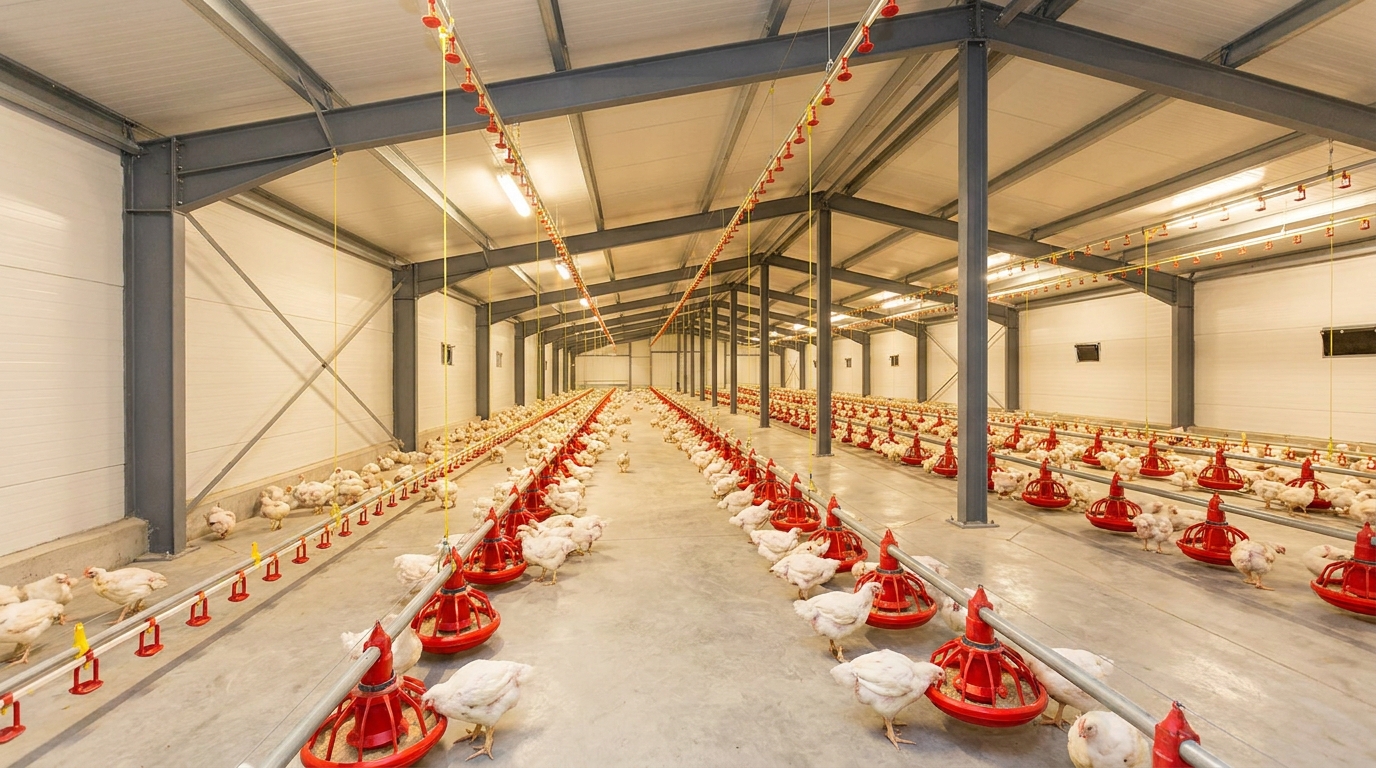
A modern breeder chicken house is a highly specialized agricultural facility designed to raise parent stock chickens for the production of viable hatching eggs. Unlike standard chicken coops, these commercial structures are engineered to support long-term flock health and high mating performance.
What is the primary role of breeder facilities?
Think about it: This facility does not produce meat directly but acts as the genetic origin for commercial meat flocks. By housing parent stock under strict environmental conditions, it ensures that every egg laid carries the target genetics for rapid growth or high egg production.
- Securing genetic traits passed down to the commercial generation.
- Maintaining parent flock health to maximize fertile egg yields.
- Preventing early horizontal disease transmission via bio-secure isolation.
Key structural features of parent stock housing
Here is the key: Parent stock buildings require highly durable components that support sophisticated automation systems. Heavy-duty framing and thick insulated walls are critical to handle structural load requirements while protecting birds from external weather threats.
- Clear-span steel frames to eliminate internal structural obstructions.
- High-R-value sandwich panel insulation for stable internal climates.
- Reinforced roof purlins to support heavy suspended feeding equipment.
Key Takeaway: A specialized parent flock facility is designed to support the fragile biological needs of reproductive birds rather than just maximizing rapid body weight.
| Design Parameter | Commercial Broiler House | Specialized Breeder House | |
|---|---|---|---|
| Primary Purpose | Mass meat output | Viable hatching eggs | |
| Structural Load | Moderate | High suspended load | |
| Sizing Approach | High bird density | Spatial freedom & nesting |
Analytical Guidance: Investing in a dedicated structural layout ensures long-term operational ease and minimizes structural retrofitting costs.
How do production goals differ for broiler and breeder farms?
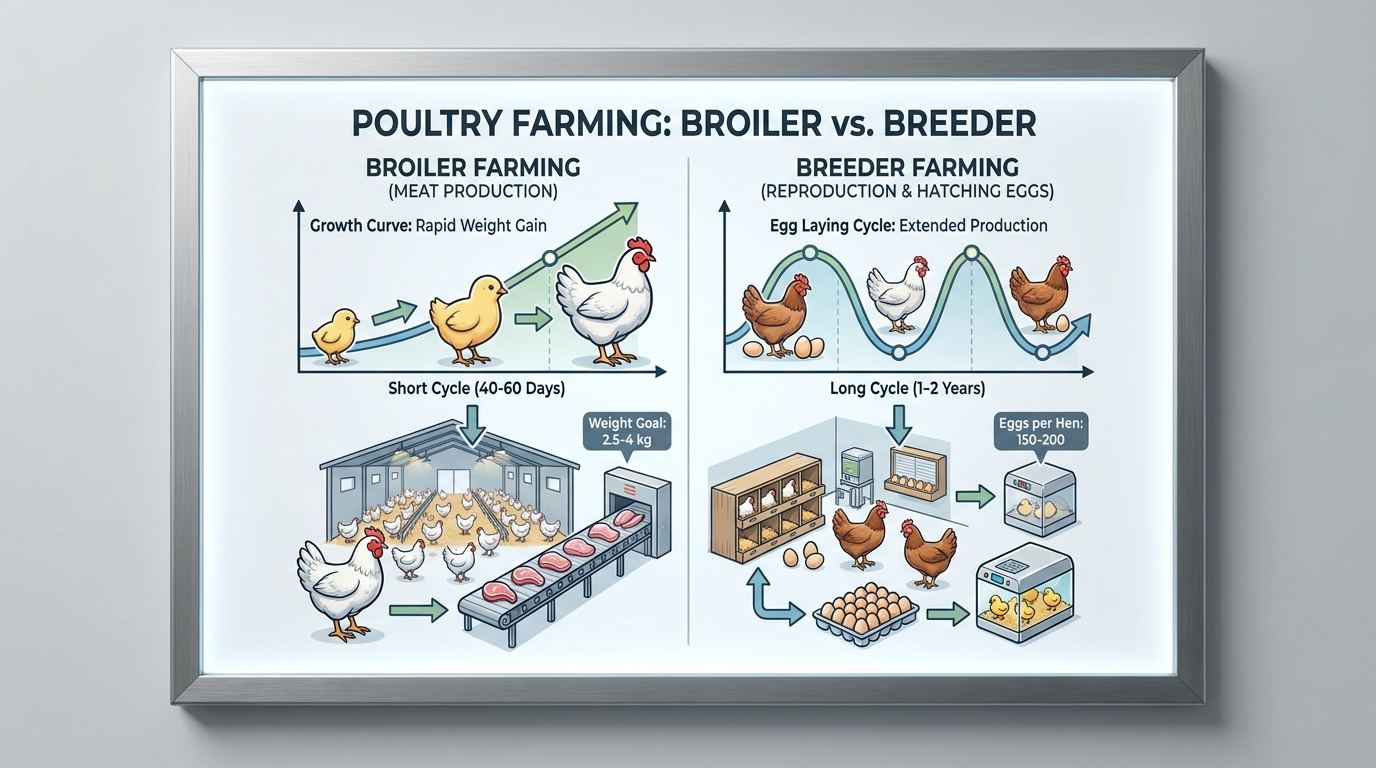
When planning your poultry venture, comparing a breeder chicken house with a broiler house reveals highly contrasting production objectives that dictate every engineering choice. Understanding these different goals is vital before breaking ground on your new farm.
Broiler houses: optimized for rapid meat growth
Let’s face it: Broiler farms are designed to raise day-old chicks to market weight as quickly and efficiently as possible. Because these birds stay on the farm for only six weeks, the infrastructure prioritizes high stocking density and fast feed delivery.
- Turnaround times averaging only thirty-five to forty-two days per flock.
- Simplified automated floor feeder lines to maximize direct feed access.
- High-density environments requiring heavy ventilation during late growth stages.
Breeder houses: focused on viable egg production
Here is the bottom line: Breeder housing must keep birds healthy and active for more than a year to secure consistent egg fertility. This requires separate diets, mating spaces, and gentle egg-handling zones to protect the delicate shells.
- Flock lifespans lasting up to sixty-eight weeks for continuous output.
- Divided spatial layouts that promote natural mating behavior.
- Egg collection pathways that protect shell cleanliness and structural integrity.
Key Takeaway: Broilers are raised for rapid muscle development, whereas breeders require long-term metabolic balance to ensure high hatchability rates.
| Operational Metric | Broiler Houses | Breeder Houses | |
|---|---|---|---|
| Flock Lifespan | 5 to 6 weeks | 60 to 68 weeks | |
| Daily Activities | Routine feeding | Egg gathering & monitoring | |
| Feeding Target | Maximum weight gain | Controlled, balanced reproduction |
Analytical Guidance: Understanding this fundamental operational split helps poultry investors correctly allocate their capital to structural designs that match their target output.
Build Your High-Performance Breeder Chicken House Today !
Email:sales@showhoo.com.cn
Phone/WhatsApp: + 86 186 7895 5927
What are the standard sizes and capacities for breeder houses?
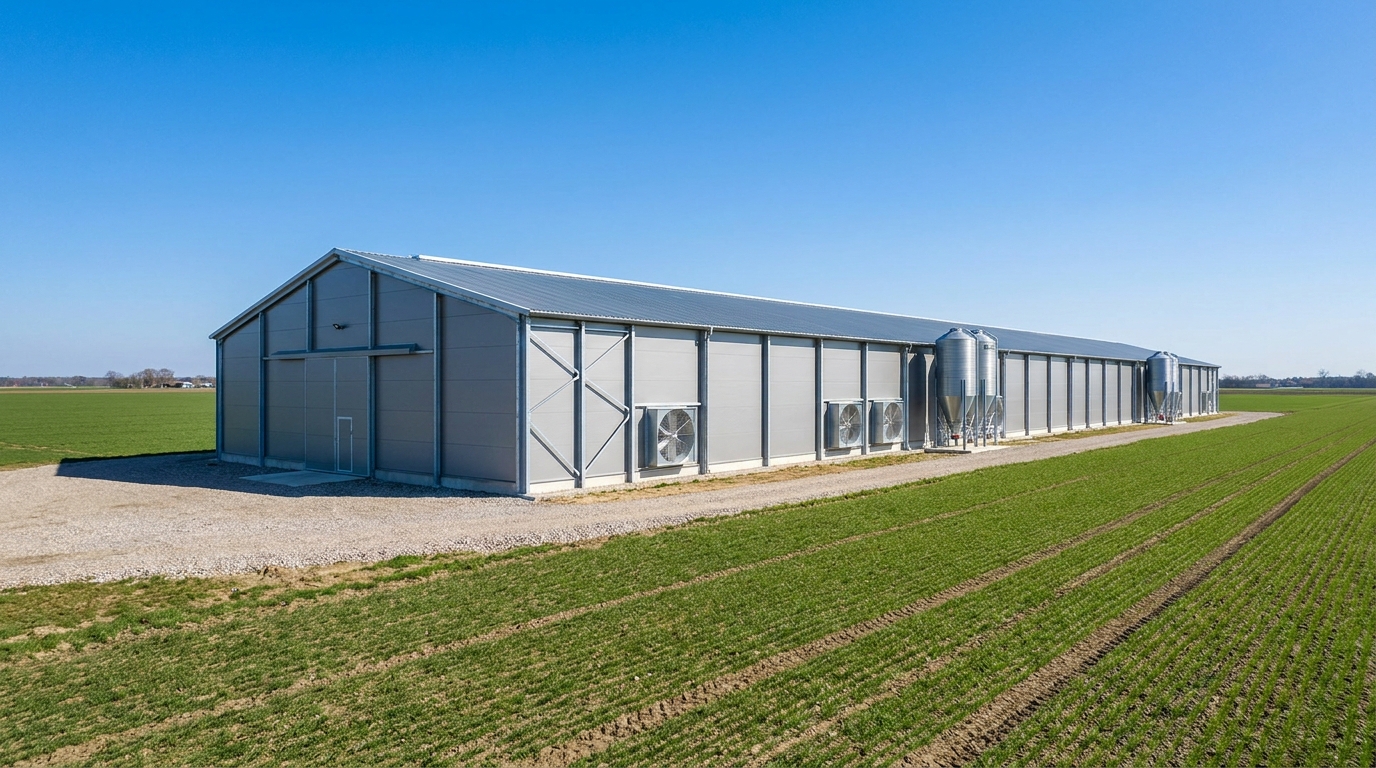
The scale of a commercial breeder chicken house must follow precise dimensions to prevent overcrowding and ensure healthy social interaction between the roosters and hens. Getting the measurements right from the start prevents severe management headaches later.
How much floor space does each bird require?
Think about this: Breeder birds need significantly more floor space than meat broilers because they remain in the house for over a year. Overcrowding breeders quickly leads to elevated stress, aggressive fighting, and a sharp drop in mating frequency and fertility.
- Stocking densities kept to four to five birds per square meter.
- Sufficient floor space to accommodate large automatic nesting assemblies.
- Ample room for roosters to move freely without facing aggressive territorial disputes.
Typical dimensions for commercial operations
Indeed: Standard commercial steel buildings are typically engineered with dimensions that optimize modern automated ventilation and feeding layouts. These structures must provide long, unobstructed spaces that allow standard machinery to operate continuously.
- Widths spanning twelve to fifteen meters to facilitate optimal tunnel airflow.
- Lengths extending from one hundred to one hundred and fifty meters.
- Clear-span ceiling heights designed to hold automated overhead equipment.
Key Takeaway: Designing breeder houses with strict floor space limits is crucial to keep bird stress low and maintain reliable reproductive performance.
| Structural Dimension | Standard Breeder House | Key Benefit | |
|---|---|---|---|
| Width | 12m to 15m | Enhances tunnel wind speed cooling | |
| Length | 100m to 150m | Optimizes automated layout efficiency | |
| Density Limit | 4.0 – 5.5 birds / m² | Reduces flock aggression and stress |
Analytical Guidance: Utilizing standardized, industry-proven dimensions reduces engineering expenses while optimizing flock physical performance.
Why use pre-engineered steel buildings for breeder houses?
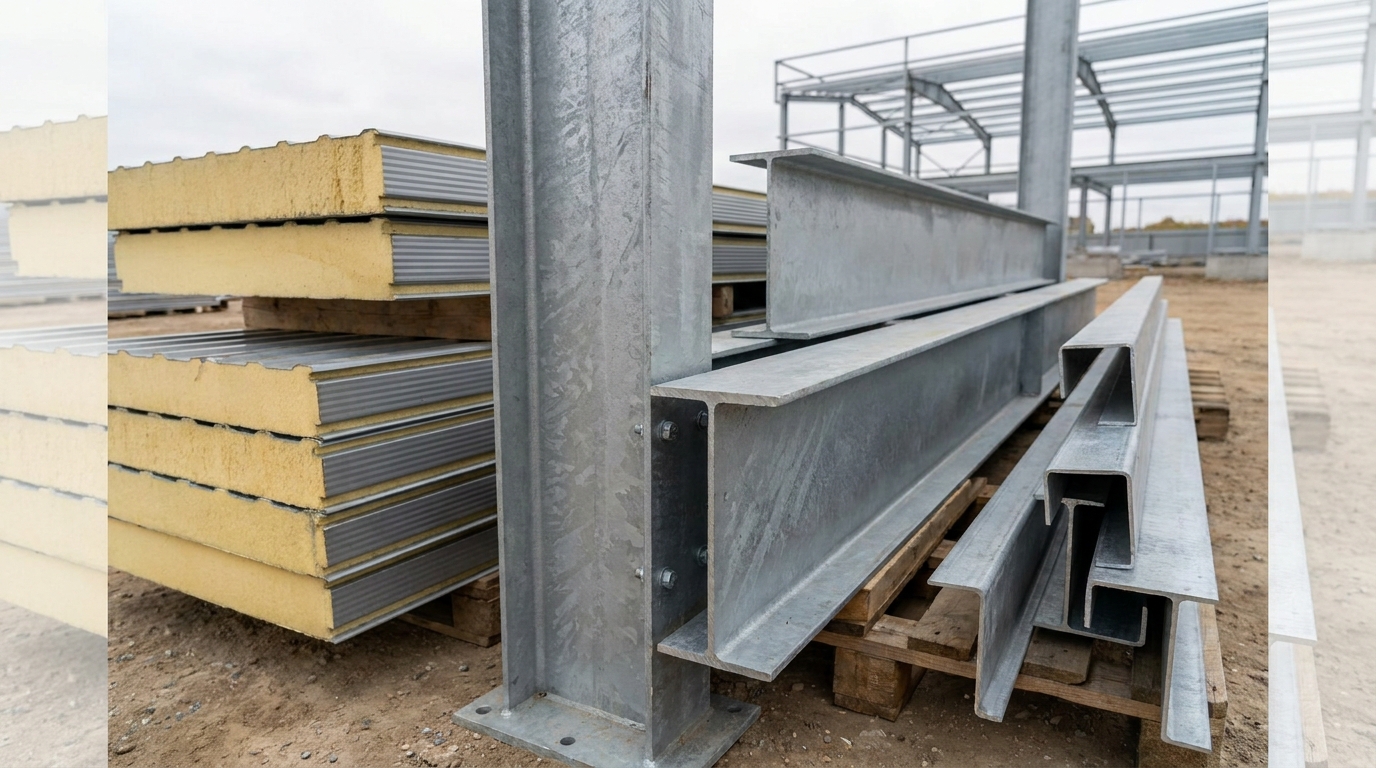
Investing in a pre-engineered steel breeder chicken house ensures your agricultural business benefits from unmatched structural durability and robust protection against heavy external weather hazards. Modern steel fabrications outperform traditional materials across every performance metric.
Unmatched biosecurity and disease control benefits
But wait, there’s more: Steel structures provide completely non-porous surfaces that are easy to wash, sanitize, and disinfect between flock cycles. Unlike timber, steel does not absorb pathogens, moisture, or chemical residues, making it a powerful tool for biosecurity.
- Zero organic materials to prevent mold growth and bacterial nesting.
- Impermeable barriers that completely stop rodents and wild birds.
- Resilient steel surfaces that withstand high-pressure water washing.
How does clear-span steel construction improve layout?
Think about it: Removing interior load-bearing columns allows you to arrange nests, feeders, and egg belts in perfectly straight lines without obstruction. This uninterrupted spatial floor planning is crucial for the efficient movement of machinery and flock monitoring.
- Unobstructed interior floors that allow fast mechanical litter cleanup.
- Flexible placement options for automated egg collection conveyors.
- Uniform air distribution paths that have no columns to block wind.
Key Takeaway: Pre-engineered steel frames offer superior structural lifespan and cleanability, forming the foundation of modern high-standard farm biosecurity.
| Material Option | Steel Structures | Timber / Wood Structures | |
|---|---|---|---|
| Sanitation Quality | Outstanding (non-porous) | Poor (absorbs moisture/bacteria) | |
| Column-Free Space | Yes (up to 30m clear span) | No (requires internal posts) | |
| Pest Resistance | Absolute (rodents cannot chew) | Low (prone to boring pests) |
Analytical Guidance: Selecting steel over wood dramatically lowers your ongoing maintenance costs while ensuring long-term biosecurity compliance.
What daily labor and management do breeder farms require?
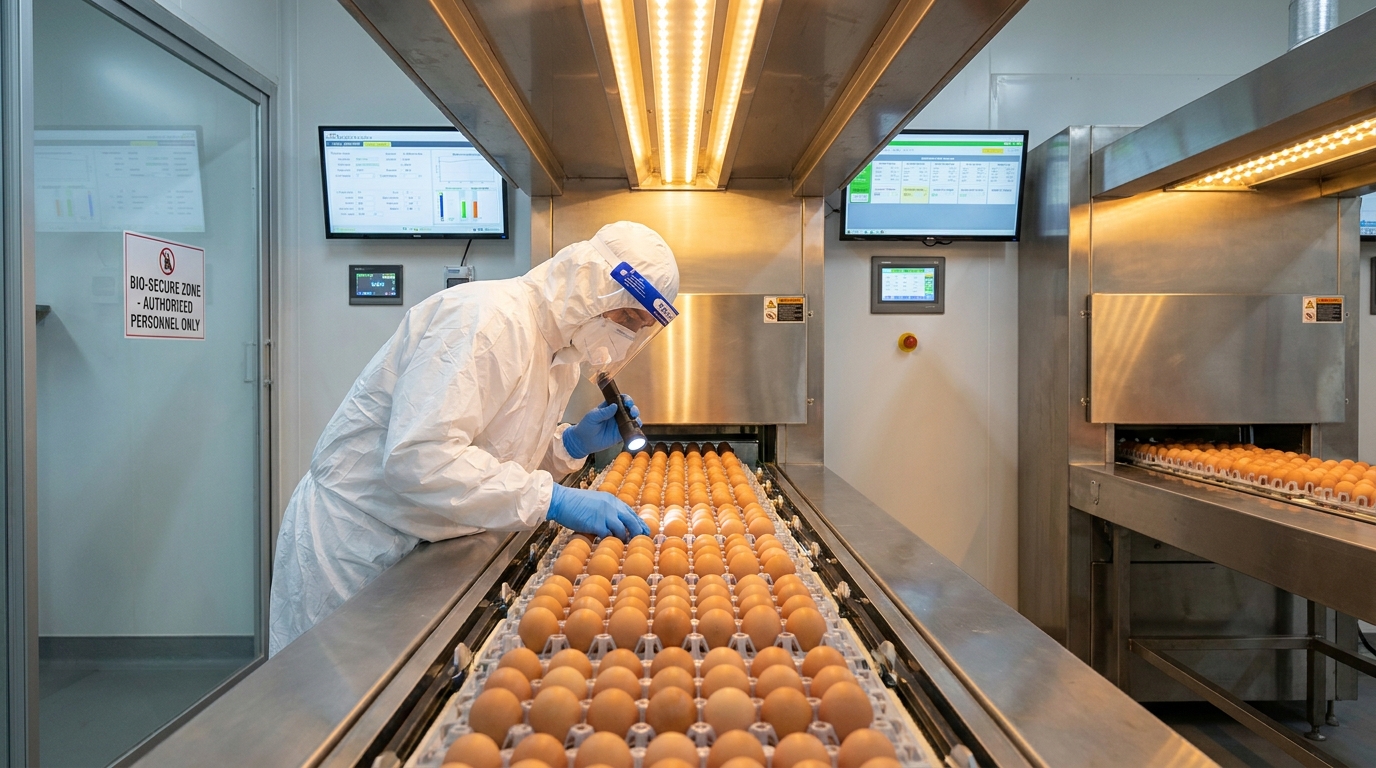
Managing a high-yield breeder chicken house successfully requires highly trained agricultural workers and strict daily schedules to keep the parent flock performing at its peak. Daily attention to small details separates profitable farms from those that struggle.
Strict biosecurity protocols and sanitation
Let’s be honest: Since breeder flocks represent a massive financial and genetic investment, you must protect them from outside diseases. Daily biosecurity protocols must be strictly enforced for all farm personnel, visitors, and support vehicles entering the property.
- Mandatory shower-in and shower-out facilities for every worker.
- Dedicated site clothing and sanitized footwear to prevent cross-contamination.
- Regular chemical sanitization of egg-handling equipment and sorting tables.
Why does breeder flock care require skilled labor?
Think about this: Unlike simple broiler farming, breeder staff must manually handle delicate hatching eggs, perform detailed sorting, and maintain precise rooster-to-hen ratios. These complex tasks demand high attention to detail and specialized livestock training.
- Frequent egg collections to avoid damage and nest contamination.
- Careful physical handling of fragile eggs to protect live embryos.
- Accurate grading to separate cracked, dirty, or undersized eggs.
Key Takeaway: Regular staff training and strict hygiene practices are crucial to protect breeder genetic integrity and prevent catastrophic disease outbreaks.
| Operational Task | Labor Requirement | Quality Target | |
|---|---|---|---|
| Egg Gathering | Frequent daily cycles | Zero floor contamination | |
| Flock Inspection | Visual physical checks | Healthy mating activity levels | |
| Disinfection | Continuous surface sanitizing | Sterile sorting zones |
Analytical Guidance: Investing in trained personnel and structural biosecurity rooms secures a reliable, high-performing hatching egg output.
How do separate feeding layouts manage the rooster-to-hen ratio?
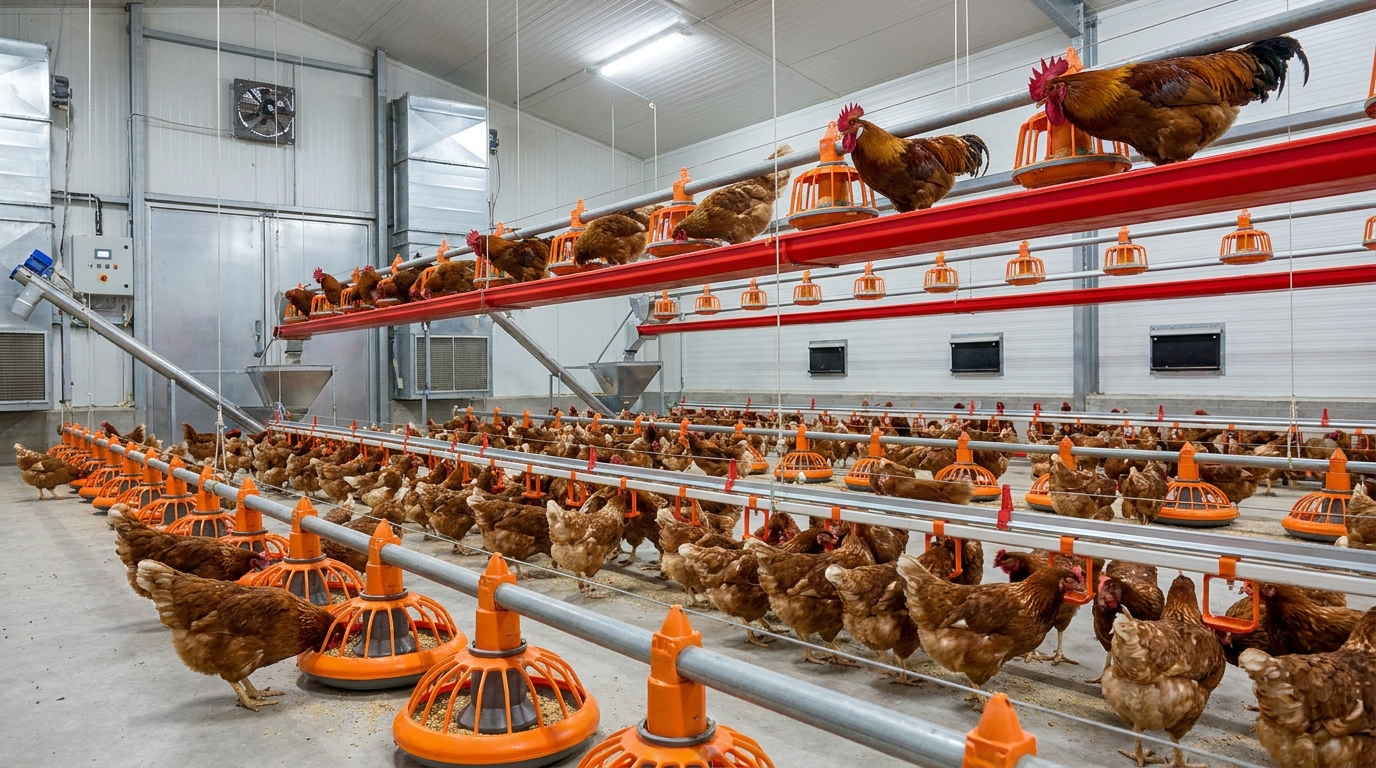
An optimized breeder chicken house must include specialized separate-sex feeding equipment to prevent larger roosters from eating the carefully balanced hen feed. Keeping the physical diets of males and females separated is critical for egg viability.
The science behind male-to-female ratios
Here is the key: Maintaining the correct ratio of roosters to hens is essential to keep egg fertility and hatchability at profitable levels. Too many roosters leads to fighting and bird injuries, while too few results in unfertilized eggs.
- Maintaining a ratio of eight to ten roosters per one hundred hens.
- Monitoring mating behaviors to ensure roosters are active.
- Replacing old or inactive roosters to keep fertility levels high.
Separate-sex feeding equipment and exclude systems
But wait, there’s more: Roosters and hens have different nutritional needs to maintain their weight and reproductive health. Installing physical grills on hen feeders blocks the larger heads of roosters, keeping them restricted to elevated male feeder tracks.
- Feeder grills that restrict opening widths to forty-five millimeters.
- Elevated rooster feed lines suspended high enough to block shorter hens.
- Different dietary formulas to support egg shell production vs. semen quality.
Key Takeaway: Implementing a secure separate-sex feeding system prevents male obesity and maintains high mating success throughout the flock cycle.
| Bird Group | Feeder System Design | Dietary Focus | |
|---|---|---|---|
| Hens (Females) | Grilled floor feeders | Calcium-rich, egg-producing feed | |
| Roosters (Males) | High suspended feeders | High-energy, muscle-retaining feed | |
| Mating Ratio | Controlled distribution | High fertility rates |
Analytical Guidance: Installing separate-sex hardware is essential to avoid feed wastage and sustain high hatching performance.
Build Your High-Performance Breeder Chicken House Today !
Email:sales@showhoo.com.cn
Phone/WhatsApp: + 86 186 7895 5927
How do advanced nest systems optimize hatching egg collection?
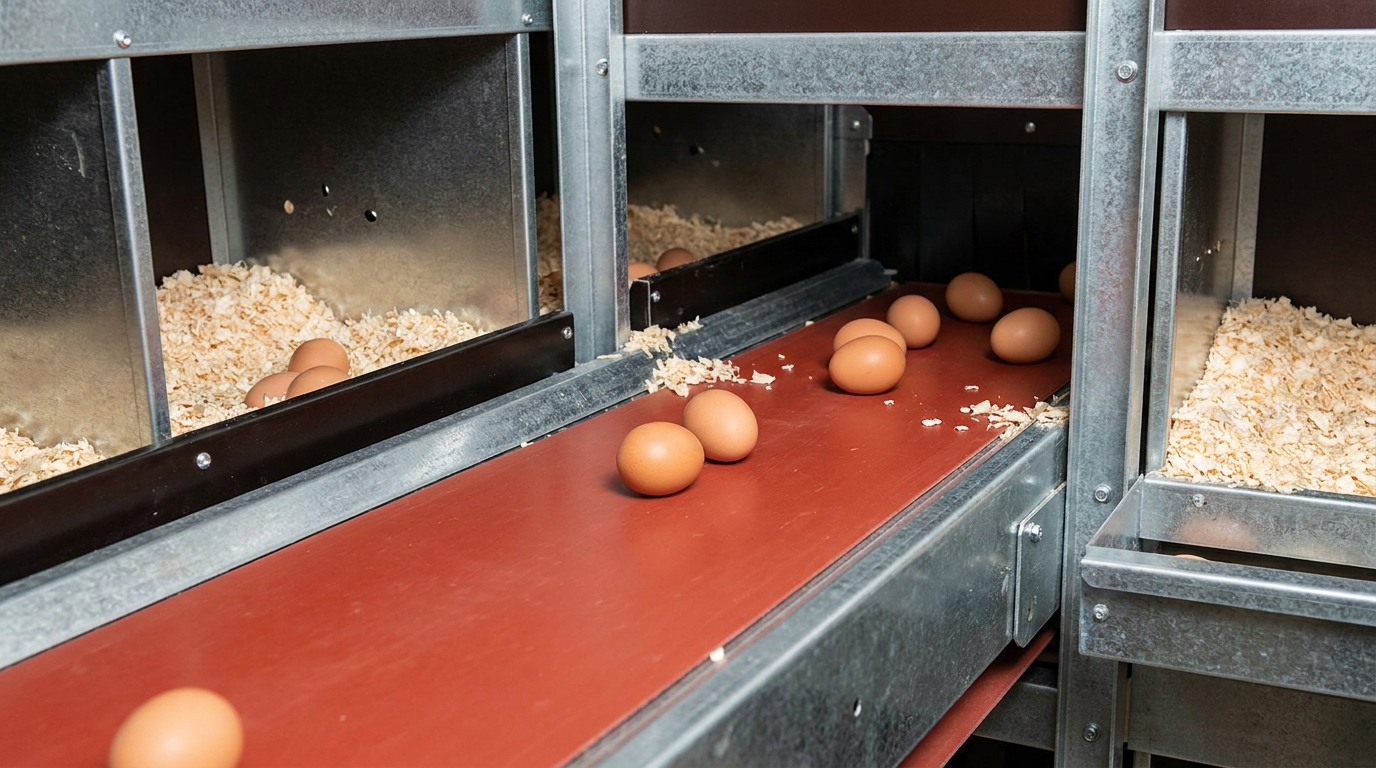
The commercial success of a modern breeder chicken house depends on advanced automated nest boxes designed to keep hatching eggs perfectly clean and free of damage. Every broken or soiled egg represents direct lost hatchery revenue.
Why use automatic community nest boxes?
Think about it: Automatic nest boxes encourage hens to lay their eggs in safe, comfortable spaces equipped with sloping floors. Once laid, eggs gently roll onto a central conveyor belt, keeping them protected from dirt and bird activity.
- Soft rubber nesting pads that eliminate hairline cracks.
- Central conveyor belts that carry eggs directly to sorting rooms.
- Automated mechanical expulsion panels that gently push birds out to prevent nesting at night.
Preventing floor eggs and maximizing egg hygiene
Let’s be honest: Eggs laid on the litter floor are exposed to heavy bacteria and cannot be used for hatching. Proper training, specific lighting, and slatted flooring are crucial to guide hens into using the nesting boxes.
- Elevated plastic slats that make the floor less comfortable for laying.
- Strict morning schedules to gather any floor eggs early.
- Eliminating dark corner spots where hens might try to hide.
Key Takeaway: Automated nest boxes and slatted floors are critical investments to reduce labor hours and keep floor-laid egg counts below one percent.
| Nesting System Type | Floor Laying Rate | Manual Labor Required | |
|---|---|---|---|
| Manual Nest Boxes | Higher (needs constant checking) | Heavy manual collection | |
| Automated Nest Systems | Under 1% (with correct training) | Automated, centralized transport | |
| Dirty Egg Risk | Very High | Extremely Low |
Analytical Guidance: Integrating automatic nest systems reduces breakage risks and increases the volume of clean hatching eggs sent to the hatchery.
What ventilation, cooling, and lighting setups are required?
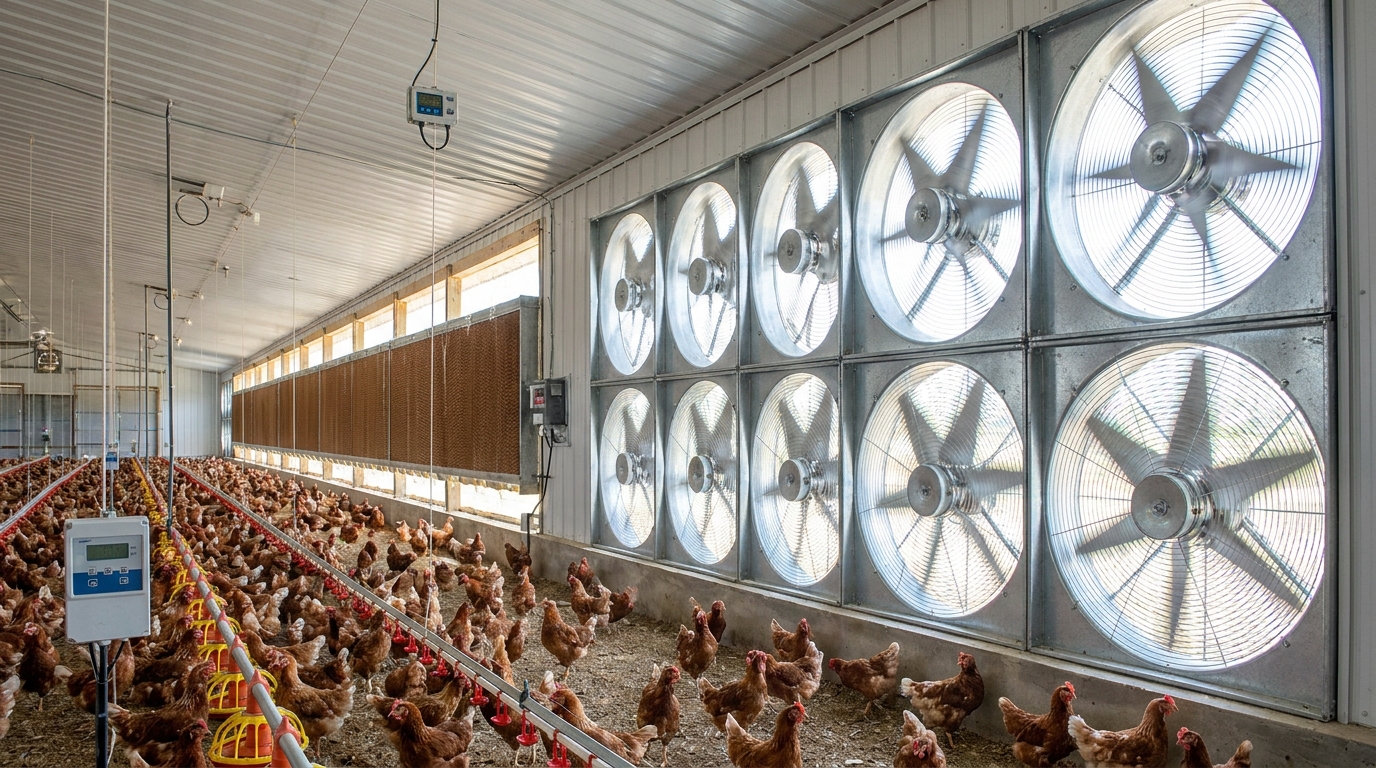
Maintaining precise climate control inside a breeder chicken house is critical, as any sudden spikes in heat or changes in light schedules can permanently damage egg fertility. Reproductive birds are highly sensitive to their surrounding environment.
Tunnel ventilation and evaporative cooling pads
Here is the bottom line: Large breeder birds produce significant body heat, requiring high-velocity tunnel ventilation to keep them comfortable. Evaporative cooling pad walls installed at the opposite end of the house pull air through to lower temperatures in hot climates.
- High-powered exhaust fans that maintain constant airflow.
- Cellulose cooling pads that lower inbound air temperatures.
- Automated controllers that adjust wind speed based on humidity.
Can strict lighting schedules control sexual maturity?
Think about this: Poultry reproductive systems are highly sensitive to the duration and intensity of light exposure. Precise dimmer systems and light traps must be used to control day length, encouraging uniform flock development and consistent laying cycles.
- Light traps on fans and inlets to maintain total darkness during rearing.
- Tailored photoperiod plans to stimulate healthy laying cycles.
- Programmable LED dimmers to simulate natural sunrises and sunsets.
Key Takeaway: Integrated climate and lighting controls protect birds from heat stress and keep egg laying cycles perfectly uniform.
| Control Element | Target Parameter | Primary Equipment | |
|---|---|---|---|
| Temperature | 20°C to 24°C | Cooling pads & tunnel fans | |
| Airflow Speed | 2.5 to 3.0 m/s | Exhaust fans | |
| Photoperiod | 14 to 16 light hours | LED dimmers & light traps |
Analytical Guidance: Installing automated climate controllers minimizes environmental risks and supports high flock fertility rates.
What are typical breeder farm construction and operating costs?
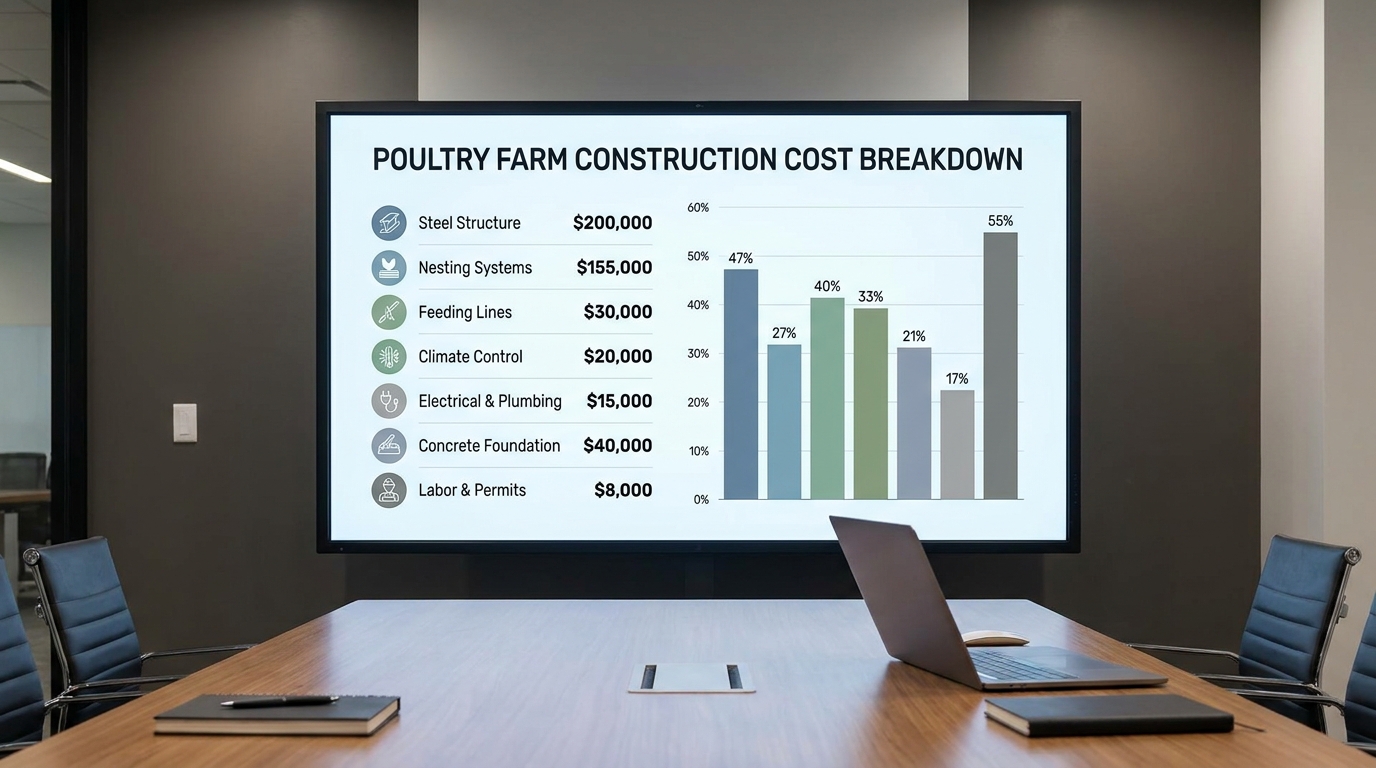
Building a commercial breeder chicken house requires a larger initial capital investment compared to standard broiler farms due to the specialized automation systems required. Budgeting carefully for both structural and operating costs prevents cash flow issues.
Analyzing high initial capital expenditures
Let’s be honest: Pre-engineered steel frames, thermal insulation, automated nesting, and specialized sex-separated feeding lines add to the initial building cost. However, these high-quality components ensure low maintenance and high operational efficiency over decades.
- High-strength steel framing designed to handle heavy suspended equipment.
- Advanced nesting belts and automated egg collection tables.
- Complete climate systems featuring heavy cooling pads and exhaust fans.
Evaluating feed, energy, and labor operating costs
But wait, there’s more: Operational expenses for breeder facilities are dominated by specialized nutritional feeds and high energy demands for constant ventilation. While these running costs are substantial, the high value of fertile hatching eggs helps offset the initial investment.
- High-quality starter, developer, and breeder feeds.
- Continuous electrical energy to run heavy climate systems.
- Skilled labor required for daily sorting and egg care.
Key Takeaway: While initial setup costs are high, using energy-efficient steel structures and automated machinery lowers long-term running expenses.
| Budget Component | Relative Share | Primary Cost Driver | |
|---|---|---|---|
| Steel Frame & Panels | 35% – 40% | High-grade galvanized steel | |
| Automated Nest Systems | 20% – 25% | Conveyors, pads, and collection | |
| Feeding & Watering | 15% – 18% | Separate-sex lines & augers | |
| Climate Control | 12% – 15% | High-power fans and wet pads |
Analytical Guidance: Reviewing these cost shares helps farmers plan budgets and avoid financial overruns during construction.
How do you evaluate the ROI of a breeder farm investment?

Assessing the return on investment for a commercial breeder chicken house involves evaluating long-term contracts with hatcheries and looking at overall flock productivity. While the initial costs are higher, the long-term returns are incredibly reliable.
Contract farming agreements vs. independent operation
Here is the key: Many breeder farmers partner with large integrated poultry companies under long-term supply contracts. These agreements reduce market risks by guaranteeing stable prices for every viable hatching egg produced.
- Guaranteed egg purchase agreements with regional hatcheries.
- Insulated pricing structures that protect against market feed volatility.
- Regular supply chains that keep production runs continuous.
What risk mitigation factors protect your investment?
Think about it: Protecting your business against animal diseases, energy outages, and building failures is vital. High-quality steel frames, reliable backup generators, and strict biosecurity systems help secure your long-term profits.
- Backup generators to maintain ventilation during power grid failures.
- Biosecurity perimeter walls that prevent unauthorized access.
- Durable steel structures that resist earthquakes and high winds.
Key Takeaway: Long-term hatchery contracts and strong risk prevention turn high initial breeder farm investments into highly stable agricultural businesses.
| Investment Strategy | Risk Level | Return Stability | |
|---|---|---|---|
| Independent Farms | High (subject to market ups and downs) | Variable, market-dependent | |
| Contract Operations | Low (guaranteed corporate purchase) | Highly predictable and stable | |
| Risk Mitigation | Extremely Low (with backup systems) | Protected and consistent |
Analytical Guidance: Following contract structures and adding robust backup systems helps secure a steady return on investment.
Conclusion
Selecting the ideal building setup is the first and most critical step in launching a highly profitable agricultural business. Whether you are building a rapid-turnover broiler facility or an advanced parent stock facility, we solve your structural, ventilation, and biosecurity challenges by manufacturing custom-engineered steel structures designed for maximum durability. Our technical team works alongside you to design, fabricate, and deliver high-performance farming layouts that reduce running costs and keep your birds healthy. To start planning your customized poultry facility, contact us today for expert engineering support. Together, we build the durable foundations that feed a growing world.
Build Your High-Performance Breeder Chicken House Today !
Email:sales@showhoo.com.cn
Phone/WhatsApp: + 86 186 7895 5927
Frequently Asked Questions (FAQ)
How do I know if a breeder farm is a better investment than a broiler farm for my land?
Yes, breeder farms are generally better if you prefer stable long-term profits over rapid market turns. While they require higher initial capital, their long-term supply contracts with hatcheries protect you from regional market price fluctuations.
Can I convert an existing broiler house into a breeder house?
No, conversion is highly challenging and rarely cost-effective. Breeder houses require much stronger structural roofs to support heavy suspended nesting equipment and separate-sex feeding systems, along with different ventilation layouts.
What’s the best steel coating to use in a poultry house environment?
Hot-dip galvanized coating is the absolute best choice. This thick zinc coating protects the steel frame from high internal ammonia levels, moisture, and corrosive washing chemicals used during periodic sanitization.
Can I manage a breeder farm without automated egg collection systems?
Yes, but it is not recommended for commercial operations. Collecting thousands of delicate eggs by hand dramatically increases labor costs and the risk of hairline shell damage, which lowers overall hatchery performance.
How do I know if my breeder house ventilation system is working efficiently?
You must check your air speed and bird distribution patterns. When ventilation is working correctly, birds will be spread out evenly across the floor rather than crowding together near exhaust fans or air inlets.