
Designing a highly efficient 60k-80k birds broiler house in the Philippines requires transitioning from traditional floor systems to climate-controlled, multi-tier prefabricated steel cage systems. Raising such a large flock in a tropical climate presents severe challenges, including intense heat, suffocating humidity, and strict local environmental laws. If you fail to manage these issues, high mortality rates and poor feed conversion ratios will quickly drain your farm’s profitability. Fortunately, implementing an advanced chicken coop design philippines model offers a complete steel structural and mechanical solution to secure high yields and outstanding biosecurity.
Why upgrade to a vertical cage system?
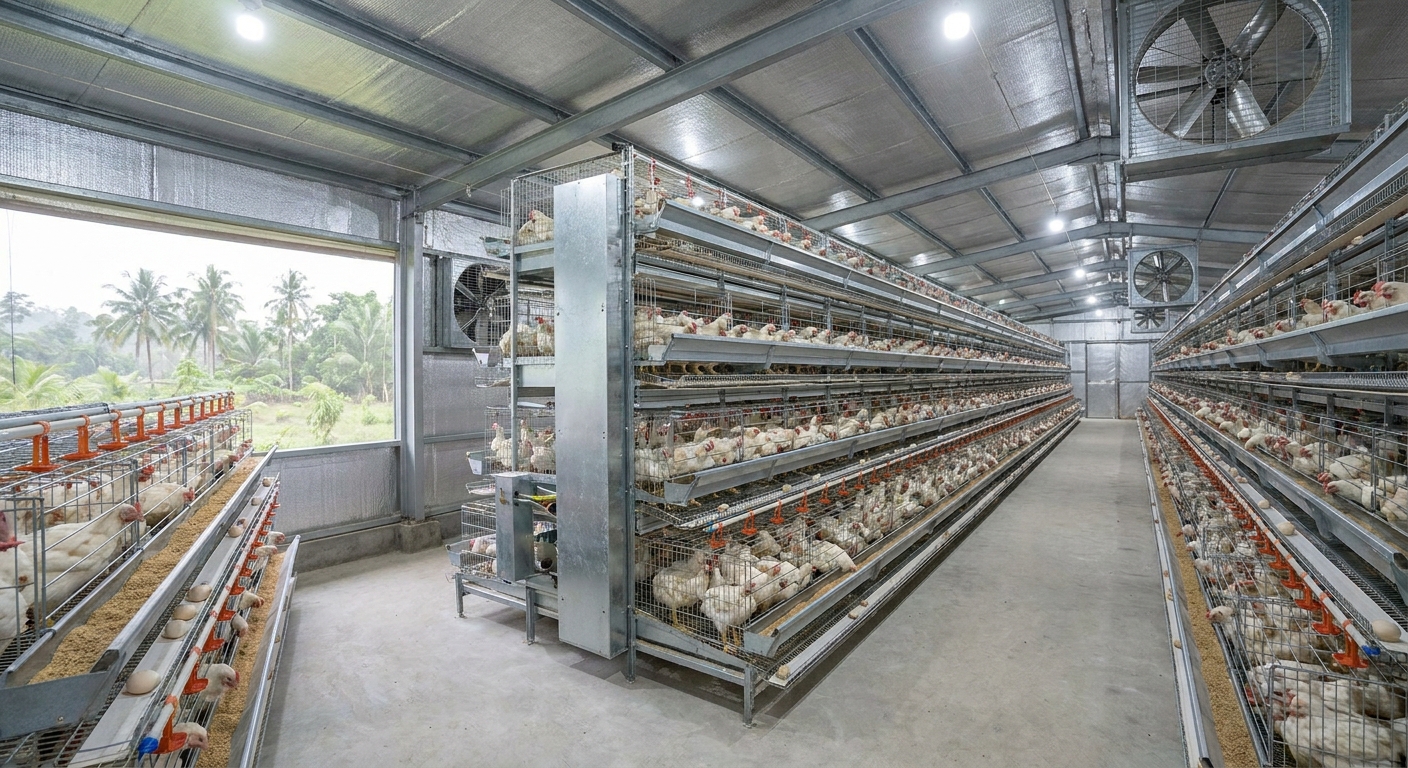
Upgrading to a vertical cage system allows Filipino poultry farmers to scale flock density by up to 150% within the same land footprint. Shifting from traditional floor layouts to vertical configurations is the defining factor in successful B2B chicken coop design philippines layouts. By utilizing vertical space, you can comfortably house 80,000 birds without buying expensive additional land.
How does multi-tier stacking maximize space?
Stacking birds in three or four tiers allows you to maximize space that traditional floor systems completely waste. Think about it: by expanding vertically, you can dramatically scale your poultry operations within a limited land footprint.
- Multiplies bird capacity per square meter by up to 150 percent.
- Ensures uniform access to automated feed and water lines.
- Restricts excessive bird movement to optimize growth rates.
Why do cage systems improve biological safety?
Vertical cage systems isolate broilers from their own waste, preventing soil-borne pathogens and coccidiosis. Here is the shocking truth: floor-raised birds constantly walk on wet litter, which acts as a breeding ground for dangerous bacteria.
- Manure falls directly onto automated cleanup belts.
- Keeps birds completely dry and clean throughout the cycle.
- Reduces reliance on expensive veterinary medications.
Key Takeaway: Shifting to multi-tier cage setups minimizes health risks and maximizes spatial density, protecting your long-term capital investment.
| System Parameter | Floor-Raised System | Multi-Tier Cage System | |
|---|---|---|---|
| Flock Density | 10–12 birds/m² | 25–30 birds/m² | |
| Coccidiosis Risk | High | Extremely Low | |
| Manure Handling | Manual cleanout | Daily automated removal |
These operational metrics confirm that multi-tier cages provide superior biological efficiency compared to old floor systems.
How does steel prefabrication speed up assembly?
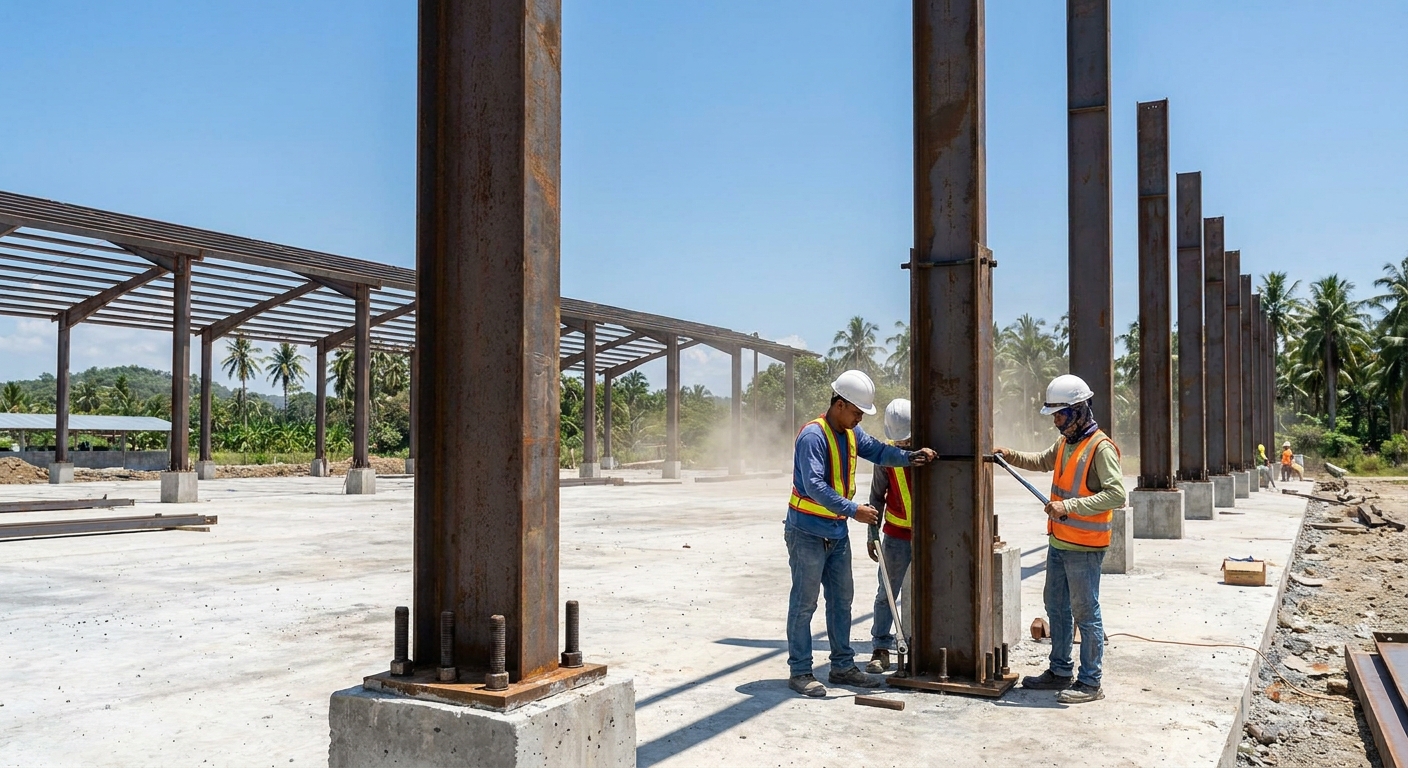
Prefabricated steel structure systems minimize local construction time by allowing site preparation and frame fabrication to occur simultaneously. Modern projects in Luzon and Mindanao rely on these engineered structures to optimize their chicken coop design philippines projects. If you choose this building method, you can easily bypass the long wet-weather delays common during the local monsoon season.
Why is structural steel superior to wood framing?
Prefabricated structural steel is immune to pests, resists high-velocity typhoons, and does not absorb corrosive ammonia gases. Let’s face facts: cheap wood frames deteriorate rapidly under constant agricultural exposure and humidity. While we also design standard steel structure warehouse and commercial steel structure workshop facilities, specialized agricultural steel is specifically treated to resist harsh poultry environments.
- Withstands tropical typhoon wind loads of up to 250 km/h.
- Resists corrosion from humid tropical air and acidic bird droppings.
- Provides non-porous surfaces that prevent insect infestations.
How fast can you erect a steel poultry house?
A prefabricated steel frame for an 80,000-bird facility can be fully bolted together on-site in less than 30 days. But that is not all: this fast installation allows you to start your rearing cycles months ahead of schedule.
- Eliminated complex on-site welding with bolt-together connections.
- Features pre-punched ports for direct ventilation equipment mounting.
- Reduces on-site labor requirements by up to 40 percent.
Key Takeaway: Choosing prefabricated steel structures accelerates your farm commission schedule while ensuring maximum resistance against extreme tropical weather.
| Structural Feature | Wood & Concrete | Prefabricated Steel | |
|---|---|---|---|
| Framing Timeline | 75 – 90 Days | 20 – 30 Days | |
| Lifespan Expectancy | 8 – 12 Years | 25+ Years | |
| Typhoon Resistance | Up to 150 km/h | Up to 250 km/h |
Investing in prefabricated steel frames guarantees exceptional durability and vastly shortens your project timeline.
Get a Custom Chicken Coop Design Philippines Quote Today!
Email:sales@showhoo.com.cn
Phone/WhatsApp: + 86 186 7895 5927
What dimensions are optimal for 80,000 birds?
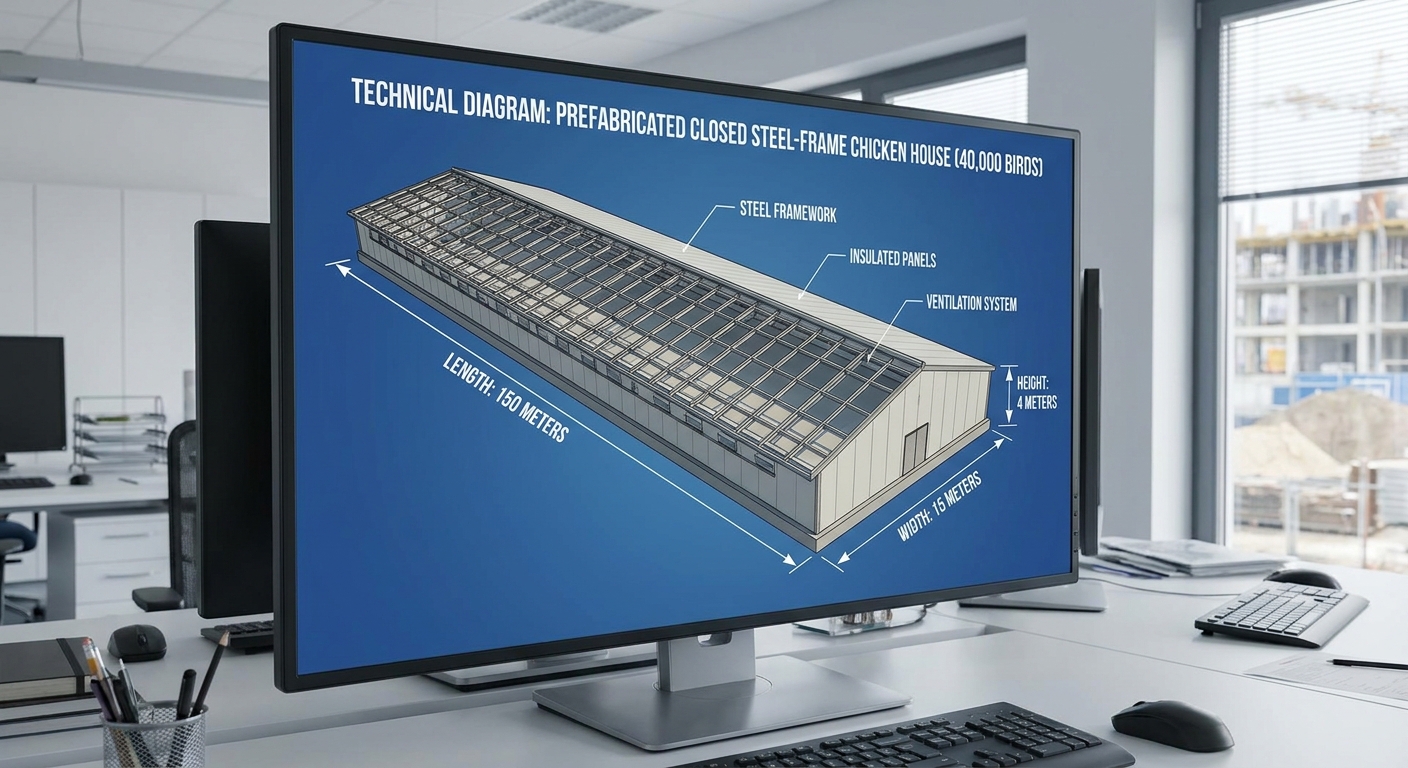
The optimal dimensions for an 80,000-bird broiler operation consist of two prefabricated buildings measuring 150 meters long by 15 meters wide. This specific geometric ratio has become the golden standard for professional chicken coop design philippines engineering. By splitting your flock into two identical houses, you ensure peak environmental control and manageable equipment loads.
Why is house width limited to fifteen meters?
Keeping the building width between 12 and 15 meters ensures that wind tunnel air travels at high velocity past every bird. Here is the kicker: wider layouts create dead air zones in the center, leading to rapid heat buildup.
- Maintains consistent static pressure for efficient fan operation.
- Eliminated stagnant heat pockets along the center columns.
- Keeps cooling pad drafts perfectly uniform from wall to wall.
What ceiling height is needed for vertical cages?
A multi-tier cage system requires a minimum interior sidewall height of 3.8 to 4.2 meters. Keep this in mind: insufficient height will trap hot air directly in the top cage levels, causing bird stress.
- Leaves at least 1.2 meters of clear headspace for air mixing.
- Provides ample space for heavy-duty overhead feed hoppers.
- Allows bottom-belt manure scrapers to operate without obstruction.
Key Takeaway: Adhering to the 150m x 15m footprint with a 4m ceiling guarantees optimal wind velocity and safe cage vertical spacing.
| Parameter | Minimum Dimension | Engineering Purpose | |
|---|---|---|---|
| Sidewall Height | 3.8 – 4.2 Meters | Top-tier heat clearing | |
| House Width | 12 – 15 Meters | Wind tunnel velocity | |
| Clearance Above Cages | 1.2 Meters | Air mixing and flow |
These physical design constraints prevent heat trapping and ensure uniform ventilation throughout the entire facility.
How do you design ventilation for tropical heat?
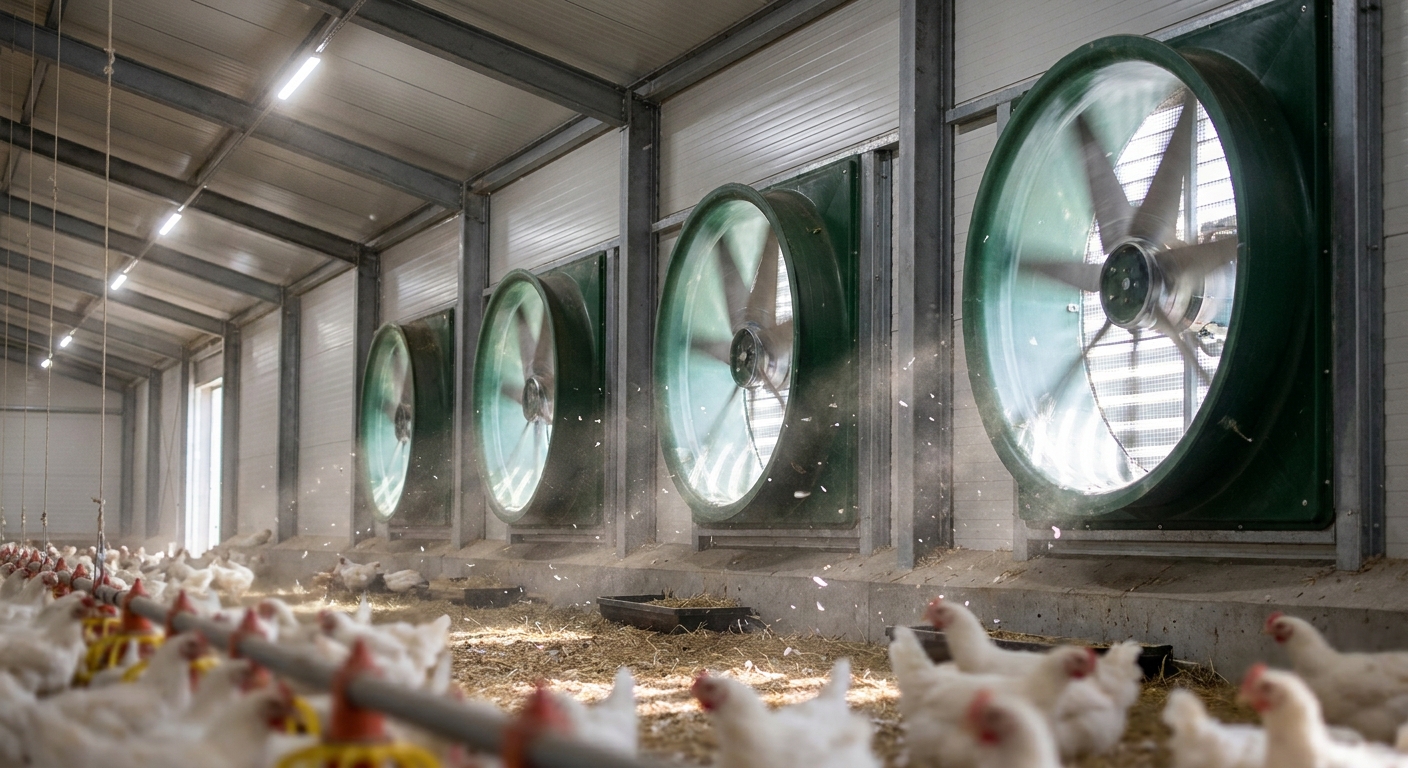
Controlling heat stress in the Philippines requires a fully sealed, closed-house design combining tunnel ventilation with wet evaporative cooling pads. Managing extreme tropical humidity and hot weather is the biggest challenge in modern chicken coop design philippines projects. If you fail to regulate internal temperatures, your high-density flock will suffer severe heat stroke and high mortality.
How do evaporative cooling pads lower temperatures?
Wet evaporative cooling pads lower incoming air temperatures by up to 6°C as warm outside air passes through saturated cellulose media. Look at it this way: without this cooling, the incoming air would match the blistering 35°C outside heat.
- Cools incoming air to a safe and stable 26–28°C range.
- Uses heavy-duty water pumps to ensure continuous paper saturation.
- Covers the entire intake wall to eliminate warm air bypass.
What wind speed is required to cool high-density birds?
An air velocity of 2.5 to 3.0 meters per second is required to produce the “wind chill” effect that cools broilers. This is critical: moving air actively carries body heat away from your birds’ feathers.
- Generates a felt temperature drop of 4°C to 5°C.
- Uses large, 50-inch fiberglass exhaust fans to pull the air.
- Demands an airtight building envelope to maintain strong static pressure.
Key Takeaway: Combining high-capacity cooling pads with high-speed exhaust fans keeps your flock comfortable even during the hottest Philippine summers.
| Target Metric | Ideal Parameter | Operational Purpose | |
|---|---|---|---|
| Air Velocity | 2.5 – 3.0 m/s | Heat removal via wind chill | |
| Internal Temp | Below 28°C | Prevents respiratory distress | |
| Static Pressure | 25 – 35 Pa | Maintains constant tunnel draft |
Maintaining these exact climate parameters prevents bird mortality and ensures consistent growth during heatwaves.
Which feeding system maximizes B2B feed efficiency?
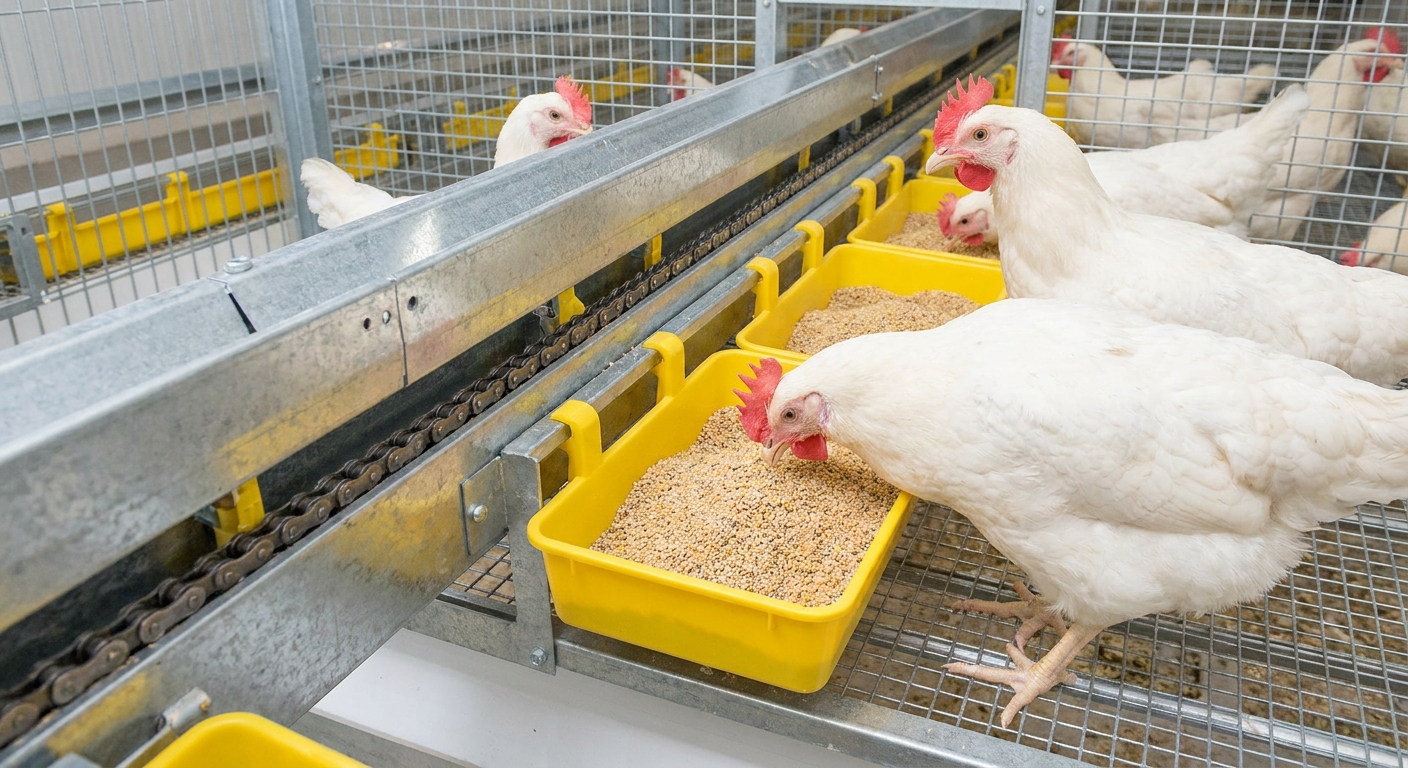
High-density poultry farms must use automated, auger-driven pan feeding systems to ensure every bird gets equal nutrition. Integrating these automated systems directly into your B2B chicken coop design philippines blueprints minimizes feed wastage and lowers operational labor costs. When you automate your feeding lines, you ensure your birds hit their target weights on schedule.
How does automated pan feeding reduce waste?
Automated auger lines deliver pre-measured feed directly to individual plastic pans at scheduled intervals throughout the day. Here is the thing: manual feeding methods often lead to severe feed spilling and uneven growth.
- Fills pans automatically to prevent human measurement errors.
- Features anti-scratch rings that keep birds from throwing feed out.
- Adjusts feed depth easily as your broilers grow larger.
What is the benefit of a silo-to-pan delivery?
Feed stored in outdoor steel silos is transported through enclosed PVC pipes directly to the internal cage hoppers. But that is not all: this enclosed pipeline protects the feed from humidity, mold, and wild birds.
- Protects valuable feed from damp tropical air and moisture.
- Prevents disease contamination from wild birds and local rodents.
- Allows bulk feed purchasing to lower your raw material costs.
Key Takeaway: Automating your feed delivery from the external silo to the cage pan cuts feed wastage and protects nutritional quality.
| Feeding Parameter | Manual Feeding | Automated Auger System | |
|---|---|---|---|
| Feed Spillage Rate | 8% – 12% | Less than 1% | |
| Feeding Labor Needed | High (Daily manual hauling) | Zero (Automated timed lines) | |
| Feed Conversion Ratio | 1.65 – 1.75 | 1.50 – 1.55 |
These operational figures show that automated feeding lines drastically reduce feed costs and boost your final feed conversion ratio.
What water delivery design prevents contamination?
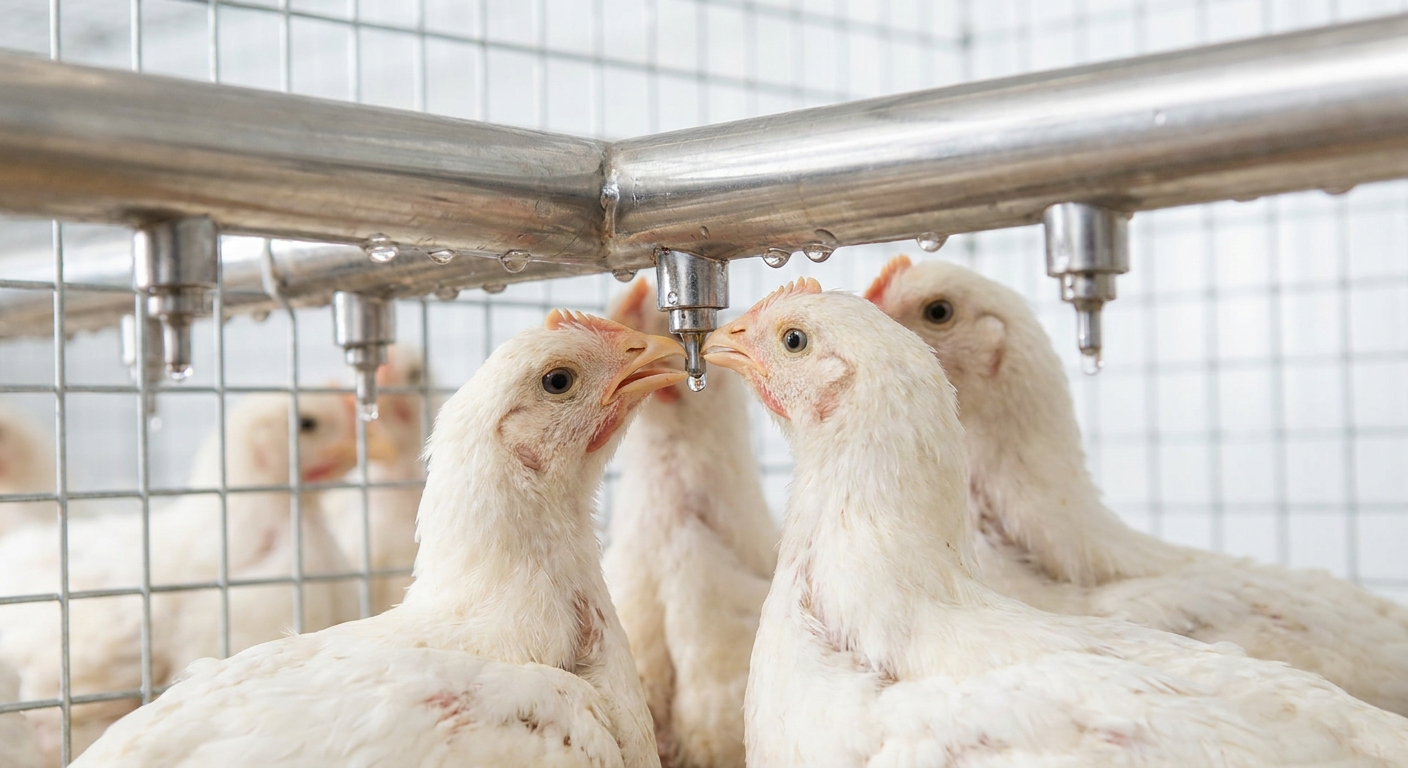
An enclosed nipple drinking system with integrated water pressure regulators is the best design to prevent water contamination. Water safety and hygiene must be a high priority in any professional chicken coop design philippines project. If your birds drink dirty water, bacterial infections will quickly spread, causing severe flock-wide disease.
Why are enclosed nipple lines superior to open cups?
Enclosed plastic pipes with stainless steel nipples deliver clean water only when birds tap the metallic trigger. Let’s face facts: open drinking cups or troughs gather dust, feathers, and manure, creating bacteria-heavy reservoirs.
- Eliminates standing water to keep bacterial growth at zero.
- Stops water from spilling onto the manure belts below.
- Delivers fresh, sanitary drinking water on demand.
How do water pressure regulators improve flow?
Integrated water pressure regulators keep water flow rates perfectly balanced across long cage rows. This is critical: if pressure is too high, water will leak; if it is too low, birds will dehydrate.
- Ensures consistent water pressure from the front to the back of the house.
- Includes simple flush valves to clean out bio-film buildup easily.
- Integrates medicine dosers for simple water-soluble flock treatment.
Key Takeaway: Implementing a fully regulated, enclosed nipple drinking system provides clean water, prevents spills, and simplifies medical dosing.
| Water System Parameter | Open Water Cups | Enclosed Nipple Lines | |
|---|---|---|---|
| Bacterial Risk | Extremely High | Zero (Sealed system) | |
| Water Waste | High (Constant spilling) | Minimal (Controlled trigger) | |
| Maintenance | Daily manual scrub | Periodic line flushing |
Our technical data confirms that sealed nipple lines prevent waterborne diseases while keeping the house perfectly dry.
Get a Custom Chicken Coop Design Philippines Quote Today!
Email:sales@showhoo.com.cn
Phone/WhatsApp: + 86 186 7895 5927
How should you automate poultry manure removal?
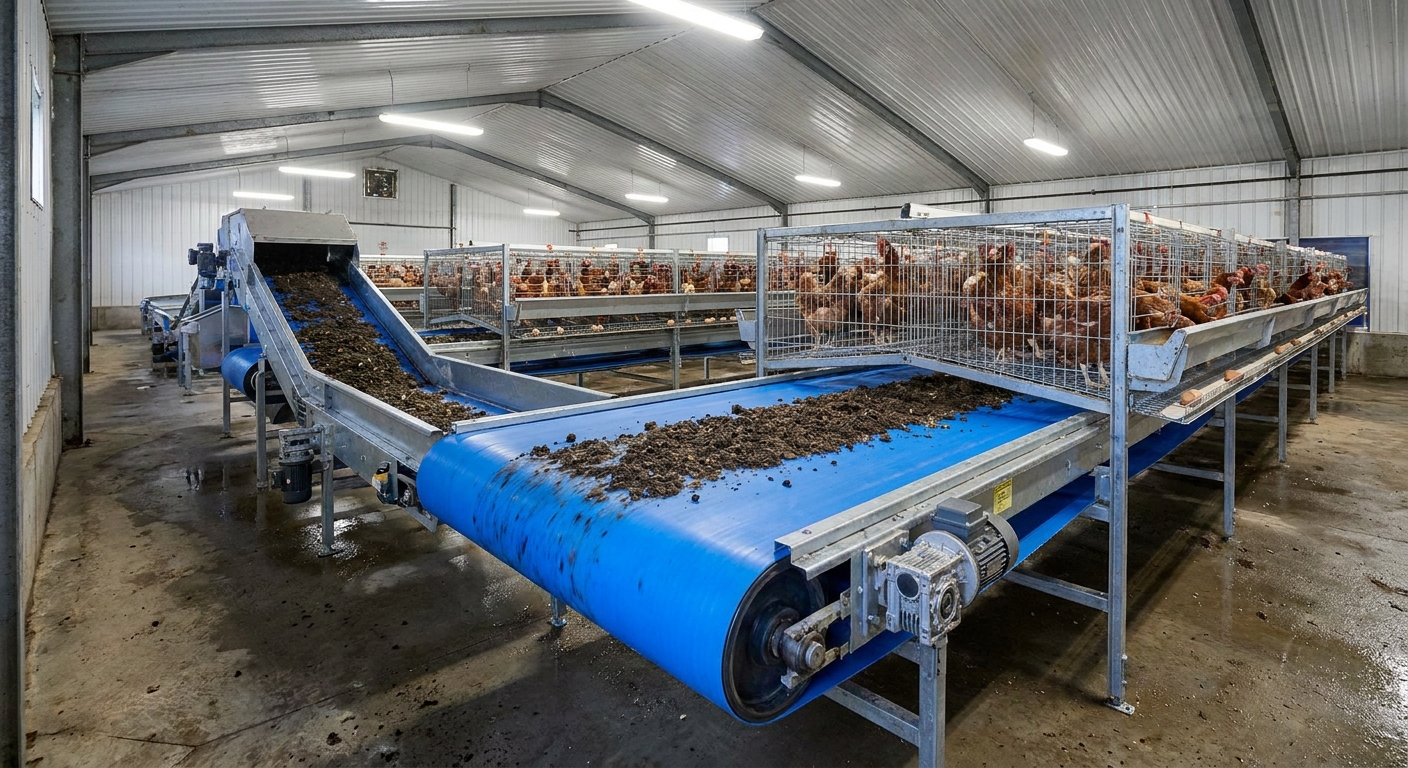
Managing bird waste requires automatic polypropylene conveyor belts positioned directly under each cage tier to clear droppings daily. This automated setup is crucial for modern chicken coop design philippines farms to keep the air clean and satisfy local environmental laws. If you let wet manure build up on the floor, high ammonia levels will quickly damage your birds’ lungs.
How do polypropylene manure belts operate?
Durable, slick polypropylene belts run directly beneath each cage tier, collecting droppings and carrying them to transverse scrapers at the end of the house. Think about it: removing manure daily keeps ammonia levels low and keeps your birds healthy.
- Slick surfaces prevent wet droppings from sticking or clogging.
- Pulls waste out of the building directly into transport trucks.
- Reduces ammonia concentrations to safe levels below 10 ppm.
Why does dry handling simplify local compliance?
The Philippine Department of Environment and Natural Resources (DENR) enforces strict rules against waste runoff and heavy odors. Here’s the kicker: dry waste handling systems prevent wet manure from soaking into local groundwater.
- Complies fully with strict local DENR environmental regulations.
- Keeps odors low, avoiding complaints from nearby neighborhoods.
- Produces dry manure that you can sell as valuable fertilizer.
Key Takeaway: Dry-belt manure removal keeps your air clean, protects bird health, and ensures your farm complies with local laws.
| Metric | Wet Scraper Pit | Dry Polypropylene Belt | |
|---|---|---|---|
| Ammonia Level | 25 – 45 ppm | < 10 ppm (Safe) | |
| Runoff Risk | High | Zero (Dry containment) | |
| Fertilizer Profit | Low (Diluted slurry) | High (Dry organic grade) |
Automated dry belt systems keep ammonia levels low and make local environmental compliance straightforward.
Why are modern climate control panels essential?
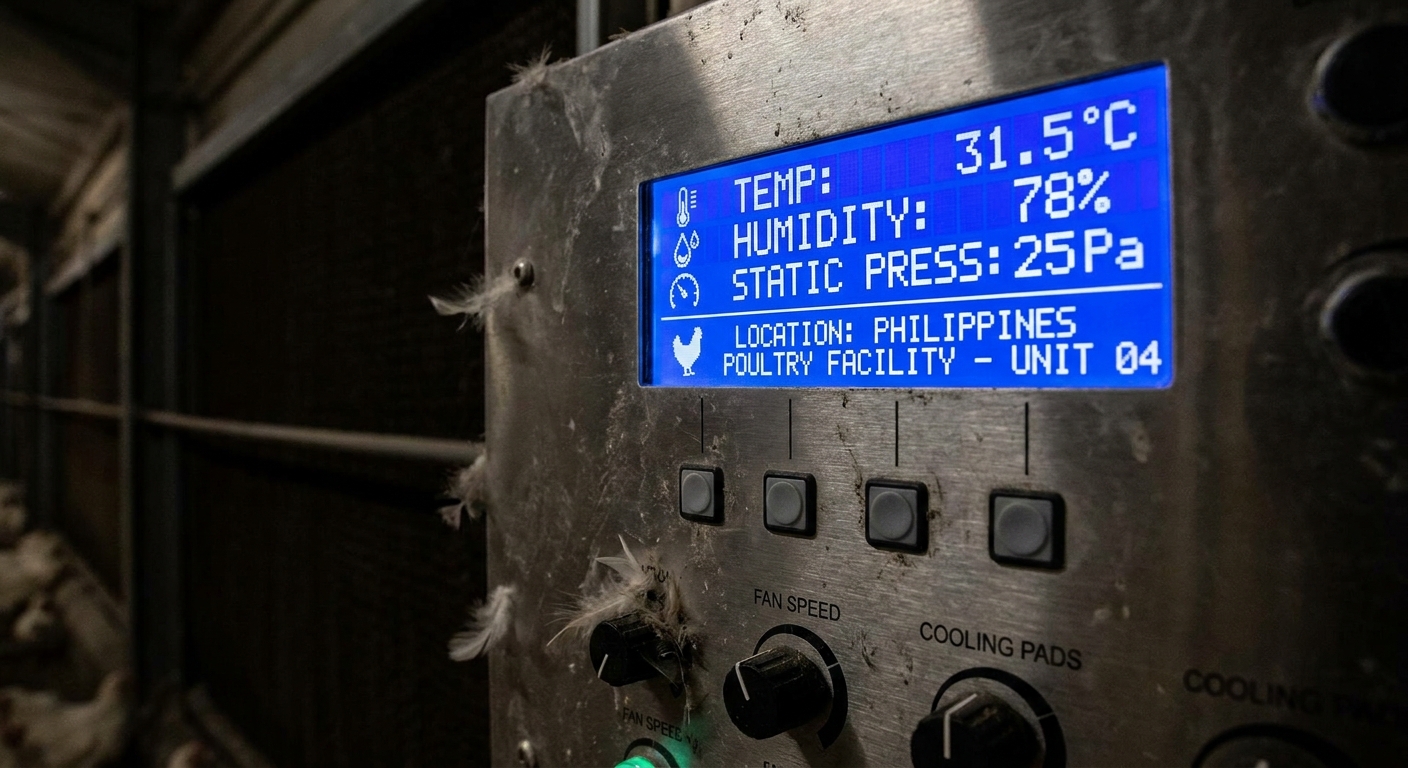
Modern climate control panels are essential because they automatically monitor and adjust your fans, cooling pads, and lights in real time. These smart units act as the nervous system of any successful chicken coop design philippines installation. When you automate these controls, you ensure your birds always live in their ideal climate zone.
How do smart controllers regulate your climate?
Temperature and humidity sensors placed throughout the house send continuous data to the main panel. Make no mistake: manual adjustments cannot keep up with rapid weather shifts or tropical storms.
- Adjusts exhaust fan speeds automatically to maintain static pressure.
- Turns cooling pumps on or off based on humidity levels.
- Saves energy by running equipment only when necessary.
Why is the backup power alarm system critical?
Smart controllers feature immediate alarm systems that alert you during power outages or water failures. This is critical: losing ventilation for just fifteen minutes can cause high-density flocks to suffocate.
- Triggers automatic transfer switches to start backup generators.
- Sends immediate mobile alerts to your on-duty managers.
- Monitors water consumption to detect line leaks early.
Key Takeaway: Installing a smart controller protects your flock from sudden weather changes and warns you of equipment failures.
| Controller Feature | Manual Switches | Smart Control Panel | |
|---|---|---|---|
| Response Time | Delayed (Requires staff) | Instantaneous (Automatic) | |
| Energy Efficiency | Low (Fans run constantly) | Optimized (Adjusts to needs) | |
| Alarm Integration | None | Real-time SMS and horn |
Automated control panels guarantee rapid climate corrections, protecting your flock during unexpected power outages.
How does modern housing improve your farm ROI?
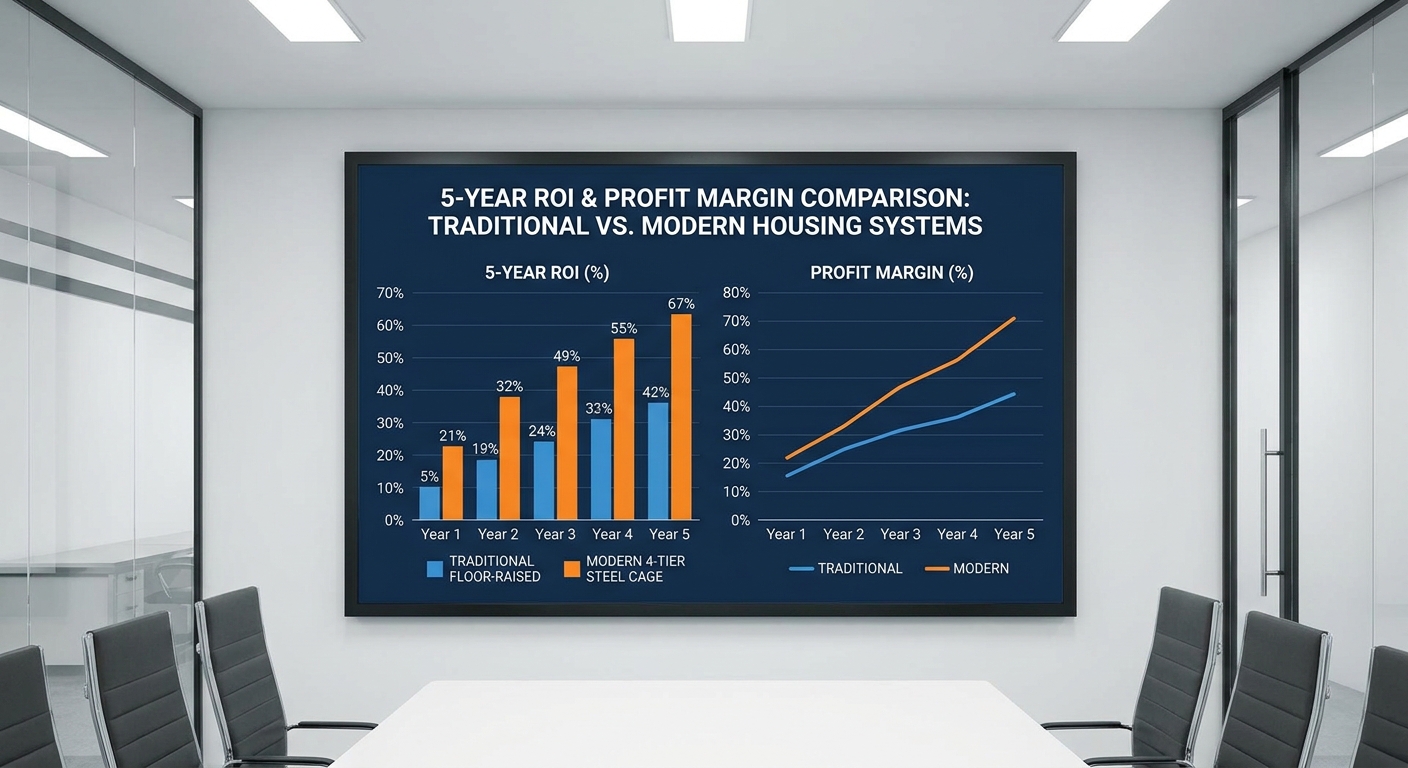
Modern automated steel broiler houses improve farm ROI by lowering bird mortality and boosting feed efficiency. Choosing a high-efficiency chicken coop design philippines model demands a larger initial investment, but it delivers much higher long-term profits. If you analyze the numbers, the operating savings will quickly pay back your setup costs.
How fast can you recover your investment?
An automated multi-tier broiler facility typically achieves a full return on investment within 3.5 to 4.5 years. Here is the path to success: lowering your feed conversion ratio from 1.7 to 1.5 saves millions of pesos each year.
- Reduces feed costs by up to 12 percent over the bird’s life.
- Lowers labor costs by letting one operator manage 40,000 birds.
- Minimizes mortality losses, keeping flock survival above 97 percent.
What are the long-term asset value benefits?
Prefabricated galvanized steel structures maintain their high structural value for over twenty-five years with minimal maintenance. But that is not all: steel coops hold their value far better than wooden buildings, which rot quickly.
- Hot-dip galvanized frames resist heavy corrosion and rust.
- Provides strong collateral value for future expansion loans.
- Lowers your annual building maintenance and repair costs.
Key Takeaway: Investing in modern steel coops secures higher bird performance, lowers operating costs, and ensures a faster return on investment.
| ROI Metric | Open Wooden House | Prefabricated Steel House | |
|---|---|---|---|
| Return Period | 6 – 8 Years | 3.5 – 4.5 Years | |
| Structural Lifespan | 8 – 12 Years | 25+ Years | |
| Operating Costs | High (Manual labor/feed waste) | Low (Automated systems) |
The financial evidence proves that automated steel poultry houses deliver superior profitability and long-term asset value.
How do you select the best poultry build partner?
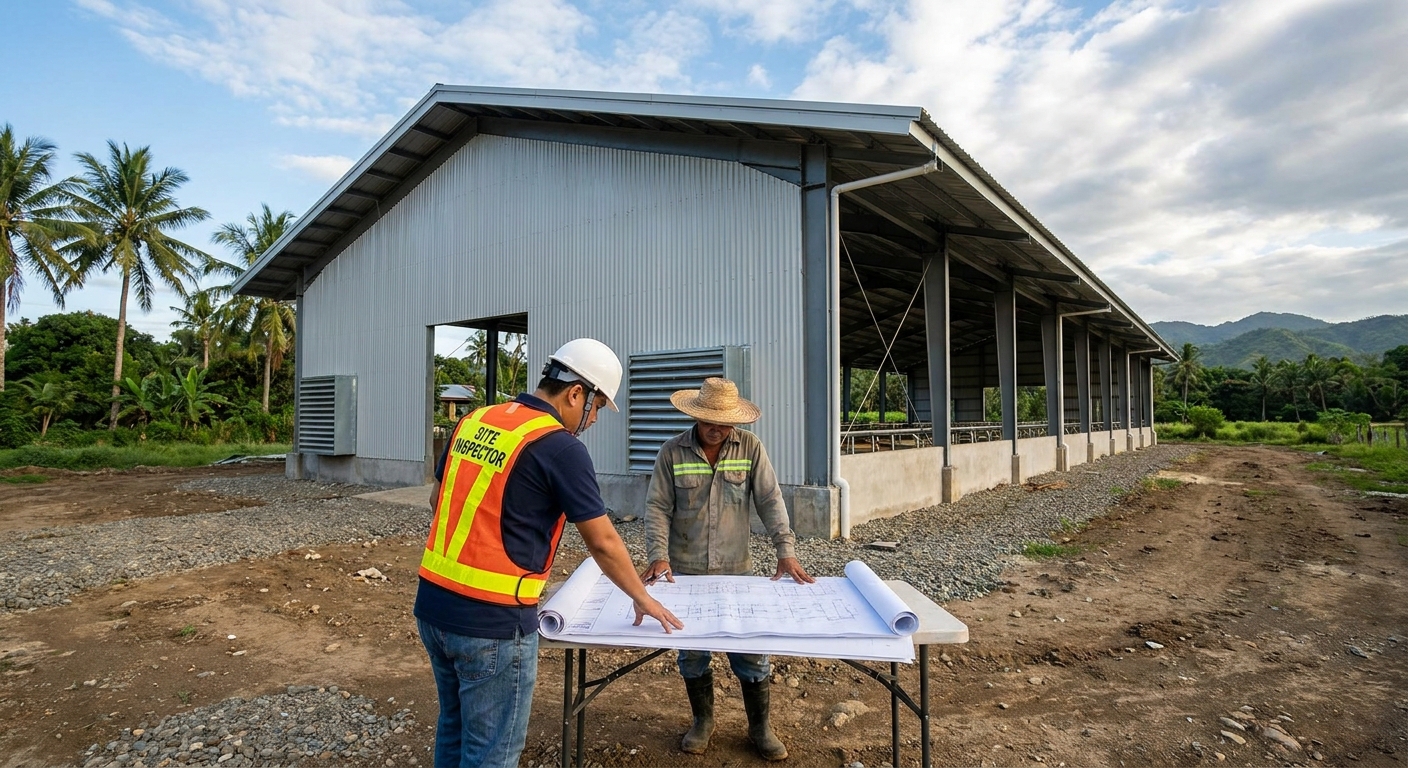
Selecting the best poultry build partner requires finding a certified steel fabricator with extensive agricultural experience. Working with an experienced team ensures that your chicken coop design philippines projects comply with strict local building codes. If you select a supplier who understands agricultural engineering, you will avoid expensive structural mistakes.
What engineering standards should you demand?
Your fabrication partner must use high-quality steel coatings and provide full structural engineering calculations. Keep this in mind: cheap steel will rust and sag quickly under high ammonia and tropical humidity. Feel free to check our professional background to understand how our engineering team delivers durable steel buildings that resist heavy corrosion.
- Requires a minimum galvanized coating of 275 g/m² to prevent rust.
- Provides certified wind-load calculations of up to 250 km/h.
- Supplies pre-engineered bolt connections for easy on-site assembly.
Why is complete package supply essential?
A great building partner delivers a complete package, including the steel frame, insulation panels, and hardware. But that’s not all: getting everything from one source prevents on-site delays and ensures all parts fit perfectly.
- Eliminates the hassle of dealing with multiple suppliers.
- Ensures insulation panels and wall frames fit together perfectly.
- Provides complete assembly guides and remote engineering support.
Key Takeaway: Partnering with a certified, single-source steel manufacturer keeps your project on schedule, on budget, and built to last.
| Evaluation Factor | Uncertified Suppliers | Experienced Partners | |
|---|---|---|---|
| Galvanized Coating | Under 120 g/m² (Rusts easily) | Over 275 g/m² (Highly durable) | |
| Engineering Proof | None provided | Certified wind load stamps | |
| Package Completeness | Structural frame only | Complete frame, panels, hardware |
Choosing an experienced partner ensures structural integrity and a smooth installation process on your farm.
Conclusion
Building a modern 60k-80k birds broiler house in the Philippines is a highly profitable investment when built with durable, prefabricated steel and automated cage systems. Transitioning to closed, climate-controlled steel structures helps poultry farmers overcome tropical heat stress, reduce bird mortality, eliminate high labor costs, and achieve straightforward environmental compliance. Partnering with a professional, factory-direct steel building manufacturer ensures your facility is engineered for the tropical climate and built for long-term durability.
From initial structural designs to installing ventilation, waste management, and automated feeding systems, our team delivers high-quality, pre-engineered steel buildings tailored for modern livestock farming. We are committed to empowering poultry farmers across the Philippines with durable structures that maximize yield and optimize efficiency. To receive a custom structural design and cost estimate for your farm project, contact us today to connect with our expert agricultural engineers.
Get a Custom Chicken Coop Design Philippines Quote Today!
Email:sales@showhoo.com.cn
Phone/WhatsApp: + 86 186 7895 5927
Frequently Asked Questions
Can I convert an existing wooden open-sided house into a closed steel cage system?
Yes, you can convert existing footprints, but it usually requires reinforcing foundations and replacing old wood structures with steel frames to handle the weight of multi-tier cages. Wooden frames cannot support the heavy loads of modern 4-tier cage systems and automatic manure machinery. Additionally, closed systems must be airtight to maintain the high static pressure needed for tunnel ventilation, which is very difficult to achieve with old, porous wood walls.
What’s the best cage tier configuration for Filipino farmers with limited land?
A 4-tier vertical cage configuration is the best option for maximizing bird density on limited land footprints in the Philippines. Going up to 4 tiers lets you scale capacity to 80,000 birds without buying more land, while keeping the building ceiling height at a manageable 4.0 meters. Sizing for 4 tiers also ensures that ventilation fans can maintain uniform air speed past every tier without creating hot air pockets near the ceiling.
How do I know if my site has adequate ventilation clearance for a closed poultry house?
Your poultry house must have at least 15 to 20 meters of clear, unobstructed space on all sides to allow proper airflow into the cooling pads and out of the exhaust fans. Nearby buildings, tall trees, or steep hills can block air from reaching the cooling pad intakes or cause exhaust air to recirculate back into the house. Having our engineers review your site layout during the initial design phase is the best way to ensure optimal ventilation performance.