
Selecting hot-dip galvanizing over industrial paint typically provides superior long-term corrosion resistance and physical protection for structural frameworks. Designing modern commercial layouts requires careful consideration of structural longevity and aesthetic impact, as exposure to humidity, dust, and physical wear can degrade structural elements. Left unprotected, bare metal quickly oxidizes, leading to structural failures and a deteriorated aesthetic that damages your brand’s credibility. Investing in a galvanized vs painted steel showroom is widely considered a highly effective method to solve these structural issues while delivering an impressive visual space.
Is rust inevitable in a galvanized vs painted steel showroom?
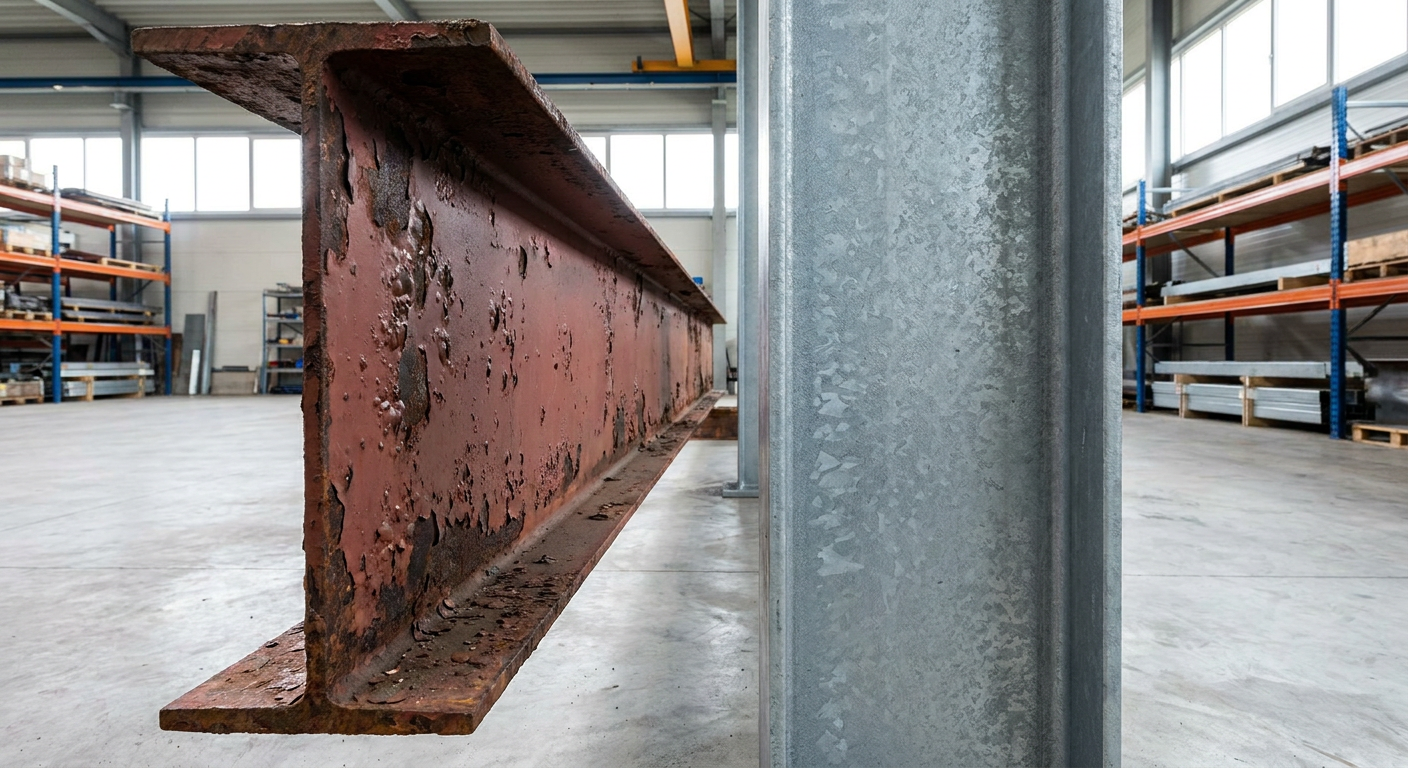
Preventative surface treatments generally make structural oxidation highly preventable rather than inevitable. When planning a sustainable galvanized vs painted steel showroom , selecting a robust protective finish is critical to prevent moisture from initiating the rusting process. Uncontrolled rust can quickly spread across structural columns, weakening joints and threatening the building’s physical integrity.
Applying an advanced coating standard practice protects your investment from chemical degradation over time. Utilizing zinc-rich coatings or multi-layered barrier paints typically isolates raw iron elements from ambient humidity.
The physical mechanics of steel oxidation
Oxygen and moisture routinely interact with unprotected iron atoms, creating hydrated iron oxide, which we recognize as rust. This chemical breakdown leads to flaking, which continuously exposes fresh steel underneath to further environmental degradation. In busy commercial spaces, this process can compromise aesthetic standards and structural margins.
Here is why:
- Oxygen exposure accelerates in high-humidity indoor zones.
- Condensation on structural columns provides the fluid medium for electron transfer.
- Exposed raw connections represent the primary site for initial spot corrosion.
How do protective barriers prevent degradation?
Barrier protection typically works by isolating the metallic substrate from external corrosive fluids. Commercial finishes block atmospheric reactants, preventing moisture and oxygen from making contact with the underlying load-bearing members.
Think about it: If your coating fails, the corrosive agents immediately exploit the breach. Therefore, ensuring high adhesion strength is essential to maintain structural reliability.
Key Takeaway: Selecting a highly adhesive, chemically stable barrier is crucial to guarantee that your structural columns remain protected against structural rust.
| Metric | Hot-Dip Galvanizing | Industrial Paint Coating | |
|---|---|---|---|
| Rust Prevention | Sacrificial & barrier protection | Purely barrier protection | |
| Risk of Undercutting | Extremely low due to zinc patina | High if paint layer is scratched |
This comparison highlights the fundamental protective differences between physical barrier coats and metallurgical zinc layers.
How is hot-dip used in a galvanized vs painted steel showroom?
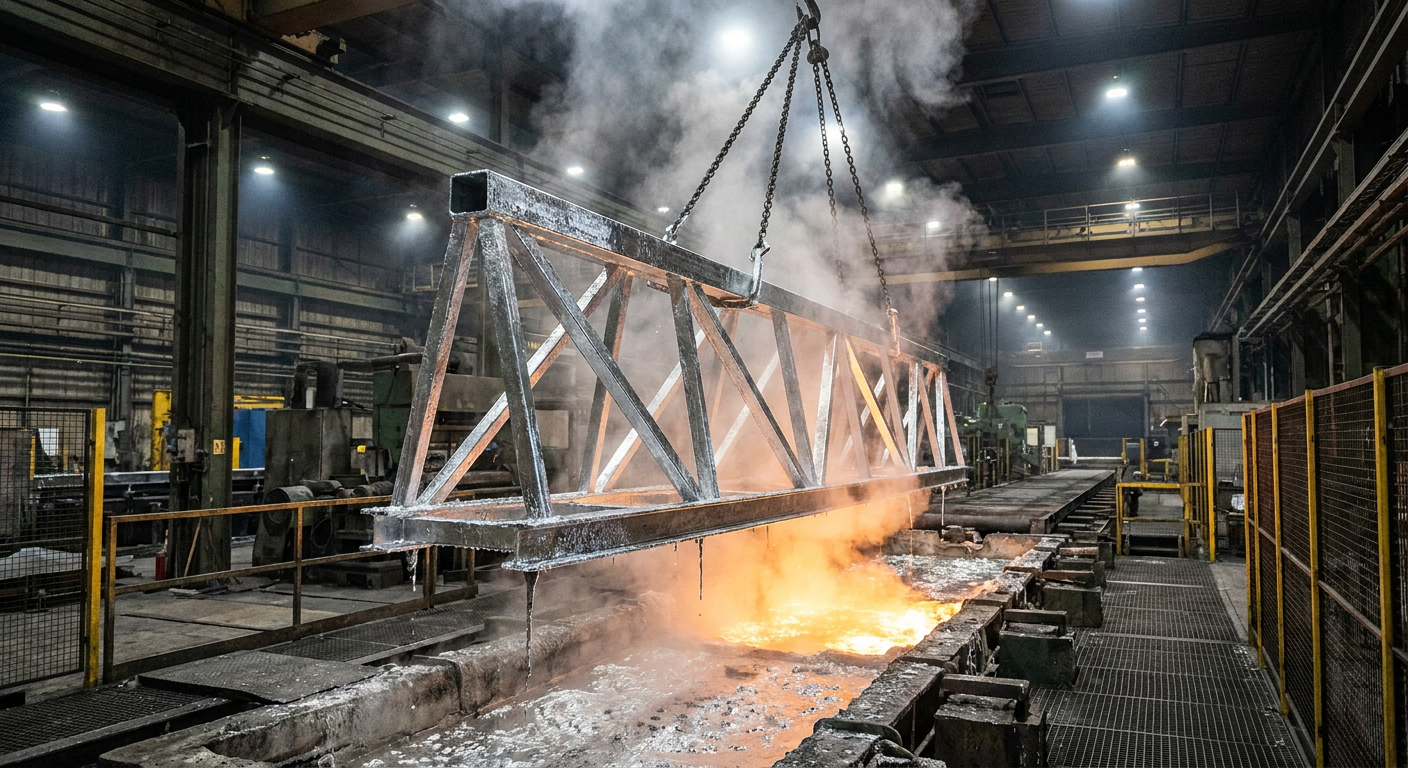
Hot-dip galvanizing typically involves immersing prepared steel elements into a bath of liquid zinc at temperature levels around 450 degrees Celsius. This specialized dipping process is highly recommended for building a galvanized vs painted steel showroom that requires extreme durability. This manufacturing technique ensures a consistent, high-density alloy shield that protects every millimeter of the treated metal.
The liquid zinc reacts with the steel, creating multiple metallic layers that are chemically fused to the core metal. This process eliminates structural weak spots and delivers long-term peace of mind.
The science of zinc-iron alloy layers
This thermal immersion process produces a series of distinct zinc-iron alloy layers that are physically harder than the structural steel itself. The outer layer consists of pure zinc, providing a dense, impact-absorbing surface that resists abrasion.
Why does this matter?
- Alloy bonding offers excellent resistance against mechanical scraping.
- The intergranular integration ensures that the coating cannot delaminate.
- The sacrificial zinc protects exposed metal if deep scratches occur.
What standards regulate the coating quality?
Strict international standards generally dictate the minimum thickness and quality of batch-galvanized coatings. Compliance with specifications like BS EN ISO 1461 guarantees consistent protection levels across all processed components.
Look: By following these standardized metrics, engineers can confidently design high-load structures knowing their corrosion protection is highly verified.
Key Takeaway: Adhering to verified international galvanizing standards ensures your steel frames benefit from uniform, reliable thickness and predictable service lives.
| Quality Parameter | Batch Hot-Dip Galvanizing | Spray Paint Coating | |
|---|---|---|---|
| Regulation Standard | BS EN ISO 1461 | ISO 12944 | |
| Bond Strength | Metallurgical bond (highly durable) | Mechanical adhesion (susceptible to peeling) |
Evaluating standard compliance helps clarify why thermal zinc coatings provide unmatched bond durability.
Is paint reliable for a galvanized vs painted steel showroom?
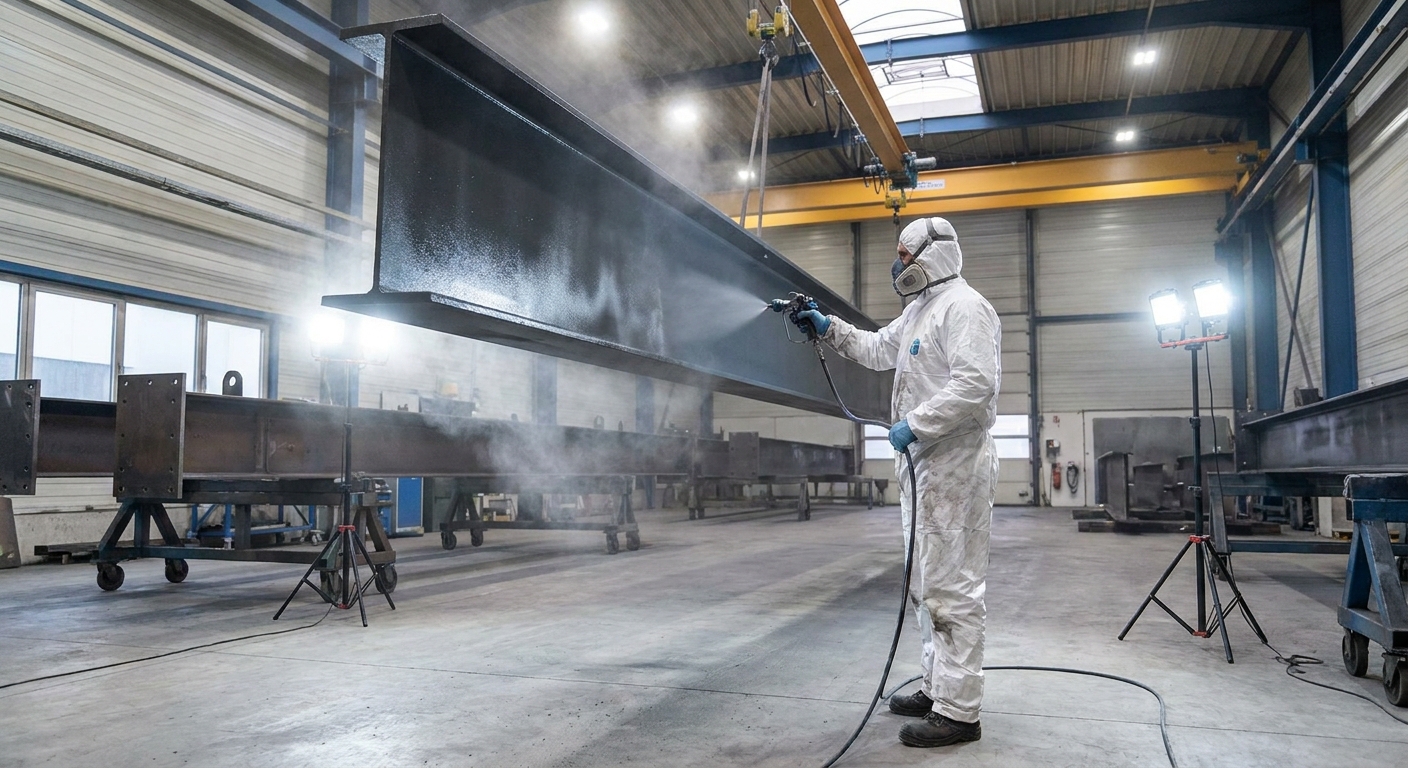
Industrial paint systems are generally considered highly reliable, provided they are applied over properly prepared surfaces in controlled environments. When designing a high-end galvanized vs painted steel showroom , paint offers superior visual customization and color-matching capabilities. However, a painted finish remains susceptible to chipping and scratching if the surface experiences impact.
To ensure long-term performance, multiple paint layers including primers and high-build polyurethane topcoats are typical requirements. This complex layering system helps maximize the protection of structural columns.
Understanding organic barrier layers
Liquid industrial coatings utilize polymer binders to create a dry film that resists water molecules. High-performance epoxies generally serve as prime coats, while decorative topcoats offer UV protection.
Think about it:
- Polyurethane topcoats retain color depth under indoor showroom spotlights.
- Epoxy primers provide excellent initial chemical adhesion to sandblasted steel.
- Multi-coat systems offer improved defense against minor moisture exposure.
Why does polymer adhesion occasionally fail?
Paint relies on a mechanical bond, which is highly vulnerable to surface contaminants like mill scale, oils, or dust. If the initial steel preparation is inadequate, the paint layer can delaminate, leaving the structural core highly vulnerable.
But that is not all. Even minor structural vibrations can cause hairline cracks in rigid epoxy coats, allowing moisture to seep underneath the paint layer.
Key Takeaway: Successful painted finishes depend heavily on the quality of the blast cleaning and the application environment to prevent premature peeling.
| Adhesion Properties | Epoxy & Polyurethane Paint | Hot-Dip Galvanized Zinc | |
|---|---|---|---|
| Bond Mechanism | Mechanical surface keying | Metallurgical alloy fusion | |
| Damage Consequence | Creeping rust underneath the paint | Self-healing sacrificial zinc action |
These technical characteristics explain why physical paint barriers demand strict quality control during their application.
Which resists storms in a galvanized vs painted steel showroom?
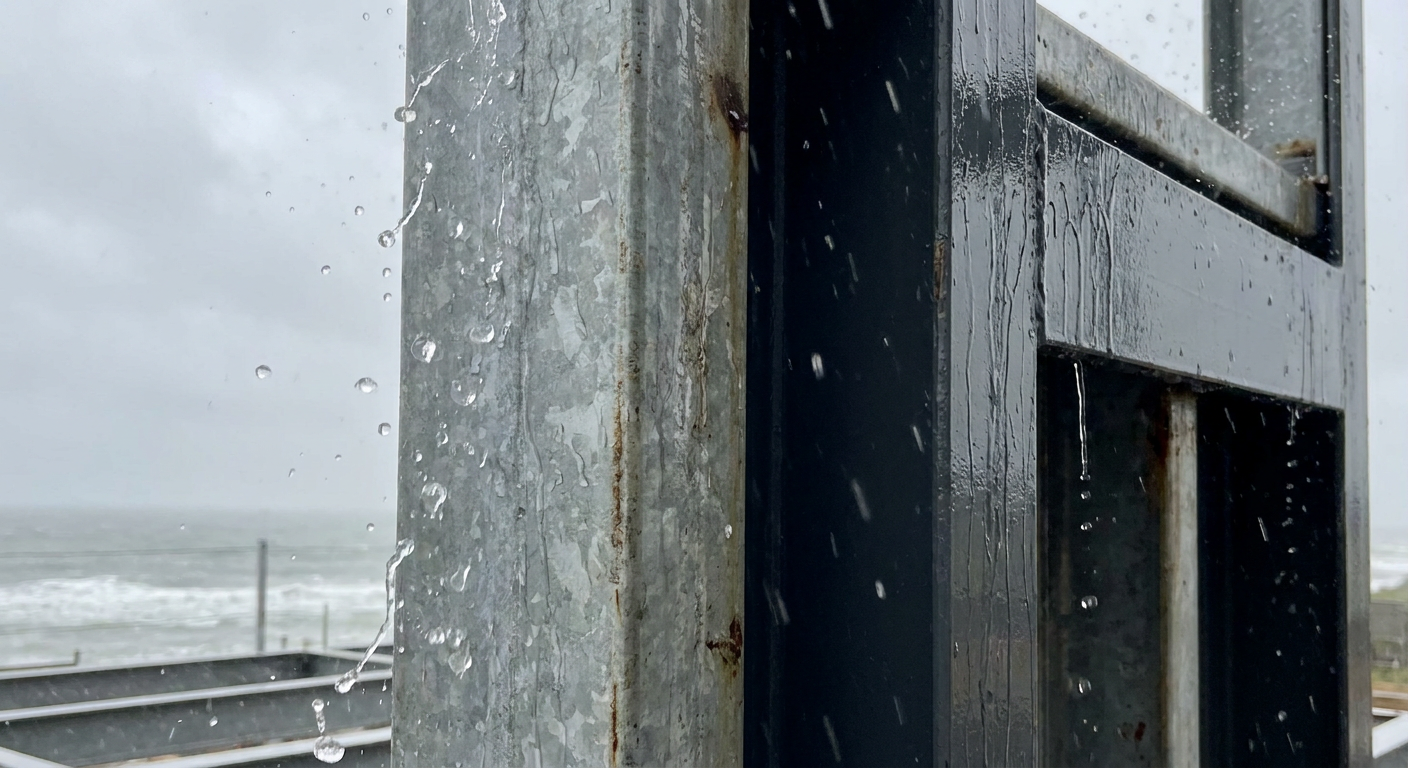
Hot-dip galvanizing routinely outperforms standard paint systems under harsh storm conditions and high-humidity exposure. For any galvanized vs painted steel showroom built in coastal or high-precipitation regions, water resistance is a critical priority. Unlike paint, which can blister when exposed to constant moisture, a zinc patina actually hardens when exposed to natural weather elements.
The zinc coating reacts with rain and atmospheric carbon to form a tough zinc carbonate barrier. This naturally protective layer prevents weather elements from degrading the structural core.
How does intense heat affect coatings?
Solar radiation and high temperatures can cause organic paint binders to dry out, leading to cracking and fading. In contrast, galvanized zinc remains thermally stable up to 200 degrees Celsius, which is far beyond natural atmospheric limits.
Look:
- UV rays break down the chemical bonds in standard paint polymers.
- Thermal expansion can cause paint layers to split at welded steel joints.
- Galvanized steel maintains its physical properties regardless of extreme solar exposure.
What happens during prolonged heavy rain?
Continuous rain can penetrate minor micro-cracks in painted steel, leading to hidden corrosion under the surface. Galvanized steel, however, utilizes sacrificial protection, meaning the zinc actively corrodes to protect the steel even if the moisture penetrates the surface layer.
Why does this matter? Your building’s structural integrity remains secure even during seasonal flooding or extended tropical storms.
Key Takeaway: Specifying a galvanized structure is highly recommended if your showroom project faces high humidity or seasonal storms.
| Weather Element | Galvanized Patina Performance | Painted Surface Performance | |
|---|---|---|---|
| UV Radiation | Highly stable, no chemical breakdown | Prone to fading, chalking, and micro-cracking | |
| High Humidity | Forms protective zinc carbonate | Susceptible to blistering and delamination |
This environmental comparison demonstrates why metallurgical zinc coatings are preferred for buildings facing volatile outdoor climates.
What handles impact in a galvanized vs painted steel showroom?
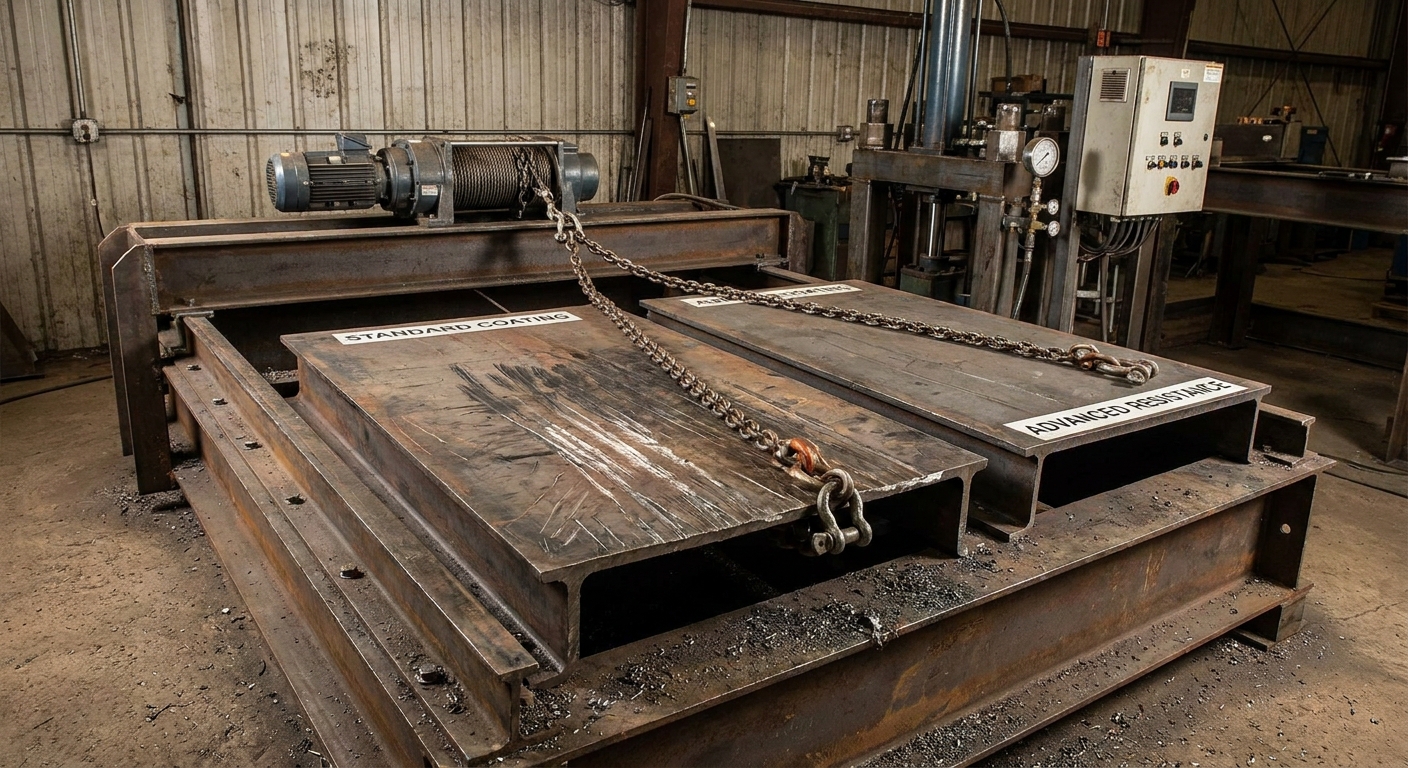
Zinc coatings typically handle heavy impacts and surface friction much better than commercial paints. When evaluating a galvanized vs painted steel showroom , transport and assembly wear represent major risks to the structural framework. While painted surfaces are easily damaged by rigging chains and forklifts, galvanizing resists gouging due to its exceptional hardness.
The unique alloy layers formed during galvanizing act as an energy-absorbing shield. This protects the columns during assembly, reducing the need for costly touch-ups.
Mitigating damage during transit and assembly
Shipping structural beams to the construction site often results in metal-on-metal friction. While painted finishes frequently chip during transit, galvanized components generally arrive at the job site virtually intact.
The best part?
- Rigging straps rarely damage the tough galvanized alloy surface.
- On-site welding zones require minimal localized touch-up compared to painted beams.
- Structural components can be handled quickly without specialized soft slings.
Can your columns withstand daily mechanical wear?
Showroom spaces often experience high foot traffic, moving displays, and occasional equipment impacts. Painted columns in high-traffic zones typically require constant repainting to hide scratches and chips.
Here is why: Zinc coatings are self-healing. If a scratch exposes the steel, the surrounding zinc naturally corrodes to protect the exposed area.
Key Takeaway: Choosing galvanizing is strongly advised for heavy structural frames to eliminate touch-up costs caused by shipping and construction damage.
| Durability Variable | Hot-Dip Galvanized Beams | Painted Steel Beams | |
|---|---|---|---|
| Scratch Resistance | High (harder than structural steel) | Moderate (susceptible to sharp objects) | |
| Assembly Repair | Rarely required after erection | Typically required to patch installation chips |
Understanding physical wear resistance helps developers select coatings that reduce long-term maintenance labor.
Which covers joints in a galvanized vs painted steel showroom?
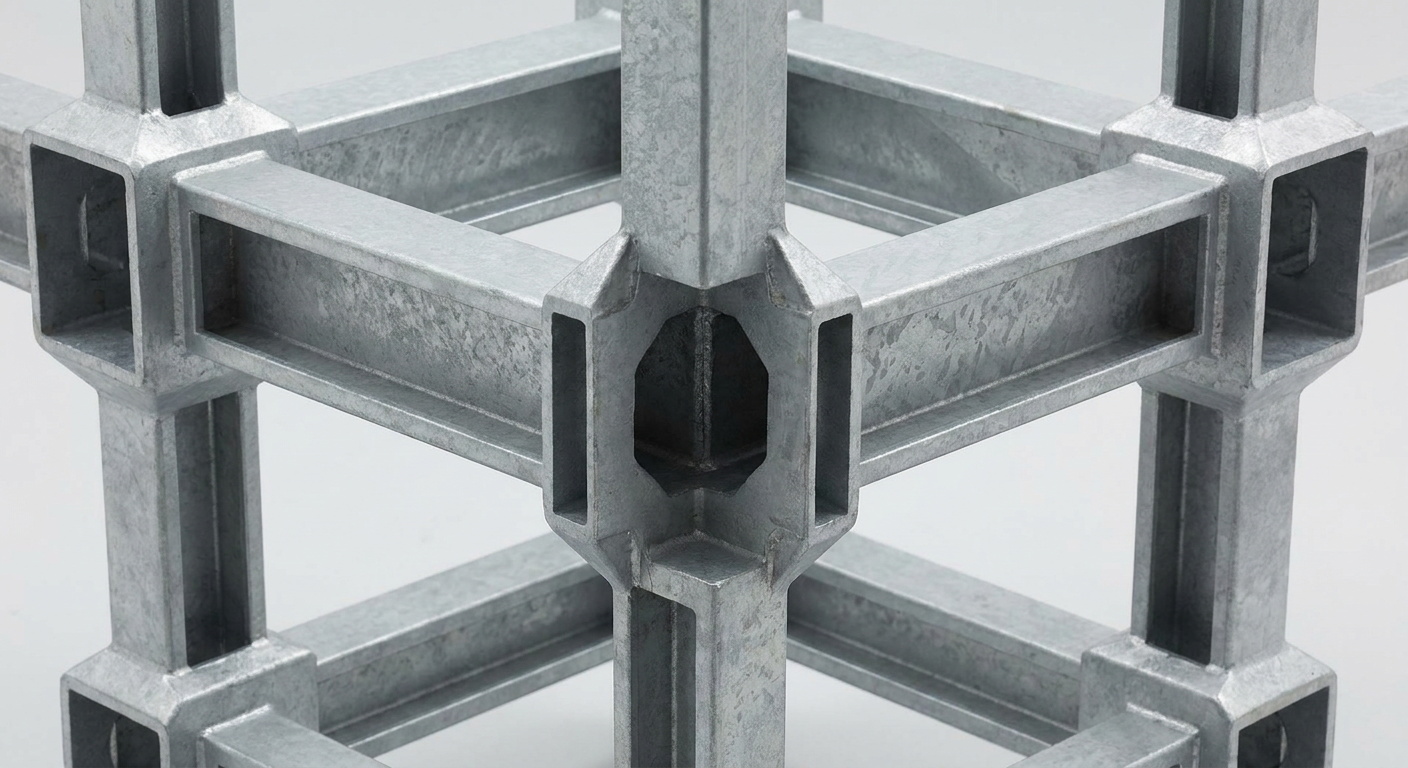
Hot-dip galvanizing provides complete structural coverage, including hollow areas and complex welded joints, which spray painting cannot achieve. When fabricating a galvanized vs painted steel showroom with complex architectural curves, complete coverage is essential. Spray guns only apply paint to visible surfaces, leaving internal hollow sections and tight angles completely unprotected.
Dipping the entire steel frame into liquid zinc ensures immense coverage across joints, internal voids, and threads. This prevents internal rusting that could cause structural failure.
Eliminating hidden structural vulnerabilities
Hollow structural sections are highly popular in modern commercial buildings, yet they are extremely difficult to paint internally. Moisture can collect inside these tubes, causing rust to grow unseen from the inside out.
Look:
- Liquid zinc flows freely into and out of hollow sections during the dipping process.
- Internal welds receive the same protective thickness as external surfaces.
- Unseen interior corrosion is virtually avoided, protecting the structure’s integrity.
How does immersion resolve application mistakes?
Manual paint application depends heavily on the operator’s skill, making missed spots and uneven coating thicknesses common occurrences. Galvanizing is a self-controlling process where the zinc-steel reaction only stops when the metallurgical bond is complete.
But that is not all. The liquid zinc naturally adheres to complex edges, threads, and recesses with the same high-density coverage as flat plates.
Key Takeaway: Immersing your structural steel is the most reliable way to guarantee that hidden joints and hollow interiors are perfectly coated.
| Geometric Area | Hot-Dip Zinc Coverage | Spray Paint Coverage | |
|---|---|---|---|
| Internal Hollows | Full, uniform coverage | Typically uncoated or poorly covered | |
| Sharp Edges & Welds | Naturally thicker coating build-up | Often thinner due to surface tension run-off |
This coverage breakdown shows why complex architectural steel geometries benefit from thermal dipping rather than hand spraying.
What is the true cost of a galvanized vs painted steel showroom?
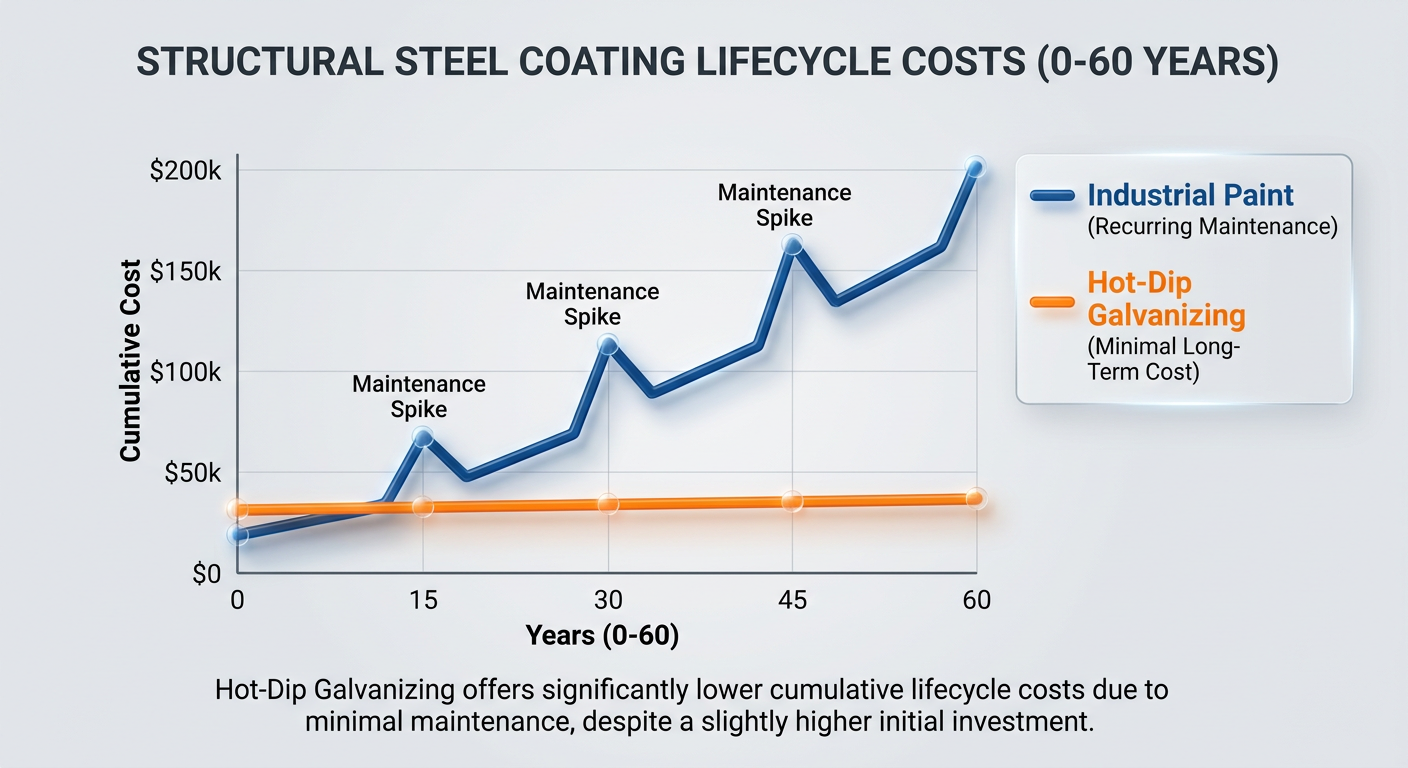
The true cost of a coating system be calculated over the entire service life of the building, where galvanizing routinely proves to be the most economical choice. For any commercial galvanized vs painted steel showroom project, the initial application cost is only a small part of the long-term budget. Painted systems typically require major repainting every fifteen years, which quickly adds up.
Galvanized steel often remains maintenance-free for over fifty years in normal conditions. This long life-cycle eliminates recurring labor and material expenses.
Measuring the upfront labor and material costs
While paint systems might have a slightly lower initial cost for simple steel shapes, complex fabrications require intensive manual labor to paint. The high efficiency of automated dipping often makes galvanizing highly competitive even on day one.
Think about it:
- Manual shop painting requires multiple drying cycles, which can delay projects.
- Galvanizing is independent of weather, allowing fast turnaround times.
- The upfront investment in zinc pays for itself by eliminating future repair downtime.
Why does recurring maintenance drain your budget?
Maintaining painted steel in an active commercial showroom requires closing the facility, moving inventory, and paying for professional painting crews. These operational disruptions can cost far more than the actual paint itself.
Why does this matter? A maintenance-free galvanized structure allows your business to operate continuously without interruption or unexpected facility management costs.
Key Takeaway: Calculating whole-life costs over a thirty-year span typically reveals that paint systems are significantly more expensive than hot-dip galvanizing.
| Cost Phase | Hot-Dip Galvanizing | High-Performance Paint System | |
|---|---|---|---|
| Initial Investment | Moderate | Low to Moderate | |
| 30-Year Maintenance Cost | Zero | High (requires multiple recoats) |
This financial comparison explains why experienced project managers prioritize life-cycle value over initial coating costs.
How do aesthetics work in a galvanized vs painted steel showroom?
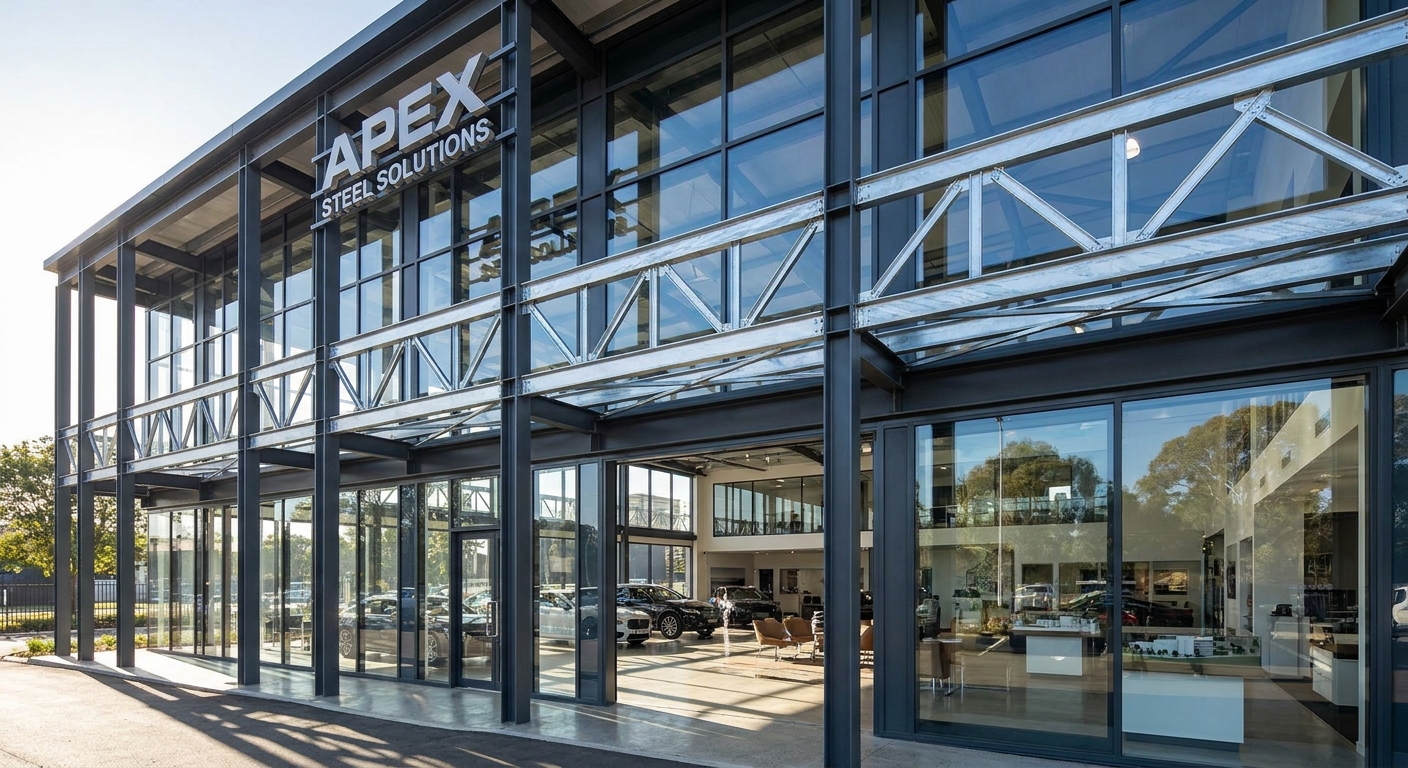
Paint is the ideal choice for bright colors and corporate branding, while galvanizing offers a modern, industrial silver-grey finish. When planning a galvanized vs painted steel showroom, the structural frame plays a key role in the overall architectural design. While some brands prefer the bright colors that high-gloss paints provide, others appreciate the raw, industrial aesthetic of galvanized steel.
Each option has its place, and the choice depends on your brand’s style and visual goals. For example, modern industrial designs often highlight galvanized trusses alongside matte black painted columns.
Creating a modern, high-end visual statement
High-end automotive showrooms and retail spaces often use exposed steel to convey strength and sophistication. A pristine painted finish can match your corporate color palette, creating a seamless visual brand identity.
The best part?
- Paint allows you to use specific brand colors across all structural columns.
- Gloss, satin, and matte finishes let you control how light reflects off the steel.
- Smooth surfaces are easy to dust and clean, maintaining a high-end look.
Can you successfully blend both finishes?
A hybrid design, known as a duplex system, combines paint or powder coating over a galvanized base. This approach provides the exceptional corrosion resistance of zinc along with the color options of paint.
Look: This combination extends the lifespan of both coatings, ensuring your showroom remains protected and visually appealing for decades.
Key Takeaway: Combining both coatings in a duplex system is highly recommended if you want specific corporate colors without sacrificing corrosion protection.
| Aesthetic Option | Hot-Dip Galvanized Zinc | Premium Industrial Paint | |
|---|---|---|---|
| Color Variety | Matte grey patina (industrial look) | Virtually unlimited RAL color options | |
| Texture Finish | Crystalline, textured spangles | Smooth, uniform gloss or matte |
This stylistic comparison shows how each coating can be used to meet specific branding and architectural goals.
Which option is greener for a galvanized vs painted steel showroom?
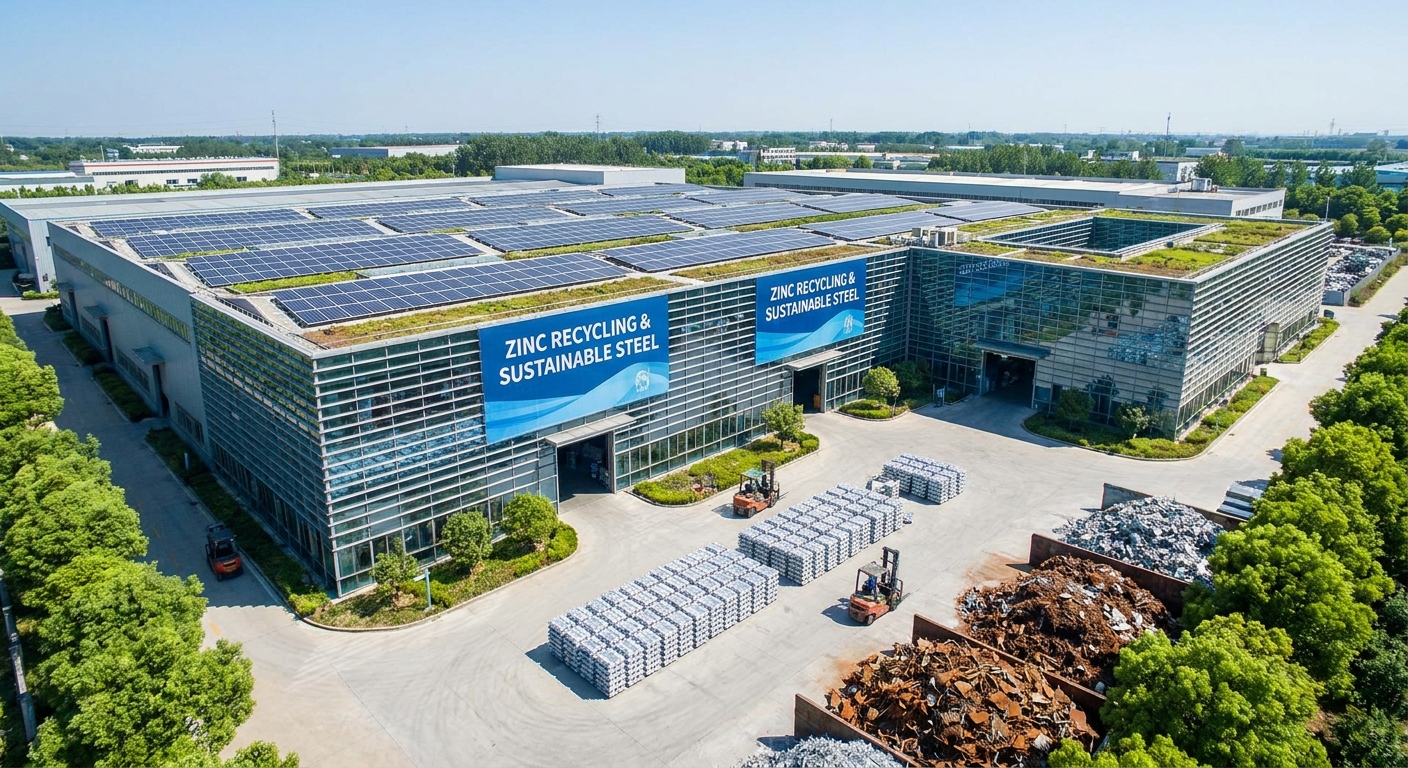
Hot-dip galvanizing is generally more eco-friendly than solvent-based paint because zinc is naturally occurring, highly recyclable, and produces minimal waste. When building a sustainable galvanized vs painted steel showroom , choosing low-impact materials is a key part of modern green building practices. While many commercial paints release volatile organic compounds (VOCs) during application and drying, the galvanizing process keeps emissions to a minimum.
The long life-cycle of galvanized steel also means fewer resources are used over the building’s lifespan. This helps lower the overall environmental footprint of your commercial project.
Assessing volatile organic compound emissions
Traditional liquid paints can contain solvents that release VOCs into the atmosphere, which can affect indoor air quality. This off-gassing is a major concern for developers aiming for green building certifications like LEED.
Why does this matter?
- Galvanizing is an inorganic process that does not release VOCs.
- Zinc is a natural element that is essential for biological life.
- Eliminating solvent emissions helps create a healthier workspace for your staff and visitors.
How do life-cycle carbon footprints compare?
The carbon footprint of paint systems increases over time due to the energy and materials needed for recurring maintenance. Galvanizing is a one-time process that lasts for decades, making it a highly sustainable choice over the long term.
Think about it: By choosing a coating that does not require regular replacement, you save energy, reduce transport emissions, and keep waste out of landfills.
Key Takeaway: Choosing galvanized steel is a highly effective way to support your brand’s green building goals and lower your project’s carbon footprint.
| Environmental Metric | Hot-Dip Galvanized Zinc | Solvent-Based Paint System | |
|---|---|---|---|
| VOC Off-Gassing | Zero emissions | Moderate to High during application | |
| Material Circularity | 100% recyclable without loss of quality | Non-recyclable polymer film |
This environmental comparison highlights why green building standards favor durable, fully recyclable metal treatments.
How do you specify a galvanized vs painted steel showroom?
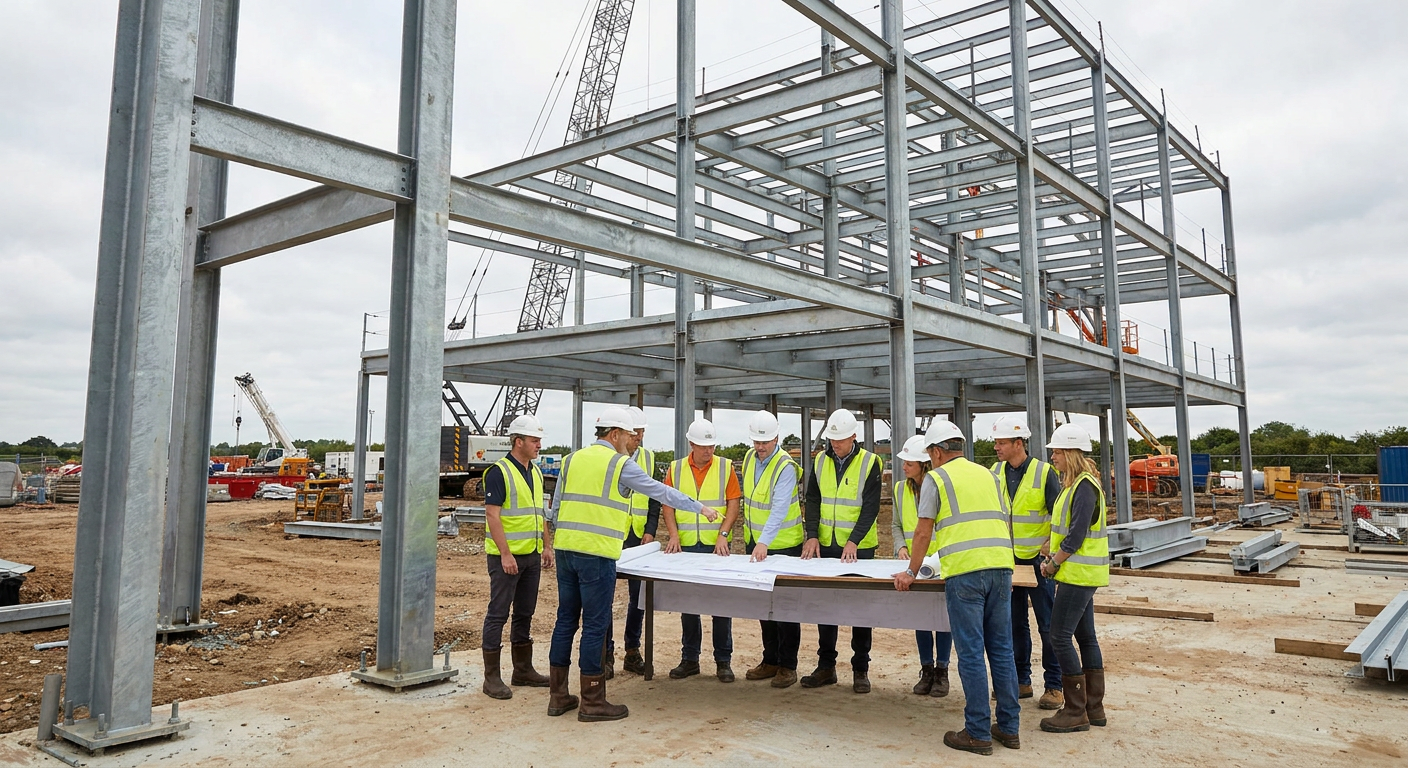
Specifying the right coating involves assessing the showroom’s location, budget, and long-term maintenance plans. When planning a galvanized vs painted steel showroom, working closely with structural engineers early in the process is essential to select the best system. While heavy industrial projects often favor galvanizing, high-end retail designs may benefit more from painted finishes or hybrid duplex coatings.
Getting expert advice early helps you avoid unexpected costs and ensures your steel structure performs well for decades.
Defining your mechanical and exposure limits
Start by evaluating the corrosivity of your project’s location using the ISO 12944 classification system. Highly corrosive coastal areas typically require the robust sacrificial protection of hot-dip galvanizing to prevent rust.
Look:
- Indoor showrooms with climate control can use high-quality paint systems.
- Open-air or partially exposed structures benefit most from galvanized finishes.
- High-traffic areas should use impact-resistant zinc coatings to prevent scratching.
Establishing a reliable quality control checklist
Ensure your project specifications require certified applicators who follow international quality standards. This quality control step is essential to guarantee the durability and performance of your chosen finish.
But that is not all. We strongly advise performing regular dry-film thickness checks to ensure your coatings meet all technical requirements before assembly begins.
Key Takeaway: Setting clear quality standards during the design phase is essential to ensure your steel structure remains durable and visually appealing.
| Project Variable | Choose Hot-Dip Galvanizing | Choose Premium Painted Systems | |
|---|---|---|---|
| Corrosion Risk | High (coastal, humid, industrial) | Low to Moderate (indoor, dry climates) | |
| Visual Goals | Raw industrial look, silver-grey finish | Specific brand colors, smooth finishes |
This practical checklist helps engineers select the ideal coating based on environmental conditions and design requirements.
Conclusion
Choosing between galvanizing and paint is a key engineering decision that affects your showroom’s durability, appearance, and lifecycle costs. While paint offers excellent styling and branding flexibility, hot-dip galvanizing provides unmatched physical protection and corrosion resistance. To explore high-quality custom structural steel showrooms or to get expert advice on the best coating system for your next commercial project, contact us today . Our experienced engineering team is ready to help you design a durable, high-performing showroom that stands out in your market.
Choose the Best Showroom Steel Finish—Contact Us Today !
Email:sales@showhoo.com.cn
Phone/WhatsApp: + 86 186 7895 5927
FAQ
Can I paint over galvanized steel?
Yes, you can successfully apply paint over a galvanized surface using a duplex coating system. This hybrid approach combines the exceptional corrosion resistance of zinc with the styling flexibility of paint, extending the overall lifespan of both coatings.
What’s the best coating for coastal environments?
Hot-dip galvanizing is generally the most effective choice for high-salinity coastal areas. The zinc coating provides sacrificial protection that resists saltwater corrosion, while standard paints are more prone to blistering and peeling in humid, salty air.
How do I know if my steel structure needs galvanizing?
You should specify galvanizing if your building faces high humidity, mechanical wear, or requires a maintenance-free lifespan of over fifty years. If your project is located indoors with climate control and requires specific brand colors, a premium painted finish may be more suitable.
Can I galvanize steel after it has been fabricated?
Yes, batch hot-dip galvanizing is routinely performed after all cutting, welding, and drilling are complete. This sequence ensures that all joint details, internal hollows, and cut edges receive a uniform protective coating.