
Investing in a facility based solely on your current plane often leads to immediate regret when you realize the space lacks room for maintenance or a future upgrade. A standard footprint might fit a small piston single today, but it offers zero “wiggle room” for growth or basic maneuvering.
Imagine the frustration of purchasing a high-performance turboprop only to find the wingspan is inches too wide for your door. This lack of foresight leads to expensive retrofits, the need for secondary leases, or the forced sale of a premier airport location.
By analyzing modern aviation trends and structural engineering requirements, you can calculate the optimal aircraft hangar size by balancing wingspan, tail height, and multi-use functionality. Showhoo provides clear-span steel structures that ensure your asset remains valuable and functional for decades.
Why is current aircraft hangar size often insufficient?
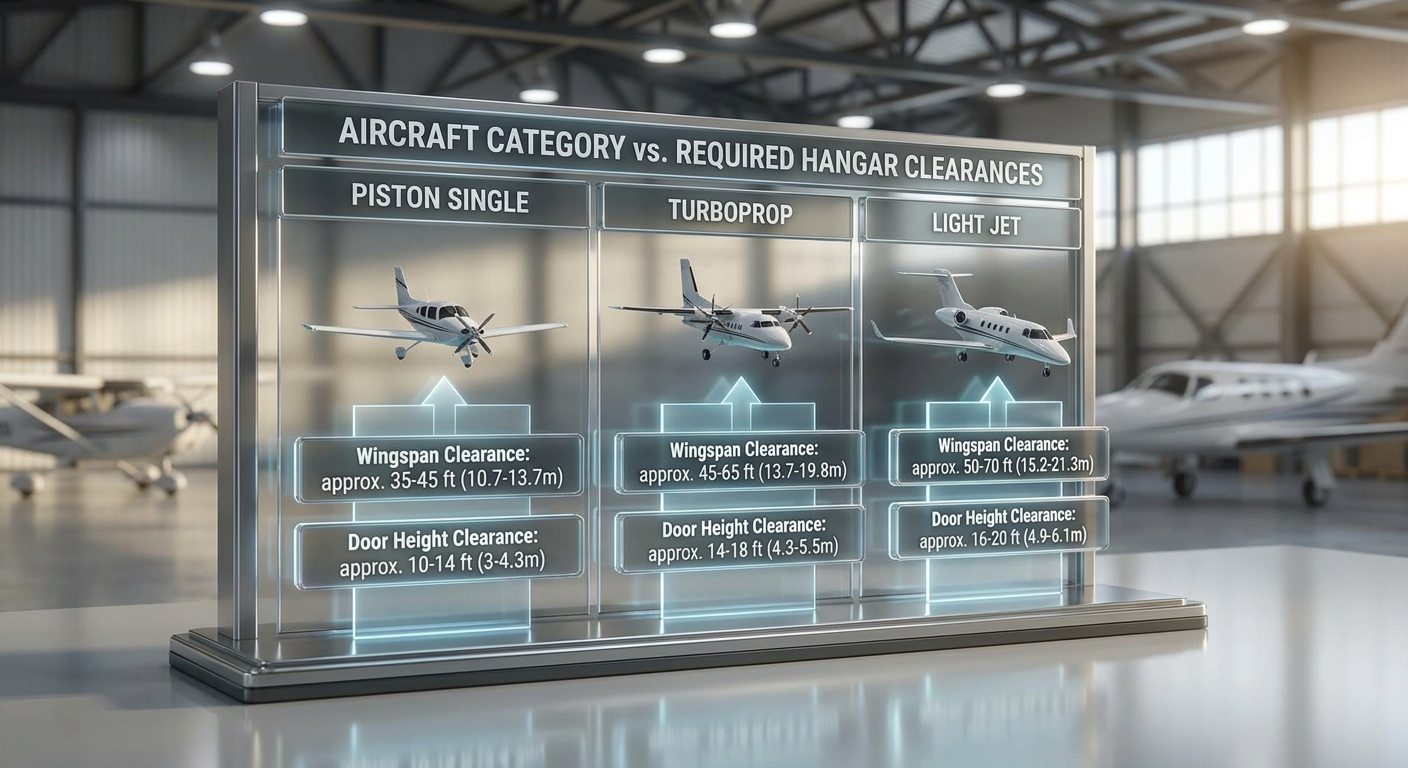
Traditional 40×30 footprints were designed for a different era of aviation where aircraft were smaller and lighter. You will find that these tight dimensions leave no room for tool chests, tugs, or even basic pre-flight inspections when calculating your aircraft hangar size .
The limitation of traditional footprints
Standard T-hangars often measure exactly 40 feet wide, which restricts modern high-performance aircraft. Older designs lack the depth for modern long-nose piston engines, often sacrificing maneuvering space for density.
Why modern piston singles require more space
Modern high-performance singles have grown in both wingspan and length to improve aerodynamic efficiency. If you try to squeeze a new SR-series or a 182 into an old hangar, you risk constant hangar rash. Avionics and antennas also add height requirements not seen in legacy planes.
The risk of outgrowing your facility quickly
Many owners upgrade their aircraft within three years because they move from a single to a twin or a turboprop. Investing in a larger footprint now prevents the massive logistical headache of relocating later. Resale value is significantly higher for hangars that accommodate turboprops.
| Aircraft Category | Average Wingspan | Recommended Width | Note | |
|---|---|---|---|---|
| Classic Piston Single | 30′ – 35′ | 40′ | Minimal storage space | |
| Modern High-Performance | 36′ – 39′ | 50′ – 60′ | Room for movement | |
| Experimental/Light Sport | 25′ – 32′ | 40′ | Fits standard T-hangars |
Key Takeaway: Traditional footprints fail to account for modern wingspans and the equipment necessary for safe maintenance and storage.
How does wingspan impact your aircraft hangar size?
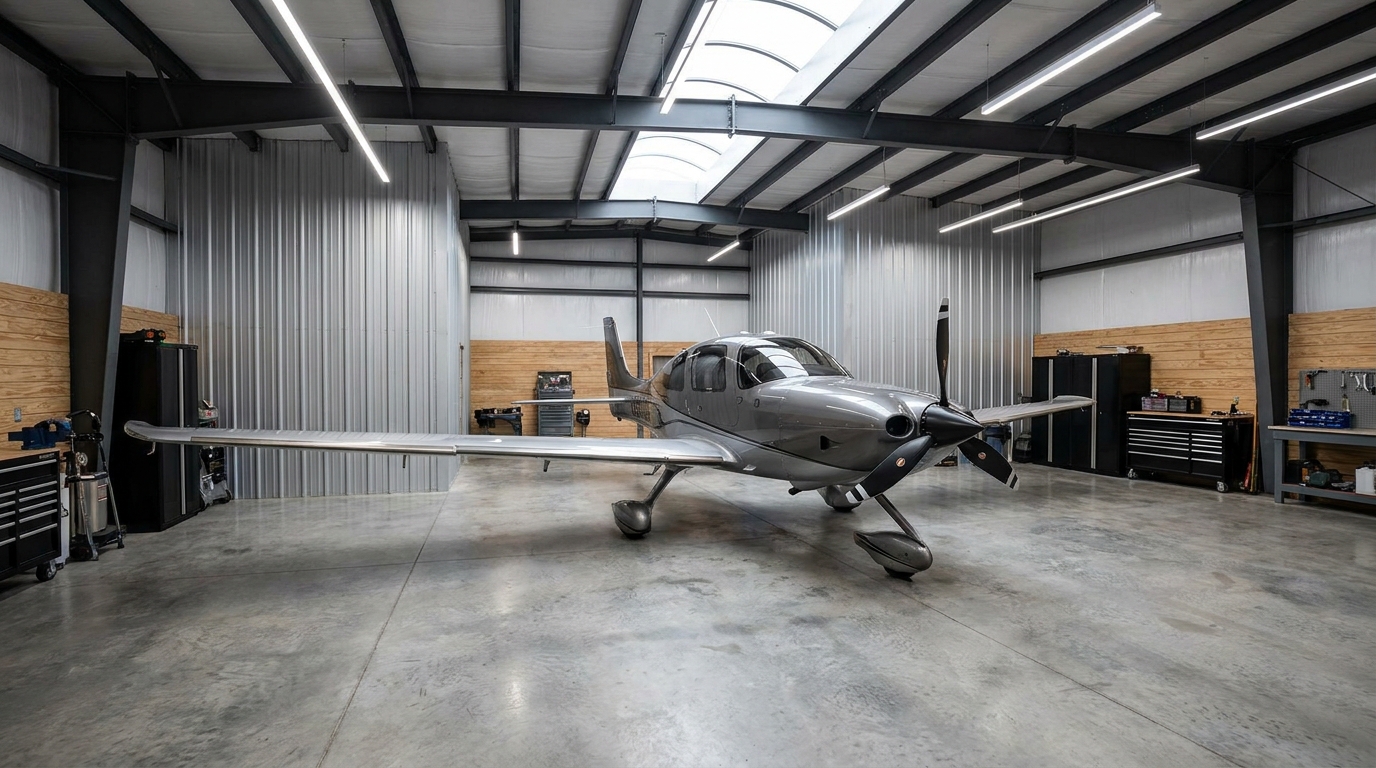
You must calculate at least five feet of “wiggle room” on either side of the wingtips to ensure safe taxiing and towing. Without this buffer, the smallest steering error can lead to a costly insurance claim. Measure the widest point of your current and dream aircraft before finalizing your aircraft hangar size.
Calculating wingtip clearance for safety
Consider the sweep of the wings if you use a rotating tug to move the aircraft. Add ten total feet to the wingspan for the minimum door width to prevent accidents. Proper planning ensures you have a safe operational environment every time you fly.
The 60×60 standard for modern versatility
The 60×60 footprint has become the gold standard for private owners because it accommodates almost everything up to a light jet. You will appreciate the extra floor space for moving the aircraft without having to shift every piece of ground equipment. It fits most single-engine turboprops comfortably.
Maneuvering aircraft with specialized tugs
The type of tug you use significantly impacts how much interior width you need to turn the aircraft. If you use a large power tug, you need extra clearance at the nose to prevent the tail from swinging into a wall. Robotic tugs require less clearance than traditional tow bars.
| Wingspan Range | Minimum Hangar Width | Ideal Hangar Width | |
|---|---|---|---|
| Up to 38′ | 50′ | 60′ | |
| 39′ – 48′ | 60′ | 70′ | |
| 49′ – 55′ | 70′ | 80′ |
Key Takeaway: A 60×60 footprint provides the necessary buffer for wingspan growth and safe maneuvering with modern towing equipment.
Is tail height critical for your aircraft hangar size?
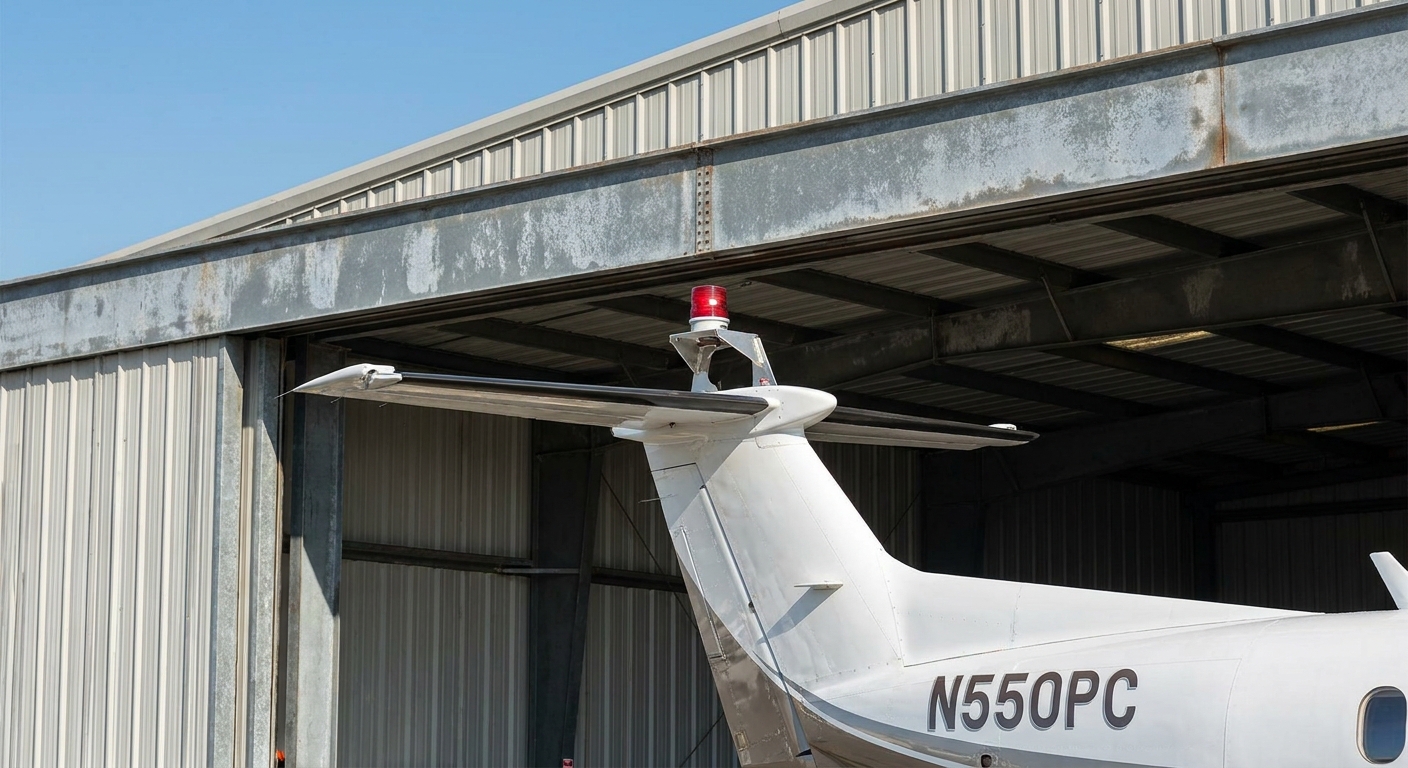
Your aircraft hangar size is fundamentally limited by the “clear opening” height of the door, not the roof peak. Large turboprops and light jets often have tail heights reaching 14 to 15 feet. Always measure with the aircraft fully fueled and heavy to ensure clearance.
Vertical clearance for turboprops and jets
The Pilatus PC-12 and similar airframes require significant vertical clearance due to their T-tail design. Tail beacons and antennas can add several inches to the total height of the fuselage. Ignoring these small details can make a hangar practically unusable for your future fleet.
Why header height matters more than wall height
The header is the structural beam that sits above your hangar door and determines the maximum entry height. You should ensure your header is high enough to accommodate the door mechanism without reducing the advertised opening. Bi-fold doors require extra header space for the fold.
Accommodating antennas and tail beacons
Think about the GPS pucks and satellite antennas mounted on the top of the fuselage or tail. Antenna heights vary significantly between avionics packages and must be factored into the door height. Include a 12-inch “safety margin” above the highest point for peace of mind.
| Aircraft Type | Average Tail Height | Recommended Clear Opening | |
|---|---|---|---|
| Piston Singles | 7′ – 10′ | 12′ | |
| Large Turboprops | 14′ – 15′ | 18′ – 20′ | |
| Light Business Jets | 13′ – 15′ | 18′ 6″ + |
Key Takeaway: Door “clear opening” height is the most critical vertical dimension for accommodating future turboprop or jet upgrades.
What is the ideal aircraft hangar size for light jets?
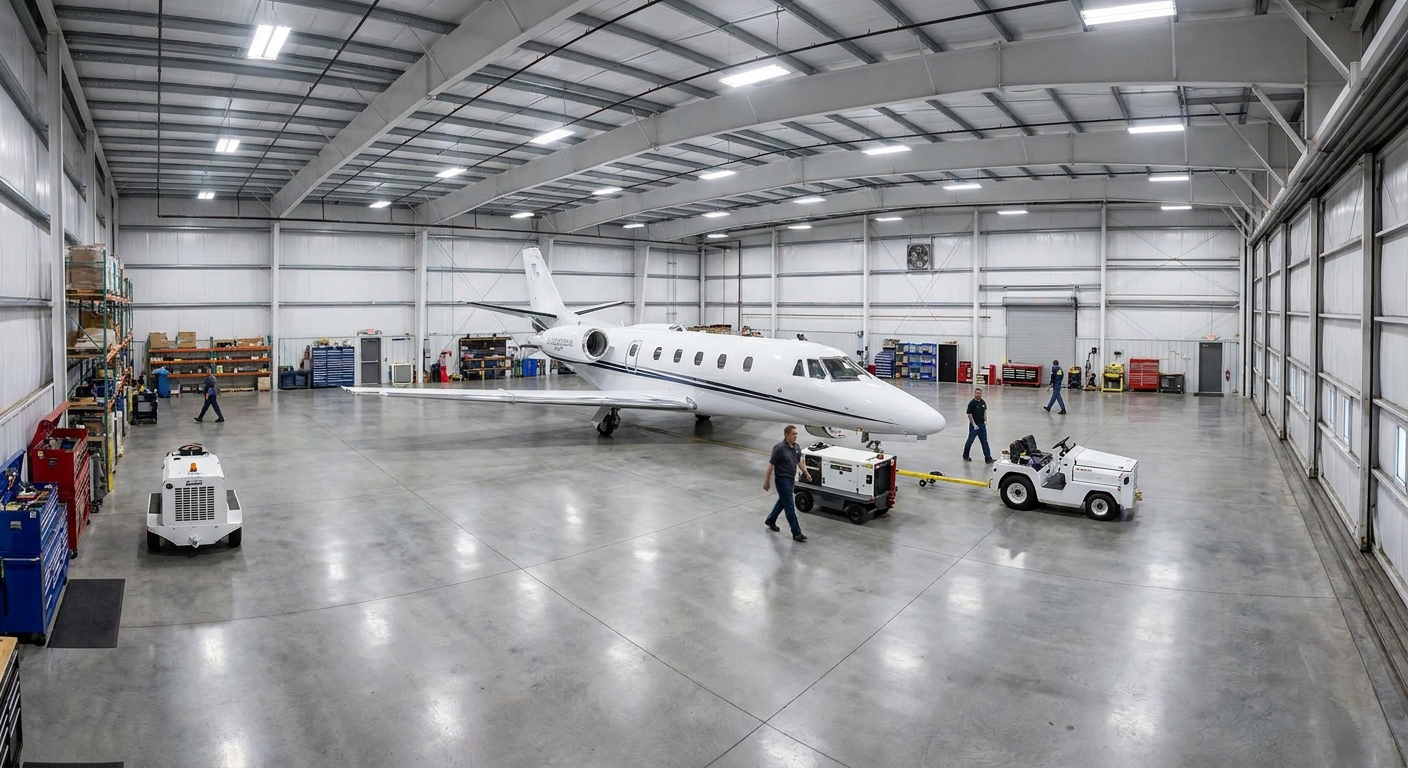
When you step up to a light jet, the square footage requirements increase exponentially to handle the larger footprint. You will need at least an 80×80 space to manage a single jet and the support equipment it requires. Maintenance crews need room to walk around the entire airframe safely.
Expanding to 80×80 or 120×120 footprints
Large footprints allow for dedicated ground power units and specialized maintenance zones. If you plan to house multiple aircraft, the layout becomes a puzzle of overlapping wings and tails. A 120×120 building offers the most flexibility for professional fleet management.
Handling the footprint of multiple jet engines
T-stacking allows two planes to fit in one large square by overlapping the wings. Nose-to-nose parking is another efficient method for narrow-wing jets. Ensure the floor can handle the point loads of heavier jets during the design phase.
Turning radius requirements for larger frames
Larger airframes have wider turning radii, meaning you need more floor space to position them correctly. You should never design a hangar that requires “perfect” steering to avoid a collision. Check the manufacturer’s manual for the minimum turning radius requirements.
| Jet Category | Recommended Minimum Size | Benefit | |
|---|---|---|---|
| Single Light Jet | 60′ x 60′ | Tight fit, limited storage | |
| Dual Light Jets | 80′ x 80′ | Professional fleet management | |
| Mid-Size Jets | 100′ x 100′ | Full maintenance capability |
Key Takeaway: Light jets require a minimum 80×80 footprint to ensure adequate space for turning, ground support, and maintenance access.
Does your future fleet affect aircraft hangar size?
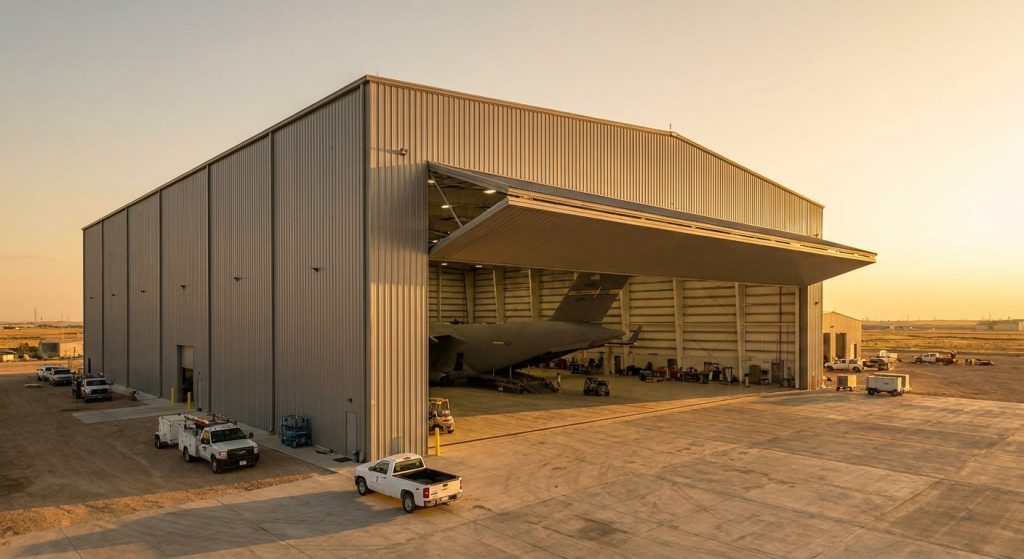
You should always build for the next plane on your list, not the one currently in your logbook. It is much cheaper to pay for extra steel now than to realize your aircraft hangar size is obsolete in a few years. Most pilots upgrade from piston to turbine within five years.
Planning for the aircraft you want in 5 years
A 60-foot width accommodates the majority of owner-flown aircraft currently on the market. Extra height is the most valuable feature for future resale as it opens the door to turbine buyers. Designing with foresight saves significant renovation costs down the road.
Resale value of over-sized hangar facilities
A hangar that is “too big” for a Cessna 172 is actually “just right” for a buyer with a TBM or a Malibu. By increasing the footprint, you open the market to a much wealthier pool of potential buyers. Premium buyers specifically look for hangars that fit 18-foot tails.
Flexibility for seasonal aircraft rotations
If you own multiple toys, like a summer floatplane and a winter ski-plane, you need a larger footprint to store off-season gear. Having that extra space means you don’t have to pay for off-site storage. This avoids the clutter that often leads to hangar accidents.
| Current Aircraft | Likely Next Step | Suggested Size | |
|---|---|---|---|
| Piston Single | High-Performance Piston | 60′ x 60′ | |
| High-Performance | Single-Engine Turboprop | 60′ x 60′ (with 18′ door) | |
| Turboprop | Light Jet | 80′ x 80′ |
Key Takeaway: Building for your five-year plan increases resale value and ensures your facility remains useful as you upgrade aircraft.
Can you add workshops to your aircraft hangar size?
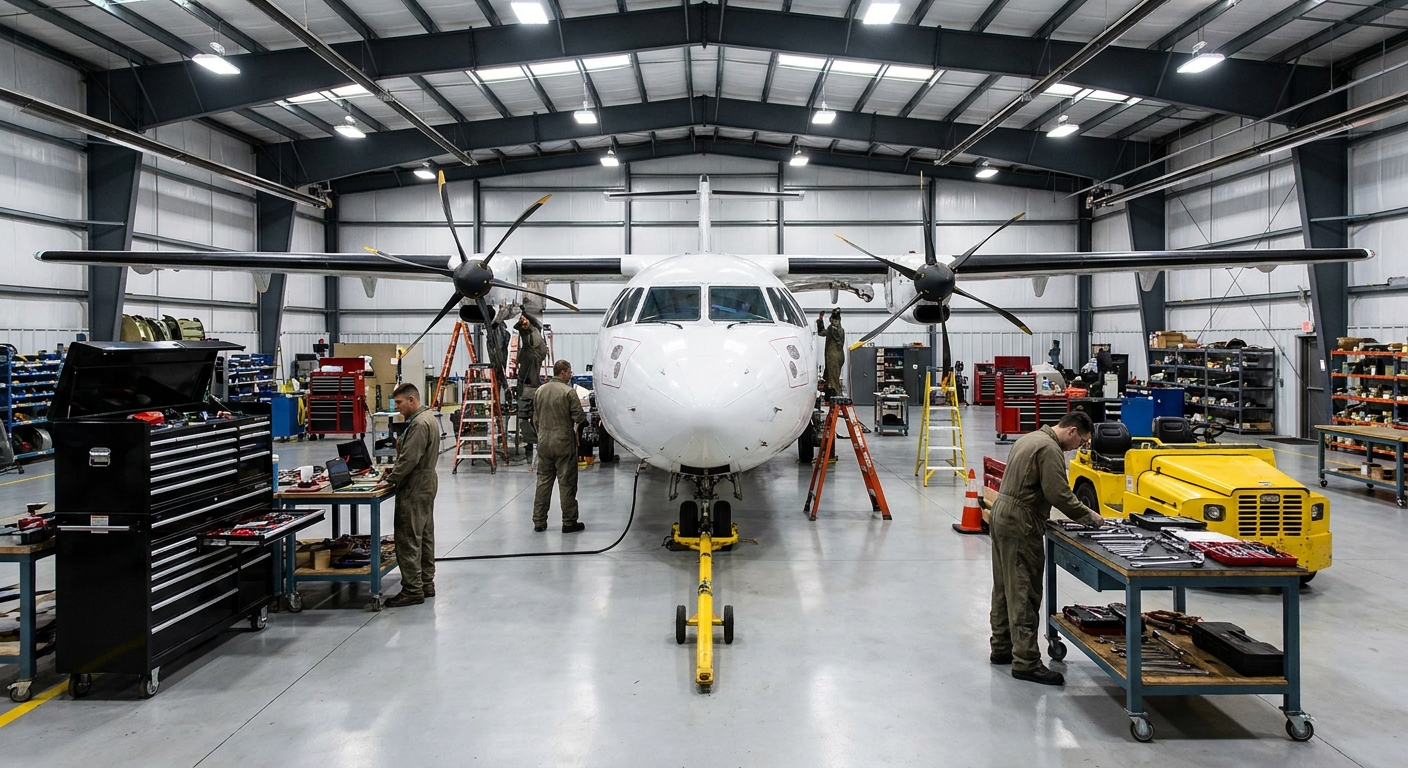
Positioning your workbench in the “dead space” created by the aircraft’s wings is a smart way to maximize utility. You will want at least 200 square feet of dedicated space for tools and parts cleaning. Proper planning integrates these zones into your total aircraft hangar size.
Designing dedicated maintenance zones
Place benches along the back wall for maximum clearance and ease of movement. Ensure you have high-voltage outlets for compressors and specialized avionics test equipment. Install bright LED lighting over the work area to improve safety and precision during maintenance.
Positioning tool storage within cross-shaped gaps
Because airplanes are roughly cross-shaped, the four corners of a square hangar are usually empty. You can use these corners for rolling tool chests, oil storage, and extra hardware bins. Corner storage keeps the main floor clear for taxiing and towing operations.
Safety clearances for hazardous materials
When adding a workshop, you must maintain a safety buffer between your welding or grinding station and the aircraft’s fuel vents. You should never compromise safety for the sake of a more compact layout. Keep fuel-related tools at least 10 feet from the wing.
| Feature | Estimated Square Footage | Placement Strategy | |
|---|---|---|---|
| Work Bench | 100 – 200 sq ft | Along rear or side walls | |
| Parts Storage | 150 – 300 sq ft | Corner “dead space” | |
| Lounge/Office | 400 – 800 sq ft | Mezzanine or corner unit |
Key Takeaway: Utilize the corner “dead space” of your hangar for workshops to maximize utility without increasing the building footprint.
How do door clearances change aircraft hangar size?
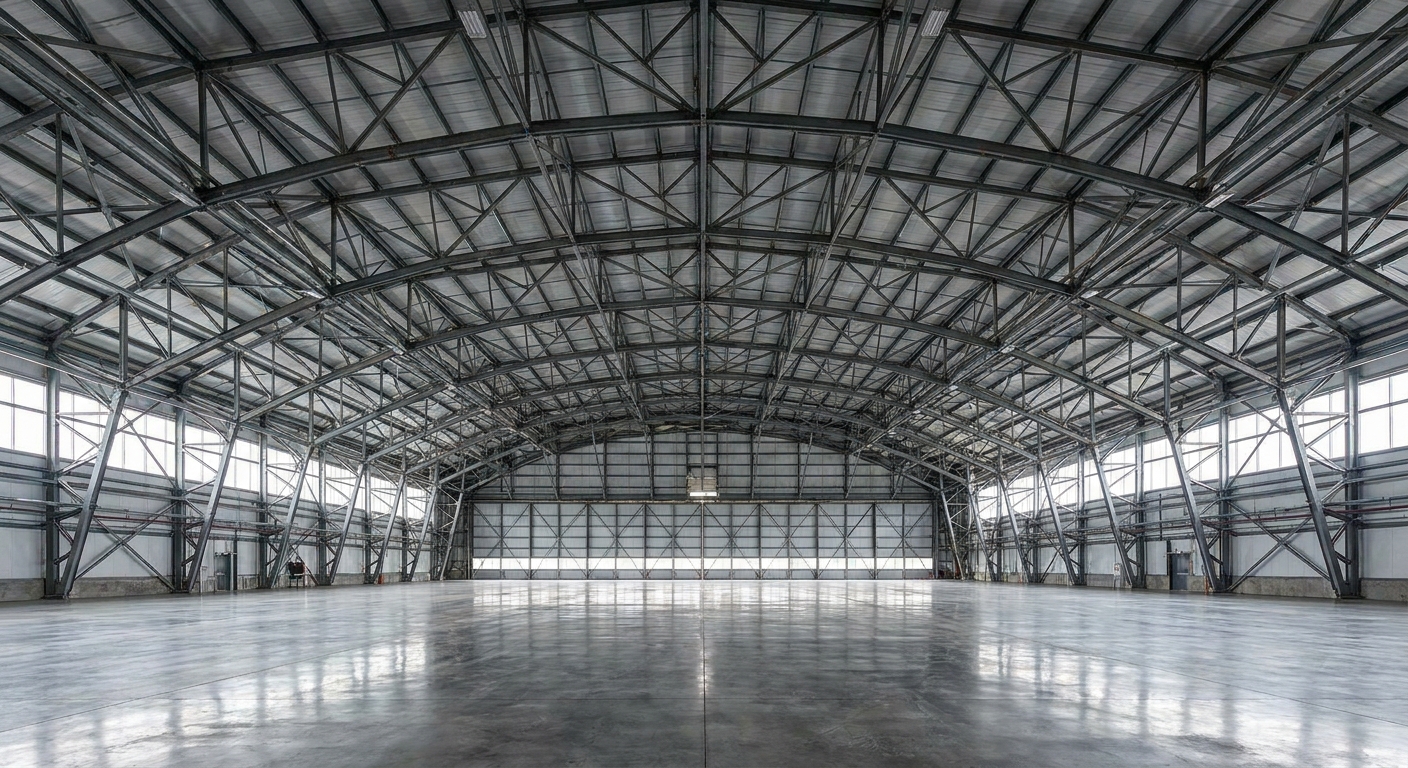
The type of door you choose can either save or waste several feet of usable interior width. You should evaluate how the tracks and motors affect your total aircraft hangar size before finalizing the blueprint. Showhoo offers various door configurations to optimize your clear opening.
Choosing between bi-fold and sliding doors
Bi-fold doors fold outward, which saves interior ceiling space but requires a stronger header. Sliding doors are reliable but require tracks that may restrict the side clearance of the hangar. Hydraulic doors act as a canopy when open, providing maximum vertical efficiency.
Impact of door tracks on usable internal width
Some stacking doors require multiple tracks that can eat up three or four feet of your hangar’s depth. If you are working with a tight footprint, this lost space could prevent you from closing the door with a long aircraft inside. Exterior-mounted tracks are often the best solution.
Clear opening vs. rough opening dimensions
The clear opening is the only measurement that matters because it represents the actual space your plane must pass through. Subtract the door frame and seals from the total width to find the true clear space. Confirm these measurements with the steel manufacturer to avoid errors.
| Door Type | Width Impact | Height Impact | |
|---|---|---|---|
| Bi-Fold | Minimal width loss | Requires taller header | |
| Hydraulic | No width loss | Uses external canopy space | |
| Sliding | Can reduce usable width | Simple vertical clearance |
Key Takeaway: Always design based on “clear opening” dimensions to ensure your aircraft can safely pass through the door frame.
Will non-aviation storage affect aircraft hangar size?
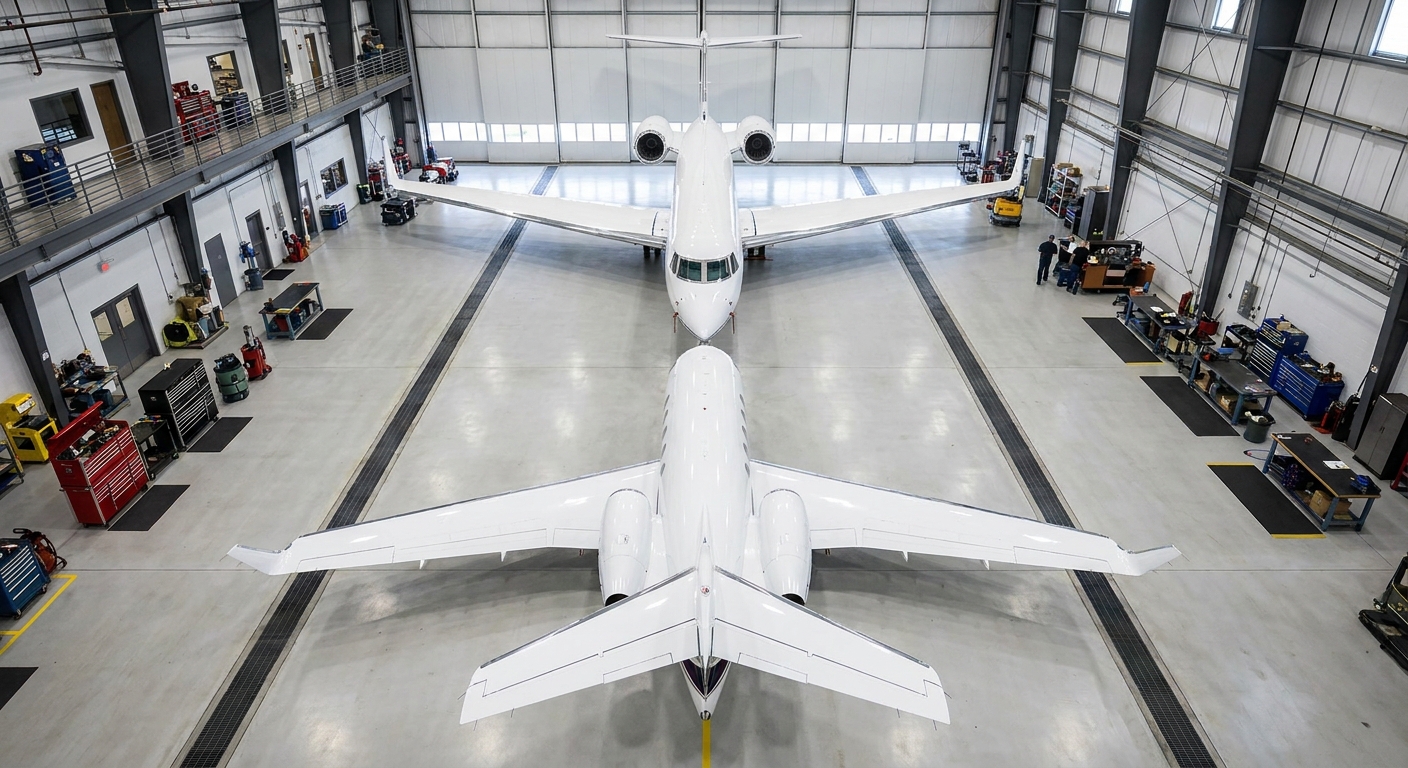
Many pilots enjoy the convenience of keeping their motorcoach alongside their aircraft. You will need to add at least 50 feet of depth to a standard hangar to accommodate a luxury RV safely. This expansion significantly changes the total aircraft hangar size required for your property.
Storing RVs and motorcoaches with planes
Ensure the floor is reinforced for the high weight of an RV compared to a light aircraft. Add a dedicated 50-amp circuit for vehicle charging to maintain batteries during storage. Consider the swing radius if the RV has slide-outs that will be deployed inside.
Accommodating classic car collections
The corner gaps of a 60×60 hangar are perfect for storing a few classic cars or motorcycles. You should measure your vehicles and add their footprint to your total square footage calculations. Cars are best stored away from the main taxi path to prevent accidents.
Managing airport covenants and restrictions
Before you finalize a massive footprint, check your airport’s land lease agreement. Some airports strictly prohibit non-aviation storage, which would make the extra square footage a wasted investment. Read the “permitted use” clause carefully before proceeding.
| Item Type | Average Length | Added Hangar Depth Needed | |
|---|---|---|---|
| Luxury Motorcoach | 40′ – 45′ | +50′ | |
| Standard SUV | 16′ – 18′ | +20′ | |
| Custom Motorcycles | 8′ | Negligible |
Key Takeaway: If storing vehicles, increase depth and floor reinforcement to handle the weight and length of RVs or car collections.
Does steel engineering optimize aircraft hangar size?
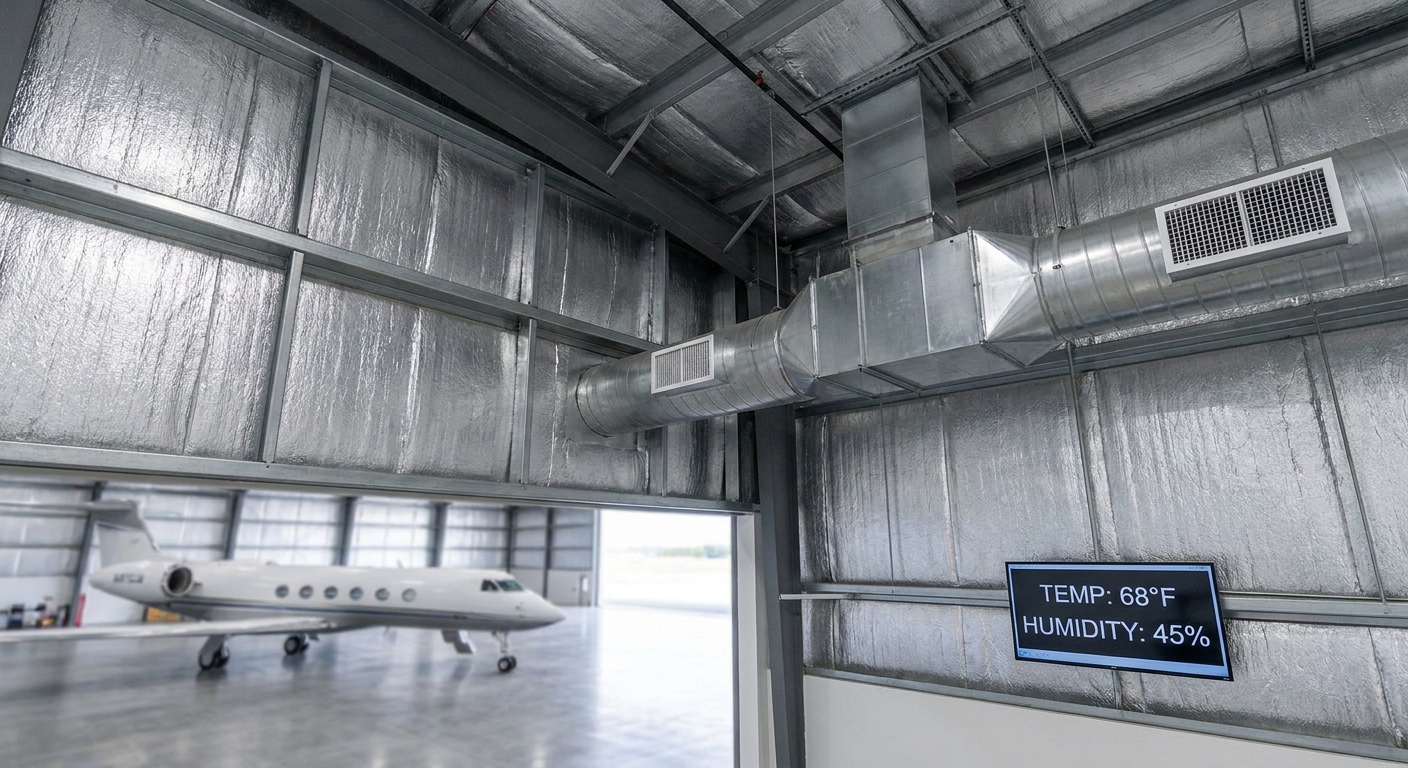
Steel structures allow for massive clear spans of 40 meters or more without the need for interior support columns. This ensures your aircraft hangar size is 100% usable floor space for maneuvering planes. Showhoo engineering provides the stability needed for large-scale aviation facilities.
Clear-span benefits of steel structures
No central columns means no obstacles for wingtips, allowing for total freedom of movement. High-strength H-section steel provides superior stability against wind and snow loads. Clear spans allow for flexible internal reconfigurations as your fleet changes over time.
Column-free interiors for maximum maneuverability
When you remove the pillars found in traditional wood buildings, you gain total freedom to T-stack multiple aircraft. You will find that a column-free design significantly reduces the stress of moving aircraft in tight quarters. It also provides a clean, professional aesthetic for high-end jets.
Building for wind, snow, and seismic loads
Modern engineering ensures that even a large, clear-span hangar can withstand extreme weather conditions. You should always choose a manufacturer that designs specifically for your local environmental codes. Showhoo uses galvanized steel to resist corrosion in coastal areas.
| Engineering Feature | Benefit | Showhoo Advantage | |
|---|---|---|---|
| H-Section Steel | High strength-to-weight ratio | Factory-direct pricing | |
| Clear Span | No interior columns | Up to 40m+ width | |
| Modular Design | Fast installation | Complete delivery package |
Key Takeaway: Clear-span steel engineering maximizes usable floor space and safety by eliminating dangerous interior support columns.
How do you calculate a custom aircraft hangar size?

Modern 3D modeling allows you to visualize exactly how your aircraft will sit within the proposed walls. You can “walk through” the digital space to ensure there is enough room for your wingtips and ground equipment. This is the final step in determining your perfect aircraft hangar size.
Using 3D modeling for precise planning
Upload your aircraft’s specific CAD dimensions to test different workshop and lounge layouts. Simulate the path of the door as it opens to ensure no interference with the tail. Testing these variables digitally prevents expensive mistakes during the construction phase.
Coordinating with international steel fabricators
Working directly with Showhoo ensures that your custom dimensions are translated accurately into the fabrication drawings. You will avoid middleman markups while receiving a structure built to your exact specifications. Every component is labeled for easy on-site assembly.
Finalizing dimensions for local code compliance
Before the steel is cut, verify that your chosen footprint meets local zoning and airport height restrictions. Coordinate with your local engineer to ensure the foundation can support the specific structural loads. Obtain engineering stamps specifically for your project region.
| Custom Calculation Step | Requirement | Target Outcome | |
|---|---|---|---|
| Primary Dims | Wingspan + Length + Height | Base footprint | |
| Safety Buffer | Add 5-10 feet per side | Prevent ground rash | |
| Future Growth | Add 20% total sq ft | High resale/upgradability |
Key Takeaway: Use 3D modeling and factory-direct coordination to ensure your custom dimensions meet both operational needs and local building codes.
Conclusion
Right-sizing your facility is the most important decision you will make in the construction process. By prioritizing clear-span engineering, vertical clearance, and future-proof dimensions, you protect your investment and your aircraft. Showhoo is dedicated to delivering high-quality, factory-direct steel structures that meet the rigorous demands of the global aviation industry. For a customized engineering analysis and a precise aircraft hangar size quote tailored to your specific fleet, please contact our specialists today.
Email:sales@showhoo.com.cn
Phone/WhatsApp:+86 186 7895 5927
FAQ Section
Can I customize the door height after the hangar is built?
The truth is, it is extremely difficult and expensive to modify the header of a steel building once it is erected. It is highly recommended to plan for your maximum possible height, such as 18 feet 6 inches, during the initial design phase to avoid future structural modifications.
What is the best layout for storing two aircraft in one hangar?
The “T-stack” or “Staggered” layout is most efficient for two planes. One aircraft faces forward while the other is backed in, allowing their tails or wings to overlap in the wider sections of the building, usually requiring at least an 80-foot width for safe clearance.
How do I know if my aircraft hangar size meets local wind and snow codes?
Showhoo engineers use local building codes to calculate the necessary gauge and grade of steel for your specific region. You should request a customized solution that includes full engineering documentation and stamps specifically for your project site to ensure compliance.
Can I add a mezzanine level for an office or lounge?
Yes, steel structures are ideal for mezzanines because the frame can support significant vertical loads. However, you must account for this extra weight in the foundation and column design during the primary engineering phase to ensure the structural integrity of the entire building.
How do I know if the factory-direct model is right for me?
If you want to eliminate middleman markups and maintain direct control over quality and delivery, the factory model is ideal. Working directly with a manufacturer like Showhoo ensures your specific dimension requirements are met without communication errors and with full QC checkpoints.