
A standard hay bale can weigh anywhere from 40 pounds for a small square bale to over 1,500 pounds for a massive round or large square bale, depending entirely on its dimensions, crop type, and moisture level. Buying or selling hay by the bale without knowing the exact weight leads to unpredictable livestock rations and massive financial uncertainty. You risk underfeeding your herd, breaking tractor axles, violating transport highway weight limits, or causing spontaneous combustion in poorly ventilated barns. By mastering the key factors that govern how much does a hay bale weigh , you can confidently plan your annual feed budget, optimize transport logistics, and build the ultimate safe storage environment.
Why does how much does a hay bale weigh matter?
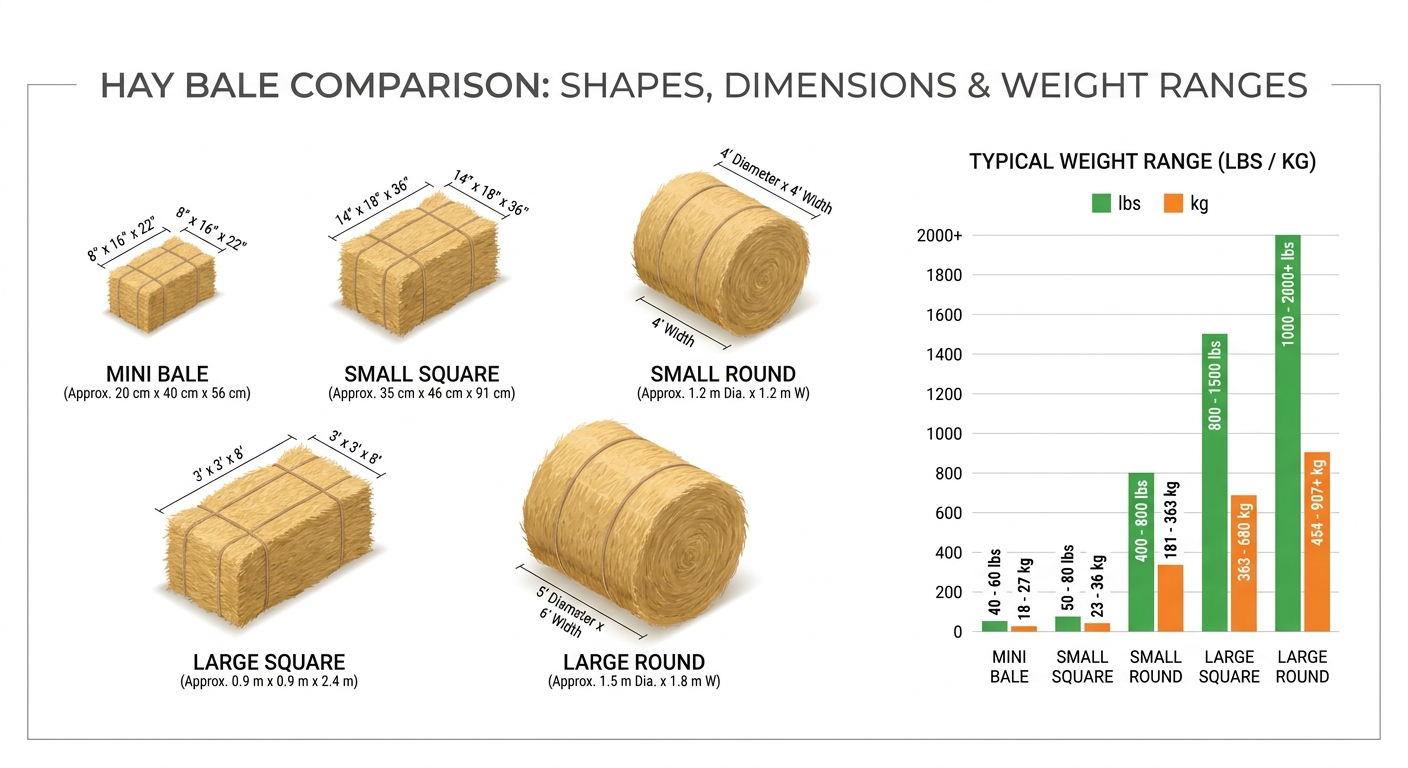
Knowing exactly how much does a hay bale weigh is essential for maintaining accurate nutritional rations, avoiding dangerous transportation overloads, and designing stable storage infrastructures. If you estimate weight by visual inspection alone, you risk severely underfeeding your livestock or overpaying for low-density feed. Storing thousands of high-density bales also exerts substantial lateral and vertical pressure on your warehouse walls. To prevent costly structural collapses, commercial operators utilize precision calculations of how much does a hay bale weigh to build agricultural facilities that handle extreme physical loads.
The Operational Impact of Precise Hay Weight Tracking
Here is the deal: when you manage a commercial farm, guesswork is your greatest financial enemy. If you do not track the exact tonnage of your forage, you cannot calculate accurate daily dry matter intake for your herd. This lack of data directly impacts animal health and drains your profit margins through transport inefficiencies.
- Nutritional Deficits: Livestock receive fewer nutrients than their daily metabolic requirements demand.
- Logistical Risk: Overloaded trailer axles violate highway DOT regulations and cause equipment damage.
- Structural Failures: Massive stacked weights cause lateral blowouts in substandard storage buildings.
Key Takeaway: Knowing precise weights ensures feed security, protects transport machinery, and safeguards structural storage investments.
| Strategic Objective | Operational Risk of Guesswork | Mitigation Strategy | |
|---|---|---|---|
| Feed Rationing | Livestock nutritional deficits; winter shortages | Weigh sample bales; track exact dry matter intake | |
| Logistics Safety | Overloaded trailer axles; highway DOT violations | Calculate total haul weight based on average bale mass | |
| Infrastructure Protection | Barn wall blowouts; structural frame collapses | Store in heavy-duty engineered metal barns with open clearances |
This comparative assessment highlights why exact weight metrics form the foundation of efficient agricultural management.
Build the Right Warehouse to Protect Your Hay.
Email:sales@showhoo.com.cn
Phone/WhatsApp:+86 186 7895 5927
Does shape change how much does a hay bale weigh?
Yes, the physical shape and dimensions of a bale are the most immediate indicators of how much does a hay bale weigh. Small square bales are light enough for manual handling, whereas large square and round bales represent industrial-scale bulk weights that require heavy machinery to transport. Understanding these shapes prevents equipment strain and helps you configure storage layouts safely.
Evaluating Bale Shapes and Handling Requirements
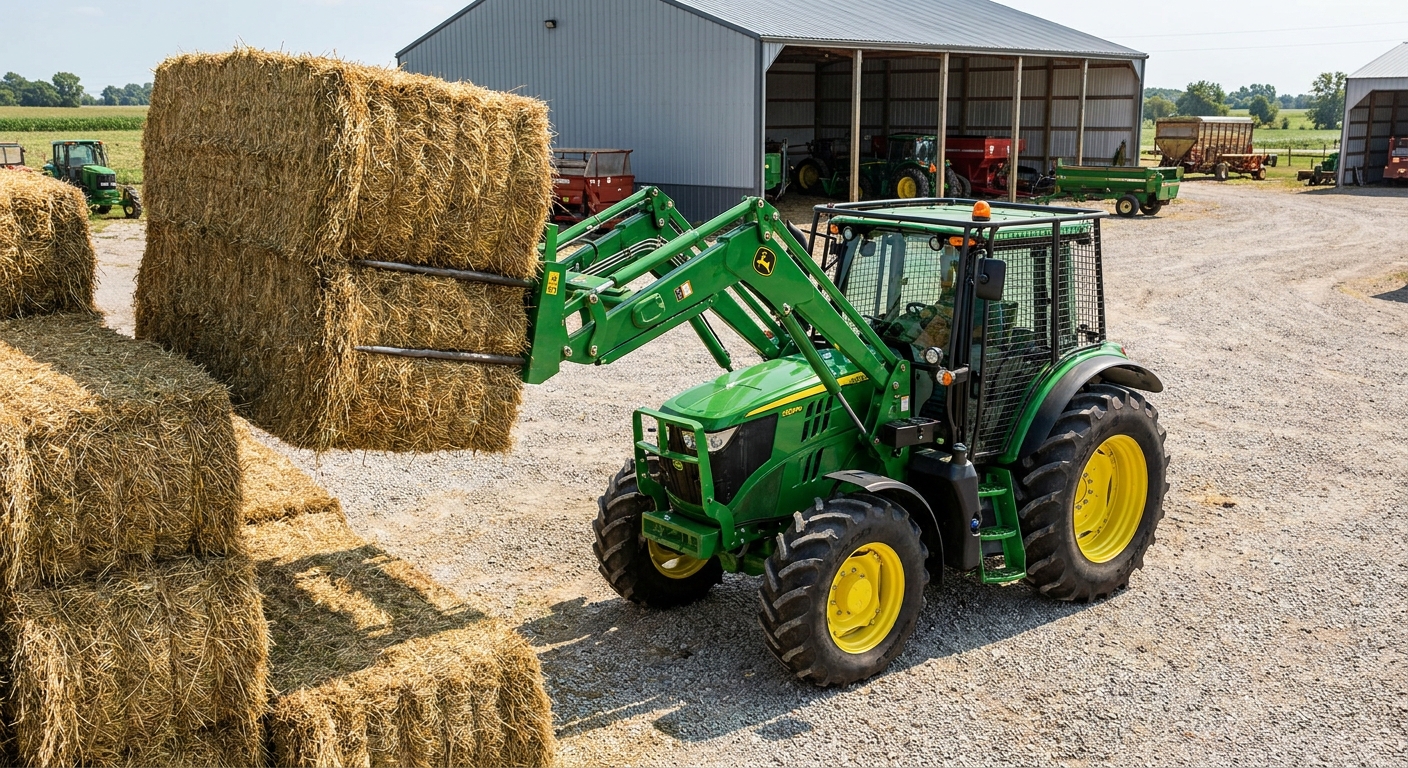
Let’s look closer: you must match your handling equipment to the specific shape of the bales you purchase. While mini and small square bales can be managed with manual labor, large round and square bales demand heavy-duty tractors fitted with specialized spears. If you lack the proper loader capacity, moving these massive dense blocks becomes extremely hazardous.
- Small Square: Weighs 40 to 75 pounds; ideal for manual stacking and precision equine feeding.
- Large Square: Weighs up to 1,500 pounds; requires heavy tractor spears for commercial stacking.
- Round Bales: Rollable and highly unstable; requires loader-mounted bale clamps to prevent rolling accidents.
Key Takeaway: Shape dictates not only the physical mass but also the mechanical infrastructure required for safe farm logistics.
| Type of Hay Bale | Dimensions (W x H x L / Dia.) | Typical Weight Range | Common B2B Uses | Handling Equipment | |
|---|---|---|---|---|---|
| Mini Bale | 1.5 ft×1 ft×1 ft | 20–35 lbs (9–16 kg) | Small pets, hobby farms | Manual (no tools required) | |
| Small Square | 2 ft×1.5 ft×1.5 ft | 40–75 lbs (18–34 kg) | Horse stables, small farms | Manual stacking & hooks | |
| Small Round | 4 ft diameter×4 ft width | 600–800 lbs (270–360 kg) | Beef cattle pastures | Loader with bale squeeze | |
| Large Square | 3 ft×3 ft×8 ft | 800–1,500 lbs (360–680 kg) | Commercial dairy feedlots | Tractor with heavy dual spears | |
| Large Round | 5 ft diameter×6 ft width | 1,000–1,500 lbs (450–680 kg) | Large herds, outdoor feeding | Heavy wheel loader with fork |
This comprehensive dimension data allows commercial managers to select bale types matching both storage capacity and machinery limits.
Choose the Right Steel Warehouse for Maximum Hay Protection
Email:sales@showhoo.com.cn
Phone/WhatsApp:+86 186 7895 5927
Does crop type impact how much does a hay bale weigh?
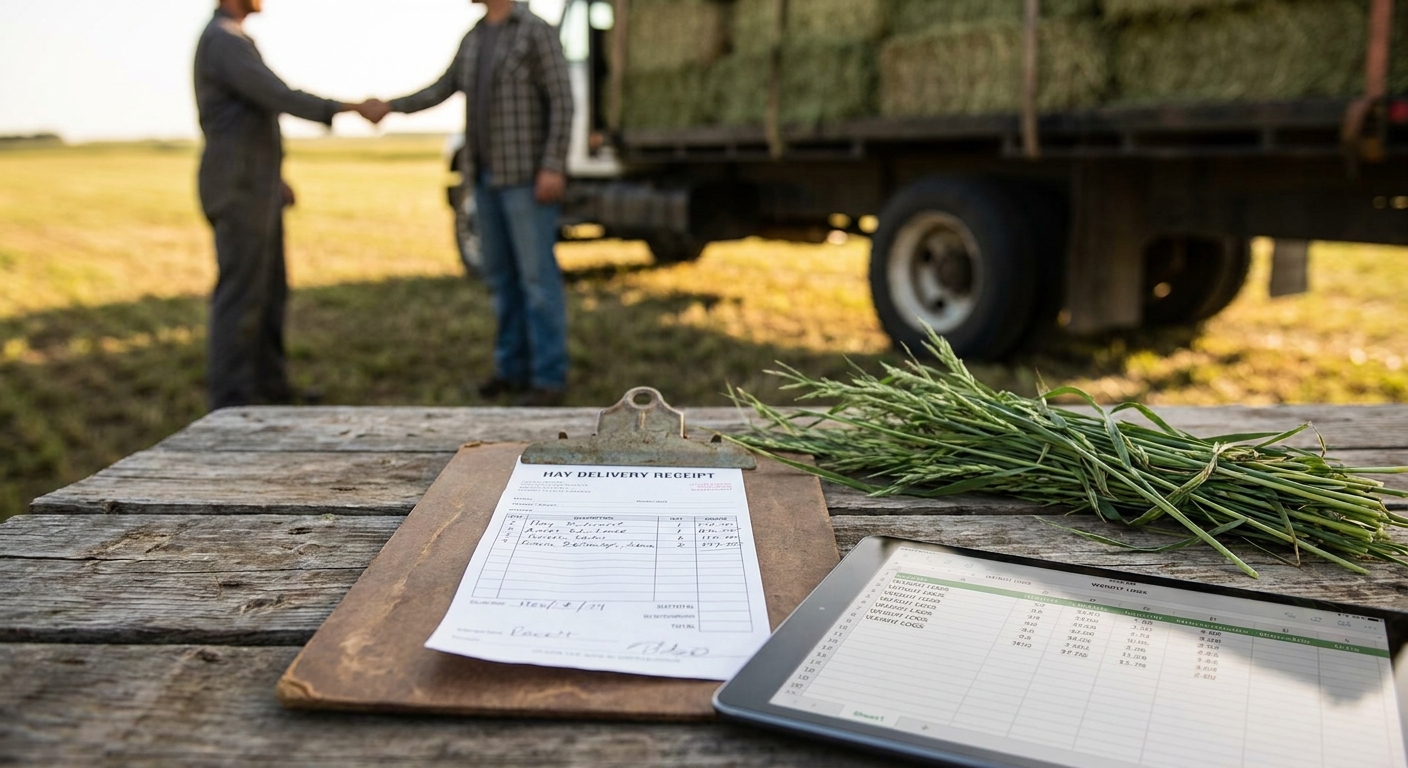
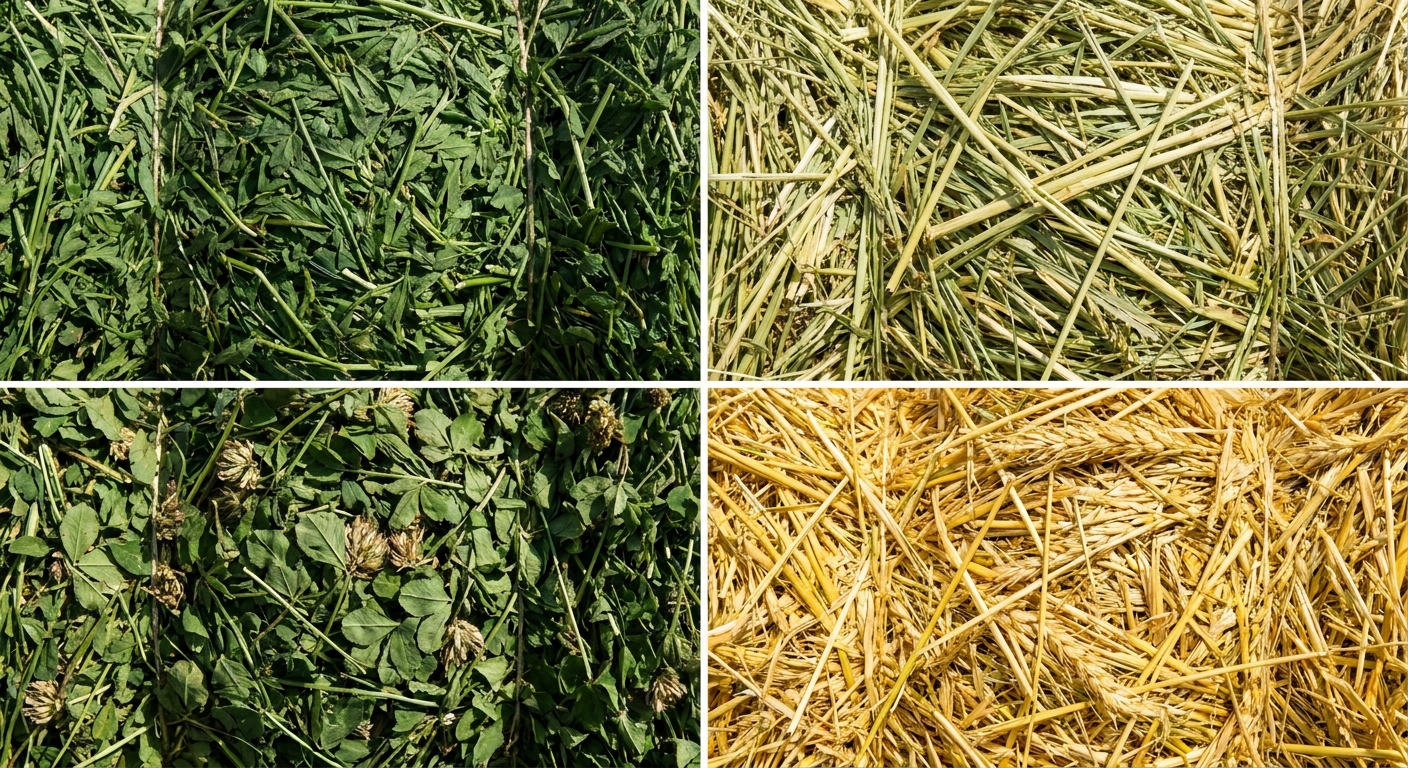
Yes, the specific crop variety dramatically impacts how much does a hay bale weigh because different plants have varying stem-to-leaf densities and physical structures. Legumes like alfalfa compress tightly with very few air gaps, resulting in significantly heavier bales than hollow-stemmed grasses like Timothy. Understanding these differences ensures you receive the correct feed density during financial transactions. Thus, calculating how much does a hay bale weigh based on crop type helps you plan accurate storage volumes.
Comparing Alfalfa, Grass, and Straw Forage Densities
Here is the catch: if you buy hay solely by volume, you might be overpaying for air pockets instead of actual nutrition. Legumes have a dense leafy structure that packs closely together, whereas cereal straws are light, hollow, and lack substantial moisture weight. You must adjust your trailer loading plans based on the specific crop variety to avoid underweight or overweight hauls.
- Alfalfa: Heaviest and most compact legume; minimal air gaps inside the compressed bale.
- Timothy Grass: Light, fibrous, hollow stems; retains significant air pockets during compression.
- Wheat Straw: Very dry and hollow chaff; primarily used for bedding and weighs up to 40% less than alfalfa.
Key Takeaway: Crop choice directly determines physical density, meaning an alfalfa bale will always outweigh a grass bale of identical size.
| Crop / Forage Variety | Leaf-to-Stem Density Ratio | Average Weight Modifier | Primary Commercial Use | |
|---|---|---|---|---|
| Alfalfa (Pure) | Very High (dense structure) | Heaviest (+20% to baseline) | Dairy cows, high-performance horses | |
| Timothy Grass | Medium-Low (hollow stems) | Lighter (-10% to baseline) | Recreational horses, sheep, goats | |
| Bermudagrass | Medium (fibrous structure) | Baseline Weight | Beef cattle herds | |
| Mixed Grass Forage | Medium (variable leaves) | Neutral Weight | General livestock maintenance feed | |
| Wheat Straw | Very Low (hollow chaff) | Lightest (-40% to baseline) | Animal stall bedding, insulation |
Assessing crop density variations is essential for optimizing transport configurations and livestock ration planning.
Does moisture affect how much does a hay bale weigh?
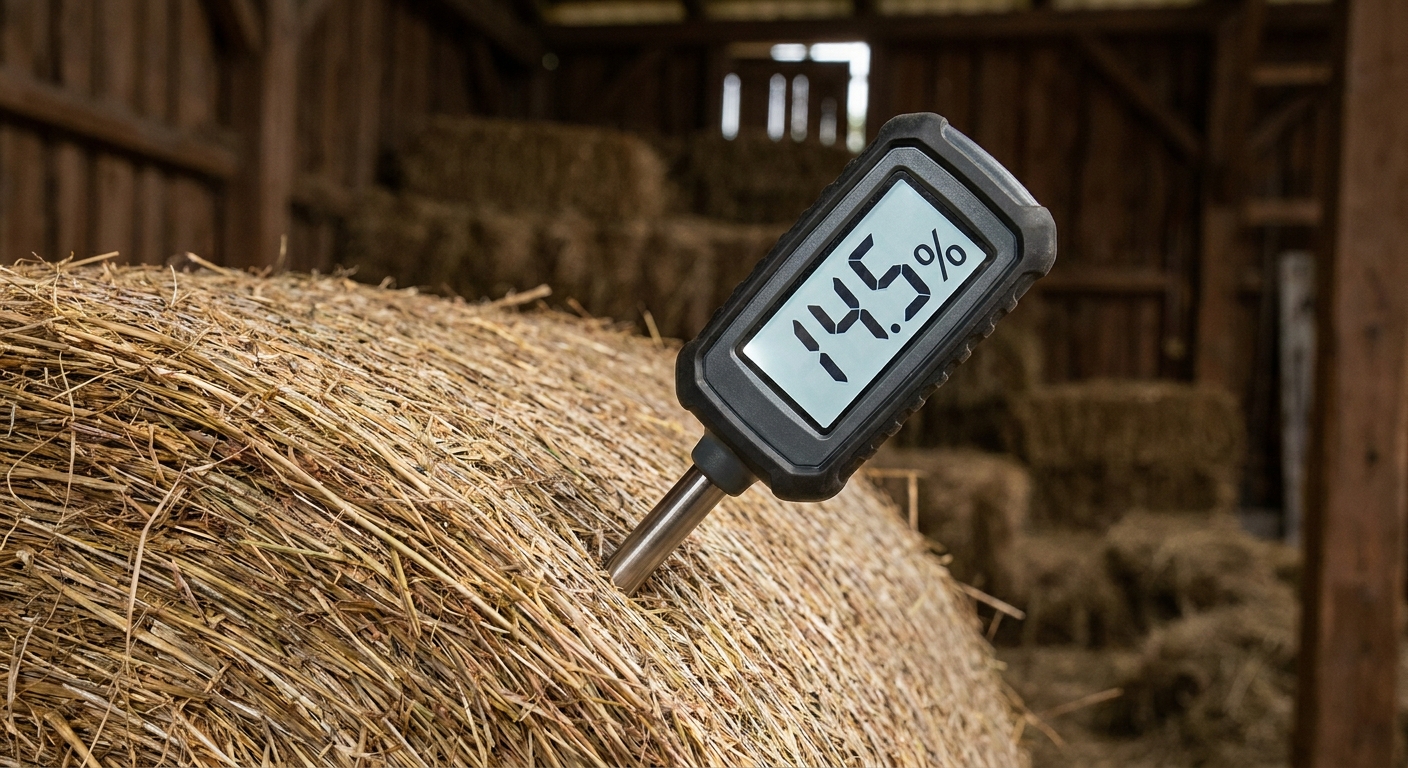
Moisture levels are the most volatile factor influencing how much does a hay bale weigh, representing water mass rather than actual dry feed value. Baling hay with excessive moisture artificially inflates its weight while creating severe biological and chemical hazards during storage. To protect your investment and maintain feed quality, you must monitor moisture levels closely before storing hay indoors.
Managing Water Weight and Storage Safety Risks
It gets worse: when you stack damp bales, you create the perfect breeding ground for hazardous microbial fermentation. This biological activity raises internal temperatures, which can quickly lead to severe mold growth or even spontaneous combustion. You need to verify that your hay has cured properly to avoid losing both your crop and your barn.
- Internal Heating: Temperatures climbing above 130∘F indicate dangerous active microbial respiration.
- Protein Spoilage: Chemical Maillard reactions turn hay brown and lock up vital digestible proteins.
- Mold Infestation: Moisture levels above 20% destroy palatability and cause chronic livestock respiratory disease.
Key Takeaway: High moisture adds expensive water weight while actively threatening your herd’s health and your storage facilities.
| Moisture Level (%) | Safe for Baling? | Chemical / Biological Risk | Impact on Total Weight | |
|---|---|---|---|---|
| Under 12% | Yes (Too Dry) | Excessive leaf shatter, nutrient loss | Unusually light, dusty bales | |
| 14% to 18% | Ideal Target | Safe stable storage, no mold activity | Standard baseline weight | |
| 20% to 25% | Highly Dangerous | Mold growth, heating, mold dust | Heavy, water-logged bales | |
| Over 25% | Do Not Store | Spontaneous combustion hazard | Extremely heavy, combustible hazard |
Monitoring these moisture thresholds protects your agricultural inventory from catastrophic loss while ensuring feed safety.
Can you calculate how much does a hay bale weigh?
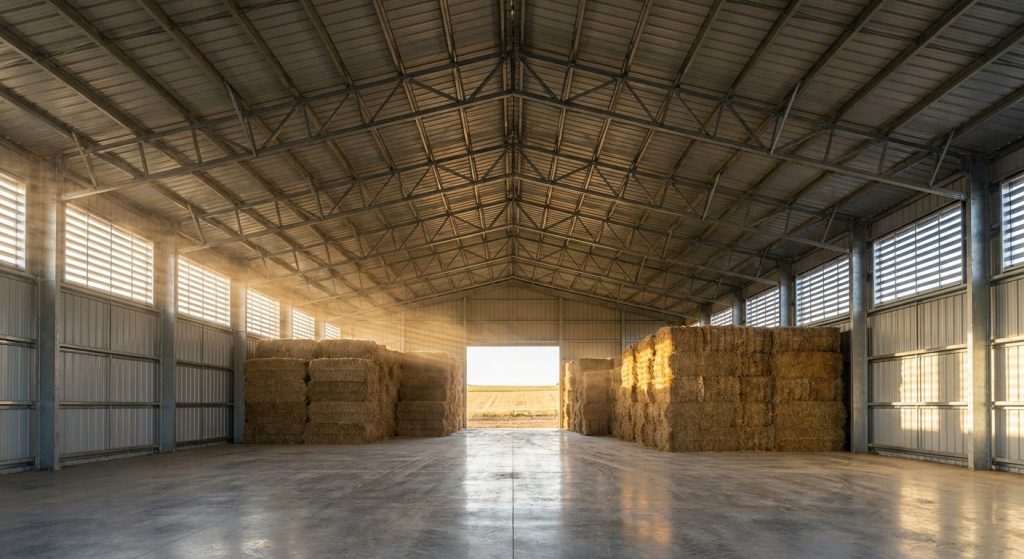
Yes, you can estimate how much does a hay bale weigh by using basic mathematical formulas based on the bale’s shape, volume, and crop density. Calculating these figures is invaluable for estimating your overall storage requirements and planning structural floor loads without access to industrial scales. By determining how much does a hay bale weigh , you can design appropriate clear-span steel buildings to house your forage.
Estimating Square and Cylinder Bale Mass Formulas
Here is the formula: you can calculate the volume of a square bale by multiplying its width, height, and length, then applying a crop density factor. For round bales, you treat the bale as a cylinder and calculate its volume using the radius and width. These calculations allow you to easily project storage needs and track inventory levels.
- Alfalfa Density: Typically ranges between 12 and 14 pounds per cubic foot.
- Timothy Grass Density: Averages between 10 and 12 pounds per cubic foot.
- Bermudagrass Density: Ranges from 8 to 10 pounds per cubic foot.
Key Takeaway: Applying volumetric formulas combined with average crop densities lets you estimate weights accurately right from your desk.
| Bale Shape | Volume Formula | Example Dimensions | Calculated Volume | Estimated Weight (at 10 lbs/ft³) | |
|---|---|---|---|---|---|
| Small Square | W×H×L | 1.5 ft×1.5 ft×2.0 ft | 4.5 cubic ft | 45 lbs | |
| Large Square | W×H×L | 3.0 ft×3.0 ft×8.0 ft | 72.0 cubic ft | 720 lbs | |
| Round Bale (5×6) | π×R2×W | 2.5 ft radius×6.0 ft width | 117.8 cubic ft | 1,178 lbs |
These formulas convert spatial dimensions into reliable mass estimates for superior crop planning and safe facility engineering.
How much does a hay bale weigh per single US ton?
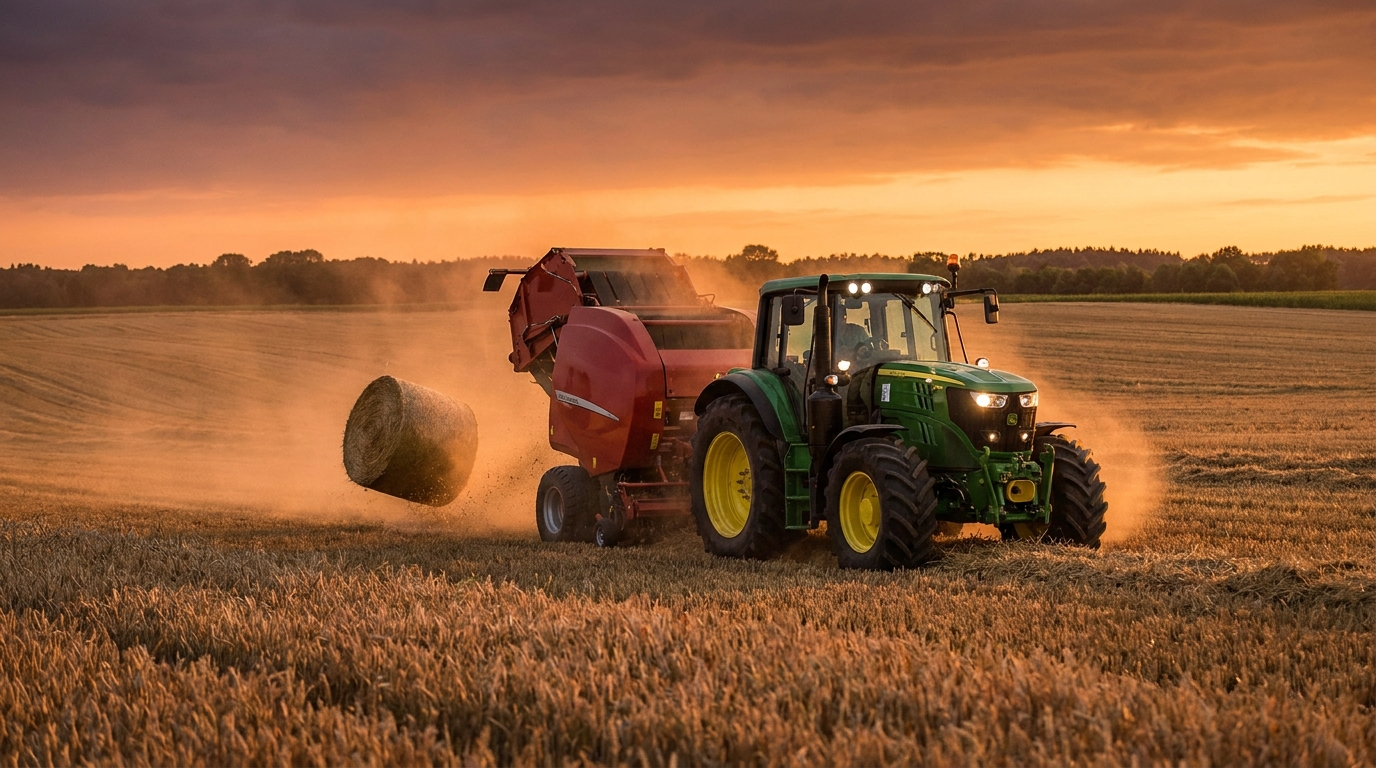
To calculate how much does a hay bale weigh in commercial terms, you must convert individual bale weights into standard US short tons of 2,000 pounds. This mathematical translation is crucial for auditing purchase receipts and managing trailer load logistics accurately. Knowing these conversions prevents overpaying and ensures your trucks carry legal, safe payloads.
Converting Bale Units to Standard Freight Tonnage
It is simple math: you divide 2,000 pounds by your average individual bale weight to determine how many units make up a standard US ton. If your shipping calculations are off, you might face expensive commercial highway violations or run out of winter feed early. Let’s look at how small square and large round bales translate to transport capacities.
- Small Square Conversion: At 50 pounds per bale, it takes exactly 40 bales to secure one US ton.
- Large Square Conversion: At 1,000 pounds per bale, only two units are needed to reach a full ton.
- Large Round Conversion: At 1,200 pounds per bale, approximately 1.6 bales complete the weight equivalent.
Key Takeaway: Standardizing unit counts to tonnage is critical for lawful highway transport and accurate feed accounting.
| Average Weight of Unit | Bales per Standard Ton (2,000 lbs) | Ideal Delivery Truck Payload Capacity | Total Bales on Full Semi-Trailer (24-Ton Limit) | |
|---|---|---|---|---|
| 35 lbs | 57.1 Bales | Gooseneck flatbed trailer | 1,371 Mini Bales | |
| 50 lbs | 40.0 Bales | Double-axle farm trailer | 960 Small Squares | |
| 70 lbs | 28.5 Bales | Flatbed commercial trailer | 684 Small Squares | |
| 750 lbs | 2.6 Bales | Semi-flatbed commercial rig | 64 Small Rounds | |
| 1,000 lbs | 2.0 Bales | Semi-flatbed commercial rig | 48 Large Squares | |
| 1,200 lbs | 1.6 Bales | Heavy commercial drop-deck | 40 Large Rounds |
Translating individual units into precise logistics metrics allows for optimization of bulk agricultural shipping routes.
Keep Your Hay Protected Year-Round — Get a Free Quote Now
Email:sales@showhoo.com.cn
Phone/WhatsApp:+86 186 7895 5927
Does storage affect how much does a hay bale weigh?
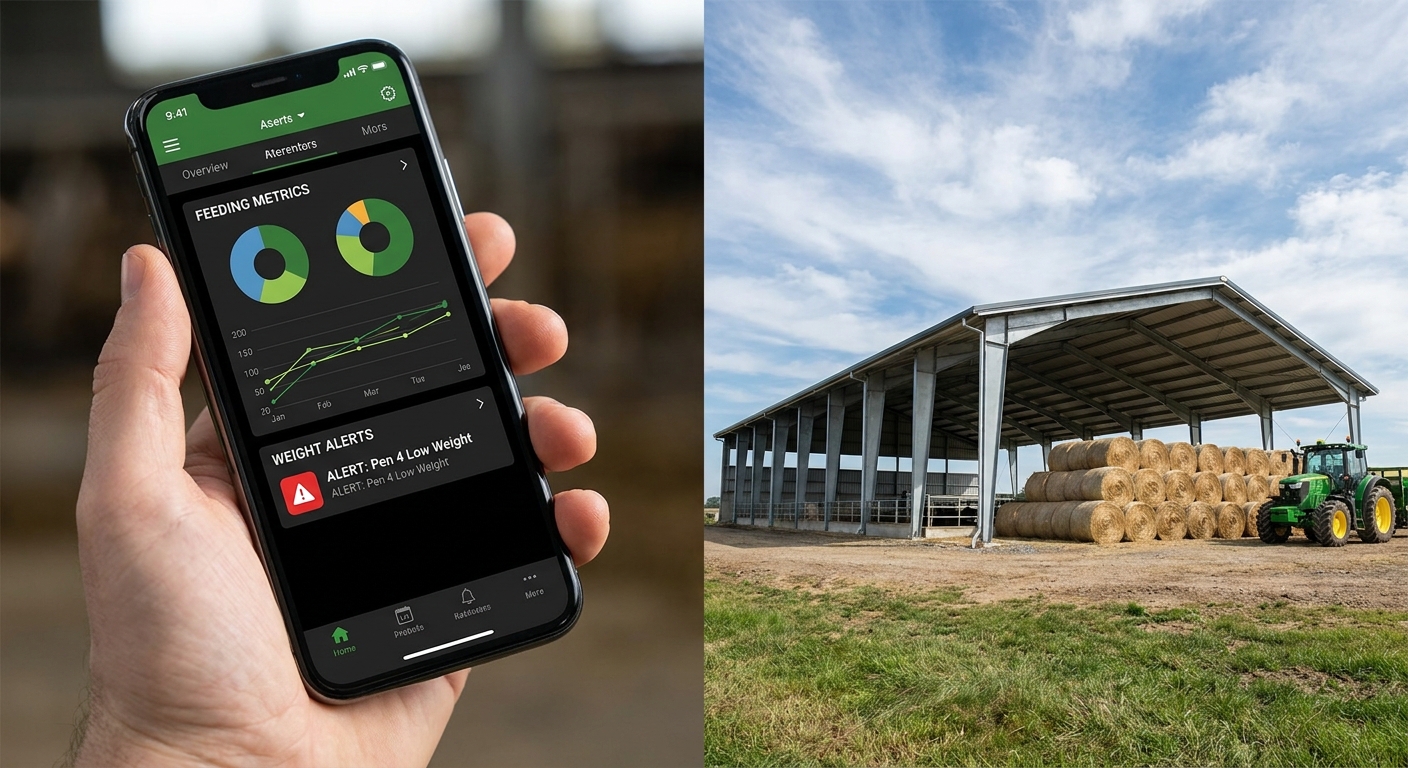
Yes, the storage environment directly controls how much does a hay bale weigh over time by regulating natural moisture loss and preventing physical crop decay. Storing hay in high-quality steel structures protects it from rainwater absorption and soil moisture, which ruin nutritional dry matter. To secure your harvest from environmental degradation, understanding how much does a hay bale weigh under different storage types is essential.
Protecting Forage Weight and Dry Matter Integrity
Look at it this way: you lose a significant portion of your crop’s value when rain and ground moisture rot the bottom layers of stacked hay. Uncovered outdoor stacks face dramatic dry matter losses, which compromises livestock nutrition and wastes hard-earned capital. Investing in indoor, well-ventilated storage ensures your hay preserves its weight and protein content.
- Elevate Storage Stacks: Use wooden pallets or clean gravel beds to stop rising ground moisture.
- Optimize Air Circulation: Leave small gaps between stacked rows to allow natural heat dissipation.
- Implement Steel Sheds: Store feed in fully enclosed or open-sided metal buildings to eliminate weather rot.
Key Takeaway: Proper indoor storage maintains optimal bale moisture, preserving nutritional value while eliminating heavy weather-related losses.
| Storage Environment | Average Annual Feed Spoilage | Moisture Retention Profile | Impact on Feed Nutritional Value | |
|---|---|---|---|---|
| Open Air (Uncovered) | 25% to 40% loss | Absorbs heavy rainwater; high rot | Extremely low (severe mold risks) | |
| Outdoor Stack + Tarp | 15% to 25% loss | High sweating; condensation risks | Moderate (interior bale core remains safe) | |
| Pallet Stack + Barn | Under 5% loss | Stable moisture level (12%-14%) | Excellent (maximum protein retention) |
This comparative breakdown proves that investing in engineered structural protection eliminates costly agricultural feed waste.
Are myths about how much does a hay bale weigh true?
Many common assumptions regarding how much does a hay bale weigh are misleading myths that can hurt your farm’s bottom line. Assuming two bales of the same size weigh the same, or that heavier bales are always superior, leads to inaccurate feeding and poor financial planning. Dispelling these misconceptions is crucial for running an efficient and safe agricultural business.
Debunking Core Forage Misconceptions and Rumors
Think again: you cannot determine nutritional quality or actual dry matter mass by simply looking at a bale’s dimensions. A highly compressed square bale can easily outweigh a loosely packed round bale, depending entirely on baler settings. Additionally, heavy weight often points to excess water rather than premium nutrition.
- Tension Variation: Baler pressure settings can alter the weight of identical-sized bales by up to 30%.
- The Water Trap: Exceptionally heavy bales often hide high moisture, raising mold risks.
- Density vs. Shape: Compression levels, rather than shape, dictate the true mass of stored feed.
Key Takeaway: Never purchase or feed hay based on visual volume alone; always rely on moisture and weight metrics.
| Common Industry Myth | Real-World Agricultural Fact | Impact on Feed Management | |
|---|---|---|---|
| “Bales of the same dimensions weigh the same.” | Weight varies by 20% to 30% depending on crop type and baler pressure. | Causes feeding deficits if ration calculations are based on count only. | |
| “Heavier bales always equal higher feed value.” | High weight is often caused by excess moisture, which leads to mold and spoilage. | Spoilage causes livestock health risks and high waste. | |
| “Round bales are always heavier than square ones.” | Ultra-dense large square bales are often much heavier than standard round bales. | Misleads logistics and flatbed truck planning calculations. |
Understanding these realities helps farm managers make smarter buying decisions and avoid costly feeding errors.
How do you optimize how much does a hay bale weigh?
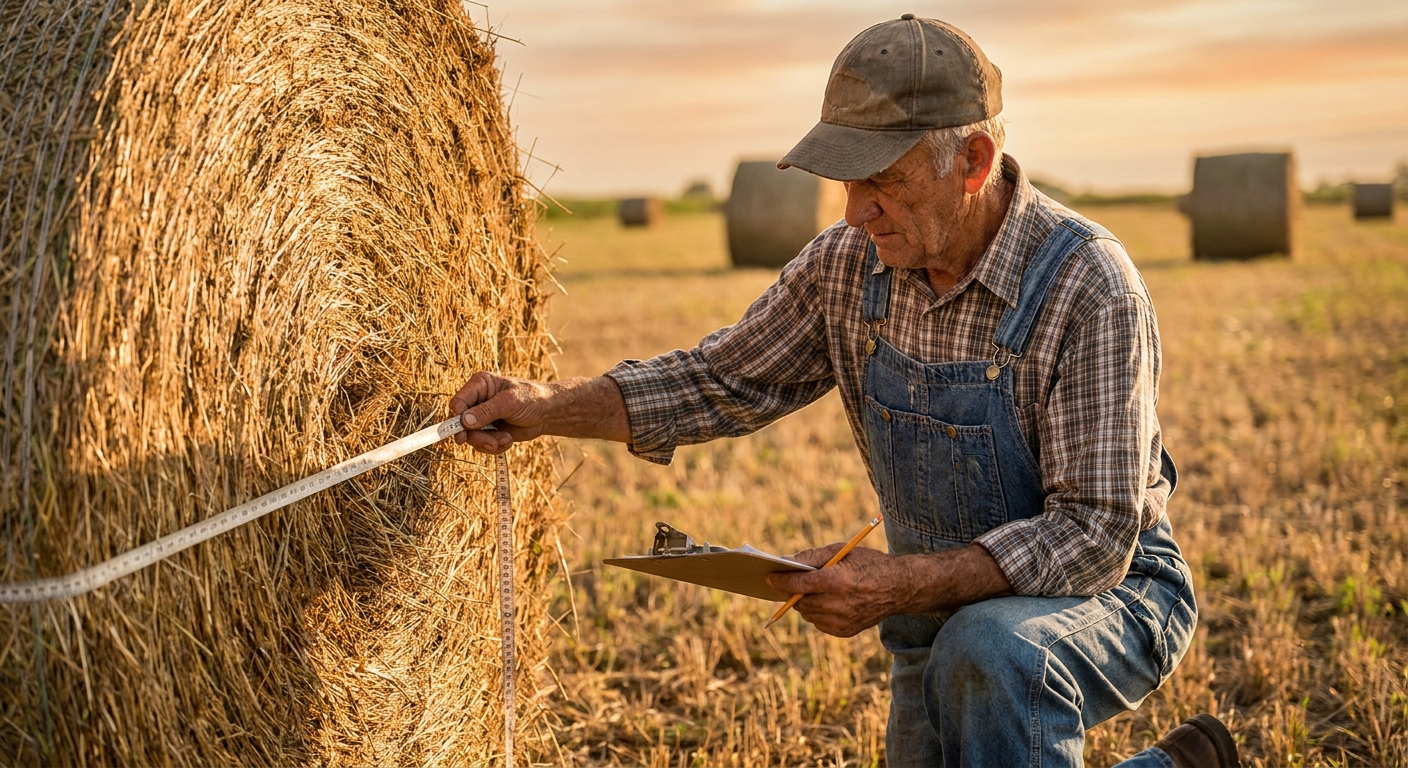
Optimizing how much does a hay bale weigh requires calibrating your baling equipment, harvesting crops at ideal maturity, and managing field dry-down times. By adjusting hydraulic tension and monitoring plant moisture, you can pack more nutrient-dense dry matter into every unit. Implementing these professional field techniques ensures that figuring how much does a hay bale weigh consistently aligns with your target feed goals.
Machinery Adjustments and Timing for Ideal Density
How do we achieve this? You must carefully adjust your baler’s hydraulic chamber pressure to match changing field conditions throughout the day. Cutting your crop at the late boot or early bloom stage ensures excellent leaf preservation and high fiber density. These steps allow you to fit more high-quality forage into fewer bales, reducing overall handling and storage costs.
- Calibrate Baler Springs: Maintain uniform pressure within the compression chamber to guarantee consistent density.
- Utilize Field Tedders: Accelerate dry-down times to prevent the crop from drying out unevenly.
- Target Ideal Moisture: Aim for a consistent 15% to 18% moisture window for stable, safe storage.
Key Takeaway: Equipment calibration and harvest timing work together to maximize bale density and preserve feed quality.
| Optimization Action | Machinery Adjustment | Targeted Moisture Window | Expected Improvement in Bale Quality | |
|---|---|---|---|---|
| Density Chamber Tune-up | Tighten tension springs/hydraulics | Neutral effect (mechanically compressed) | 15% more weight per unit; lower storage volume | |
| Harvest Maturity Timing | Cut early to mid-bloom stage | Ideal drying condition (15%-20%) | High leaf retention; maximum digestible protein | |
| Tedder Operations | Fluff windrows for fast, even drying | Safely reduces moisture to <18% | Eliminates damp spots; prevents mold and rot |
Implementing these standard practices ensures your harvest maintains peak weight consistency and excellent nutritional values.
Who will calculate how much does a hay bale weigh?
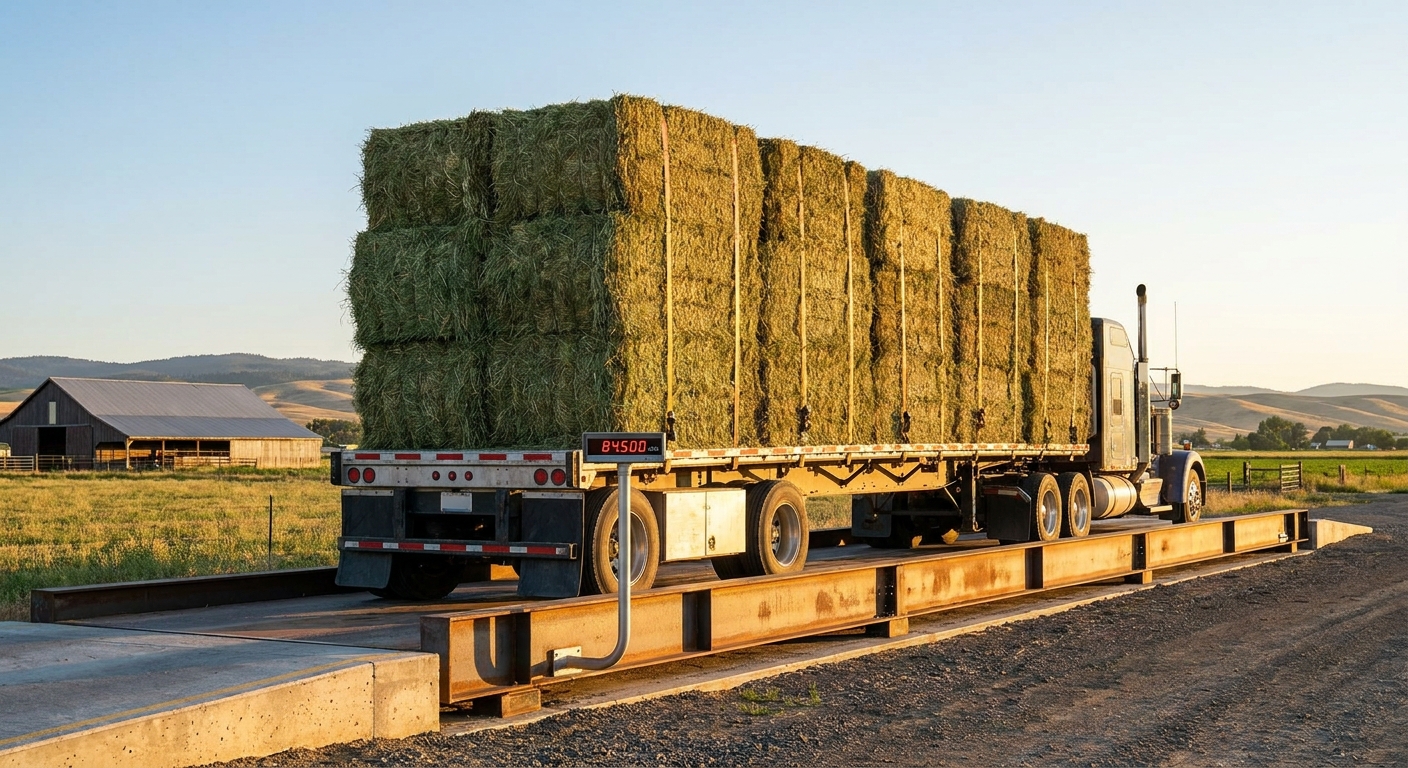
Measuring how much does a hay bale weigh requires using certified truck scales, hanging dial scales, or advanced agricultural management software to track your inventory. Commercial operations rely on these physical and digital tools to audit deliveries, calculate animal feed rations, and monitor financial performance. Combining modern software with heavy-duty scales lets you manage your forage assets with absolute precision.
Physical Scales and Modern Management Systems
Here is the bottom line: you cannot manage what you do not measure. By pairing certified physical scales with digital inventory tracking systems, you can monitor exact consumption rates and prevent winter feed shortages. Using these tools lets you identify poor-quality, moisture-heavy batches before they enter your barns.
- Audits Shipments: Verify that delivered weight perfectly matches your purchase invoices.
- Calculates Feeding Rates: Monitor daily herd dry matter consumption to optimize nutrition.
- Optimizes Facility Design: Design your steel storage structures to support known static weights.
Key Takeaway: Combining physical scales with digital tracking tools gives you full control over your farm’s logistics and feed budgets.
| Tracking System Type | Operational Function | Primary Business Advantage | Recommended Implementation | |
|---|---|---|---|---|
| Industrial Truck Scales | Weighs entire flatbed trailers | Direct verification of total shipping tonnage | Use at commercial delivery gates | |
| Hanging Tension Scales | Weighs individual sample units | Instantly calculates density and moisture variances | Keep in utility vehicles for field testing | |
| Agricultural Software | Tracks historical feed inventory | Predicts feed run-out dates and manages costs | Update daily via mobile dashboards |
Integrating scales with digital tracking systems ensures your operation remains highly profitable and logistically sound.
Conclusion: Build the Perfect Storage Solution for Your Farm
Managing the vast logistics and structural pressures of bulk forage requires deep agricultural expertise and exceptional engineering. Understanding bale weights resolves crucial issues like crop spoilage, feed budget deficits, and structural barn failures. At Showhoo Steel Structure, we design and manufacture elite, clear-span steel buildings that protect your inventory from the elements and support heavy agricultural loads. Our structures feature high clearances, customizable ventilation, and outstanding wind resistance to keep your hay perfectly dry and secure. Ready to upgrade your farm infrastructure with a premium, long-lasting metal barn? contact us today to receive a custom engineering quote designed specifically for your operation’s unique storage needs.
Protect Your Hay With a Durable Steel Warehouse — Contact Us Today!
Email:sales@showhoo.com.cn
Phone/WhatsApp:+86 186 7895 5927
Frequently Asked Questions About Hay Weights
Can I estimate a bale’s weight without a scale?
Yes, you can calculate an estimate by determining the volume of the bale and multiplying it by its crop density. While this provides a reliable operational baseline, using a physical scale remains the only way to get a legally binding weight.
What’s the best moisture level for storing round bales?
The optimal moisture target is strictly under 15 percent to ensure long-term stability and prevent mold. Storing round bales with higher moisture levels triggers internal heating, which degrades feed value and increases fire risks.
How do I know if my hay bales are too heavy?
You should use a digital moisture meter probe to check if high water content is causing the excess weight. If the moisture reads above 20 percent, the bale is too heavy because of trapped water, making it unsafe for indoor stacking.
Can I mix different crop bales in the same trailer load?
Yes, you can mix different crop varieties on a single trailer as long as you calculate the total payload weight carefully. Because alfalfa is much heavier than grass or straw, place the heaviest bales over the trailer axles to maintain balance and safety.