
The Highland cow is an iconic, exceptionally hardy Scottish breed prized globally for its high-quality beef, low-maintenance lifestyle, and dramatic shaggy appearance. Managing rough, marginal acreage under punishing weather conditions often feels like an uphill battle for modern agricultural operators. Traditional cattle breeds frequently struggle in harsh climates, demanding massive feed inputs, constant veterinary intervention, and high-cost indoor housing that rapidly eat away at your profit margins.
Fortunately, integrating a heritage highland cow herd into your business model solves these land management and budget struggles perfectly. Their evolutionary background equips them to convert poor forage into premium beef while needing very little structural support.
Why is the highland cow a top asset for modern farms?
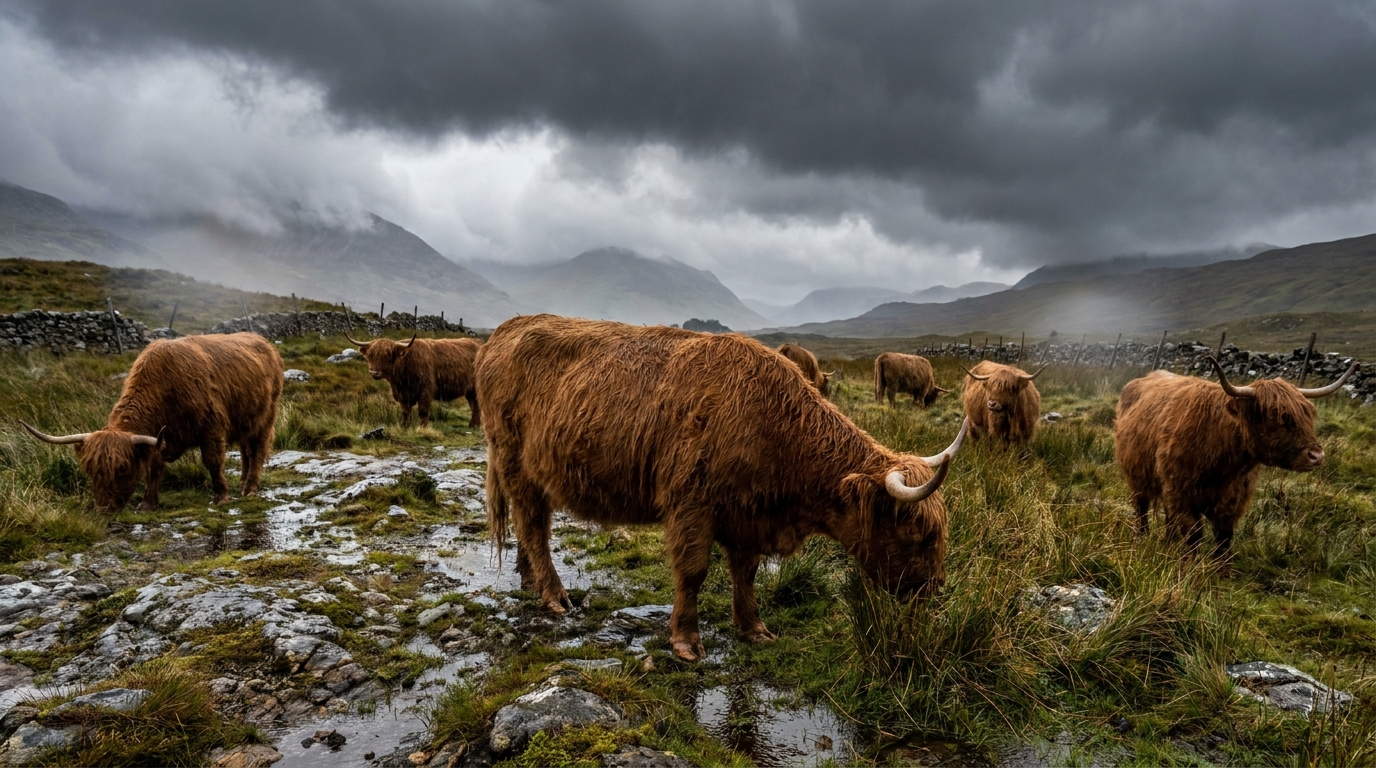
The highland cow is an outstanding agricultural asset because it drastically reduces input costs while producing a highly marketable, premium-tier beef product. These resilient animals are uniquely capable of transforming neglected brush and marginal pastures into valuable biomass. Their presence on your property also generates direct interest from local markets and agritourism channels.
What makes them a highly profitable livestock choice?
You might be wondering how a heritage breed can compete with modern commercial giants. Think about it: traditional livestock operations spend thousands of dollars on high-energy grains and climate-controlled infrastructure to keep cattle healthy.
The reality is that these shaggy animals thrive without these expensive inputs.
- Excellent feed conversion on poor quality pastures.
- Premium market prices for high-quality, lean beef.
- Outstanding longevity that extends their productive life.
How do they minimize overall farm operating costs?
Managing farm overhead requires you to look closely at feed and veterinary expenses. Here is the kicker: their natural resilience means they suffer from fewer diseases and require less veterinary care.
You can easily graze them on rugged hillsides where other cattle would starve.
- Lower annual veterinary bills due to high natural immunity.
- Minimal winter feed costs through efficient roughage digestion.
- Reduced need for intensive manual labor during daily operations.
| Cost Category | Standard Breed Costs | Highland Cow Costs | |
|---|---|---|---|
| Winter Supplemental Feed | High (Requires grain/alfalfa) | Low (Thrives on lower-grade hay) | |
| Veterinary Care & Meds | Regular (Shorthair diseases) | Very Low (Exceptional hardiness) | |
| Infrastructure & Barns | High (Insulated housing) | Low (Basic open-front windbreaks) |
Comparing these financial metrics demonstrates that heritage breeds offer a highly efficient, low-overhead alternative to commercial beef production.
Key Takeaway: Choosing this breed allows B2B landowners to reclaim high-input costs and transform low-value pasturelands into highly profitable, self-sustaining grazing zones.
How did the highland cow evolve its extreme resilience?
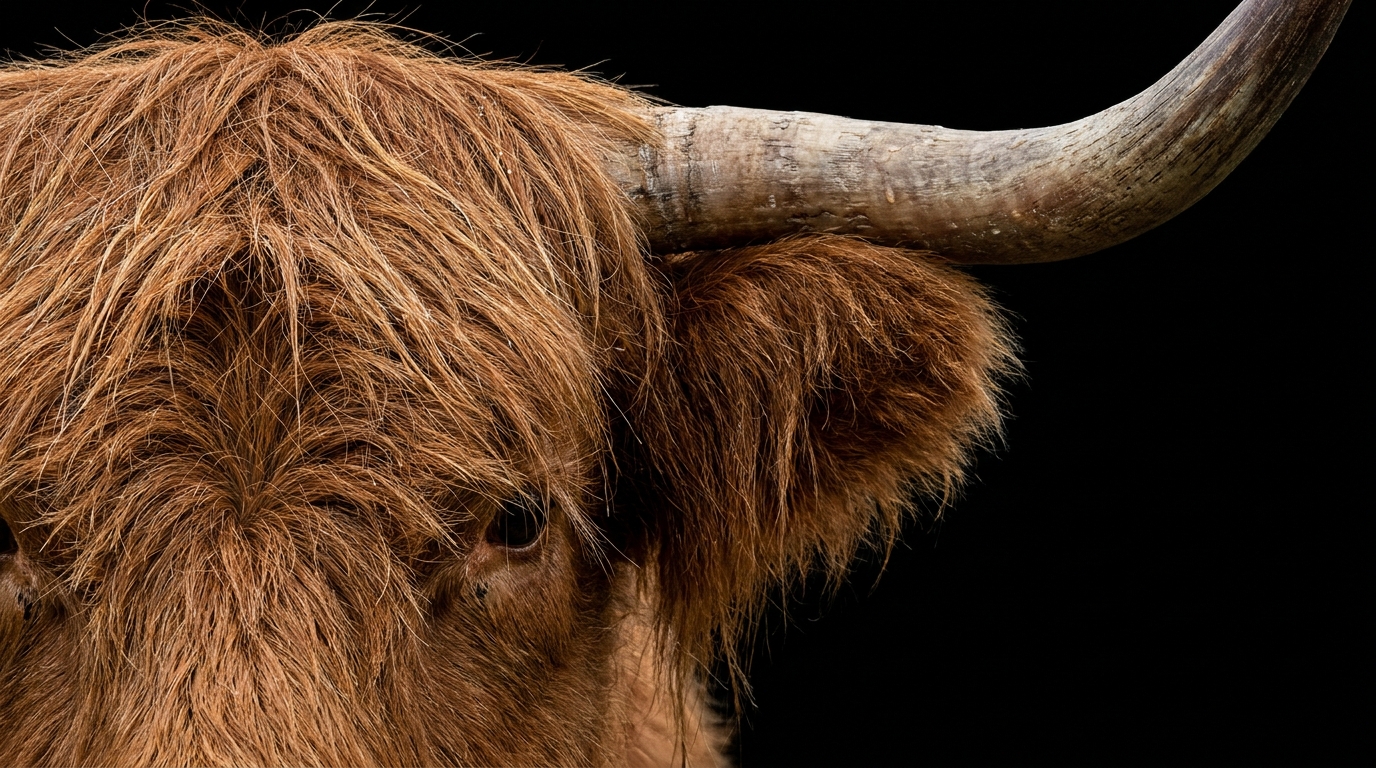
The highland cow evolved its legendary resilience over centuries by surviving in the unforgiving, wet, and windy climates of northern Scotland. This severe selective pressure created an animal that possesses unmatched physiological defenses against cold weather. Consequently, they do not suffer from the same environmental stresses that plague standard domestic cattle.
Where does this resilient heritage breed originate?
You should know that the historic Scottish Highlands shaped this animal’s biology. Look: the combination of wet marshes, rocky hills, and freezing winters forced them to develop a highly unique survival mechanism.
Over centuries, only the hardiest individuals survived to pass on their genetics.
- Origin in the stormy Scottish Highlands and Western Isles.
- Natural selection based on local feed scarcity and severe storms.
- Documented as one of the oldest registered cattle breeds.
How do cold-climate adaptations reduce your overhead?
When you run an outdoor operation, winter weight loss in cattle is a major financial drain. Think about it: normal cows burn critical calories just to stay warm when temperatures drop.
This breed maintains its weight perfectly because its thick coat blocks freezing winds.
- Caloric energy is saved instead of burned for body heat.
- Reduced need for expensive grain supplements in freezing weather.
- Higher winter survival rates for calves born in open fields.
| Evolutionary Pressure | Physical Adaptation | Practical B2B Benefit | |
|---|---|---|---|
| Harsh wind and rainfall | Double-layered hair coat | Keeps skin dry and warm without indoor heating | |
| Poor quality winter forage | Highly efficient rumen | Cuts down pasture maintenance and feed bills | |
| Rocky, steep terrain | Strong, sure-footed hooves | Accesses remote grazing areas without injury |
These natural evolutionary traits allow you to manage a highly resilient herd without investing in artificial heating or high-energy grain feeds.
Key Takeaway: Leveraging the breed’s evolutionary hardiness directly translates to lower operational costs and a more sustainable, self-sufficient pasture model.
Boost Farm Profits with Highland Cows!
Email:sales@showhoo.com.cn
Phone/WhatsApp: +86 186 7895 5927
What are the key features of a highland cow’s anatomy?
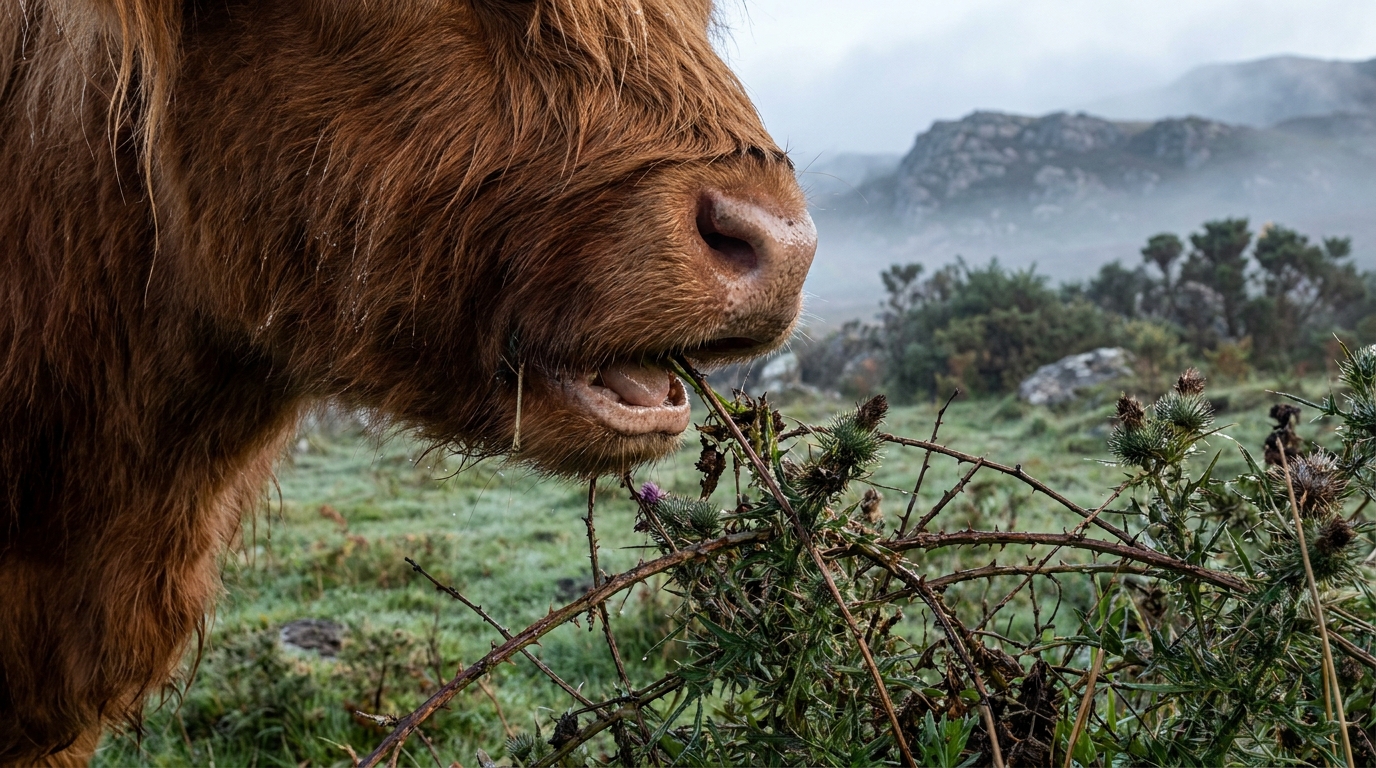
A mature highland cow displays several unique anatomical traits, most notably a shaggy double coat, large sweeping horns, and a heavy forelock. These physical structures are not merely decorative but serve critical survival and foraging functions in the field. Understanding these physical traits helps you appreciate how well they utilize tough pastures.
How does the thick double coat protect them?
You will find that their unique double coat provides incredible weather protection. Here is the kicker: the outer hair is long and oily to repel rain, while the undercoat acts as a dense woolly blanket.
This physical barrier means they do not need to build up thick layers of backfat.
- Outer coat grows up to 13 inches long to shed heavy rain.
- Oily secretion keeps moisture completely away from the skin.
- Insulating undercoat traps warm air directly against the body.
Why do both males and females carry massive horns?
You might be wondering if those large horns are a hazard or a help. Look: they use their horns to sweep aside heavy snow to find grass and clear woody brush.
This makes them highly effective land-clearing tools for overgrown acreage.
- Horns sweep upward in cows and forward in bulls.
- Used as a natural defense against potential field predators.
- Helps the animals navigate dense undergrowth and brush easily.
| Anatomical Part | Physical Characteristic | Field Functionality | |
|---|---|---|---|
| Double Fleece | Long oily guard hair over wool | Complete water and wind resistance | |
| Keratin Horns | Thick, sweeping structures | Snow clearing and pasture defense | |
| Dossan (Forelock) | Long fringe covering the eyes | Protection from dust, flies, and wind |
This biological blueprint minimizes common health problems like pinkeye and rain scald, ensuring your herd remains highly productive.
Key Takeaway: Investing in animals with these protective physical features reduces the need for expensive chemical insect treatments and continuous veterinary monitoring.
How much space does a highland cow require to thrive?
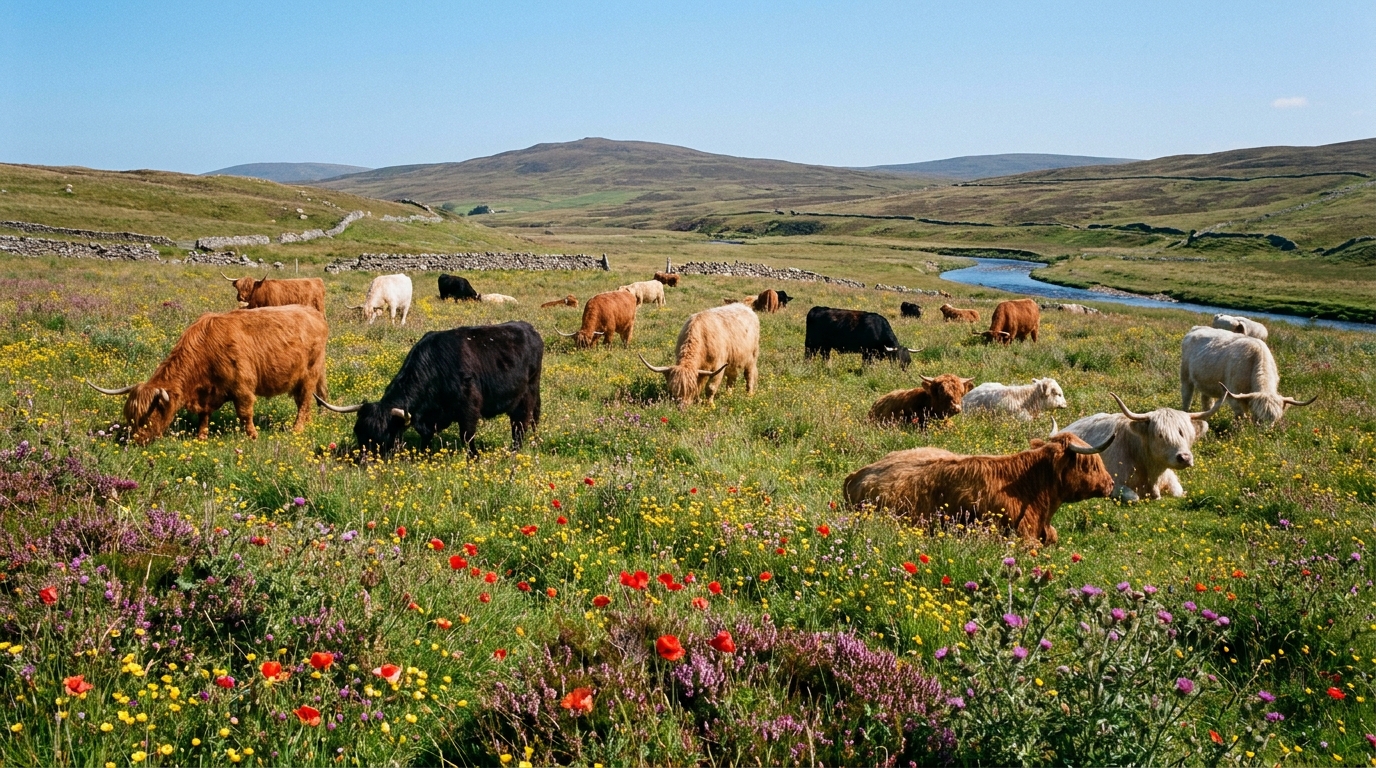
Determining pasture requirements for a highland cow is straightforward because their space needs are highly adaptable to local vegetation quality. They are lighter on the land than heavy commercial breeds, which helps prevent soil erosion. This adaptability allows B2B landowners to run a highly efficient grazing program on diverse terrains.
What are the exact acreage needs of standard herds?
You should plan your stocking rates based on your specific regional grass growth. Think about it: a standard recommendation is 1.5 to 2 acres of pasture per animal.
However, their non-selective eating habits mean they utilize marginal brush lands much better than other breeds.
- 1.5 to 2 acres per cow-calf pair on moderate pasture.
- Lower acreage required if implementing managed rotational grazing.
- Excellent ability to thrive on scrubland and rocky hillsides.
Are miniature and micro classes viable for your farm?
You might be wondering about smaller versions of this breed that you see online. But wait, there’s more: while miniature lines exist, “micro” is not an officially recognized breed category.
These small animals may look appealing, but they lack the carcass weight needed for B2B beef markets.
- Miniature lines typically stand under 42 inches tall.
- Mainly targeted toward small hobby farms and pet markets.
- Lower commercial beef yields compared to standard breed lines.
| Animal Classification | Shoulder Height | Recommended Acreage | Primary B2B Purpose | |
|---|---|---|---|---|
| Standard Highland Cow | 42″ – 48″ | 1.5 – 2.0 Acres | Premium Beef & Breeding | |
| Miniature Highland | Under 42″ | 0.5 – 1.0 Acres | Agritourism & Pets | |
| Micro Class (Unregistered) | Extremely Small | Highly Variable | Lifestyle Marketing Only |
This spatial comparison highlights why standard-sized animals are the best choice for commercial agricultural operations.
Key Takeaway: Stick to standard registered lines to ensure your herd has the structural scale to generate real, measurable beef and breeding profits.
What winter shelter design does a highland cow need?
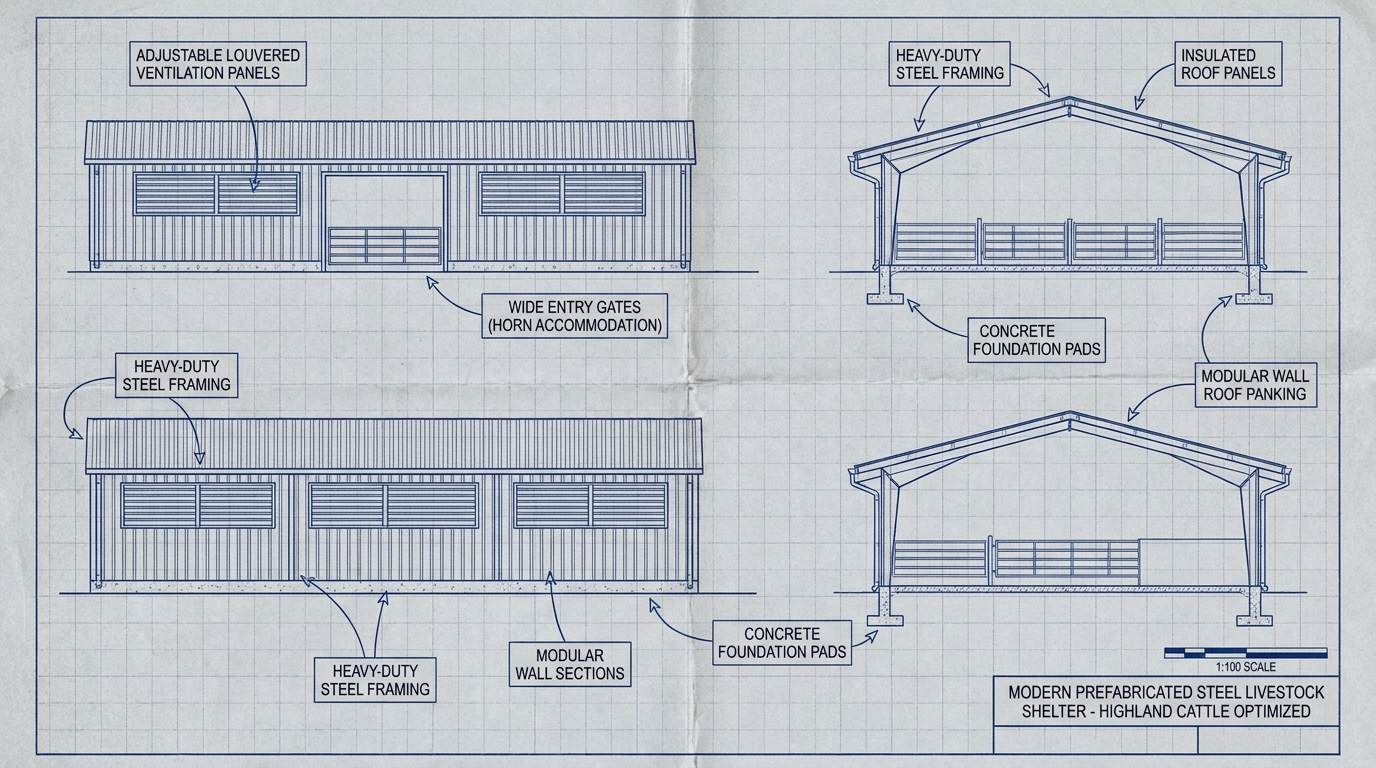
A winter shelter for a highland cow should prioritize excellent ventilation and protection from freezing winds rather than warm insulation. Because these animals carry heavy coats, keeping them in hot, closed barns can lead to respiratory illnesses. A well-designed, durable shelter protects your livestock capital during severe winter storms.
Do these cold-hardy animals require heavy barns?
You do not need to construct a highly complex, heated barn for this breed. Look: their double-layered coats provide all the thermal protection they need in freezing temperatures.
However, freezing rain combined with high winds can chill calves, so basic protection is highly recommended.
- Simple three-sided shelters work best in most climates.
- Requires high-clearance doorways to accommodate their sweeping horns.
- Good natural ventilation is critical to prevent pneumonia in winter.
How do steel shelter plans optimize herd health?
When you design a modern ranch, choosing durable structural materials is a vital long-term decision. Think about it: wood rot, mold, and damage from rubbing horns can ruin standard timber sheds in a few seasons.
Utilizing prefabricated steel ensures a lifetime of structural integrity without constant maintenance.
- Resistance to mold, rotting, and insect infestations.
- Strong steel frames easily withstand high snow and wind loads.
- Quick on-site assembly reduces your initial construction labor costs.
| Shelter Material | Maintenance Needs | Lifespan | Cleanliness & Hygiene | |
|---|---|---|---|---|
| Traditional Timber | High (Painting, pest control) | Short to Medium | Poor (Porous wood harbors bacteria) | |
| Prefabricated Steel | Extremely Low (Rust-resistant) | Long (Decades of use) | Excellent (Non-porous, easy to sanitize) | |
| Fabric/Tarp Sheds | Very High (Tears easily) | Very Short | Moderate (Prone to moisture buildup) |
This comparison demonstrates why modern agricultural operators prefer steel building solutions to protect their livestock investments.
Key Takeaway: Build with steel to secure a highly durable, low-maintenance winter shelter that keeps your herd healthy and your maintenance costs low.
Is the highland cow temperament safe for handlers?
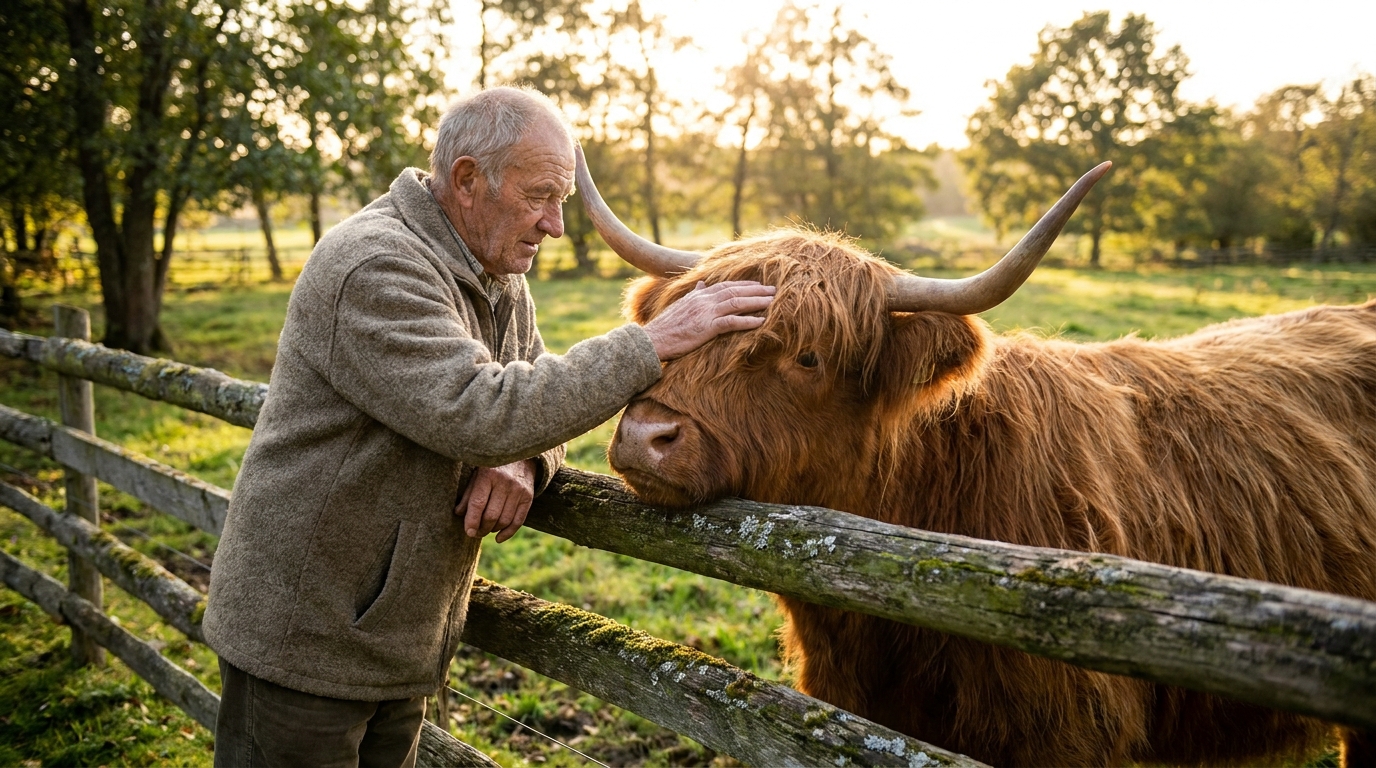
The highland cow is highly regarded for its quiet, gentle, and docile temperament when handled regularly by humans. Despite their intimidating appearance, they rarely show aggression toward workers in standard farming setups. This calm behavior makes them much easier to manage than high-strung commercial beef breeds.
Are these horned cattle safe around farm workers?
You will find that these animals respond very well to low-stress handling methods. Here is the kicker: a calm herd means fewer injuries to both your cattle and your team.
They are slow-moving and curious, which makes routine checks straightforward.
- Naturally docile and cooperative under normal pasture conditions.
- Strong social structure keeps the herd calm and cohesive.
- Saves labor because a single handler can often manage them.
How can you establish safe handling routines?
When you work with horned cattle, proper handling design is absolutely essential. Look: you must ensure your chutes, gates, and sorting alleys are wide enough to accommodate their horns safely.
Consistently spending time around the herd builds up trust and keeps them manageable.
- Build wider handling lanes to prevent horn damage.
- Maintain extra caution around cows with newborn calves.
- Use positive reinforcement like feed treats during sorting.
| Handling Challenge | Standard Cattle Breed | Highland Cattle Breed | |
|---|---|---|---|
| Handler Stress | High (Flighty, easily spooked) | Very Low (Naturally calm and curious) | |
| Facility Width | Standard width is sufficient | Requires wider gates for sweeping horns | |
| Labor Requirements | Multiple workers often needed | Often managed by a single operator |
Adapting your infrastructure to match this breed’s physical shape ensures safe and efficient handling operations.
Key Takeaway: Train your staff in low-stress handling and provide wide gates to make working with this gentle breed a safe, stress-free experience.
Boost Farm Profits with Highland Cows!
Email:sales@showhoo.com.cn
Phone/WhatsApp: +86 186 7895 5927
What is the actual size and weight of a highland cow?
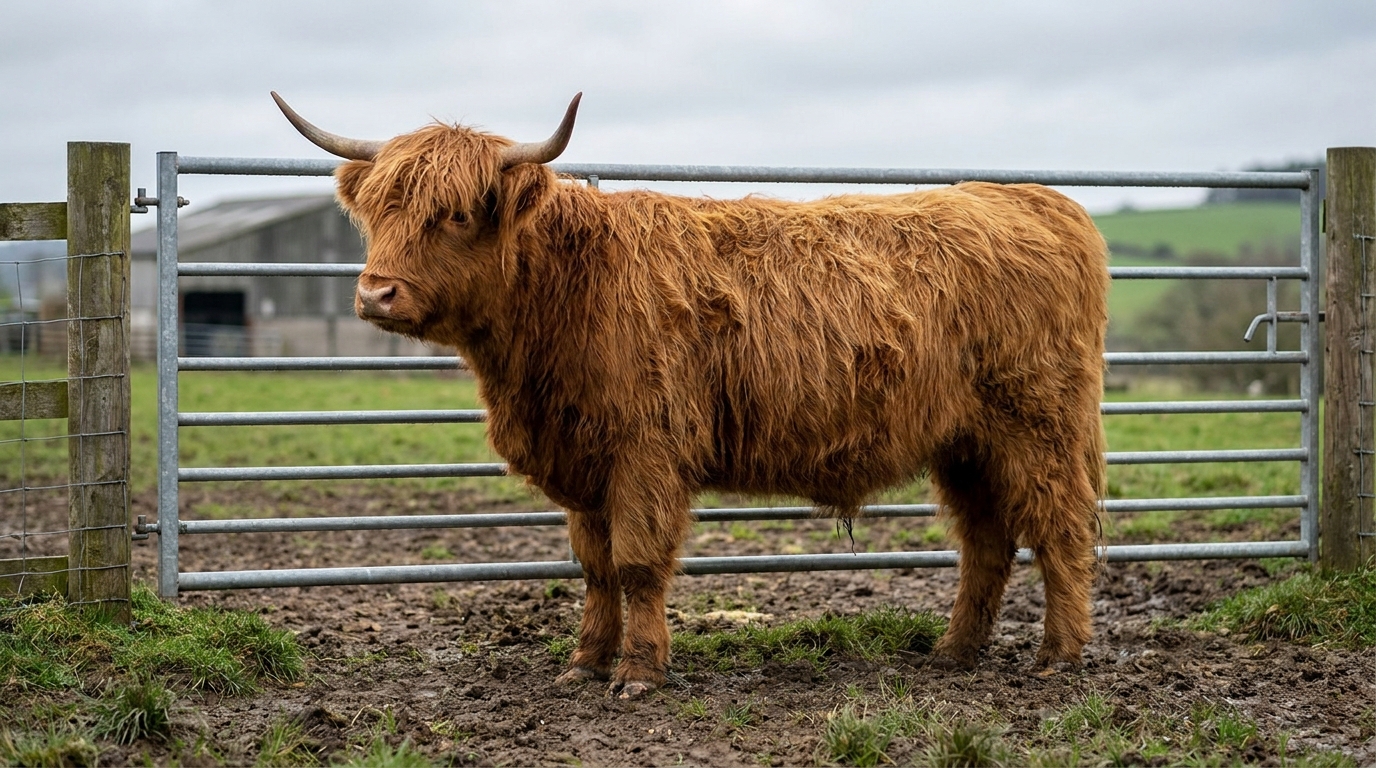
The typical size and weight of a highland cow classify it as a medium-sized beef breed. They are shorter and more compact than massive industrial cattle like Charolais or Angus. This moderate physical scale is highly advantageous for preventing pasture damage and ensuring easy management.
What are the average dimensions of mature animals?
You need to understand the physical dimensions of these cattle before setting up your pasture gates. Think about it: a mature cow typically stands 42 to 48 inches tall at the shoulder.
They carry a sturdy, muscular frame that looks heavier than it actually is due to their thick coats.
- Mature female weight: 900 to 1,300 pounds.
- Mature male (bull) weight: 1,300 to 1,800 pounds.
- Slightly shorter stature compared to industrial beef breeds.
How do their physical sizes impact pasture management?
Managing soil health is a major priority if you graze cattle on wet clay soils. But wait, there’s more: because they are lighter, they do not compact the soil like heavier cattle do.
This makes them perfect for wet climates where preserving pasture grass is critical.
- Lower soil compaction prevents erosion and weed outbreaks.
- Reduced damage to wet pastures during autumn and spring.
- Ideal for grazing delicate conservation lands and forests.
| Metric | Shorthorn Beef Breeds | Standard Highland Cows | |
|---|---|---|---|
| Mature Cow Weight | 1,200 – 1,600 lbs | 900 – 1,300 lbs | |
| Ground Pressure | High (Heavy soil compaction) | Low (Gentle on wet pasturelands) | |
| Feed Consumption | High daily intake requirements | Highly efficient, lower intake needs |
This physical profile demonstrates why a compact breed is highly suited for sustainable and regenerative farming systems.
Key Takeaway: Choose a medium-sized breed to protect your precious pasture soil from heavy hoof compaction while maintaining steady beef yields.
How do you manage breeding for a highland cow herd?
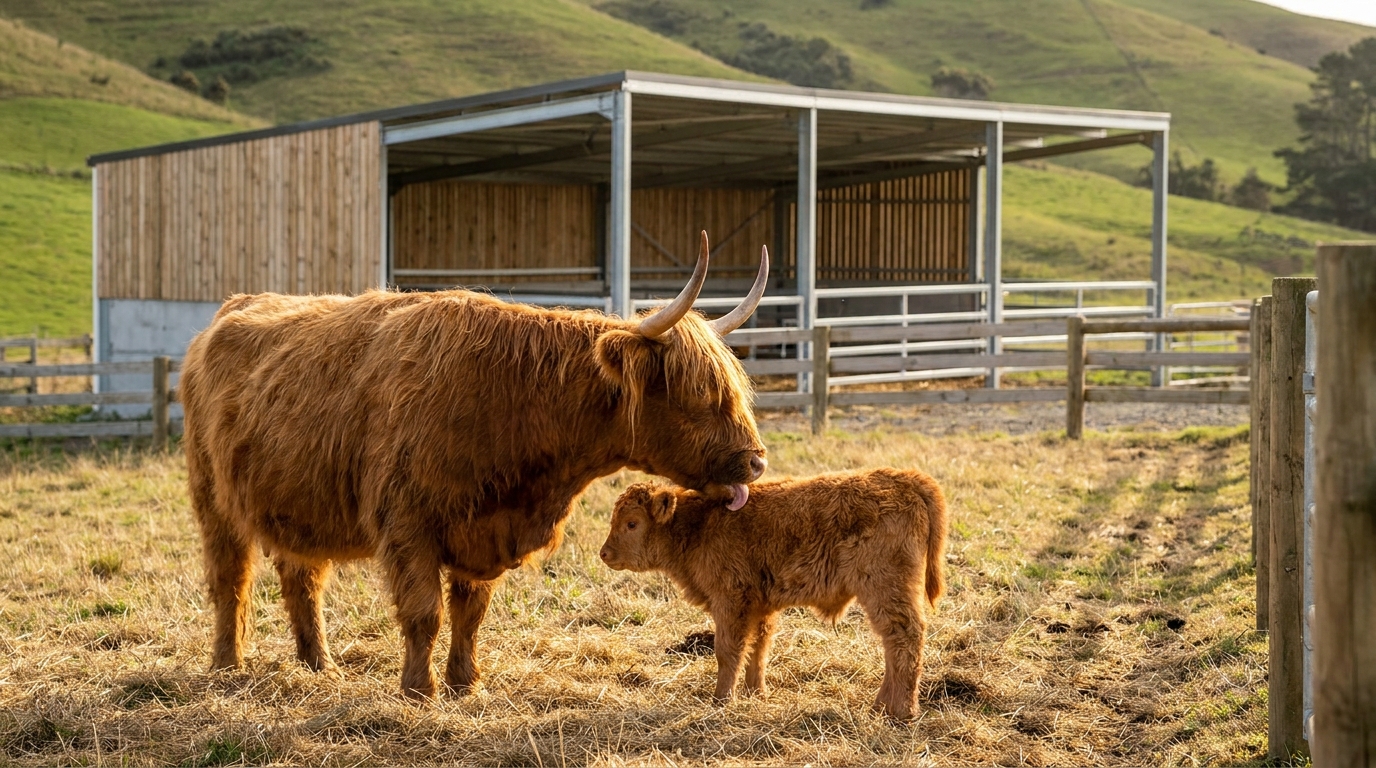
Breeding a highland cow is highly efficient because they are known for easy calving and extremely strong maternal instincts. They have long reproductive lifespans, which means you can raise calves from a single cow for up to twenty years. This long-term breeding capability significantly increases your farm’s return on investment.
When do heifers reach structural breeding maturity?
You should plan your breeding timeline to allow young heifers to develop fully before their first pregnancy. Think about it: breeding them too early can stunt their physical growth and cause calving problems.
Most responsible breeders wait until heifers are 18 to 24 months old.
- Puberty is reached around 12 to 14 months of age.
- Breeding age target: 18 to 24 months for skeletal safety.
- Ensures a wider pelvic opening for completely trouble-free births.
What are the key stages of the gestation cycle?
You can expect a standard gestation period of approximately 283 days. Look: they rarely need human assistance during delivery, as their calves are born small and highly vigorous.
After birth, the cows are highly protective and attentive mothers.
- Gestation period matches standard beef breeds (283 days).
- Low birth weights (50 to 70 lbs) prevent difficult calving.
- Calves are born with a thick coat, allowing immediate outdoor survival.
| Breeding Phase | Standard Target | Key Management Action | |
|---|---|---|---|
| Heifer Breeding Age | 18 – 24 Months | Monitor growth and feed quality | |
| Gestation Duration | ~283 Days | Provide balanced pasture minerals | |
| Calving Support | Minimal to None | Provide a clean, dry, draft-free field |
Tracking these breeding milestones keeps your reproduction rates high and minimizes calf mortality.
Key Takeaway: Rely on the breed’s natural calving ease to reduce your birth watch labor, keeping newborn losses next to zero.
Boost Farm Profits with Highland Cows!
Email:sales@showhoo.com.cn
Phone/WhatsApp: +86 186 7895 5927
What care guidelines keep a highland cow healthy?
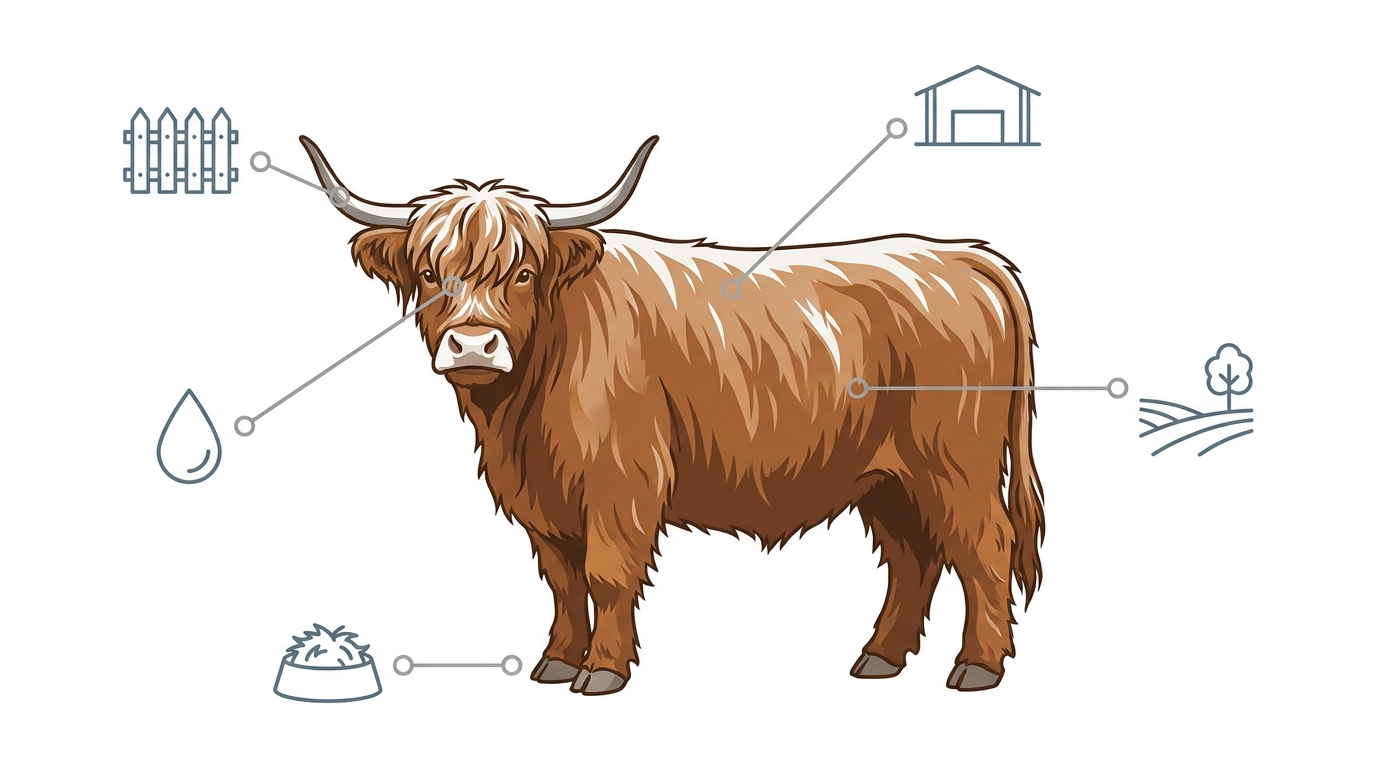
Keeping a highland cow in peak health requires basic pasture management, clean water, and standard mineral supplements. Although they are highly resistant to common bovine diseases, neglecting their basic nutritional needs will lower your calving percentages. Following a structured care routine keeps your operating costs extremely low.
What feeding strategy maintains ideal body condition?
You will appreciate how easily these cattle convert rough forage into energy. Here is the kicker: they can eat woody plants and tough brush that other cattle breeds completely ignore.
This non-selective grazing helps clean up overgrown pasturelands.
- High-fiber diets are highly suitable for their digestive systems.
- Requires quality hay during freezing winter months.
- Access to mineral licks prevents local trace nutrient deficiencies.
What routine medical care does the breed require?
When you manage a herd, keeping up with basic medical prevention saves thousands in emergency vet bills. Look: they have excellent natural resistance to foot rot and pinkeye due to their physical traits.
Regular deworming and standard vaccinations are still necessary to maintain herd health.
- Monitor hoof growth, although pasture rocks naturally wear them down.
- Administer annual core cattle vaccinations on a strict schedule.
- Conduct regular herd checks to monitor body condition scores.
| Care Requirement | Optimal Frequency | Primary Field Objective | |
|---|---|---|---|
| Pasture Rotation | Every 1 to 2 weeks | Prevents overgrazing and worm cycles | |
| Mineral Supplement | Available year-round | Maintains strong skeletal and horn growth | |
| Vaccinations | Annually | Prevents major contagious bovine viruses |
This proactive management plan guarantees a highly disease-resistant herd with minimal veterinary expenses.
Key Takeaway: Combine their natural hardiness with standard preventive care to achieve a highly efficient, self-sustaining cattle business.
Is a highland cow profitable for niche beef markets?
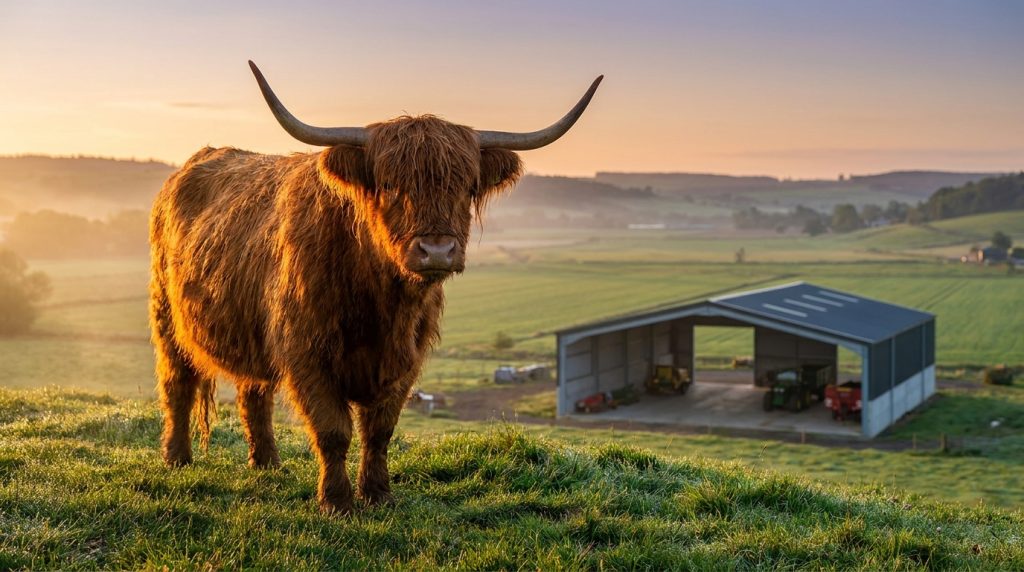
The highland cow represents a highly lucrative opportunity for boutique beef producers and landowners seeking premium retail prices. Their grass-fed meat is incredibly lean, flavorful, and low in cholesterol, which makes it highly attractive to health-conscious consumers. By targeting this specialty market, you can bypass low commodity beef prices.
Why does their beef command a significant premium?
You can market this beef at premium prices because of its superior nutritional profile. Think about it: health-conscious buyers are happy to pay more for grass-fed meat that is lower in fat than standard chicken.
The meat is also incredibly tender because of their slow-growing genetics.
- Extremely lean meat with lower fat and cholesterol levels.
- High iron and protein content compared to commercial beef.
- Exceptional marbling and rich, traditional beef flavor.
How does conservation grazing generate extra revenue?
You might be wondering how to monetize land-clearing services on your property. But wait, there’s more: government agencies often pay ranchers to graze these cattle on state lands to control invasive plants.
This dual-income model turns land maintenance into a direct source of profit.
- Earn land management fees from private and public estates.
- Improve your pasture soils without using chemical herbicides.
- Reduce your pasture mowing costs through natural weed grazing.
| Target Market | Pricing Potential | Main Selling Point | |
|---|---|---|---|
| Boutique Butcher Shops | 20% to 40% above market price | High-quality, tender heritage meat | |
| Direct-to-Consumer | High premium retail price | Health benefits of grass-fed beef | |
| Conservation Contracts | Steady contract payments | Eco-friendly land clearing services |
These niche business avenues demonstrate how heritage cattle generate far higher margins than commodity beef breeds.
Key Takeaway: Focus on premium direct-to-consumer sales and conservation grazing to maximize the financial returns of your herd.
Conclusion & CTA
To wrap up, the Highland cow is a highly efficient and resilient asset that solves major agricultural challenges. By dramatically lowering winter feed bills, utilizing marginal grazing lands, and reducing the need for high-maintenance indoor facilities, this breed is a game-changer for B2B agricultural operations. While their natural hardiness is incredible, protecting your herd during severe winter weather with robust shelter ensures consistent calving rates and healthy herd growth.
We specialize in providing high-quality, prefabricated steel structures tailored specifically for modern livestock farms. Our custom-designed sheds and barns accommodate wide horns, offer superior natural ventilation, and withstand the toughest winter conditions with zero maintenance. Let us help you design the perfect, long-lasting setup for your growing herd; contact us today to receive a factory-direct quote and build a highly profitable, sustainable farming future.
Boost Farm Profits with Highland Cows!
Email:sales@showhoo.com.cn
Phone/WhatsApp: +86 186 7895 5927
FAQ
Can I raise these cattle in hot climates?
Yes, they are highly adaptable. They will naturally shed their thick shaggy coats much earlier in the spring, though you must provide them with deep shade and plenty of clean, cool water.
What’s the best fencing setup to secure them?
A high-tensile electric or woven wire setup is the most reliable option. The physical posts must be exceptionally sturdy because their large horns are frequently used for rubbing.
How do I know if my pasture acreage is enough?
You should calculate based on a standard 1.5 to 2 acres per pair ratio. This ensures they have plenty of forage to meet their nutritional needs without overgrazing.
Can I co-graze them with other livestock?
Yes, they are excellent candidates for multi-species programs. Highland cattle focus on coarse brush and weeds, while sheep and horses focus on shorter grasses, maximizing pasture utility.
What’s the best shelter style to protect them?
An open-front prefabricated steel livestock shed is the absolute best solution. This configuration provides dry wind protection while ensuring maximum natural ventilation to prevent respiratory illnesses.