
Building a durable and efficient steel structure showroom requires integrating high-precision pre-engineered steel framing with strategic architectural layouts to optimize spatial flexibility and long-term durability. Imagine investing millions of dollars into a new brick-and-mortar showroom, only to face extensive construction delays, rising material costs, and a final layout cluttered with intrusive columns that ruin your product displays. This structural nightmare not only drains your capital reserves but also delays your grand opening, allowing competitors to capture your target audience while your inventory sits idle in warehouse storage.
Fortunately, choosing a modern, sustainable pre-engineered steel system solves these issues entirely by accelerating assembly timelines and providing wide, column-free interior spans. By learning How to build a showroom building using advanced metal fabrication, you can create an architecturally stunning, cost-effective commercial facility that elevates your brand presence from day one.
Why Choose Steel for Commercial Showroom Construction?
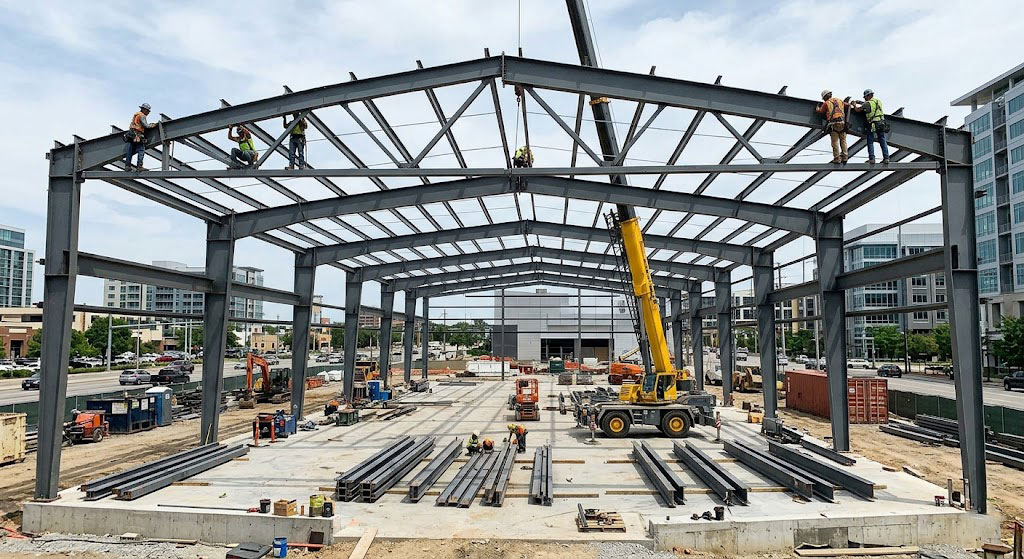
Choosing steel for commercial showroom construction provides you with unmatched structural strength, rapid assembly times, and exceptional floor layout flexibility. When evaluating How to build a showroom building that delivers maximum return on investment, steel stands out as the ultimate commercial material. Its superior strength-to-weight ratio allows for wide, column-free spaces that are perfect for showcasing premium products.
Unmatched Architectural Design Flexibility
Think about this: how often do you see traditional concrete structures limited by thick support pillars? Pre-engineered steel frames allow you to design open-span layouts of up to sixty meters. This spatial freedom lets you customize your display areas without any physical restrictions.
Using light steel frames makes it incredibly easy to install massive glass curtain walls. This allows natural light to illuminate your retail showroom floor beautifully.
- High-clearance heights for large product displays.
- Seamless integration of extensive glass facades.
- Easy reconfiguration of interior partitions.
Accelerated Project Delivery Timelines
The beauty of prefabricated steel construction lies in its concurrent manufacturing workflow. While your on-site team is pouring the concrete foundation, your structural steel columns are being fabricated with millimeter precision inside a controlled factory environment. This parallel processing cuts down on-site erection times by more than forty percent.
Key Takeaway: Choosing pre-engineered steel frames dramatically reduces on-site labor demands while maximizing clear-span spatial efficiency for your retail displays.
| Material / Feature | Prefabricated Steel System | Traditional Concrete Masonry | |
|---|---|---|---|
| Erection Time | 4 to 8 Weeks | 16 to 24 Weeks | |
| Usable Clear Span | Up to 60 Meters | Up to 18 Meters | |
| Material Recyclability | 98% Recyclable | Less than 20% Recyclable |
This comparative data highlights how modern pre-engineered steel frames consistently outperform traditional concrete in structural efficiency.
What Key Planning Steps Prevent Cost Overruns?
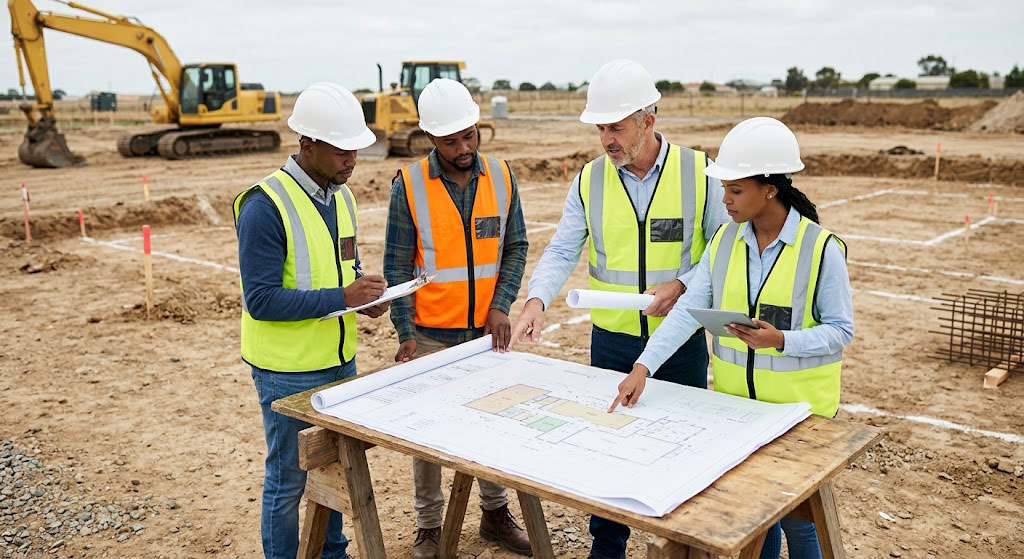
Preventing cost overruns in your commercial project requires meticulous site analysis, detailed spatial zoning, and proactive expansion planning before fabrication begins. Understanding How to build a showroom building successfully depends entirely on how well you align your site logistics with structural engineering blueprints. Early stage planning helps you identify soil capacity issues and zoning setback requirements before they become expensive problems.
Analyzing Site Accessibility and Traffic Flow
Let’s face the facts: your showroom will struggle to attract buyers if customer access is restricted. You must design wide access roads and heavy-duty loading bays that easily accommodate large transport trucks. Proper segregation of pedestrian traffic and delivery zones is vital for site safety.
- Ample turning radii for heavy logistics vehicles.
- Dedicated customer parking zones separate from loading bays.
- Heavy-load concrete slabs for equipment delivery routes.
Proactive Design for Future Expansion
What happens when your product lines double in size over the next five years? With modular steel structures, expanding your physical footprint is as simple as bolting on additional framing bays. This foresight eliminates the need for costly demolition or relocation when your business scales.
Key Takeaway: Integrating modular expansion points into your initial structural design saves millions of dollars in future construction costs as your brand grows.
| Planning Focus | Minimum B2B Standard | Operational Value | |
|---|---|---|---|
| Driveway Load Limit | 15 Metric Tons per Axle | Prevents pavement cracking from heavy transport trucks | |
| Zoning Setbacks | Variable by Local Code | Avoids legal penalties and costly structural modifications | |
| Ceiling Height Clearance | 4.5 Meters Minimum | Accommodates large-format machinery displays and signage |
This site planning matrix demonstrates how integrating basic engineering standards early protects your long-term commercial investment.
“Build Your Steel Showroom Faster – Get Quote Now!”
Email:sales@showhoo.com.cn
Phone/WhatsApp:+86 186 7895 5927
How to Select the Right Steel Structure Framing?
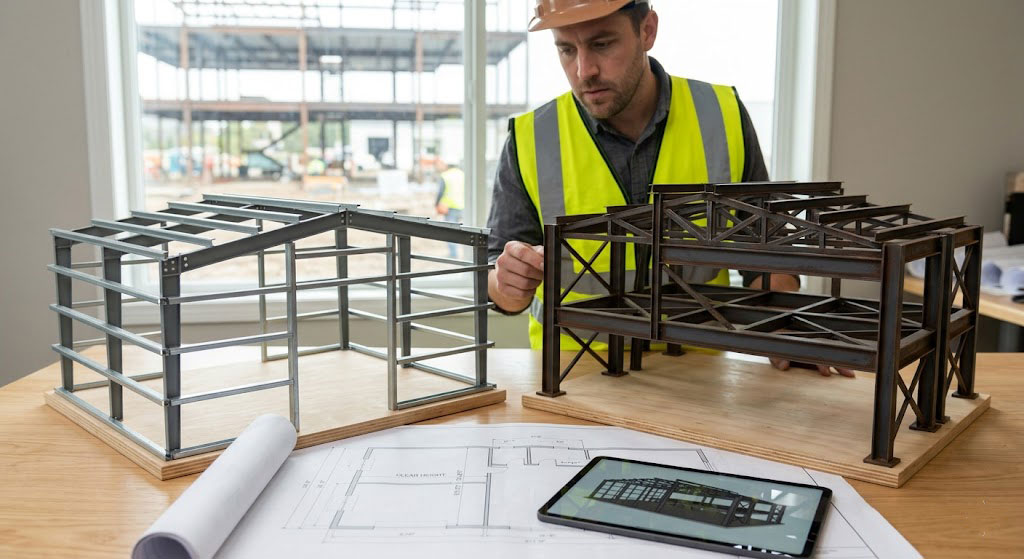
Selecting the correct steel framing system requires balancing your structural load-bearing requirements with your aesthetic architectural goals and budget limits. When you are investigating How to build a showroom building with maximum durability, you must choose between pre-engineered metal frames and fully customized structural steel. Each system offers distinct advantages depending on your building’s clear height and layout complexity.
Comparing Prefabricated and Custom Steel Frames
Look: pre-engineered metal buildings represent the most cost-effective and highly reliable option for standard rectangular commercial footprints. These systems utilize standardized components that are quick to fabricate and easy to assemble on-site. On the other hand, custom steel frames offer unlimited design freedom for complex, curved multi-story spaces.
- Standardized bolt connections for rapid installation.
- Factory-welded clips to reduce on-site labor requirements.
- Pre-punched purlins to speed up insulation attachment.
Evaluating Load Capacities and Structural Safety
Your selected steel framing must be engineered to withstand severe localized environmental loads easily. This includes planning for high wind velocities, seismic activities, and heavy seasonal snow accumulation on your roof. Working with certified engineers ensures your structure uses high-tensile steel grades that keep visitors safe.
Key Takeaway: Specifying high-tensile Q355B steel for your primary framing guarantees superior structural resilience against unpredictable weather events.
| Framing Component | Preferred Specification | Primary Structural Purpose | |
|---|---|---|---|
| Primary Rafters | Q355B Welded H-Section | Supports major roof loads and vertical wind pressure | |
| Secondary Framing | Galvanized C/Z Purlins | Transfers lateral wall loads directly to the main frame | |
| Structural Fasteners | ASTM A325 High-Strength Bolts | Connects critical beam-to-column joints securely |
This structural specification chart displays the critical material grades required to maintain a highly stable, load-bearing commercial building.
How to Design an Optimized Showroom Layout?
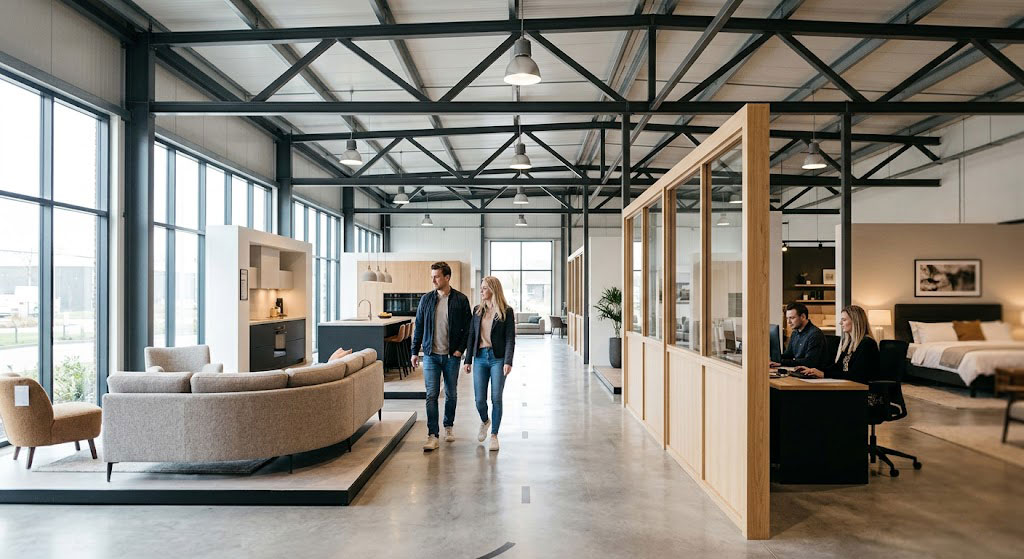
Designing an optimized layout involves creating clear sightlines, planning intuitive walking paths, and separating your operational zones from display areas. When deciding How to build a showroom building that boosts sales, your layout must focus heavily on the customer experience. An open-span steel design allows you to guide visitors smoothly past your premium displays without any structural columns blocking their view.
Strategic Zoning of Commercial Interiors
Here is the deal: a cluttered showroom floor leaves customers feeling overwhelmed and confused. You need to divide your floor space into distinct display rings, consultative sales offices, and secure utility storage rooms. This division keeps your sales representatives accessible while hiding daily administrative tasks.
- High-visibility display rings for core products.
- Comfortable consulting desks along quiet perimeter walls.
- Discreet inventory storage zones in rear sections.
Maximizing Natural Light and Air Circulation
Large glass curtain walls flood your showroom with warm natural light, making your products look vibrant and appealing. Additionally, maintaining a highly comfortable indoor temperature keeps buyers on-site longer. By integrating smart HVAC layouts into your steel framework, you ensure quiet and efficient climate control.
Key Takeaway: Eliminating column obstacles and maximizing natural light directly enhances product presentation, keeping prospective buyers engaged on your sales floor.
| Showroom Zone | Optimal Spatial Ratio | Recommended Environmental Feature | |
|---|---|---|---|
| Display Area | 65% of Floor Space | High-performance glass facades for natural illumination | |
| Sales Offices | 15% of Floor Space | Targeted acoustic insulation for private client discussions | |
| Inventory Storage | 20% of Floor Space | Wide service doors to facilitate rapid product rotation |
This spatial breakdown serves as an effective template for balancing customer display areas with essential administrative workspaces.
Which Construction Materials Ensure Longevity?
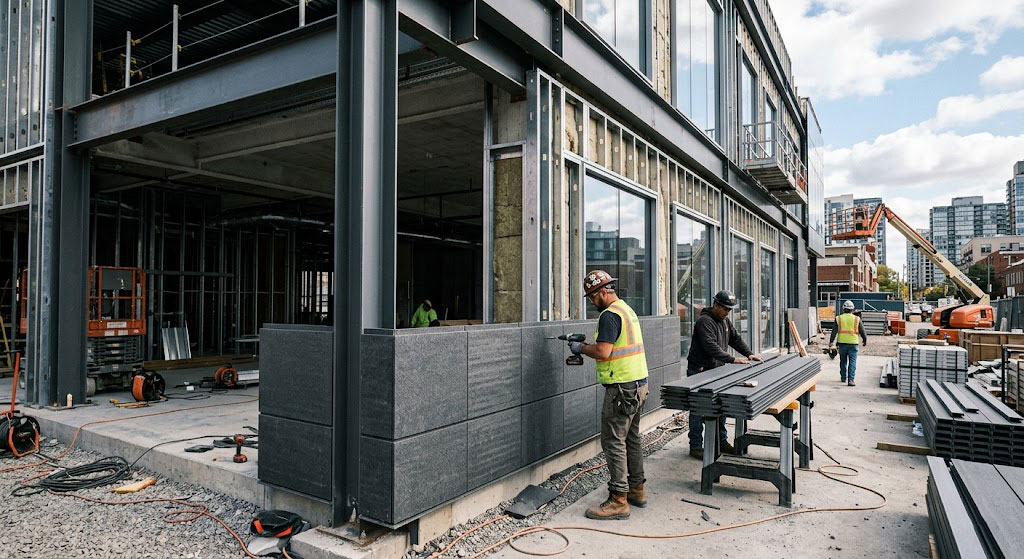
Ensuring long-term structural durability requires utilizing corrosion-resistant steel alloys, high-performance insulation, and heavy-duty protective coatings. If you want to know How to build a showroom building that withstands harsh environmental wear, you must prioritize premium materials. Investing in quality cladding saves thousands of dollars in future energy costs and exterior repairs.
Selecting Corrosion-Resistant Steel Elements
You see: building in humid coastal regions or industrial areas exposes your structure to severe rust risks. To prevent this degradation, your primary steel members must feature hot-dip galvanized finishes or zinc-rich epoxy primers. These protective barriers seal the steel against moisture and oxygen, preventing structural decay.
- Hot-dip galvanizing with a minimum of 275 g/m² of zinc.
- Two-part epoxy primers for heavy-duty industrial defense.
- Galvanized structural fasteners to stop localized corrosion.
Evaluating Insulated Cladding Panel Options
Wall insulation is critical for controlling your interior temperatures and cutting down monthly utility bills. Double-layered polyurethane or Rockwool sandwich panels offer exceptional thermal resistance and robust fire barrier properties. These insulated panels also act as high-efficiency sound barriers, keeping external highway noises out of your showroom.
Key Takeaway: Choosing hot-dip galvanized steel frames and high-density polyurethane panels protects your asset from rust while slashing operational energy consumption.
| Material Category | Recommended Specification | Primary Protective Advantage | |
|---|---|---|---|
| Steel Galvanization | Hot-Dip Galvanized Zinc Layer | Delivers decades of rust protection in high-humidity zones | |
| Wall Panels | Polyurethane (PU) Core Panels | Offers maximum thermal resistance to lower climate control costs | |
| Joint Fasteners | Zinc-Plated EPDM Washer Screws | Creates a watertight seal that prevents roof panel leaks |
This material specification matrix shows the best protective solutions to guarantee your commercial showroom survives tough climates.
How to Comply with Local Commercial Building Codes?
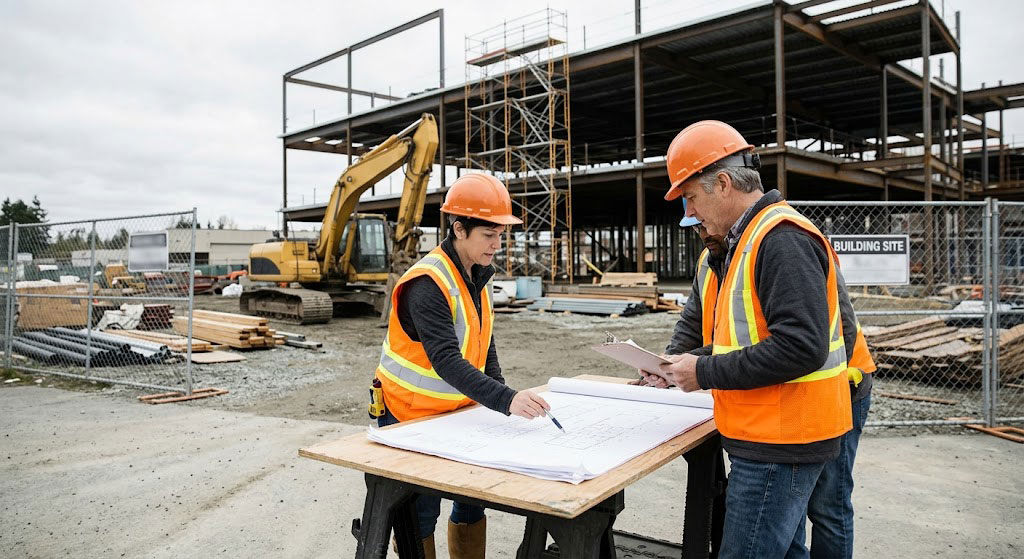
Complying with commercial building codes requires performing thorough zoning audits, securing engineered structural stamps, and installing compliant fire protection systems. When coordinating How to build a showroom building, keeping up with strict municipal safety standards is non-negotiable. Designing your building to meet code requirements from day one protects you from expensive fines and structural modifications.
Meeting Strict Local Commercial Zoning Rules
Let’s face the facts: ignoring local setback lines or storm drainage guidelines will shut down your project fast. You must verify your site plan meets municipal height limits and vehicle parking requirements before pouring concrete. Working with certified designers ensures your blueprints pass the city review process smoothly.
- Accurate property setback clearances from public roads.
- Proper commercial vehicle parking ratios per square meter.
- Approved environmental stormwater runoff retention basins.
Integrating Crucial Passive Fire Protection
Since steel can lose strength under extreme heat, passive fire protection is essential for visitor safety. Applying certified intumescent paint to your primary columns provides up to three hours of structural resistance during a fire. This special paint expands under heat to insulate the steel, protecting the building’s structural integrity.
Key Takeaway: Designing with certified fire-resistant paint and automated safety systems ensures full code compliance and protects your physical assets.
| Safety Code Category | Required Compliance Standard | Intended Safety Benefit | |
|---|---|---|---|
| Fire Safety Rating | 2-Hour Structural Fire Resistance | Delivers critical evacuation time and limits structural collapse | |
| Seismic Resilience | Local Peak Ground Acceleration Specs | Prevents structural cracking during tectonic movements | |
| Thermal Insulation | Regional Energy Code U-Value Limits | Ensures energy efficiency and lowers building operating costs |
This compliance overview helps developers confirm that their steel commercial showrooms meet all local safety and engineering codes.
“Build Your Steel Showroom Faster – Get Quote Now!”
Email:sales@showhoo.com.cn
Phone/WhatsApp:+86 186 7895 5927
What Timeline Strategy Speeds Up Construction?
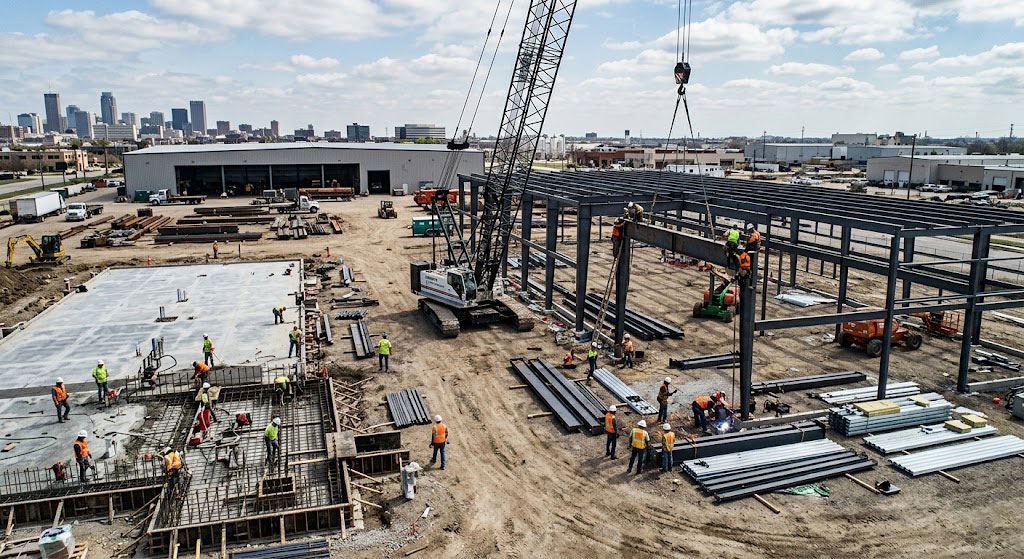
Speeding up your construction schedule requires coordinating your foundation curing, off-site steel fabrication, and on-site assembly into a synchronized timeline. If you want to know How to build a showroom building without costly delays, pre-engineered steel is your best choice. Because the framing components are manufactured in a factory, site preparation and building fabrication happen at the same time.
Phasing the Pre-Engineered Showroom Build
Look: standard concrete projects are highly vulnerable to unpredictable weather delays. In contrast, steel erection moves rapidly because every column, rafter, and purlin arrives on-site pre-cut and pre-drilled. Once your concrete foundation cures, your assembly crew simply lifts and bolts the steel skeleton together.
- Phase 1: Excavation and concrete foundation curing.
- Phase 2: Primary steel frame lifting and bolting.
- Phase 3: Cladding, wall insulation, and roof panel attachment.
Minimizing Site Construction Downtime
To avoid expensive bottleneck delays, you need to coordinate your heavy machinery schedules carefully. Having mobile cranes and professional assembly crews on-site the moment materials arrive ensures non-stop progress. This tight coordination slashes labor hours and gets your showroom open and running weeks ahead of schedule.
Key Takeaway: Overlapping off-site steel manufacturing with on-site foundation preparation accelerates your project timeline, cutting labor costs significantly.
| Build Phase | Estimated Completion (1000m² site) | Primary Machinery Required | |
|---|---|---|---|
| Foundation Curing | 10 to 14 Days | Concrete transit mixers and soil excavators | |
| Frame Assembly | 7 to 10 Days | High-capacity mobile cranes and hydraulic lifts | |
| Cladding & Roof | 10 to 12 Days | Scissor lifts and professional panel installation crews |
This structured timeline illustrates the speed and efficiency of pre-engineered steel construction over traditional building methods.
How to Integrate Modern Utilities and Smart Tech?
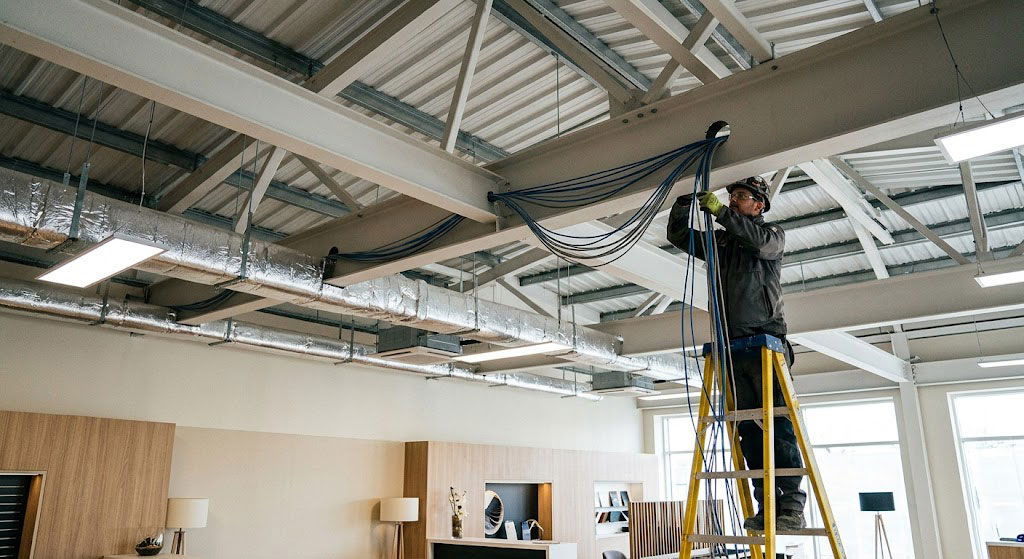
Integrating modern utilities into your showroom requires planning your HVAC routes, LED layouts, and smart automated systems during the initial design phase. When finalizing How to build a showroom building with high energy efficiency, utility integration is a top priority. Designing your steel rafters with pre-punched holes allows you to run electric wires and plumbing cleanly without cluttering your walls.
Designing High-Performance HVAC and Lighting
But how do you keep your visitors comfortable while highlighting your displays in the best possible light? You need high-CRI LED track lights to showcase your products’ true colors and multi-zone HVAC to keep different rooms at perfect temperatures. Running these utilities through secondary steel framing channels keeps your interior looking clean and professional.
- High-CRI LED track lights for accurate product color displays.
- Multi-zone VRF HVAC systems for targeted, efficient climate control.
- Concealed cable trays to protect electrical wiring from dust.
The Business Value of Smart Building Technology
Implementing centralized smart systems gives you complete, remote control over your entire facility’s operations. You can automate lighting, adjust room temperatures, and monitor security cameras directly from your smartphone. These advanced systems protect your inventory and reduce monthly energy waste by automatically adjusting when the building is empty.
Key Takeaway: Planning utility pathways during the structural drafting stage guarantees a clean showroom aesthetic and lowers monthly operating costs.
| Smart Utility System | Preferred Technology | Primary Operational Advantage | |
|---|---|---|---|
| Climate Management | Multi-Zone VRF HVAC | Delivers targeted heating and cooling to cut energy bills | |
| Display Lighting | High-CRI LED Track Lighting | Enhances product visual appeal and reduces heat output | |
| Automated Controls | Centralized Building Management | Automates power cycles to prevent energy waste overnight |
This utility integration table shows how smart technologies combine with clean engineering to boost showroom efficiency.
Which Facade and Finishing Touches Boost Sales?
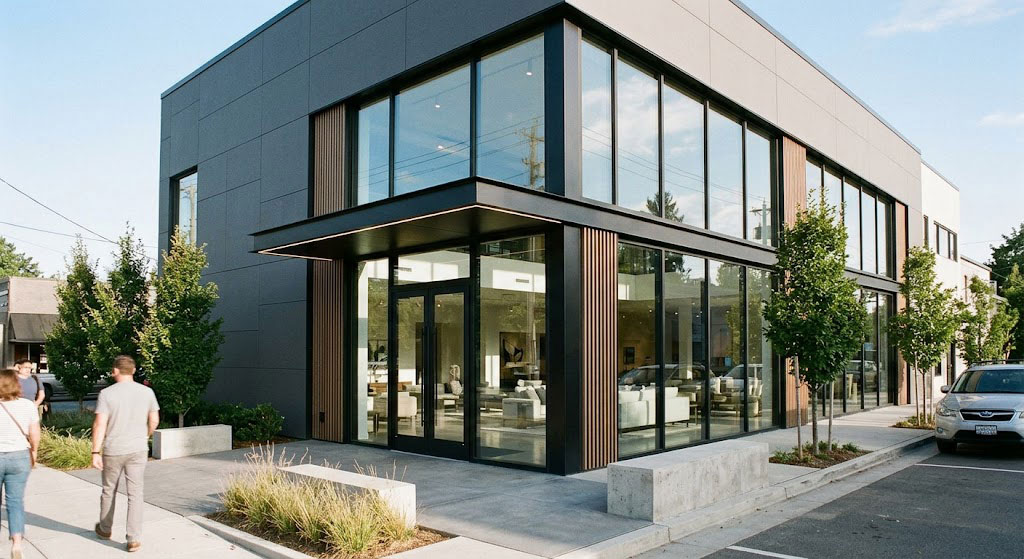
Boosting your sales requires designing a bold, modern exterior facade, installing high-end showroom flooring, and creating strategic branding spaces. When planning How to build a showroom building that attracts premium clients, first impressions are everything. A stunning exterior facade serves as a physical handshake that builds instant trust with your visitors.
Designing a High-Impact Exterior Facade
Here is the deal: a dull, concrete exterior will never attract high-value commercial buyers. Combining large glass curtain walls with sleek aluminum composite panels creates a striking, modern look. This design keeps your display floor visible to passing traffic, turning your building into a 24/7 billboard.
- Polished glass curtain walls for maximum display visibility.
- Aluminum composite material panels for a durable, clean finish.
- Integrated backlit LED panels to display your brand logo.
Choosing Elegant, Durable Interior Finishes
Your showroom floor must handle heavy product displays and constant foot traffic without wearing down. Polished concrete flooring is an excellent choice, offering a modern industrial look that holds heavy loads easily. Pairing this with adjustable overhead steel trusses makes it easy to update your display layouts whenever you launch new products.
Key Takeaway: Combining premium glass facades with durable polished flooring creates an elegant commercial space that displays your products beautifully.
| Design Element | Preferred Material Choice | Visual and Functional Benefit | |
|---|---|---|---|
| Facade Glazing | Double-Glazed Low-E Glass | Flood interior with daylight while blocking external heat | |
| Exterior Cladding | Aluminum Composite Panels | Creates a sleek, modern brand image that resists weathering | |
| Showroom Flooring | Heavy-Duty Polished Concrete | Resists heavy wheel loads and scratches while remaining easy to clean |
This finishing touches matrix guides developers in choosing high-impact materials that elevate visual appeal and stand up to daily commercial wear.
What Maintenance Habits Keep Your Steel Showroom Safe?
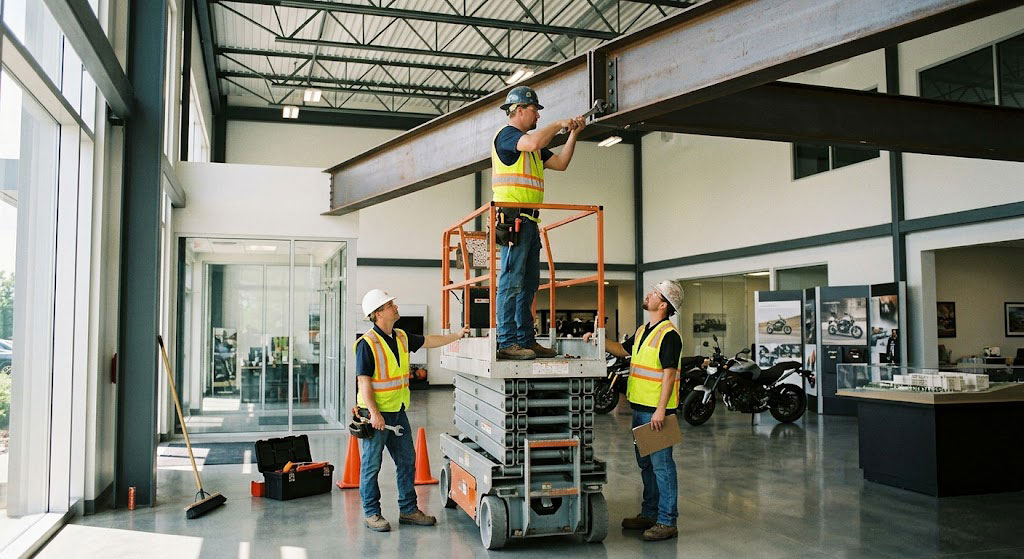
Keeping your steel showroom safe and in top condition requires establishing a simple preventative maintenance schedule and performing regular structural checks. If you want to know How to build a showroom building that maintains its commercial value for decades, regular maintenance is essential. Taking care of your steel structure protects your physical assets and prevents minor wear from becoming expensive repairs.
Setting Up a Basic Preventative Maintenance Plan
You see: neglecting small weather wear can lead to major structural repair bills down the road. You must run quick, twice-yearly checks on your roof panels, structural bolts, and gutter systems. Keeping your drainage clear is the easiest way to prevent water from pooling and causing rust.
- Twice-yearly checks on primary column bolt tightness.
- Clearing gutters and downspouts to prevent roof leaks.
- Quick paint touch-ups on any exterior panel scratches.
Conclusion: Ready to Build Your Commercial Showroom?
Building a high-performance commercial facility requires balancing design flexibility, speed of assembly, and long-term durability. Transitioning from traditional masonry construction to modern, high-precision pre-engineered steel frames is the smartest way to achieve these goals. Whether you are expanding your physical footprint or launching a brand-new retail hub, choosing structural steel eliminates column obstacles and cuts construction timelines in half.
Our engineering team is here to help you bring your vision to life with top-tier, customized steel structures designed specifically for your brand’s retail and display needs. We provide high-precision manufacturing, expert design planning, and end-to-end logistics support to ensure your project is a complete success. Let us build a beautiful, durable foundation for your business growth— contact us today to request your custom design consultation and quote!
Key Takeaway: Doing quick, regular preventative checks and partnering with expert fabricators preserves your showroom’s visual appeal and protects your long-term commercial investment.
“Build Your Steel Showroom Faster – Get Quote Now!”
Email:sales@showhoo.com.cn
Phone/WhatsApp:+86 186 7895 5927
Frequently Asked Questions (FAQ)
Can I expand my showroom size after the initial construction is completed?
Yes, you can easily expand a pre-engineered steel showroom because of its modular bolted connections. Since the primary framing relies on high-strength bolted connections, your construction crew can simply remove the end-wall cladding and bolt additional steel rafters and columns onto the existing frame without tearing down the main structure.
What’s the best foundation design for a heavy-duty steel showroom?
A reinforced concrete slab-on-grade foundation with deep perimeter concrete piers is the absolute best choice. This specific design ensures the heavy load from the main steel columns is distributed safely into the ground while providing a rock-solid, level base that easily supports heavy display vehicles or large industrial machinery.
How do I know if my steel showroom requires specialized fireproof coatings?
You must check your local municipal zoning laws and national commercial building codes to make this determination. In most urban commercial zones, applying a certified intumescent fireproofing paint to your primary columns is required to meet standard two-hour fire safety ratings based on the building’s proximity to other structures.
Can I design my showroom with a fully custom glass facade?
Absolutely, structural steel framing is ideal for supporting extensive glass curtain walls and modern architectural panels. Because the steel skeleton bears the entire structural load, you can replace entire walls with clear, double-glazed glass to maximize natural daylighting and product visibility.
What’s the best insulation type to lower monthly heating and cooling bills?
Polyurethane sandwich panels are highly recommended because they offer the highest thermal performance on the market. These double-layered panels feature a dense foam core that blocks heat transfer and dampens external noise, significantly slashing your monthly HVAC operating costs.