
A modern warehouse building is a specialized industrial facility engineered to protect goods while facilitating rapid material handling and logistical efficiency. Inefficient storage sites often lead to astronomical operational costs, frequent inventory errors, and safety hazards that can cripple a growing business. Without a strategic approach to facility design, you may find yourself trapped in rigid structures that cannot adapt to shifting market demands or technological advancements. Investing in a high-quality warehouse building ensures you create a resilient hub that optimizes flow, protects assets, and scales effortlessly alongside your operational requirements.
What Defines a Modern Warehouse Building?
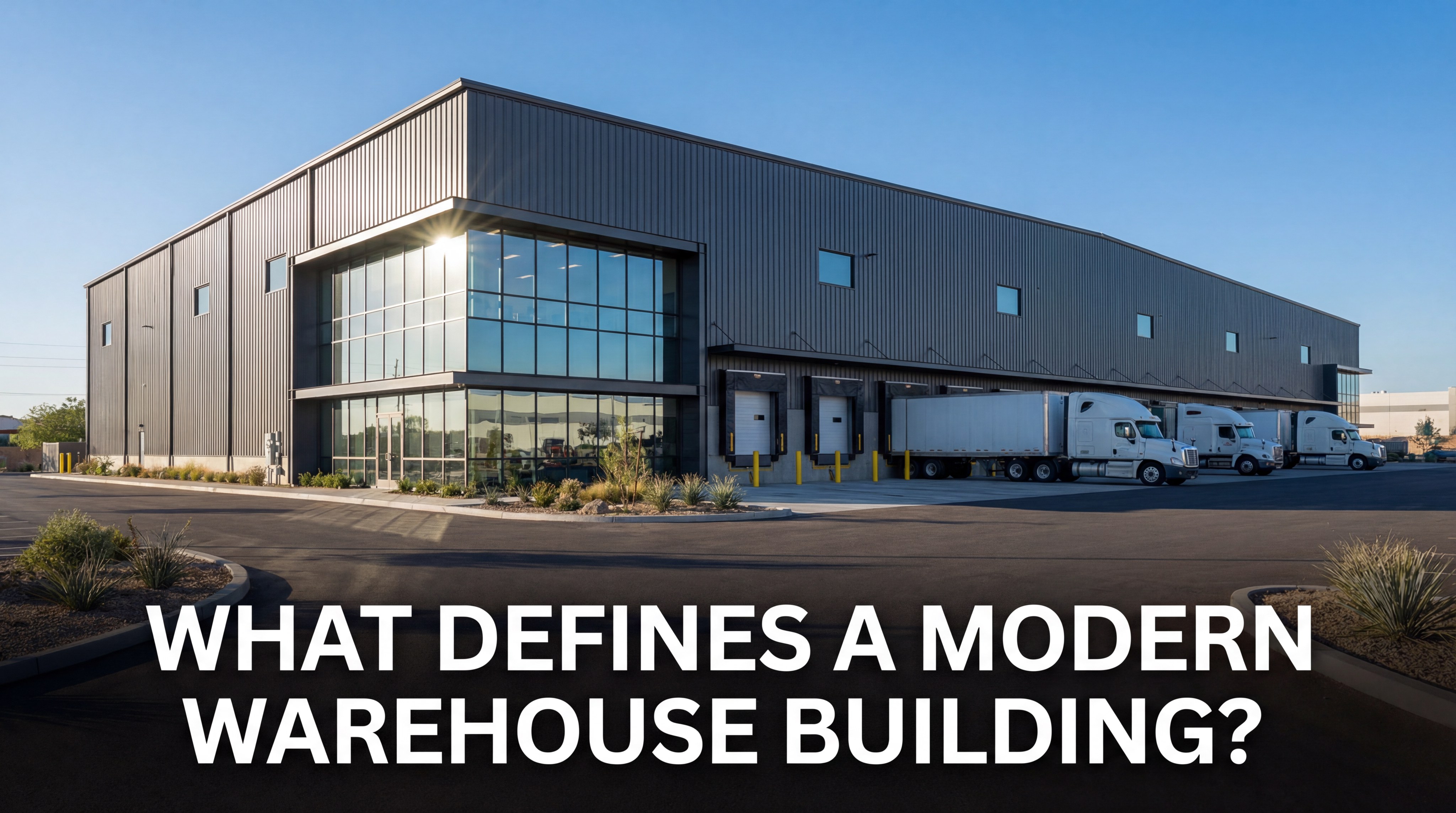
A modern warehouse building is defined by its ability to synthesize structural durability with high-tech tracking, quality control, and repackaging capabilities. These facilities no longer act as passive storage shells but function as active hubs for sophisticated distribution networks and broadband-connected inventory management. You must ensure the environment is specifically tailored to protect materials from the elements while accommodating the heavy loads of associated handling equipment.
What are the core functional requirements?
Every facility must be designed based on the specific dead and live load requirements of the materials you intend to store. This includes accounting for the weight of high-density racking systems and the constant movement of heavy forklift machinery. Want to know the best part?
- Integrated broadband connectivity for real-time tracking.
- Structural capacity for heavy material handling equipment.
- Adequate clearance for internal circulation paths.
- Protection from wind-driven rain and moisture penetration.
How does design impact business service?
The layout of your facility directly correlates to the turnaround time of your products and the overall productivity of your operating personnel. Strategic planning helps you avoid bottlenecks at the loading docks and ensures that goods are processed with minimal friction. Think about it.
- Reduced processing time for shipping and receiving.
- Improved worker satisfaction through better environmental controls.
- Enhanced corporate image with modern architectural aesthetics.
- Flexibility to adapt to future mission changes or growth.
Key Takeaway: A well-designed facility acts as a strategic asset that enhances the speed and reliability of your entire supply chain.
What Are the Primary Types of Warehouse Structures?
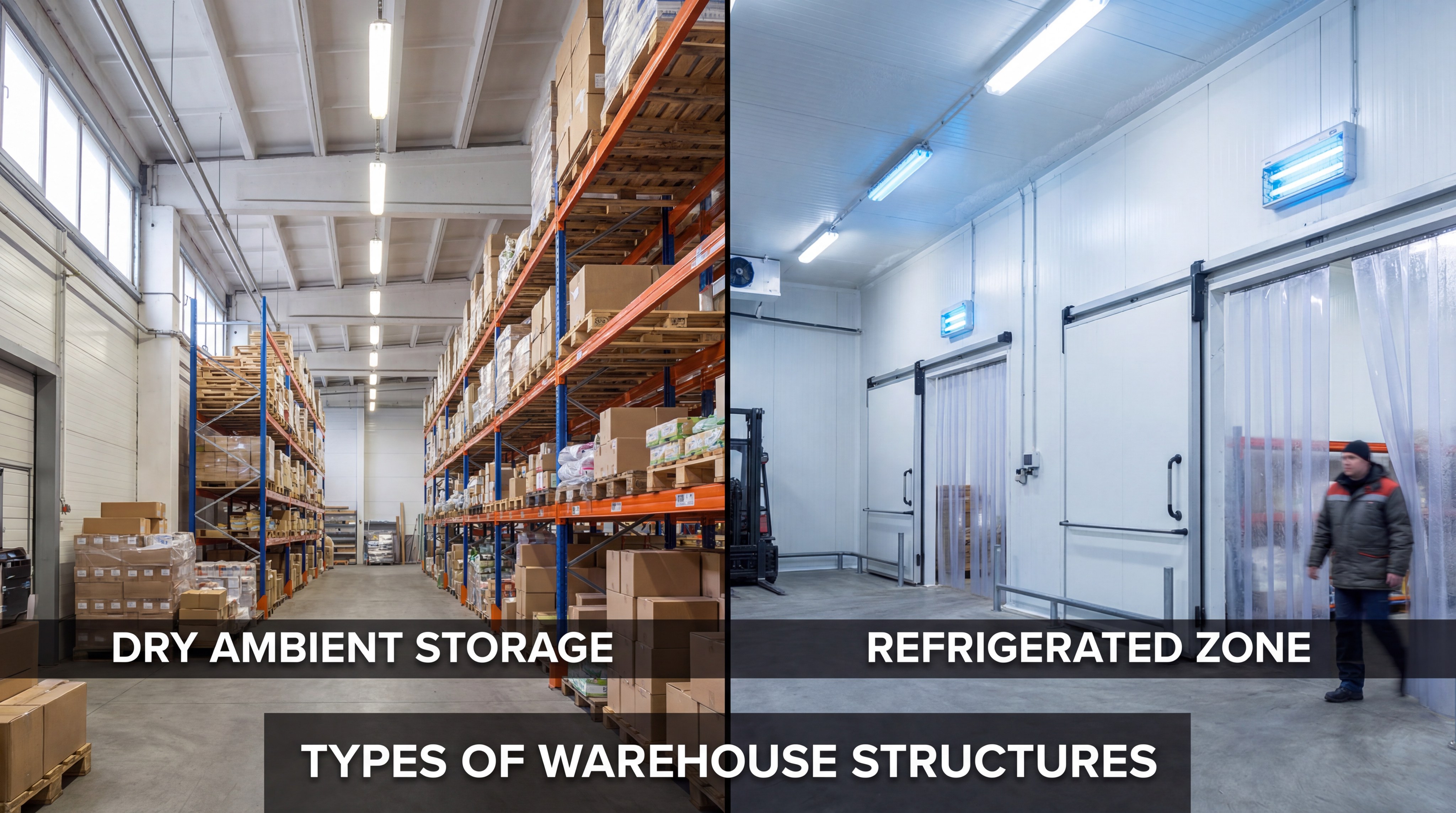
The primary types of warehouse building structures include general heated or unheated spaces, refrigerated units for perishables, and controlled humidity facilities for sensitive electronics. Each type requires specific architectural features, such as vapor barriers for humidity control or heavy insulation for freeze and chill spaces. You must select the structural type that matches the chemical and physical requirements of your specific commodity classification.
What is the difference between heated and unheated spaces?
General warehouses provide the essential bulk, rack, and bin storage required for standard goods that do not need extreme temperature regulation. These buildings must still include dedicated areas for office work, packing, crating, and personnel toilets to maintain full operational functionality. Here is the kicker.
- Bulk storage areas for oversized or palletized goods.
- Dedicated packing and crating zones.
- Integrated office spaces for administrative staff.
- Bin storage for small-parts inventory management.
How do refrigerated and humidity-controlled units work?
Refrigerated structures preserve the quality of perishable goods by utilizing specialized mechanical areas and high-performance thermal envelopes. Controlled humidity (CH) warehouses use vapor barriers and HVAC equipment to maintain precise moisture levels, preventing the degradation of sensitive materials or metals. Sound familiar?
- Freeze and chill spaces for food and medical supplies.
- Vapor barriers to prevent moisture infiltration.
- Humidity control equipment for specialized storage needs.
- Insulated dock areas to maintain temperature integrity during loading.
Key Takeaway: Selecting the correct environmental control category is essential for preventing product loss and maintaining strict quality standards.
| Structure Type | Primary Control | Strategic Value | |
|---|---|---|---|
| General Warehouse | Ambient Temperature | Cost-effective bulk and rack storage | |
| Refrigerated | Thermal Insulation | Preservation of perishable commodities | |
| Controlled Humidity | Vapor Barriers | Protection of moisture-sensitive materials | |
| Hazardous Material | Specialized Containment | Safe storage of flammable or toxic goods |
Evaluate your inventory requirements to determine the necessary level of environmental protection before finalizing structural plans.
How Do You Optimize Interior Warehouse Space?
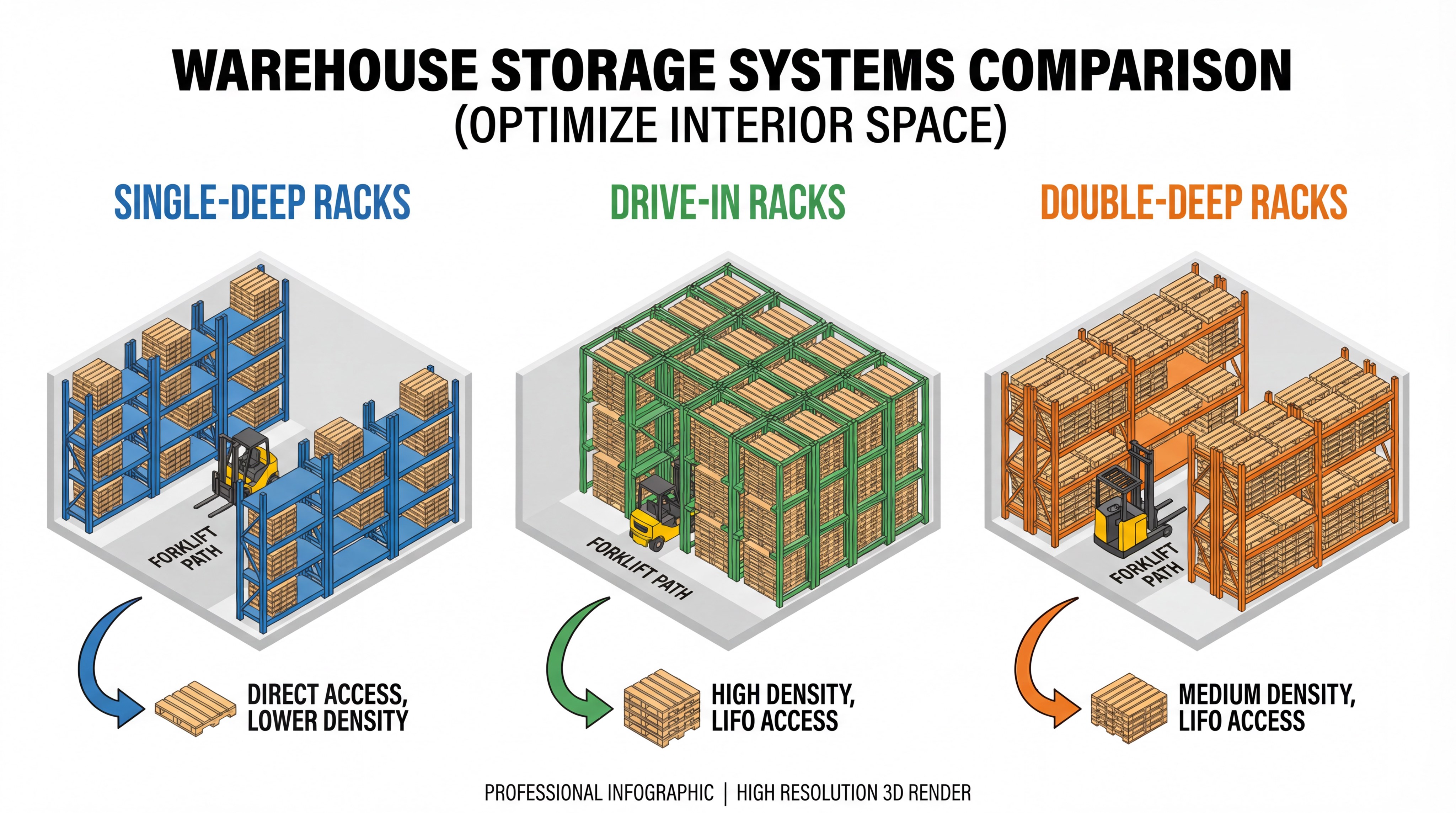
You optimize interior space in a warehouse building by utilizing higher bays to take full advantage of vertical height allowances and implementing high-density racking. Maximizing the utilization of every cubic foot allows you to increase inventory capacity without expanding the physical footprint of the foundation. You must ensure that structural members do not interfere with aisle widths or the maneuverability of material handling equipment like forklift trucks.
Why are higher bays essential for modern logistics?
Higher bays allow for vertical expansion of storage, which is critical for maximizing density in high-rent or limited-space geographic areas. You should also ensure the roof design includes extra structural capacity to handle the weight of future rooftop equipment or mezzanine additions. But there is more.
- Increased storage capacity within the same land footprint.
- Space for high-lifting reach trucks and automated cranes.
- Future-proofing for mezzanine or upper-level office installs.
- Better air circulation and heat management in the upper zones.
How do you plan for “Just-in-Time” storage?
Planning for rapid throughput requires wide circulation paths and clear-span structures that allow for the fluid movement of personnel and machinery. You should design the facility to accommodate both current needs and potential future transitions into light industrial or fabrication uses. The results?
- Optimized aisle widths for various forklift types.
- Unobstructed flow from receiving to storage zones.
- Flexible layouts that adapt to changing product lines.
- Clear-span areas that eliminate pillar interference.
Key Takeaway: Verticality and flexibility are the two most important factors in ensuring your storage space remains profitable as your business scales.
| Optimization Strategy | Actionable Step | Expected Outcome | |
|---|---|---|---|
| Vertical Storage | Implement high-bay racking | 30-50% increase in storage density | |
| Clear-Span Design | Minimize internal columns | Unobstructed equipment maneuverability | |
| Future Capacity | Strengthen roof structures | Seamless addition of future HVAC or solar | |
| Adaptive Layout | Use modular partitioning | Rapid conversion between storage and light industry |
Audit your current pallet count against vertical height potential to identify immediate density improvement opportunities.
Which Loading Dock Features Improve Logistics?
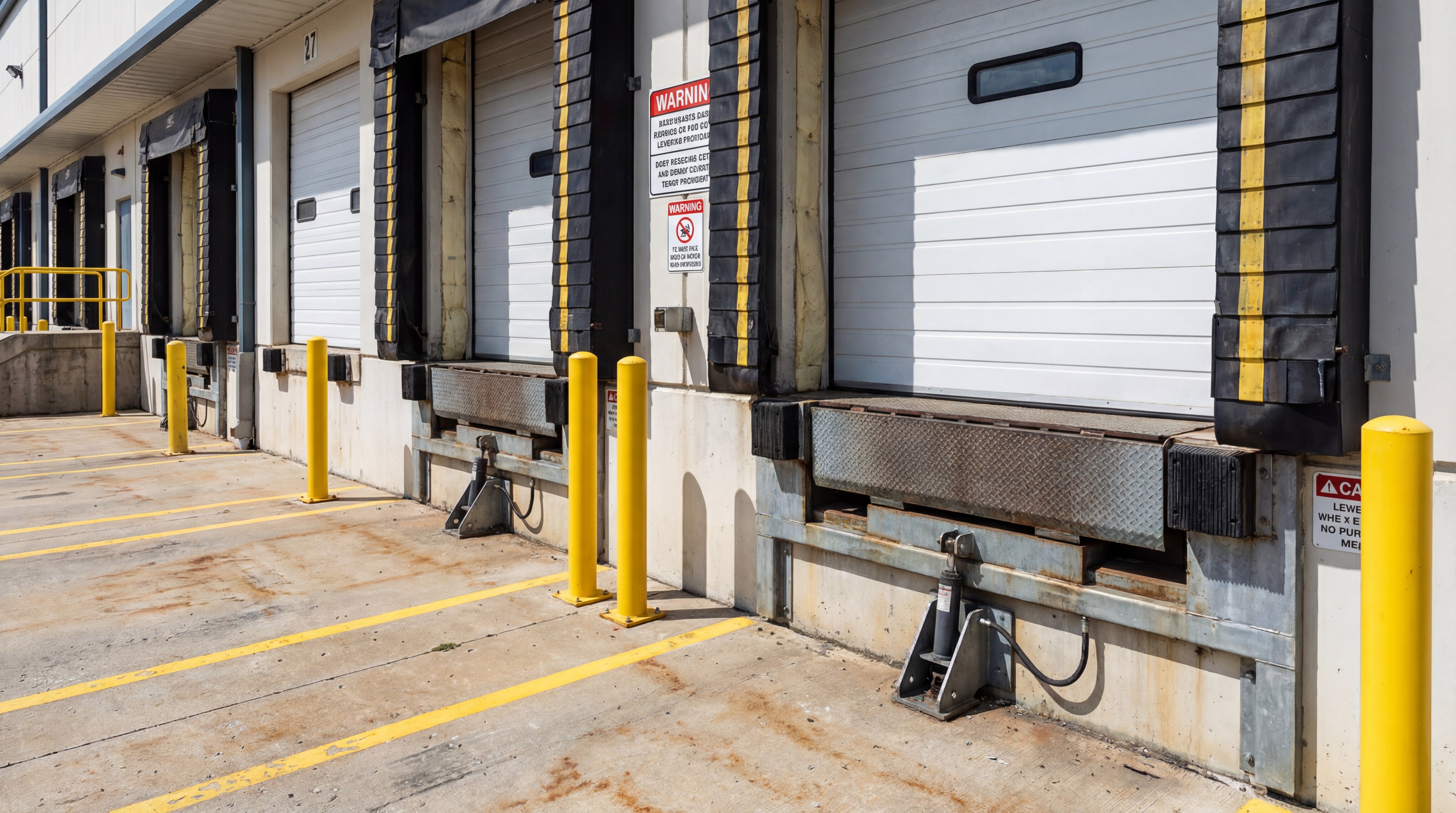
Efficient logistics in a warehouse building rely on standardized dock heights, typically 4’–4″ for trucks and 3’–9″ for rail terminals, to ensure seamless transitions. Integrating dock levelers and seals helps you maintain climate control while preventing safety hazards during the loading process. You must separate receiving and shipping zones to avoid congestion in maneuvering areas and ensure that forklift traffic can flow without interruption.
What are the standard dock height requirements?
Matching the building’s dock height to the height of the vehicle fleet is the most basic requirement for avoiding manual handling delays. You should utilize scissor lifts or adjustable dock levelers to bridge the gap between varying truck bed heights and the concrete floor. Believe it or not.
- 4’–4″ truck dock height for standard freight.
- 3’–9″ rail dock height for intermodal logistics.
- High-clearance doors for full-pallet handling.
- Integrated ramps for ground-level equipment access.
How to separate receiving and shipping operations?
Separating the entry and exit points of your goods prevents the cross-traffic congestion that often leads to accidents and delays at the loading bay. You should ensure that dock widths and interior staging areas are large enough to allow multiple forklifts to operate simultaneously. Let’s dive deeper.
- Dedicated zones for inbound and outbound freight.
- Large maneuvering areas for tractor-trailers.
- Non-slip floor finishes in high-moisture dock zones.
- Staging areas designed for rapid quality control.
Key Takeaway: The loading dock is the primary bottleneck of any facility; optimizing its height and flow is critical for high-speed logistics.
| Dock Feature | Strategic Function | Operational Impact | |
|---|---|---|---|
| Dock Levelers | Bridges gap to truck beds | Reduces equipment wear and operator injury | |
| Dock Seals | Closes gap between building and truck | Maintains internal temperature and hygiene | |
| Traffic Separation | Split shipping and receiving | Eliminates vehicle congestion and wait times | |
| High-Clearance Doors | Accommodates tall pallet loads | Maximizes volume throughput per shipment |
Review your daily vehicle turnaround times to identify if dock height mismatches or congestion are causing costly delays.
What Materials Ensure Structural Warehouse Durability?
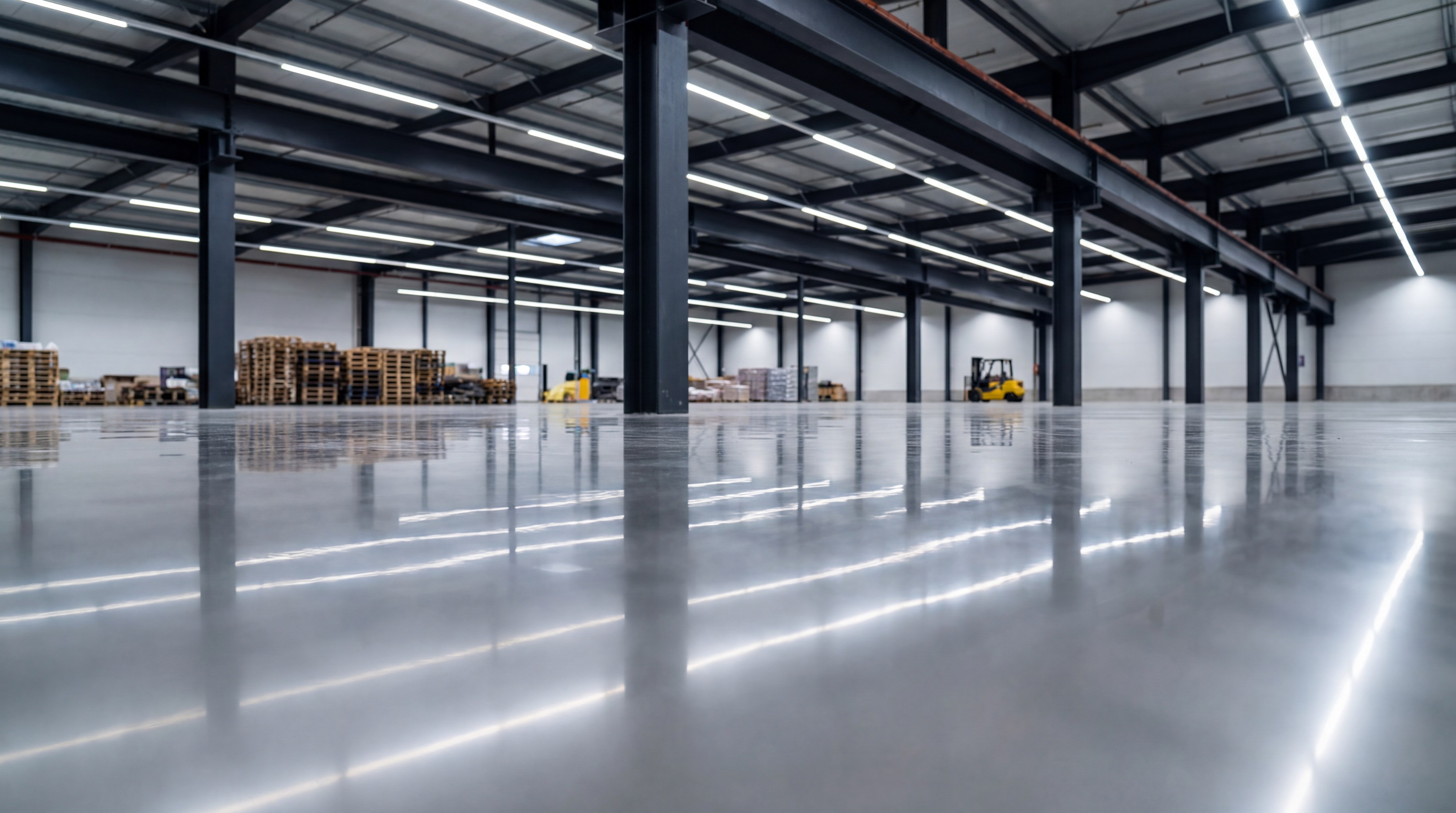
Structural durability for a warehouse building is achieved by using laser-leveled concrete slabs and industrial-grade steel frames that withstand seismic and wind loads. The flooring must be treated with hardeners and dust-proofers to resist the constant abrasion of hard-rubber forklift tires and heavy pallet loads. You should also specify white-painted roof decking to increase reflectivity and lighting efficiency while protecting the structure from environmental stress.
Why is floor flatness critical for high-lifting?
Floor flatness and levelness are essential for the safe operation of high-lifting equipment, as even a minor deviation can cause a forklift mast to sway dangerously at height. You should apply epoxy coatings in specialized areas, such as battery charging stations, to protect the concrete from chemical spills and corrosion. Want to know the best part?
- Concrete slabs with integrated hardeners for abrasion resistance.
- Laser-leveling for safe high-bay storage operations.
- Epoxy coatings for chemical and acid protection.
- Dust-proofing to maintain cleanliness in the storage environment.
How to manage wind, snow, and seismic loads?
You must design your facility to meet local building codes for wind uplift, especially if the site is located in an open area where wind velocities are higher. Racking systems in seismic zones must be engineered with better bracing and stronger anchor points to prevent collapse during an earthquake. Here is the secret.
- Engineered bracing for racking in seismic-active regions.
- Reinforced roof copings to prevent wind uplift damage.
- Wall designs that permit moisture evaporation and prevent rot.
- Structural steel that accommodates heavy snow loads.
Key Takeaway: Investing in superior flooring and structural steel reduces long-term maintenance costs and ensures the safety of your high-value inventory.
| Structural Component | Material Requirement | Long-term Benefit | |
|---|---|---|---|
| Foundation Slab | Laser-leveled reinforced concrete | Safe operation of high-reach machinery | |
| Floor Treatment | Hardeners and dust-proofers | 50% reduction in maintenance and cleaning | |
| Primary Frame | Industrial-grade structural steel | Resilience against extreme weather and seismic events | |
| Wall Systems | Breathable vapor-permeable panels | Prevents mold and moisture damage to goods |
Conduct a soil and seismic analysis before construction to ensure your material choices are appropriate for the local environment.
How Can You Build a Sustainable Warehouse Facility?
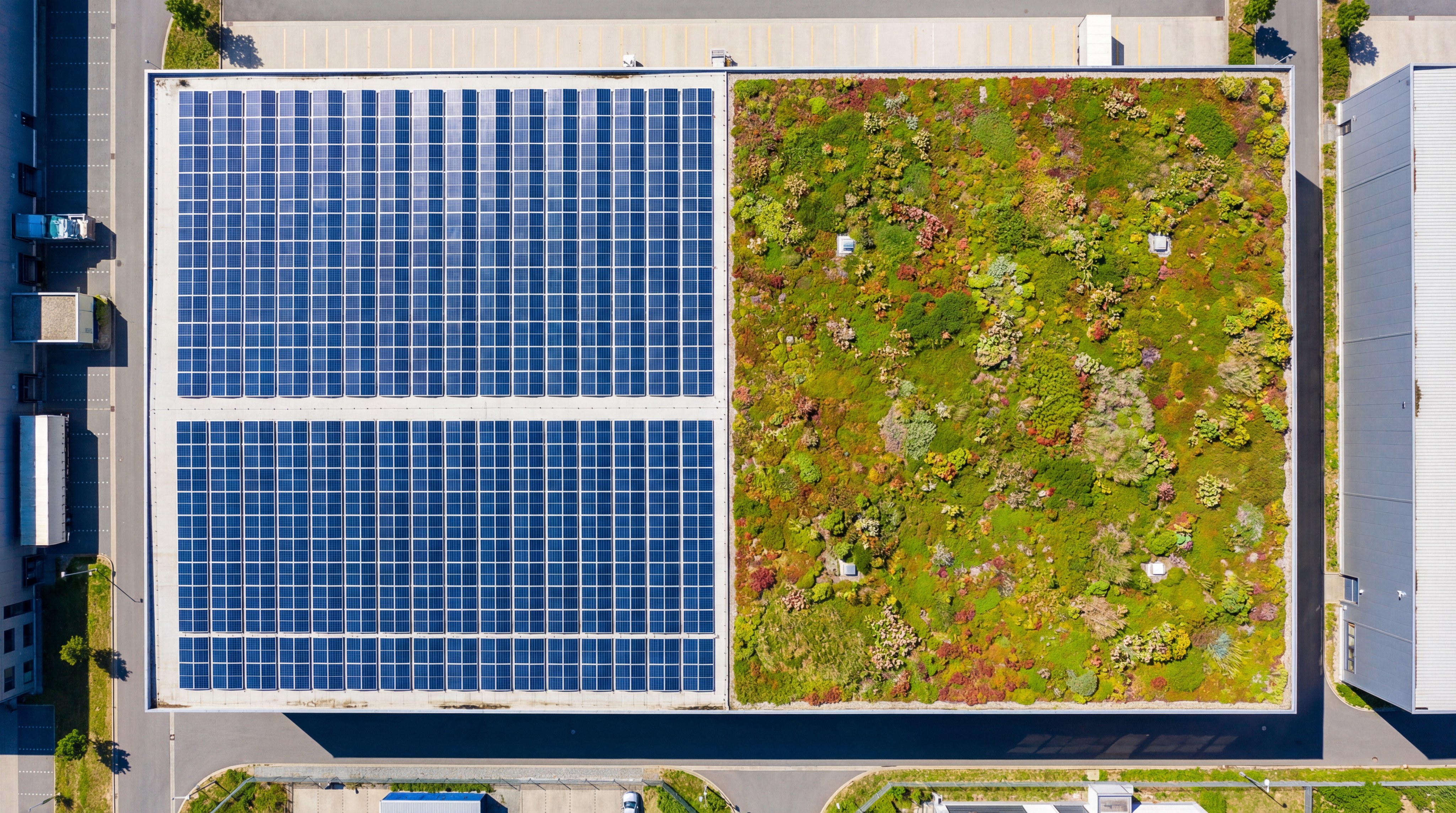
You can build a sustainable warehouse building by integrating passive solar concepts, “cool” roofing materials, and energy-efficient lighting systems. Utilizing solar geometry helps you reduce the building’s thermal load, while motion-sensor lighting ensures you only consume power in active zones. You should also consider green roofs and xeriscaping to manage stormwater runoff and reduce the need for irrigation in industrial settings.
Can passive solar design reduce operating costs?
By orienting your facility to take advantage of solar geometry, you can significantly reduce the energy required for heating and cooling throughout the year. Light-colored roofs reflect a large percentage of solar radiation, which keeps the interior cooler in the summer and increases overall worker productivity. Think about it.
- Reduced HVAC loads through reflective roofing.
- Lower electricity costs with daylight-integrated lighting.
- Optimized plant size for smaller heating and cooling units.
- Increased thermal comfort for the ground-level workforce.
What are the benefits of green roofing and xeriscaping?
Green roofs capture airborne particulates and reduce noise levels while significantly decreasing the volume of stormwater runoff that leaves the site. Incorporating drought-resistant xeriscaping allows you to maintain professional landscaping without the high costs of constant watering and maintenance. But there is more.
- Natural insulation for the building’s upper shell.
- Reduction in local heat island effects.
- Lower water utility costs through drought-resistant plants.
- Improved air quality and worker wellness surroundings.
Key Takeaway: Sustainability in industrial design is not just an environmental choice but a strategy for reducing long-term operational overhead.
| Sustainability Feature | Mechanism | Financial Advantage | |
|---|---|---|---|
| Cool Roof | High solar reflectance | Lowers summer cooling costs by 15-20% | |
| Smart Lighting | Motion sensors and dimmers | Dramatically reduces base electricity consumption | |
| Green Roof | Stormwater absorption | Eliminates need for expensive drainage infrastructure | |
| Passive Solar | Building orientation | Reduces reliance on active HVAC systems |
Analyze your local climate data to determine whether heating or cooling loads should be the primary focus of your sustainable design.
Why Is Operational Safety Vital in Warehouse Design?
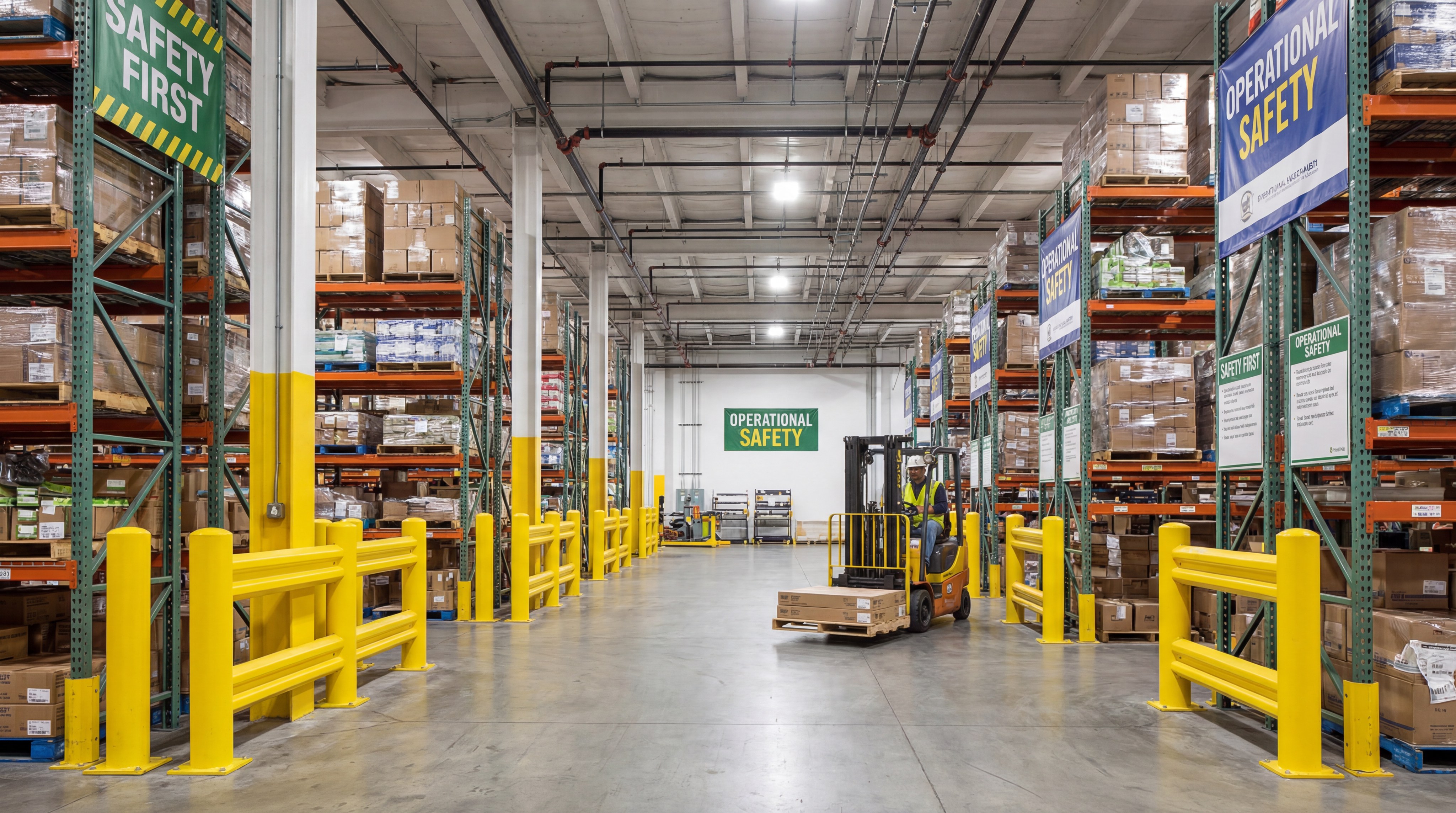
Operational safety is vital in warehouse building design because the combination of heavy machinery and high-density storage creates significant risks for personnel. You must address life-safety concerns by engineering fire sprinkler systems that are specifically rated for the commodity classifications you are storing. Implementing non-slip floor treatments and clear safety signage helps you prevent the trips, falls, and musculoskeletal disorders that are common in industrial environments.
How to prevent common occupational injuries?
Proper ergonomics and floor safety treatments are essential for reducing the risk of work-related injuries during manual handling and forklift operations. You should ensure that all exits and egress paths are kept clear and that workers have access to ergonomically designed workstations. You might be wondering.
- Non-slip surfaces on all docks and high-traffic paths.
- Clear signage for hazard warnings and precinct directions.
- Ergonomic chairs and furnishings for sorting tasks.
- Safe clearance paths for powered industrial trucks.
What fire protection systems are necessary?
Fire protection systems must be designed to cover the specific hazards of your inventory, particularly if you are storing products with high plastic content or shrink-wrapped pallets. You must re-evaluate your sprinkler system’s adequacy whenever you change product lines or switch from wood to plastic pallets. Here is the kicker.
- In-rack sprinkler systems for high-bay storage.
- Class-specific fire suppression for hazardous chemicals.
- Rodent-proofing to protect electrical wiring from damage.
- Clear blocking-free exits for rapid emergency egress.
Key Takeaway: Safety-first design reduces insurance premiums and prevents costly downtime caused by workplace accidents or structural fires.
| Safety System | Protective Action | Strategic Goal | |
|---|---|---|---|
| Engineered Sprinklers | Commodity-specific fire suppression | Asset protection and regulatory compliance | |
| Floor Markings | Defines forklift and pedestrian lanes | Elimination of vehicle-to-person collisions | |
| Ergonomic Stations | Reduces repetitive motion strain | Higher worker retention and productivity | |
| Pest Barriers | Prevents wire and inventory damage | Operational continuity and hygiene |
Audit your current fire protection ratings against your inventory types to ensure you are not under-protected for high-hazard goods.
What Amenities Increase Warehouse Worker Productivity?
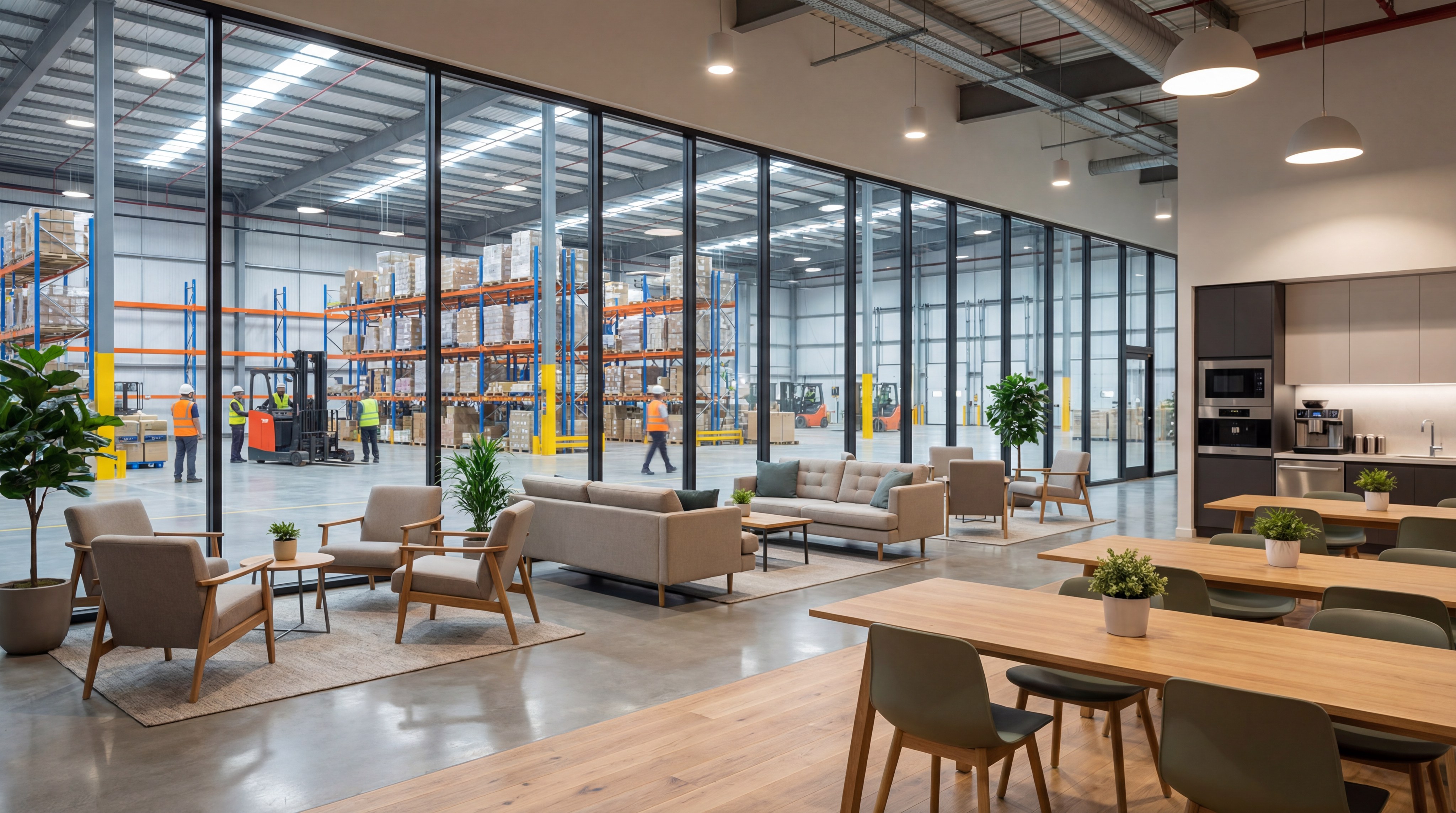
Amenities such as natural lighting, climate-controlled office spaces, and ergonomic breakrooms are essential for maintaining worker productivity in a warehouse building. Providing a comfortable environment with low noise levels and high air quality creates a “sense of place” that fosters pride and dedication among your staff. You must ensure that the building design includes proper ventilation and lighting controls to keep the workspace bright and healthy throughout the shifts.
How to integrate natural lighting and ventilation?
Integrating skylights and high-level windows allows you to use natural light to reduce energy consumption while improving the mood and focus of your workers. You should install CO2 sensors and ceiling-mounted fans to provide real-time air quality monitoring and prevent heat stratification in the tall storage bays. Sound familiar?
- Skylights and monitors for diffused natural light.
- CO2 sensors for real-time air quality management.
- High-volume low-speed (HVLS) fans for air movement.
- Automated lighting controls that respond to daylight levels.
Why is ergonomic design important for health?
Ergonomically designed furnishings and equipment reduce the physical strain on workers who perform repetitive motions or manual lifting all day. By minimizing the risk of strains and sprains, you ensure that your workforce remains healthy and capable of meeting high-speed distribution targets. Think about it.
- Height-adjustable sorting tables for various workers.
- Low-noise HVAC systems in occupied office zones.
- High-visibility gear storage and cleaning stations.
- Comfortable break areas that allow for true rest.
Key Takeaway: Improving the worker environment directly leads to lower turnover rates and higher accuracy in inventory management.
| Amenity | Primary Benefit | Workforce Impact | |
|---|---|---|---|
| Daylight Integration | Better visibility and mood | Reduced errors and lower energy bills | |
| Climate Control | Consistent air temperature | Higher focus during extreme weather | |
| HVLS Fans | Reduced heat stratification | Increased thermal comfort in tall bays | |
| Ergonomic Workstations | Less physical fatigue | Fewer sick days and higher hourly output |
Consider conducting a worker survey to identify which environmental factors most impact the daily performance of your logistics team.
How Is Automation Reshaping Today’s Warehouses?
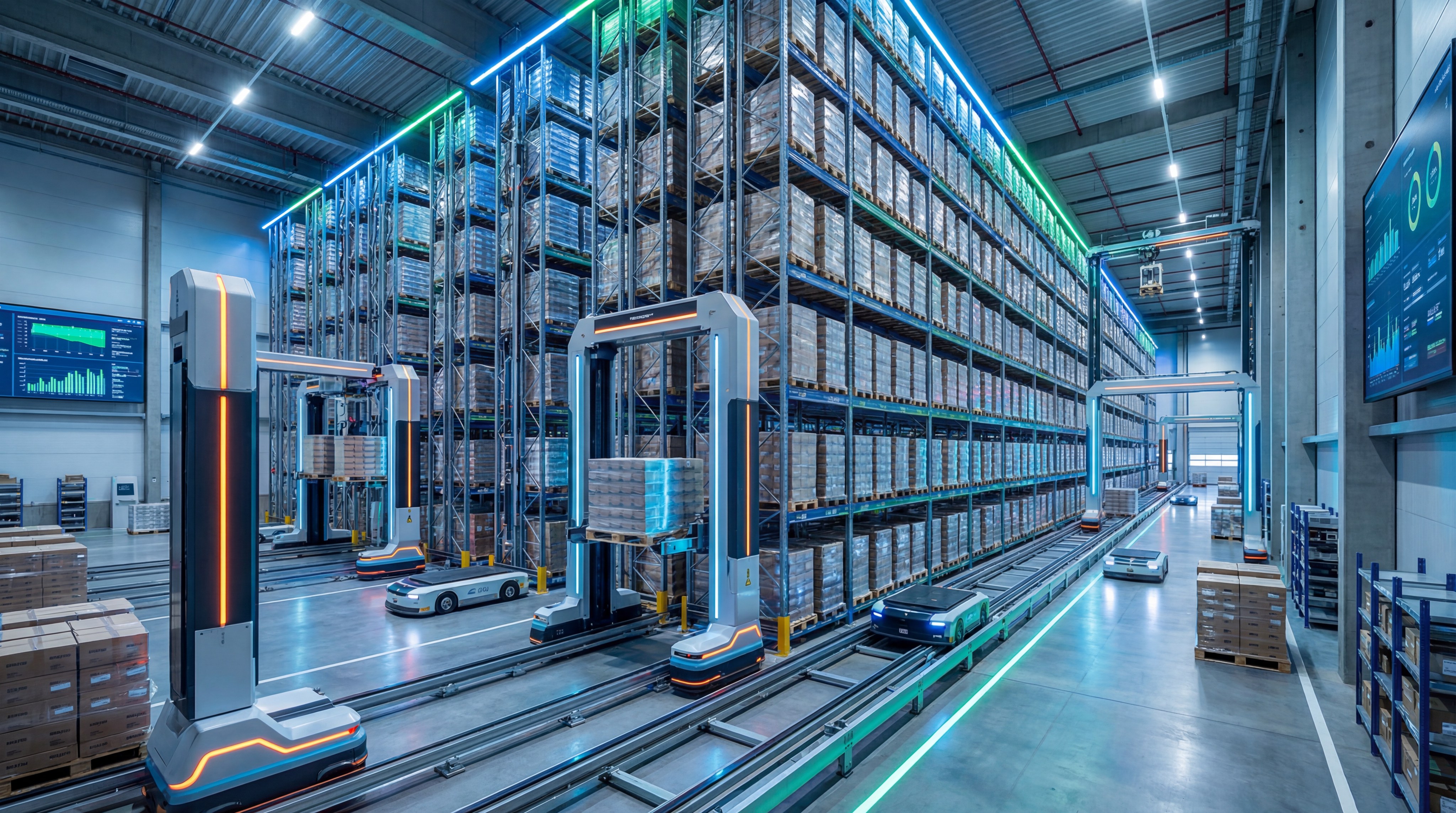
Automation is transforming the warehouse building into a sophisticated logistics engine through the use of Automated Storage and Retrieval Systems (AS/RS). These systems allow you to store goods with maximum density and operate with minimal personnel, often in “dark” environments with reduced lighting and heating needs. You must ensure that your facility is built with extremely level floors to accommodate the high-speed precision required by robotic cranes and automated shuttles.
What are Automated Storage and Retrieval Systems?
AS/RS are high-tech links in the information chain that control manufacturing schedules and work-in-process with extreme accuracy. These systems require tall, specialized structures that maximize vertical space and rely on precise structural engineering to function without interruption. Want to know the best part?
- Maximum storage density with minimal human footprint.
- Real-time reporting on the movement of all materials.
- Ability to operate in low-temperature or low-light conditions.
- Reduced labor costs for repetitive picking operations.
How does e-commerce impact facility location?
The speed of e-commerce is driving a trend toward clustering distribution centers near major logistics hubs like international airports and ports. You may need to locate your facility near specialized transportation centers if your business model depends on rapid parcel air transport or overnight overland delivery. Here is the secret.
- Proximity to major airports for parcel-heavy operations.
- Clustering in regional hubs for overland distribution.
- Rise of smaller, local distribution centers for last-mile delivery.
- Integration of high-tech tracking for global supply chains.
Key Takeaway: Automation requires a higher initial investment in floor precision and structural height but delivers massive gains in logistical throughput.
| Automation Type | Structural Requirement | Strategic Goal | |
|---|---|---|---|
| AS/RS Cranes | Extremely level floor (Superflat) | High-speed, high-density storage | |
| Automated Shuttles | High-precision racking alignment | Rapid pallet movement with zero labor | |
| Sortation Conveyors | Integrated mezzanine or floor space | High-volume package routing | |
| Drone Hubs | Specialized roof access or clearance | Future-proofing for last-mile air delivery |
Evaluate your current labor costs against the potential 24/7 productivity gains of an automated storage solution.
What Trends Influence Future Warehouse Site Selection?
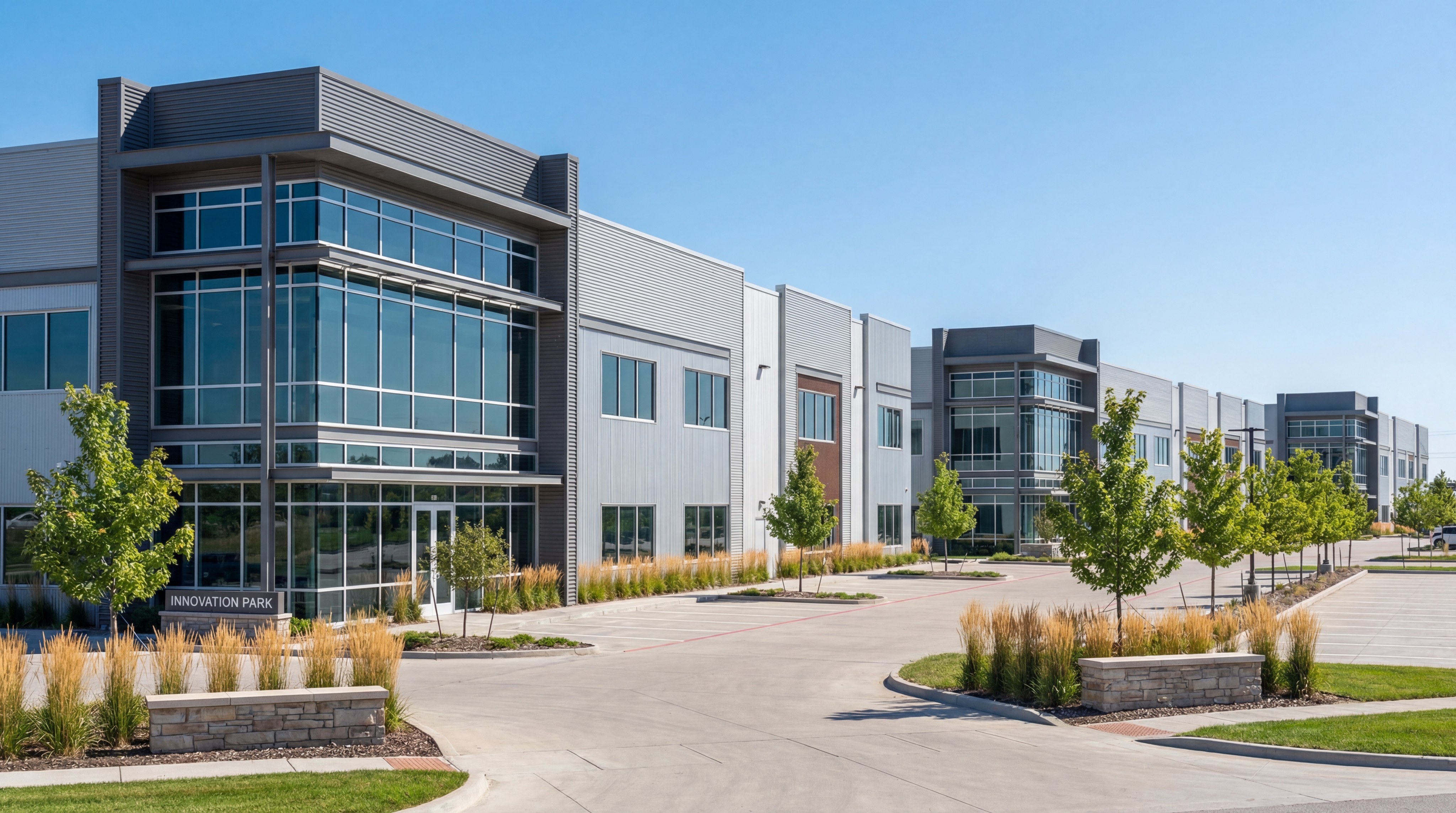
Future trends in warehouse building site selection are focusing on regional consolidation and the growth of “flex” industrial parks. You should look for sites that offer strong technology infrastructure and labor availability, as these factors are becoming more critical than simple land cost. Additionally, the repositioning of older, low-roof buildings into multi-tenant spaces is creating new opportunities for small businesses like contractors and fabricators.
What are “Flex” warehouse parks?
Flex buildings are designed with high-quality landscaping and aesthetics to accommodate small businesses that need a mix of office and industrial space. These units allow you to operate a light fabrication shop or specialized workshop in a professional setting that is attractive to both employees and clients. But there is more.
- Combined office and warehouse space for small teams.
- Aesthetic landscaping and modern building facades.
- Repositioned older structures for new commercial use.
- Location in well-maintained industrial business parks.
Where should you locate for optimal logistics?
Optimal logistics locations are shifting toward areas that can support large-scale regional distribution while remaining close to specialized transportation modes. You must balance the need for substantial truck maneuvering space with proximity to the labor markets required to staff a high-tech facility. The results?
- Fewer but larger regional hubs for cost efficiency.
- Specialization near air-cargo hubs like Memphis or Louisville.
- Urban proximity for high-speed e-commerce delivery.
- Integration with third-party logistics (3PL) providers.
Key Takeaway: The best site is no longer the cheapest land, but the location that offers the best balance of transport access and technical talent.
| Location Factor | Modern Priority | Business Benefit | |
|---|---|---|---|
| Hub Proximity | Near airports or ports | Reduced transit time and lower fuel costs | |
| Labor Pool | High technical skill availability | Faster adoption of automation and software | |
| Flex Utility | Mixed-use office/industrial | Accommodates administrative and production teams | |
| Regional Reach | Centralized distribution site | Consolidation of inventory for multiple markets |
Analyze your transport-to-labor cost ratio to determine if a centralized regional hub or several local “flex” sites better serve your clients.
FAQ
Can I convert an old warehouse building into an office?Yes, most industrial steel structures are highly adaptable due to their clear-span designs. You can easily integrate office mezzanines or computer centers into the existing shell as long as the floor and roof can support the additional loads.
What is the best way to determine required dock height?Standard truck beds require a 4’–4″ dock height for level loading without steep ramps. If you operate a mixed fleet, the best solution is to install adjustable dock levelers that can bridge the height difference for smaller vans or specialized trailers.
Can I store hazardous chemicals in a general warehouse building?Generally no, because hazardous materials require specialized containment, non-sparking electrical systems, and higher-rated fire suppression. You must ensure the facility is specifically engineered with the correct vapor barriers and spill-containment flooring before storing toxic or flammable goods.
How do I choose between a cool roof and a green roof?Select a cool roof if your primary goal is reducing summer cooling costs and initial construction investment. A green roof is better if you need to manage significant stormwater runoff or want to provide superior sound insulation and aesthetic value.
What is the most durable flooring for heavy machinery?The most durable choice is a laser-leveled concrete slab treated with chemical hardeners and dust-proofers. For areas involving chemicals or battery charging, adding an epoxy coating provides the necessary protection against corrosive spills.
Conclusion
Success in modern logistics begins with a facility that is as efficient as the inventory it houses. A high-performance warehouse building is no longer just a shell; it is a strategic tool that maximizes density, ensures worker safety, and integrates seamlessly with global distribution networks. By prioritizing vertical space, structural durability, and sustainable design, you build a foundation for long-term operational excellence. Our brand stance is built on providing engineered solutions that transform storage into a competitive advantage. If you are ready to future-proof your supply chain with a world-class steel structure, please contact us today to begin your project analysis.