
Selecting the right birds involves matching their productivity, temperament, and hardiness to your specific environmental conditions. You dream of a thriving homestead filled with the sounds of a healthy flock and a basket full of fresh eggs every morning. However, choosing the wrong variety can lead to high maintenance costs, low egg yields, and birds that cannot withstand your local climate. This frustration often causes new owners to abandon their poultry goals entirely. By choosing a proven farm chicken , you can secure a reliable source of protein and a resilient flock that grows alongside your agricultural ambitions.
Why is Ameraucana a top farm chicken for blue eggs?
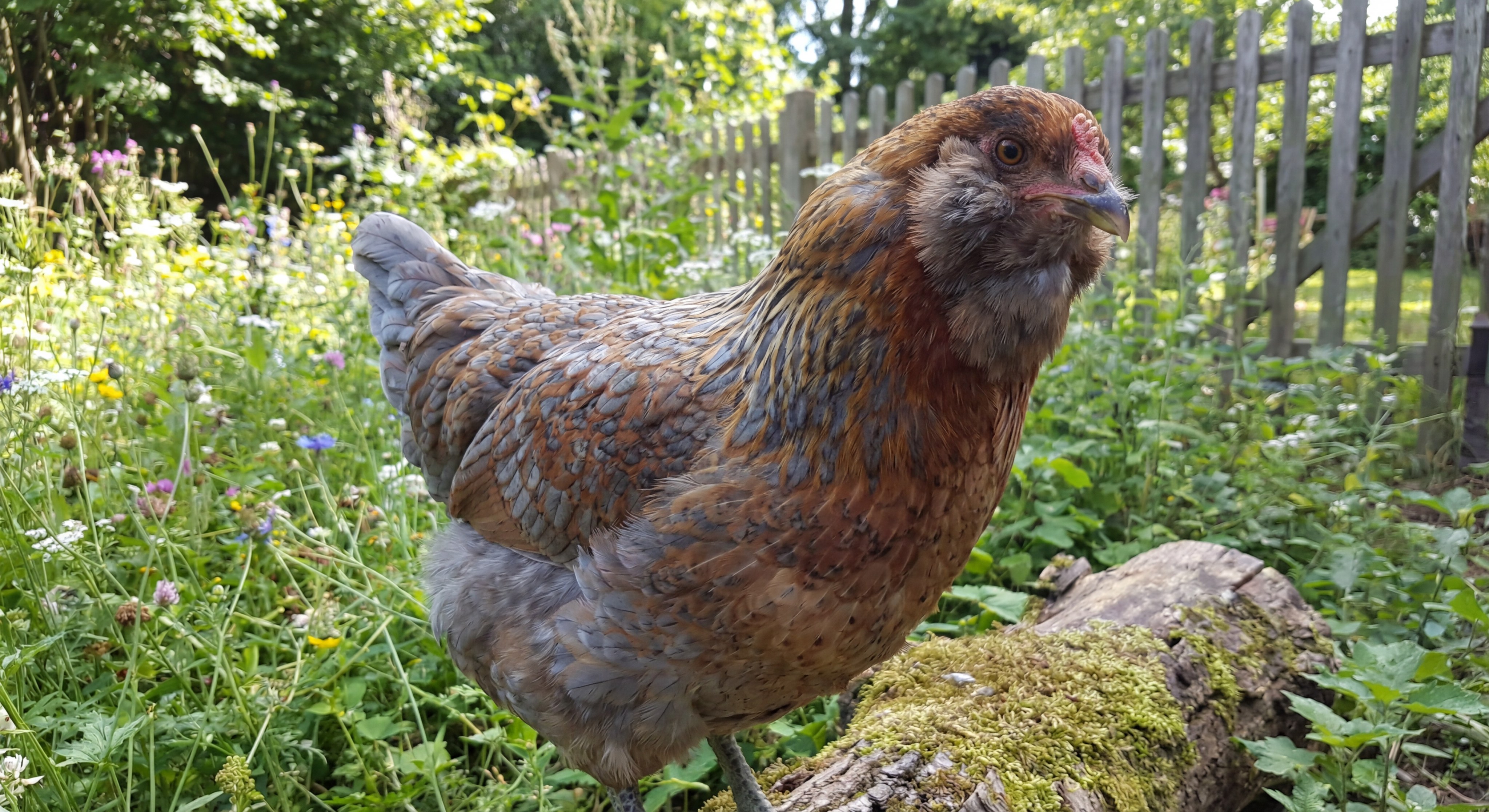
Ameraucanas are highly valued for their ability to produce beautiful medium-sized blue or greenish-blue eggs consistently. Finding the right farm chicken starts with identifying unique traits that add value to your colorful egg basket. You will find that these birds are not just productive but also bring a unique aesthetic to your backyard.
What defines their unique look?
These birds possess distinct facial features such as muffs and beards that protect them from the elements.
- They feature a small pea comb.
- Their feather patterns are varied and striking.
- They maintain a calm and curious temperament.
But that’s not all. Their genetic makeup makes them extremely resistant to frostbite, which is vital for northern climates.
Are they hardy enough for you?
You need a bird that can handle cold winters without constant intervention or specialized heating.
- They thrive in varied weather conditions.
- Their foraging skills help reduce feed costs.
Key Takeaway: The Ameraucana is the premier choice for farmers wanting colorful eggs and high cold tolerance.
| Feature | Specification | |
|---|---|---|
| Egg Color | Blue / Blue-Green | |
| Temperament | Docile & Active | |
| Hardiness | High Cold Resistance |
This breed provides a perfect balance between ornamental beauty and functional farm performance for any modern homestead.
Is the Australorp the most productive farm chicken?
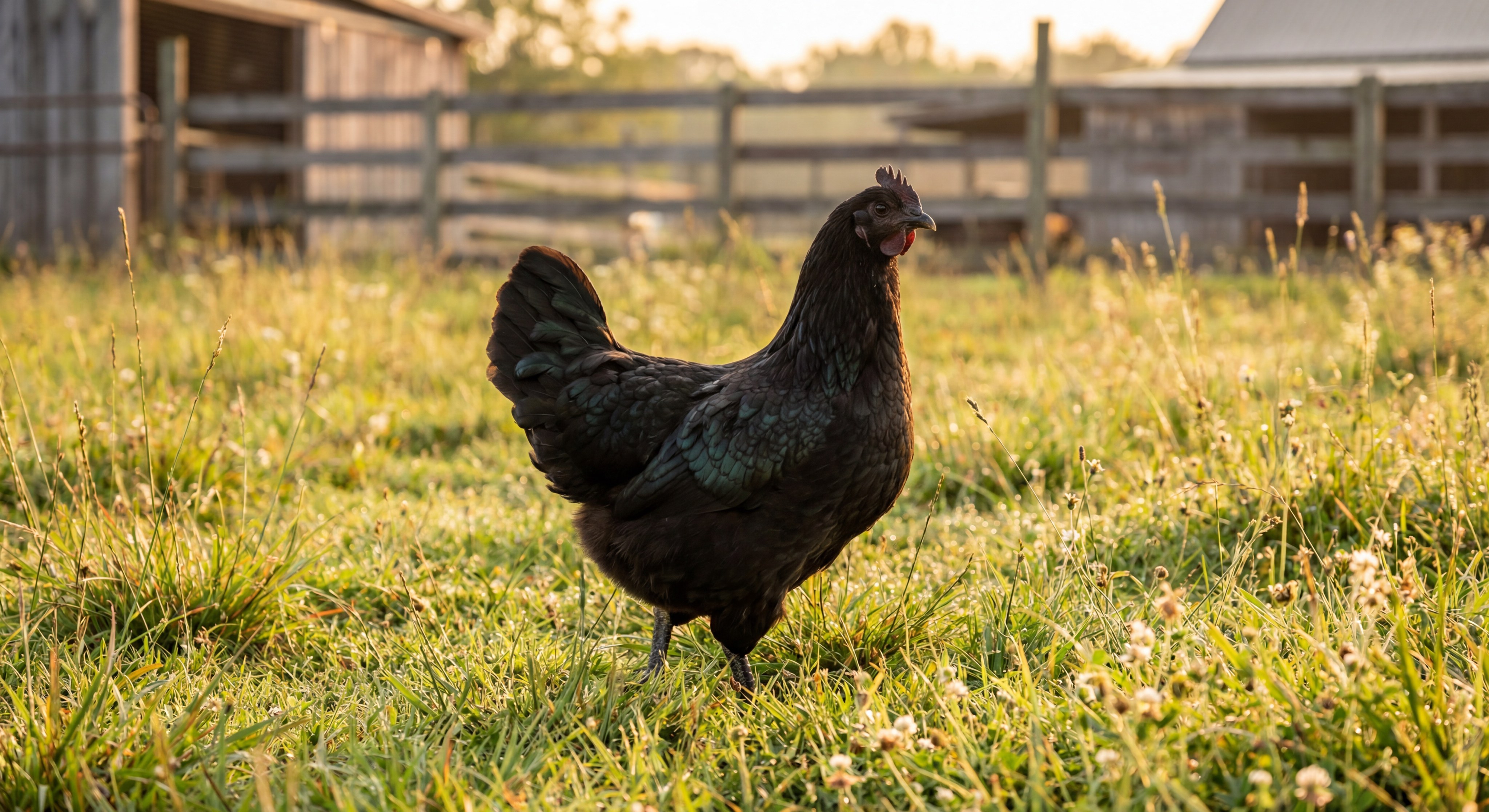
The Australorp is widely considered the gold standard for high-volume egg laying in a domestic environment. This productive farm chicken once held the world record for laying 364 eggs in a single year. To keep these prolific layers safe, you should invest in a secure Chicken House that provides proper ventilation and protection.
Why is egg volume so high?
Australorps have been selectively bred for efficiency, ensuring you get the most return for your feed investment.
- They lay large brown eggs almost daily.
- They reach maturity faster than most heritage breeds.
- Their black feathers have a beautiful green iridescence.
Think about it. A small flock of these birds can easily provide enough eggs for a large family and extra for local sales.
How do they act in a flock?
You will enjoy their docile nature, which makes them easy to handle even if you are a beginner.
- They are non-aggressive toward other breeds.
- They adapt well to both confinement and free range.
Key Takeaway: For sheer egg-laying volume and a friendly disposition, the Australorp is nearly impossible to beat.
| Feature | Specification | |
|---|---|---|
| Annual Production | 250+ Eggs | |
| Egg Size | Large / X-Large | |
| Personality | Sweet & Calm |
The combination of record-breaking productivity and a gentle soul makes this breed a foundational asset for any poultry operation.
How does the Brahma farm chicken handle cold weather?
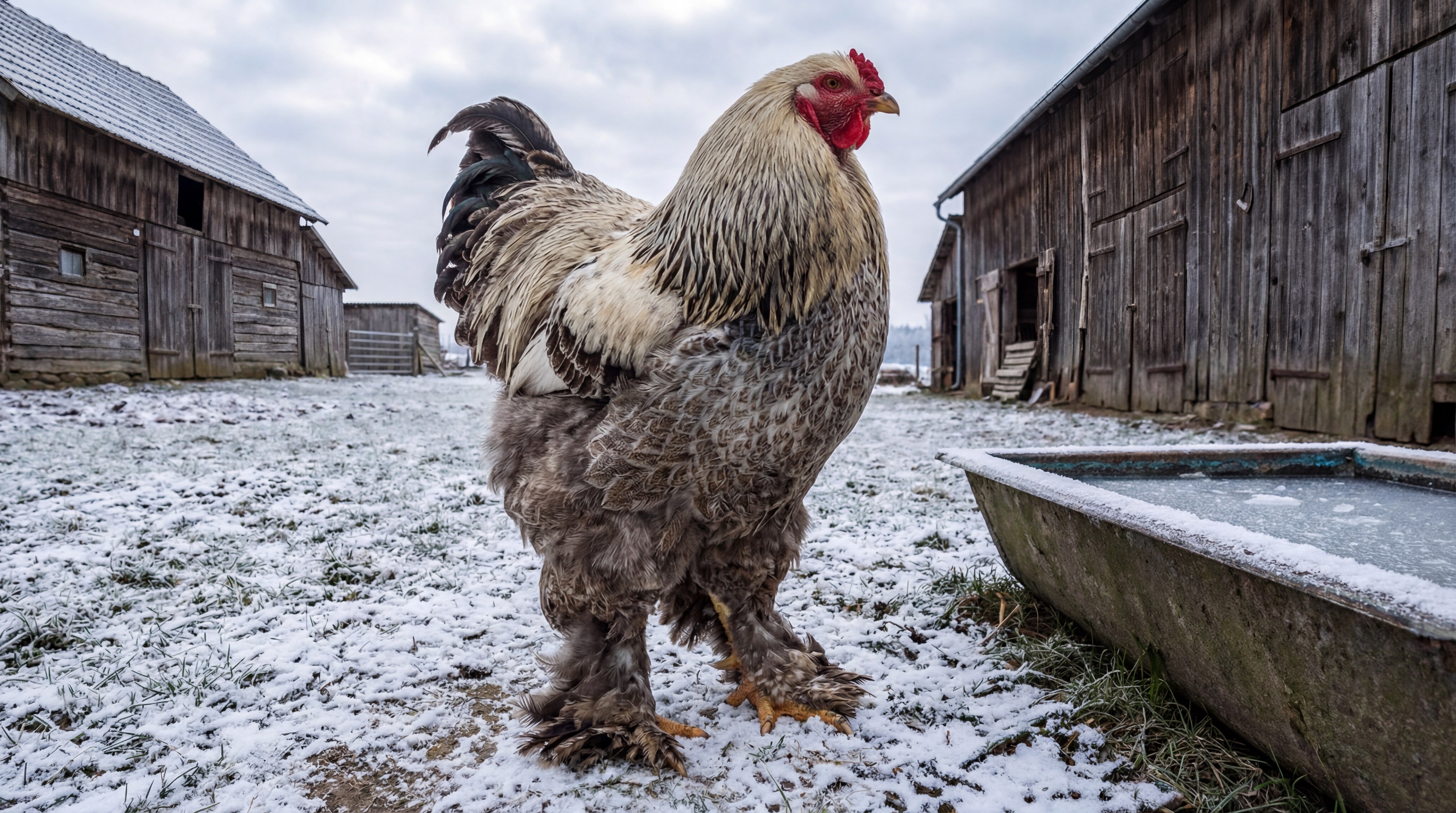
Brahmas are known as the “King of All Poultry” because their massive size and heavy feathering provide superior insulation. Choosing a farm chicken with feathered shanks ensures your flock remains active even during the harshest winter months. You will appreciate their steady, calm presence in the coop when temperatures begin to drop.
Does size prevent predator attacks?
Their large frame often acts as a natural deterrent to smaller hawks and other common backyard predators.
- They possess thick feathering down to their toes.
- They are heavy birds that do not fly over fences.
- Their pea combs are virtually frostbite-proof.
Believe it or not, these gentle giants are often the last ones to head inside when it starts to snow.
What are their nesting habits?
You can rely on Brahmas to continue laying eggs throughout the winter when other breeds typically stop.
- They produce medium to large brown eggs.
- They have a slow but steady growth rate.
Key Takeaway: Brahmas are the ultimate cold-climate companions for farmers who value winter production and massive, docile birds.
| Feature | Specification | |
|---|---|---|
| Weight | 8.0 – 12.0 lbs | |
| Egg Color | Light Brown | |
| Climate Type | Cold & Dry Preferred |
Investing in a large-framed breed like the Brahma ensures your farm remains productive during the most challenging seasonal shifts.
Why choose Cochin as your docile farm chicken?
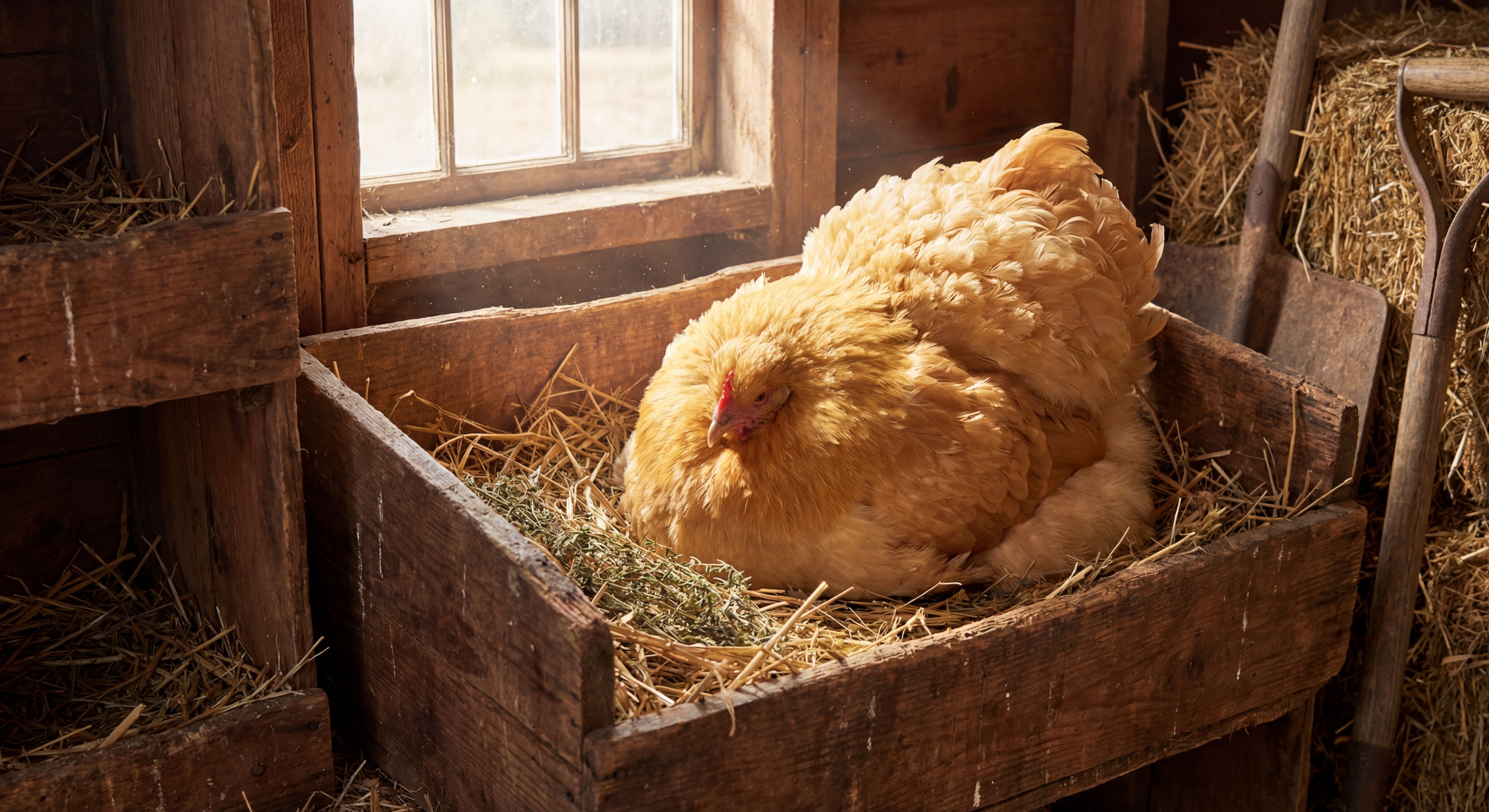
Cochins are the epitome of the “fluffy” bird, prized mainly for their maternal instincts and exceptionally gentle nature. This docile farm chicken is perfect if you want a bird that will naturally hatch and raise its own chicks. If you plan on housing a large collection of these heavy birds, a farm chicken offers the space and durability needed for a large-scale brooder.
Are they good mothers?
Cochins are famous for their broodiness, often willing to sit on almost any egg you place under them.
- They have unmatched profuseness of feathering.
- They produce significant “animal heat” in winter.
- They are extremely friendly with children.
But wait, there’s more. Their calm demeanor makes them ideal for small yards where flighty birds might cause neighbor issues.
Do they need special care?
You must keep their environment dry because their foot feathers can collect mud and moisture if not managed.
- They require low perches due to their weight.
- They are excellent eaters with moderate egg output.
Key Takeaway: Choose Cochins if your primary goal is a docile family pet that doubles as a reliable foster mother.
| Feature | Specification | |
|---|---|---|
| Disposition | Very Gentle | |
| Mothering | Exceptional | |
| Feathering | Loose & Profuse |
While they lay fewer eggs than commercial hybrids, their ability to expand your flock naturally provides long-term value to your farm.
Is the Delaware farm chicken best for meat and eggs?
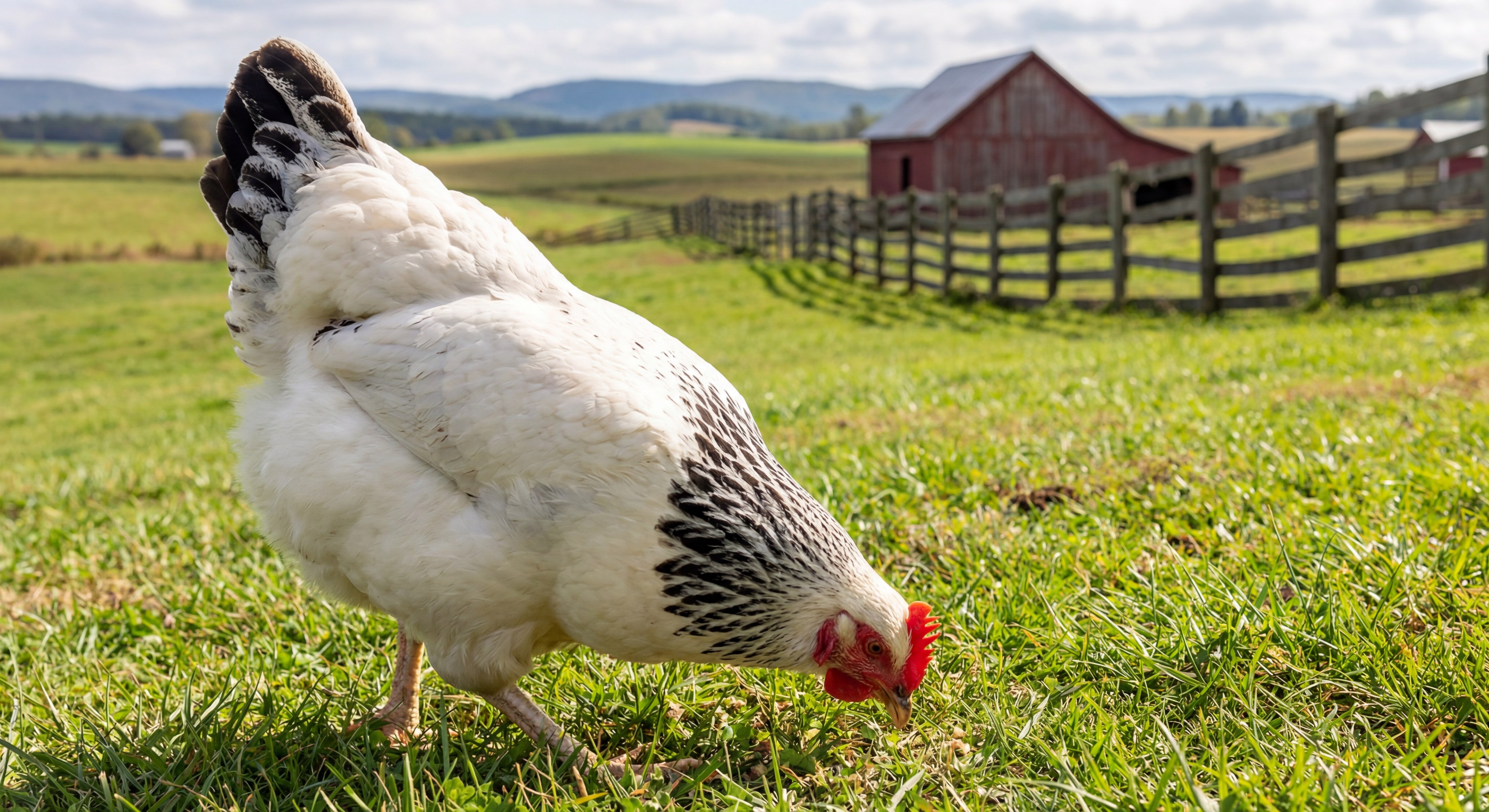
The Delaware is a premier American dual-purpose breed that offers a rapid growth rate alongside dependable egg production. As a versatile farm chicken , they were originally developed for the commercial broiler industry before being surpassed by modern hybrids. You will find that they are much hardier and more self-sufficient than those modern specialized birds.
Why is their growth so fast?
Delawares were engineered to reach market weight quickly, making them efficient converters of feed to protein.
- They have deep, broad bodies ideal for roasting.
- Their white plumage makes for a clean dressed carcass.
- They are active foragers on open pasture.
The best part? They don’t sacrifice egg-laying ability, providing plenty of large brown eggs for your kitchen table.
How do they handle the heat?
You can raise these birds in warmer climates without the stress often seen in heavier, dark-feathered breeds.
- They are alert and predator-aware.
- They maintain a calm but competitive energy.
Key Takeaway: The Delaware is the perfect breed for self-sufficiency, offering a balance of meat quality and egg output.
| Feature | Specification | |
|---|---|---|
| Maturity | Rapid | |
| Purpose | Dual (Meat/Egg) | |
| Egg Size | Large / Jumbo |
Farmers who want to minimize feed costs while maximizing protein output will find the Delaware to be an indispensable asset.
Why is the Leghorn the busiest farm chicken breed?
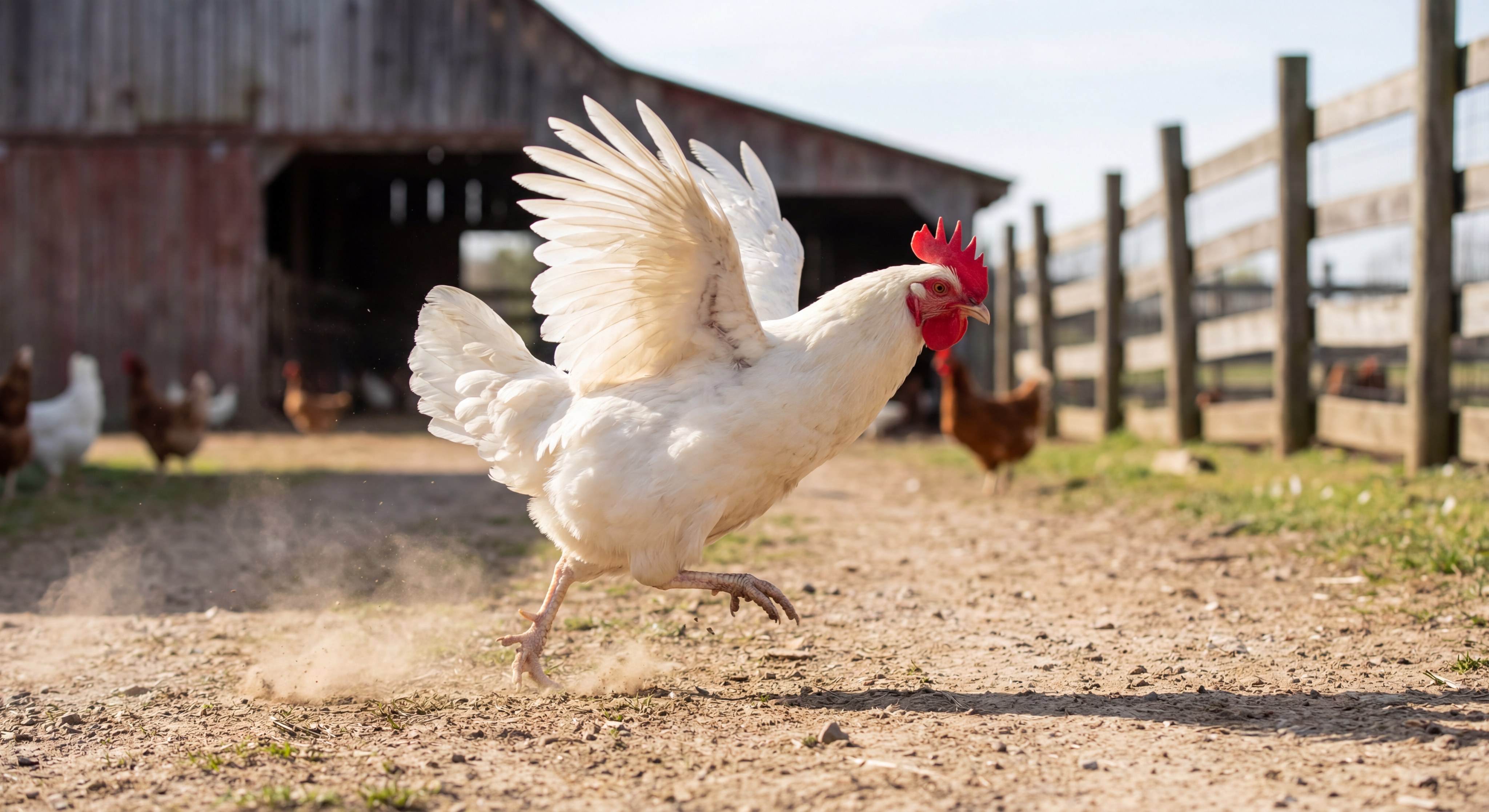
Leghorns are high-performance birds that dominate the white egg industry due to their incredible feed-to-egg conversion ratio. This energetic farm chicken is always working, hunting, and scratching for insects across your property. To keep your overall farm organized, consider placing their coop near a Cow & Sheep Shed to centralize your feeding and maintenance chores.
Can they save you money on feed?
Because Leghorns are smaller and highly active, they consume less commercial feed than heavy-bodied heritage breeds.
- They lay prolific amounts of large white eggs.
- They are highly fertile and hardy.
- They are excellent foragers in open fields.
Here is the kicker: their efficiency means you get more eggs per dollar spent on grain than almost any other breed.
Are they flighty or friendly?
You should be aware that Leghorns are more nervous than dual-purpose birds and prefer large spaces to roam.
- They are capable of considerable flight.
- They rarely go broody, keeping production steady.
Key Takeaway: The Leghorn is the ultimate choice for high-yield white egg production and maximum foraging efficiency.
| Feature | Specification | |
|---|---|---|
| Egg Color | Pure White | |
| Activity Level | Very High | |
| Feed Efficiency | Superior |
If your primary goal is a massive supply of white eggs with minimal overhead, this breed is the clear professional choice.
Is the Orpington the friendliest farm chicken?
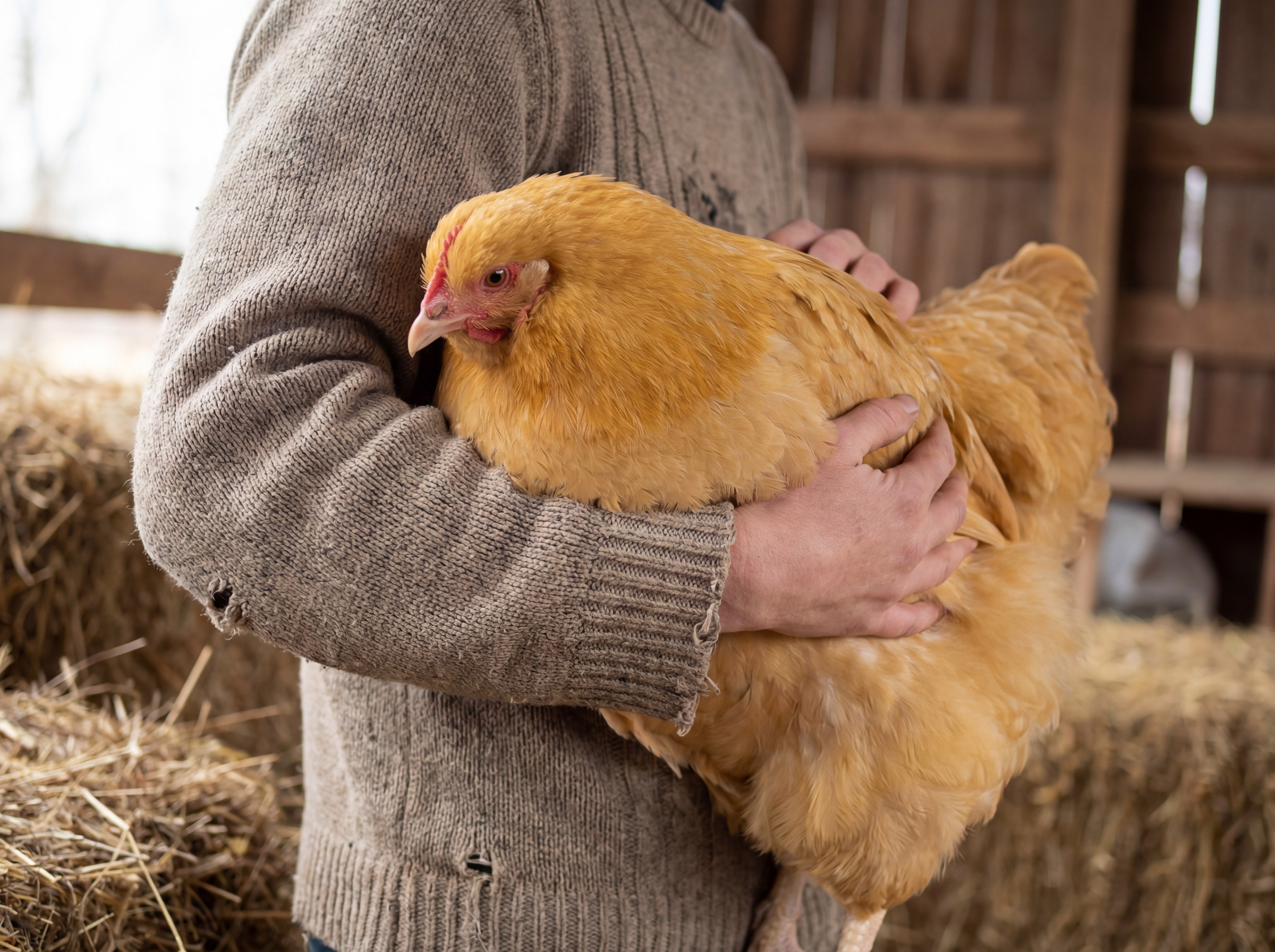
Orpingtons are frequently called the “lap dogs” of the poultry world because they are incredibly calm and easy to handle. This heavy-bodied farm chicken features loose, soft plumage that makes them feel even larger than they actually are. You will find them to be the perfect choice for families with small children or first-time owners.
Do they survive harsh winters?
Their heavy insulation allows them to continue foraging and laying even when temperatures drop well below freezing.
- They come in solid colors like Buff and White.
- They are docile and do not bully other birds.
- They make excellent and protective mothers.
Think about it. A bird that is both a reliable layer and a friendly pet provides double the value to your farm.
How do they handle confinement?
You will find that they are very content in smaller runs as long as they have access to fresh water and food.
- They are not prone to flying over high fences.
- They are often the “underdogs” in mixed flocks.
Key Takeaway: Orpingtons are the best choice for beginners seeking a gentle, cold-hardy bird with dependable egg production.
| Feature | Specification | |
|---|---|---|
| Personality | Extremely Docile | |
| Egg Color | Brown | |
| Cold Tolerance | Excellent |
Their sweet nature and soft appearance make them a favorite for those who view their flock as part of the family.
How versatile is the Plymouth Rock farm chicken?
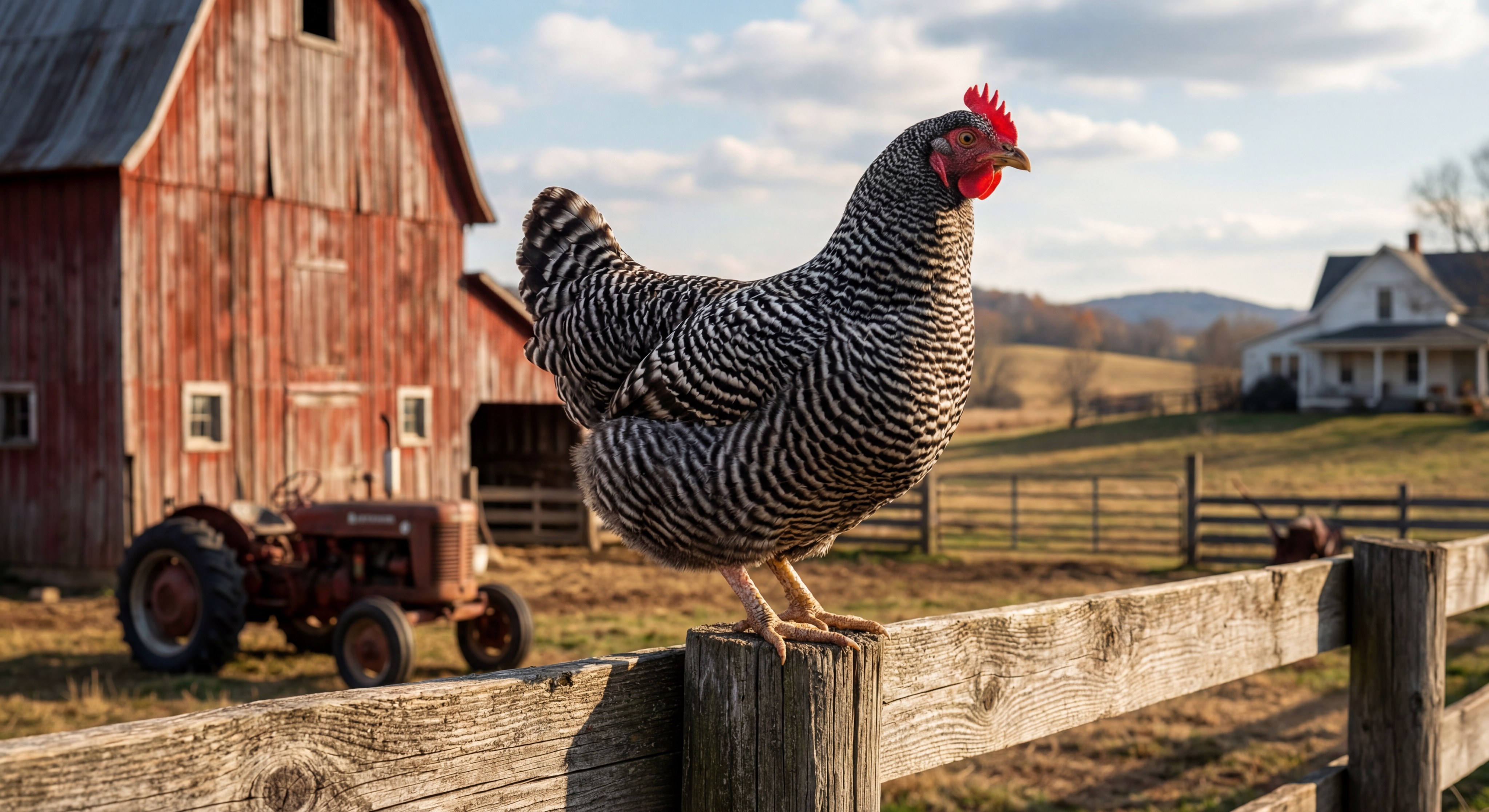
The Plymouth Rock is an iconic American breed known for its longevity, consistent egg laying, and overall resilience. This versatile farm chicken is often the backbone of a diverse homestead because it thrives in nearly any geographic location. For large operations that require integrated storage for both birds and equipment, an Chicken House provides the necessary wide-span space.
Why is the “Barred” pattern so famous?
The striking black-and-white striped feathers make the Barred Rock easy to identify and aesthetically pleasing in any yard.
- They are sturdy, long-lived birds.
- They produce a reliable supply of brown eggs.
- They are smart enough to avoid most predators.
Believe it or not, these birds were once the primary source of eggs and meat for most of North America.
Can they handle heat and cold?
You don’t have to worry about seasonal extremes, as this breed handles temperature shifts with impressive ease.
- They have a calm enough disposition for confinement.
- They remain active foragers when given the space.
Key Takeaway: The Plymouth Rock is the “all-rounder” that provides long-term stability and reliability for your farm.
| Feature | Specification | |
|---|---|---|
| Versatility | High | |
| Lifespan | Long (8-10 years) | |
| Production | Very Reliable |
Consistency is the greatest strength of this breed, making it a safe investment for anyone building a multi-generational flock.
Why is Rhode Island Red the world’s best farm chicken?
The Rhode Island Red is perhaps the most famous and successful dual-purpose bird ever developed for the modern farm. As a rugged farm chicken , it is legendary for its ability to produce high numbers of eggs even in marginal conditions. You will appreciate their “no-nonsense” attitude toward survival and production as they work through heat and cold alike.
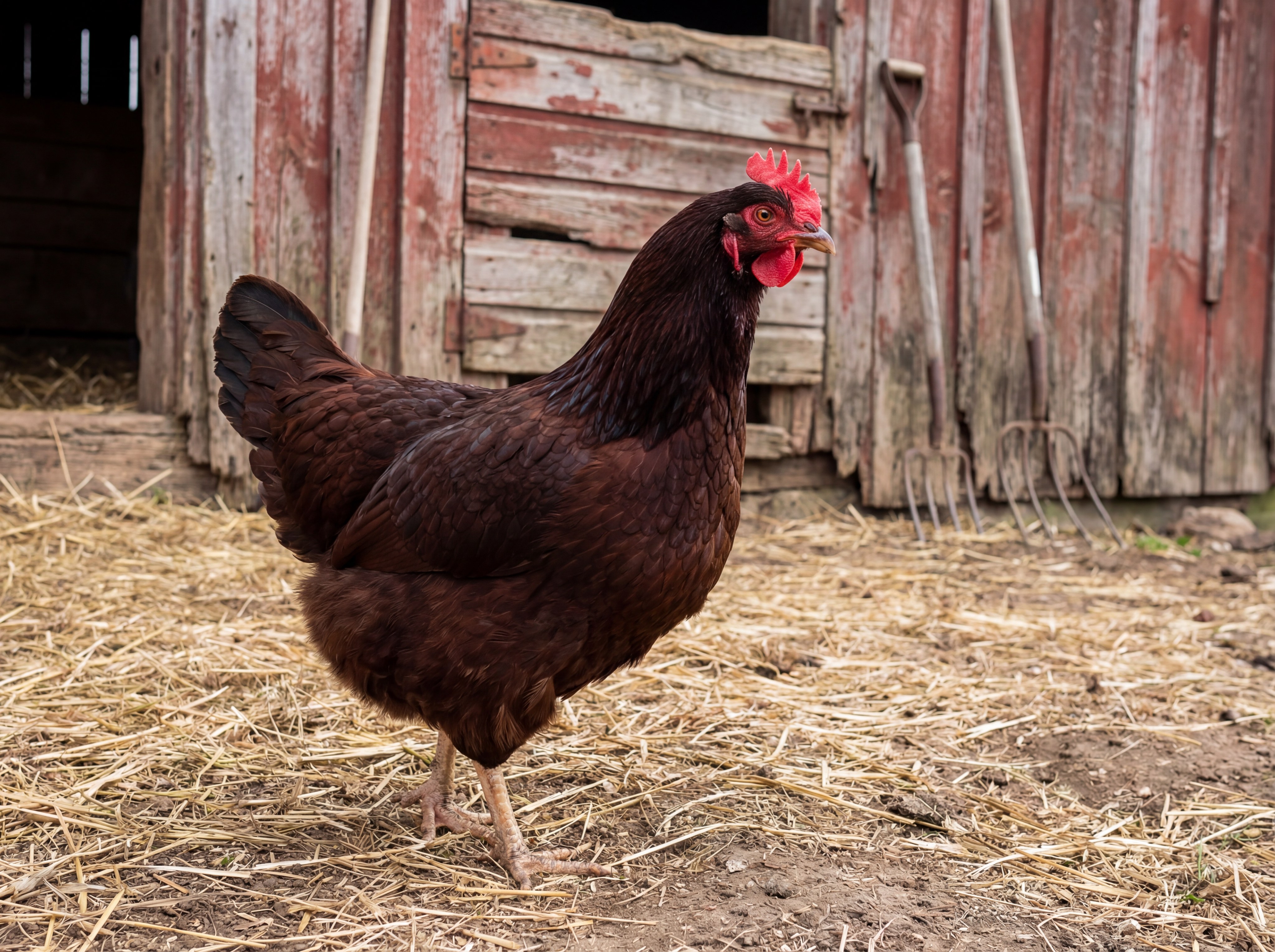
Are they the best for survival?
These birds are incredibly disease-resistant and can handle less-than-ideal housing better than almost any other breed.
- They lay large, rich brown eggs.
- They possess a deep, mahogany red color.
- They are competitive and excellent at foraging.
The best part? You can rely on them to keep your egg carton full even when other birds go into a seasonal slump.
Are they aggressive toward others?
You should monitor them in mixed flocks, as their high energy and competitive nature can lead to bullying of more docile breeds.
- They are active and alert to surroundings.
- They rarely go broody in commercial strains.
Key Takeaway: If you can only choose one breed for maximum survival and output, the Rhode Island Red is the gold standard.
| Feature | Specification | |
|---|---|---|
| Egg Production | 200 – 300 per year | |
| Hardiness | Extreme | |
| Best For | High Production Farms |
Their reputation as the workhorse of the poultry world is well-deserved, providing consistent value year after year.
Can the Sussex be your primary farm chicken for meat?
The Sussex is an ancient, heavy breed that provides exceptional meat quality alongside a steady supply of large, light-colored eggs. This dependable farm chicken is ideal for those who want a dual-purpose bird with a heavy frame and a gentle heart. To protect these heavy meat birds from predators, a specialized farm chicken style structure can be adapted to provide maximum ventilation and safety.
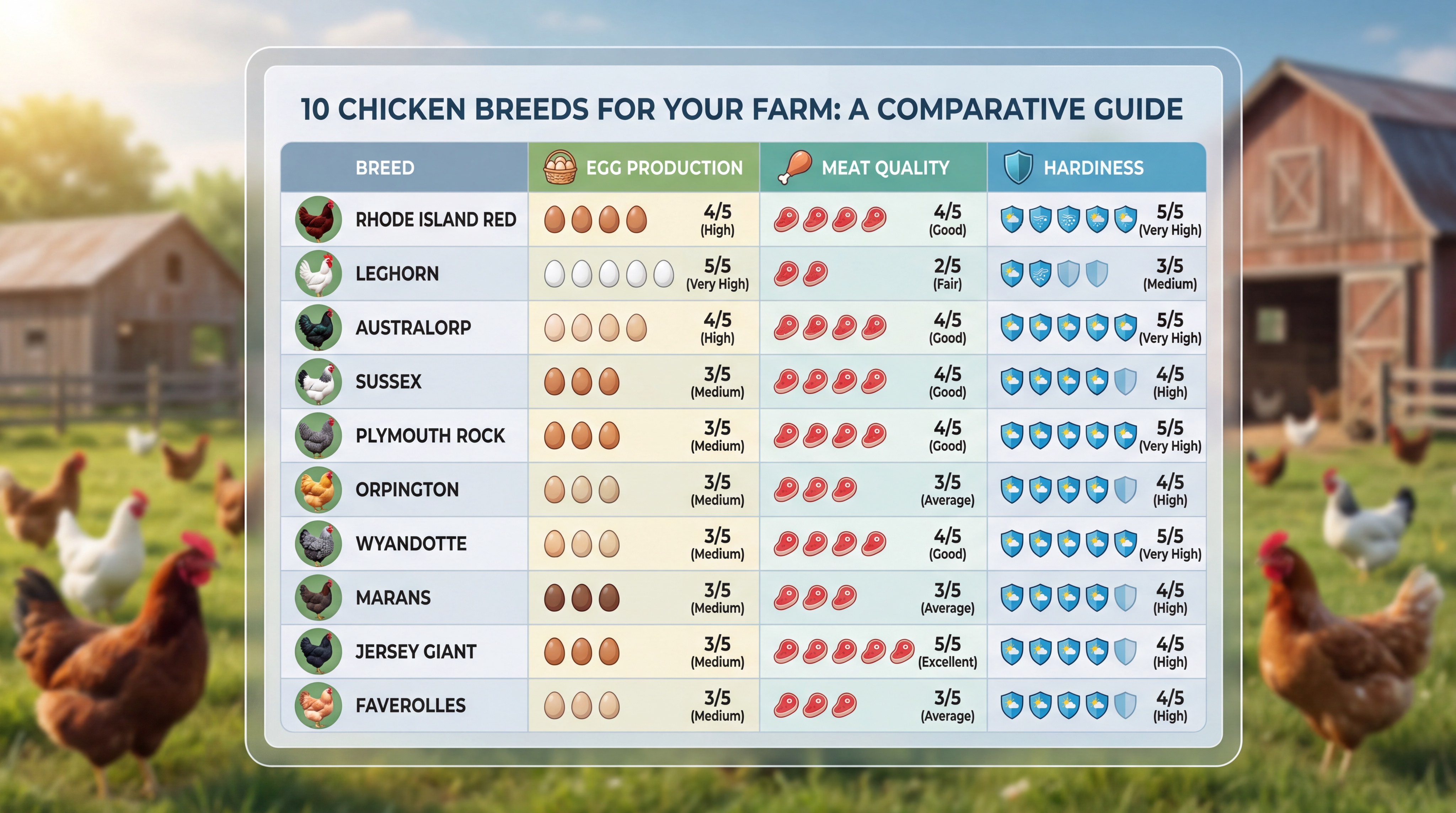
What makes their meat quality superior?
Sussex chickens are prized for their white skin and tender, succulent meat that is far superior to standard commercial birds.
- They are heavy birds with wide breasts.
- they are adaptable to almost any climate.
- They lay large cream to light-brown eggs.
But that’s not all. Their curious nature means they will often follow you around the yard like a companion animal.
Are they easy to keep?
You will find them very alert to their surroundings, which helps them avoid predators while they forage in your pastures.
- they stay calm under environmental stress.
- they are friendly and easy to catch if needed.
Key Takeaway: The Sussex is the premier choice for farmers who want a heavy meat bird that remains a pleasant garden companion.
| Breed Feature | Sussex Performance | |
|---|---|---|
| Meat Quality | Excellent (White Skin) | |
| Egg Production | Medium – High | |
| Adaptability | Very High |
Selecting the Sussex ensures your farm produces high-quality protein while maintaining a docile and manageable flock atmosphere.
Frequently Asked Questions
Can I mix different breeds in the same flock?Yes, you can mix most of these breeds together. You should just ensure that high-energy birds like Rhode Island Reds do not bully very docile breeds like Cochins or Orpingtons.
What’s the best breed for absolute beginners?The Australorp is the best choice because it is exceptionally hardy and consistently productive. This allows new owners to see immediate success without complex management requirements.
How do I know if my breed needs a heated coop?Most hardy breeds like the Brahma or Ameraucana do not need heat. You should check for a small pea comb, which is a direct indicator of high frostbite resistance.
What is the longest living chicken breed?The Plymouth Rock typically lives the longest. These birds often remain productive and healthy for 8 to 10 years when provided with proper nutrition and secure housing.
Why does my chicken stop laying in winter?Daylight is the primary trigger for egg production. You will find that production slows as days shorten, though breeds like the Brahma and Sussex are better at winter laying than others.
Selecting the perfect flock is the first step toward a successful and sustainable homestead. To truly protect your investment and ensure long-term productivity, you must provide a secure, engineered environment that stands up to the elements and predators. Our team specializes in providing professional-grade agricultural structures that are tailored to the unique needs of your farm. Please contact us today to discuss your project requirements and let us help you build a future that lasts for generations.