
On average, building a modern industrial facility will cost you between 75 and 140 per square foot for a basic shell and essential systems. Growing inventory and cramped aisles are more than just an operational headache; they are a silent killer of your bottom line. Every day you delay expansion, your distribution efficiency drops, and your competitors gain ground. The search for space usually leads to one critical question: how do you secure a high-performance facility without overextending your capital? By choosing a precision-engineered warehouse construction cost strategy, you can build a scalable, durable asset that turns your logistics nightmare into a competitive advantage.
What is the average warehouse construction cost?
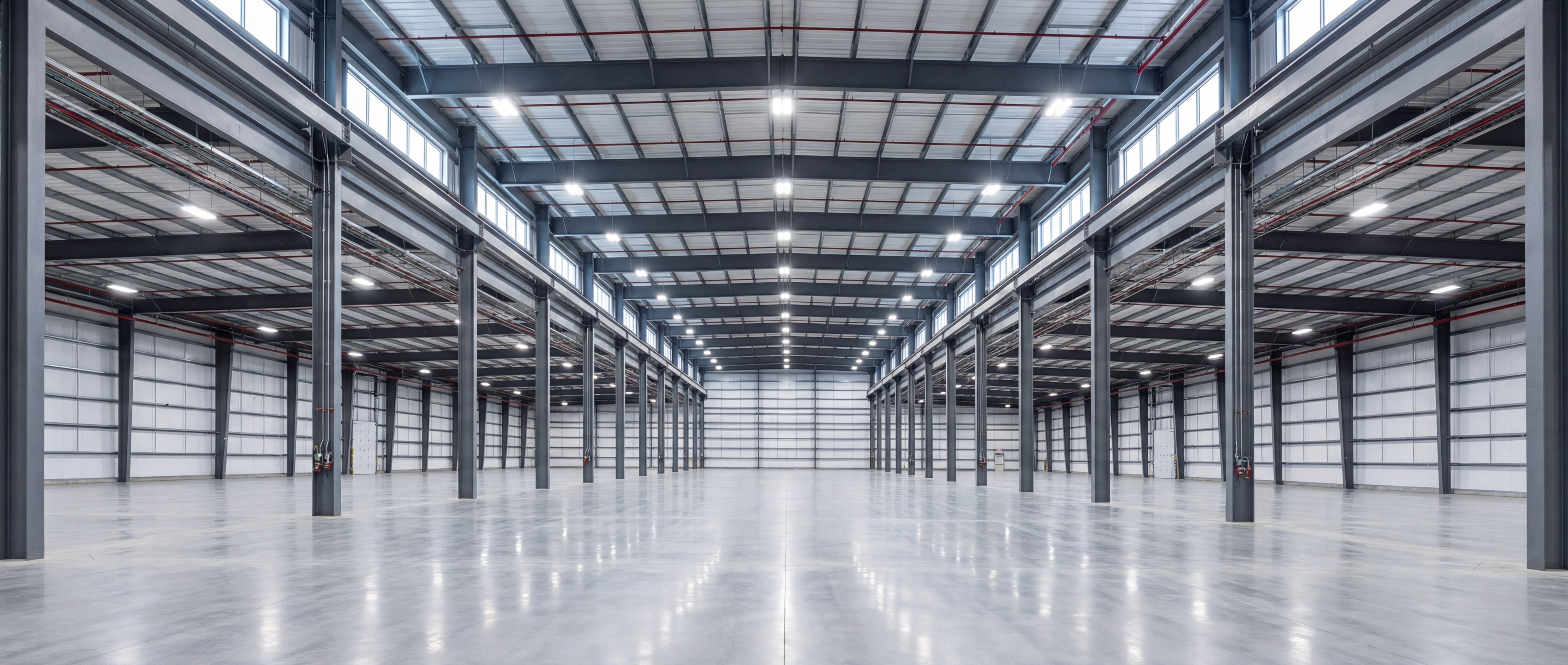
A standard warehouse construction cost typically ranges from 75 to 140 per square foot for the building shell and basic mechanical systems. Understanding the baseline is the first step toward a realistic budget that covers your operational needs.
The Per Square Foot Reality
Understanding the baseline is the first step toward a realistic budget.
- Small Buildings (10k-20k sq ft): ~$140/sq ft.
- Mid-Size (30k-50k sq ft): ~85−100/sq ft.
- Large Facilities (100k+ sq ft): ~60−80/sq ft.
Think about this: Lower prices per square foot in larger buildings aren’t magic—they are the result of spreading fixed mobilization and utility costs over a massive footprint.
Why Regional Averages Matter
Local labor markets and land availability dictate your final numbers.
- Urban centers often see a 15-20% premium.
- Coastal zones require expensive wind-rated engineering.
- Rural sites may face high utility extension fees.
But that’s not all. Regional seismic or snow load requirements can add significant weight to your steel frame, quietly pushing your numbers higher.
Key Takeaway: Budgeting starts with a broad range, but the economy of scale is your best friend when planning for growth.
| Category | Size Range (Sq Ft) | Estimated Cost / Sq Ft | |
|---|---|---|---|
| Small | 10,000 – 20,000 | $140 | |
| Medium | 30,000 – 50,000 | 85–100 | |
| Large | 100,000+ | 60–80 |
Analysis Guide: Use these figures as a “shell-only” baseline; always add 20% for site-specific soft costs and permits.
How does size impact warehouse construction cost?
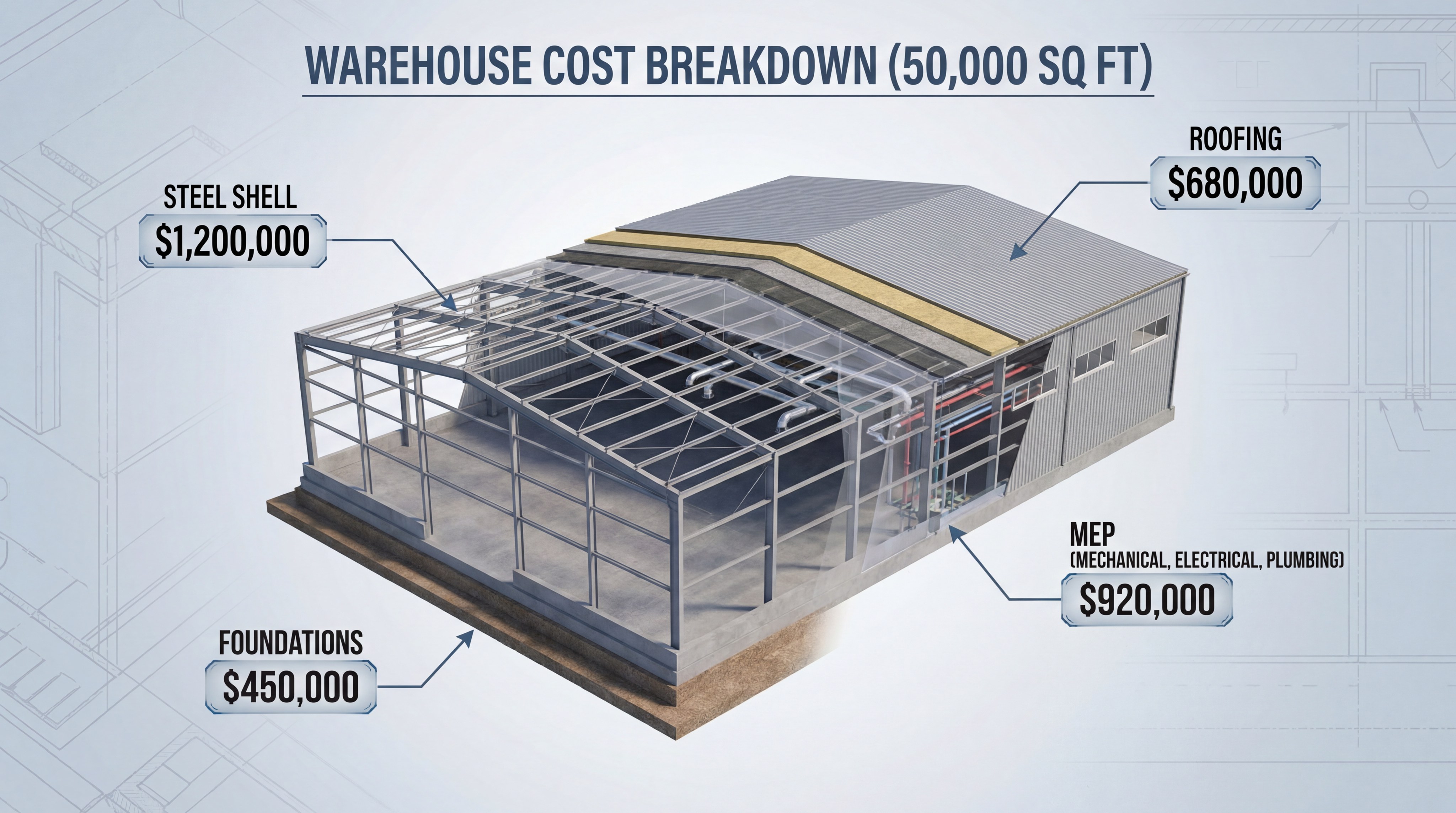
The total warehouse construction cost decreases on a per-unit basis as the total square footage increases due to significant economies of scale in materials and labor. Larger footprints allow you to distribute fixed expenses across more area, lowering the average cost.
The Magic of Scaling Efficiency
Large-scale projects allow for bulk material purchasing and streamlined labor.
- Bulk steel orders reduce the price per ton.
- Automated fabrication lines favor repetitive parts.
- Equipment rental costs are spread over more workdays.
Here is the kicker: A 100,000-square-foot facility doesn’t cost ten times more than a 10,000-square-foot one—it’s often significantly more efficient.
Key Takeaway: If your growth projections are strong, building larger now is almost always more cost-effective than adding an extension later.
| Facility Size | Scale Impact | Efficiency Gain | |
|---|---|---|---|
| 20,000 Sq Ft | High Fixed Cost Ratio | Baseline | |
| 50,000 Sq Ft | Moderate Efficiency | +15% | |
| 150,000 Sq Ft | Maximum Efficiency | +35% |
Analysis Guide: Assess your 5-year growth plan; if you need 40,000 sq ft in three years, building 50,000 now is cheaper per foot.
How do materials change warehouse construction cost?
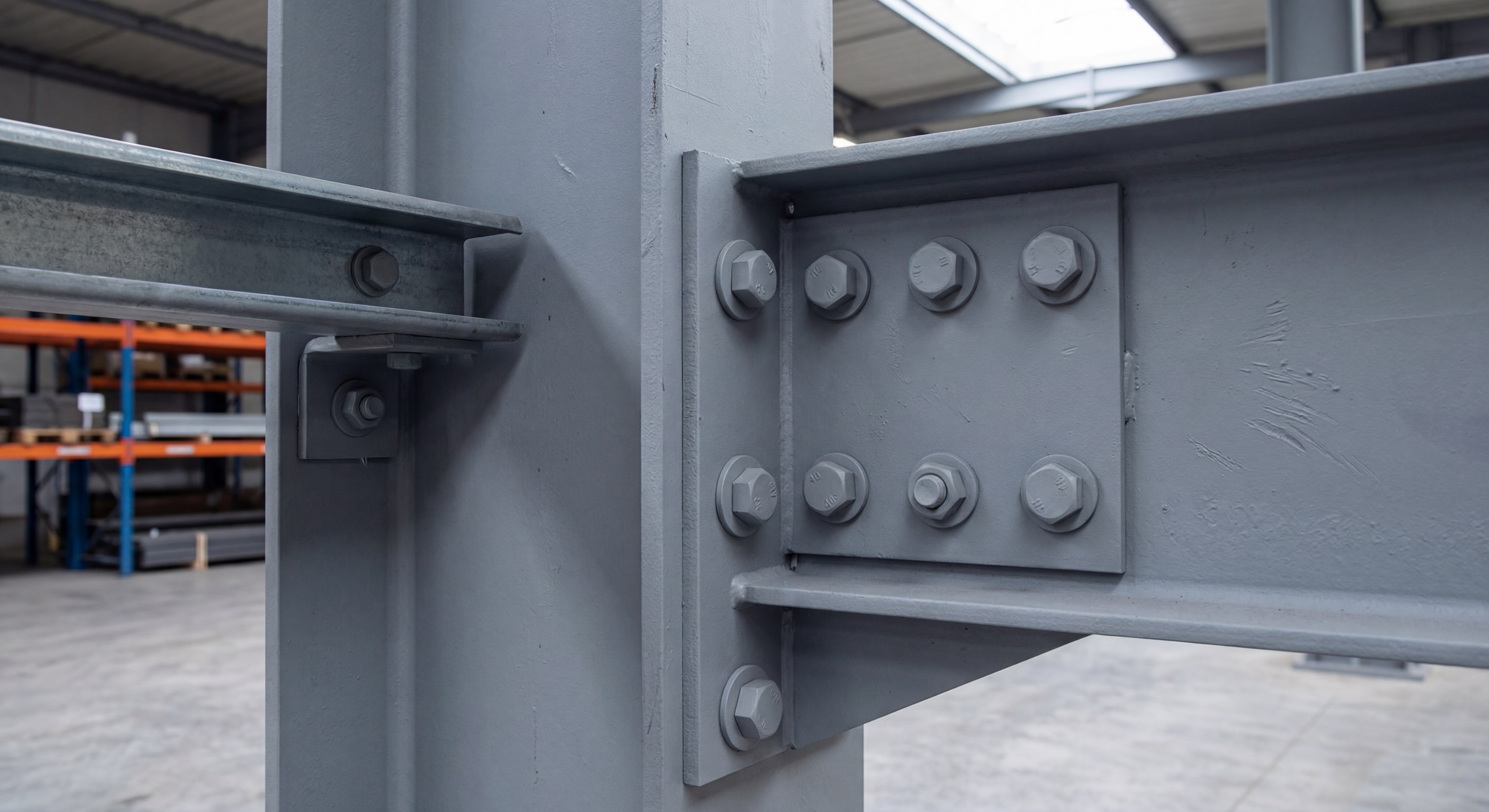
Choosing a steel frame is the most effective way to lower the initial warehouse construction cost compared to traditional tilt-up or masonry methods. Steel structures offer a high strength-to-weight ratio that reduces foundation requirements and speeds up the erection process.
Steel Structures for Value
Steel remains the gold standard for modern industrial applications.
- Clear Spans: Up to 40m without interior columns.
- Rapid Assembly: Pre-engineered parts arrive ready to bolt.
- Durability: Resistant to pests, rot, and fire.
Let’s dig deeper. Because steel is lighter than concrete, you can often save money on the depth and complexity of your foundation.
Comparing Concrete and Masonry
While durable, concrete tilt-up systems have a higher entry price.
- Requires massive on-site casting areas.
- Needs heavy-duty cranes for panel erection.
- High thermal mass but slower construction time.
The truth is: Steel offers a “dry” construction process that isn’t as dependent on perfect weather as concrete pouring, keeping your timeline on track.
Key Takeaway: For most logistics and distribution needs, steel provides the best balance of clear-span capability and budget control.
| Material Type | Cost Index | Construction Speed | |
|---|---|---|---|
| Pre-Engineered Steel | Low – Medium | Fast | |
| Tilt-Up Concrete | Medium – High | Moderate | |
| Masonry/Brick | High | Slow |
Analysis Guide: Steel is the most “bankable” option for fast-track projects where time-to-market is the priority.
What features drive warehouse construction cost up?
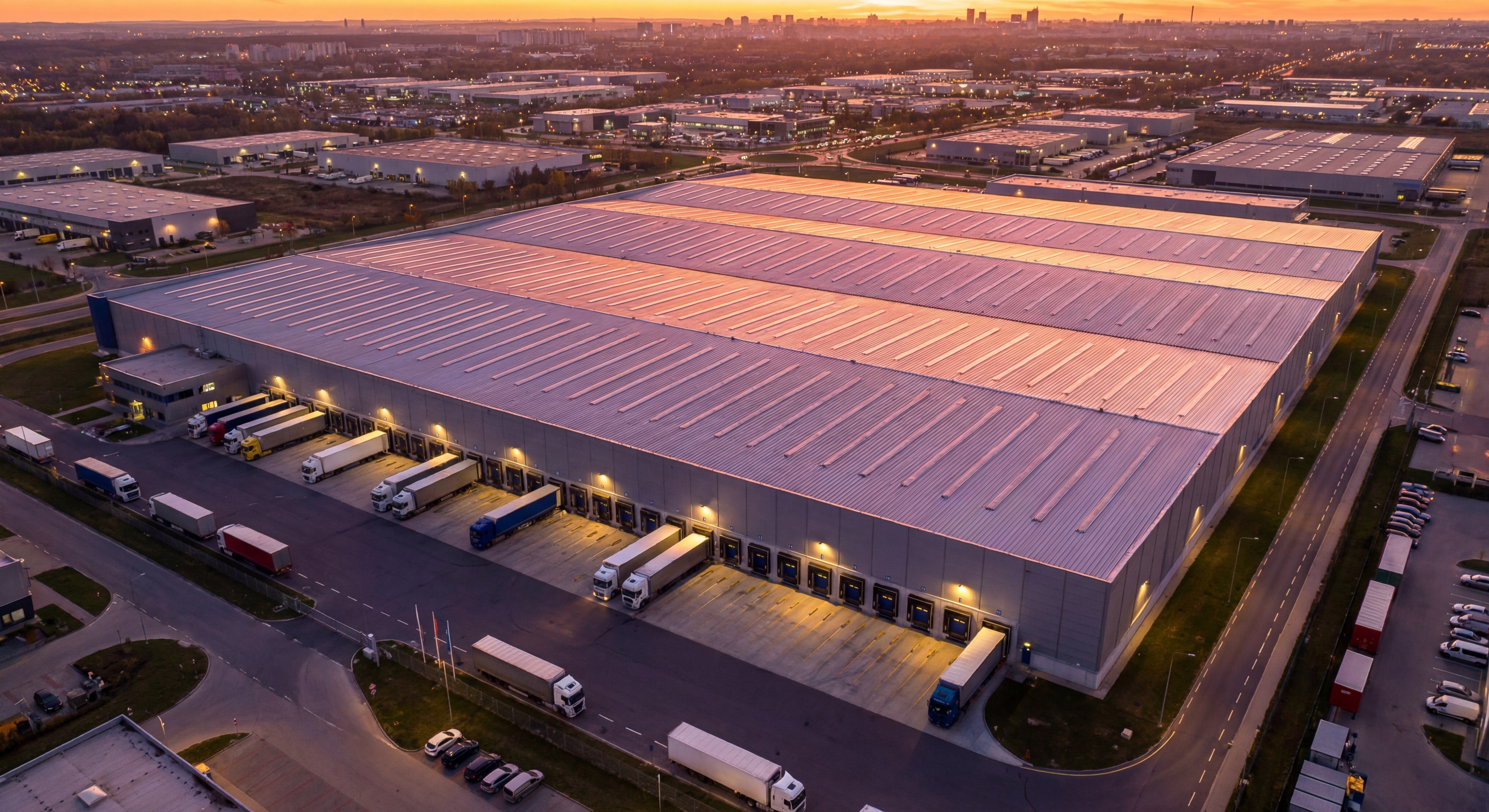
High clear heights, heavy-duty floor slabs, and a high frequency of dock doors are the primary drivers of an increased warehouse construction cost. These functional requirements demand more material strength and specialized equipment during the build.
The Price of Vertical Space
Going higher allows for more racking, but it demands more from the structure.
- Heavier steel columns to prevent buckling.
- Specialized fire suppression (ESFR) systems.
- Thicker concrete slabs to support high-stack point loads.
Why does this matter? Every extra foot of “clear height” increases the volume of air you must heat or cool, impacting long-term Opex.
Dock Doors and Loading Infrastructure
The more “openings” your building has, the more it costs to build and maintain.
- Levelers and seals add 5k−15k per position.
- Reinforced aprons are required for heavy trailer traffic.
- Insulated doors are a necessity for climate control.
But that’s not all. Frequent dock doors interrupt your wall structure, requiring “header” beams that increase the complexity of the steel frame.
Key Takeaway: Functional requirements like clear height and dock count should be finalized early to avoid mid-project budget spikes.
| High-Cost Feature | Cost Impact | Operational Benefit | |
|---|---|---|---|
| 40′ Clear Height | +12% Shell Cost | +25% Storage Capacity | |
| Heavy Load Slab | 3−7 / Sq Ft | Supports VNA Racking | |
| High Dock Ratio | $10k+ Per Door | Faster Throughput |
Analysis Guide: Evaluate the ROI of height; often, a taller building with a smaller footprint is cheaper than a sprawling low-rise.
Does location affect warehouse construction cost?
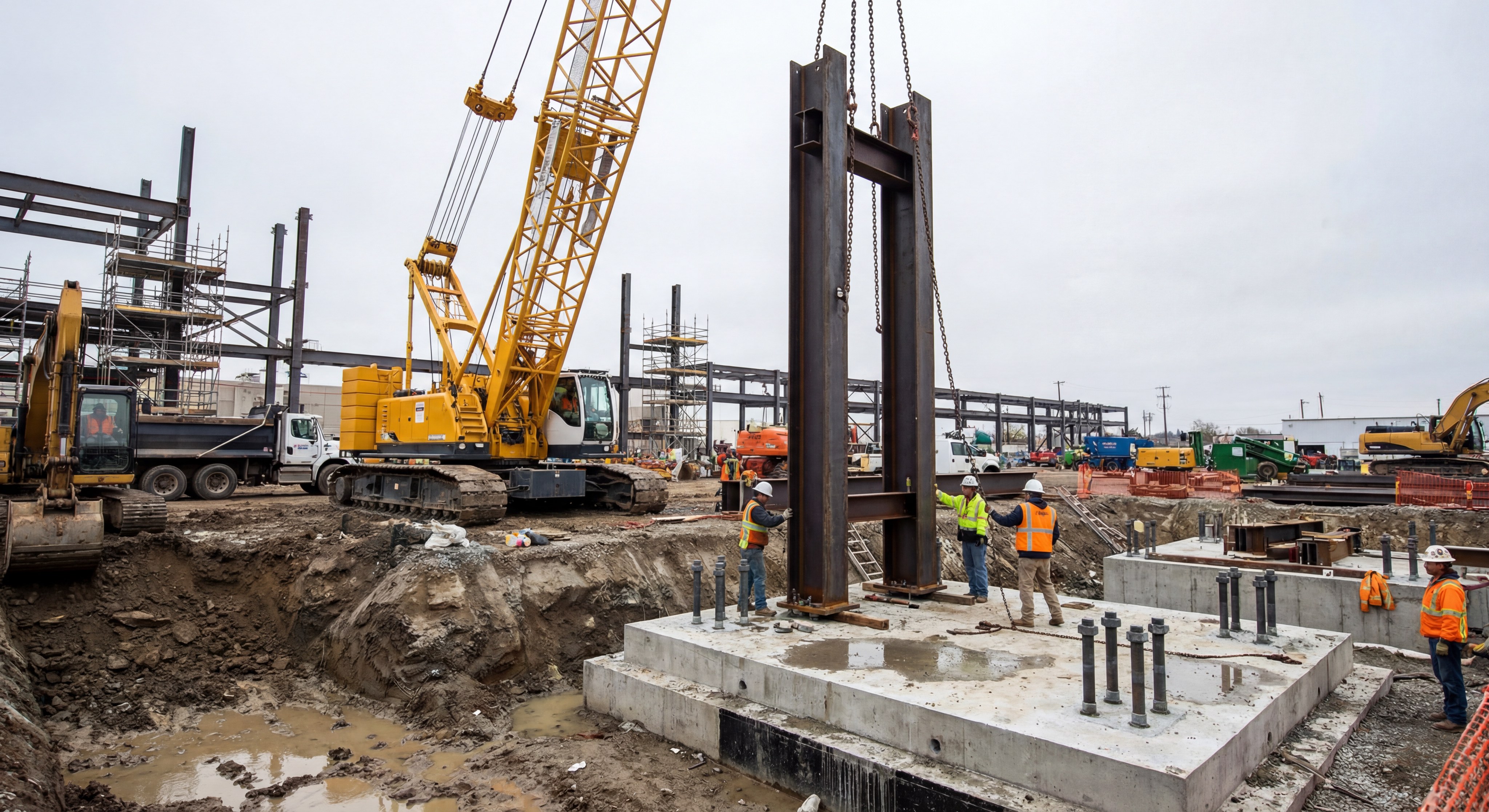
Yes, regional differences in labor availability and climate-specific building codes can swing the warehouse construction cost by as much as 30%. Local zoning laws and environmental requirements also play a critical role in your final expenditure.
Navigating Local Labor Markets
The cost of “boots on the ground” varies wildly by geography.
- Unionized labor in major hubs increases hourly rates.
- Remote sites require “per diem” and travel pay for crews.
- Availability of specialized steel erectors impacts the schedule.
Think about this: A delay in finding a qualified crew can cost more in holding interest than the actual labor premium.
Climate and Regulatory Hardening
Your building must survive its environment, which requires specific engineering.
- Seismic Zones: Extra bracing and specialized connections.
- Snow Loads: Heavier roof purlins and thicker steel.
- Coastal Zones: Galvanized coatings to prevent salt corrosion.
Here is the kicker: Meeting local energy codes can add significant costs to your insulation and HVAC package.
Key Takeaway: Never use a national average for a local budget; always get a site-specific quote that accounts for local codes.
| Region Type | Primary Cost Driver | Estimated Premium | |
|---|---|---|---|
| Coastal / High Wind | Corrosion & Bracing | 15% – 20% | |
| High Snow Load | Roof Reinforcement | 10% – 15% | |
| Metropolitan | Labor & Permits | 20% + |
Analysis Guide: Review local case studies for similar climates to see how others managed these regional premiums effectively.
How do use cases shift warehouse construction cost?
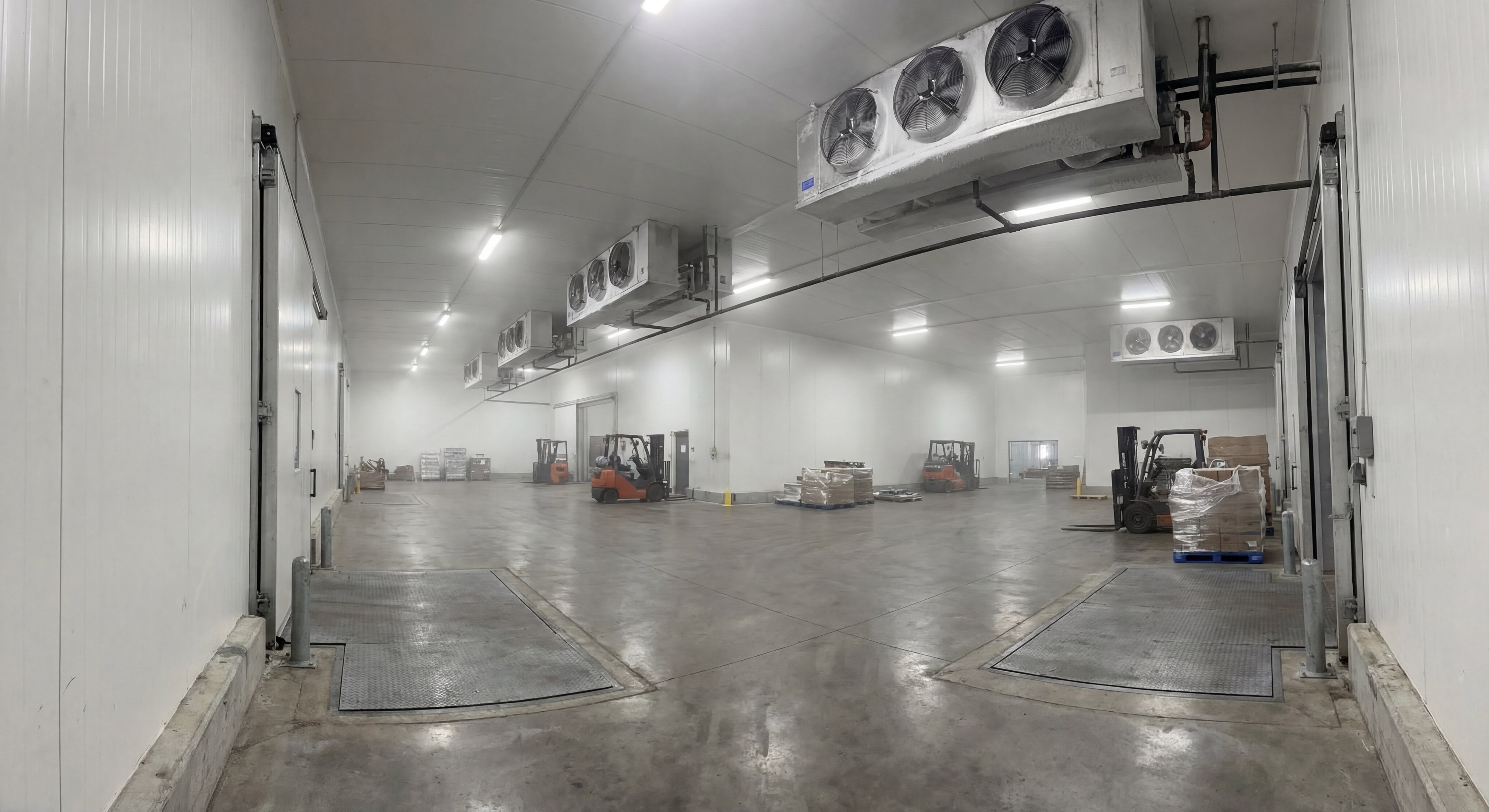
Specialized facilities, such as cold storage or light manufacturing, can double the baseline warehouse construction cost due to mechanical complexity. The more your operations require environmental control or process utilities, the higher your budget must scale.
The High Cost of Cold Storage
Refrigerated space is the most expensive “box” you can build.
- Insulation: Requires high R-value wall and roof panels.
- Floors: Needs heated sub-slabs to prevent frost heave.
- Power: Massively upgraded electrical service for compressors.
The truth is: Cold storage often costs upwards of $150 per square foot because the building is essentially a giant appliance.
Flex Space and Light Manufacturing
Adding production lines or offices changes the building’s classification.
- Increased ventilation and dust collection systems.
- Higher lighting levels for task work.
- Added plumbing and fire separation walls for office staff.
But that’s not all. Hybrid buildings require more complex MEP coordination than a standard “stack and pack” warehouse.
Key Takeaway: Be clear about your use case from day one; retrofitting a dry warehouse for cold storage is prohibitively expensive.
| Use Case | Estimated Cost / Sq Ft | MEP Complexity | |
|---|---|---|---|
| Dry Storage | 75−90 | Low | |
| Light Mfg | 100−130 | Medium | |
| Cold Storage | 150−250+ | High |
Analysis Guide: If your use case might change, design the steel frame for “flexibility” to accommodate future MEP upgrades.
What are the hidden warehouse construction costs?
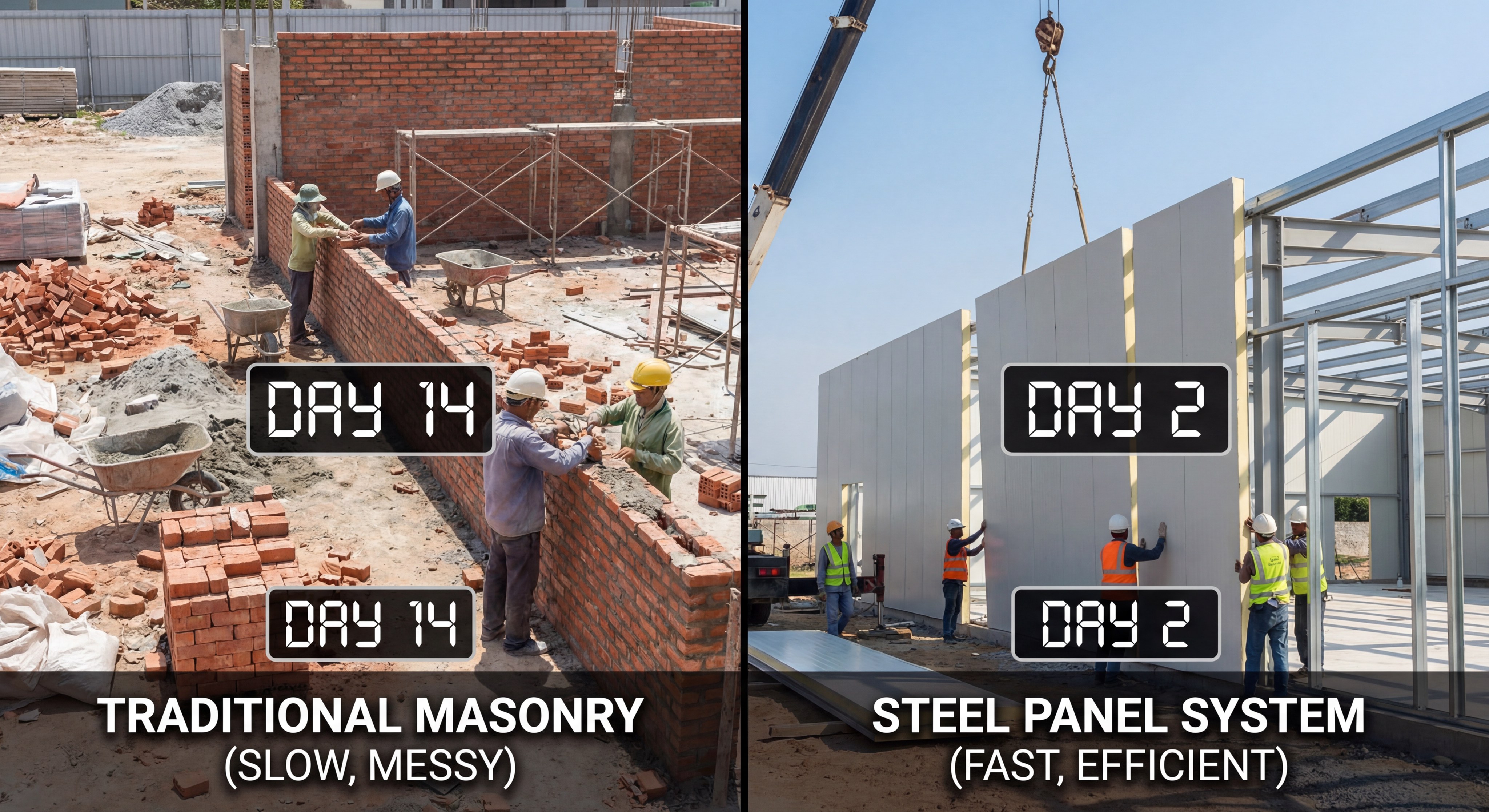
Hidden warehouse construction cost items like site preparation, utility extensions, and professional fees often consume 20% of your total budget. These are the “below-the-surface” costs that many first-time builders overlook during initial planning.
The Dirt Work Dilemma
What lies beneath your site can break your budget before the first steel beam arrives.
- Soil Stabilization: Bringing in structural fill or lime treating.
- Stormwater Management: Retention ponds and complex drainage.
- Paving: Massive concrete aprons for heavy truck maneuvering.
Think about this: You aren’t just building a warehouse; you’re building a “site” that must handle thousands of tons of moving weight.
Soft Costs and Administrative Hurdles
The costs you can’t see on a blueprint are often the most frustrating.
- Impact Fees: Local government charges for “stressing” the grid.
- Financing Costs: Interest paid on construction loans.
- Third-Party Inspections: Mandatory QC for welding and concrete.
It gets better: Using a pre-engineered system with a clear Bill of Materials reduces the time inspectors spend on-site, saving you money.
Key Takeaway: Always maintain a 10-15% contingency fund specifically for “below-ground” and “administrative” surprises.
| Hidden Item | Typical % of Budget | Impact Level | |
|---|---|---|---|
| Site Prep / Earthwork | 5% – 10% | Variable | |
| Professional Fees | 3% – 5% | Fixed | |
| Utility Hookups | 2% – 4% | High |
Analysis Guide: Conduct a geotechnical report before signing a land lease; poor soil quality is the leading cause of budget overruns.
Can design reduce warehouse construction cost?
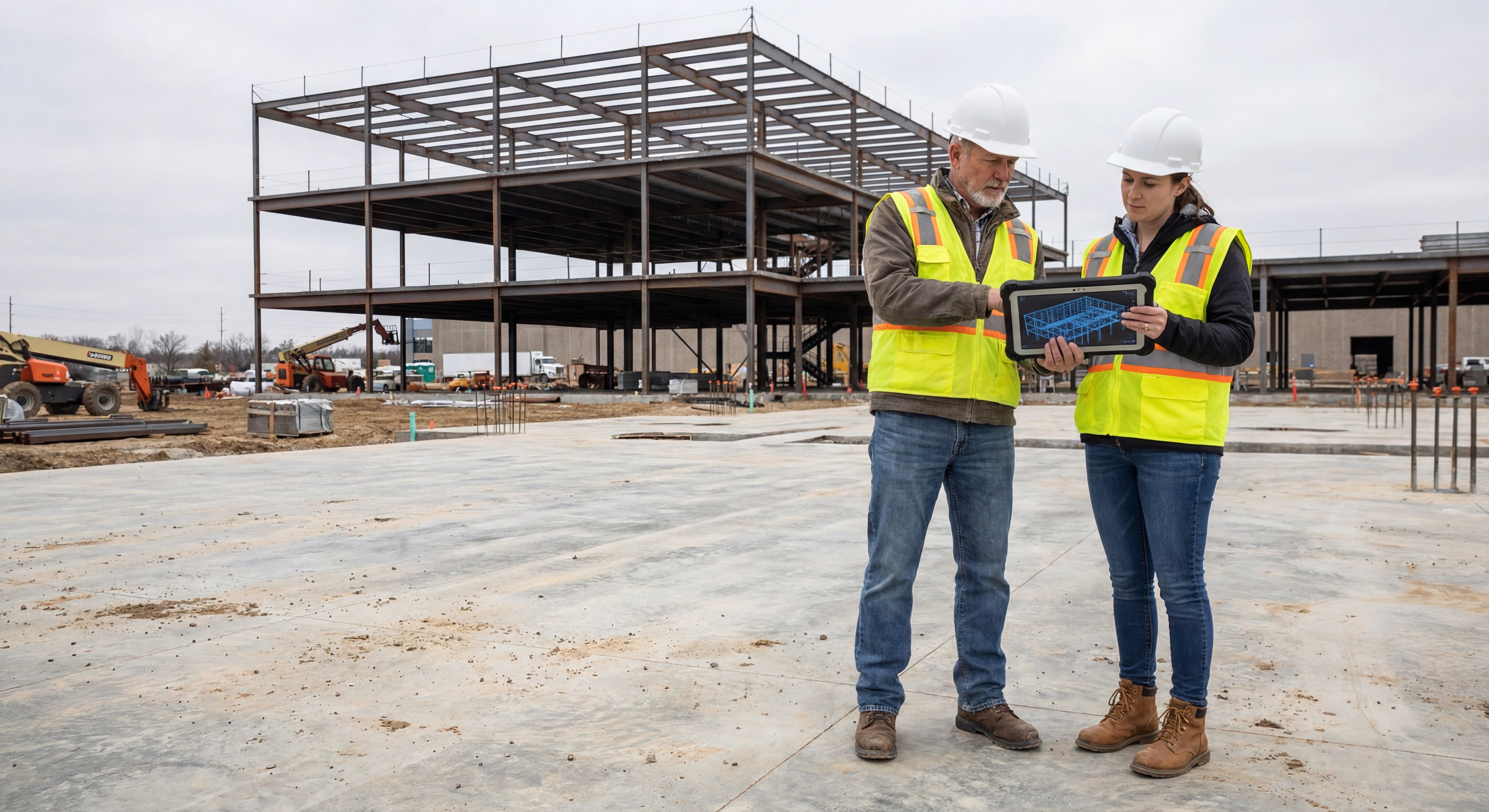
Yes, optimizing the structural grid and using a “design-build” approach can significantly lower the warehouse construction cost. Strategic planning before the first shovel hits the ground allows you to engineer out waste and maximize every dollar.
Optimizing the Structural Grid
The distance between your columns is a direct lever for cost control.
- Standard Spacing: 40′ x 50′ is usually the structural “sweet spot.”
- Custom Spacing: Moving columns just 5 feet can increase steel weight by 10%.
- Roof Pitch: A lower pitch requires less material and volume to heat.
Why does this matter? Aligning your building dimensions with standard steel lengths eliminates waste and reduces labor hours.
The Power of Design-Build
Eliminating the “hand-off” between the architect and the manufacturer saves both time and money.
- Instant feedback on material pricing during the design phase.
- Reduction in change orders because the fabricator is the designer.
- Faster procurement of long-lead items like joists and girders.
But that’s not all. A design-build partner can suggest “value engineering” options that offer better performance for less investment.
Key Takeaway: Don’t design in a vacuum; involve your steel manufacturer during the conceptual phase to optimize for their production capabilities.
| Design Strategy | Potential Savings | Impact on Ops | |
|---|---|---|---|
| Standardized Bays | 5% – 8% | Minimal | |
| Optimized Roof Pitch | 2% – 4% | Medium (Opex) | |
| Design-Build Model | 10% – 15% | High (Speed) |
Analysis Guide: Ask your manufacturer for their “standard” bay sizes and try to fit your racking layout into those dimensions.
How to budget your warehouse construction cost?
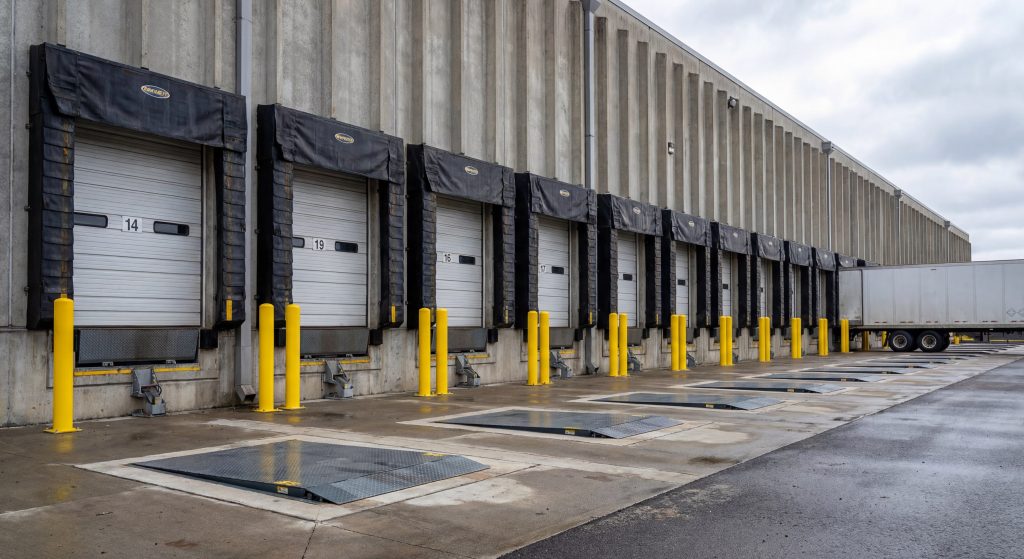
To create a realistic budget, you must combine the warehouse construction cost for the shell with site development, MEP systems, and a healthy contingency. A complete budget accounts for every phase of the project, from permitting to final move-in.
Define the Functional Program
Before looking at prices, you must know what the building must do.
- What is the required clear height for your forklift reach?
- How many dock positions do you need for daily throughput?
- What is the maximum point load of your racking system?
Think about this: A budget based on “average” numbers will always fail if your specific needs are above average.
The Three-Tier Budgeting Method
Divide your budget into distinct buckets to track where the money goes.
- Hard Costs: Materials (Steel, Concrete) and Labor.
- Site Costs: Earthwork, Paving, and Utilities.
- Soft Costs: Design, Permits, Taxes, and Insurance.
It’s simpler than you think. By tracking these separately, you can identify which “bucket” is leaking and adjust before it’s too late.
Key Takeaway: A “complete” budget is not just the price of the building; it’s the price of the building ready to move in.
| Budget Tier | Includes | Recommended Reserve | |
|---|---|---|---|
| Hard Costs | Steel, Shell, Slab, MEP | 5% | |
| Site Costs | Grading, Paving, Pipes | 15% | |
| Soft Costs | Fees, Financing, Legal | 2% |
Analysis Guide: Use a spreadsheet to track the “Total Landed Cost” per square foot to see the true ROI of the project.
How to lower your warehouse construction cost?
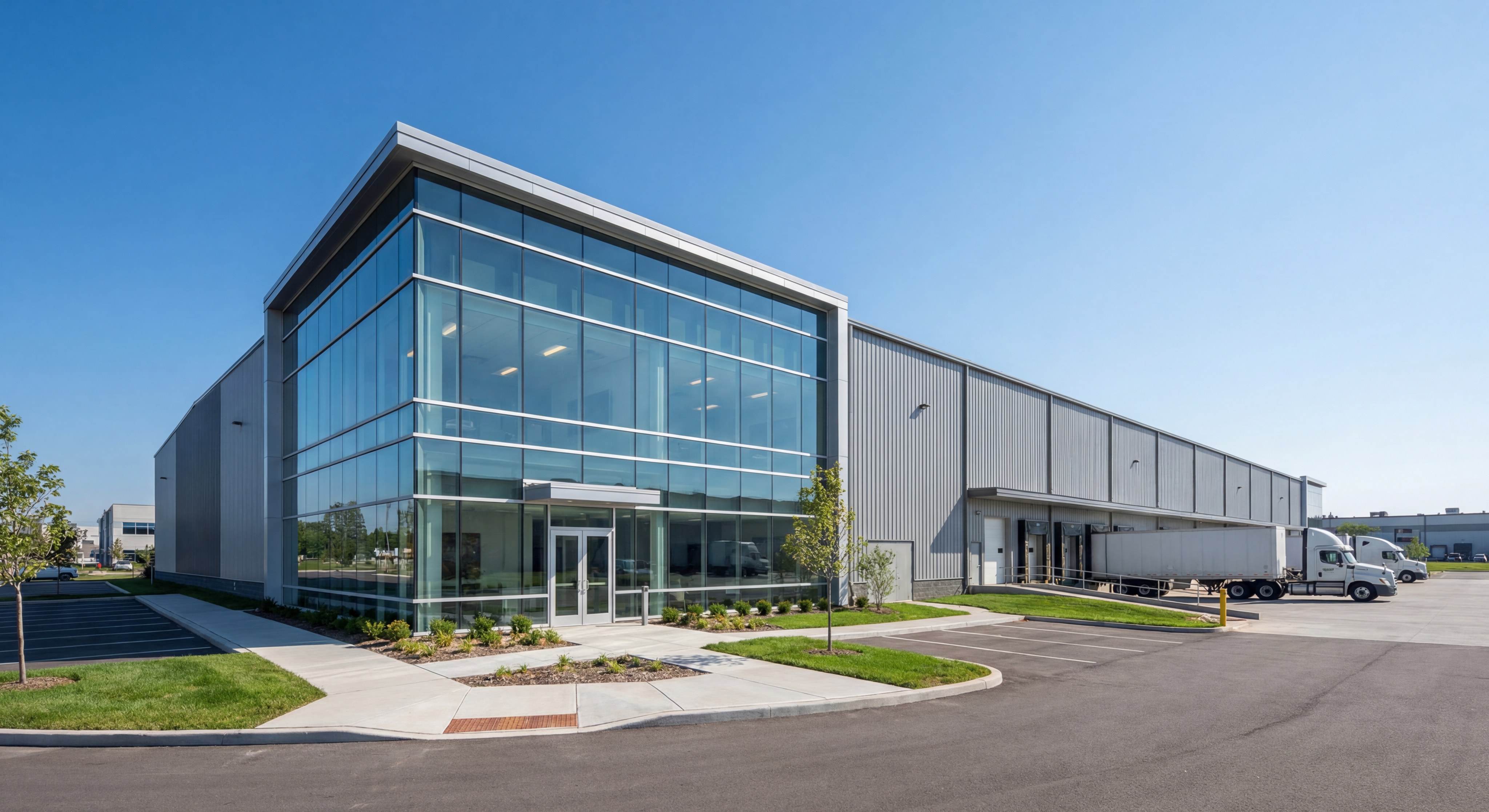
The most effective way for you to reduce your final warehouse construction cost is to source factory-direct steel and minimize on-site modifications. By controlling the supply chain and reducing field labor, you can reclaim thousands in your budget.
Sourcing Factory-Direct Materials
Eliminating middleman markups is the fastest way to save 10% or more.
- Work directly with the manufacturer to avoid dealer fees.
- Ensure the factory provides a complete installation-ready system.
- Request a full Bill of Materials (BOM) to verify every bolt.
Let’s dig deeper. When you buy direct, the communication channel is shorter, which means fewer errors and faster resolution of site questions.
Reducing Site Labor via Pre-Fabrication
The most expensive place to do work is on a construction site.
- Pre-Punched Holes: Ensures perfect alignment for faster bolting.
- Sequential Packing: Materials arrive in the order they are needed.
- Integrated Accessories: Buying doors and windows with the shell.
Why does this matter? The less time your crew spends “figuring it out” or cutting steel in the field, the less you pay in labor and crane rental.
Key Takeaway: Factory-direct precision engineering is the single greatest lever for reducing total project costs and timelines.
| Cost Reduction Lever | Potential % Saved | Primary Benefit | |
|---|---|---|---|
| Factory-Direct Sourcing | 10% – 15% | Lower Material Cost | |
| Pre-Punched Fabrication | 5% – 10% | Reduced Site Labor | |
| Sequential Shipping | 2% – 4% | Faster Erection |
Analysis Guide: Evaluate quotes based on “landed and installed” cost rather than just the price of the raw materials.
Ready to Optimize Your Industrial Future?
Building a warehouse is a significant investment that requires balancing speed, durability, and budget. We have solved the challenges of over-budget projects and delayed timelines by providing factory-direct, precision-engineered steel systems that arrive ready for assembly. Our vision is to deliver engineering excellence that empowers your global logistics operations without the middleman markup. Stop guessing at your project totals and start building with confidence. Contact us today for a customized, high-performance solution that fits your specific needs.
Decision FAQ
Can I build a warehouse on a sloped site without doubling my costs?Yes, but it requires strategy. While sloped sites require more earthwork and potentially retaining walls, you can mitigate costs by using a “stepped” foundation or a multi-level steel design that works with the natural grade rather than fighting it.
What’s the best way to choose between a 30’ and 40’ clear height?Evaluate your racking density. If land is expensive, 40’ is the best choice because it maximizes storage density; however, if land is cheap and you don’t have high-reach equipment, 30’ will save you roughly 10-15% on your steel shell.
How do I know if a factory-direct quote is truly complete?Request a full Bill of Materials (BOM). A complete quote must include primary frames, secondary members, roofing panels, connection hardware, and even small accessories like flashings and gutters to ensure no hidden site purchases are required.
Can I use a standard design to save money if my site is unique?Sometimes. While standard designs are cheaper to manufacture, forcing a standard “box” onto a difficult site can lead to massive “hidden” site preparation costs; often, a lightly customized steel frame is cheaper than moving thousands of tons of dirt.
How do I know if my steel frame can handle future solar panels?Include it in the design phase. Steel frames are highly adaptable, but adding the dead load of solar panels later requires specific roof purlin spacing and beam reinforcement that is significantly cheaper to install during initial fabrication.