
Designing a storage warehouse requires a methodical approach that balances space maximization with operational fluidity to ensure high throughput. You may find that inefficient layouts and disorganized stock lead to mounting overhead costs and frustrated staff. If your facility is struggling with bottlenecks or safety hazards, you need a proven framework to revitalize your infrastructure. This guide provides the container warehouse design solutions you need to transform a chaotic space into a high-performance logistics hub.
How do you start a container warehouse design project?
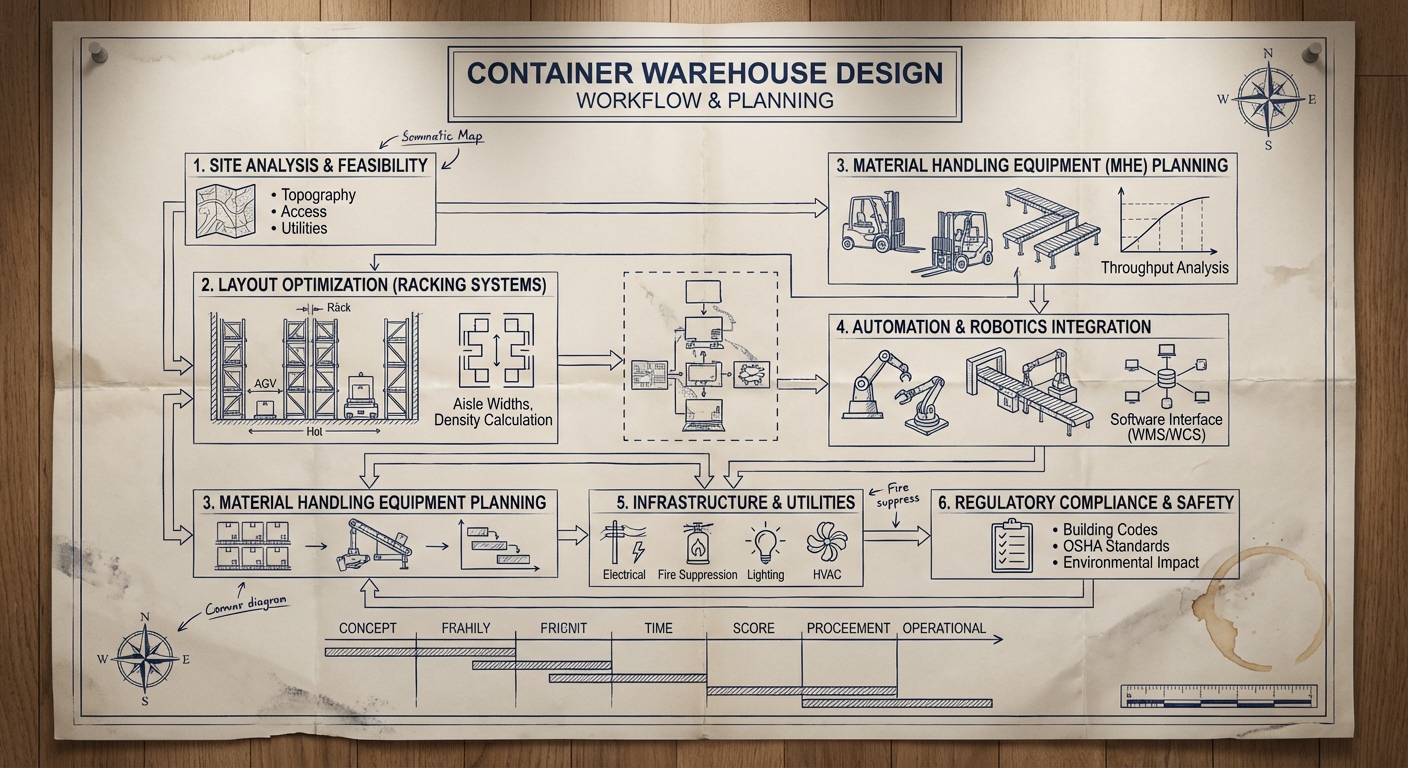
You begin by conducting a comprehensive analysis of your current and projected inventory volumes to define the facility’s physical requirements. This initial stage of container warehouse design focuses on understanding the specific dimensions and weights of the goods you handle. By establishing these metrics early, you prevent costly architectural modifications later in the project.
You must also account for the frequency of item movement, often referred to as inventory velocity. Analyzing how often stock enters and leaves the building allows you to allocate appropriate floor space for high-turnover items.
Analyzing Inventory Volume and Type
Before you pick up a blueprint, you need to catalog every SKU by its physical footprint and stackability. Understanding whether you are dealing with fragile electronics or heavy industrial parts dictates the foundation of the facility.
Believe it or not, most failures in storage design stem from a lack of data. You should track the following:
- Average pallet dimensions and weight.
- Percentage of stackable vs. non-stackable goods.
- Specialized environmental requirements (e.g., climate control).
Assessing Future Growth Projections
Your facility must be built for where your business will be in five years, not just where it is today. Scaling without a plan often leads to expensive off-site storage rentals or compromised safety.
Look at the big picture:
- Anticipated SKU count increases.
- Seasonal peak volume fluctuations.
- Potential shifts in product packaging sizes.
Key Takeaway: Success begins with data-driven planning that anticipates growth rather than reacting to overcrowding.
| Phase | Focus Area | Goal | |
|---|---|---|---|
| Discovery | Inventory Audit | Define physical storage needs | |
| Analysis | Throughput Velocity | Determine aisle and dock requirements | |
| Planning | Scalability Forecast | Ensure 5-year facility viability |
An accurate assessment of inventory characteristics reduces the risk of structural obsolescence by 35% over the first five years of operation.
Which racking fits your container warehouse design?
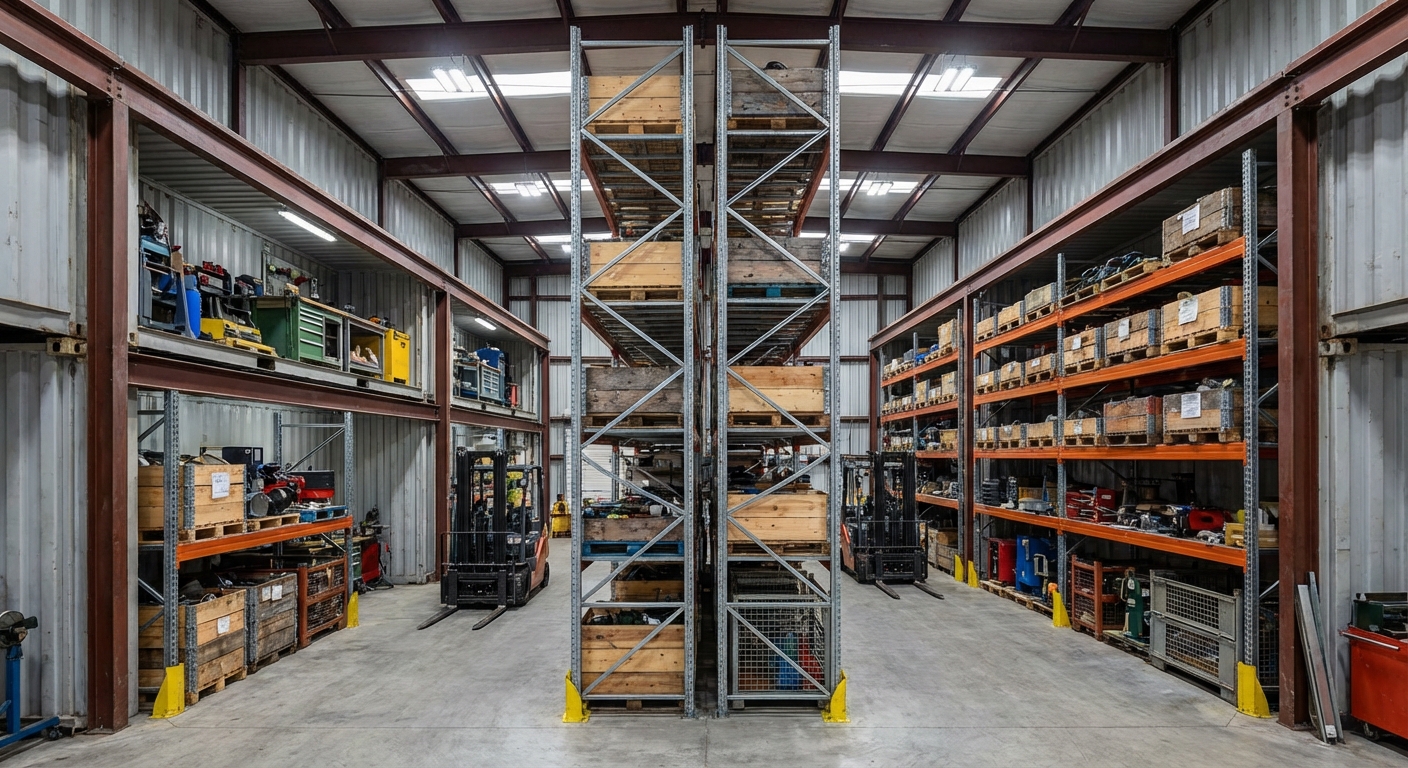
You select a racking system based on the balance between storage density and the need for immediate access to individual pallets. In a modern container warehouse design, choosing the wrong rack can lead to “honeycombing,” where empty spaces are unreachable. You must evaluate whether your operation requires Last-In, First-Out (LIFO) or First-In, First-Out (FIFO) methodologies.
Standard selective racking is the most common choice because it offers 100% accessibility to every pallet position. However, if you have high volumes of identical SKUs, high-density systems like drive-in or push-back racks may be more efficient.
Evaluating Selective vs. High-Density Racks
Selective racks are ideal when you have a wide variety of SKUs that require frequent picking. High-density racks, conversely, maximize the floor footprint by eliminating aisles between rows.
The truth is, your choice depends on your specific SKU profile. Consider these options:
- Selective racks for maximum flexibility.
- Drive-in racks for bulk storage of similar items.
- Push-back racks for high-density LIFO operations.
Optimizing Vertical Space with Mezzanines
When the floor is full, you should look up to capture the unused cubic volume of your building. Mezzanines can double your usable surface area for small-parts picking or office space without expanding the building’s footprint.
Here is the deal: verticality is your cheapest real estate. You can implement:
- Multi-tier racking for small-item picking.
- Structural mezzanines for packing stations.
- Catwalk systems for overhead conveyor access.
Key Takeaway: Matching your racking system to your SKU velocity ensures that you never sacrifice accessibility for the sake of density.
| Rack Type | Access Level | Space Efficiency | |
|---|---|---|---|
| Selective | 100% | Low to Moderate | |
| Drive-In | 20% | High | |
| Push-Back | 40% | Moderate-High |
Selecting high-density racking can increase your storage capacity by up to 50% compared to standard wide-aisle configurations.
Why is zoning vital for container warehouse design?
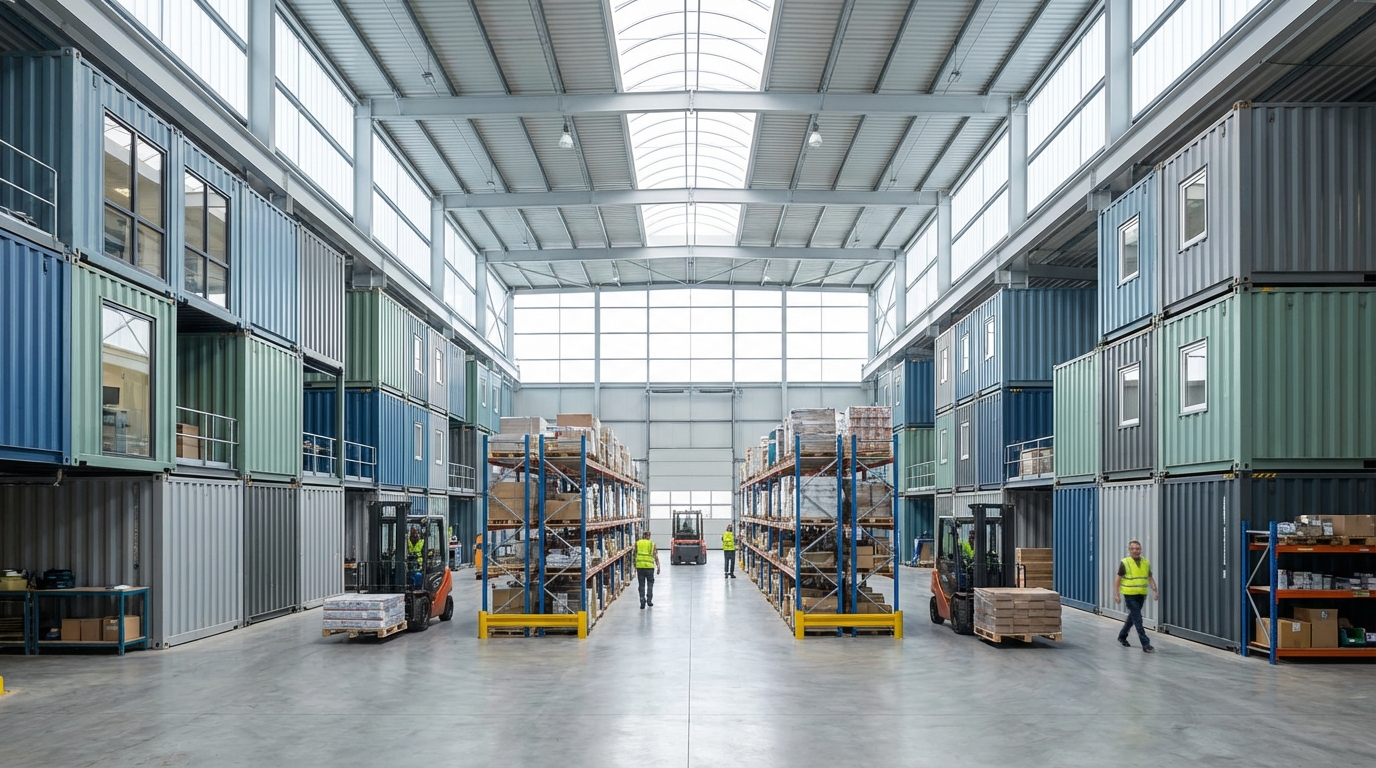
You designate specific areas for different functions to prevent cross-traffic congestion and streamline the movement of goods from receiving to shipping. In an effective container warehouse design , the floor plan should mirror the logical flow of your operations. By separating quiet storage zones from high-activity picking zones, you enhance both speed and safety.
Clear boundaries help employees understand where they should be, reducing the time spent wandering through the facility. It also allows you to implement different safety protocols for different areas based on the equipment used there.
Creating Separate Zones for Key Functions
You must isolate the “dirty” areas of receiving and shipping from the “clean” areas of long-term storage. This prevents inbound debris from contaminating your stock and ensures that loading docks remain clear for vehicle turnarounds.
It gets better: clearly defined zones actually reduce labor costs. Ensure your layout includes:
- Staging areas for inbound inspection.
- Secure cages for high-value or hazardous materials.
- Dedicated returns processing stations.
Implementing Clear Signage and Labeling
Signage is the “operating system” of your physical space, guiding both human workers and automated machinery. Without clear labels on every rack, aisle, and zone, your inventory accuracy will inevitably plummet.
Don’t overlook the basics:
- Reflective aisle markers for forklift visibility.
- Color-coded floor tape for pedestrian pathways.
- Large, high-contrast rack location labels.
Key Takeaway: Strategic zoning eliminates operational friction by ensuring that workers and machines never compete for the same space.
| Zone Type | Primary Activity | Required Equipment | |
|---|---|---|---|
| Receiving | Unloading & Inspection | Pallet Jacks, Scanners | |
| Picking | Order Consolidation | Pick Carts, Handhelds | |
| Shipping | Packing & Loading | Stretch Wrappers, Forklifts |
Facilities with clearly demarcated functional zones report a 25% decrease in internal traffic accidents and near-miss incidents.
How to plan aisles for container warehouse design?
You optimize aisle layouts by calculating the minimum width required for your material handling equipment while maintaining two-way travel where necessary. In your container warehouse design, aisles act as the arteries of the facility, and their width directly impacts your storage density. Narrow aisles allow for more racks, but they require specialized equipment like reach trucks or Very Narrow Aisle (VNA) forklifts.
Short, straight travel paths are always preferable to long, winding routes. You should design your main “travel highways” to be wide enough for high-speed transit, while storage aisles can be tighter to maximize pallet positions.
Utilizing Narrow Aisle Configurations
Narrow aisle systems can reclaim up to 20% of your floor space that would otherwise be wasted on wide forklift paths. If you are operating in a high-cost real estate market, this transition is often the most cost-effective way to expand capacity.
The bottom line is efficiency:
- Standard aisles (12+ feet) for counterbalanced trucks.
- Narrow aisles (8-10 feet) for reach trucks.
- VNA aisles (5-6 feet) for turret trucks or AGVs.
Arranging Items by Access Frequency
You should place your “A-movers”—the products that make up 80% of your volume—closest to the shipping docks. This minimizes the travel distance for your pickers and reduces the wear and tear on your vehicle fleet.
Think about it this way:
- High-velocity items at eye level near the docks.
- Medium-velocity items in the middle of the aisles.
- Slow-moving “C” stock in the back or upper levels.
Key Takeaway: Aisle planning is a trade-off between equipment cost and storage density; choose the configuration that fits your operational budget.
| Aisle Type | Typical Width | Storage Density | |
|---|---|---|---|
| Wide | 12′ – 14′ | Low | |
| Narrow | 8′ – 10′ | Moderate | |
| Very Narrow | 5′ – 6′ | High |
Reducing travel distance through smart slotting and aisle layout can improve picking productivity by more than 30%.
Why prioritize light in container warehouse design?
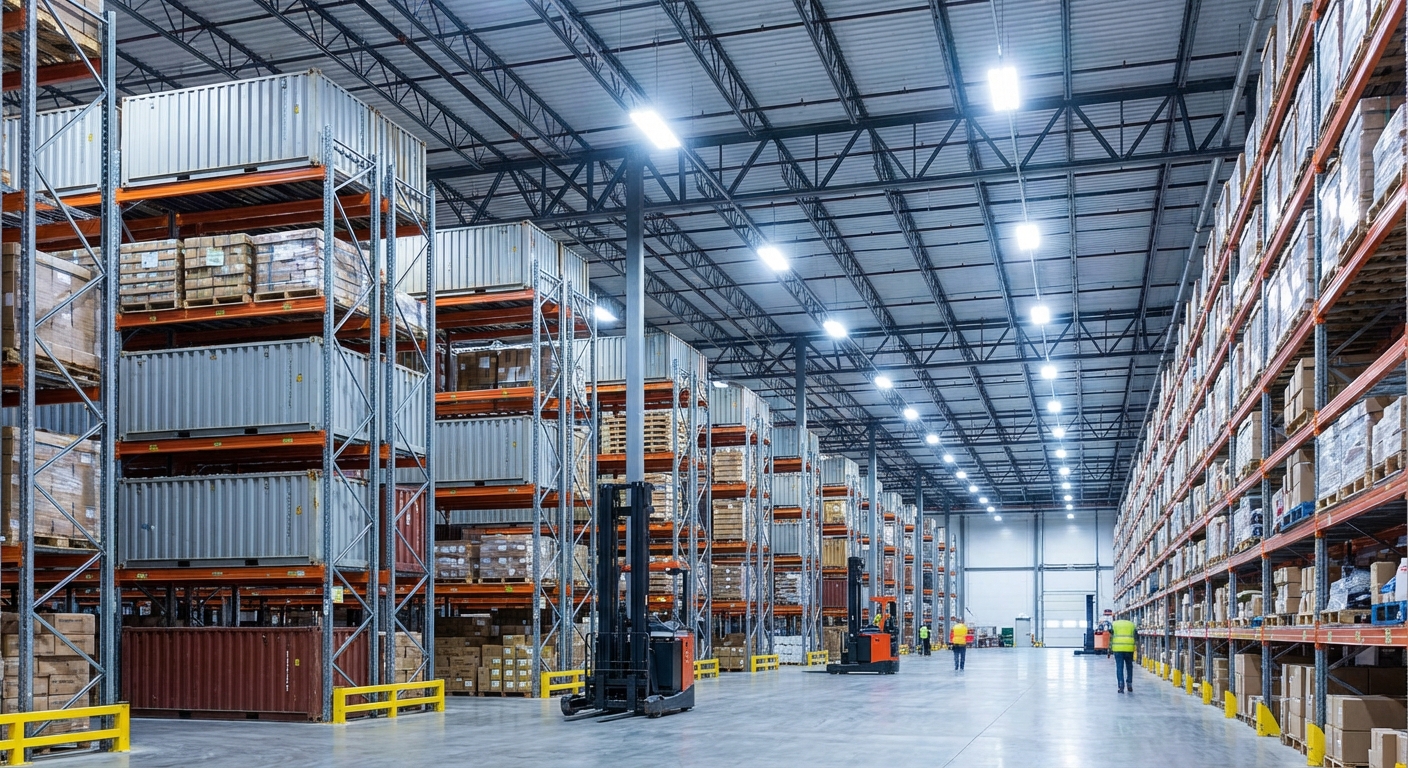
You ensure adequate lighting to improve picking accuracy, enhance worker safety, and reduce the likelihood of product damage during handling. A high-quality container warehouse design prioritizes uniform illumination levels, particularly in deep racking aisles where shadows can obscure labels. Bright environments have been shown to boost employee morale and alertness, leading to fewer errors.
Modern LED solutions are the industry standard because they provide crisp, white light while consuming a fraction of the power of older metal halide fixtures. They also reach full brightness instantly, which is critical for safety in high-traffic areas.
Installing Bright LED Lighting Systems
LEDs are not just about saving money; they are about precision. High-lumen output ensures that your team can read small-print serial numbers and barcodes without straining their eyes or stopping their workflow.
Consider the technical benefits:
- Reduced heat emission (lowering cooling costs).
- Longer lifespan (reducing maintenance cycles).
- Improved Color Rendering Index (CRI) for item identification.
Using Motion Sensors and Natural Light
Integrating motion sensors ensures that lights are only active when an aisle is being used, significantly lowering your utility bills. Furthermore, incorporating skylights or clerestory windows provides “free” light and connects employees to the outside world.
Let’s face it: energy costs are only going up. You should:
- Install sensors in low-traffic back-stock areas.
- Use dimmable fixtures that adjust based on sunlight.
- Place windows in packing areas to improve worker well-being.
Key Takeaway: Superior lighting is a safety and productivity tool that pays for itself through reduced errors and lower energy bills.
| Lighting Type | Longevity | Energy Efficiency | |
|---|---|---|---|
| Metal Halide | ~15,000 hrs | Low | |
| Fluorescent | ~30,000 hrs | Moderate | |
| LED | ~50,000+ hrs | High |
Upgrading to LED lighting with motion controls can reduce warehouse energy consumption by up to 70% while improving light quality.
How to declutter your container warehouse design?
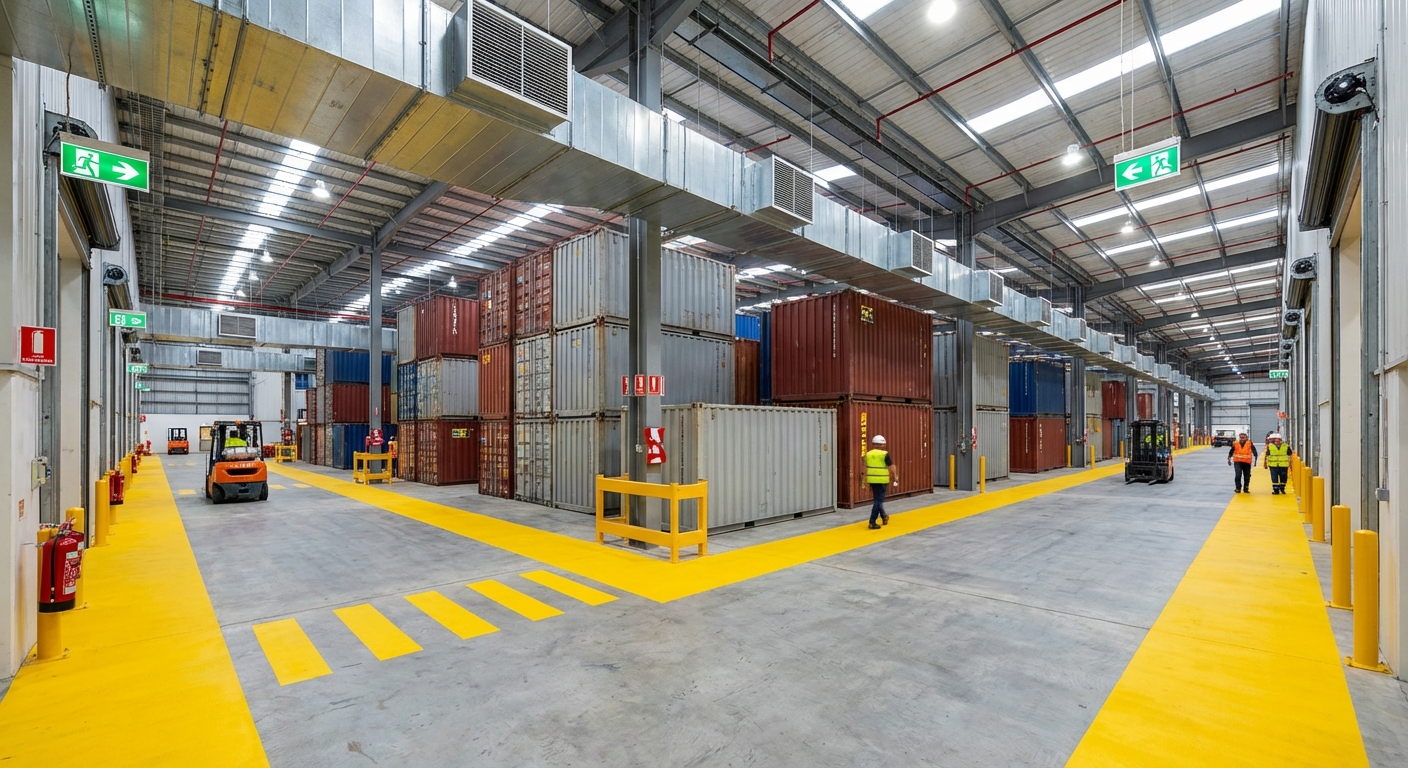
You implement economic storage solutions and a regular decluttering schedule to maintain a lean, organized environment that prevents accidents. In your container warehouse design, “clutter” is often hidden in the form of obsolete inventory, empty pallets, and packaging waste. By using stackable bins and collapsible containers, you can efficiently store small parts while keeping the floor clear of loose debris.
A “clean floor” policy is essential for forklift safety. Even a small piece of discarded shrink wrap can cause a pallet jack to skid or stall, leading to potential injuries or equipment damage.
Utilizing Stackable Bins and Containers
Standardized containers allow you to stack goods securely without the risk of collapse. When these containers are empty, collapsible versions can be folded down to save 75% of their original volume, freeing up valuable floor space.
Make it a standard practice:
- Use color-coded bins for different product categories.
- Implement wire mesh decks to prevent dust accumulation.
- Standardize pallet sizes to ensure rack compatibility.
Conducting Regular Inventory Audits
You must identify and remove “dead stock” that has not moved in six months or more. Holding onto obsolete items consumes the prime real estate of your warehouse and inflates your insurance and tax liabilities.
Keep your inventory fresh:
- Schedule quarterly cycle counts.
- Create a “discount or donate” policy for aged stock.
- Purge broken pallets and damaged packaging weekly.
Key Takeaway: Organization is a daily habit; maintaining a lean facility ensures that your primary storage remains dedicated to profitable inventory.
| Storage Solution | Use Case | Space Benefit | |
|---|---|---|---|
| Stackable Bins | Small parts/High variety | Organizes vertical shelf space | |
| Collapsible Totes | Returnable shipping | Saves 75% space when empty | |
| Wire Baskets | Bulk/Heavy items | Durable and visible contents |
Eliminating obsolete inventory can free up as much as 15% of your warehouse capacity without adding a single square foot of building space.
Can software aid your container warehouse design?

You incorporate a Warehouse Management System (WMS) to gain real-time visibility into your inventory levels and optimize the physical placement of goods. In a modern container warehouse design , software acts as the brain that directs every movement within the four walls. By analyzing order patterns, the WMS can suggest “slotting” changes that move high-demand items closer to shipping.
Digital tracking eliminates the need for paper pick lists, which are slow and prone to human error. With mobile devices and scanners, your team can confirm every move instantly, ensuring 99.9% inventory accuracy.
Tracking Stock with Real-Time Data
Real-time data allows you to see exactly where every pallet is located at any given moment. This prevents “lost” inventory and ensures that you are picking the oldest stock first to maintain proper rotation.
The benefits are undeniable:
- Automated replenishment alerts.
- Labor productivity tracking and reporting.
- Reduced time spent on manual cycle counts.
Leveraging Data Analytics for Slotting
Analytics can tell you which products are frequently ordered together, allowing you to store them in adjacent locations. This “cross-picking” optimization reduces the total travel time required to fulfill a multi-line order.
Take control of your data:
- Analyze seasonal trends to prep for peak demand.
- Identify bottlenecks in specific warehouse zones.
- Optimize replenishment paths for bulk-to-pick moves.
Key Takeaway: Software transforms a static warehouse into a dynamic fulfillment center that learns and adapts to your business needs.
| Feature | Primary Benefit | ROI Factor | |
|---|---|---|---|
| Real-time Tracking | Accuracy | Reduces lost stock | |
| Directed Picking | Speed | Increases orders per hour | |
| Slotting Logic | Efficiency | Minimizes travel distance |
Implementing a WMS typically results in a 20% to 30% increase in labor efficiency by eliminating manual search time and redundant paperwork.
How to scale a container warehouse design effectively?
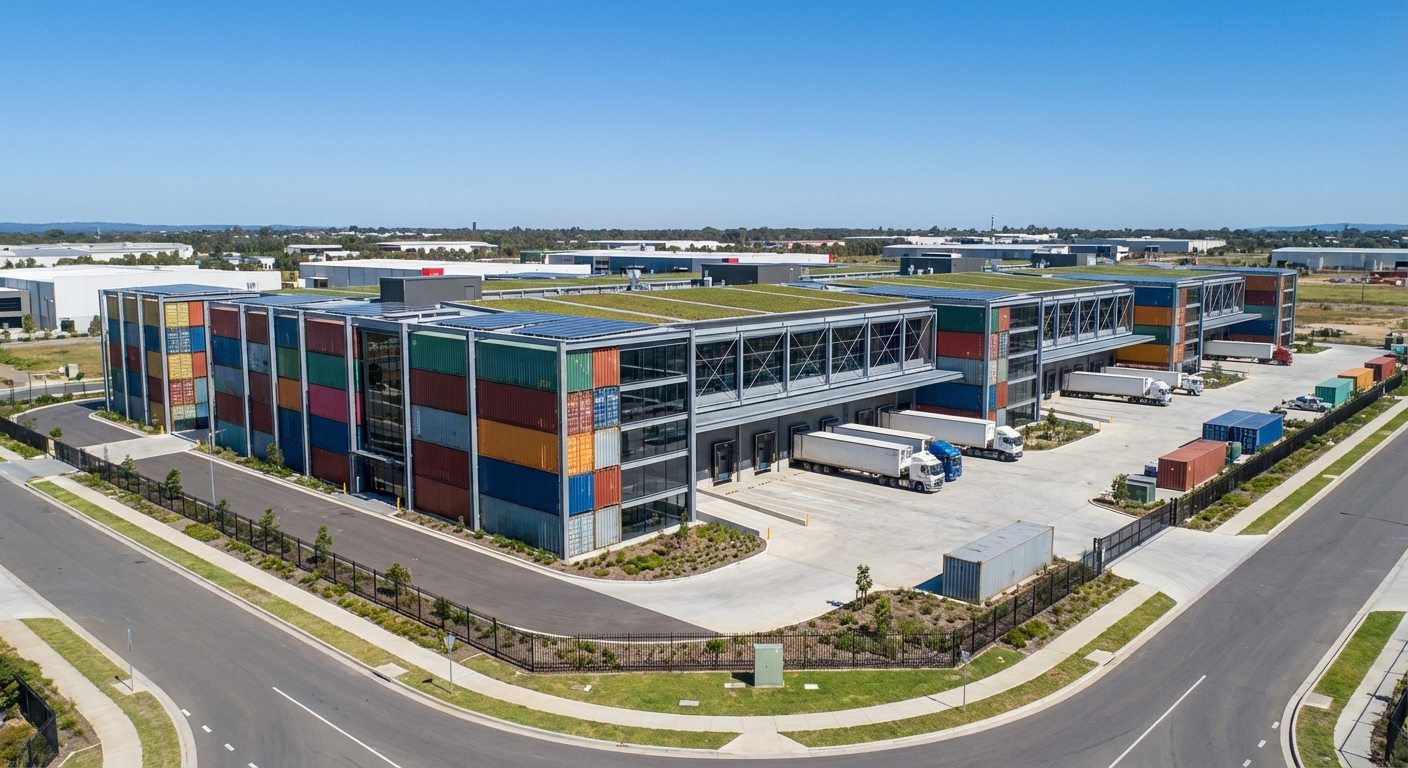
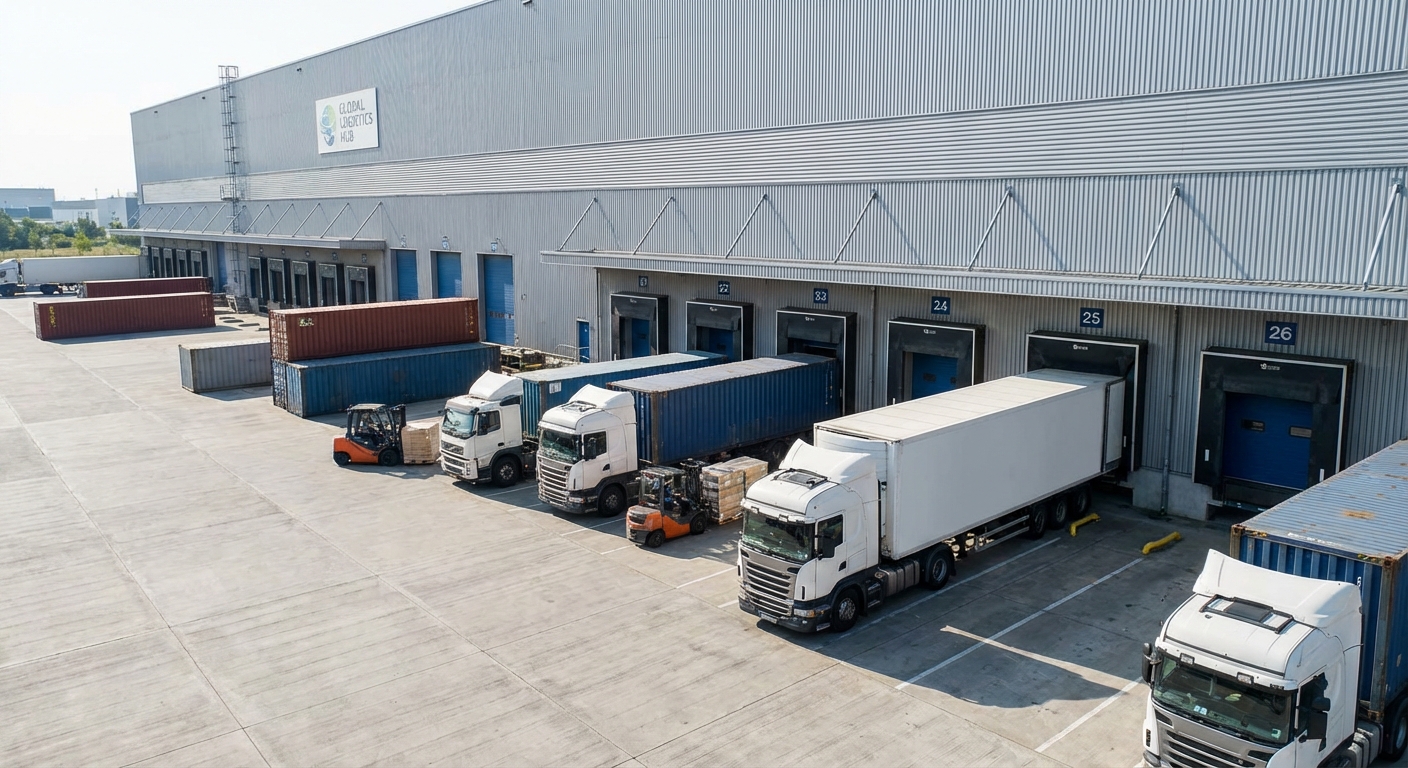
You plan for expansion by designing a modular layout that can accommodate additional racking or technology without requiring a total facility shutdown. An aerial view of a container warehouse design often reveals the potential for phase-two developments, such as extending the building or adding external storage silos. By keeping your utility hubs (like charging stations) centrally located, you make it easier to expand in any direction.
Modular components, such as bolt-together mezzanines and adjustable racking, allow you to reconfigure your space as your product mix changes. This flexibility is your best defense against market volatility.
Incorporating Modular Shelving Systems
Modular systems allow you to add levels or rows incrementally as your budget allows. Unlike permanent structures, these can be dismantled and moved if you ever need to relocate to a larger facility.
You should prioritize flexibility:
- Bolt-on rack extensions for increased height.
- Movable shelving units for flexible pick-faces.
- Standardized bay widths for interchangeable rack types.
Anticipating Changes in Product Lines
The products you sell today may not be what you sell tomorrow. Your warehouse design should be “agnostic,” meaning it can handle various pallet sizes and weights without major structural changes.
Stay ahead of the curve:
- Leave “knock-out” panels for future dock doors.
- Install extra electrical capacity for future automation.
- Design floor slabs to handle higher point-loads than currently needed.
Key Takeaway: Scalability is built into the foundation; designing for tomorrow’s growth prevents the high cost of outgrowing your facility too soon.
| Scalability Tactic | Impact | Implementation Speed | |
|---|---|---|---|
| Modular Racking | Incremental capacity | Fast | |
| Mezzanine Addition | Double floor space | Moderate | |
| Automation Prep | Future-proofing | Slow |
Planning for 20% future capacity in your initial design can save you hundreds of thousands of dollars in expansion costs later.
Does comfort matter in container warehouse design?
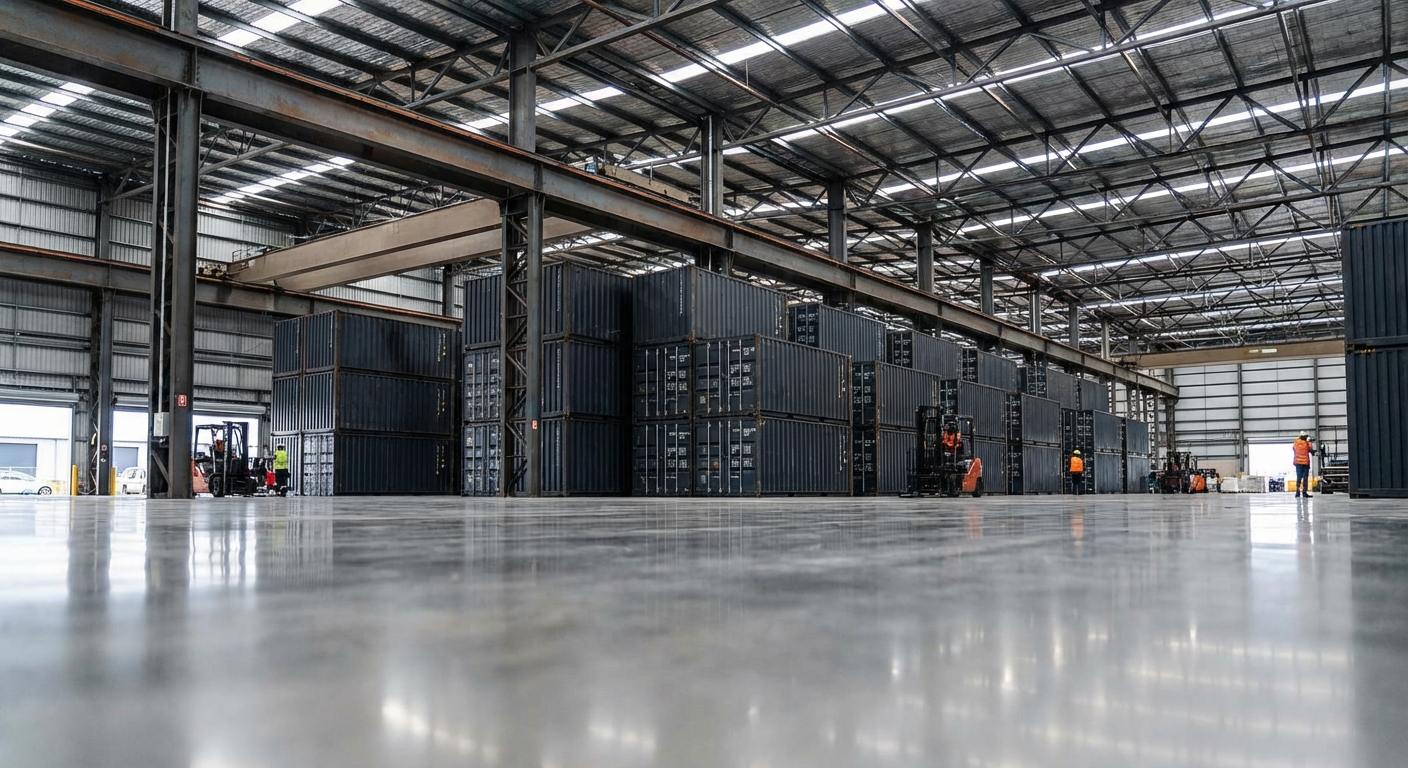
You prioritize employee comfort to reduce turnover, minimize workplace injuries, and maintain a high level of daily productivity. Within a B2B container warehouse design , ergonomics should be integrated into every workstation. Providing anti-fatigue mats, height-adjustable packing tables, and proper ventilation ensures that your staff can perform at their best throughout an eight-hour shift.
A comfortable worker is a focused worker. When employees are not distracted by extreme temperatures or physical strain, they make fewer errors and are more likely to adhere to safety protocols.
Providing Ergonomic Workstations
Packing and sorting tasks often involve repetitive motions that can lead to long-term strain. By optimizing the height of work surfaces, you keep employees in a “power zone” where they have maximum strength and minimum risk of injury.
Focus on these ergonomic wins:
- Anti-fatigue mats at standing stations.
- Vacuum lifters for heavy carton handling.
- Industrial fans or HVLS (High Volume Low Speed) fans for airflow.
Maintaining Temperature and Air Quality
Large warehouses can become dangerously hot in the summer or freezing in the winter. Proper insulation and climate control systems protect both your workers and your temperature-sensitive inventory.
It’s a matter of retention:
- Air curtains at dock doors to keep conditioned air in.
- Proper exhaust systems for forklift fumes.
- Dedicated breakrooms with climate control and hydration.
Key Takeaway: Investing in human-centric design reduces the “hidden” costs of worker compensation claims and high staff turnover.
| Feature | Employee Benefit | Operational Benefit | |
|---|---|---|---|
| HVLS Fans | Thermal comfort | Reduced heat stress errors | |
| Ergonomic Mats | Reduced joint pain | Longer sustained productivity | |
| Lighting Quality | Reduced eye strain | Improved picking accuracy |
Studies show that improving warehouse climate and ergonomics can increase overall facility productivity by up to 12%.
How to save energy in container warehouse design?
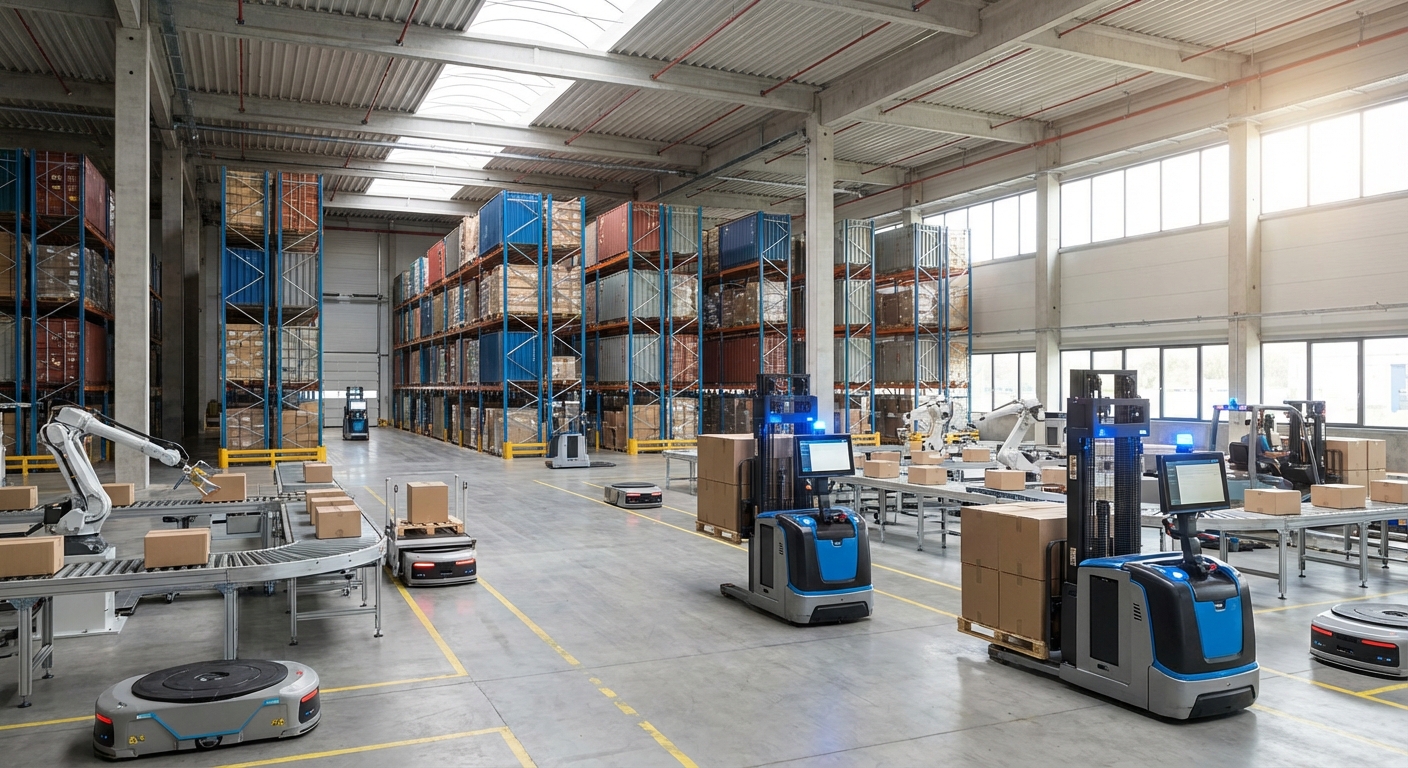
You implement energy-efficient practices to lower your overhead costs and meet modern sustainability standards for industrial facilities. In your container warehouse design, energy savings are achieved through a combination of high-efficiency equipment and smart building management. Automated systems, while requiring power, often use it more precisely than manual processes, reducing waste.
Sustainability is no longer a luxury; it is a business requirement that many B2B clients look for when choosing a logistics partner. Reducing your carbon footprint often aligns perfectly with reducing your utility expenses.
Opting for Energy-Efficient HVAC
HVAC systems are often the largest energy consumers in a warehouse. By installing high-efficiency units and ensuring the building envelope is tightly sealed, you can maintain the required temperatures for a fraction of the cost.
Consider these upgrades:
- Programmable thermostats for different zones.
- High-R-value insulation in walls and ceilings.
- Reflective “cool roofs” to bounce away solar heat.
Promoting Employee Awareness and Training
Technology can only do so much; your staff must be trained to support your energy goals. Simple habits, like ensuring dock doors are closed when not in use, can save thousands of dollars in escaped heat or cooling.
Lead by example:
- Reward teams for meeting energy reduction targets.
- Conduct regular audits of air compressor leaks.
- Transition to electric forklifts with lithium-ion batteries.
Key Takeaway: Energy efficiency is a competitive advantage that directly increases your bottom line by turning wasted power into profit.
| Saving Method | Primary Target | Estimated Savings | |
|---|---|---|---|
| LED Retrofit | Electricity | 50% – 70% | |
| Dock Seals | HVAC Loss | 15% – 20% | |
| Smart Sensors | Idle Power | 10% – 15% |
Industrial facilities that implement a comprehensive energy management strategy can see a return on investment in as little as 18 to 24 months.
Designing a world-class storage facility is a journey that requires balancing human needs with technological precision. By following these ten steps, you solve the core problems of space scarcity, inventory inaccuracy, and rising labor costs. Whether you are building from scratch or retrofitting an existing site, your vision should be focused on long-term efficiency and scalability. We are committed to helping you build a smarter, safer, and more profitable future for your logistics operations. To start your transformation, contact us today for a professional consultation.
FAQ
Can I reconfigure my warehouse design without stopping operations?Yes, but it requires careful planning. By performing reconfigurations in “zones” or during off-peak shifts, you can minimize the impact on your daily throughput while upgrading your infrastructure.
What is the best way to handle seasonal spikes in inventory?Dynamic slotting and temporary high-density racking are the most effective strategies. By reserving a portion of your floor for flexible “bulk” storage, you can accommodate overflow without disrupting your permanent pick paths.
How do I know if my warehouse is at maximum capacity?Most experts consider a warehouse “full” at 85% capacity. Once you cross this threshold, the congestion of goods typically causes productivity to drop so sharply that the cost of inefficiency outweighs the value of the extra storage.
Is automation necessary for a 10,000-square-foot warehouse?Not necessarily, but semi-automation often provides a high ROI even in smaller spaces. Simple solutions like conveyors or automated scanning can provide significant speed gains without the massive investment required for full robotics.
What is the first step if my warehouse is currently disorganized?Perform a total inventory audit and data analysis. You cannot fix what you cannot measure; once you know exactly what you have and how fast it moves, the logical layout for your facility will become clear.