
The best horse arena size is 100′ x 200′ for most professional disciplines, though a minimum of 60′ x 120′ is required for basic training. Imagine you are finally ready to build your dream equestrian facility, but the blueprints look confusing. If you select an incorrect size of horse arena, you risk creating a cramped environment that endangers riders and limits your property’s commercial value. We provide the engineering expertise and clear-span solutions to turn your vision into a high-performance reality. By partnering with a specialist in steel structures, you can find the perfect size of horse arena for your specific needs.
What is the standard size of horse arena for training?
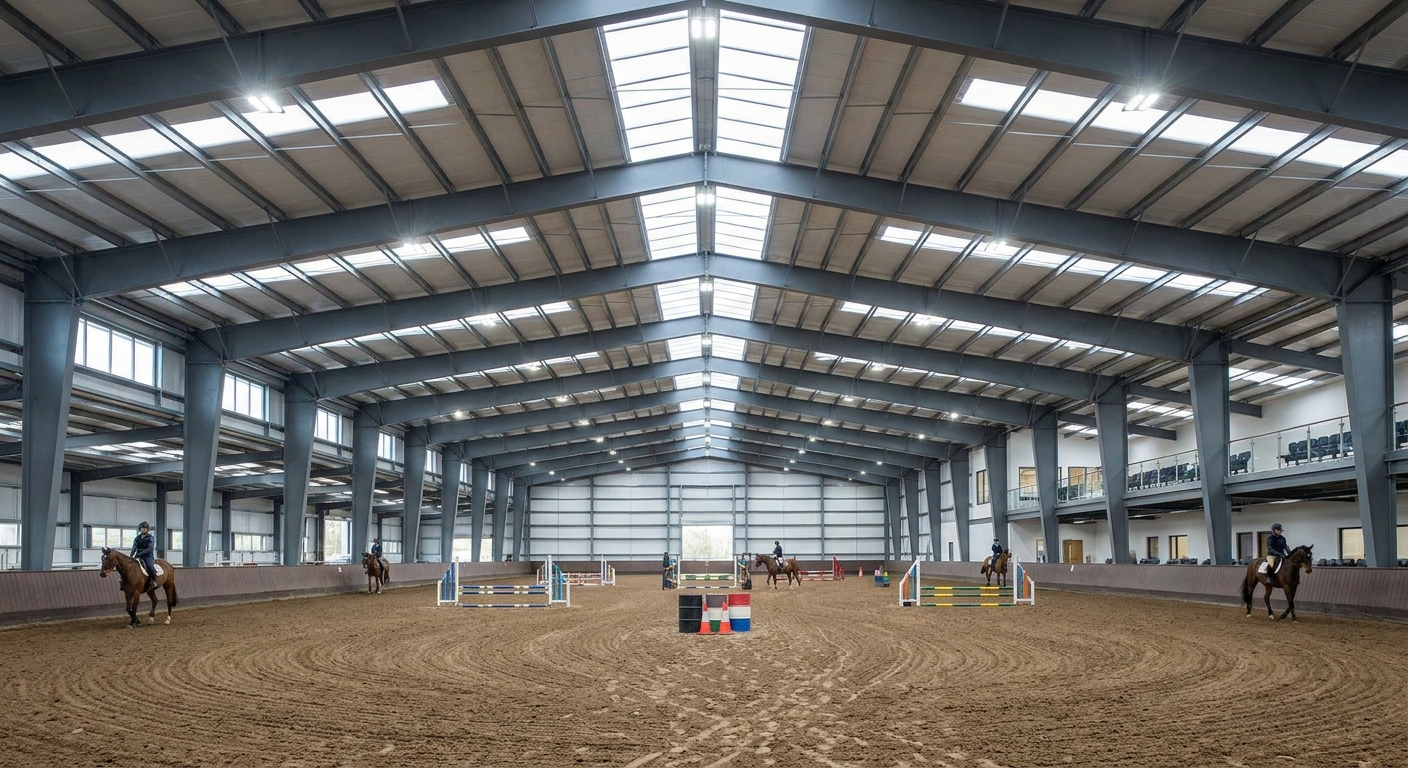
The baseline for training is 60′ x 120′. When you are planning the initial layout, the size of horse arena dictates the complexity of your daily drills. This footprint provides enough room for basic gaits without overwhelming a small property.
Minimum dimensions for beginner riders?
Beginners need a predictable space where the horse remains focused on the rider’s aids.
Think about it:
- 60′ x 100′ is ideal for young horse starts.
- 60′ x 120′ allows for comfortable canter transitions.
- A 15′ buffer around the perimeter is recommended for safety.
Space for lungeing and ground work?
Ground work is the foundation of every successful training program. While round pens are popular, a rectangular arena with corners helps horses learn to balance themselves properly.
| Training Type | Recommended Dimensions (ft) | Primary Use | |
|---|---|---|---|
| Basic Groundwork | 60 x 100 | Lungeing and starts | |
| General Exercise | 60 x 120 | Basic gaits | |
| Professional Schooling | 80 x 150 | Advanced conditioning |
Key Takeaway: A 60′ x 120′ arena is the absolute minimum required to ensure a safe training environment for both the horse and the rider. The table above illustrates how increasing dimensions directly translates to more advanced training capabilities.
What is the ideal size of horse arena for dressage?
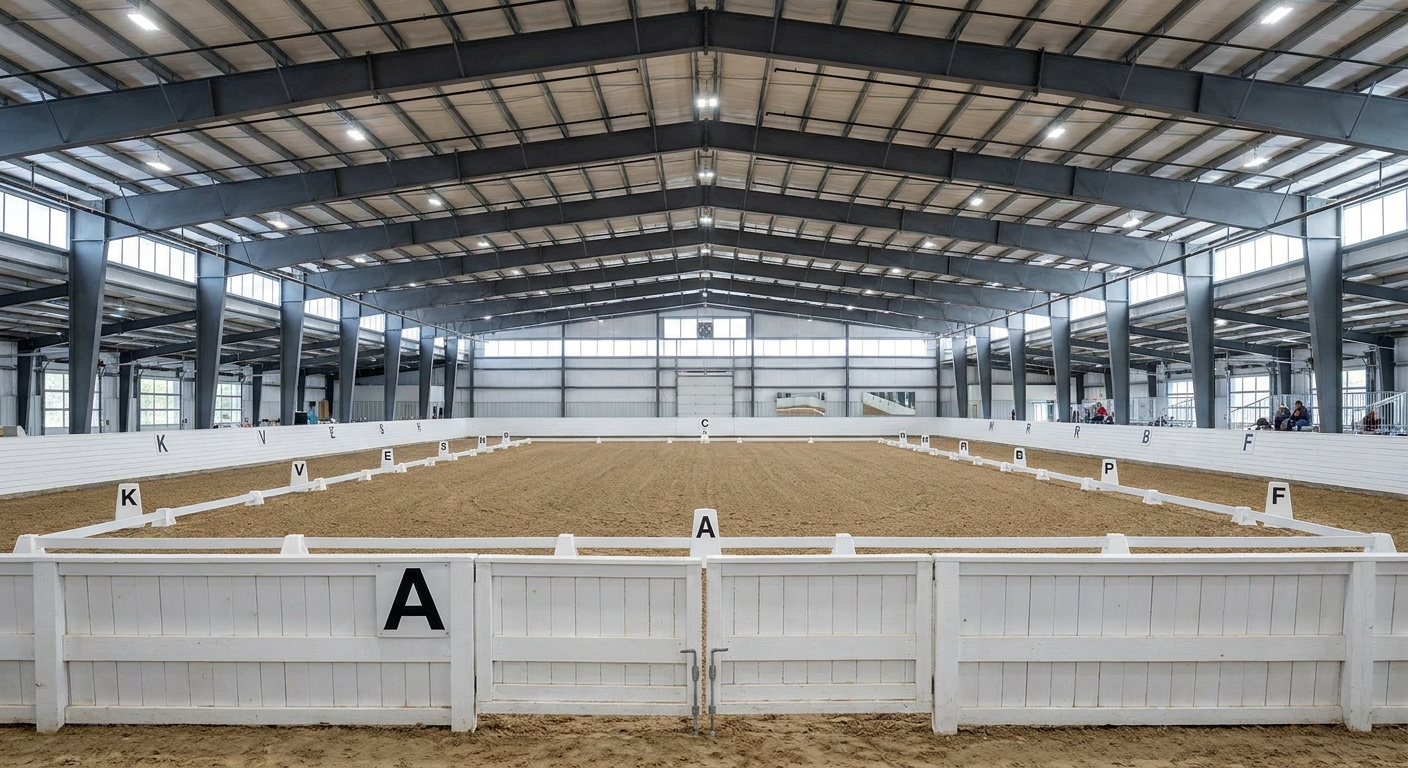
Small courts are 20m x 40m, while standard courts are 20m x 60m. Selecting the correct size of horse arena for dressage ensures your horses develop proper rhythm and balance. Precision is the primary goal in this discipline.
Small vs. large dressage court sizes?
Dressage levels dictate the space required for various tests and movements.
The best part?
- Small courts (20m x 40m) are perfect for introductory levels.
- Standard courts (20m x 60m) are required for all FEI-level competitions.
- Larger buildings allow for standard letters to be placed accurately.
Corner space and clearance?
When using steel structures, you must account for the thickness of the columns and the kick boards. Always add at least two feet to each side to prevent boots from scraping against the walls during lateral work.
| Dressage Level | Dimension (Meters) | Dimension (Feet) | |
|---|---|---|---|
| Small Court | 20m x 40m | 66′ x 131′ | |
| Standard Court | 20m x 60m | 66′ x 197′ | |
| Indoor Prep Area | 25m x 65m | 82′ x 213′ |
Key Takeaway: Accuracy in sizing is critical for dressage training to mirror the conditions found in the competition ring. The dimensions provided above help owners plan for both the riding surface and the necessary structural clearance.
How does the size of horse arena affect show jumping?
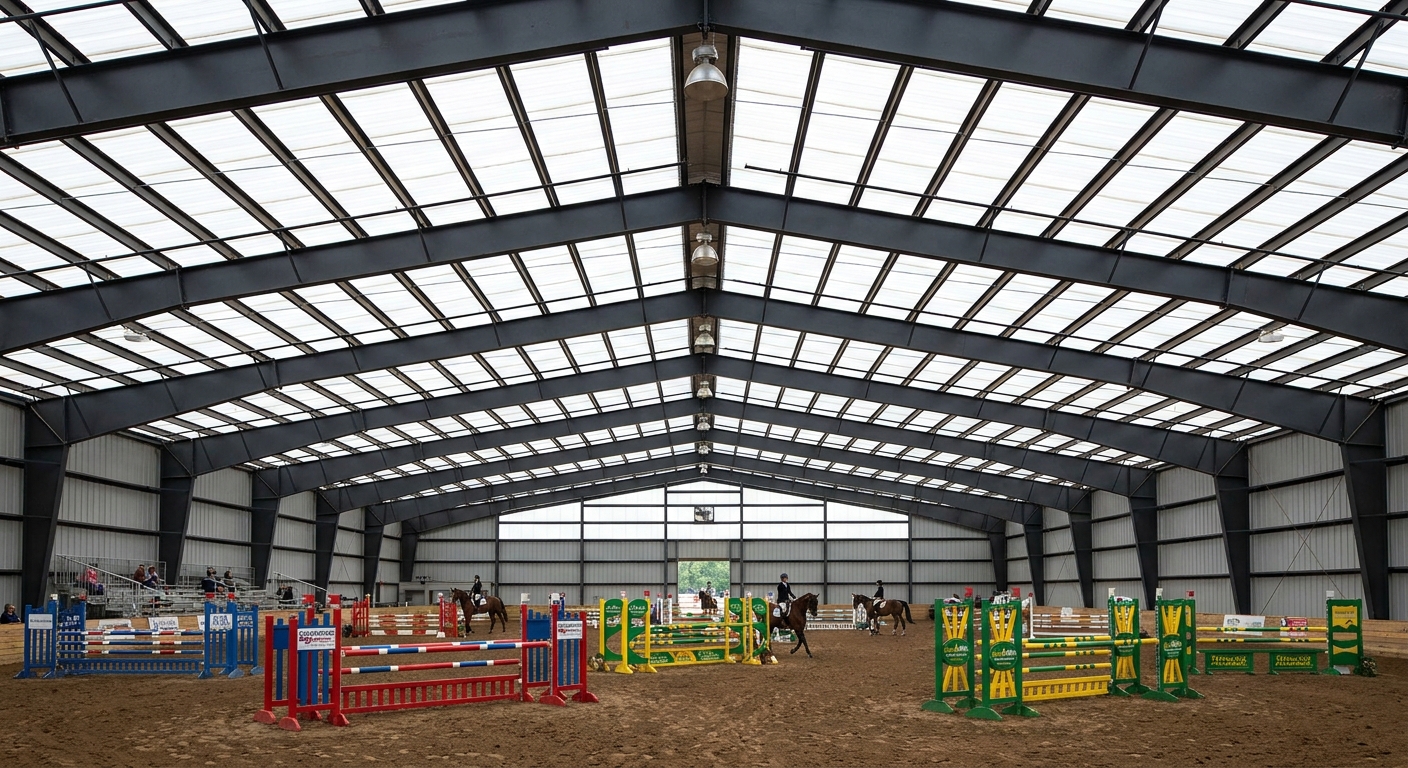
Jumping arenas require at least 100′ x 200′ for safe courses. A restricted size of horse arena forces horses into awkward approaches that can lead to refusal or injury. You need ample space for rhythm and recovery between obstacles.
Calculating length for multi-jump courses?
Planning a course requires understanding the stride of a horse between jumps.
Look at the facts:
- One jump requires roughly 20 feet of approach space.
- A three-stride line needs approximately 48 feet of clear footing.
- Grand Prix courses often require widths exceeding 150 feet.
Safe distances between obstacles?
Safety depends on the ability to turn smoothly without losing momentum. Tight “roll-back” turns in a narrow arena put excessive torque on a horse’s joints during competition.
| Jumping Style | Recommended Size (ft) | Jump Capacity | |
|---|---|---|---|
| Schooling Grids | 80 x 150 | 3–5 obstacles | |
| Hunter/Jumper | 100 x 200 | 8–10 jumps | |
| Grand Prix Level | 150 x 300 | Advanced layouts |
Key Takeaway: Width is just as important as length in jumping to allow for safe, balanced turns between fences. The data suggests that a 100′ x 200′ footprint is the minimum for anyone serious about training for competitions.
| sales@showhoo.com.cn | |
| Phone/WhatsApp | +86 186 7895 5927 |
What size of horse arena is best for roping events?
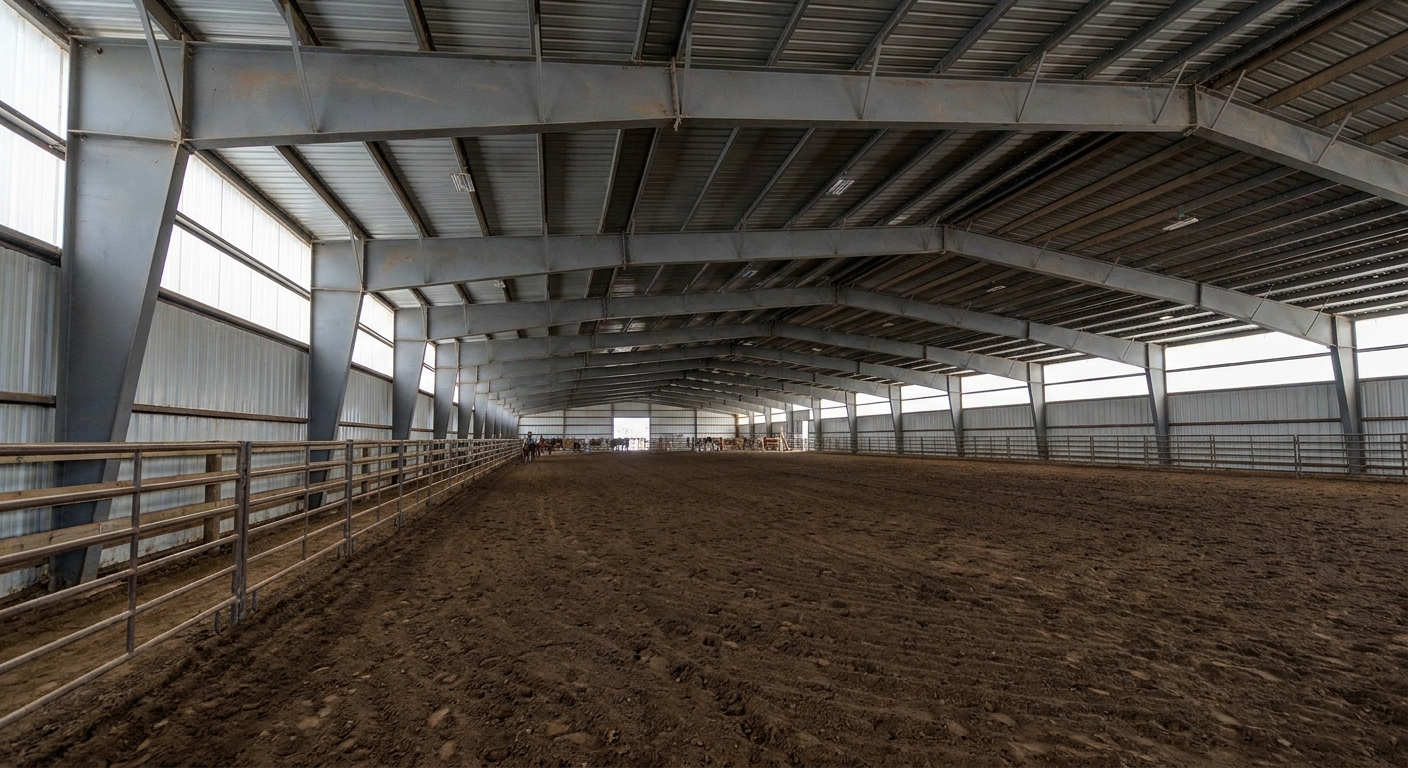
Standard roping layouts require 150′ x 250′ to accommodate horse runs. Determining the size of horse arena for roping is a specialized task involving horse handling logistics. You must leave room for the steer to run straight before the catch.
Length requirements for horse runs?
Steers need distance to find their stride, and riders need space to position their horses.
Here is the deal:
- Professional runs often reach 300 feet in total length.
- Standard heading and heeling practice can work in 250 feet.
- Shorter arenas may cause horse to “sour” by hitting the fence too soon.
Including the return alley in your plan?
You must decide if the return alley will be inside or outside the main structure. If it is inside, you must widen the building by 10 to 12 feet to keep the riding lane clear.
| Roping Type | Length (ft) | Width (ft) | |
|---|---|---|---|
| Heading/Heeling | 250 | 150 | |
| Tie-Down Roping | 300 | 100 | |
| Steer Wrestling | 300 | 150 |
Key Takeaway: Western performance events require a longer, narrower footprint compared to the square needs of English disciplines. Owners should prioritize length to ensure the safety and longevity of their horses.
Which size of horse arena works for barrel racing?
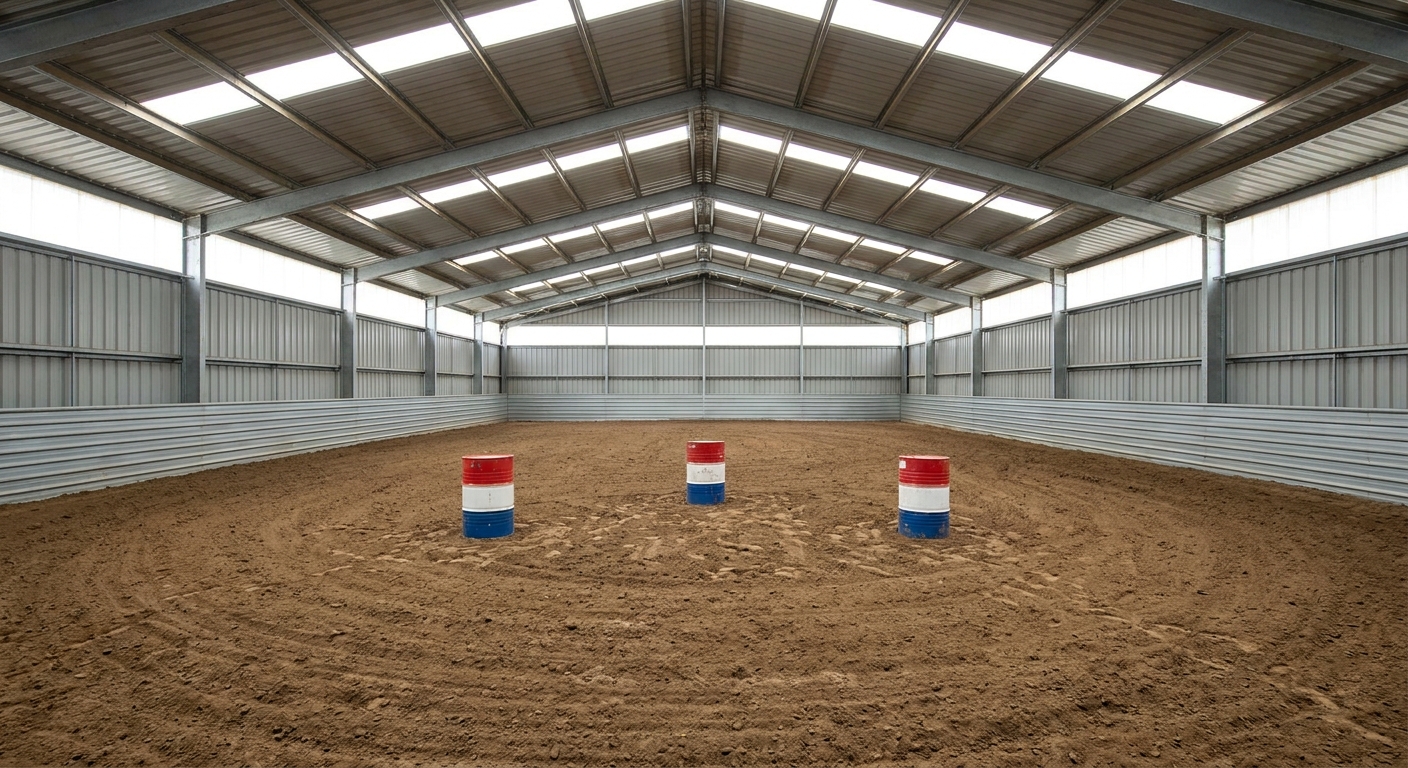
A footprint of 150′ x 250′ is optimal for full-speed patterns. The size of horse arena for barrel racing must allow for high-speed turns without the horse feeling claustrophobic. You need space to “fire” toward the finish line safely.
Distance between barrels and fences?
Riders need a safety buffer to prevent knees from hitting the arena wall.
It gets better:
- A 15′ to 20′ buffer from the wall is the industry standard.
- Wider arenas allow for a more natural approach to the first barrel.
- Stopping room after the timer is crucial for preventing accidents.
Why clear-span width is critical?
Interior columns are a major hazard for horses moving at full gallop. Steel structures provide a 100% clear-span environment, ensuring there are no obstructions in your path.
| Event Type | Minimum Size (ft) | Optimal Size (ft) | |
|---|---|---|---|
| Local Jackpot | 130 x 200 | 150 x 250 | |
| Professional Rodeo | 150 x 250 | 200 x 300 |
Key Takeaway: Barrel racing requires significant width and length to maintain safety at high speeds. The table highlights how professional standards require nearly double the space of a local practice pen.
Is the size of horse arena different for cutting pens?
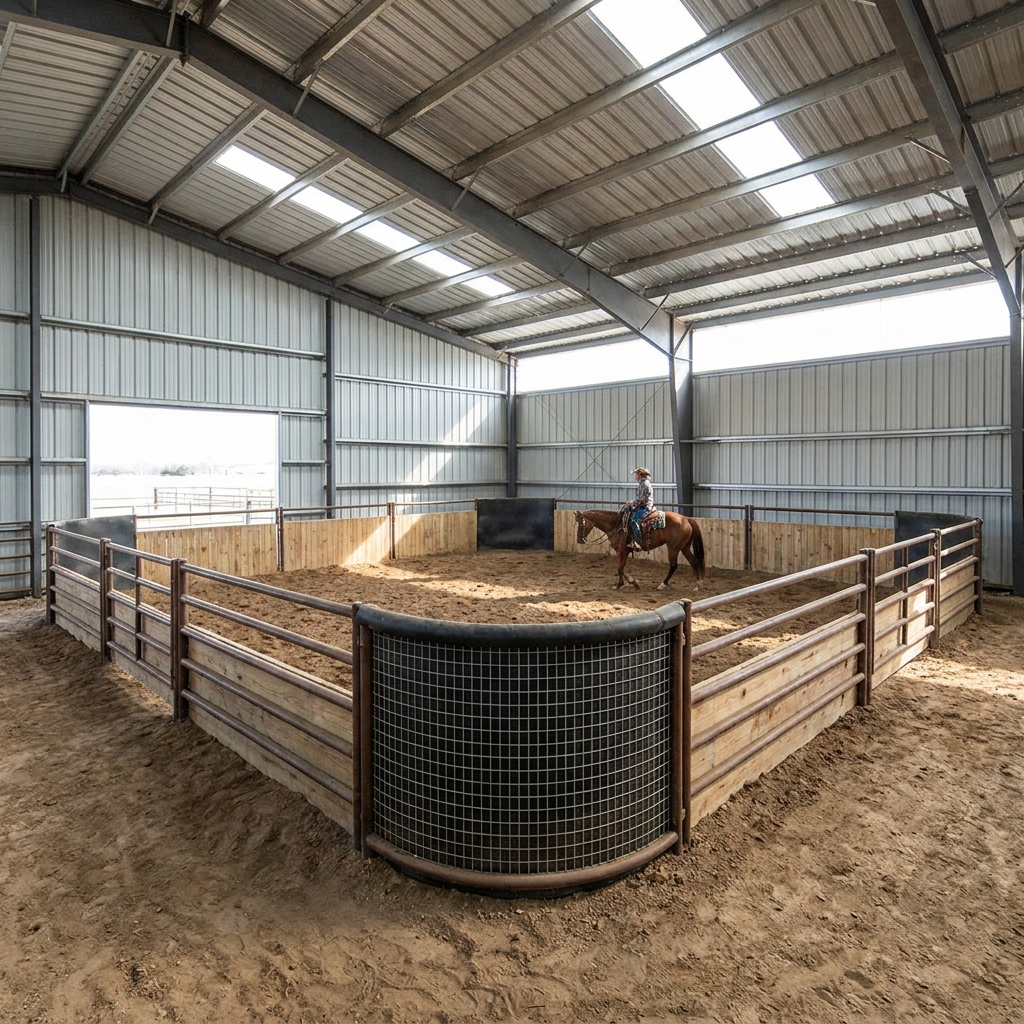
Cutting pens are usually square, measuring 100′ x 100′ or 120′ x 120′. When you select the size of horse arena for cow work, the goal is to keep the horse in the “working zone.” Shorter distances prevent the cow from gaining too much speed.
Diameter for optimal horse control?
The horse needs to be able to mirror the cow’s movements with precision.
Trust the process:
- A 100′ width keeps the cow focused on the horse.
- Square pens are preferred to keep the horse “in the middle.”
- Shorter arenas reduce the physical strain on the horse’s sprinting muscles.
Square vs. round pen efficiency?
Many professional trainers prefer a square pen but with “soft” or rounded corners. This prevents horse from getting “stuck” in a corner while still maintaining the efficiency of a square steel building.
| Activity | Optimal Size (ft) | Building Shape | |
|---|---|---|---|
| Cutting Practice | 100 x 100 | Square | |
| Working Cow Horse | 100 x 200 | Rectangular | |
| Herd Work | 120 x 120 | Square |
Key Takeaway: Cutting pens focus on tight, controlled spaces rather than the expansive lengths required for jumping or roping. The comparison table shows that building shape is just as important as the raw dimensions.
| sales@showhoo.com.cn | |
| Phone/WhatsApp | +86 186 7895 5927 |
What size of horse arena is needed for multi-use?
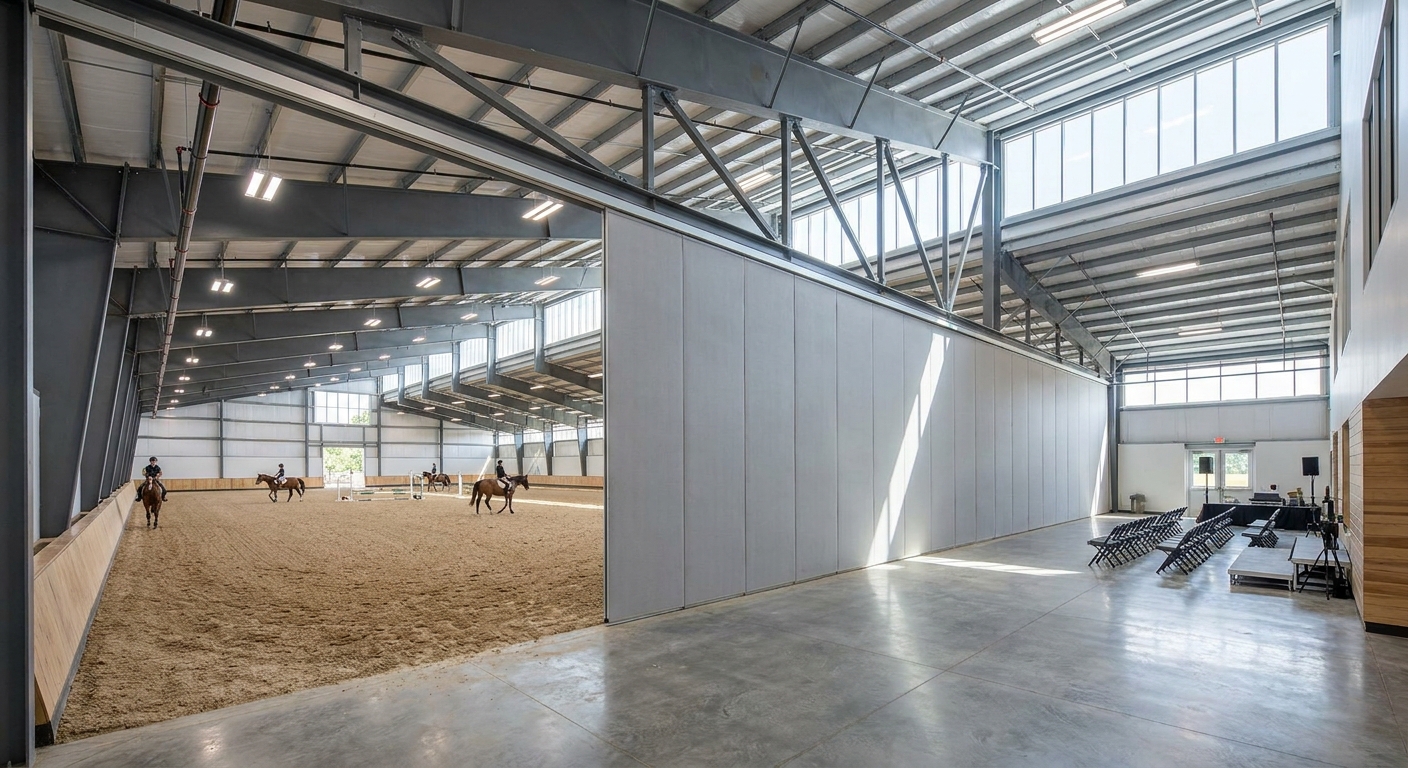
The 100′ x 200′ “Golden Ratio” is the best multi-discipline choice. This size of horse arena allows you to host dressage clinics on Monday and jumping shows on Saturday. Versatility is the key to a high return on investment.
Balancing various riding disciplines?
A facility that caters to multiple riders needs to be wide enough for passing and long enough for jumping.
Consider this:
- 100′ width allows for a dressage court and a viewing lane.
- 200′ length fits most standard competition patterns.
- Multi-use arenas increase the resale value of your property.
Subdividing a large span?
Large clear-span structures allow you to use portable partitions to create two separate training zones. You can run a private lesson in one half while others school their horses in the remaining space.
| Use Case | Dimensions (ft) | Versatility Rating | |
|---|---|---|---|
| Private Multi-Use | 80 x 180 | High | |
| Commercial Facility | 100 x 200 | Very High | |
| Event Center | 150 x 300 | Professional Grade |
Key Takeaway: Investing in a 100′ x 200′ structure provides the flexibility to adapt to any riding style as your business grows. The ratings above clearly demonstrate why commercial facilities prefer larger, clear-span footprints.
Does the size of horse arena impact steel construction?
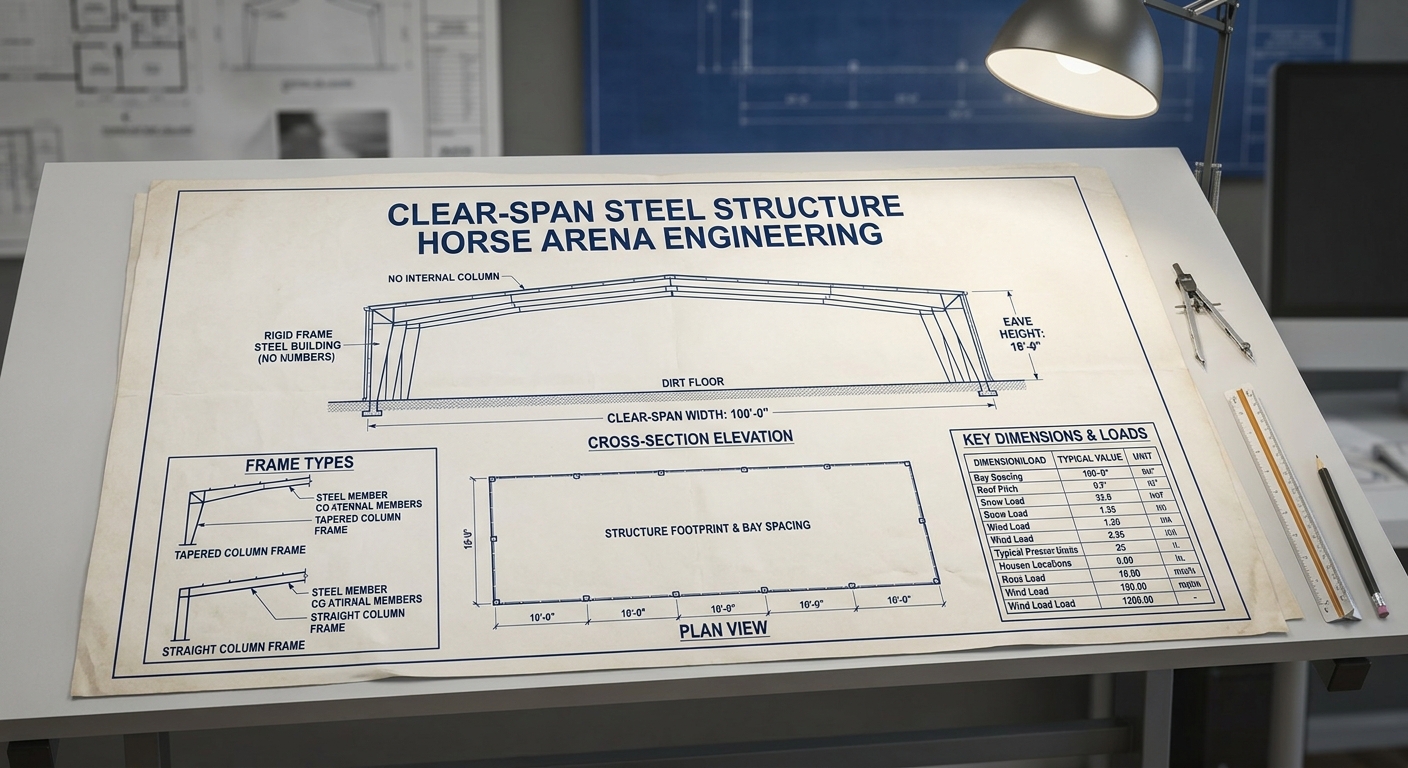
Larger widths require clear-span engineering and increased beam depth. The size of horse arena directly affects the type of H-section steel beams used in the frame. Engineering must account for snow and wind loads without interior supports.
Clear-span engineering for large widths?
Building an arena wider than 80 feet requires heavy-duty rafters to maintain structural integrity.
The best part?
- Rigid frame designs offer 100% usable interior space.
- Tapered columns maximize strength where the load is highest.
- Pre-engineered kits reduce on-site construction time by weeks.
Vertical clearance for mounted riders?
Height is just as critical as floor space when planning your building. You should aim for a minimum eave height of 16 to 18 feet to ensure riders don’t hit the ceiling during a jump or a rear.
| Building Width (ft) | Steel Frame Type | Minimum Eave Height (ft) | |
|---|---|---|---|
| 60–80 | Rigid Frame | 14 | |
| 80–120 | Tapered H-Beam | 16 | |
| 120+ | Heavy-Duty Truss | 18–20 |
Key Takeaway: Engineering complexity increases with arena width, requiring specialized steel frames to ensure long-term safety. The technical requirements listed in the table ensure your structure remains stable under all environmental conditions.
How to choose the right size of horse arena for space?
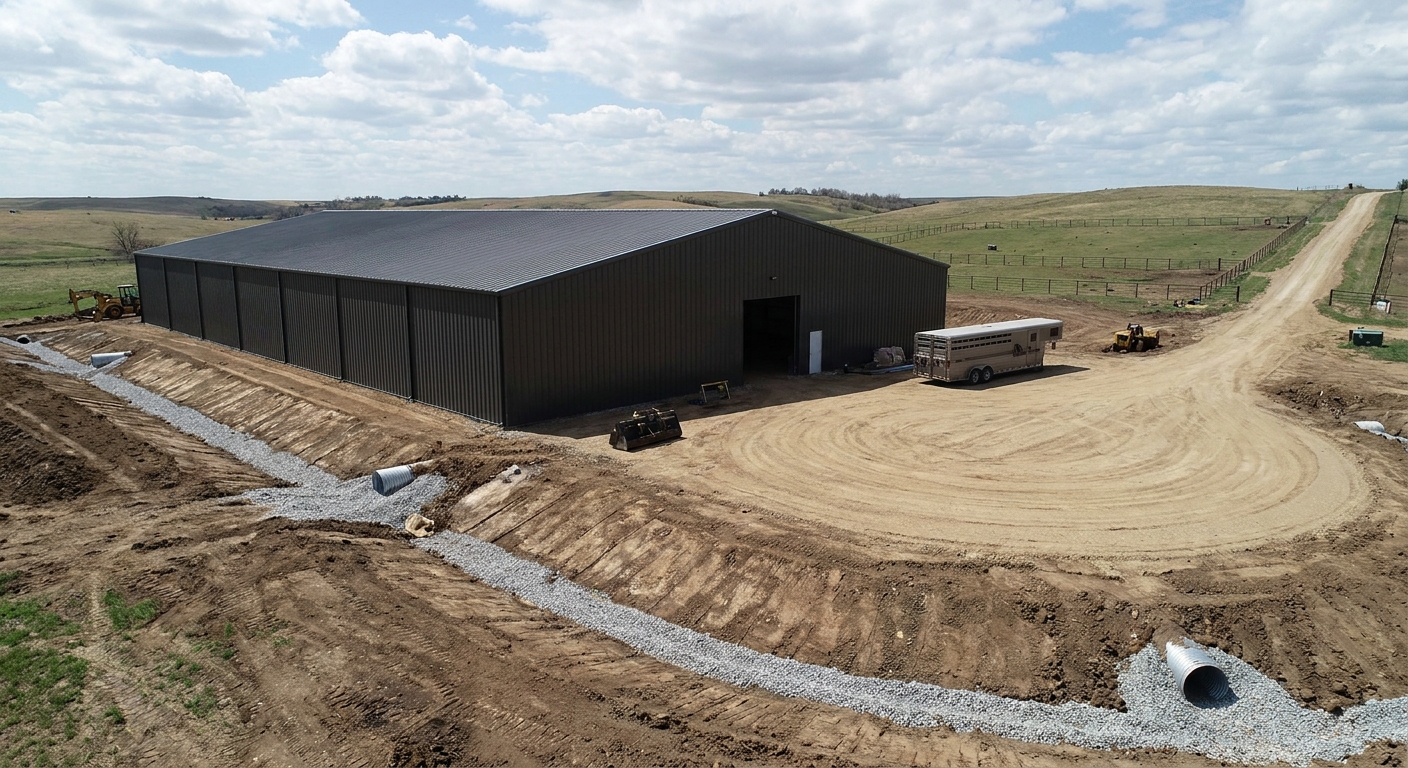
You must evaluate your land pad, allowing for drainage and trailer access. The total size of horse arena isn’t just the building footprint, but the entire site preparation. Proper planning prevents flooding and logistical headaches later.
Assessing your available land?
A 100-foot wide building actually needs a much larger flat pad for water runoff.
Don’t forget:
- Add 15 feet to every side for proper drainage slopes.
- Ensure your driveway can handle 40-foot horse trailers.
- Check local zoning setbacks before pouring any concrete.
Planning for future expansions?
Steel buildings are modular, making them the perfect choice for growing businesses. If you start with a 150-foot length, you can easily add bays later to reach 250 feet as your budget allows.
| Site Factor | Required Extra Space | Purpose | |
|---|---|---|---|
| Drainage Perimeter | 10–15 ft | Prevent flooding | |
| Trailer Turnaround | 40–60 ft | Logistical access | |
| Zoning Setbacks | Varies | Legal compliance |
Key Takeaway: Site preparation is the most overlooked aspect of arena sizing and can significantly impact your total budget. Proper site factor planning as shown in the table will save you thousands in future repairs.
Why does the size of horse arena matter for safety?
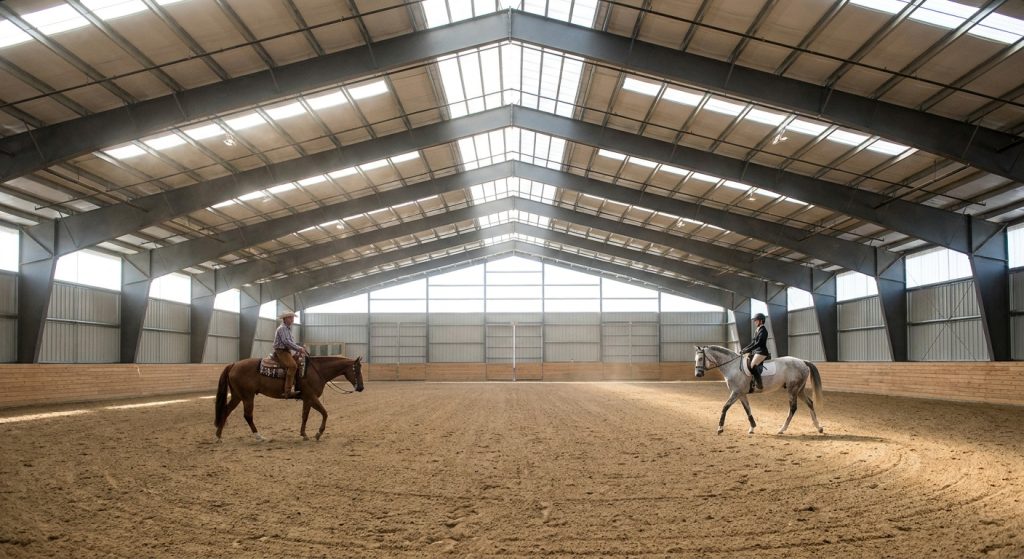
Proper sizing prevents joint strain from tight turns and reduces rider collisions. An undersized size of horse arena forces a horse into repetitive, tight circles that damage the hocks. You must prioritize the physical health of your equine partners.
Impact of tight turns on joints?
Repetitive torque on the fetlocks is a leading cause of lameness in performance horses.
Wait, there’s more:
- Larger arenas allow for natural, flowing circles.
- Soft corners prevent horses from getting “trapped” or spooked.
- Better biomechanics lead to longer, more productive careers.
Preventing rider collisions?
In a busy boarding facility, width is your best friend for traffic control. Providing a 20-foot lane for passing at the trot or canter ensures that different gait speeds can coexist safely.
| Risk Factor | Impact of Small Arena | Impact of Large Arena | |
|---|---|---|---|
| Equine Joint Stress | High torque on hocks | Natural biomechanics | |
| Rider Safety | Collision risk | Safe passing lanes | |
| Horse Psychology | High stress/claustrophobia | Relaxed and focused |
Key Takeaway: A larger arena is a direct investment in the long-term health of your horse and the safety of your clients. The safety comparison highlights why professional managers never settle for the minimum allowable footprint.
Conclusion
At Showhoo, we are dedicated to providing the highest quality steel structure solutions for the global equestrian market. Our vision is to empower facility owners with factory-direct pricing, engineering excellence, and integrated delivery systems that eliminate project risk. We manage every stage from design to delivery, ensuring your arena meets the strictest local codes and functional requirements. To begin your journey toward a world-class facility, contact us today for a customized consultation.
| sales@showhoo.com.cn | |
| Phone/WhatsApp | +86 186 7895 5927 |
FAQ
- Can I build a custom size of horse arena for small plots?
Yes, our steel structures are fully customizable, though we recommend a minimum 60′ width to maintain the physical health of your horses.
- What’s the best size of horse arena for a private barn?
For private owners, 70′ x 140′ is considered the “sweet spot” for versatility without excessive construction costs.
- Can I expand the size of horse arena later?
Absolutely, because steel frames are modular, you can remove an end wall and add more bays to increase the length of your facility.
- What’s the best height for an indoor arena?
The industry standard is 16 feet, but 18 feet is much better if you intend to perform high-level show jumping or western speed events.
- Can I include a viewing area in the arena footprint?
Yes, many clients add an extra 20 feet to the building width to accommodate a raised mezzanine or seating area for spectators and clinicians.