
You face a constant struggle to protect high-value aviation assets from unpredictable weather and structural degradation. Leaving aircraft exposed to the elements leads to accelerated corrosion, mechanical failures, and massive insurance premiums that drain your operational budget. A precision-engineered steel structure aircraft hangar offers the ultimate solution by providing a clear-span, fire-resistant environment that secures your fleet for decades. You can streamline your maintenance workflows and ensure asset longevity by investing in a steel structure aircraft hangar designed for industrial-grade performance.
Why Choose a Steel Structure Aircraft Hangar for Aviation Needs?
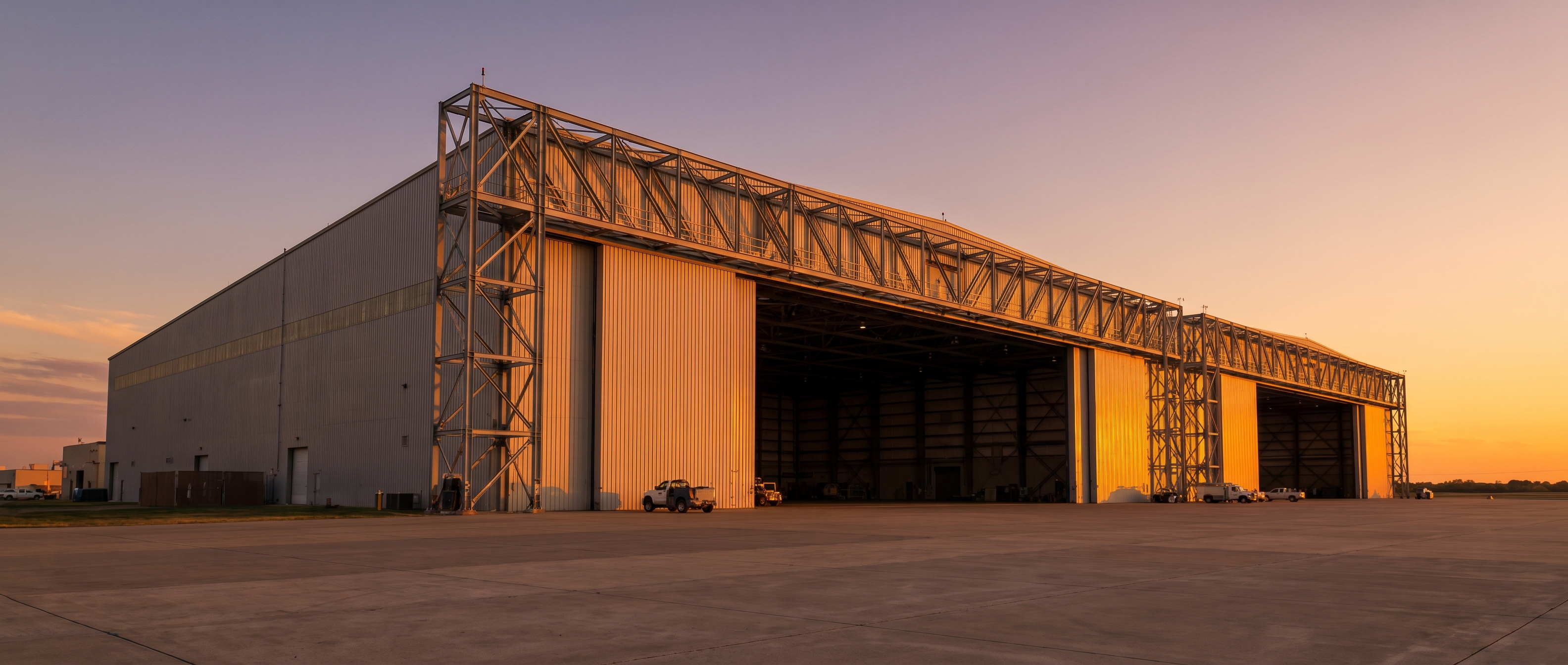
You need a facility that offers maximum structural integrity with minimal internal obstructions to move aircraft safely. A steel structure aircraft hangar utilizes high-strength H-section beams to provide massive clear spans that traditional construction simply cannot match. This allows you to store multiple aircraft without the risk of wing-tip collisions against interior columns.
How does steel improve operational safety?
Steel is a non-combustible material that significantly lowers the fire risk for your hangar and its contents. You also benefit from a structure that resists pests, rot, and mold, ensuring a clean environment for sensitive avionics. The high strength-to-weight ratio means the building can withstand extreme wind and snow loads.
Think about it:
- Non-combustible framing reduces insurance costs.
- Termite and mold resistance ensures long-term hygiene.
- Predictable structural behavior in extreme weather.
- Seismic resistance protects assets during ground movement.
Why is speed of erection critical?
Because most components are prefabricated in a factory, on-site assembly is significantly faster than masonry or wood construction. You can have your facility operational in weeks rather than months, reducing downtime for your business. This rapid deployment allows for a faster return on investment for your aviation operations.
Here is the deal:
- Factory-drilled holes ensure perfect alignment on site.
- Reduced labor hours lower total project costs.
- Dry construction methods eliminate drying time.
- All-weather assembly prevents seasonal delays.
Understanding the Structural Value
The combination of rapid deployment and extreme durability makes steel the logical choice for modern aviation infrastructure. You secure a facility that requires very little upkeep while providing a professional appearance for your clients.
Key Takeaway: Choosing a steel frame ensures your assets are protected by a fire-resistant, high-strength enclosure that is built much faster than traditional buildings.
| Feature | Steel Hangar | Traditional Building | |
|---|---|---|---|
| Construction Speed | 4-8 Weeks | 6-12 Months | |
| Clear Span Width | Up to 100m | Limited by columns | |
| Fire Rating | High (A-class) | Variable | |
| Weight | Lightweight | Heavy/Dense |
Review the following comparison to see why steel leads the aviation industry.
What are the Key Advantages of Steel Structure Aircraft Hangars?
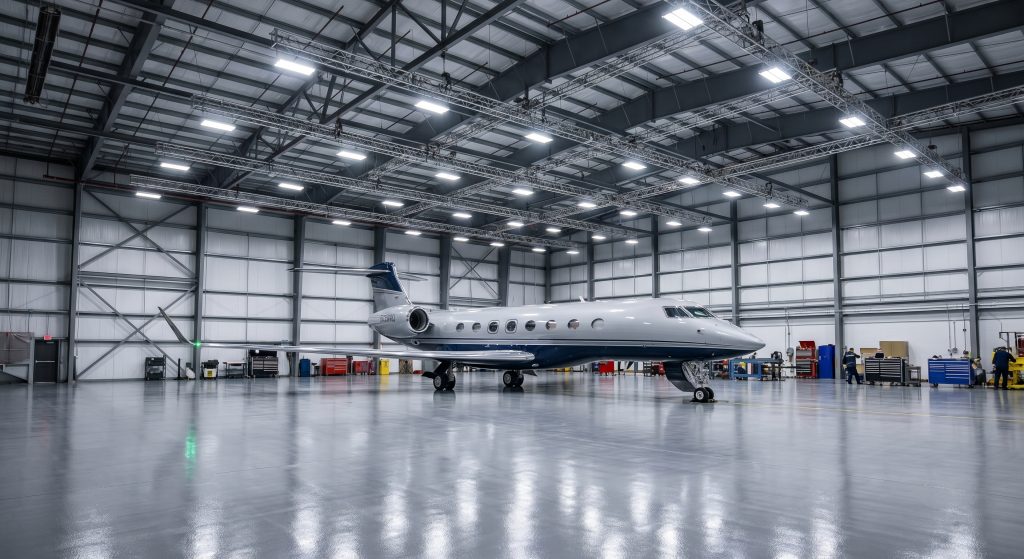
The primary advantages of a steel structure aircraft hangar revolve around long-term cost-effectiveness and unparalleled design flexibility. You can customize the interior layout to include specialized workshops, offices, and parts storage without compromising the main floor space. Steel’s modular nature means you can even expand the building in the future as your fleet grows.
Is it a cost-effective long-term investment?
While the initial material cost is competitive, the real savings come from the low maintenance requirements over the building’s 50-year lifespan. You won’t have to deal with the cracking, warping, or rotting associated with other materials. These savings directly improve your bottom line and increase the resale value of the property.
Look at it this way:
- Lower maintenance cycles reduce operational overhead.
- High durability prevents frequent structural repairs.
- Modular parts allow for easy, low-cost modifications.
- High scrap value provides an exit strategy.
Can you integrate energy-efficient features?
You can easily incorporate high-performance insulation and natural lighting solutions to reduce energy consumption. Insulated sandwich panels keep the hangar comfortable for technicians while protecting aircraft seals from extreme temperature swings. This creates a sustainable facility that meets modern environmental standards.
Believe it or not:
- Sandwich panels reduce heating and cooling costs.
- Skylights provide free illumination during the day.
- Steel is 100% recyclable, supporting green goals.
- Ventilation systems integrate seamlessly into the roof.
Maximizing Your Operational Budget
Investing in steel allows you to allocate more funds to aircraft maintenance and pilot training rather than building repairs. The efficiency of the structure translates directly into a more profitable aviation business.
Key Takeaway: The design flexibility and low maintenance of a steel hangar provide a higher total return on investment compared to any other construction method.
| Benefit Category | Impact | Efficiency Gain | |
|---|---|---|---|
| Financial | Low Maintenance | +30% Savings | |
| Operational | Flexible Layout | +25% Space Use | |
| Environmental | Recyclability | 100% Sustainable |
The following table summarizes the operational gains you can expect.
Email:sales@showhoo.com.cn
Phone/WhatsApp:+86 186 7895 5927
Which Design Considerations Matter for Your Steel Structure Aircraft Hangar?
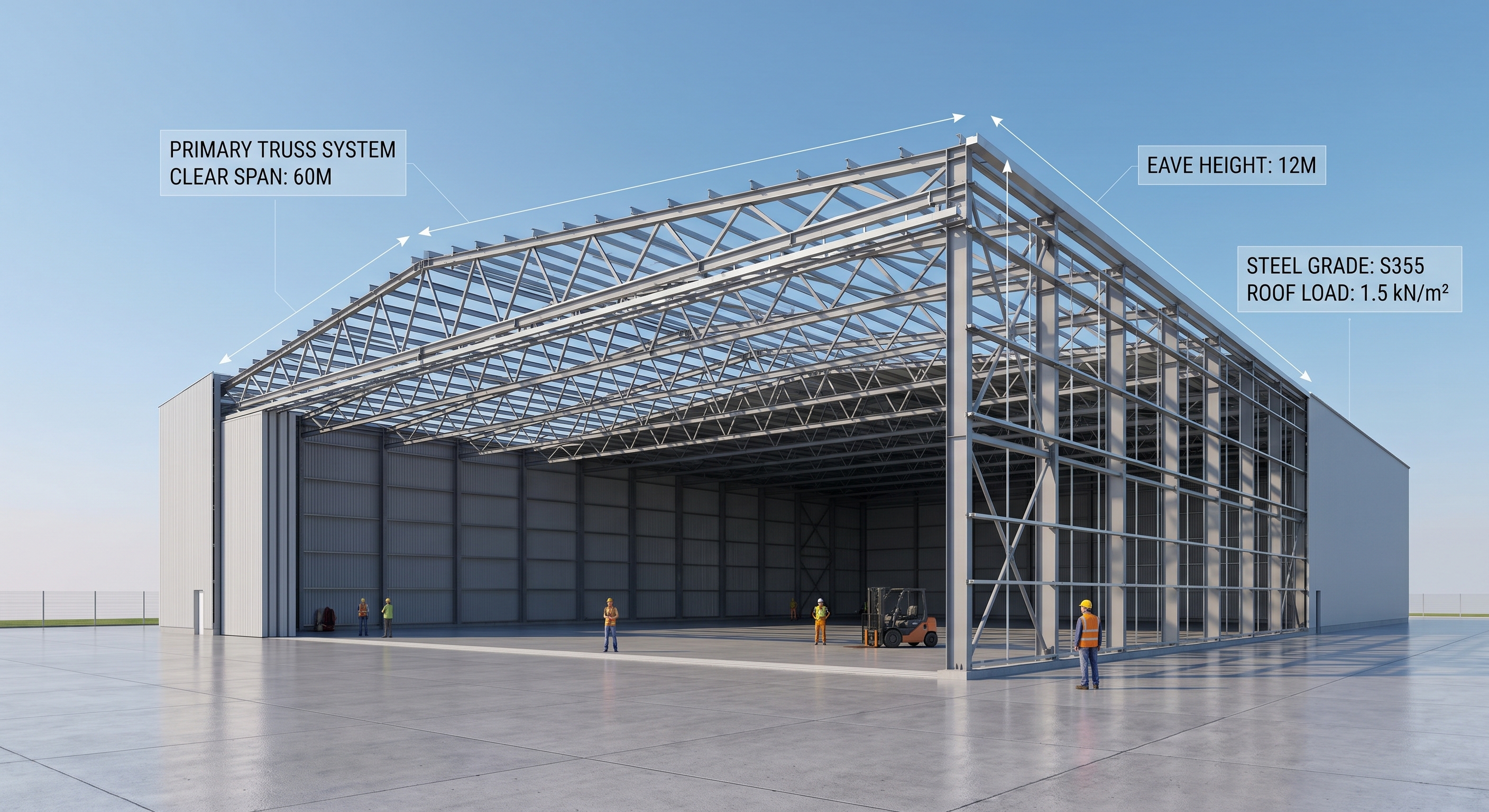
Designing a steel structure aircraft hangar requires careful planning for the tail height and wingspan of your largest aircraft. You must also consider the specific door systems, as they are the most critical moving parts of the facility. Proper about us guidance ensures that your design accounts for local wind, snow, and seismic codes.
How do you choose the right door system?
The door type you select—whether sliding, bi-fold, or vertical lift—impacts the structural design and operational flow. Sliding doors are reliable and cost-effective, while vertical lift doors save space on the apron. You need to ensure the steel frame is engineered to support the specific weight and wind load of the door.
Think about it:
- Sliding doors require exterior tracks and space.
- Bi-fold doors need strong headers for lifting loads.
- Vertical lift doors offer the tightest weather seal.
- Automatic systems improve workflow and security.
What environmental factors impact the design?
The engineering must reflect the actual conditions of your project site, including maximum recorded wind speeds and potential snow accumulation. High-pitch roofs are better for heavy snow regions, while aerodynamic shapes can mitigate wind pressure in hurricane zones. Every bolt and beam is calculated to ensure the safety of your personnel and fleet.
In simple terms:
- Wind load design prevents structural lifting.
- Snow load capacity avoids roof collapse.
- Proper drainage prevents water pooling on top.
- Seismic bracing ensures stability during tremors.
Tailoring the Structure to Your Fleet
The design phase is where you ensure the hangar will serve your needs for the next several decades. By planning for future, larger aircraft now, you avoid expensive modifications later.
Key Takeaway: Precise engineering that considers door weight and local climate is essential for a safe and functional aviation facility.
| Design Element | Factor | Result | |
|---|---|---|---|
| Door Type | Opening Clearance | Easy Aircraft Access | |
| Wind Load | Coastal Codes | Storm Resilience | |
| Span | Fleet Size | Collision Prevention |
Review these critical design factors to ensure your project starts on the right track.
How Do Material Standards Impact Steel Structure Aircraft Hangar Quality?
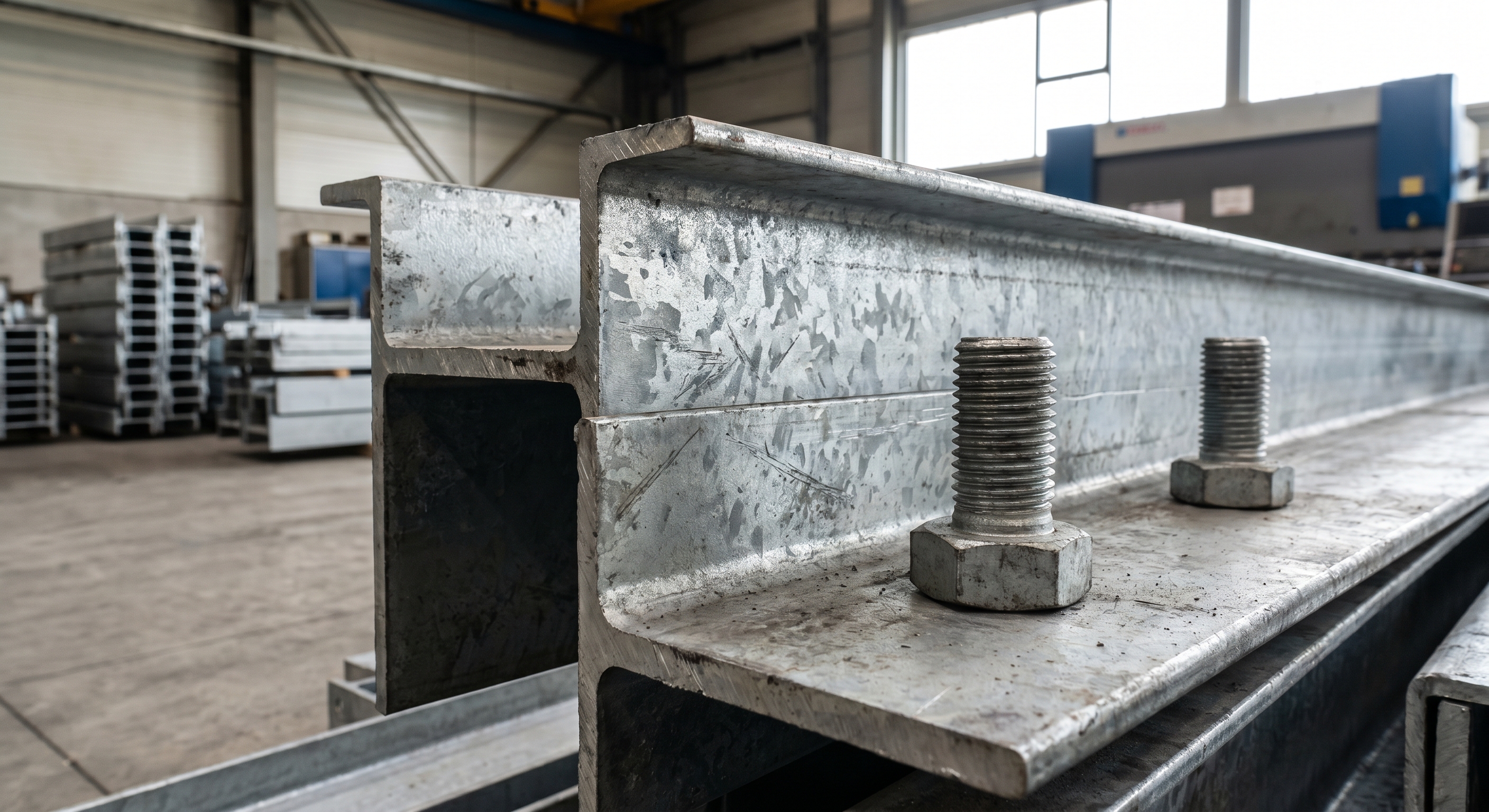
The quality of a steel structure aircraft hangar depends entirely on the grade of steel and the coating systems used for corrosion protection. You should always insist on Q355B or Q235B high-strength steel for the primary columns and rafters. These materials provide the necessary structural rigidity to maintain a massive clear span without sagging or fatigue.
Why is the coating system so important?
In humid or coastal environments, the steel must be protected by hot-dip galvanization or high-performance epoxy painting. This prevents rust from compromising the structural integrity of the building over time. A superior coating ensures the hangar remains professional-looking and safe for its entire service life.
Here is the deal:
- Hot-dip galvanization provides 50+ years of rust protection.
- Epoxy paints resist chemical spills and aviation fuel.
- Proper surface preparation (sandblasting) ensures adhesion.
- Marine-grade coatings are essential for island projects.
What role do secondary structures play?
Purlins, girts, and bracings form the secondary structure that stabilizes the main frame and supports the wall and roof panels. You need galvanized C or Z sections that are precisely manufactured to fit the main frame. These components transfer the environmental loads safely from the skin of the building to the primary foundation.
Look at it this way:
- Galvanized purlins resist corrosion in roof cavities.
- High-strength bracings prevent building sway.
- Precise tolerances make on-site assembly easier.
- Secondary members provide the base for insulation.
Selecting the Best Materials
Choosing the right material standards is the difference between a hangar that lasts a lifetime and one that requires constant repair. High-quality steel is the backbone of your aviation safety.
Key Takeaway: High-grade steel combined with advanced corrosion protection is non-negotiable for a durable aviation facility.
| Material | Standard | Function | |
|---|---|---|---|
| Primary Frame | Q355B H-Section | Load-bearing support | |
| Secondary Frame | Galvanized C/Z | Panel support | |
| Cladding | 0.5mm Steel | Weatherproofing |
Consult the material table below to verify the standards for your hangar project.
What is the Construction Process for a Steel Structure Aircraft Hangar?
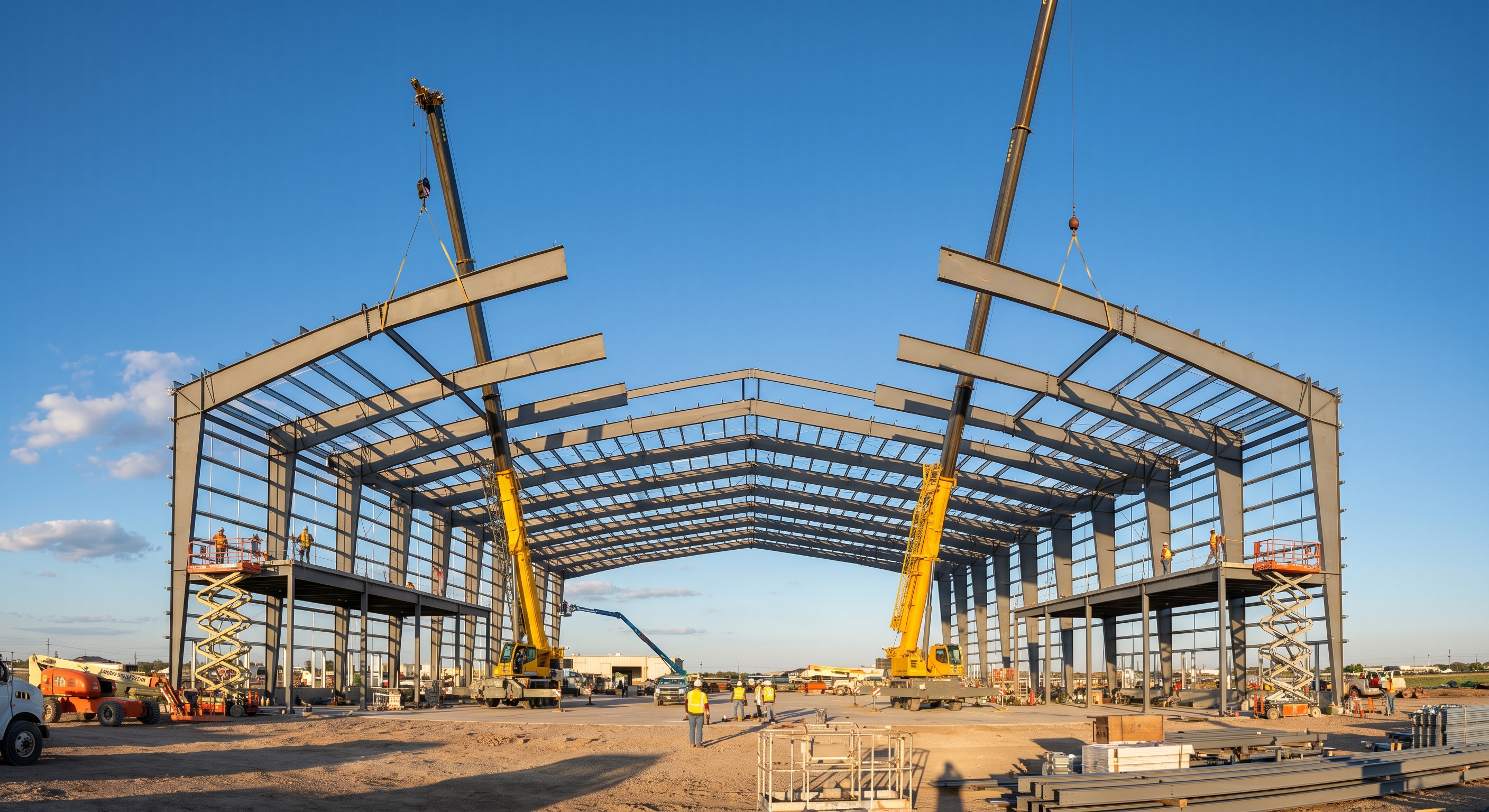
Building a steel structure aircraft hangar is a streamlined process that begins with foundation preparation and ends with the final door installation. You benefit from a sequential workflow where every part is numbered and ready for assembly. This organized approach minimizes on-site errors and keeps your project on a strict timeline.
How is the primary frame erected?
Once the anchor bolts are set in the concrete foundation, cranes lift the columns and rafters into place. These components are bolted together using high-strength hardware, creating the main structural skeleton. This phase is the fastest part of the build and provides an immediate sense of the facility’s scale.
Think about it:
- Anchor bolts must be perfectly leveled.
- High-strength bolts provide rigid connections.
- Cranes allow for the assembly of massive spans.
- Temporary bracing keeps the frame safe during work.
What happens during the enclosure phase?
After the skeleton is complete, technicians install the purlins, followed by the roof and wall panels. This creates a weatherproof envelope, allowing interior work to proceed regardless of the external conditions. The final steps include installing the hangar doors, windows, and specialized ventilation or fire suppression systems.
Here is the deal:
- Overlapping panels prevent water leaks.
- Flashing and gutters manage heavy rainfall.
- Door tracks must be aligned with extreme precision.
- Final inspections verify the torque of every bolt.
Managing the Project Timeline
A structured construction process ensures that you can plan your aircraft movements with confidence. You avoid the “moving target” completion dates common with other building types.
Key Takeaway: A standardized, bolt-together assembly process ensures your hangar is built accurately and on schedule.
| Phase | Duration | Key Outcome | |
|---|---|---|---|
| Foundation | 1-2 Weeks | Structural Base | |
| Erection | 2-3 Weeks | Main Frame Completion | |
| Cladding | 2-2 Weeks | Weatherproof Envelope |
Use this timeline as a general guide for your facility’s construction phases.
Email:sales@showhoo.com.cn
Phone/WhatsApp:+86 186 7895 5927
Can You Customize a Steel Structure Aircraft Hangar for Large Jets?
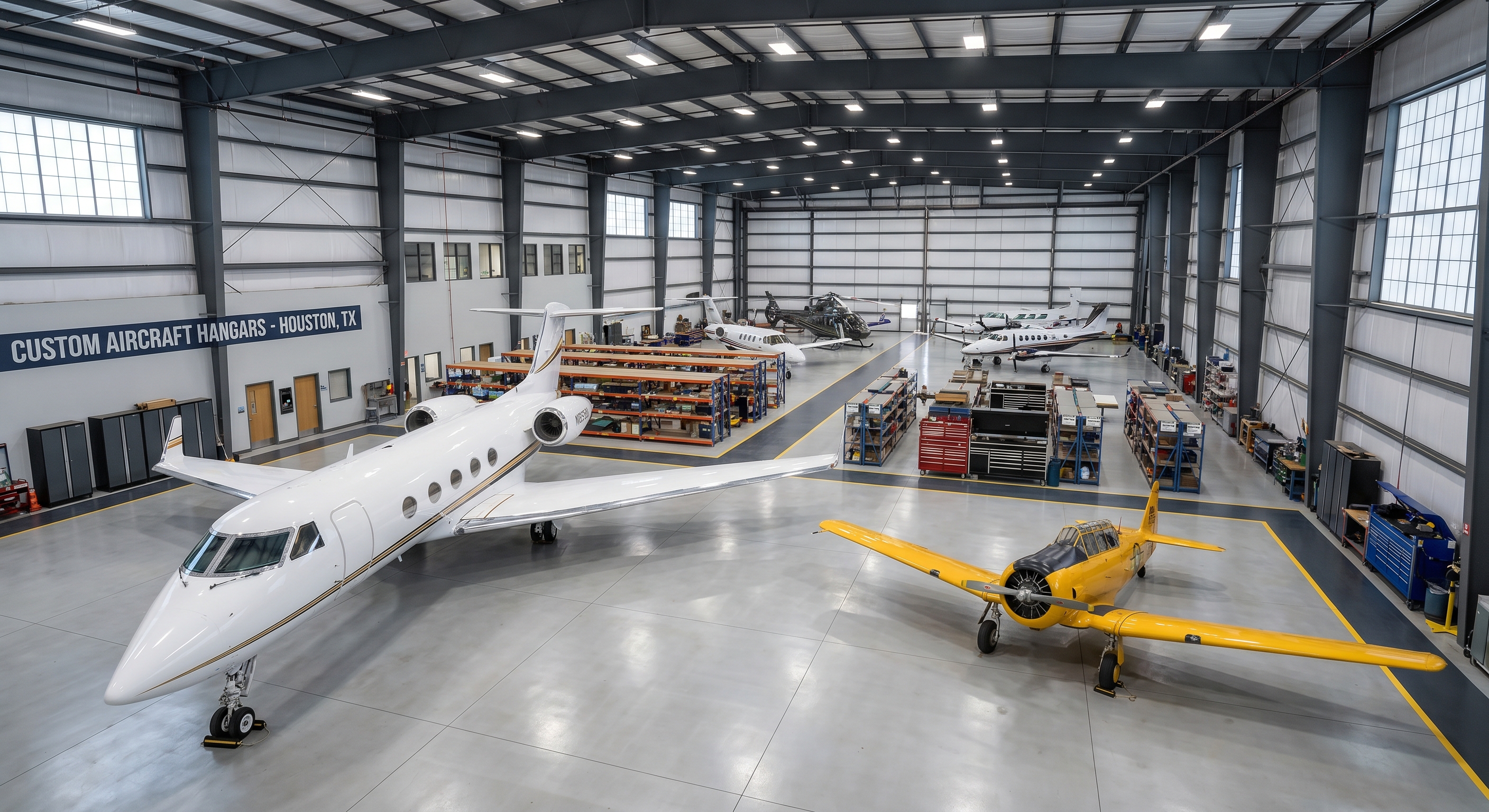
You can fully customize a steel structure aircraft hangar to accommodate commercial wide-body jets or specialized military aircraft. Steel’s inherent strength allows for the extreme eave heights and tail clearances required for the world’s largest planes. You can also integrate interior mezzanines for administrative offices and pilot lounges without losing hangar floor space.
Can you add heavy maintenance equipment?
The steel frame can be reinforced to support overhead bridge cranes for engine swaps and heavy maintenance. You can also design the floor to handle the massive point loads of heavy landing gear. This transformation makes your hangar a comprehensive service hub rather than just a storage facility.
Look at it this way:
- Reinforced columns support overhead cranes.
- Thicker slabs handle heavy-duty aircraft tires.
- Integrated utility trenches keep floors clear.
- Specialized lighting improves maintenance accuracy.
Is it possible to integrate climate control?
For sensitive aircraft, you can specify high-R-value insulation and air-handling systems to maintain a constant temperature and humidity. This is essential for preventing avionics failure and protecting composite airframes from extreme heat. You create a controlled environment that extends the life of your fleet’s components.
Believe it or not:
- Insulated panels provide a thermal barrier.
- Controlled humidity prevents electronic corrosion.
- Large-scale fans improve air circulation.
- Energy-efficient HVAC systems lower costs.
Designing for Bespoke Requirements
Customization ensures that your facility matches your specific workflow and fleet requirements perfectly. You don’t have to settle for a “one size fits all” solution.
Key Takeaway: Steel structures offer the strength and flexibility needed to support heavy maintenance and large-scale jet storage.
| Customization | Purpose | Benefit | |
|---|---|---|---|
| Crane Systems | Engine Maintenance | Faster Turnaround | |
| Mezzanine | Office Space | Efficient Site Use | |
| High-R Panels | Climate Control | Asset Protection |
This table highlights the various ways you can tailor your hangar to your needs.
How to Ensure Long-Term Maintenance for a Steel Structure Aircraft Hangar?
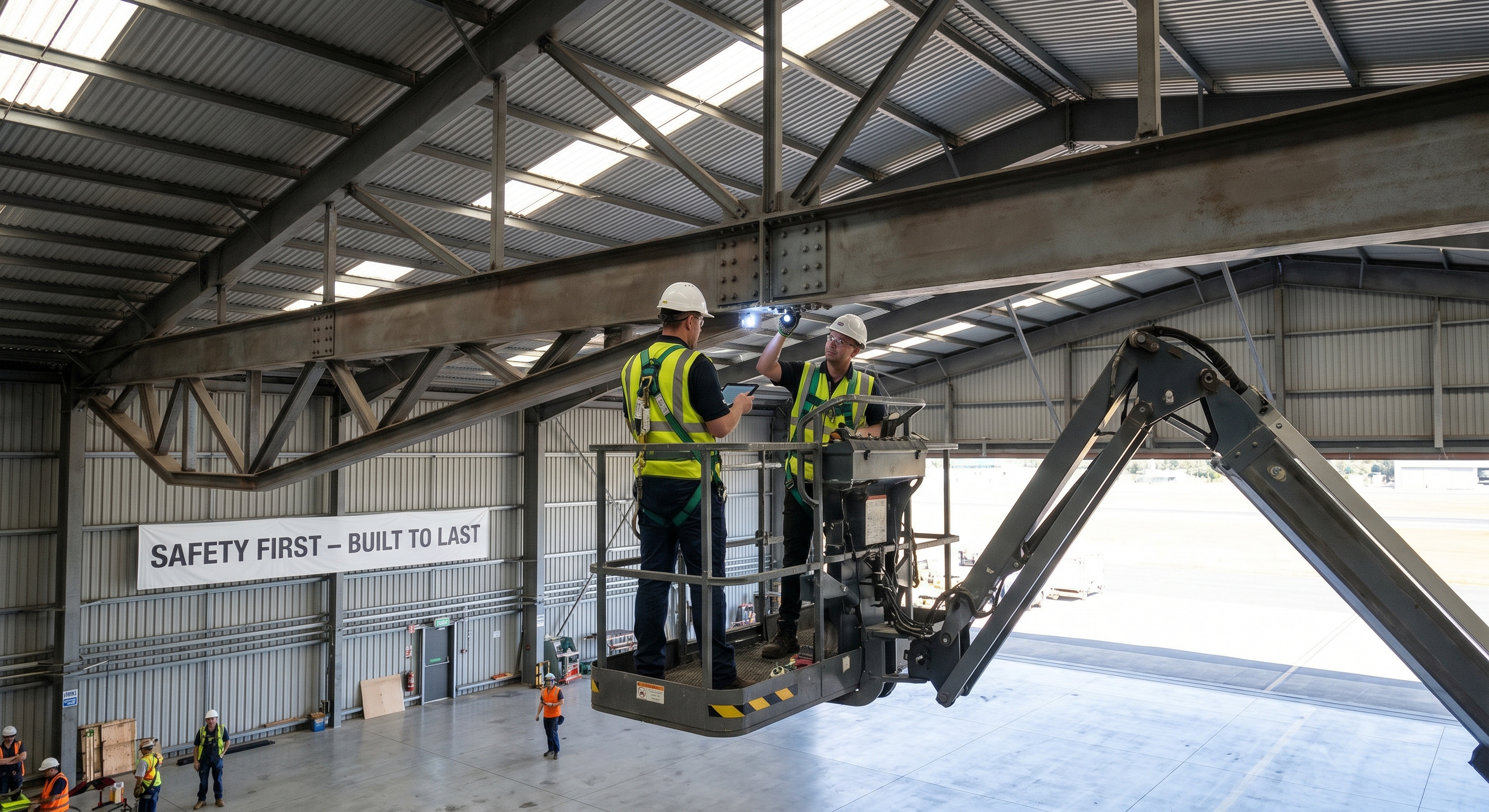
Maintaining your steel structure aircraft hangar is simple but requires a consistent schedule to prevent minor issues from becoming costly repairs. You should perform bi-annual inspections of the roof, fasteners, and door mechanisms to ensure everything is functioning correctly. Proactive care is the most effective way to protect your long-term investment.
What are the most critical maintenance tasks?
Cleaning the gutters and downspouts is essential to prevent water from backing up and causing rust on the roof panels. You should also check the seals on the hangar doors to ensure they are preventing dust and pests from entering the building. These simple steps keep the interior environment pristine and the structure secure.
Think about it:
- Debris removal prevents panel corrosion.
- Door seal checks maintain climate control.
- Lubricating moving parts ensures smooth operation.
- Fastener inspections ensure structural tightness.
How do you handle surface damage?
If the exterior paint or coating is scratched during operations, you should touch it up immediately with the appropriate paint. This prevents oxidation from starting on the exposed steel. While modern coatings are very durable, small repairs now prevent large-scale repainting projects in the future.
In simple terms:
- Touch-up paint prevents localized rusting.
- Regular washing removes salt and industrial pollutants.
- Checking for structural alignment prevents door binding.
- Inspecting insulation ensures thermal efficiency remains.
Staying Ahead of Decay
A well-maintained hangar retains its professional appearance and structural integrity for generations. You ensure that your facility remains an asset rather than a liability.
Key Takeaway: Regular, simple maintenance tasks like gutter cleaning and door lubrication are the keys to a fifty-year hangar life.
| Task | Frequency | Priority | |
|---|---|---|---|
| Gutter Cleaning | Every 6 Months | High | |
| Door Lubrication | Every 3 Months | Medium | |
| Coating Check | Annually | High |
Follow this maintenance schedule to keep your facility in peak condition.
Is a Steel Structure Aircraft Hangar a Good ROI for Your Business?
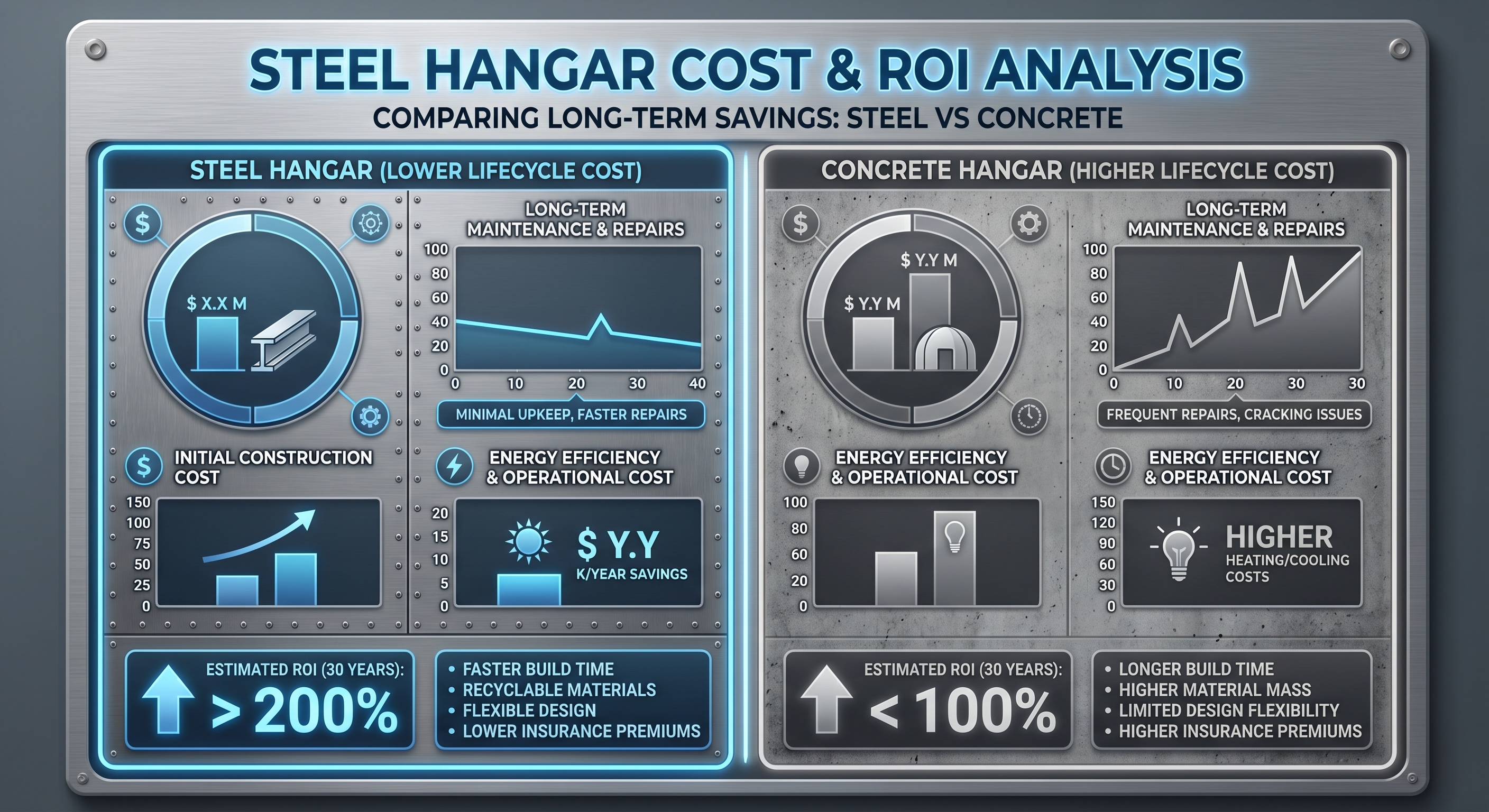
A steel structure aircraft hangar offers a superior return on investment (ROI) due to its durability, energy efficiency, and low operational costs. When you calculate the total landed cost over 30 years, steel consistently outperforms concrete or wood structures. You can find more financial data in our case studies highlighting successful global aviation projects.
How does steel impact insurance and resale?
Because steel is non-combustible and engineered to local codes, insurance companies often offer significantly lower premiums. Additionally, a clear-span steel building is highly versatile and can be sold for a premium if your business needs change. This flexibility provides a financial safety net that other building types cannot offer.
Look at it this way:
- Lower insurance premiums save thousands annually.
- High resale value protects your capital investment.
- Versatile space appeals to many industrial buyers.
- Durable assets are easier to finance through banks.
Can energy savings pay for the building?
Over several decades, the energy savings from using insulated sandwich panels and natural light can cover a significant portion of the construction costs. Reducing your monthly utility bills increases your net profit and makes your operation more competitive. Efficiency is a hidden revenue stream that pays off every month.
Here is the deal:
- High thermal efficiency lowers monthly overhead.
- Daylight integration reduces lighting expenses.
- Long lifespan means fewer replacement costs.
- Low-maintenance design saves on labor budgets.
The Financial Logic of Steel
The combination of low risk, low cost, and high utility makes steel the most profitable choice for aviation storage. You are investing in a productive tool, not just a building.
Key Takeaway: The total lifecycle cost of a steel hangar is lower than any other material, making it the smartest financial choice for your business.
| ROI Factor | Steel Impact | Financial Result | |
|---|---|---|---|
| Maintenance | -40% vs Wood | Higher Profits | |
| Insurance | -25% vs Concrete | Annual Savings | |
| Lifespan | 50+ Years | Asset Longevity |
This analysis demonstrates why steel is the preferred medium for aviation investors.
Where Can I See Successful Steel Structure Aircraft Hangar Cases?
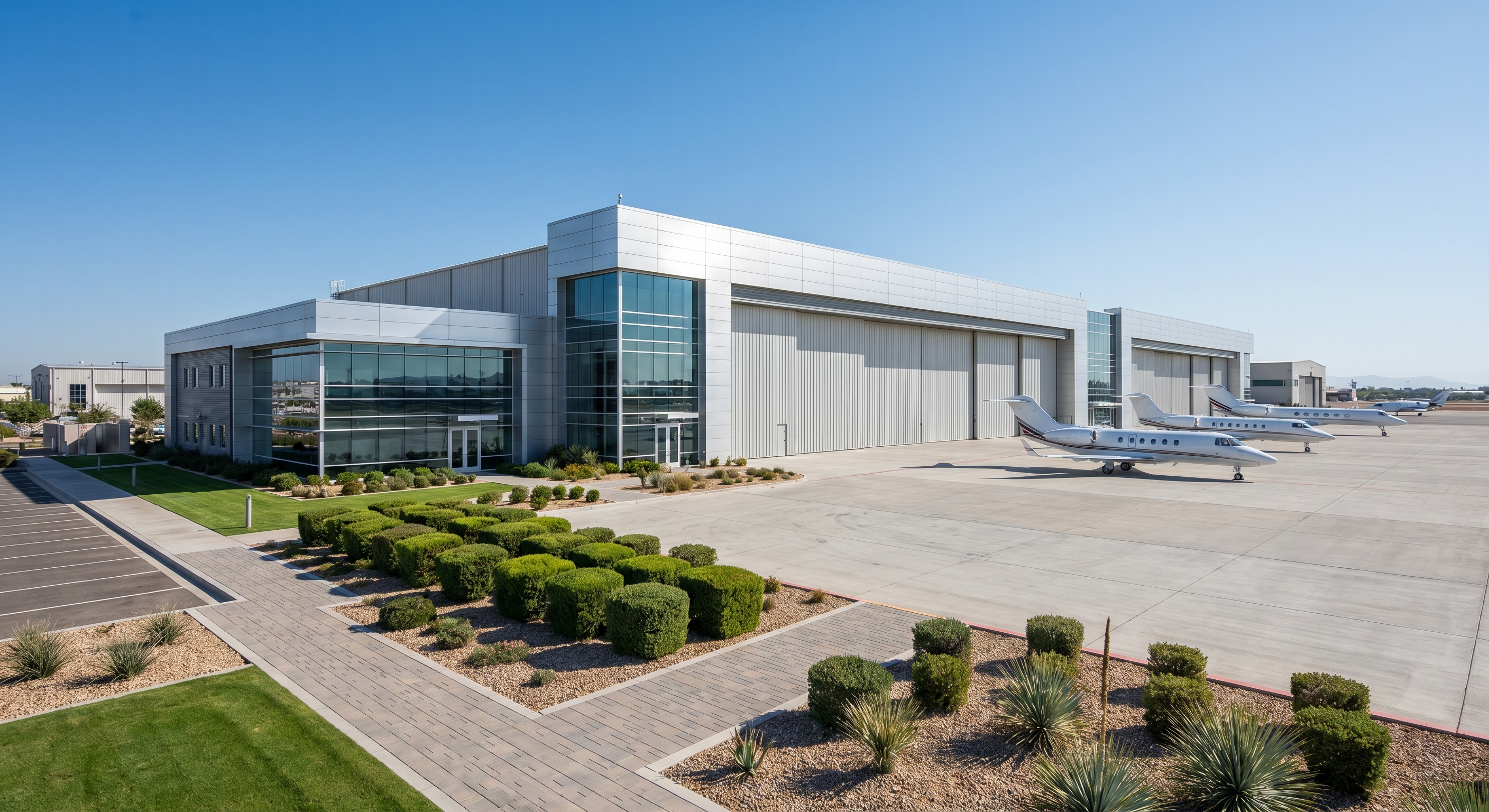
You can explore a wide range of successful steel structure aircraft hangar projects in our case gallery. From private jet facilities in Australia to commercial hangars in the Philippines, these projects prove the adaptability of steel across various climates and industries. Seeing these real-world applications helps you visualize the possibilities for your own project.
Are there examples of large-span projects?
We have completed numerous projects requiring clear spans of 60 meters or more without any interior columns. These cases demonstrate our ability to engineer structures that can handle massive weights while maintaining structural safety. You can review the technical drawings and completion photos to see the precision of our fabrication.
Think about it:
- Wide-span designs allow for flexible fleet storage.
- Successful cases prove engineering reliability.
- Diverse project locations show global experience.
- Detailed case studies provide design inspiration.
How have these hangars performed in extreme weather?
Our case studies include buildings that have survived typhoons and heavy snow events without any structural failure. This track record of performance provides the peace of mind you need when protecting high-value aircraft. You can trust our engineered solutions to stand up to the toughest conditions on earth.
Believe it or not:
- Typhoons in the Philippines didn’t damage our frames.
- Heavy snow in Northern regions was managed easily.
- Marine-grade coatings prevented rust in salt air.
- Seismic-rated designs protected assets in earthquake zones.
Visualizing Your Project Success
By reviewing our previous work, you can gain insights into the best layouts and features for your specific region. We bring global expertise to your local hangar project.
Key Takeaway: Our global portfolio of successful hangar projects demonstrates the reliability and adaptability of our steel engineering.
| Location | Climate Challenge | Steel Solution | |
|---|---|---|---|
| Australia | Extreme UV/Heat | Reflective Panels | |
| Philippines | Typhoon Winds | Reinforced Bracing | |
| Romania | Heavy Snow | High-Pitch Truss |
Review these regional case studies to see how we solve local environmental challenges.
What are Future Trends for the Steel Structure Aircraft Hangar Industry?

The steel structure aircraft hangar industry is evolving toward smarter, more sustainable, and highly automated designs. You will see an increase in “green hangars” that utilize solar-ready roofs and carbon-neutral steel production. Staying ahead of these trends by reading our blog ensures that your facility remains modern and compliant for decades to come.
Is automation the future of hangar doors?
Smart sensors and automated door systems are becoming standard to improve safety and energy efficiency. These systems can detect aircraft proximity and adjust door openings to minimize climate-controlled air loss. This level of integration makes your facility more productive and easier to manage with fewer personnel.
Look at it this way:
- Automated doors reduce the risk of pilot error.
- Smart sensors improve security and access control.
- Climate monitoring systems reduce energy waste.
- Remote management allows for site control via mobile.
Will sustainable materials dominate the market?
The demand for recyclable steel and zero-emission manufacturing is growing as aviation companies focus on ESG goals. Future hangars will likely feature integrated solar panels that turn the massive roof area into a power plant. This transition not only helps the environment but also provides your business with free, clean energy.
In simple terms:
- Solar-integrated roofs lower utility dependence.
- Carbon-neutral steel supports corporate green goals.
- High-efficiency insulation becomes the standard.
- Water-harvesting systems utilize large roof areas.
Preparing for the Next Generation
Adopting these trends today ensures your facility will be relevant in twenty years. You are building for the future of aviation, not just today’s needs.
Key Takeaway: Smart automation and solar integration are transforming steel hangars into high-tech, energy-independent assets.
| Future Trend | Business Impact | Efficiency Gain | |
|---|---|---|---|
| Automation | Lower Labor Costs | +20% Productivity | |
| Solar Power | Energy Independence | -90% Utility Bills | |
| Green Steel | ESG Compliance | Brand Leadership |
Stay ahead of the curve by considering these future-proof features for your project.
Conclusion
Maximizing the efficiency and durability of your aviation facility requires a deep understanding of structural engineering and material science. A steel structure aircraft hangar represents the pinnacle of modern industrial construction, offering the safety, speed, and cost-effectiveness you need to thrive. By choosing a precision-engineered solution, you protect your assets from the elements and ensure a professional environment for your team. We are committed to helping you design and deliver a facility that meets your highest standards. If you are ready to secure your aviation future, contact us today to discuss your project requirements.
Email:sales@showhoo.com.cn
Phone/WhatsApp:+86 186 7895 5927
Steel Hangar FAQ
Can I extend a steel hangar in the future?
Yes, you can easily extend a steel structure by adding additional bays or removing an end wall to attach a new section. The modular, bolt-together design of the frame makes expansion much simpler and more cost-effective than modifying concrete or masonry buildings.
What’s the best coating for coastal areas?
The best coating for coastal environments is hot-dip galvanization combined with a marine-grade paint system. This dual-layer protection prevents salt spray from penetrating the steel and causing rapid oxidation, which is critical for long-term structural safety.
How do I know if the span is wide enough?
You should calculate the span based on your largest aircraft’s wingspan plus a safety clearance of at least 3-5 meters on each side. This buffer prevents ground accidents and provides enough room for maintenance technicians to move equipment around the airframe safely.
Can I install a crane system in my hangar?
Yes, you can integrate overhead bridge cranes or jib cranes into the steel frame by reinforcing the main columns and rafters. This must be specified during the design phase so the structural engineering can account for the dynamic lifting loads and crane runway weights.
What is the maximum clear span available?
With modern engineering and high-strength H-section steel, clear spans can reach over 100 meters without any interior support columns. This allows for the storage and maintenance of massive commercial aircraft while providing a completely unobstructed floor area for your operations.