
Building a high-performance industrial facility begins with a comprehensive steel structure warehouse design that integrates your operational needs with engineering precision. Many business owners struggle with traditional construction methods that are slow, prone to weather delays, and difficult to scale. These inefficiencies can lead to significant capital loss and missed logistical deadlines as your inventory outpaces your storage capacity. By choosing a professional steel structure warehouse design , you ensure a rapid, cost-effective, and durable solution that serves as the backbone of your supply chain.
Why start with a steel structure warehouse design?
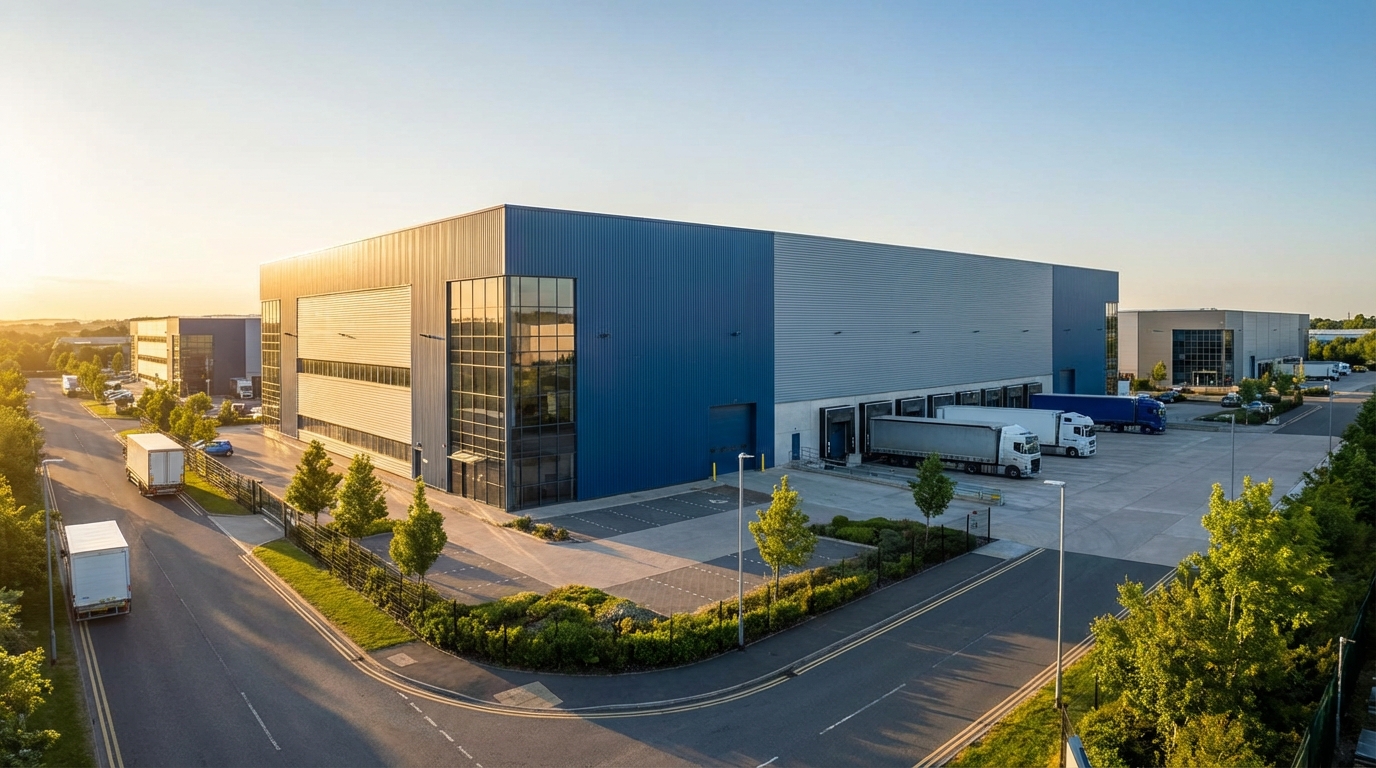
A professional plan serves as the blueprint for balancing structural load requirements with your specific logistical workflow. A specialized steel structure warehouse design allows you to visualize the final product while ensuring every beam and column is optimized for maximum efficiency.
What are the main benefits of prefab systems?
Prefabricated components are engineered in a controlled environment to reduce site labor and material waste. This approach ensures that your building is ready for occupancy in half the time of traditional methods. Check this out:
- Rapid Assembly: Bolted connections allow for quick erection in any weather.
- Cost Efficiency: Minimal waste and lower foundation requirements save capital.
- Eco-Friendly: Steel is 100% recyclable, enhancing your corporate sustainability.
Think about it. A faster build means a faster return on your investment.
How does steel compare to traditional materials?
Steel structures offer clear spans that wood or concrete simply cannot match without massive, intrusive pillars. Modern steel structure warehouse design provides the height and width necessary for heavy-duty racking systems.
- Pest Resistance: Unlike wood, steel is impervious to termites and rot.
- Fire Safety: Non-combustible materials improve the overall safety profile.
- Future-Proofing: Frames are easily modified for mezzanines or expansions.
Key Takeaway: Choosing steel over traditional materials provides a 50+ year lifespan with significantly lower maintenance costs.
| Benefit | Steel Structure | Traditional Wood/Concrete | |
|---|---|---|---|
| Build Speed | 40-50% Faster | Standard Timeline | |
| Clear Span | Up to 40m+ | Limited by Pillars | |
| Durability | High (50+ years) | Medium (Maintenance Intensive) |
Steel’s inherent strength-to-weight ratio allows for larger open spaces that are essential for modern logistics.
How to customize your steel structure warehouse design?
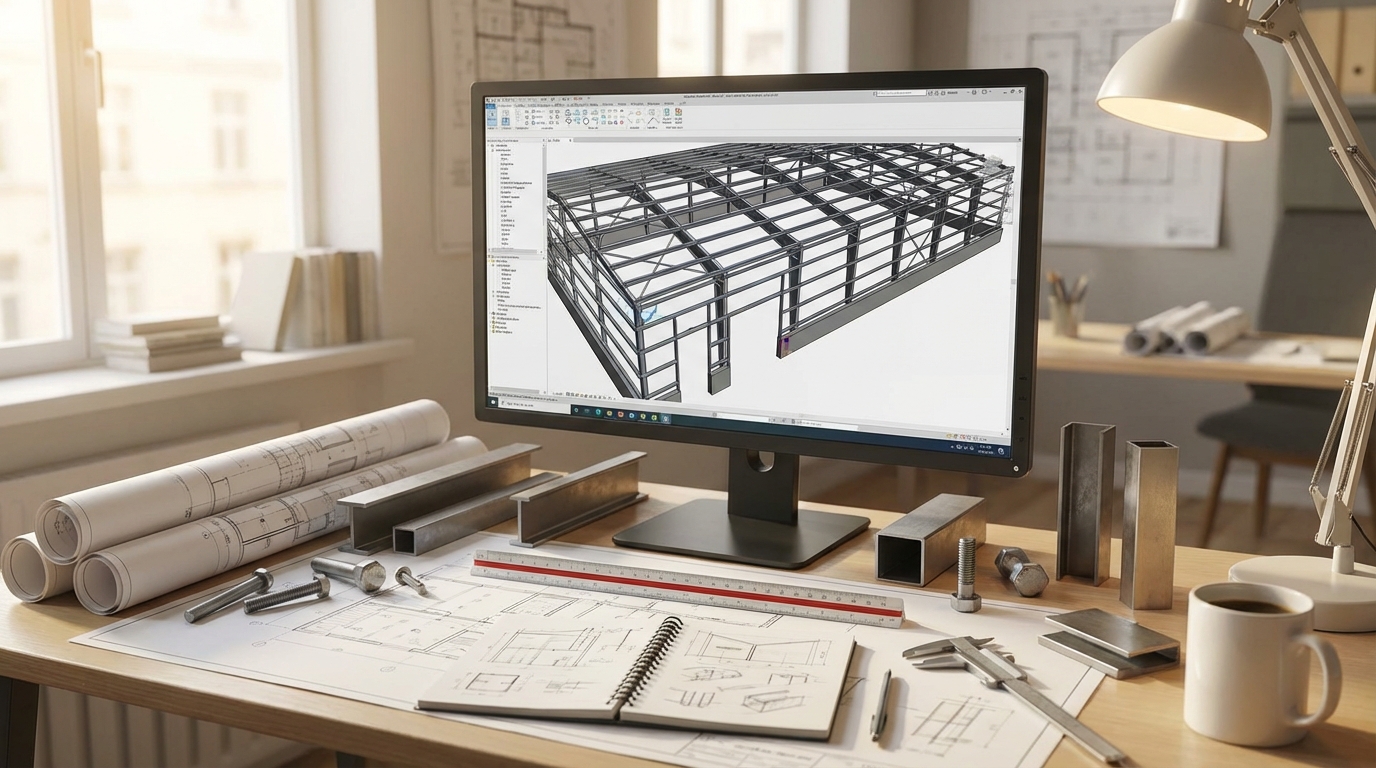
Customization allows you to tailor dimensions, load capacities, and aesthetic finishes to your specific business operations. By reviewing steel structure warehouse design cases, you can identify which configurations best suit your local site constraints and inventory types.
How do you define operational requirements?
Every successful project starts with a layout that prioritizes your daily workflow rather than forcing your business to fit the building. You must consider the specific movement of goods from receiving to shipping.
- Ceiling Height: Determine stacking heights for high-bay pallet racking.
- Loading Bays: Plan for truck traffic and dock leveler integration.
- Climate Needs: Decide if you require full insulation or simple ventilation.
Here is the deal: one size never fits all in the industrial sector.
Why is dimension precision so important?
Precision in the initial steel structure warehouse design prevents expensive “space wastage” or structural overloading issues later. Modern BIM software ensures every bolt hole aligns perfectly before the steel even leaves the factory.
- Width vs. Length: Optimizing the ratio reduces the number of heavy frames.
- Column Placement: Minimizing interior obstacles for forklift maneuverability.
- Vertical Volume: Utilizing height to increase storage without more land.
Key Takeaway: Customized dimensions ensure that every square meter of your facility contributes to your bottom line.
| Design Factor | Customization Impact | Operational Benefit | |
|---|---|---|---|
| Bay Spacing | Optimizes purlin count | Reduces material costs | |
| Eave Height | Increases vertical volume | Higher storage density | |
| Clear Span | Removes internal columns | Total floor flexibility |
Tailoring the building to your specific needs avoids the common trap of paying for unused or inefficient space.
Which steel is best for steel structure warehouse design?
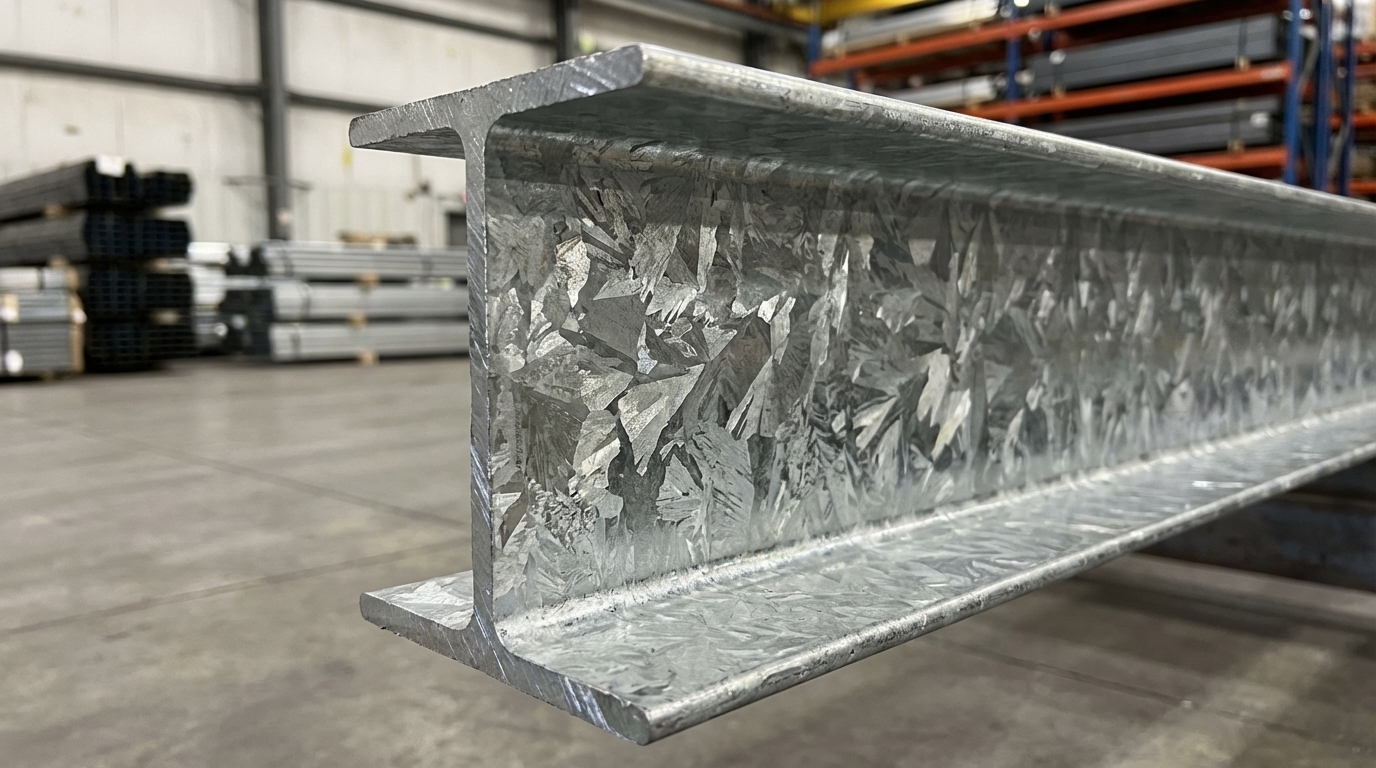
High-strength Q355B steel is the industry standard for primary frames due to its excellent balance of tensile strength and ductility. Integrating this material into your steel structure warehouse design ensures the building can withstand heavy snow, high winds, and seismic activity.
Why choose high-strength Q355B steel?
Q355B steel provides the structural backbone necessary for wide spans and heavy load-bearing requirements. It is designed to handle the stresses of industrial environments without compromising the building’s footprint.
- Ductility: Allows the structure to absorb energy during seismic events.
- Weldability: Ensures factory joints are as strong as the beams themselves.
- Efficiency: Thinner profiles can handle higher loads, reducing foundation stress.
You might be wondering: does steel grade really matter? Absolutely, as it dictates the safety and longevity of your asset.
How do you protect against corrosion?
For a steel structure warehouse design to last for decades, you must apply professional corrosion protection. Options range from standard industrial primers to high-performance hot-dip galvanization for coastal regions.
- Hot-Dip Galvanizing: Provides a thick, self-healing zinc coating.
- Sandblasting: Prepares the surface to ensure maximum paint adhesion.
- Cladding Protection: Aluzinc coatings on roof panels prevent rust.
Key Takeaway: Using Q355B steel combined with proper surface treatment is the most reliable way to ensure structural longevity.
| Component | Material Grade | Primary Protection | |
|---|---|---|---|
| Primary Beams | Q355B H-Section | Paint or Galvanization | |
| Roof Purlins | Q235B C/Z Section | Galvanized Coating | |
| Wall Panels | Color Steel/Sandwich | Aluzinc & PE Paint |
Selecting the right materials early prevents structural fatigue and high maintenance costs in the future.
Is single or multi-span steel structure warehouse design better?
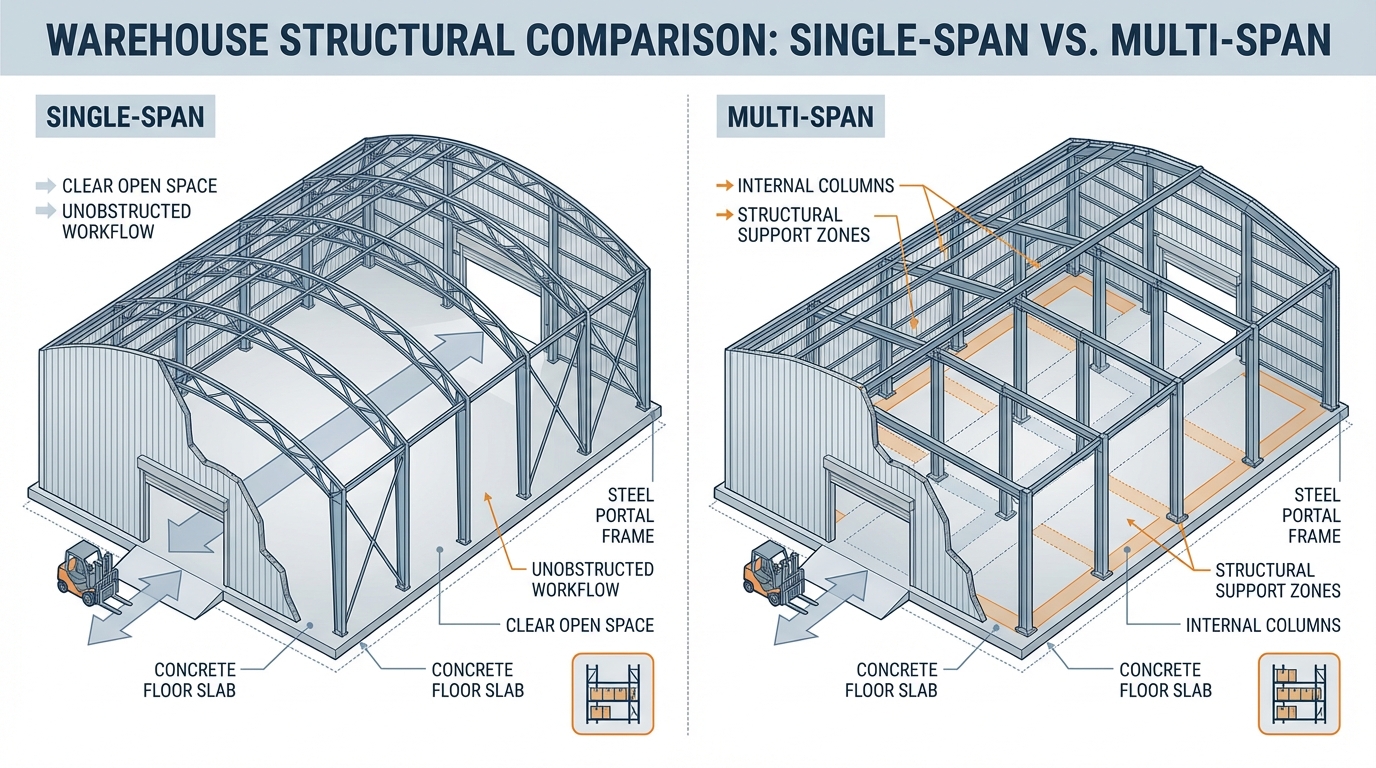
Clear-span designs are best for total flexibility, while multi-span designs offer significant cost savings for very wide facilities. Choosing the right steel structure warehouse design depends on whether you value unobstructed floor space or a lower total tonnage of steel.
What are the advantages of clear-span?
A clear-span design provides a completely open interior without any support columns, which is essential for large-scale logistics. This configuration allows for the most efficient use of automated storage systems.
- Maximum Mobility: No columns for forklifts or machinery to hit.
- Total Flexibility: Rearrange your entire racking layout at any time.
- Large Spans: Achieve widths of up to 40 meters without internal support.
But wait, there’s more: these designs are ideal for aircraft hangars and sports complexes too.
When is a multi-span design more efficient?
For buildings wider than 60 meters, a multi-span steel structure warehouse design is often more economical. By introducing a few interior columns, the size and weight of the primary roof beams can be reduced.
- Material Savings: Lower total steel weight per square meter.
- Enhanced Stability: Better load distribution for massive facilities.
- Zoning: Columns can naturally divide different warehouse departments.
Key Takeaway: Use single-span for flexibility under 40m and multi-span for cost-efficiency in ultra-wide structures.
| Span Type | Typical Width | Best Application | |
|---|---|---|---|
| Single-Span | 20m – 40m | Logistics, Sports, Hangars | |
| Multi-Span | 60m+ | Large Factories, Bulk Storage |
Choosing between these options is a strategic decision that balances upfront material costs with long-term operational freedom.
How to optimize layout in steel structure warehouse design?
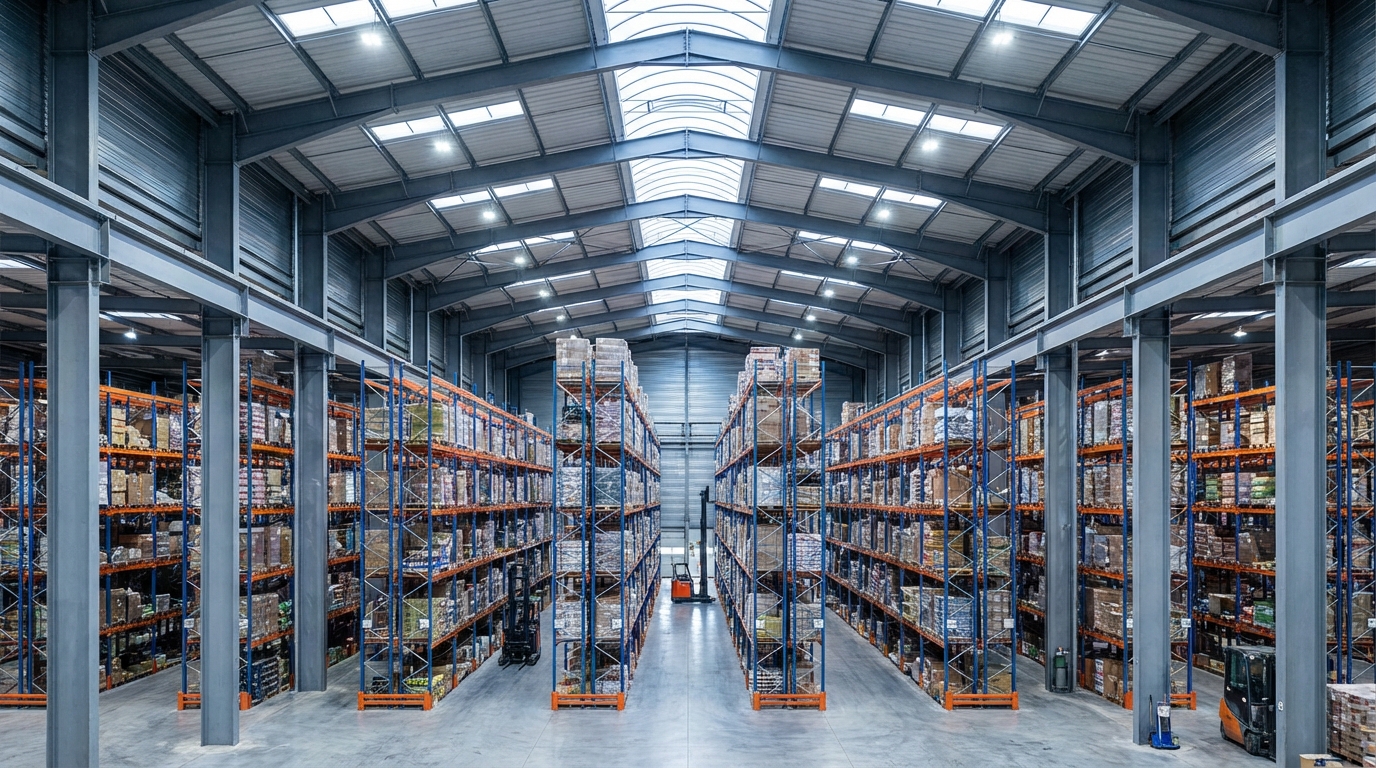
A streamlined layout ensures that goods, personnel, and machinery move through your facility with zero bottlenecks. Your steel structure warehouse design should prioritize a “one-way” logical flow from the receiving docks to the shipping area.
How do you plan strategic flow?
Efficiency is born from minimizing the number of times a product is touched before it leaves the warehouse. You must map your pathways before a single bolt is tightened on-site.
- Dedicated Zones: Separate high-turnover items from long-term stock.
- Aisle Optimization: Design widths to match your specific forklift radius.
- Dock Access: Ensure ample room for trucks to maneuver in the yard.
Keep this in mind: a poor layout can kill your productivity before you even begin operations.
Can you maximize vertical storage space?
One of the greatest benefits of a modern steel structure warehouse design is the ability to build “up” rather than “out.” Increasing your eave height allows you to triple your storage capacity on the same land footprint.
- High-Bay Racking: Utilize the full vertical volume of the building.
- Mezzanine Integration: Add second-floor offices or small-part picking areas.
- Slab Engineering: Ensure the concrete floor can handle heavy rack loads.
Key Takeaway: Verticality and logical flow are the two most important factors in high-performance warehouse planning.
| Warehouse Zone | Function | Design Priority | |
|---|---|---|---|
| Receiving | Goods Intake | Fast Access & Inspection | |
| Storage | Core Inventory | Vertical Density & Safety | |
| Shipping | Outbound Orders | Loading Speed & Accuracy |
Maximizing your vertical space is significantly cheaper than purchasing more land or expanding the building’s foundation.
What makes a green steel structure warehouse design?
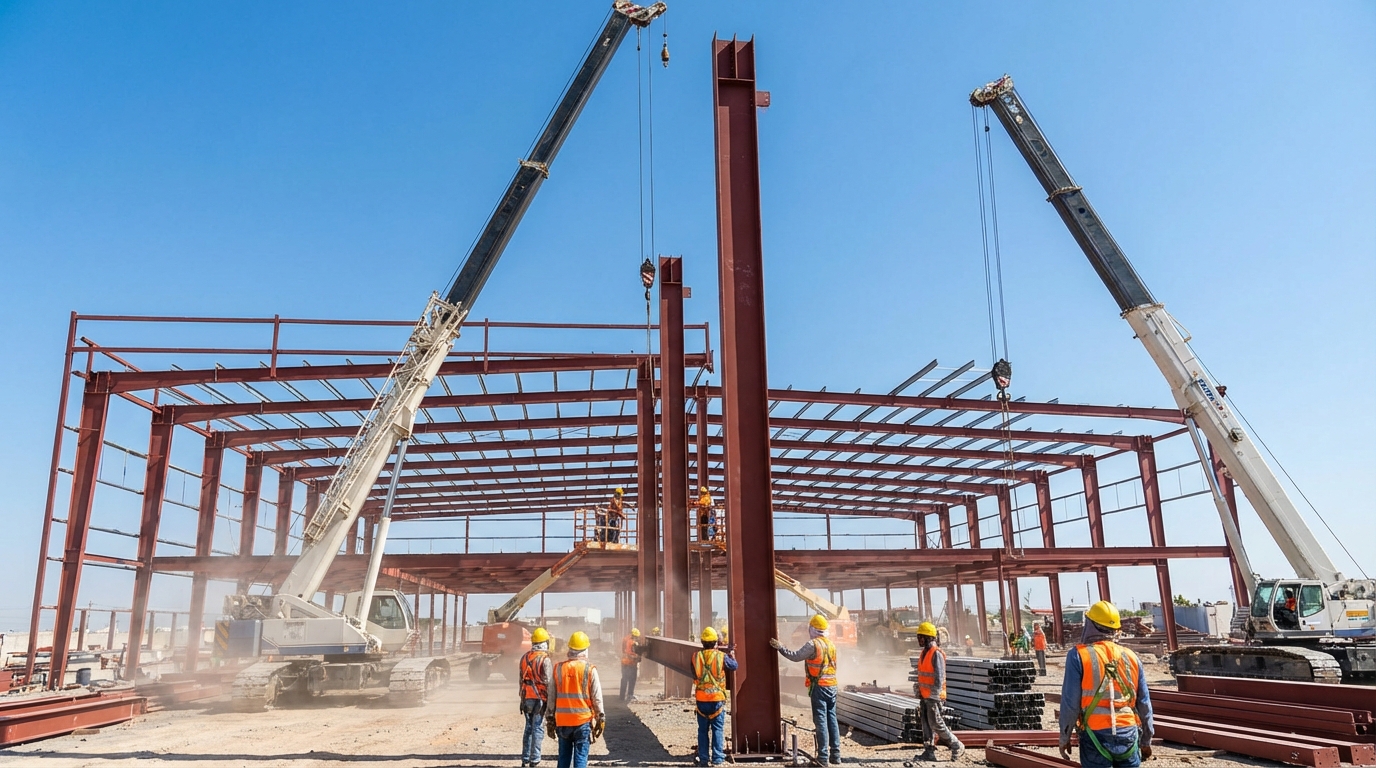
Sustainable design focuses on using recyclable materials and high-performance insulation to reduce the building’s lifecycle carbon footprint. Understanding the steel structure warehouse design philosophy behind green buildings helps you save on energy costs while protecting the environment.
Why is steel a sustainable material?
Steel is the most recycled material on the planet, making it the perfect choice for an eco-conscious warehouse. Unlike concrete, a steel building can be completely disassembled and reused at the end of its life.
- Zero Waste: Precision factory cutting ensures no scrap is sent to landfills.
- Lower Impact: Lighter structures require less intensive, carbon-heavy foundations.
- 100% Recyclable: The entire frame can be melted down and repurposed.
It gets better: going green often qualifies your business for significant tax incentives and “green building” certifications.
How do insulation systems save energy?
A sustainable steel structure warehouse design must include high-performance cladding to manage internal temperatures. Using PU or Rockwool sandwich panels dramatically reduces the energy needed for climate control.
- Natural Lighting: Skylights reduce the need for electric lighting during the day.
- Thermal Breaks: Prevents heat from transferring through the steel frame.
- Cool Roofs: Reflective coatings prevent the building from overheating in summer.
Key Takeaway: Green design balances high-recycled content steel with energy-efficient panels to lower operational overhead.
| Green Feature | Primary Benefit | Economic Impact | |
|---|---|---|---|
| Skylights | Reduced Lighting Use | Lower Electricity Bills | |
| Sandwich Panels | Thermal Regulation | 30-40% HVAC Savings | |
| Recycled Steel | Lower Carbon Footprint | Enhanced Brand Equity |
Investing in green technology today prevents your facility from becoming an energy-draining liability in the future.
How to ensure safety in steel structure warehouse design?
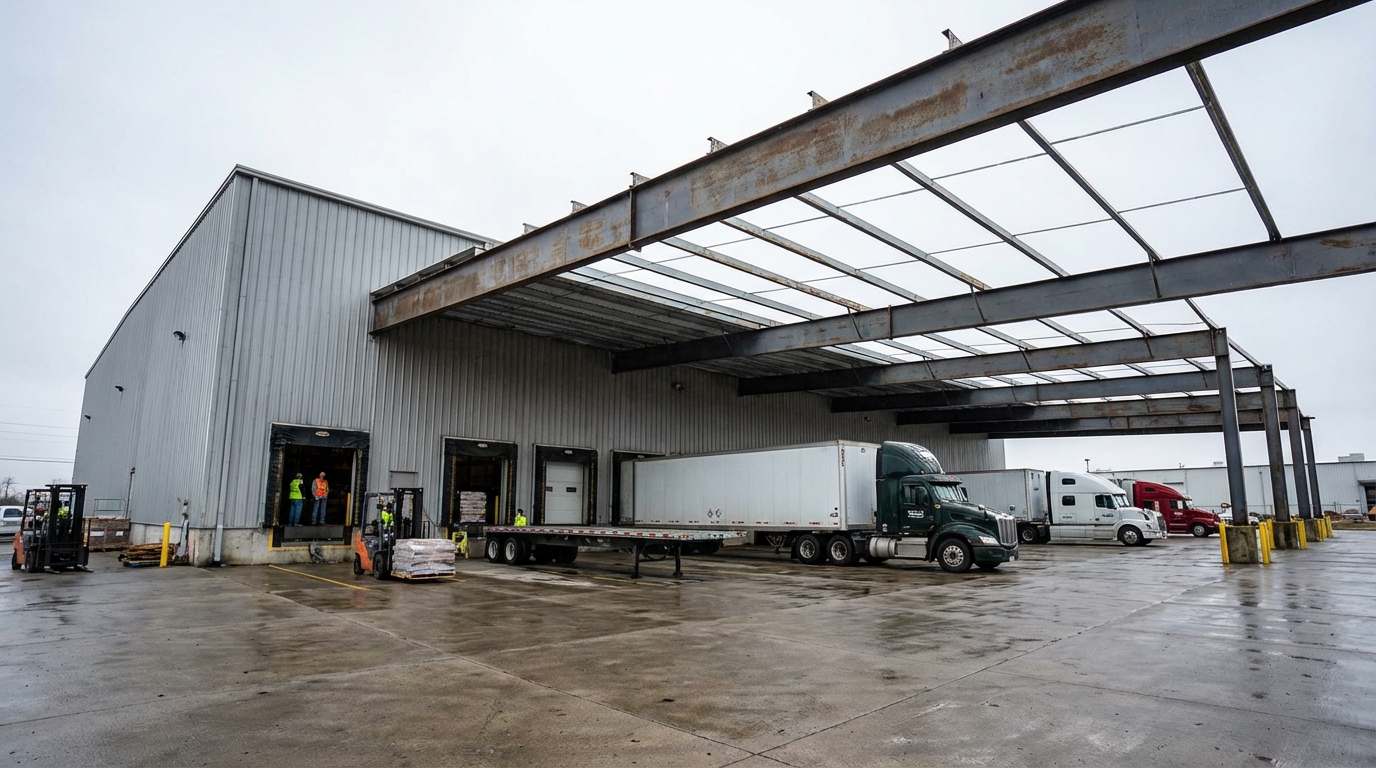
Safety is integrated through fire suppression systems, proper ventilation, and structural bracing that meets international building codes. A robust steel structure warehouse design protects your two most valuable assets: your employees and your inventory.
What are the fire safety requirements?
While steel is non-combustible, it can lose structural integrity in extreme heat, making fire-rated coatings and sprinklers vital. Your design must include clear, unobstructed emergency routes.
- Sprinkler Integration: Pre-planned mounting points for automated systems.
- Fire Walls: Use non-combustible panels to compartmentalize large spaces.
- Exit Signage: Ensure every worker can find safety during a power failure.
Safety first: compliance with local codes is the bare minimum; professional designs aim for total risk mitigation.
How does ventilation improve safety?
If your steel structure warehouse design involves storing chemicals or operating heavy machinery, air quality becomes a major concern. Proper airflow prevents the buildup of toxic fumes and manages humidity levels.
- Ridge Vents: Allow hot, stale air to escape through the roof peak.
- Powered Exhausts: Forced air systems for high-frequency operations.
- Wall Louvers: Ensure a constant supply of fresh air at the ground level.
Key Takeaway: Fire protection and air quality are non-negotiable components of a safe, compliant industrial facility.
| Safety System | Function | Maintenance Level | |
|---|---|---|---|
| Fire Sprinklers | Immediate Suppression | Annual Inspection | |
| Ridge Vents | Passive Cooling | Low Maintenance | |
| Seismic Bracing | Structural Integrity | Post-Event Check |
A safe warehouse environment reduces insurance premiums and increases worker productivity by providing a comfortable atmosphere.
Why plan for growth in steel structure warehouse design?
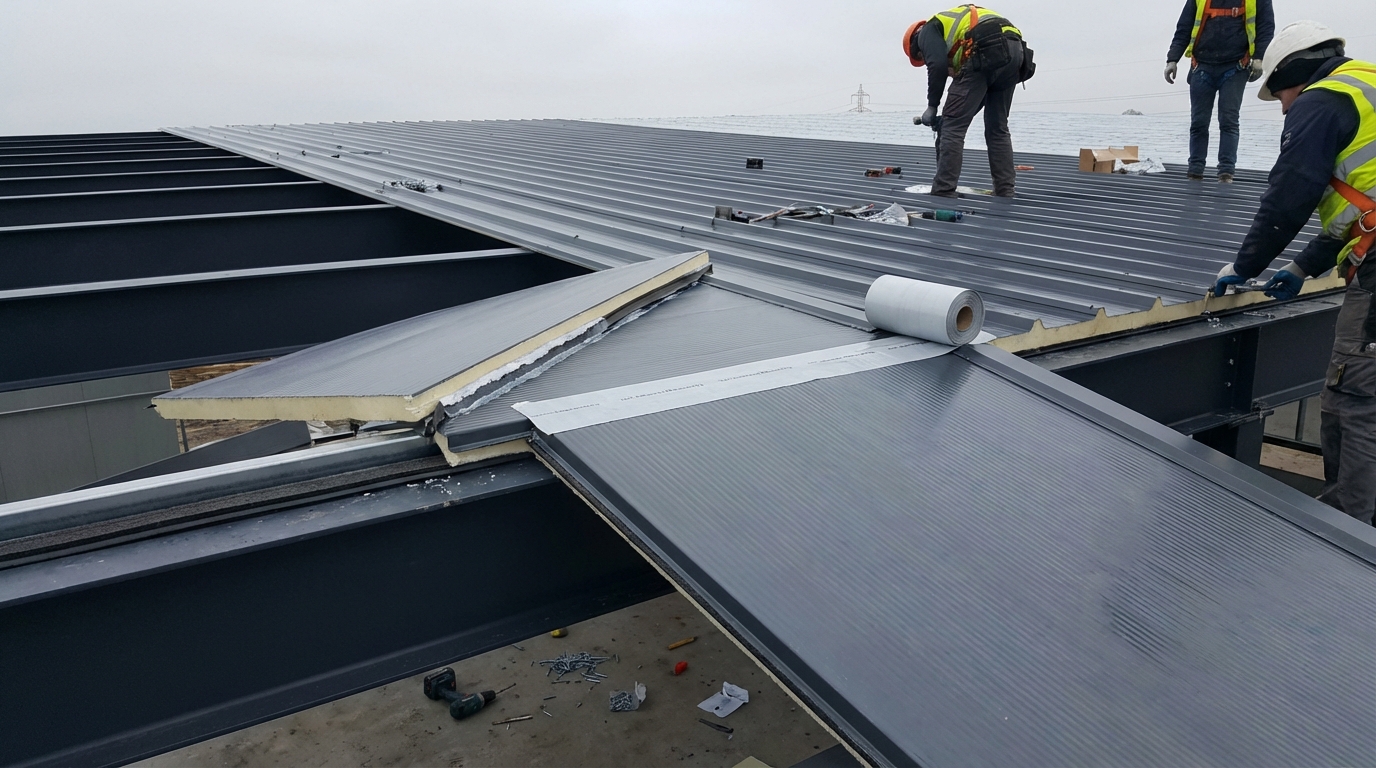
Planning for growth ensures that your building can be expanded modularly without halting your current business operations. A smart steel structure warehouse design uses “expandable” end-walls that allow you to add new bays as your market share increases.
What is modular engineering?
The beauty of steel is its modularity; you can literally bolt on new sections to your existing building. This ensures your steel structure warehouse design remains a flexible asset that grows alongside your success.
- Removable End-Walls: Designed to be taken down and moved to the new far end.
- Standardized Parts: New beams will match the original engineering perfectly.
- Bolt-On Kits: No heavy welding or cutting is required for future additions.
Think ahead: it is much cheaper to design for growth now than to “hack” an addition later.
How do you prepare foundations for expansion?
A truly professional steel structure warehouse design looks at the ground first. If you anticipate adding a second floor or a heavy crane in five years, the foundations should be poured to handle that load today.
- Oversized Footings: Prepared to handle future mezzanine levels.
- Site Layout: Ensure you have enough land clearance for future bays.
- Utility Capacity: Install larger mains to handle future machinery needs.
Key Takeaway: Modular framing and reinforced foundations turn your warehouse into a flexible, lifelong business asset.
| Growth Strategy | Action Item | Long-Term Benefit | |
|---|---|---|---|
| Expandable Frames | Use specific end-wall kits | 50% lower expansion cost | |
| Foundation Prep | Over-engineer footings | Ready for vertical growth | |
| Site Planning | Strategic utility nodes | Zero operational downtime |
Preparing your “bones” for expansion ensures you won’t be held back by your physical space when your business takes off.
Can tech improve your steel structure warehouse design?
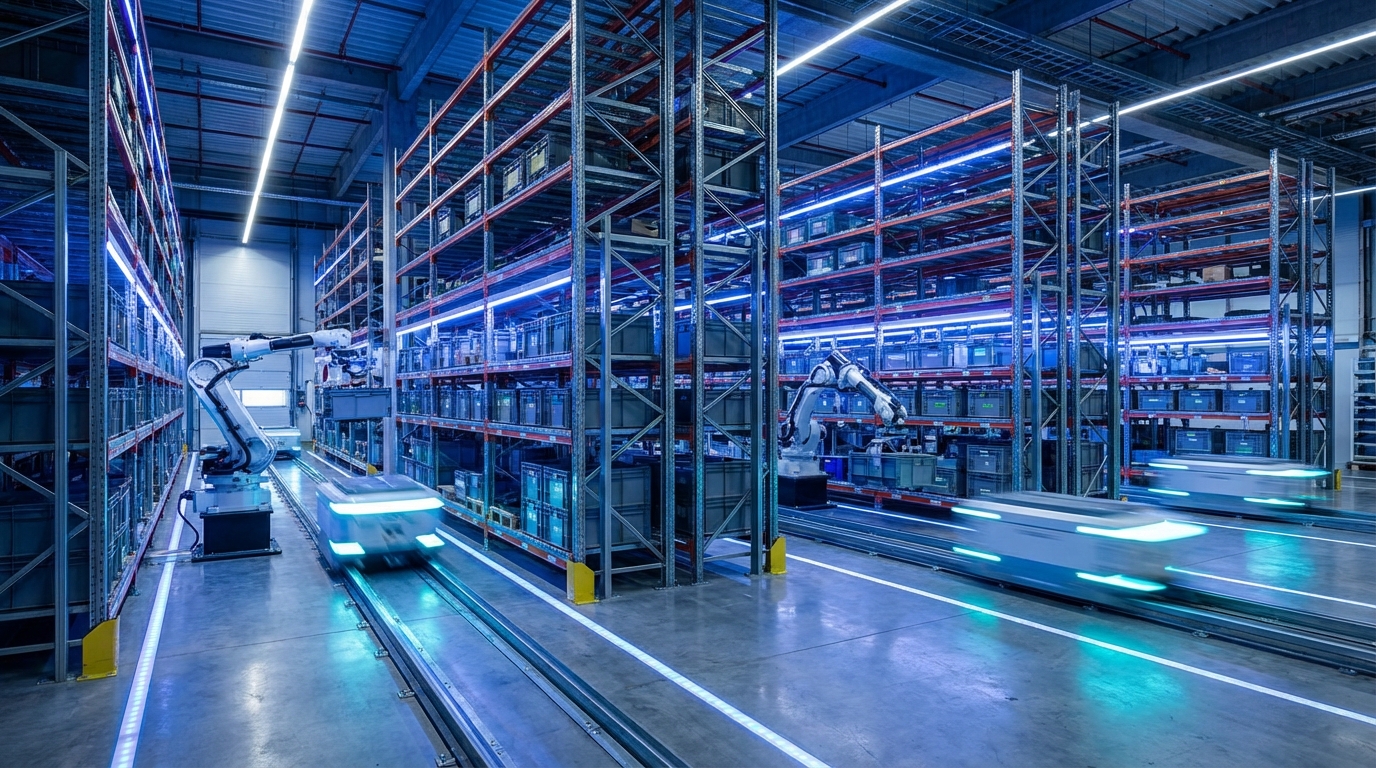
Modern technology transforms a simple steel shell into a high-efficiency logistical engine capable of automated sorting and retrieval. Integrating tech into your steel structure warehouse design allows you to stay competitive in the age of e-commerce and rapid delivery.
What is AS/RS integration?
Automated Storage and Retrieval Systems (AS/RS) require extreme precision in the steel frame and floor flatness to function correctly. Your steel structure warehouse design must account for these tight tolerances from day one.
- Rack-Supported Frames: The storage racks themselves act as the building’s support.
- Millimeter Accuracy: Steel components are manufactured with laser precision.
- Data Conduits: Pre-planned paths for high-speed internet and sensors.
The reality is: automation is the future. If your building isn’t tech-ready, it will be obsolete within a decade.
How do smart sensors save money?
A “smart” steel structure warehouse design utilizes motion sensors and automated climate controls to slash utility bills. These systems ensure that you are only lighting and cooling the areas where workers are currently active.
- Smart LEDs: Only illuminate active aisles, saving up to 60% on power.
- Zoned HVAC: Cooling is directed only to occupied zones or sensitive inventory.
- Remote Monitoring: Track building health and energy use via a smartphone app.
Key Takeaway: Technology transforms your warehouse from a passive storage space into an active, high-efficiency asset.
| Technology | Requirement | Primary Benefit | |
|---|---|---|---|
| AS/RS | High-Precision Frame | 3x Higher Storage Density | |
| Smart Sensors | Integrated Network | 40% Energy Reduction | |
| WMS Systems | High-Speed Wi-Fi | Real-Time Inventory Tracking |
Check this out: smart buildings aren’t just for skyscrapers; they are the new standard for modern industrial facilities.
What are common FAQs on steel structure warehouse design?
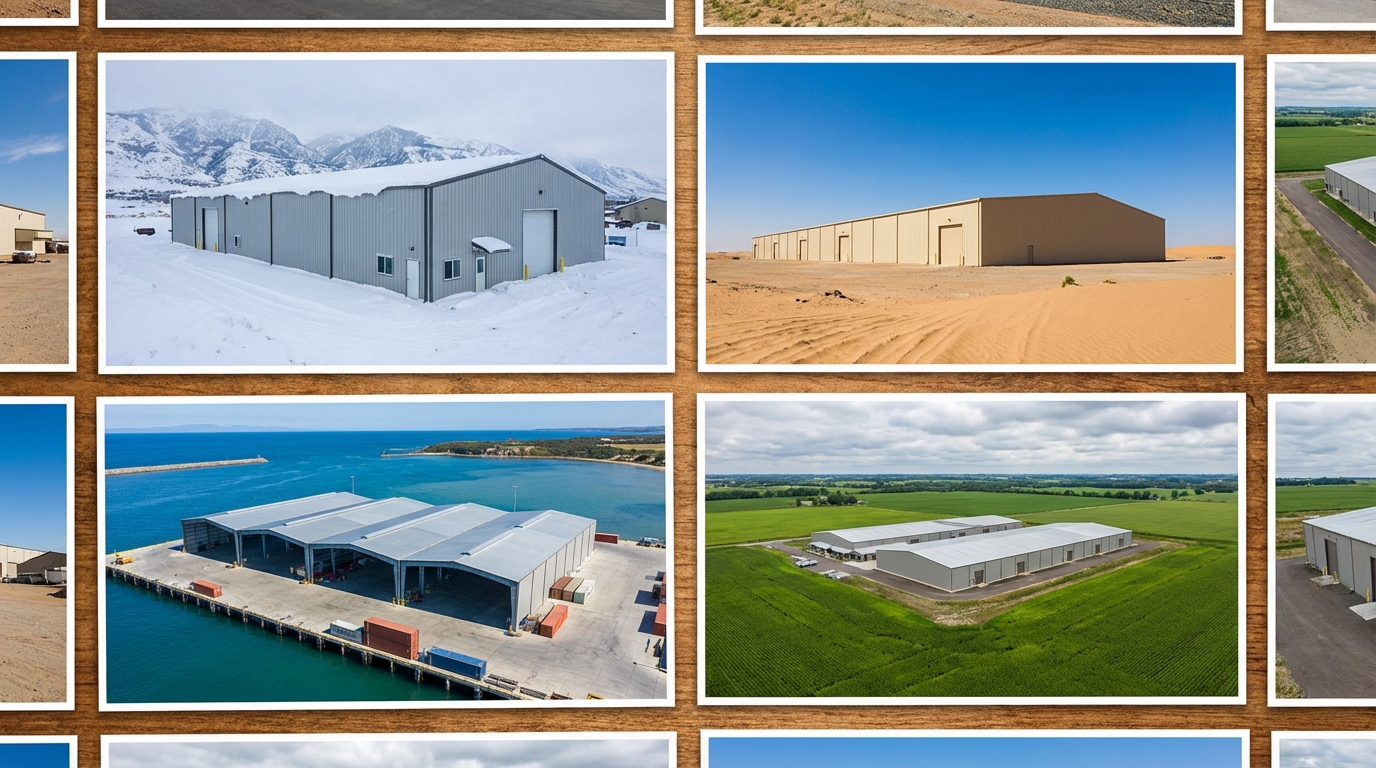
Most questions focus on the timeline, cost, and long-term durability of the facility compared to traditional builds. By consulting experts during the steel structure warehouse design phase, you can clarify expectations and set a realistic budget for your project.
5 Specific Reader-Focused Questions
1. Can I install a heavy-duty crane in a prefab warehouse?Yes, it is common to integrate crane beams and reinforced columns. A professional steel structure warehouse design can be engineered to support crane loads from 5 to 50 tons depending on your industrial needs.
2. How long does the design and fabrication process take?Typically, the design phase takes 1-2 weeks, followed by 4-6 weeks for factory fabrication. This is significantly faster than traditional methods, where material procurement alone can take months.
3. Is steel more expensive than wood for small warehouses?While the upfront material cost for steel can be higher, the lower labor costs and long-term durability make it the more affordable choice. Steel requires much less maintenance and has lower insurance premiums over its lifetime.
4. How does the building handle extreme weather like hurricanes?Engineers customize the steel structure warehouse design based on your local wind, snow, and seismic codes. High-tensile steel and robust cross-bracing ensure the structure remains stable even in winds exceeding 150 km/h.
5. Do I need specialized contractors to build a steel warehouse?Most prefab kits come with detailed manuals and videos that allow local general contractors to complete the assembly. However, hiring a team experienced in steel erection can further speed up the process and ensure perfect alignment.
Key Takeaway: Professional planning and high-quality materials are the two pillars of a successful industrial building project.
| Phase | Timeline | Primary Goal | |
|---|---|---|---|
| Design | 1-2 Weeks | Optimization & Engineering | |
| Fabrication | 4-6 Weeks | Precision Manufacturing | |
| Installation | 4-8 Weeks | Rapid Site Assembly |
Investing time in the design phase ensures a smooth construction process and a building that serves your business for decades.
Summary of Benefits:Choosing a steel structure warehouse provides unparalleled speed, cost-efficiency, and flexibility. By focusing on high-strength materials like Q355B steel and a layout optimized for vertical storage, you create a high-performance asset that grows with your company. From fire safety and green energy features to automated storage integration, these buildings represent the pinnacle of modern industrial engineering.
Ready to take the next step in your expansion? To get a custom quote or speak with an engineering expert about your specific project, contact us today.