
Selecting the right metal building insulation involves weighing options like fiberglass, reflective foil, and insulated metal panels against specific R-value requirements and regional labor costs to ensure long-term thermal efficiency. Without a proper thermal barrier, your steel facility remains vulnerable to the harsh reality of extreme internal temperature fluctuations. These swings not only make the environment unbearable for workers but also trigger the “sweat” effect where moisture accumulates on cold surfaces. Integrating high-performance warehouse roof insulation is the definitive solution to stabilize your indoor climate and protect your structural investment from moisture-driven decay.
Why invest in warehouse roof insulation systems?
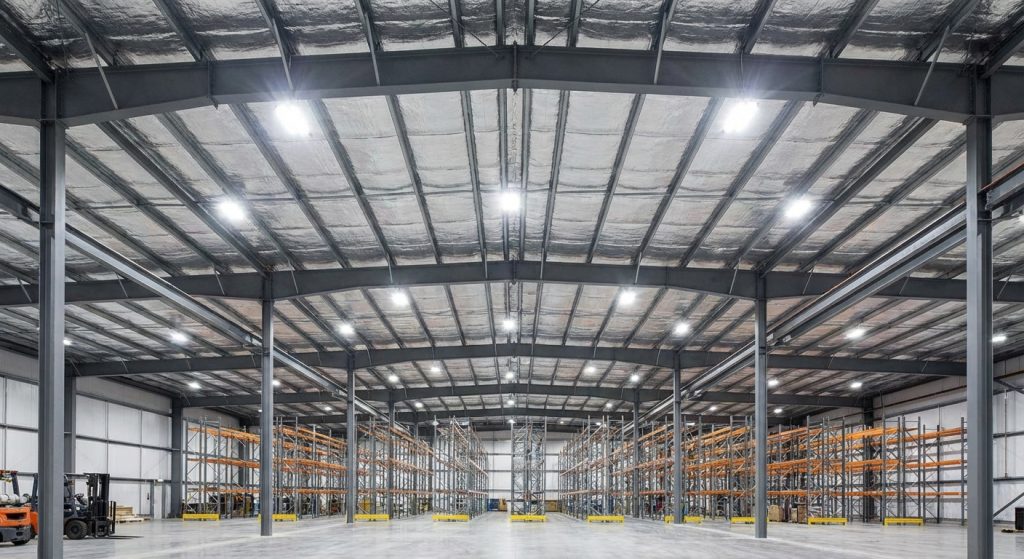
Investing in warehouse roof insulation is essential because it regulates internal temperatures and significantly reduces the energy required to heat or cool a large-scale steel structure. This thermal regulation ensures that your facility remains functional regardless of external weather conditions. By creating a consistent interior environment, you also protect temperature-sensitive inventory and equipment from damage.
Maintaining Climate Control
Keeping your facility at a steady temperature is the primary goal of any industrial insulation system. It prevents the rapid loss of heat in winter and blocks radiant heat from entering in the summer.
Here is the deal:
- Proper barriers reduce the workload on your HVAC systems.
- Employee productivity increases in a comfortable climate.
- Temperature-sensitive goods remain within safe storage limits.
Key Takeaway: Effective thermal barriers are the foundation of an energy-efficient and productive industrial workspace.
| System Benefit | Operational Impact | |
|---|---|---|
| Climate Stability | Consistent year-round facility use | |
| Energy Savings | Reduced monthly overhead costs | |
| Personnel Safety | Improved worker retention and health |
Strategic insulation placement ensures that the building shell performs as a cohesive unit against thermal transfer.
How does warehouse roof insulation prevent mold?
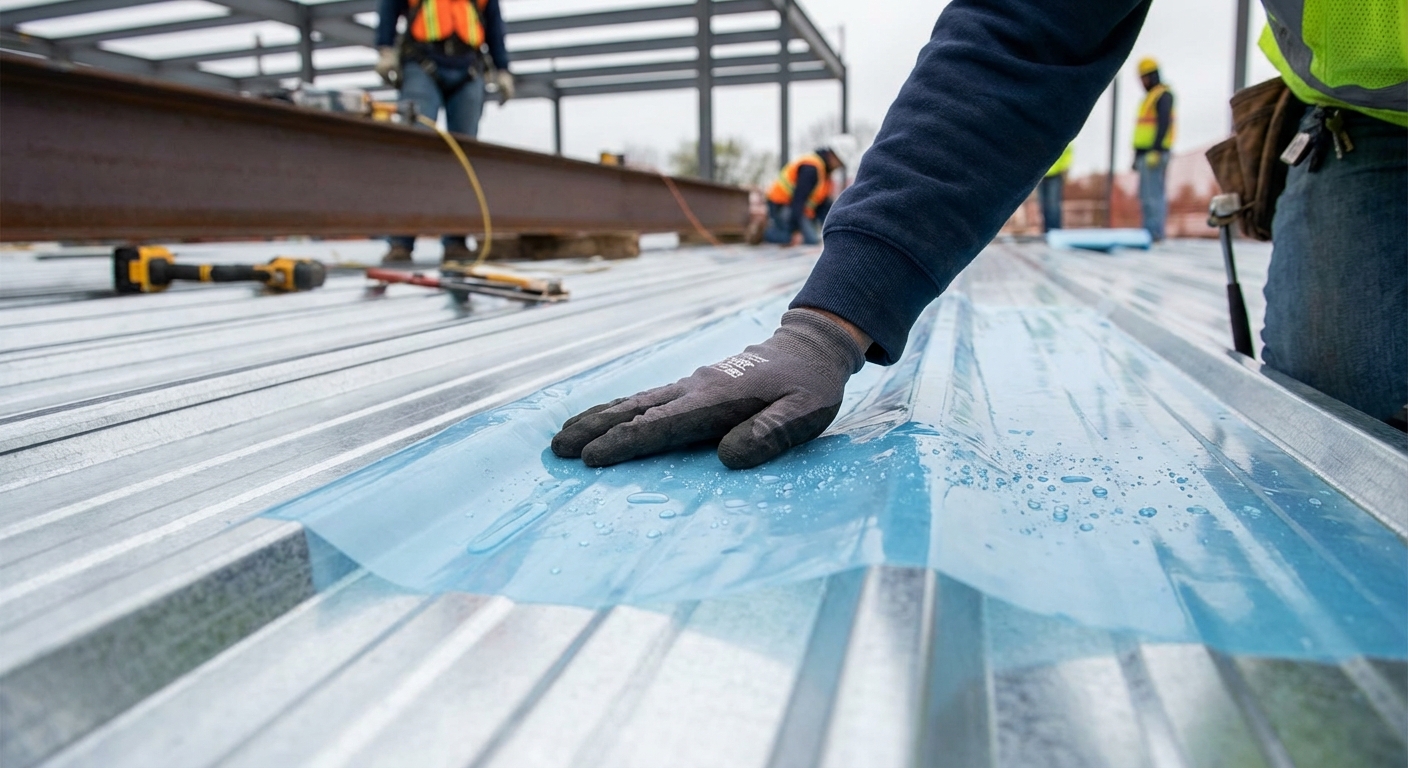
Quality warehouse roof insulation prevents mold by incorporating a vapor retarder that stops moist air from coming into contact with cold metal surfaces where condensation forms. When warm air meets cool steel, liquid water droplets appear, creating a breeding ground for organic growth. By managing this dew point, the insulation keeps the building interior dry and safe.
Managing Condensation Risks
Condensation is the hidden enemy of steel buildings, leading to rust and mold if left unmanaged. Insulation systems with a high-quality facing material act as a shield against moisture vapor.
Believe it or not:
- Vapor barriers block the movement of moist air toward the roof deck.
- Seamless installation prevents “thermal bridges” where mold often starts.
- Drier interiors extend the life of your wall and roof panels.
Key Takeaway: Preventing moisture at the source is the only way to ensure a mold-free and sanitary industrial environment.
| Moisture Control | Mechanism | |
|---|---|---|
| Vapor Retarders | Blocks humid air penetration | |
| Surface Insulation | Keeps metal panels above dew point | |
| Air Sealing | Eliminates drafts that carry moisture |
Controlling the internal humidity levels is a critical step in preserving both the building and the health of its occupants.
What defines warehouse roof insulation R-values?
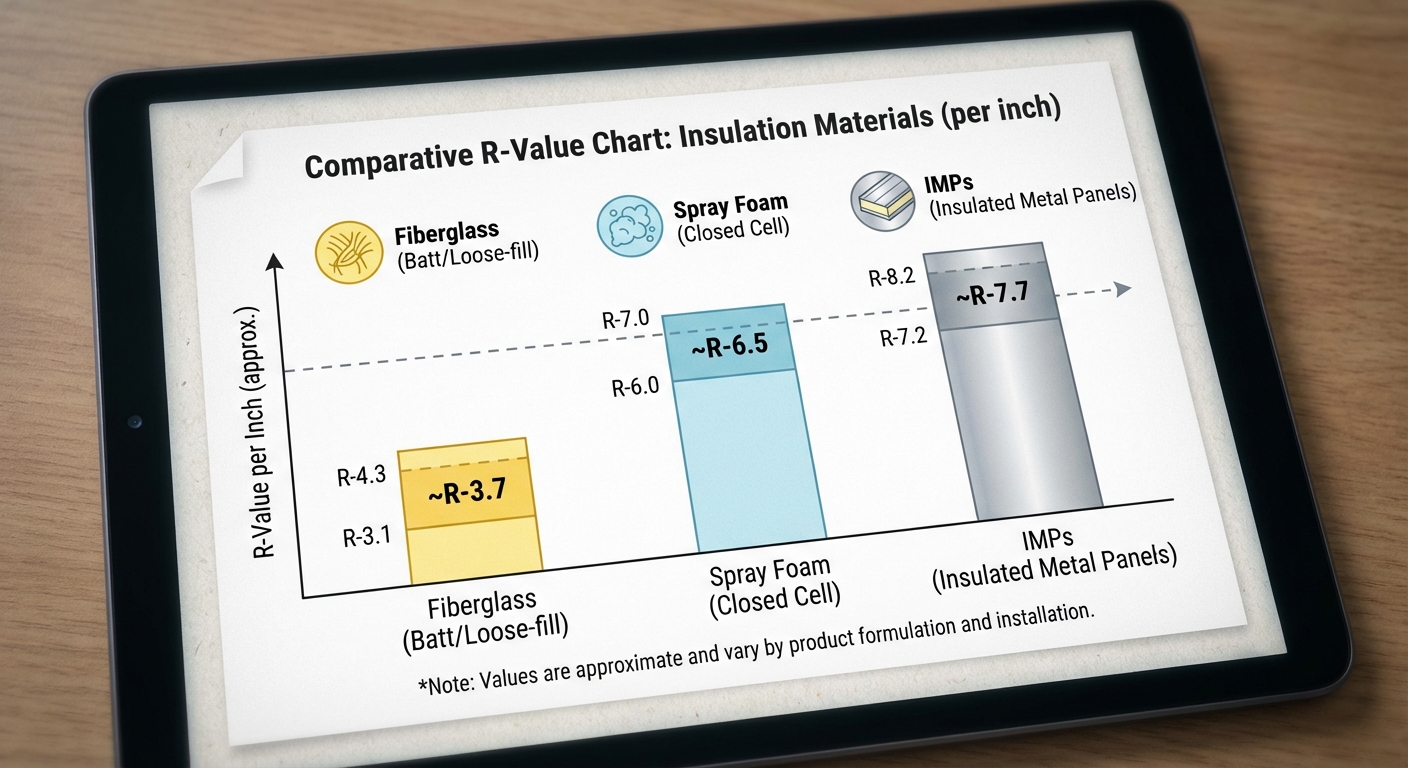
R-values define the thermal resistance of warehouse roof insulation , where a higher number indicates a more effective material at resisting heat flow. This rating is the industry standard used to determine if a building meets local energy codes. Understanding how these values interact with your specific climate zone is the first step in choosing the right material thickness.
R-Value vs. U-Value
While the R-value measures a material’s resistance to heat, the U-value measures the overall heat transfer rate of the building assembly. Lower U-values are generally better for total facility performance.
But wait, there is more:
- Local building codes often dictate a minimum R-value for new construction.
- Higher R-values usually require thicker insulation layers or denser materials.
- Geographic location is the biggest factor in determining your target R-value.
Key Takeaway: Selecting the correct R-value ensures code compliance and maximizes the return on your insulation investment.
| Material Type | Typical R-Value (per inch) | |
|---|---|---|
| Fiberglass | R-3.1 to R-4.3 | |
| Spray Foam | R-6.0 to R-7.0 | |
| Metal Panels | R-7.2 to R-8.2 |
The chart above illustrates how different materials provide varying levels of resistance for every inch of thickness installed.
Is fiberglass best for warehouse roof insulation?
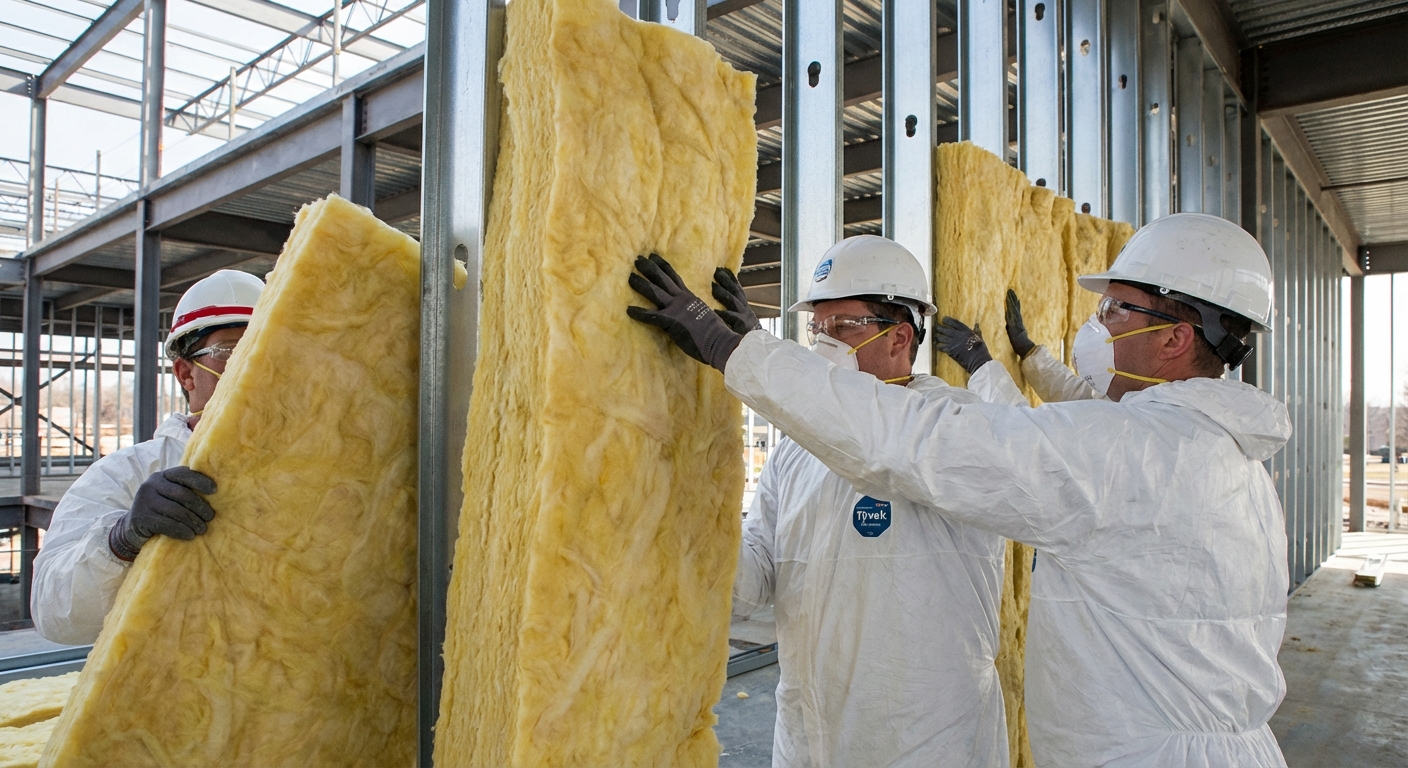
Fiberglass is often considered the best choice for warehouse roof insulation because it offers a highly economical balance between thermal performance and ease of installation. It consists of fine glass filaments that trap air, slowing down the transfer of heat through the building envelope. This material is particularly popular for broad applications across various industrial sectors.
Benefits of Fiberglass Batts
Fiberglass is available in convenient rolls and batts, which allows for rapid coverage of large roof areas. It is naturally fire-resistant and does not shrink or settle over time when properly secured.
You might be wondering:
- Fiberglass is one of the most cost-effective materials per square foot.
- It provides excellent sound dampening for noisy industrial environments.
- High-quality facings can be added to improve vapor resistance.
Key Takeaway: For many project managers, the affordability and reliability of fiberglass make it the standard for steel structure workshops.
| Fiberglass Factor | Advantage | |
|---|---|---|
| Cost | Lowest upfront material expense | |
| Fire Safety | Naturally non-combustible material | |
| Installation | Simplified process for large-scale roofs |
Despite its lower R-value per inch compared to foam, its sheer economic value makes it a top contender for large facilities.
When to use reflective warehouse roof insulation?
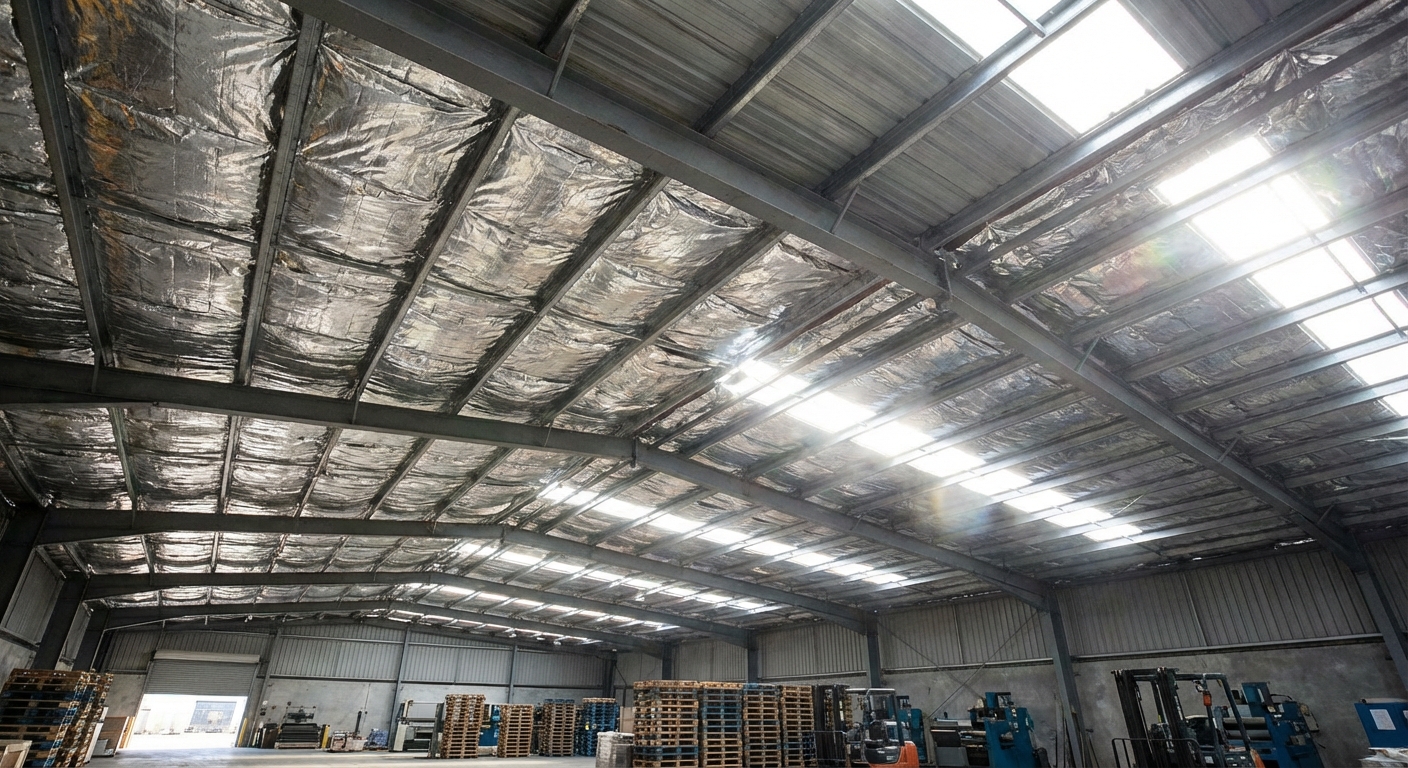
You should use reflective warehouse roof insulation in sunny, high-heat climates where the primary goal is to bounce radiant heat away from the structure. Unlike mass insulation that absorbs heat, reflective systems use aluminum surfaces to reflect up to 97% of the sun’s radiant energy. This makes it an ideal solution for facilities that struggle with solar gain during peak summer hours.
The Power of Reflection
Reflective systems are often composed of aluminum foil layers and air bubbles that create a radiant barrier. These materials are lightweight, easy to handle, and provide a clean finished look to the interior.
Here is the secret:
- Reflective barriers perform best when there is an adjacent air space.
- They are highly resistant to moisture and do not harbor mold growth.
- This material is extremely durable and does not degrade in humid air.
Key Takeaway: Reflective barriers are the most effective way to combat extreme solar heat and reduce cooling loads in hot regions.
| Reflective Attribute | Practical Benefit | |
|---|---|---|
| Radiant Blocking | Reflects 97% of solar heat gain | |
| Durability | Waterproof and non-corrosive | |
| Weight | Minimal load on the steel structure |
Using a radiant barrier can drastically lower the “feel” of the interior temperature during a hot afternoon.
Are panels a top warehouse roof insulation choice?
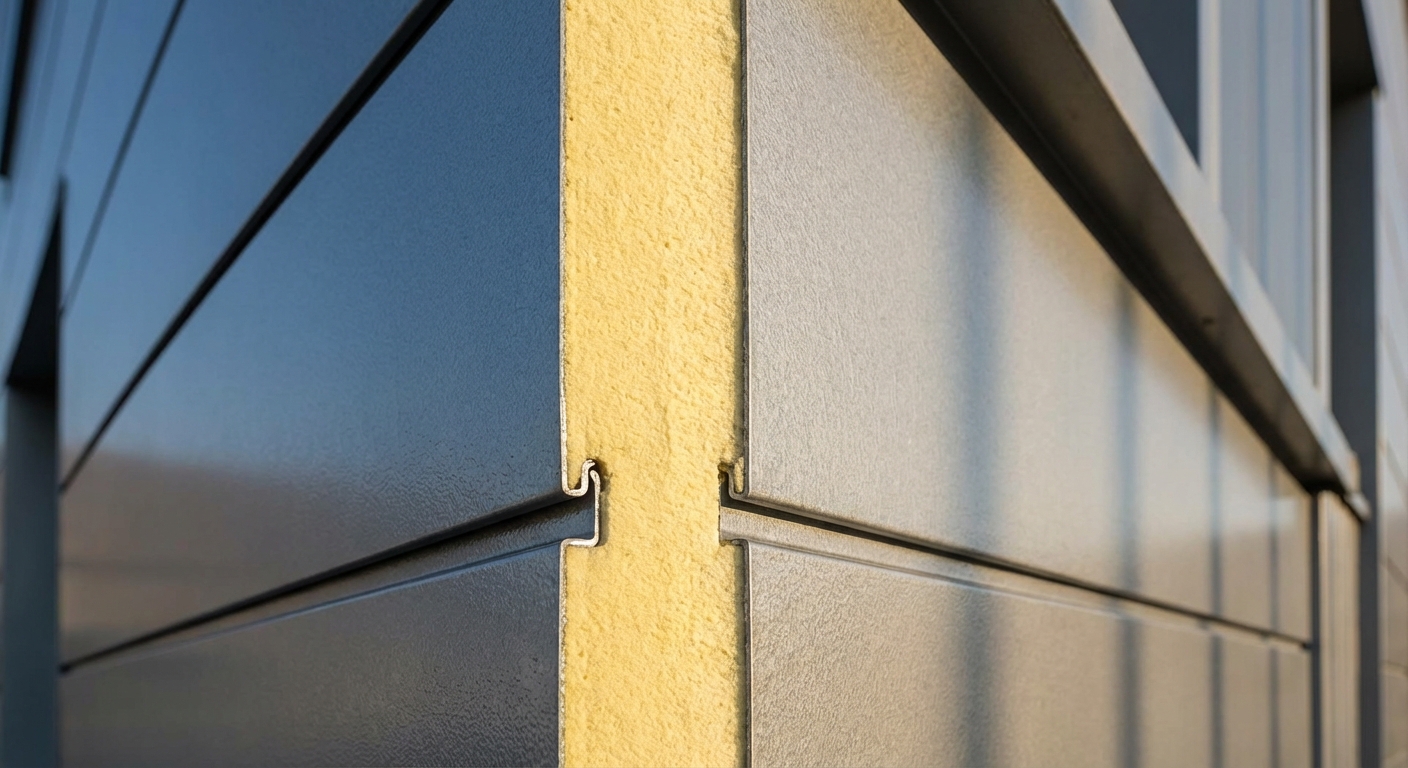
Insulated metal panels are a top warehouse roof insulation choice for high-end facilities because they combine structural cladding and premium foam insulation into a single, high-performance unit. These panels utilize a rigid foam core sandwiched between two steel skins, providing the highest R-value per inch available. They are the gold standard for projects requiring absolute climate control and modern aesthetics.
Efficiency of Integrated Panels
Because the insulation is integrated, these panels eliminate the need for secondary insulation layers and separate vapor barriers. This streamlined approach results in a tighter building envelope with fewer thermal leaks.
Make no mistake:
- Panels offer superior structural strength and thermal performance.
- They are ideal for cold storage and food processing facilities.
- The interlocking joints create a continuous, air-tight barrier.
Key Takeaway: Integrated panels provide the ultimate thermal performance for businesses that prioritize long-term efficiency and climate precision.
| Panel Feature | Operational Advantage | |
|---|---|---|
| High R-Value | Maximum thermal efficiency per inch | |
| Speed | Rapid installation of roof and insulation | |
| Longevity | Permanent, rigid system that won’t sag |
Investing in these panels often results in the lowest total lifecycle cost for a facility due to massive energy savings.
What impacts warehouse roof insulation pricing?
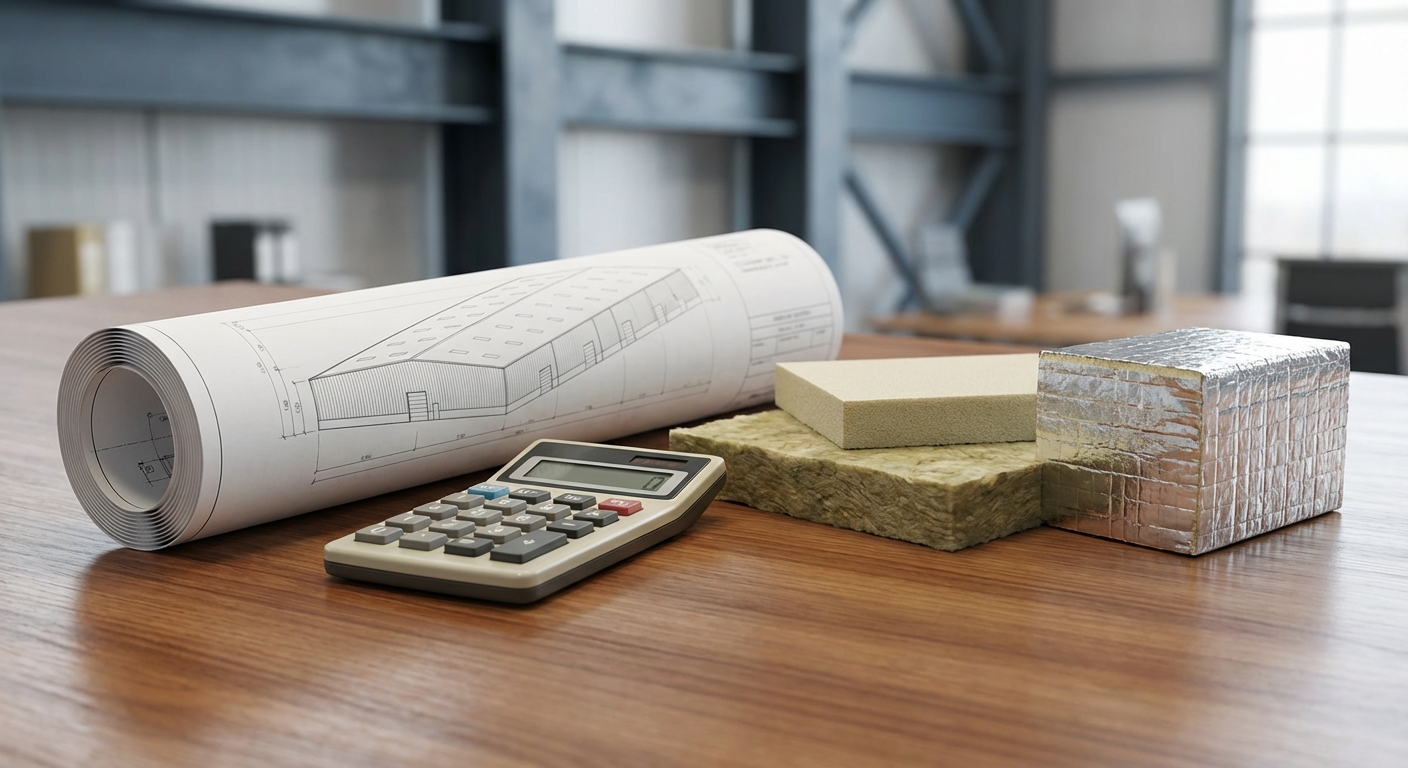
The pricing of warehouse roof insulation is primarily impacted by the type of material chosen, the desired R-value, and the complexity of the installation process. While fiberglass is the most budget-friendly option, high-performance insulated panels require a higher initial investment. You must also account for labor costs, which vary depending on whether the insulation is being installed during initial construction or as a retrofit.
Cost vs. Performance
Higher R-values require more material, which naturally increases the total price. However, more expensive materials often lead to lower utility bills, meaning the initial cost should be viewed as an investment in future savings.
Keep this in mind:
- Thicker fiberglass blankets increase material and shipping costs.
- Custom-cut panels for complex roof lines increase labor hours.
- Regional shipping distances for bulky materials can add to the total.
Key Takeaway: Balancing upfront costs with long-term energy savings is crucial for a successful B2B budgeting strategy.
| Cost Driver | Estimated Impact | |
|---|---|---|
| Material Choice | Varies from 5.00+ per sq ft | |
| Labor Complexity | Specialized skills increase daily rates | |
| System Accessories | Fasteners and tapes add 5-10% to budget |
A detailed cost-benefit analysis will reveal that quality insulation pays for itself through reduced mechanical wear and lower bills.
Does warehouse roof insulation aid longevity?
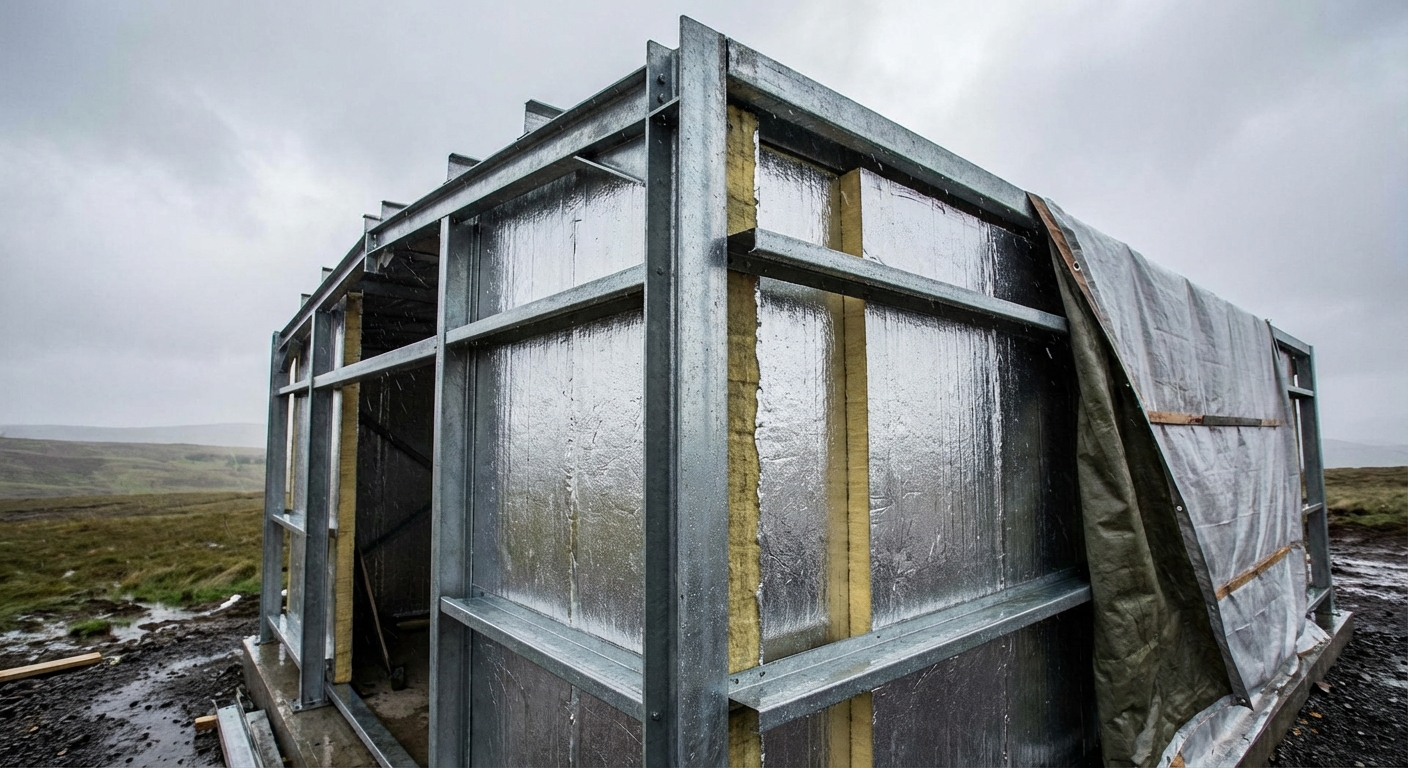
Yes, warehouse roof insulation aids longevity by protecting the steel frame from corrosion caused by condensation and reducing the “thermal shock” of rapid temperature changes. When metal expands and contracts too quickly, it puts stress on fasteners and joints. By maintaining a stable temperature, insulation ensures the structural integrity of your building remains intact for decades.
Protecting the Structural Integrity
Steel is a durable material, but it is sensitive to moisture and extreme heat. Insulation acts as a buffer, preventing the frame from reaching extreme temperatures that could weaken the assembly.
Think of it this way:
- Insulation prevents the rust that can eat through roof panels.
- It keeps fasteners tight by minimizing metal expansion cycles.
- A drier environment preserves the protective coatings on the steel.
Key Takeaway: Proper insulation is a vital maintenance tool that extends the functional life of your entire industrial facility.
| Longevity Factor | Protective Action | |
|---|---|---|
| Rust Prevention | Keeps moisture off primary steel members | |
| Fastener Stability | Reduces expansion and contraction stress | |
| Finish Protection | Maintains the integrity of paint and zinc coatings |
Long-term structural health is directly correlated to how well you manage the interior climate of your steel building.
How does warehouse roof insulation save money?
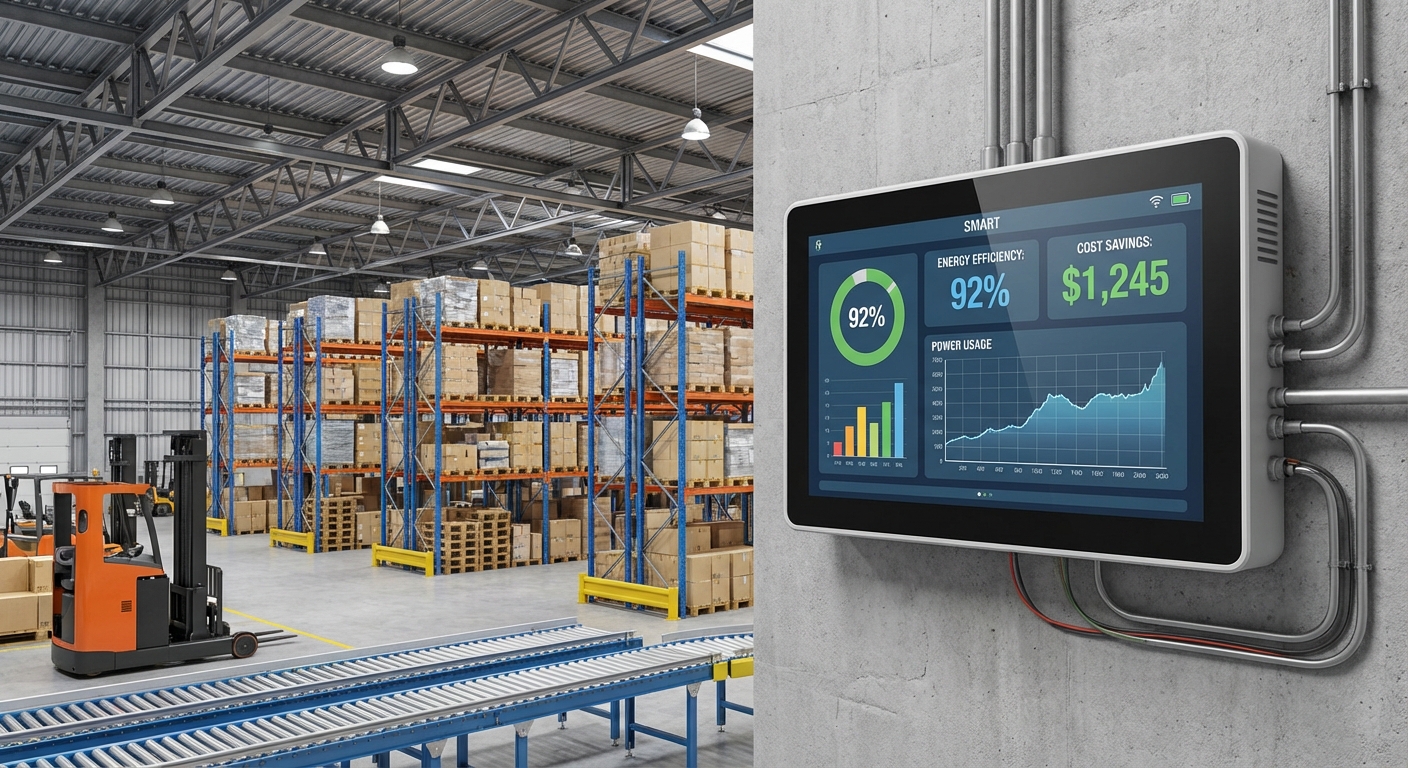
Properly installed warehouse roof insulation saves money by drastically lowering monthly utility bills and reducing the wear and tear on expensive heating and cooling equipment. When your building retains its temperature efficiently, your HVAC units cycle less frequently. This not only cuts power costs but also delays the need for costly equipment replacements and maintenance.
Reducing Operational Overhead
In a large industrial space, energy is often the highest variable cost. High-performance insulation can reduce these costs by up to 30-50% depending on the climate and facility use.
Check this out:
- Lower HVAC run-times lead to a longer mechanical lifespan.
- Reduced energy demand qualifies some businesses for tax credits.
- Consistent temperatures prevent inventory loss due to heat or dampness.
Key Takeaway: Insulation is one of the few building components that offers a direct and measurable return on investment through energy savings.
| Savings Category | Financial Benefit | |
|---|---|---|
| Monthly Utilities | Immediate reduction in power and gas bills | |
| Maintenance Costs | Fewer service calls for over-worked HVAC units | |
| Inventory Value | Prevents spoilage and moisture damage to stock |
Monitoring your energy usage before and after insulation installation often shows a dramatic shift in operational efficiency.
Where to buy warehouse roof insulation systems?

You should buy warehouse roof insulation systems from specialized manufacturers who provide integrated solutions tailored to the specific dimensions and local code requirements of your steel structure. Purchasing through an expert supplier ensures that you receive the correct R-values and all necessary installation hardware. They can also offer professional guidance on which material best suits your regional climate and facility goals.
Finding the Right Partner
The best suppliers offer a range of options from fiberglass to rigid panels and can provide detailed material specifications. Working with an experienced manufacturer reduces the risk of ordering the wrong quantities or incompatible components.
The bottom line is:
- Expert suppliers can calculate precise R-value needs for your zone.
- Buying direct from the factory often saves on middleman markups.
- Integrated shipping ensures all components arrive together on site.
Key Takeaway: Partnering with a dedicated steel building specialist guarantees that your insulation system will perform as designed for years to come.
| Procurement Step | Recommended Action | |
|---|---|---|
| Consultation | Discuss R-value requirements with a specialist | |
| Specification | Match material type to your facility’s usage | |
| Fulfillment | Choose a supplier with proven international delivery |
A professional consultation is the most effective way to navigate the complex world of industrial thermal protection.
Selecting the right insulation is a strategic decision that impacts the comfort, cost, and longevity of your industrial facility. Whether you choose the economic value of fiberglass or the premium efficiency of insulated panels, the goal remains the same: protecting your assets from the elements. Our vision is to empower global industries with durable, high-performance structures that stand the test of time. To secure a high-quality thermal solution for your project, please contact us today .
Decision FAQ
Can I add insulation to an existing metal building?Yes, retrofitting insulation is a common practice. While it is more labor-intensive than installing during initial construction, various systems like spray foam or retrofitted fiberglass can significantly improve an older building’s thermal performance.
What’s the best insulation for cold storage facilities?Insulated Metal Panels (IMPs) are the industry standard. They provide high R-values and a continuous thermal bridge-free barrier that is essential for maintaining freezing temperatures with minimal energy expenditure.
How do I know if my insulation is thick enough?Consult your local building codes. A building specialist can also run a thermal calculation based on your climate zone and desired interior temperature to determine the optimal thickness for your specific project.
Can I install fiberglass insulation myself?No, it is highly recommended to hire professionals. Handling fiberglass requires specialized safety gear to prevent skin and lung irritation, and professional installers ensure the material is tensioned correctly to prevent sagging and thermal leaks.
What’s the best way to prevent insulation from sagging?Use high-quality steel strapping and specialized fasteners. Ensuring that fiberglass is pulled tight and secured to the purlins with the correct tension is the only way to maintain a clean appearance and peak thermal performance over time.