
Choosing prefabricated office buildings allows you to bypass the lengthy delays and high costs of traditional construction while securing a high-quality, professional workspace. Imagine your business is expanding rapidly, and you desperately need a new administrative hub to house your growing team. You face the headache of traditional site work—months of noise, dust, and weather-related delays that threaten your operational uptime. Fortunately, there is a better way to build that prioritizes speed and precision without sacrificing structural integrity.
Why choose prefabricated office buildings for your project?
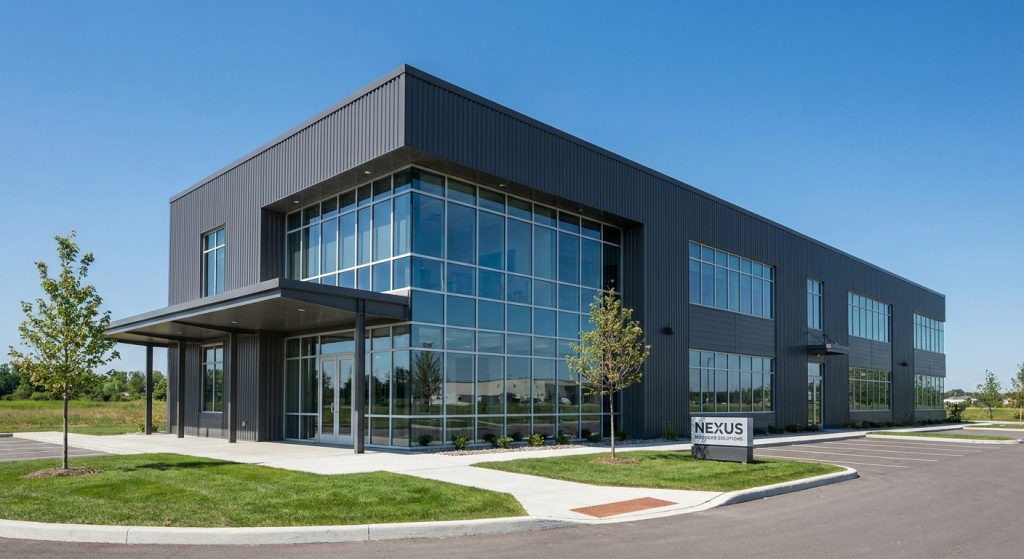
You should choose prefabricated office buildings because they offer a controlled manufacturing process that eliminates the unpredictability of on-site construction. By building components in a factory, you ensure that every beam and panel meets exact engineering standards before it even arrives at your site.
This approach minimizes disruption to your existing operations while providing a modern, professional environment for your staff. You can focus on your core business goals while your new facility is precision-engineered in a climate-controlled environment.
Does off-site construction improve quality?
Think about it: when components are built indoors, they are never exposed to rain, snow, or extreme humidity during the framing stage. This controlled environment allows for tighter tolerances and higher-quality finishes than what is typically possible on a chaotic job site.
Here is the deal:
- Materials are stored in dry, secure conditions.
- Strict factory inspections happen at every production stage.
- Advanced machinery ensures perfect alignment of structural members.
Can you scale your space quickly?
But wait, there is more: prefab structures are designed for modularity, meaning you can add more sections as your workforce grows. This flexibility prevents you from being locked into a layout that no longer serves your needs three years down the line.
Key Takeaway: Choosing prefab means you prioritize reliability and quality control, ensuring your workspace is built to last from the ground up.
| Feature | Advantage | |
|---|---|---|
| Factory Control | High precision and zero weather delays | |
| Scalability | Easy to expand as team size increases | |
| Minimal Disruption | Less noise and dust on your property |
This comparison shows how factory-driven precision provides a superior alternative to traditional building methods for growing firms.
What are the main benefits of prefabricated office buildings?
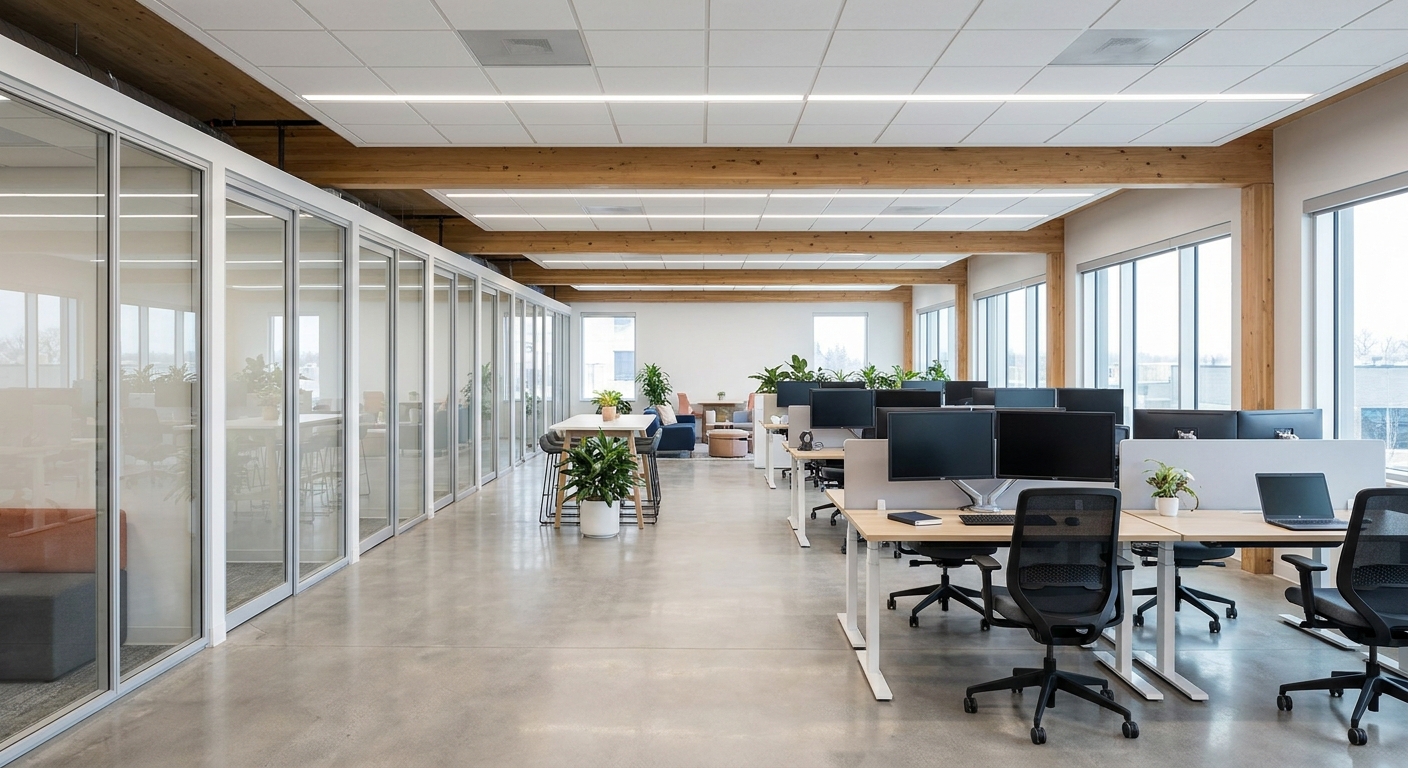
The main benefits of prefabricated office buildings include significantly reduced project timelines, predictable costs, and a much cleaner construction footprint on your site. When you opt for this method, you are choosing a streamlined path to occupancy that traditional builds simply cannot match.
Investing in prefabricated office buildings also gives you access to high-end architectural aesthetics that look and feel like permanent, site-built structures. You get the best of both worlds: the speed of modularity and the prestige of a custom-designed corporate headquarters.
Is the cost more predictable?
The best part? You avoid the common “change order” traps that plague standard construction, as the design is finalized and priced before fabrication begins. This financial transparency allows you to manage your capital expenditure with far greater confidence and accuracy.
- Fixed pricing models reduce budget overruns.
- Lower labor costs due to efficient factory assembly.
- Reduced site preparation expenses.
How does it impact your staff?
Here is the deal: your employees will appreciate a workspace that is designed for modern comfort, featuring excellent insulation and soundproofing. A high-quality interior environment directly correlates with higher productivity and better employee retention rates.
Key Takeaway: The primary benefits center on financial certainty and speed, allowing you to move into your new office months ahead of schedule.
| Benefit | Impact on Business | |
|---|---|---|
| Cost Control | No surprise invoices or budget creeping | |
| Rapid Delivery | Move-in ready up to 50% faster | |
| High Comfort | Better employee focus and satisfaction |
The data highlights that financial and temporal efficiency are the cornerstones of the prefab value proposition for modern enterprises.
How do prefabricated office buildings save you time and money?
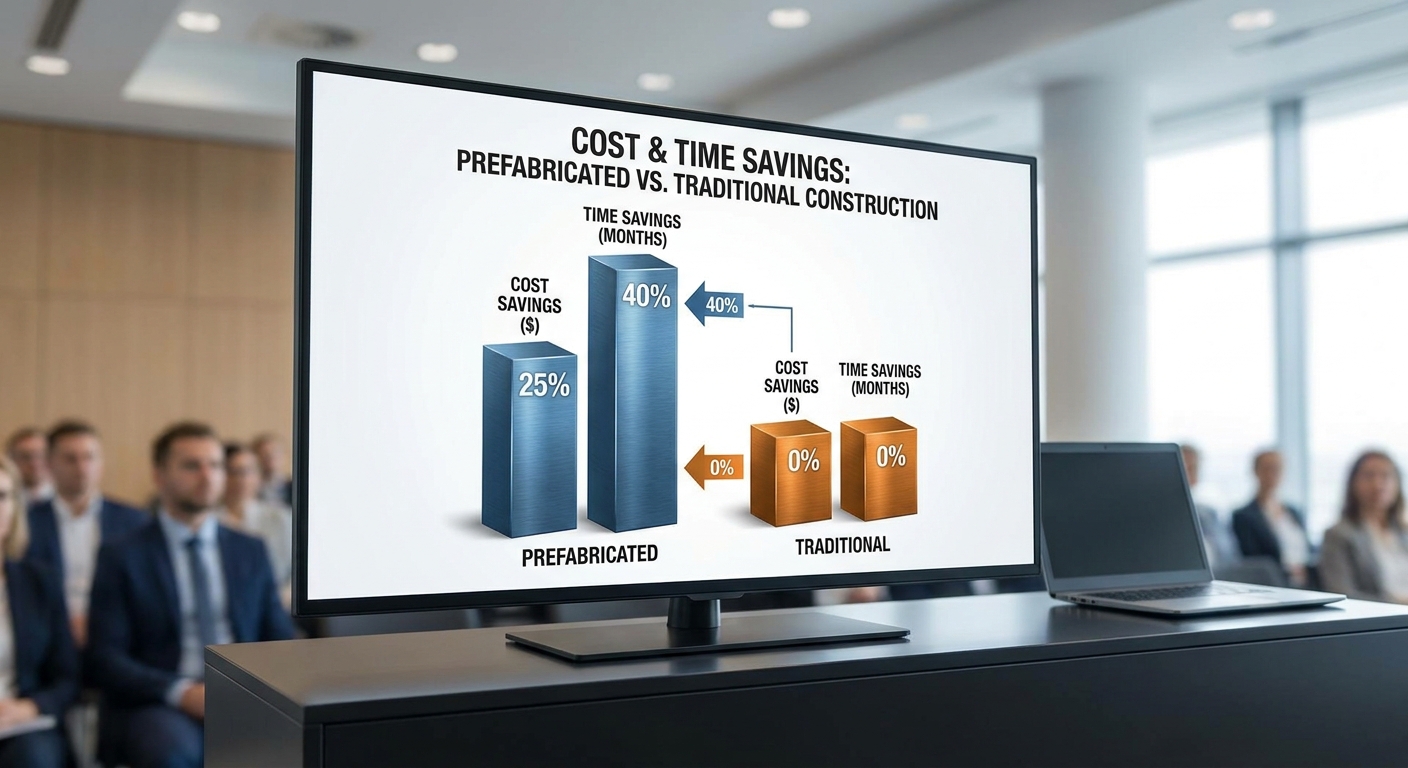
They save you time and money by allowing site preparation and building fabrication to occur simultaneously, cutting your total project schedule by nearly half. While your foundation is being poured on-site, your prefabricated office buildings are already taking shape in the factory.
Because the components arrive as a complete installation-ready system, on-site labor hours are drastically reduced. You won’t have a massive crew living on your property for months, which translates to lower overhead and fewer logistical headaches.
Can you avoid weather-related delays?
Think about it: how many construction projects have you seen stalled for weeks because of heavy rain or freezing temperatures? With prefab, the “critical path” of construction happens indoors, so the weather has virtually zero impact on your delivery date.
But wait, there is more:
- Simultaneous workflows shave months off the timeline.
- Factory efficiency reduces material waste and labor hours.
- Early occupancy means a faster return on your investment.
Is there less material waste?
Here is the deal: factory production uses precision cutting and bulk material ordering, which significantly lowers the cost per square foot compared to site-built alternatives. You are paying for the structure itself, not for the waste that usually ends up in a construction dumpster.
Key Takeaway: The simultaneous nature of site and factory work is the single greatest factor in reducing both your calendar days and your total bill.
| Efficiency Metric | Prefab Performance | |
|---|---|---|
| Schedule Reduction | 30% to 50% faster than traditional | |
| Waste Reduction | Up to 40% less material waste | |
| Labor Savings | Minimal on-site crew requirements |
Analyzing these metrics reveals why forward-thinking developers are abandoning traditional methods in favor of integrated project delivery.
Are prefabricated office buildings durable enough for long-term use?
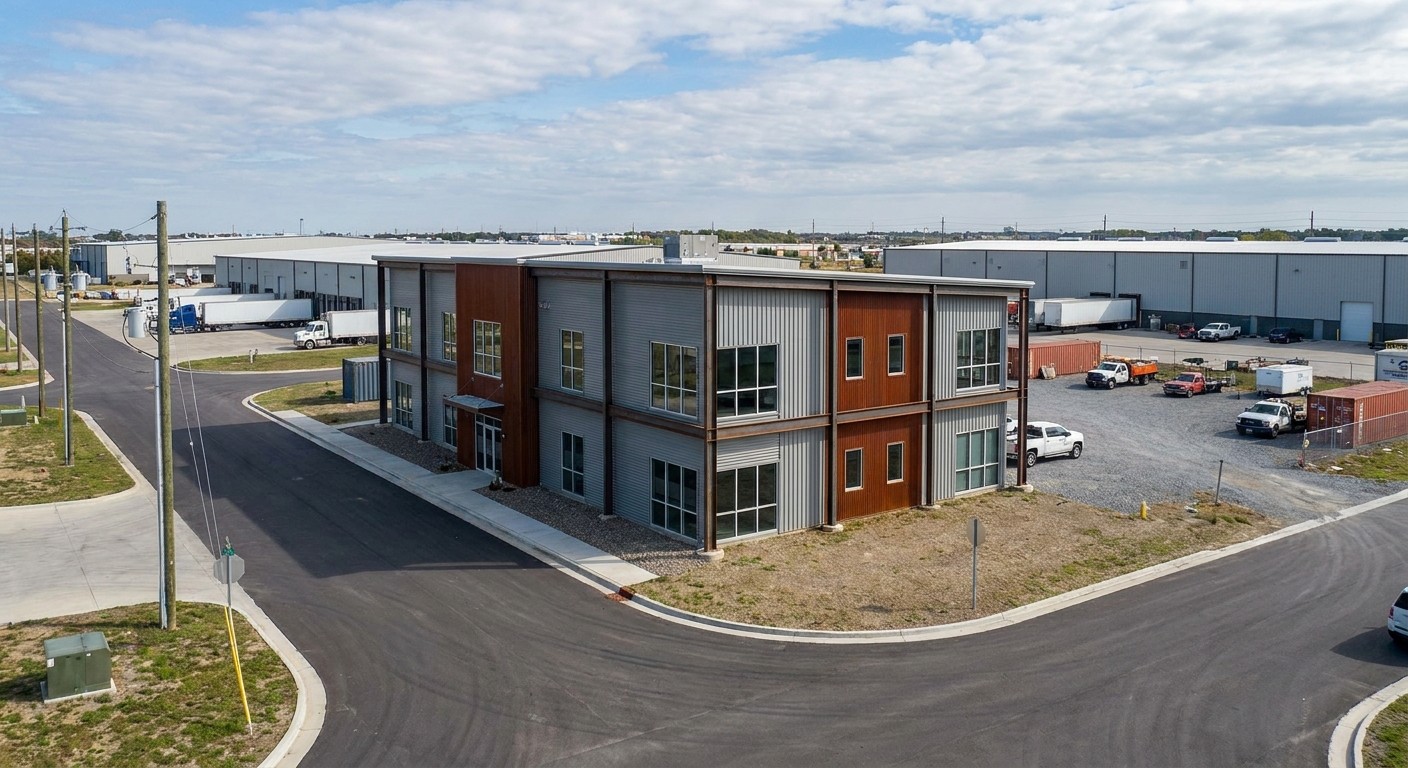
Modern prefabricated office buildings are engineered to meet or exceed the same building codes as traditional structures, ensuring they last for decades. These are not “temporary” fixes; they are permanent steel-frame structures designed to withstand high winds, heavy snow loads, and seismic activity.
When you invest in prefabricated office buildings, you are getting a structure built with high-grade industrial steel and durable cladding. These materials are chosen specifically for their longevity and low maintenance requirements in diverse global climates.
Do they meet local building codes?
The best part? Every module is designed to handle the stresses of transportation and crane lifting, which actually makes them more structurally robust than many site-built homes. If a building can survive being hauled on a highway and hoisted by a crane, it can handle your daily office operations with ease.
- Heavy-duty steel columns and beams.
- Compliance with AISC and Eurocode standards.
- High-strength bolts for secure structural connections.
How do they handle extreme weather?
Here is the deal: specialized coating systems and high-performance insulation ensure your building remains protected against corrosion and thermal loss. Whether you are in a humid coastal area or a freezing mountain region, your office remains a safe, stable haven.
Key Takeaway: Durability is baked into the design, providing you with a permanent asset that retains its value and structural integrity over time.
| Durability Factor | Specification | |
|---|---|---|
| Structural Frame | High-grade H-section steel | |
| Code Compliance | Local wind, snow, and seismic rated | |
| Lifespan | 30+ years with standard maintenance |
This technical breakdown confirms that prefab structures are high-performance assets capable of serving your business for the long haul.
Which industries benefit most from prefabricated office buildings?
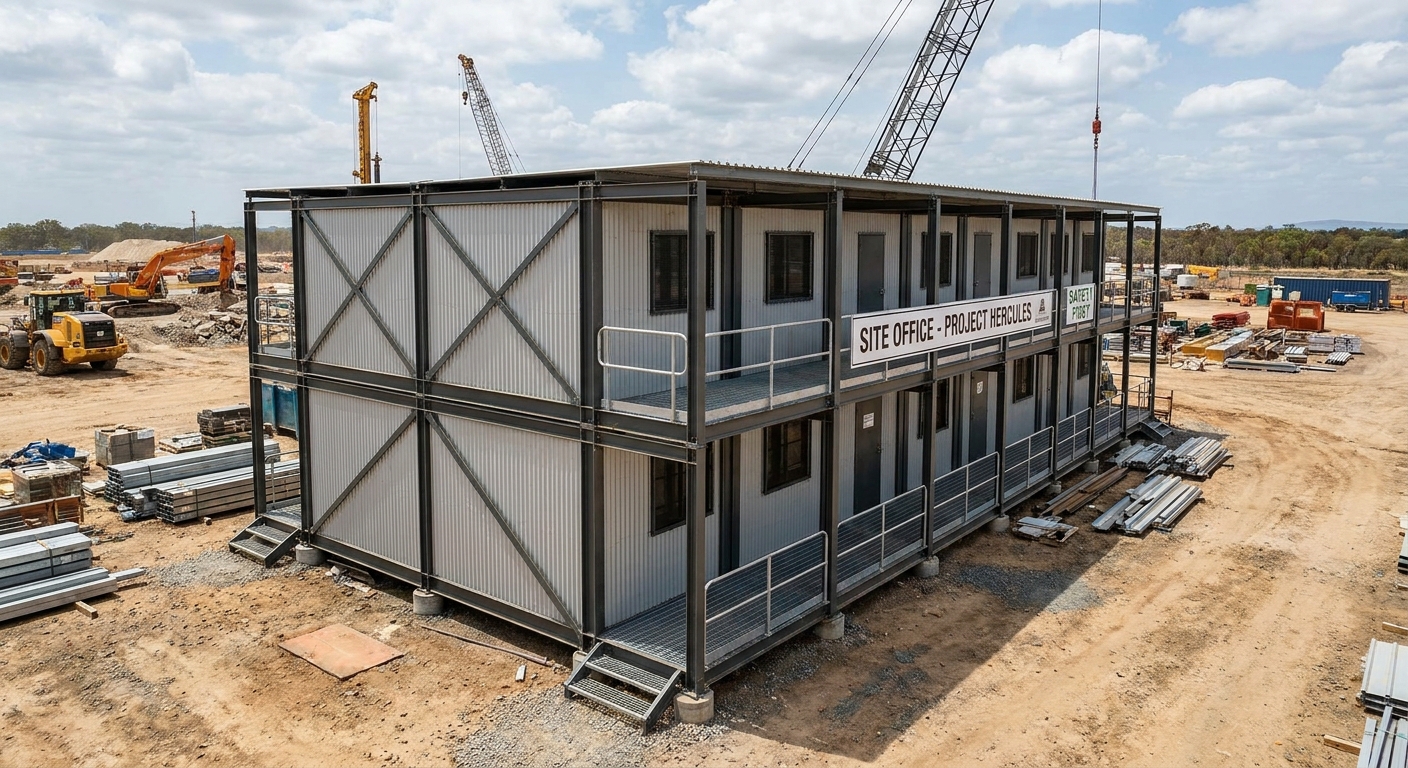
Industries requiring rapid deployment, such as logistics, manufacturing, and education, benefit most from prefabricated office buildings . If your business operates in a sector where market demands shift quickly, the ability to stand up a new headquarters in weeks is a massive competitive advantage.
Many construction and mining firms also rely on prefabricated office buildings to create high-quality administrative centers in remote locations. When local skilled labor is scarce, bringing a factory-built solution to the site is often the only viable way to ensure quality and safety.
Is this a good fit for retail?
Think about it: shopping malls and retail centers need architectural flair and rapid setup to start generating revenue as quickly as possible. Prefab allows for stunning glass facades and open-plan layouts that attract customers while keeping construction costs manageable.
But wait, there is more:
- Industrial parks use them for on-site management offices.
- Schools use them for high-quality, permanent classrooms.
- Medical facilities deploy them for urgent clinic expansions.
Why do logistics hubs love prefab?
Here is the deal: logistics giants need offices that can be positioned right next to their warehouses without shutting down truck traffic for months. The “plug-and-play” nature of prefab sections means the office can be operational almost as soon as the modules are bolted together.
Key Takeaway: Any business that values time-to-market and operational continuity will find that prefab structures solve their most pressing growth challenges.
| Industry | Primary Use Case | |
|---|---|---|
| Manufacturing | Plant management and admin hubs | |
| Education | Permanent campus expansions | |
| Logistics | Distribution center headquarters |
This overview demonstrates the versatility of modular systems across the global industrial and commercial landscape.
How customizable are modern prefabricated office buildings?
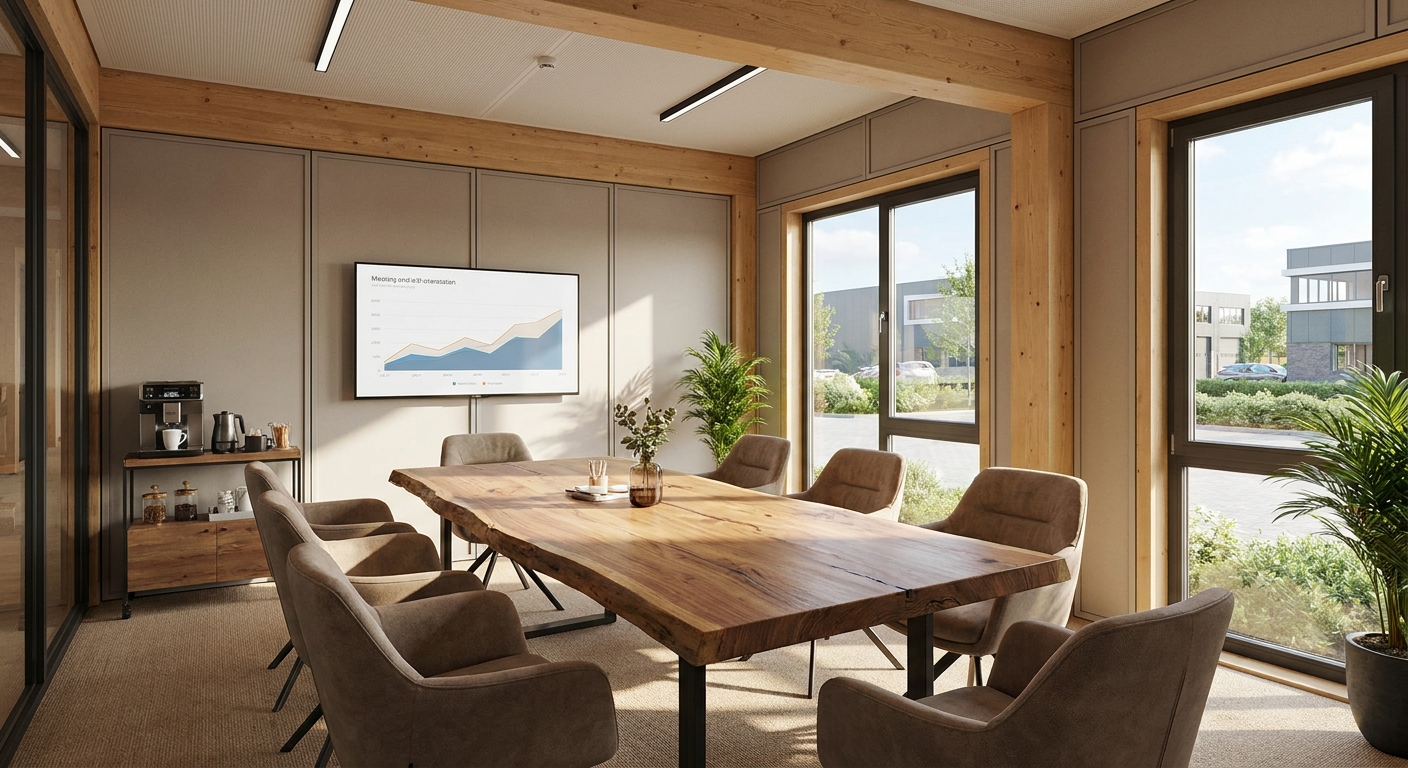
Modern prefabricated office buildings are fully customizable, allowing you to choose everything from internal layouts and finishes to external cladding and window placements. Gone are the days of “cookie-cutter” boxes; today’s technology allows for sophisticated architectural designs that reflect your brand identity.
You can specify high-end interior features in your prefabricated office buildings, such as glass-walled meeting rooms, ergonomic workstations, and integrated smart building systems. Your office will feel like a bespoke creation tailored specifically to how your team works best.
Can you choose your own floor plan?
The best part? You are not restricted to a single story or a narrow hallway; modular sections can be stacked and joined to create wide-open spaces and multi-story complexes. This flexibility ensures your office can accommodate everything from private executive suites to collaborative “hot-desk” areas.
- Custom window sizes for maximum natural light.
- A variety of exterior textures and colors.
- Integrated HVAC and electrical configurations.
What about interior branding?
Here is the deal: the walls, flooring, and lighting can all be selected to match your corporate color palette and design standards. When clients walk through your doors, they won’t see a “modular building”—they will see a premium, professional corporate environment.
Key Takeaway: Customization is no longer a hurdle in prefab; it is a core feature that allows you to build a space that truly represents your company.
| Component | Customization Options | |
|---|---|---|
| Layout | Open-plan, private offices, or hybrid | |
| Exterior | Metal panels, wood grain, or glass | |
| Interior | Premium flooring, lighting, and HVAC |
The level of choice available today ensures that your facility can be as unique as the business it houses.
What materials are used in prefabricated office buildings?
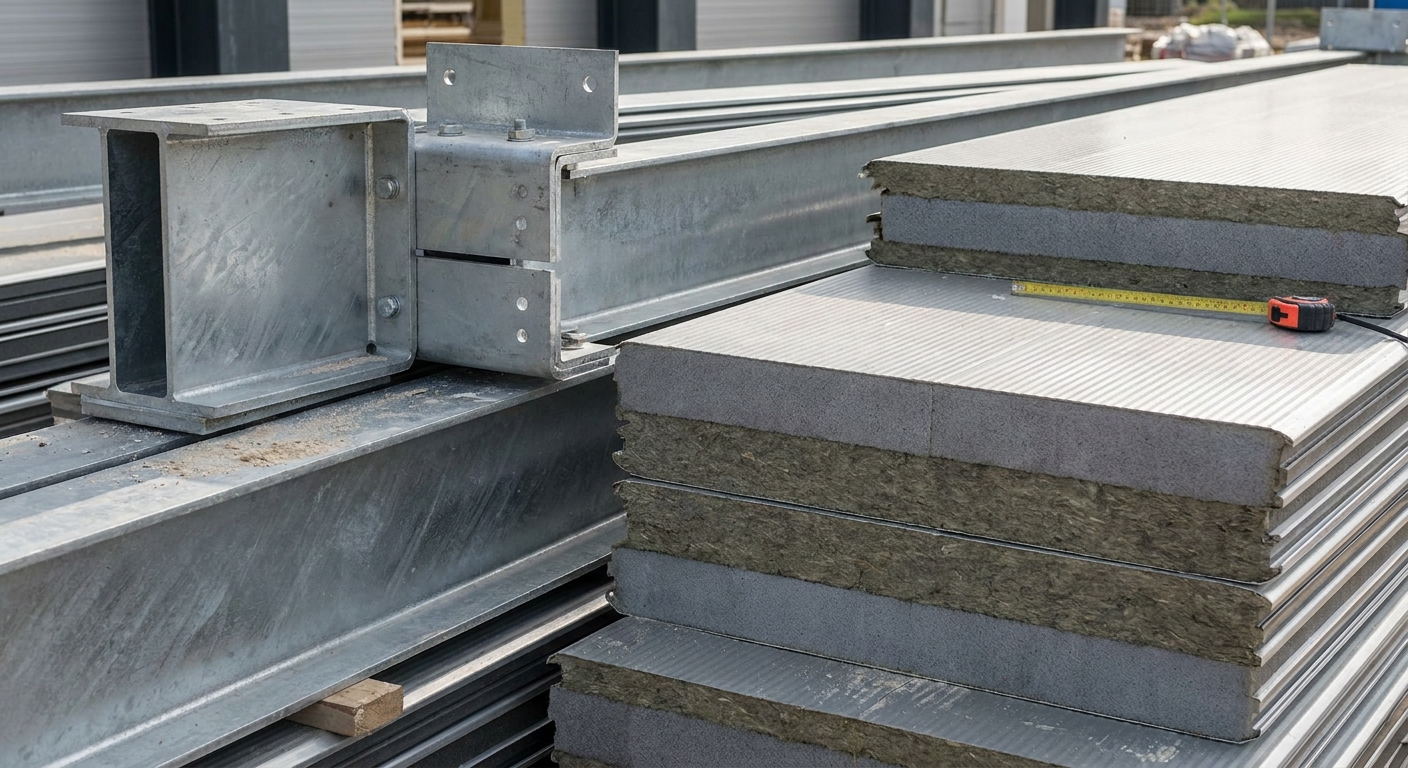
The materials used in prefabricated office buildings primarily consist of high-strength structural steel, insulated sandwich panels, and energy-efficient glazing. These components are selected for their strength-to-weight ratio, ensuring the building is light enough to transport but strong enough for heavy use.
The core of most prefabricated office buildings is a hot-dip galvanized or painted H-section steel frame that provides the primary load-bearing support. This is supplemented by secondary members like purlins and bracings that ensure the entire structure remains stable under environmental pressure.
Are the walls well-insulated?
Think about it: keeping your team comfortable and your energy bills low requires high-performance wall systems. Most modern builds use sandwich panels with rock wool or PU cores, which provide excellent thermal resistance and fire protection compared to traditional stud walls.
But wait, there is more:
- Galvanized steel prevents rust in humid climates.
- Double-glazed windows reduce noise and heat transfer.
- High-strength bolts ensure every connection is rock solid.
What about the roofing?
Here is the deal: the roof panels are designed with deep profiles and secure interlocking seams to prevent leaks even in torrential rain. By using industrial-grade materials, you reduce the long-term maintenance costs and prevent water damage before it starts.
Key Takeaway: High-quality materials are the foundation of prefab’s success, offering superior insulation and structural integrity over traditional wood framing.
| Material | Function | |
|---|---|---|
| H-Section Steel | Primary load-bearing frame | |
| Sandwich Panels | Insulated wall and roof cladding | |
| Aluminum Alloy | Durable, sleek windows and doors |
Understanding these materials helps you appreciate the engineering excellence that goes into every square foot of your new office.
Is the installation of prefabricated office buildings complex?
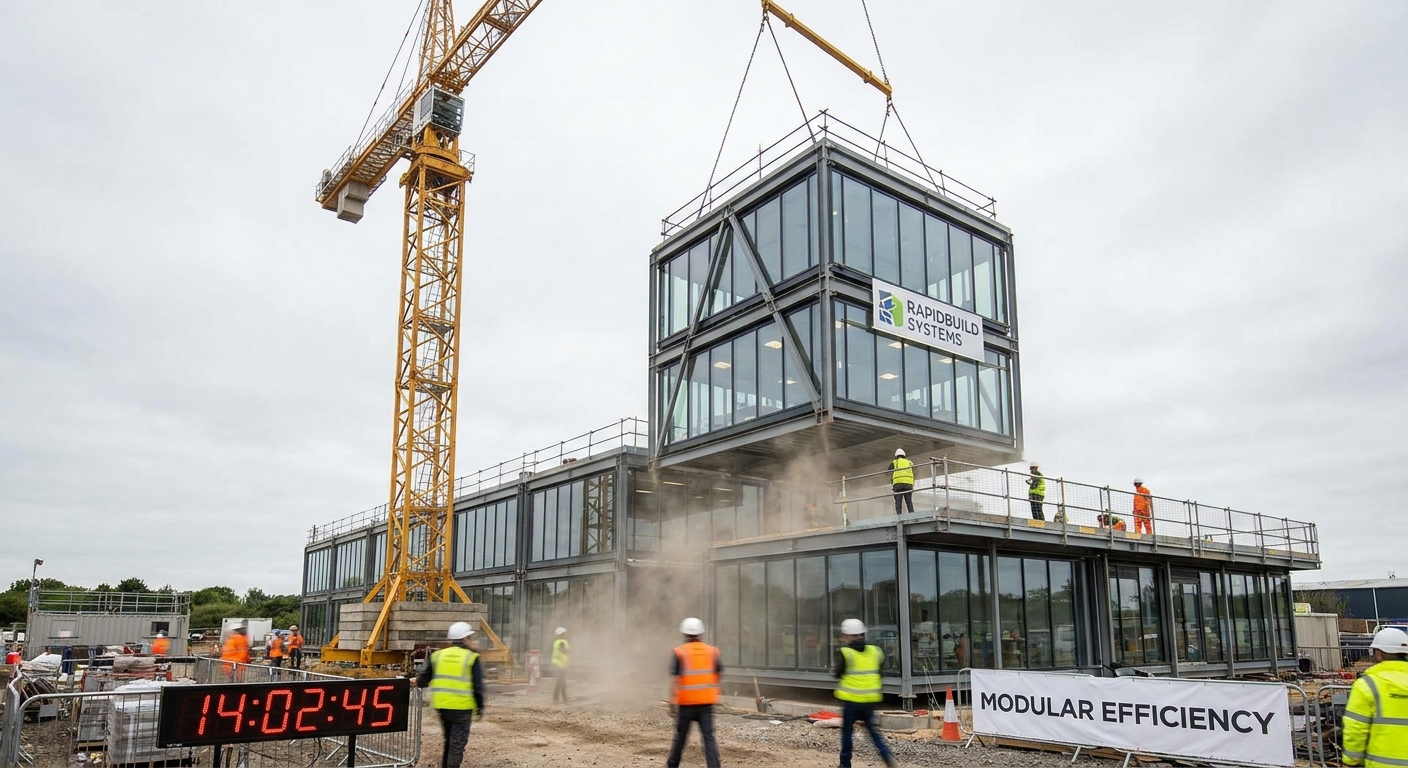
The installation of prefabricated office buildings is remarkably straightforward because the components arrive as a pre-engineered kit that fits together like a giant 3D puzzle. Every column, beam, and panel is labeled and numbered to match a detailed set of installation drawings provided to your crew.
While the on-site phase of prefabricated office buildings requires a crane and a skilled team, the “heavy lifting” of measurement and cutting has already been done in the factory. This eliminates the “trial and error” often found on traditional construction sites, leading to a much smoother assembly process.
How long does assembly take?
The best part? Small to medium-sized offices can often be fully dried-in within a matter of days, rather than weeks. This rapid closure allows interior finishing work—like electrical and plumbing—to start almost immediately, further accelerating your move-in date.
- Modules are craned directly onto the foundation.
- Precision-aligned holes make bolting fast and easy.
- Comprehensive guides reduce the need for site fixes.
Do you need specialized tools?
Here is the deal: while standard construction tools are used, the primary requirement is a crane capable of handling the module weights. Because the structure is engineered for assembly, your local contractor can often complete the job with less frustration than a custom-built project.
Key Takeaway: Installation is the “payoff” for all the factory planning, turning a complex construction project into a manageable assembly task.
| Phase | Time Estimate | |
|---|---|---|
| Foundation Prep | 1 to 2 weeks | |
| Structural Assembly | 3 to 7 days | |
| Interior Finishing | 2 to 4 weeks |
A streamlined installation process ensures that your business can transition into its new space with minimal downtime and maximum efficiency.
Are prefabricated office buildings an eco-friendly choice?
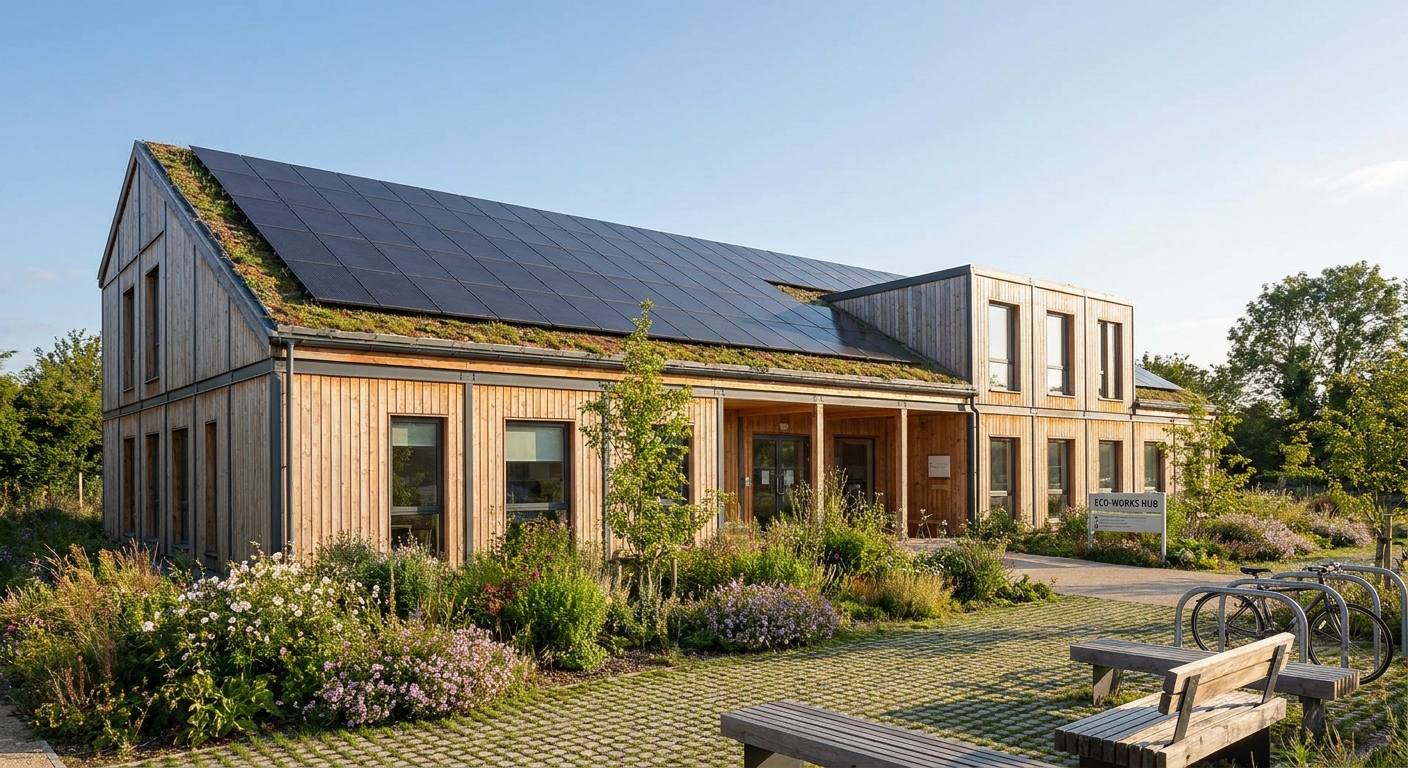
Prefabricated office buildings are an eco-friendly choice because the factory setting allows for precise material management, reducing waste by up to 40% compared to traditional sites. Any leftover steel or insulation in the factory is immediately recycled or repurposed, rather than being sent to a landfill.
Additionally, prefabricated office buildings are often designed with high-performance insulation that exceeds standard energy codes. This means your ongoing operational carbon footprint is lower, as the building requires less energy to heat and cool throughout the year.
Can they be disassembled and moved?
Think about it: traditional buildings are usually demolished at the end of their life, but many modular components can be disassembled and relocated or recycled. This “cradle-to-cradle” approach makes prefab a cornerstone of the circular economy in the construction industry.
But wait, there is more:
- Fewer truck deliveries to the site reduce carbon emissions.
- Precision sealing reduces air leakage and energy loss.
- Sustainable materials like steel are 100% recyclable.
Is the site impact smaller?
Here is the deal: because the building is “manufactured” elsewhere, there is far less disruption to the local ecosystem on your property. You won’t have months of heavy machinery compacting the soil and disturbing local wildlife or neighbors.
Key Takeaway: Choosing prefab is a commitment to sustainability, offering a path to growth that respects both your budget and the environment.
| Green Factor | Environmental Benefit | |
|---|---|---|
| Waste Control | Massive reduction in landfill contributions | |
| Energy Efficiency | Lower HVAC costs and carbon emissions | |
| Reusability | Potential for relocation rather than demolition |
This ecological focus proves that industrial efficiency and environmental stewardship can go hand-in-hand in modern architecture.
How to start your project with prefabricated office buildings?
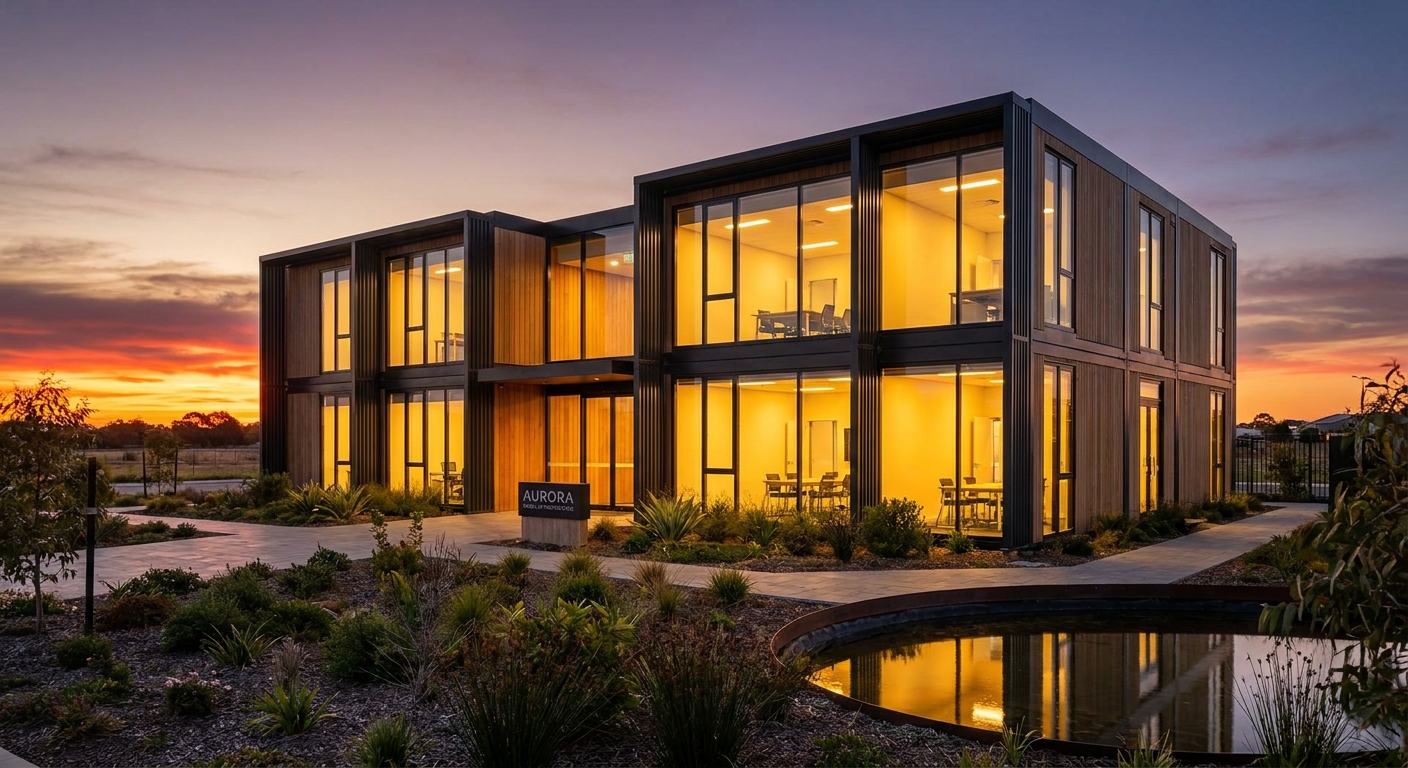
Starting your project with prefabricated office buildings begins with defining your space requirements and coordinating with a specialist manufacturer to create a custom 3D design. You don’t need to be an engineer; you just need a clear vision of how many people you need to house and what your site constraints look like.
Once the design for your prefabricated office buildings is finalized, the manufacturer handles the fabrication, quality control, and shipping logistics. You can then focus on preparing your site’s foundation while your building is being precision-crafted in the factory.
What information do you need to provide?
The best part? A dedicated project team will guide you through the technical specifications, ensuring your design meets all local wind, snow, and seismic requirements. You’ll receive a complete bill of materials and a clear timeline before any steel is even cut.
- Total square footage and number of floors.
- Required number of offices and meeting rooms.
- Local weather conditions for structural engineering.
How do you handle shipping?
Here is the deal: the components are packed securely into containers to ensure they arrive at your site in perfect condition. Whether you are across the street or across the ocean, integrated delivery services make sure every bolt and panel is accounted for.
Key Takeaway: The process is designed to be a one-stop solution, taking the complexity out of construction so you can focus on running your business.
| Step | Action Required | |
|---|---|---|
| Consultation | Define goals and site requirements | |
| Design | Approve 3D models and engineering plans | |
| Execution | Monitor factory progress and prepare site |
Starting your journey today sets the stage for a stress-free construction experience and a world-class workspace.
Building a new headquarters shouldn’t be a source of stress or financial uncertainty. By choosing prefabricated office buildings, you solve the problems of slow timelines, hidden costs, and inconsistent quality. We provide the engineering excellence and factory-direct pricing you need to expand your operations with confidence. Our vision is a world where every business has access to high-quality, sustainable, and rapid infrastructure. To take the first step toward your new professional workspace, contact us today for a customized quote and expert project analysis.
FAQ
Can I move my office to a different location in the future?Yes, most prefabricated structures are designed with modularity and bolting systems that allow for disassembly and relocation. This flexibility is a key advantage if your business needs to move to a new site or reconfigure its layout.
What’s the best way to ensure the building meets my local weather codes?The most effective method is to provide your manufacturer with specific local data regarding wind speeds, snow loads, and seismic activity. Professional engineering teams use this data to customize the steel thickness and bracing to ensure full compliance.
How do I know if prefab is cheaper than traditional construction for my specific site?You should request a factory-direct quote and compare it against a traditional contractor’s bid while factoring in the “opportunity cost” of a shorter timeline. Prefab often wins on total landed cost when you account for reduced labor, waste, and faster occupancy.
Can I add more floors to my building later?Yes, provided the initial foundation and structural frame were engineered to support the additional load of a second or third story. It is best to mention your future expansion plans during the initial design phase so the base structure is ready.
What’s the best material for insulation in a humid climate?Rock wool or PU (Polyurethane) sandwich panels are excellent choices because they offer high thermal resistance and are less prone to moisture absorption than traditional fiberglass. These materials keep your interior dry and comfortable while preventing mold growth.