
Metal building insulation options typically include fiberglass batts, rigid foam, and insulated panels, with prices ranging from 0.50 to 2.50 per square foot depending on the material’s thermal performance and thickness. Without proper protection, your steel structure will quickly become a breeding ground for rust while skyrocketing your monthly utility bills. You do not want to watch your investment deteriorate under the weight of condensation and extreme temperatures. High-quality steel building insulation provides the essential barrier needed to maintain climate control and long-term structural integrity.
Why is steel building insulation essential for your project?
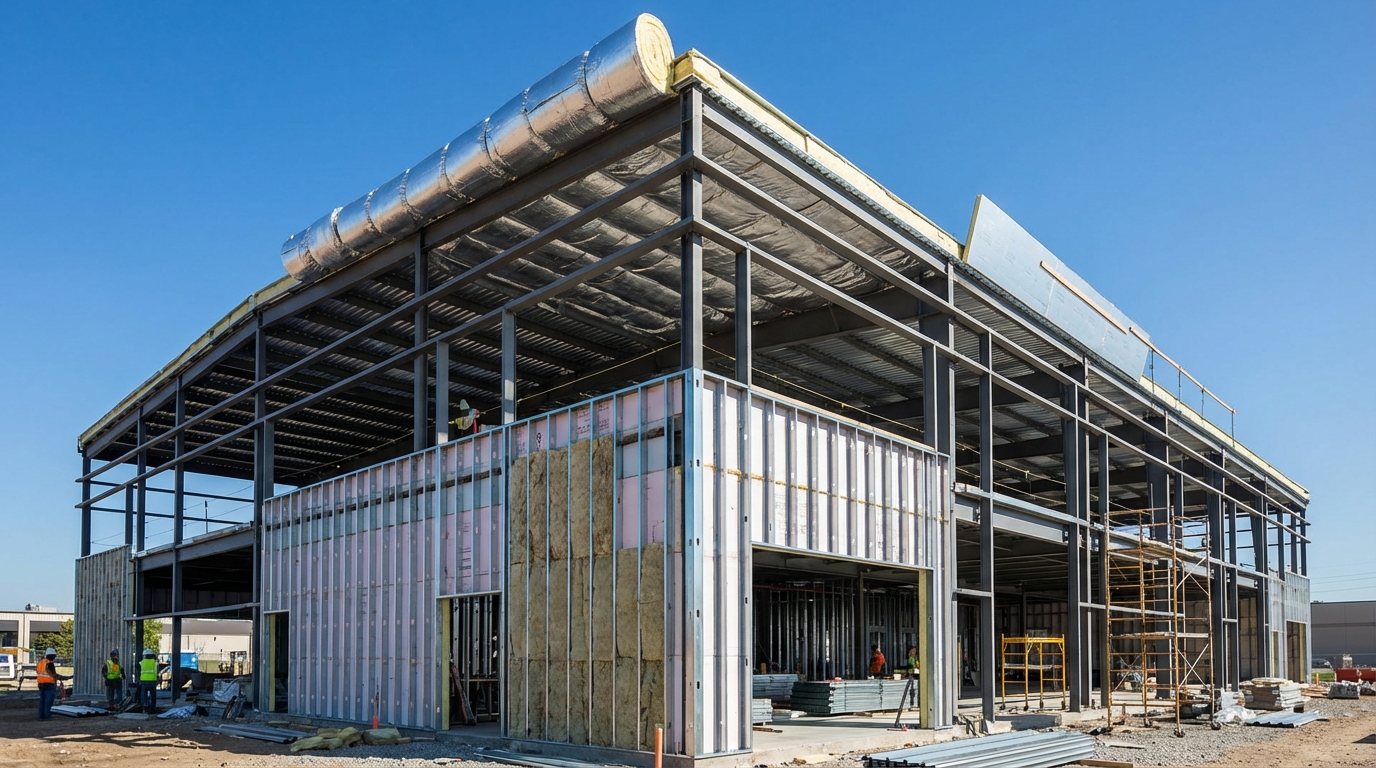
Steel building insulation is essential because it acts as a thermal shield that regulates interior temperatures while preventing moisture-driven corrosion. Installing steel building insulation is the most effective way to ensure your warehouse or workshop remains comfortable and safe for decades. This barrier stops the rapid transfer of heat that naturally occurs through metal panels during seasonal shifts. Without it, you are essentially leaving your valuable equipment and inventory vulnerable to the elements.
Protecting Your Structural Integrity
Condensation is a silent killer for any metal structure. When warm air meets cold steel, water droplets form and lead to rust at your bolts, screws, and secondary members. You must break this cycle to keep your building standing strong.
- Prevents rust on purlins
- Eliminates mold growth
- Protects secondary members
- Extends building lifespan
Maximizing Energy Efficiency
Believe it or not, an uninsulated building can lose up to 50% of its heating or cooling through the roof alone. You will see a significant drop in operational costs by investing in a high-quality thermal wrap. The savings over the building’s life often far exceed the initial installation price.
| Benefit | Impact | Efficiency Gain | |
|---|---|---|---|
| Heat Retention | High | 40% | |
| Cooling Control | Medium | 30% | |
| Moisture Block | Critical | 100% |
Effective thermal barriers transform a simple shell into a high-performance environment suitable for sensitive operations.
Key Takeaway: Proper insulation is not just an add-on; it is a vital structural component that prevents rust and slashes energy expenses for the life of the building.
Where should you install steel building insulation materials?
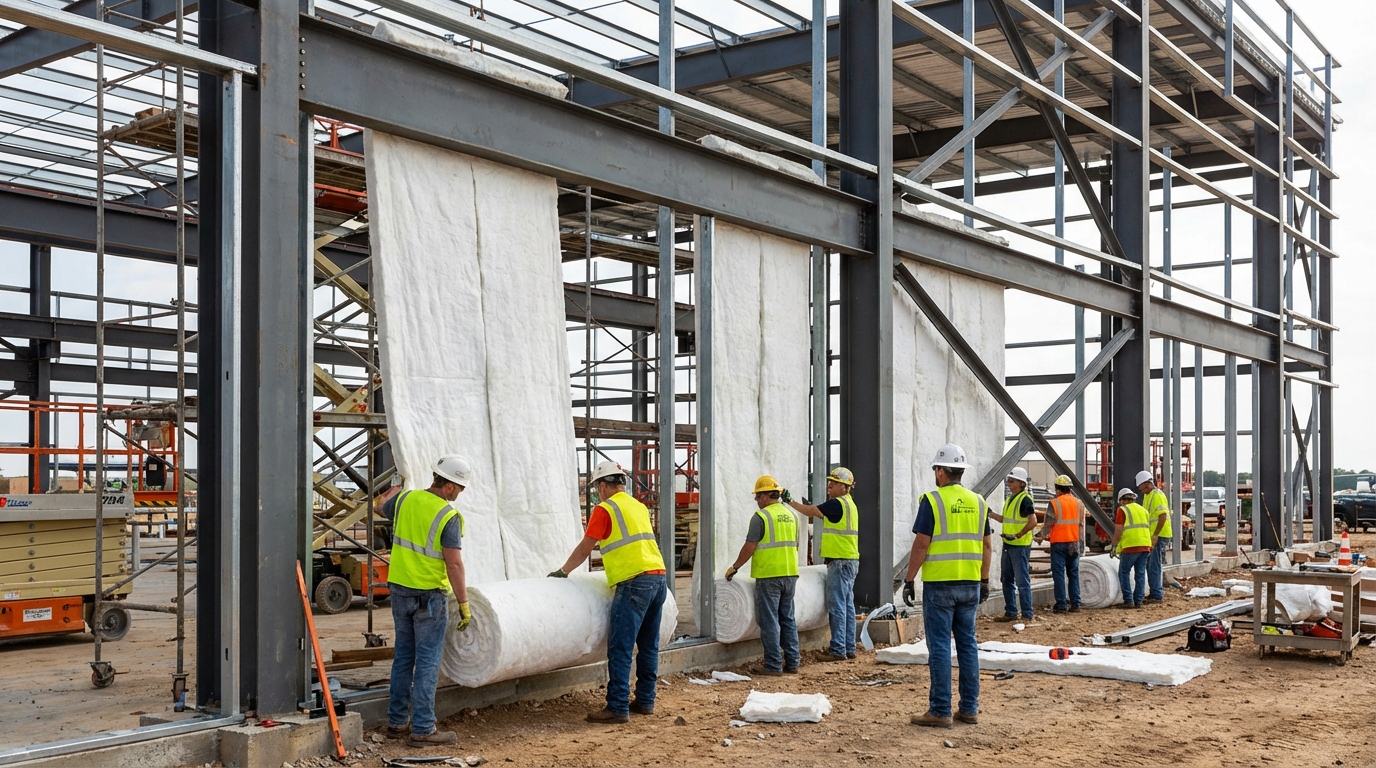
You should install steel building insulation in both the roof and the sidewalls to create a complete thermal envelope that eliminates drafts and cold spots. While the roof is the most critical area for preventing heat transfer, skipping the walls leaves your structure vulnerable to condensation. Modern steel building insulation techniques involve sandwiching the material between the frame and the exterior panels. This creates a seamless seal that blocks thermal bridging across the entire metal surface.
Roof Area Priorities
The roof is where the most significant temperature exchange occurs in any large-scale metal facility. You should prioritize high R-value materials here to combat the rising heat in winter and intense solar radiation in summer.
- Blocks vertical heat loss
- Prevents ceiling rain
- Reduces noise from rain
- Lowers solar gain
Wall Insulation Benefits
Don’t overlook the importance of your vertical panels. If you live in a snowy climate, moisture from snowbanks can transfer cold directly through the metal sheeting. Here is the deal: insulating the walls prevents that cold from reaching your interior air.
| Location | Critical Level | Recommended R-Value | |
|---|---|---|---|
| Roof | 10/10 | R-19+ | |
| Sidewalls | 8/10 | R-13+ | |
| Endwalls | 7/10 | R-13+ |
Strategic placement of insulation ensures that no part of the steel frame acts as a conduit for unwanted thermal transfer.
Key Takeaway: For the best results, treat your building as a single unit by insulating every exterior surface to prevent isolated condensation points and energy leaks.
What are the main types of steel building insulation?
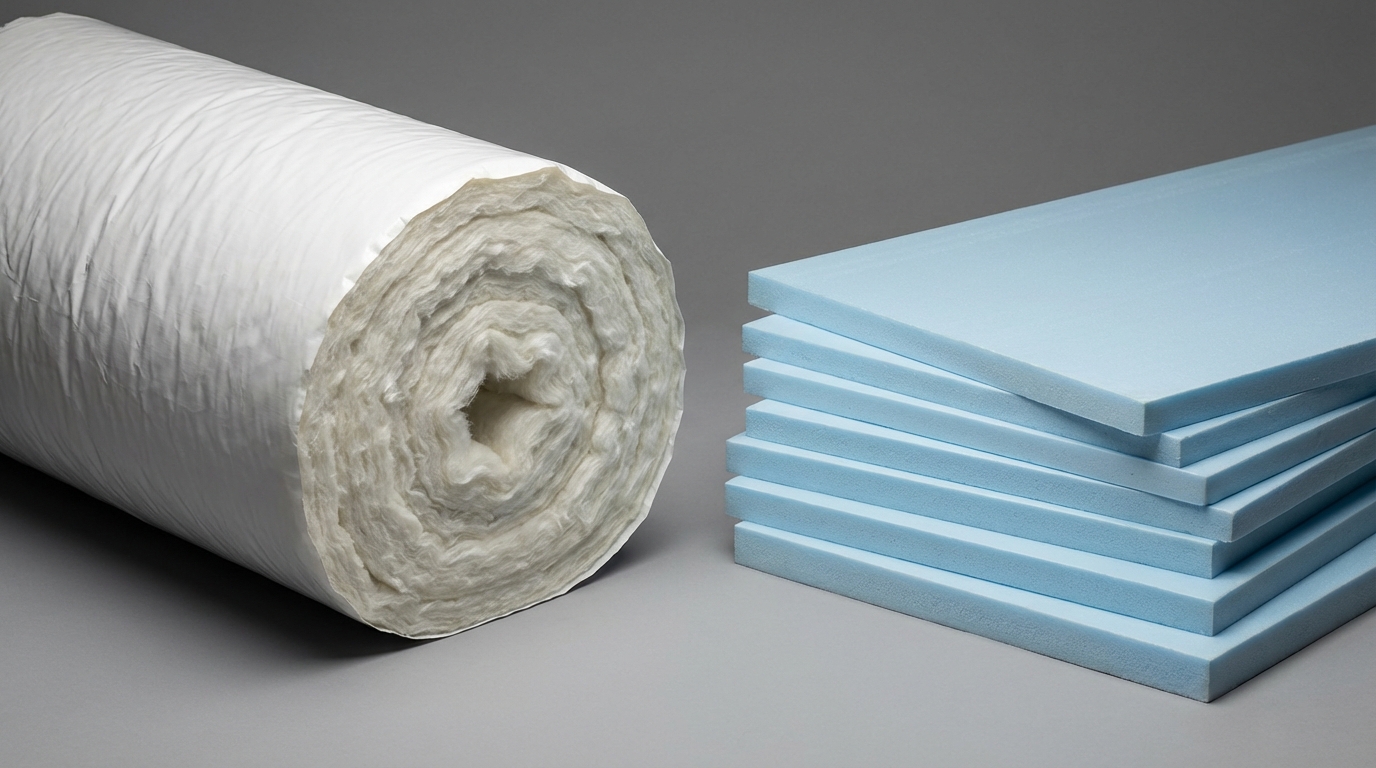
The main types of steel building insulation include vinyl-backed fiberglass batts, rigid foam boards, and pre-insulated sandwich panels. Each type of steel building insulation offers different levels of thermal resistance and aesthetic finishes for your interior walls. Fiberglass batts are the most common choice due to their affordability and ease of installation during the sheeting process. However, if you require a high-end finish and maximum efficiency, insulated panels are the clear winner for industrial projects.
Fiberglass Batt Systems
Vinyl-backed fiberglass is a versatile option that provides a built-in vapor barrier to keep moisture away from your steel frame. You can easily roll these batts over the purlins before the roof panels are screwed down.
- Cost-effective pricing
- Includes vapor barrier
- Wide availability
- Simple installation
Rigid Foam and Sandwich Panels
Rigid foam boards offer better R-values per inch than traditional batts. But wait, there is more: sandwich panels combine the insulation and the steel siding into one single, high-performance unit. This provides a clean interior look while offering the best protection against thermal bridging.
| Insulation Type | Relative Cost | Durability | |
|---|---|---|---|
| Fiberglass Batts | Low | Moderate | |
| Rigid Foam | Medium | High | |
| Insulated Panels | High | Excellent |
Selecting the right material depends on whether you prioritize initial budget savings or long-term operational efficiency and durability.
Key Takeaway: While fiberglass batts are the budget-friendly standard, insulated panels offer the highest R-values and the most professional appearance for high-use facilities.
How do R-values impact steel building insulation choices?
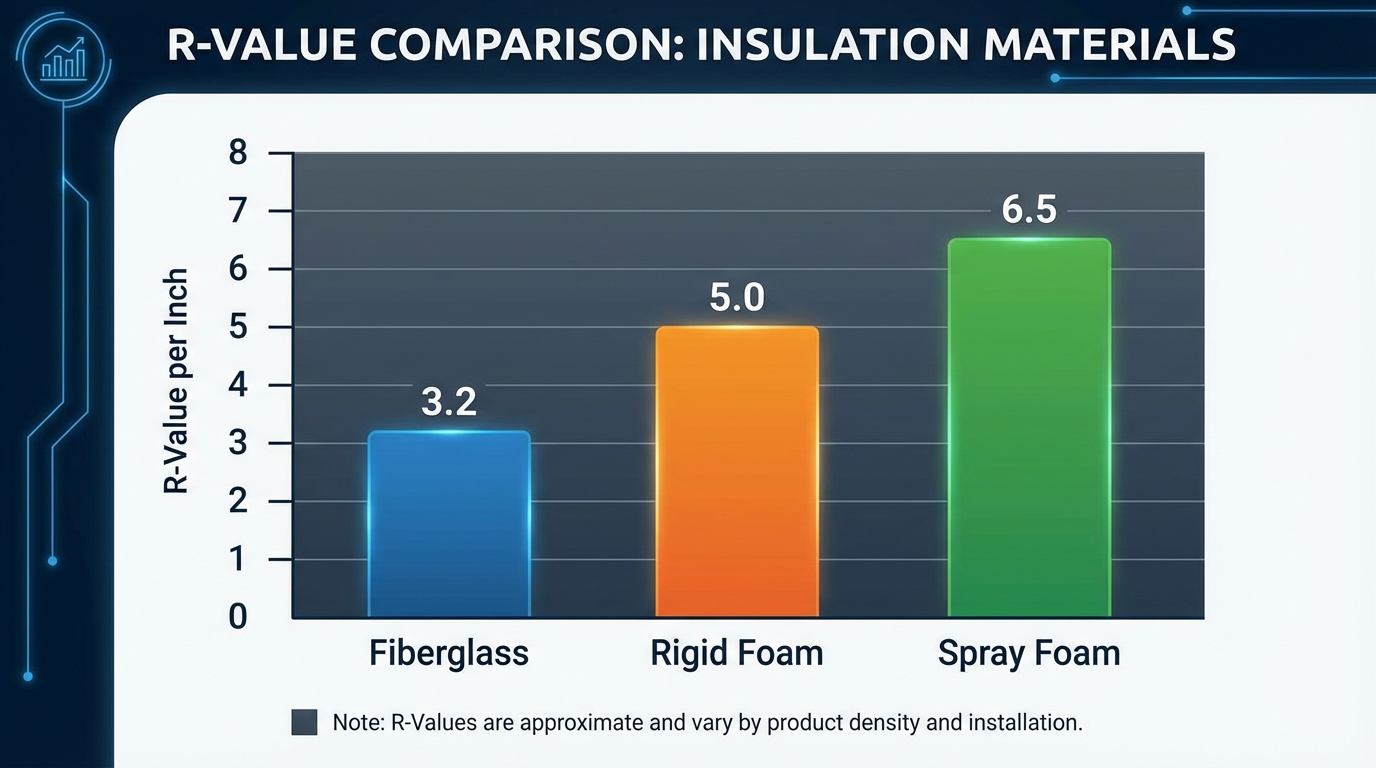
R-values impact your steel building insulation choice by determining exactly how well a specific material will resist the flow of heat into or out of your structure. The higher the R-value, the more effective the steel building insulation becomes at maintaining a stable internal climate. Local building codes often dictate the minimum R-value required for commercial or residential occupancy in your specific region. You must balance the thickness of the material with the available space between your purlins and girts to achieve the best results.
Defining Thermal Resistance
Understanding thermal resistance is the key to a comfortable building. You should know that R-value is not just about thickness; it is about the material’s density and its ability to trap air.
- Measures heat flow resistance
- Higher numbers are better
- Dictates energy compliance
- Varies by material type
Climate-Specific Standards
The truth is that a building in Florida needs a different R-value strategy than one in Alaska. You want to aim for the sweet spot where your insulation provides enough protection without over-engineering the cost. Higher R-values are always worth the investment in extreme temperature zones.
| Region | Recommended R-Value | Priority | |
|---|---|---|---|
| Southern / Arid | R-13 | Solar Block | |
| Moderate / Central | R-19 | Balanced | |
| Northern / Arctic | R-30+ | Heat Retention |
Choosing the correct R-value ensures you aren’t paying for heat that immediately escapes through a thin, poorly insulated shell.
Key Takeaway: R-value is the primary metric for insulation performance; always choose a value that meets or exceeds your local climate demands for maximum comfort.
Is spray foam the best steel building insulation option?
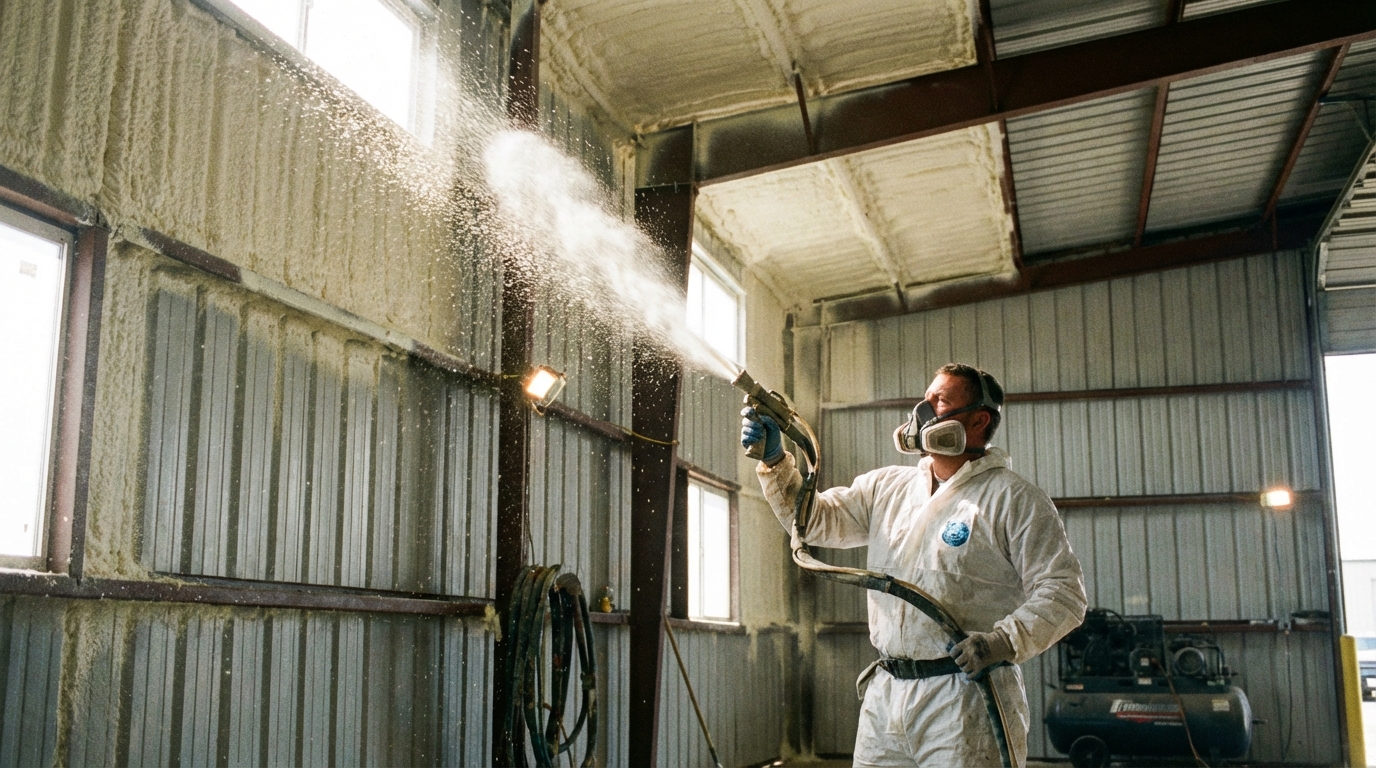
Spray foam is often not the best steel building insulation option because it lacks a proper vapor barrier and can trap destructive moisture directly against the metal panels. While this steel building insulation provides a tight seal and high R-values, it is not recommended by many industry experts for long-term steel protection. The foam can hide developing rust on the purlins and panels until the structural damage becomes catastrophic. You are usually much better off choosing vinyl-backed systems that allow the metal to breathe or shed condensation.
The Hidden Rust Risk
Spray foam adheres directly to the metal, which sounds like a benefit but can be a nightmare. If even a small amount of moisture gets behind the foam, it stays trapped against the steel.
- Hard to inspect panels
- Traps humidity
- Accelerates hidden rust
- Difficult to remove
Vapor Barrier Limitations
Most spray foams do not have the same permeance levels as dedicated vapor barriers. You might find that the foam absorbs moisture over time, losing its R-value and becoming a heavy, wet mess. Stick to insulation packages designed specifically for the expansion and contraction of metal structures.
| Feature | Spray Foam | Vinyl Fiberglass | |
|---|---|---|---|
| Air Sealing | Excellent | Moderate | |
| Rust Protection | Poor | Excellent | |
| Inspectability | Zero | High |
Avoiding spray foam protects your building’s skeleton from invisible corrosion that could lead to structural failure years down the line.
Key Takeaway: Despite its high R-value, spray foam is risky for metal buildings because it can trap moisture and hide rust on critical structural members.
How do you calculate steel building insulation costs?

You calculate steel building insulation costs by finding the total square footage of your roof and walls and multiplying it by the price of your chosen material. Estimating your steel building insulation requirements involves two separate formulas for the perimeter and the ceiling areas. For a standard 60×80 building, you would need roughly 9,300 square feet of coverage to protect the entire interior. Always remember to add a 10% buffer to your calculations to account for overlaps and cutting waste during the installation process.
Measuring Perimeter Walls
To find your wall square footage, simply add the lengths of all four walls and multiply by the eave height. You must also subtract the area of large doors and windows if you aren’t insulating over them.
- Add building lengths
- Multiply by eave height
- Subtract large openings
- Account for endwall peaks
Estimating Roof Coverage
Roof area is slightly different because of the pitch. You cannot just multiply length by width; you must account for the extra slope distance. Here is the secret: a 4:12 pitch adds about 5% more surface area compared to a flat footprint.
| Building Size | Total Wall SQFT | Total Roof SQFT | |
|---|---|---|---|
| 30x40x12 | 1,680 | 1,260 | |
| 40x60x14 | 2,800 | 2,520 | |
| 50x100x16 | 4,800 | 5,250 |
Accurate measurements prevent you from ordering too much material or, worse, running out in the middle of a construction day.
Key Takeaway: Use separate formulas for the roof and walls while accounting for roof pitch to determine the exact square footage of insulation needed for your project.
Can steel building insulation prevent condensation?
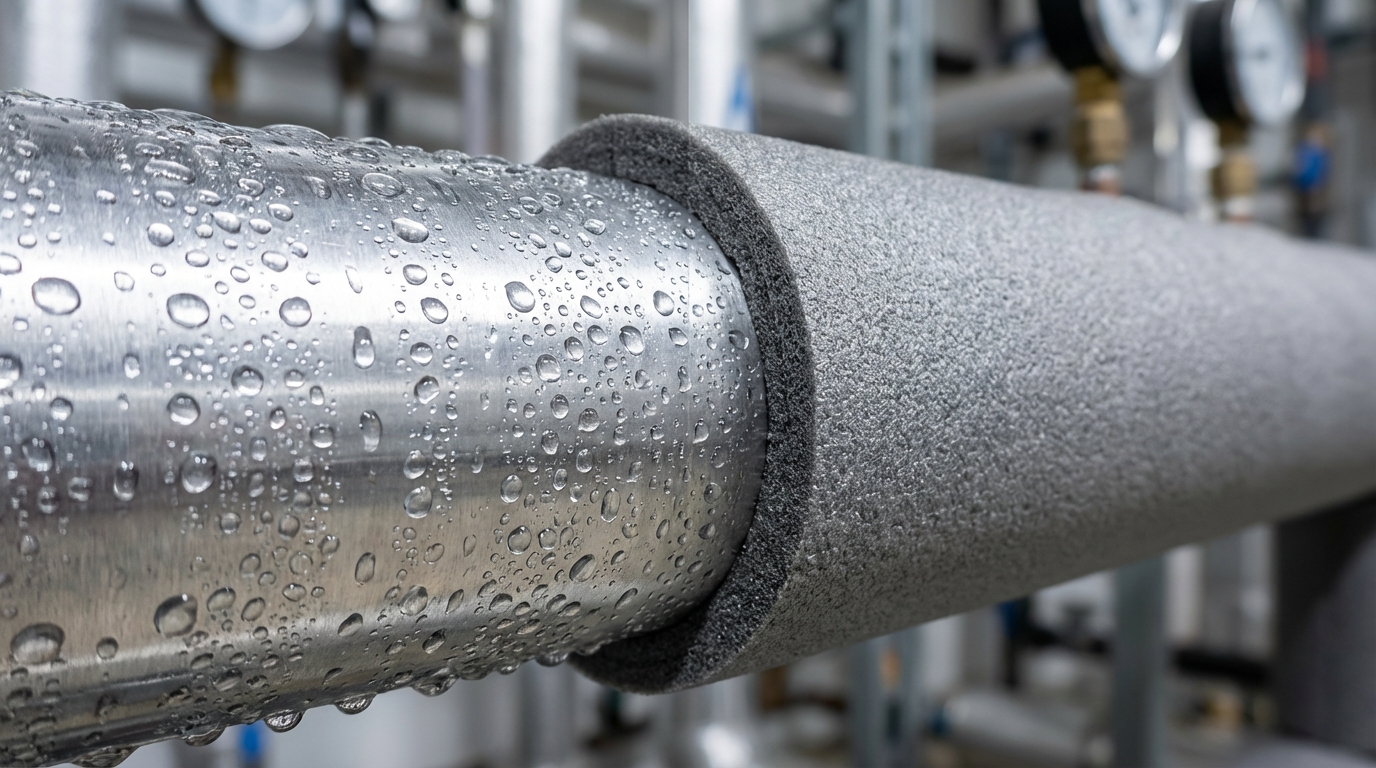
Yes, steel building insulation prevents condensation by creating a thermal break that stops warm, moist air from touching the cold metal panels. Without this steel building insulation , your building will essentially “rain” on the inside whenever the outdoor temperature drops. The insulation keeps the dew point from occurring on the metal surface, which is where moisture typically gathers. You must ensure the vapor barrier is properly sealed at the seams to keep the humid air away from the steel skeleton.
How Condensation Forms
Condensation happens when humidity in the air meets a surface that is cooler than the dew point. In a metal building, the steel panels are excellent conductors of cold, making them perfect magnets for moisture.
- High humidity levels
- Cold metal panels
- Warm interior air
- Lack of thermal break
Breaking Steel-to-Steel Contact
By sandwiching insulation between the sheeting and the frame, you effectively eliminate thermal bridging. This simple layer acts as a buffer that keeps the metal frame at a more stable temperature. You will notice an immediate difference in the dryness of your facility once the system is fully installed.
| Component | Function | Result | |
|---|---|---|---|
| Purlins | Skeleton | Kept Dry | |
| Roof Panels | Exterior | No Drip | |
| Vapor Barrier | Seal | Moisture Block |
Stopping condensation is the single most important thing you can do to protect your inventory and the building’s structural health.
Key Takeaway: Insulation is the only reliable way to prevent the “ceiling rain” effect that causes rust and mold in uninsulated metal structures.
What are common steel building insulation buying pitfalls?
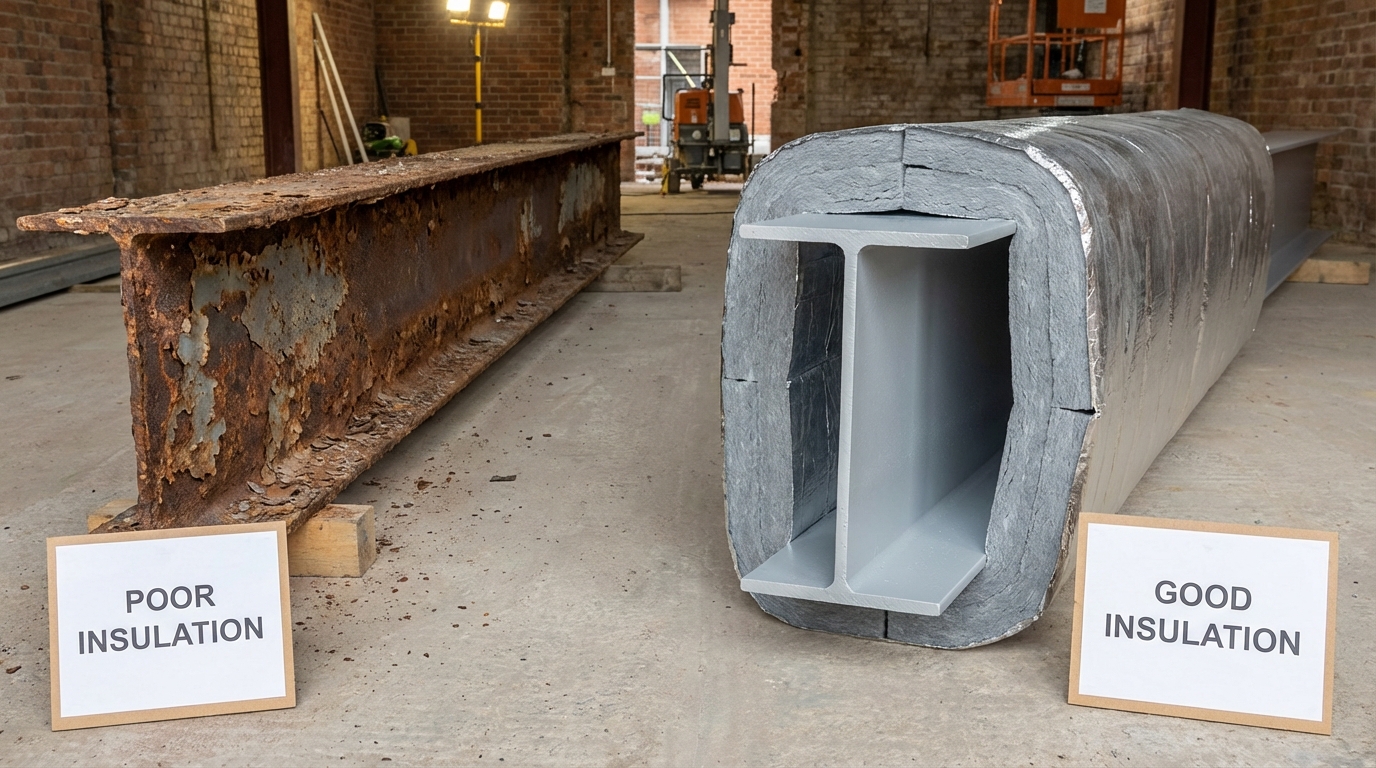
Common steel building insulation buying pitfalls include purchasing low-quality “bubble wrap” alternatives and failing to verify the material’s actual R-value. Many people try to save money by choosing thin radiant barriers that do not provide true thermal resistance for steel building insulation. These materials may reflect some heat, but they fail to stop conductive heat transfer and often have poor vapor barrier properties. You should always ask for manufacturer photos and specifications to ensure you are getting thick, high-density materials designed for heavy-duty use.
The Bubble Wrap Mistake
Be wary of suppliers who promise high performance from thin foil-backed bubble wrap. While it looks shiny, it lacks the thermal mass needed to actually insulate a building in cold climates.
- Poor R-values
- Weak vapor barriers
- No thermal mass
- Easily damaged
Ignoring Vapor Permeance
Another trap is choosing insulation that doesn’t have a professional-grade vapor retarder. You need a material with a low perm rating to truly block moisture migration. Make sure your seams can be taped securely, or your insulation will eventually become saturated and useless.
| Pitfall | Consequence | Better Choice | |
|---|---|---|---|
| Radiant Only | No Cold Block | Vinyl-Backed Glass | |
| No Tape Seams | Moisture Leak | Double-Sided Tape | |
| Low R-Value | High Bills | R-19+ Batts |
Avoiding these mistakes ensures your building performs as intended without requiring expensive retrofits or repairs later on.
Key Takeaway: Don’t be fooled by cheap radiant barriers; invest in high-density insulation with a verified R-value to ensure real climate control and protection.
Does steel building insulation work in open wall kits?
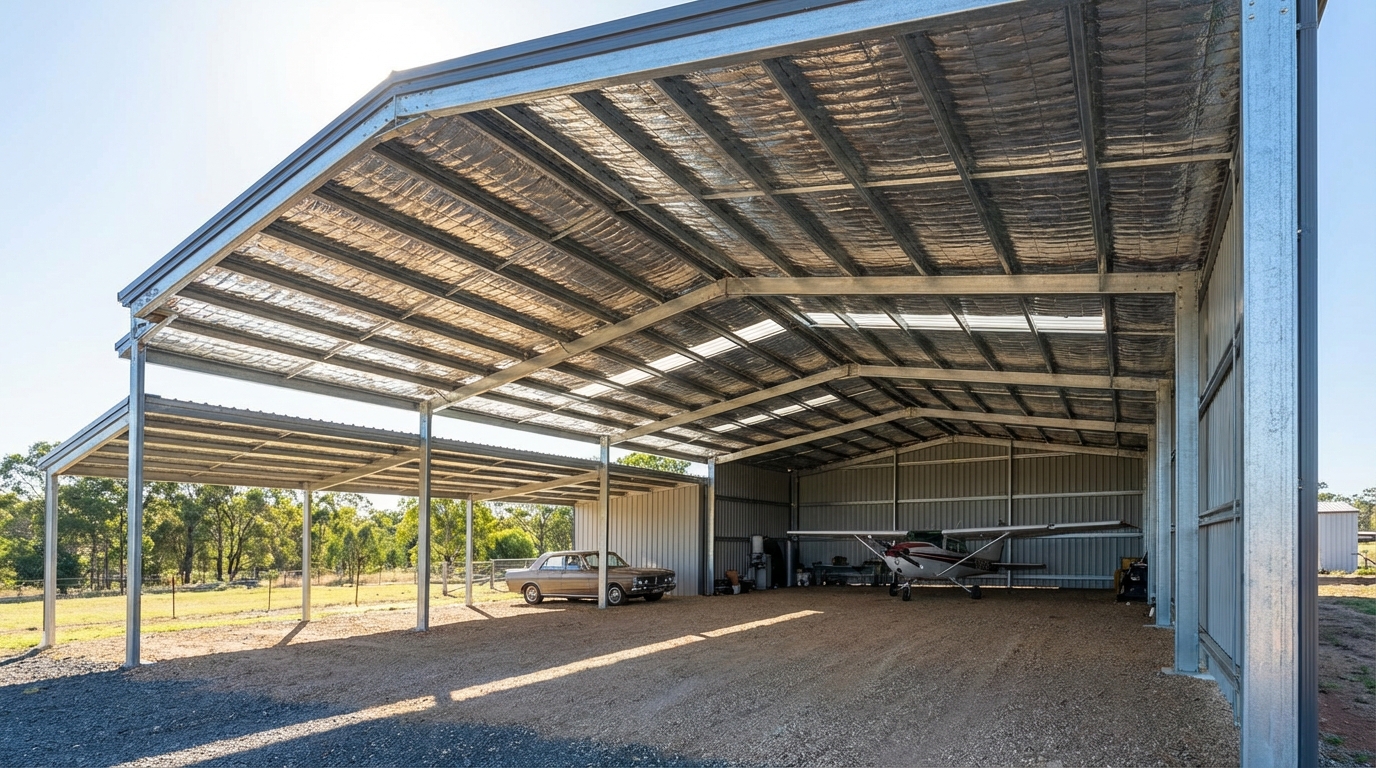
Steel building insulation works exceptionally well in open wall kits by preventing condensation from dripping off the roof onto your parked vehicles or equipment. Even in an open structure, steel building insulation is vital for managing the temperature differential on the ceiling. This prevents the “sweating” that often ruins car paint or causes rust on machinery stored under carports. You can also use specialized materials like DripStop or felt-backed panels to manage moisture in these open environments.
Managing Ceiling Rain
In an open hangar or carport, the air is the same temperature inside and out, but the metal panels can still drop below the dew point at night. You will find that an insulated roof keeps your belongings dry during those morning temperature swings.
- Stops roof dripping
- Protects vehicle paint
- Quiets rain noise
- Keeps shade cooler
Thermal Mass Alternatives
Some owners choose to combine steel roofs with concrete block walls for added security and thermal mass. However, the roof still needs a thermal break to prevent moisture issues. Here is the bottom line: never leave a metal roof uninsulated if you want to keep the area underneath it dry.
| Structure Type | Insulation Need | Main Priority | |
|---|---|---|---|
| Open Carport | Roof Only | Drip Control | |
| Aircraft Hangar | Full / Roof | Climate & Drip | |
| Picnic Shelter | Roof Only | Heat Block |
Insulating the roof of an open building significantly increases the comfort level for anyone working or parking underneath it.
Key Takeaway: Even open structures need roof insulation to prevent condensation from dripping onto vehicles and to provide a cooler shaded area.
Which steel building insulation fits your climate?

The steel building insulation that fits your climate depends on whether you need to block extreme heat, retain internal warmth, or manage high humidity levels. In northern regions, high R-value fiberglass or insulated panels are necessary for steel building insulation to keep heating costs manageable. Conversely, in tropical or arid regions, radiant barriers and moderate-thickness batts are often sufficient to block intense solar heat gain. You should consult a climate map to determine the specific thermal requirements for your building’s location.
Extreme Cold Solutions
If you are building in a sub-zero environment, you cannot afford to cut corners on thickness. You should consider a double-layer system or 4-inch thick insulated sandwich panels to maintain a habitable interior.
- High-thickness batts
- Sealed vapor seams
- Insulated doors/windows
- Maximum R-value focus
Tropical Humidity Control
In humid climates, the vapor barrier is actually more important than the R-value itself. You need a system that prevents moist air from infiltrating the building and causing mold or rust issues. High-quality vinyl backing is your best defense against the constant threat of tropical moisture.
| Climate | Insulation Focus | Suggested Material | |
|---|---|---|---|
| Arctic | Heat Retention | Sandwich Panels | |
| Arid Desert | Solar Reflection | Radiant + R-13 | |
| Tropical | Moisture Block | Vinyl Fiberglass |
Tailoring your insulation choice to your local weather patterns ensures the highest return on investment and the most comfortable environment.
Key Takeaway: Your local climate dictates your insulation needs; prioritize high R-values for cold zones and superior vapor barriers for humid areas.
Conclusion
Selecting the right metal building insulation is the most critical decision you will make for the longevity and efficiency of your project. From preventing destructive condensation to slashing monthly energy bills, the right material transforms a basic shell into a high-performance asset. At Showhoo Steel, we are committed to providing world-class manufacturing and engineering support to ensure your structure survives and thrives in any environment. Our factory-direct pricing and ISO-certified quality control mean you get the best protection without the middleman markup.
Ready to protect your investment? Contact us today to discuss your project requirements and receive a detailed, factory-direct quote.
FAQ
Can I install the insulation after my building is already erected?Yes, but it is much more difficult. Retrofitting requires attaching the insulation to the inside of the purlins rather than sandwiching it, which often leaves the frame members exposed to moisture.
What is the best way to stop rust on the purlins?The most effective method is using vinyl-backed fiberglass insulation that is installed over the purlins during the sheeting process. This creates a physical barrier between the cold steel and warm, moist air.
How do I know if I need a vapor barrier?If your building is enclosed and you experience temperature swings, you definitely need a vapor barrier. It is the only way to prevent condensation from forming and causing long-term rust.
Is vinyl-backed fiberglass better than standard bubble wrap?Absolutely. Fiberglass offers significantly higher R-values and better thermal mass, whereas bubble wrap is primarily a radiant barrier and does little to stop conductive heat transfer.
How much does insulation typically add to the cost of a building?Generally, you can expect to add between 10% and 20% to your building’s material cost for a full insulation package, but this investment usually pays for itself in energy savings within a few years.