
The Inland Steel Building is a mid-century architectural masterpiece that pioneered the use of column-free interior spaces through an innovative external steel skeleton. Most business owners struggle with rigid office layouts that prevent natural collaboration and stifle corporate growth. You feel the limitations of traditional construction when fixed pillars block your vision and your team’s workflow. By choosing the structural logic of the Inland Steel Building, you embrace a solution that externalizes support to provide 100% floor plan flexibility. Learn how our steel structure manufacturing expertise can bring this same level of innovation to your next commercial project.
1. What is the architectural significance of the Inland Steel Building?
The Inland Steel Building stands as the first major skyscraper built in the Chicago Loop after the Great Depression, marking a turning point in modernism. It introduced the International Style to the city by favoring sleek, unornamented surfaces over traditional masonry. This structure served as a bold advertisement for the post-war industrial power of its namesake company.
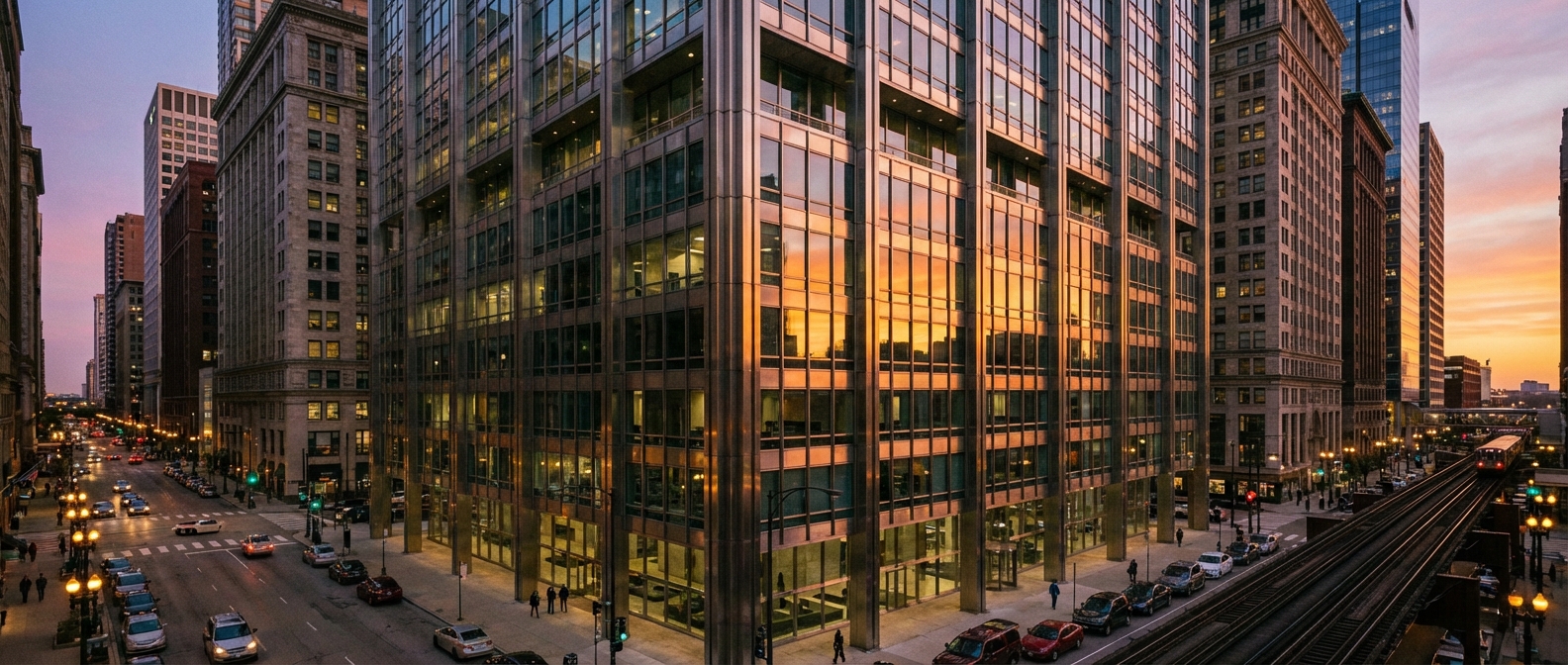
Pioneering the International Style
The design focuses on the “form follows function” philosophy popularized by Mies van der Rohe. You can see this in the shimmering facade that celebrates raw industrial materials.
- Minimalist Aesthetics: Devoid of traditional carvings or terra cotta.
- Glass Transparency: Floor-to-ceiling windows for maximum natural light.
- Structural Honesty: The building displays its steel support proudly.
A Symbol of Industrial Power
The structure was intended to prove that steel was more than just a hidden skeleton. It demonstrated that steel could be the face of modern progress.
The best part?This landmark proved that industrial materials could create high-end professional environments.
Key Takeaway: The architectural impact of this building lies in its transition from ornamental historicism to functional modernism.
| Era | Architectural Style | Core Material | |
|---|---|---|---|
| Pre-1930s | Art Deco/Neoclassical | Stone/Brick | |
| 1958 | International Style | Stainless Steel |
This table illustrates the massive shift in design philosophy led by this iconic structure.
2. How does the column-free interior of the Inland Steel Building work?
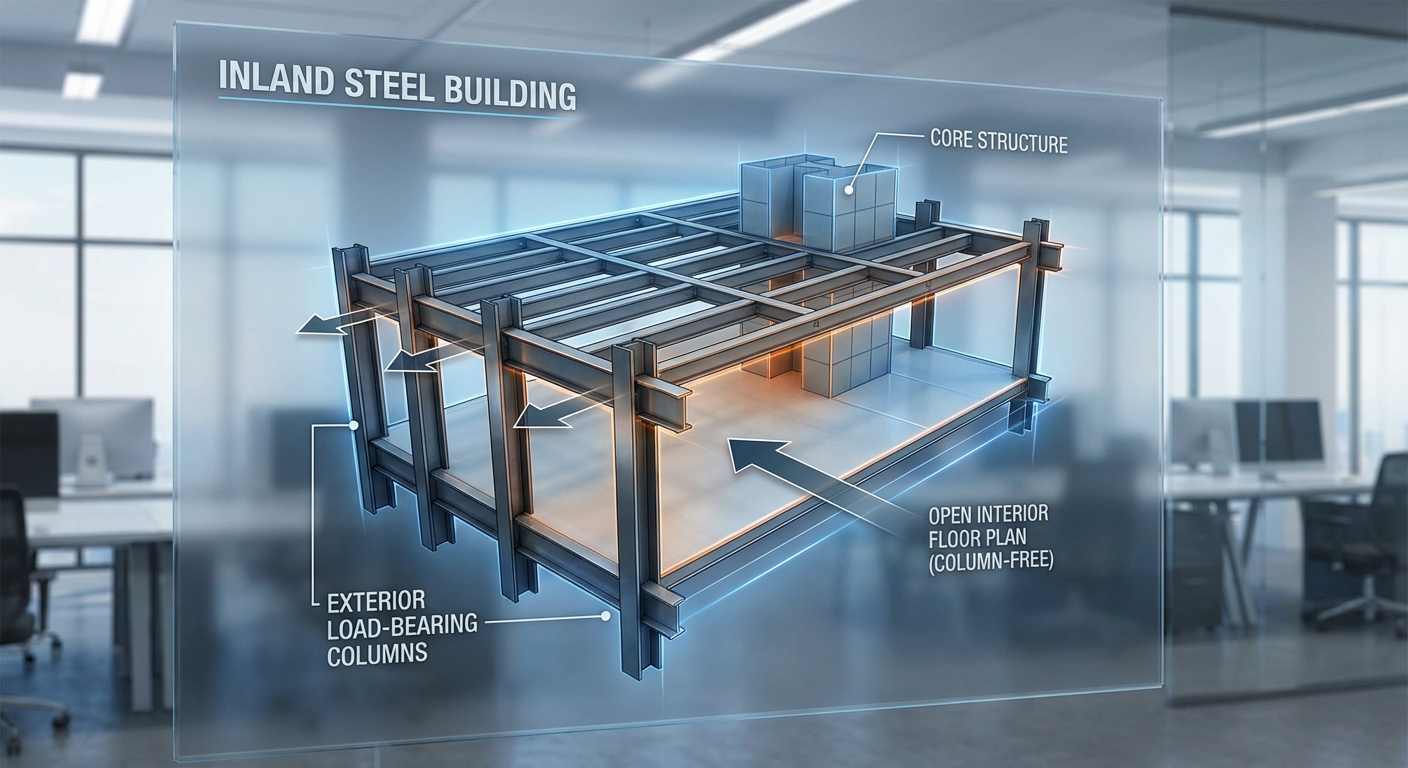
This structure achieves total interior flexibility by moving all load-bearing elements to the exterior perimeter. The Inland Steel Building provides approximately 10,200 square feet of unobstructed space on every floor. If you are planning a steel structure workshop , you can utilize this same clear-span engineering to maximize your operational efficiency.
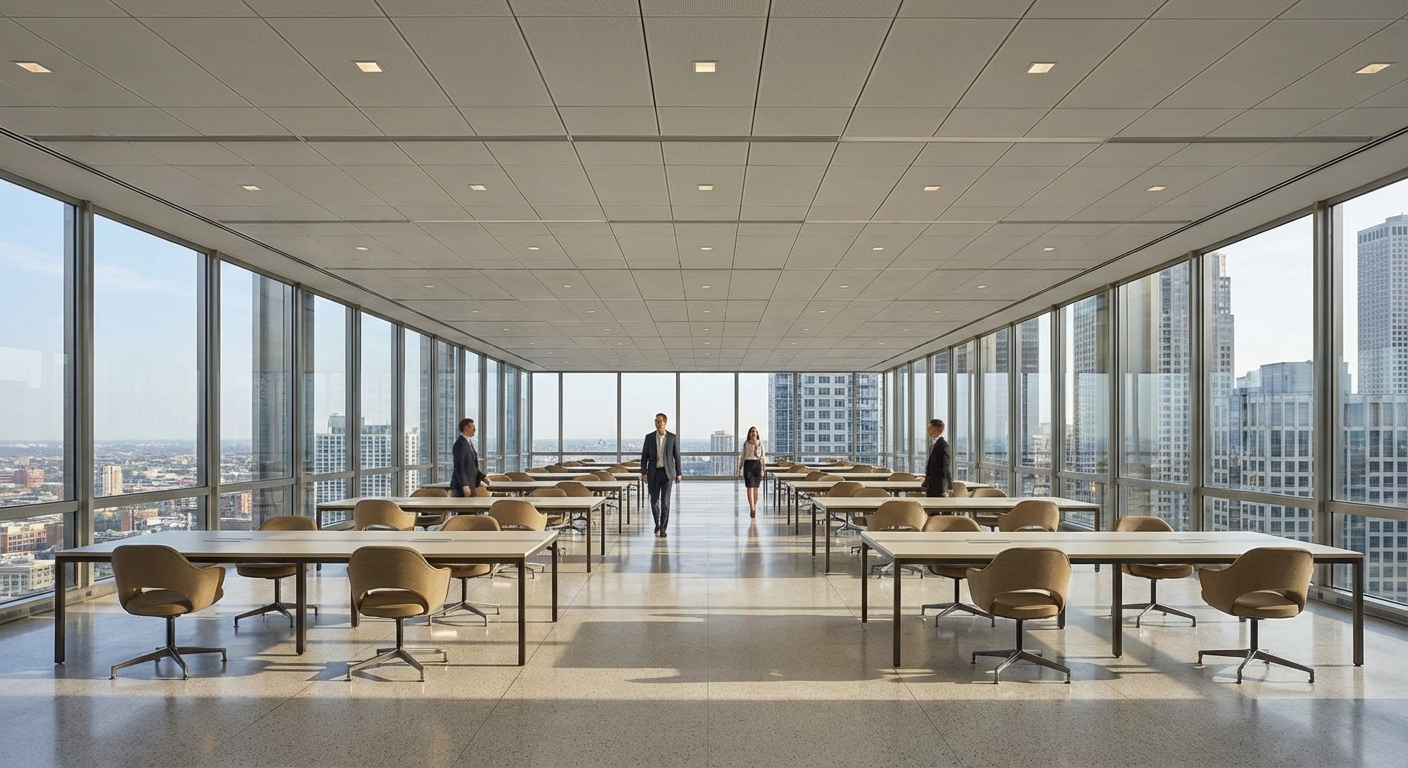
Engineering the Clear Span
The design uses 60-foot steel girders that bridge the entire width of the office tower. This removes the need for any internal pillars that would otherwise break up the room.
- Exterior Columns: 14 massive pillars carry the vertical load outside the walls.
- Long-Span Beams: High-strength steel allows for wider gaps between supports.
- Universal Space: A concept that allows any layout to be configured at will.
Flexibility for Growing Teams
Think about it:Without columns, you can rearrange desks and meeting rooms as your company evolves. This adaptability ensures the building never becomes obsolete for its tenants.
Key Takeaway: By externalizing structural support, the building maximizes usable square footage and layout freedom.
| Support Type | Placement | Impact on Interior | |
|---|---|---|---|
| Load-Bearing Columns | External Perimeter | 100% Column-Free | |
| Girders | Underfloor/Ceiling | Uninterrupted Sightlines |
The externalization of support is the defining mechanical feature that allows for such high spatial utility.
3. What innovative materials were used in the Inland Steel Building facade?
The Inland Steel Building is world-famous for its “shimmering” appearance, which is created by high-quality brushed nickel-chrome stainless steel. This material was selected specifically to resist corrosion while maintaining a brilliant, reflective finish. It remains one of the first and most successful uses of stainless steel as a primary cladding material.
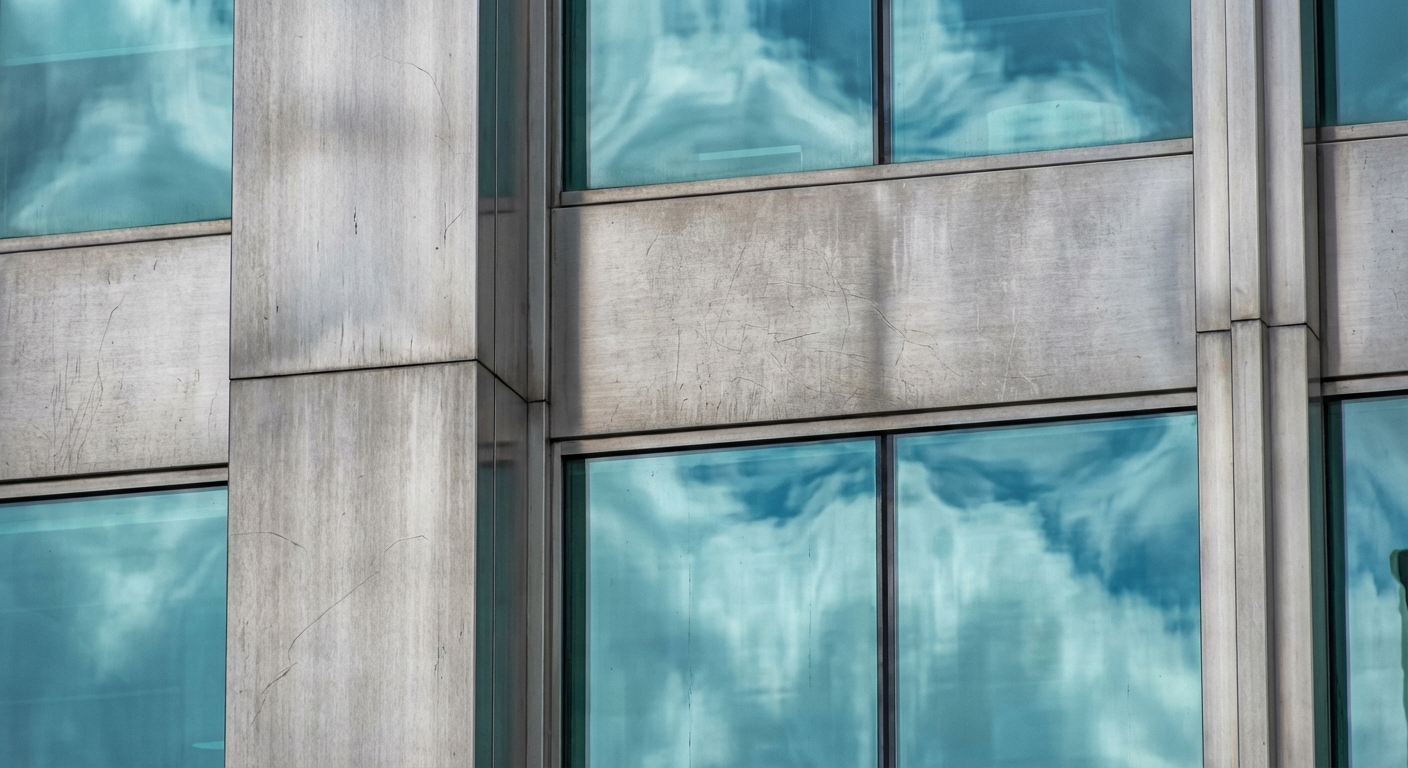
Stainless Steel Cladding Properties
The steel isn’t just a skin; it’s wrapped around the functional exterior columns to highlight the building’s strength. You get a facade that ages gracefully without the staining common in concrete.
- Nickel-Chrome Alloy: Provides superior resistance to urban pollution.
- Brushed Texture: Reduces harsh glares while retaining a silvery glow.
- Precision Fitting: Panels were engineered for rapid on-site assembly.
Aquamarine Laminated Glass
The use of tinted glass in 1958 was a bold choice that enhanced both looks and comfort.
- It reduces interior glare for employees.
- It complements the silver tones of the metal panels.
- It assists in thermal management for the HVAC systems.
Believe it or not:The glass and steel combination was so advanced it influenced skyscraper design for the next 50 years.
Key Takeaway: The marriage of brushed stainless steel and tinted glass created a timeless aesthetic that remains modern today.
| Material | Finish | Primary Benefit | |
|---|---|---|---|
| Stainless Steel | Brushed Nickel-Chrome | Corrosion Resistance | |
| Laminated Glass | Aquamarine Tint | Glare Reduction |
Using premium materials ensures that the facade maintains its prestige with minimal long-term degradation.
4. Why is the service tower separate in the Inland Steel Building design?
A separate 25-story tower houses all the “dead” functions—elevators, stairs, and utilities—away from the main workspace. By choosing this layout, the Inland Steel Building ensures that the office tower remains a pure, uninterrupted environment. This strategy is critical when developing a high-performance office building intended for high-density professional use.
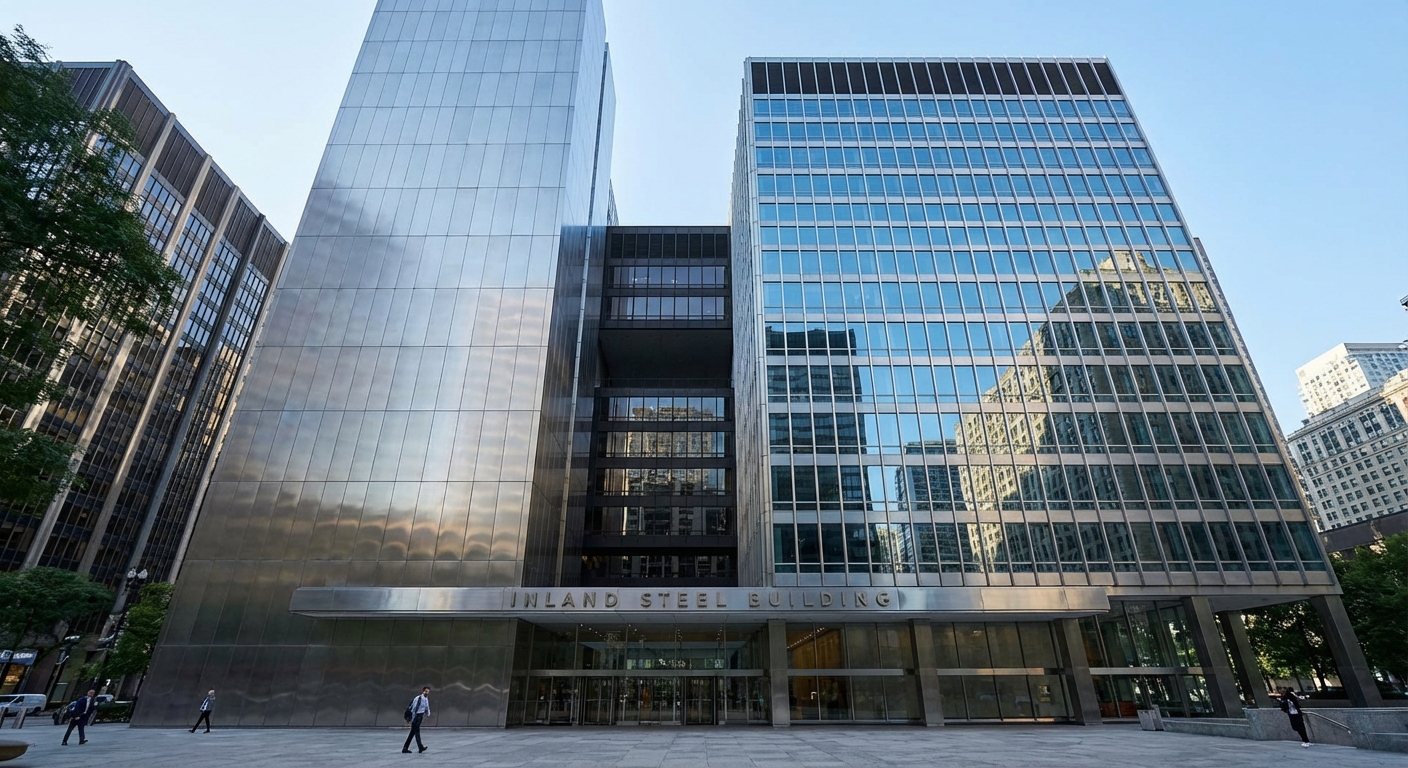
Externalized Core Systems
Moving the core outside the main footprint allows for a perfectly rectangular office plan. You don’t have to design around elevator banks or utility closets in the middle of your floor.
- Vertical Circulation: Seven elevators are centralized in the windowless tower.
- Utility Maintenance: Repairs can be conducted without entering tenant spaces.
- Visual Contrast: The taller service tower creates a striking, asymmetric silhouette.
Maximizing Tenant Efficiency
Look:Every square inch of the main tower is dedicated to your work and your people. This separation allows for a cleaner architectural expression and better interior airflow.
Key Takeaway: Separating the service core is the secret to the building’s functional success and flexible layout.
| Tower Component | Office Tower | Service Tower | |
|---|---|---|---|
| Primary Function | Professional Workspace | Elevators, Stairs, HVAC | |
| Exterior | Glass & Steel | Solid Stainless Steel |
This division of labor between the two towers creates a highly efficient and modern workplace.
5. What historical “firsts” are attributed to the Inland Steel Building?
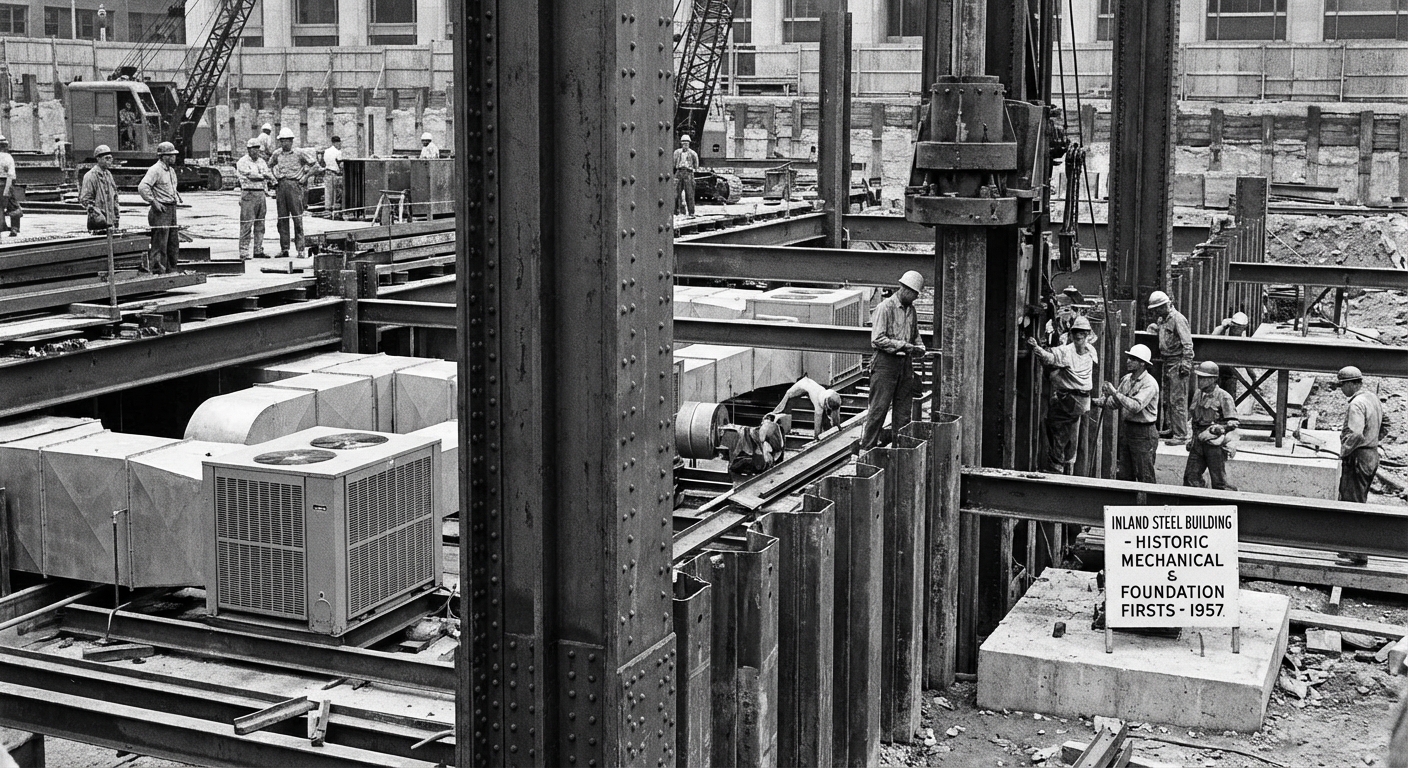
The Inland Steel Building was a laboratory for 1950s construction innovation, introducing features that are now industry standards. It was the first skyscraper in Chicago to be constructed entirely on steel pilings for foundation stability. These “firsts” solidified its place as a technological pioneer in the history of the high-rise.
Technological Milestones
The building integrated advanced systems to improve the daily experience of its inhabitants. Many of these features were revolutionary at the time of completion.
- Full Air Conditioning: The first Chicago high-rise to offer total climate control.
- Underground Parking: Introduced indoor, below-grade parking to the city’s Loop.
- Mail Distribution: Featured a custom vertical automated mail delivery system.
Automated Building Management
Engineers designed a custom window-washing system specifically for this stainless steel facade.
- It moves vertically and horizontally across the skin.
- It ensures the shimmering steel remains free of urban grime.
- It was one of the first automated exterior maintenance solutions.
It gets better:The foundation was so deep and secure that it paved the way for even taller Chicago landmarks.
Key Takeaway: The building wasn’t just an office; it was a technological blueprint for the future of smart skyscrapers.
| Innovation | Year Introduced | Impact | |
|---|---|---|---|
| Full Air Conditioning | 1958 | Standardized climate comfort | |
| Steel Pilings | 1958 | Increased foundation stability |
These milestones demonstrate why the building remains a focal point for architectural historians.
6. Why is the Inland Steel Building style best for modern offices?
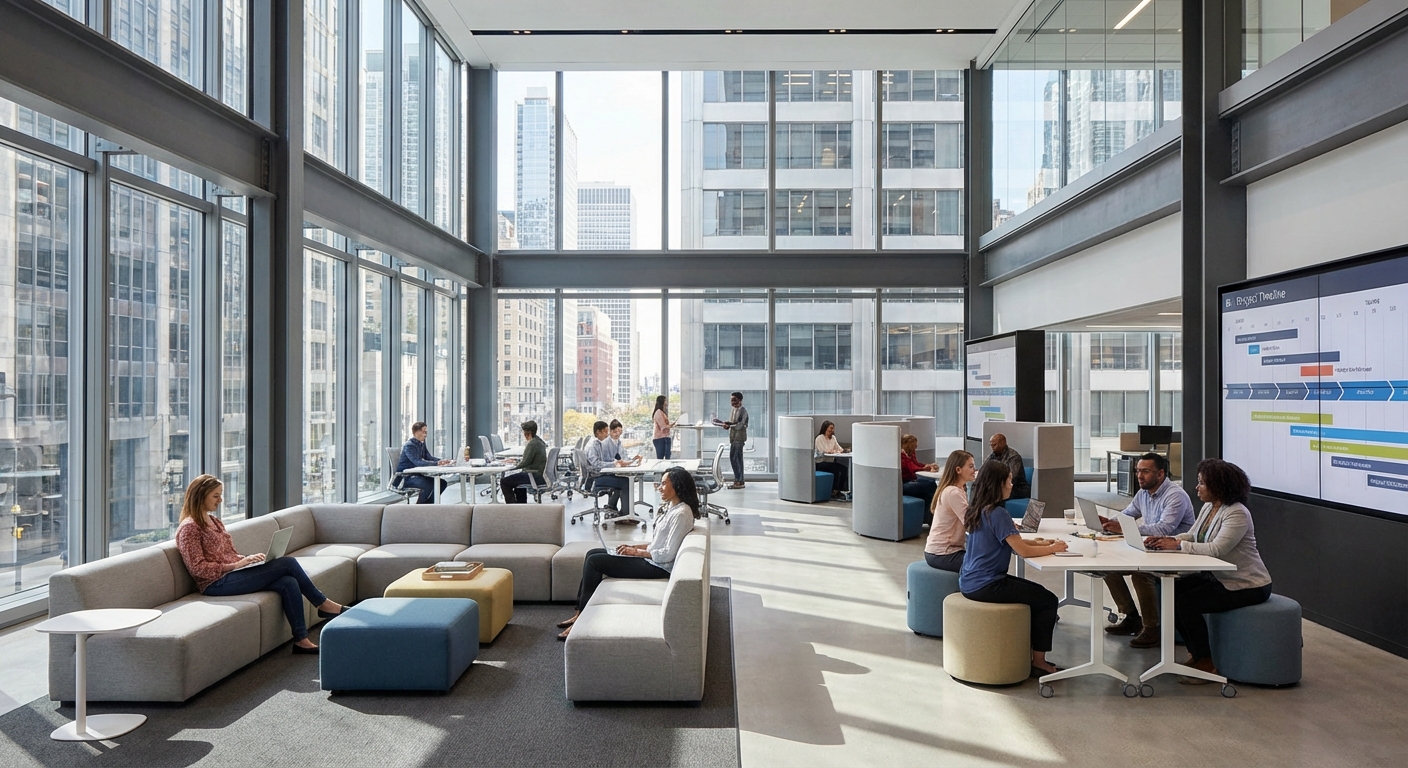
Modern offices require the adaptability that only a multi-stories building with a column-free interior can provide. The Inland Steel Building style allows for a “Universal Space” that can accommodate changing technology and office cultures. You can transition from private offices to open-plan collaboration without a single structural change.
Future-Proofing Your Workspace
Here’s the deal:If your business grows or changes its workflow, you don’t want to be limited by concrete walls. The steel frame allows for easy interior renovations.
- Natural Light: Floor-to-ceiling windows reduce the need for artificial lighting.
- Scalability: Open floors allow for easy movement between departments.
- High Resale Value: Iconic design and durable materials maintain premium market value.
Employee Productivity Benefits
A workspace without structural barriers creates a sense of transparency and connection.
- It fosters better communication between teams.
- It reduces the “boxed-in” feeling of traditional office layouts.
- it provides views of the city from almost any point on the floor.
Key Takeaway: The “Universal Space” concept ensures long-term viability for tenants in an ever-changing business world.
| Benefit Category | Specific Advantage | Impact on ROI | |
|---|---|---|---|
| Flexibility | No load-bearing interior walls | Lower renovation costs | |
| Lighting | Maximized glass surface area | Lower energy expenses |
Investing in an open-plan steel structure provides immediate functional and financial advantages.
7. What maintenance challenges does the Inland Steel Building face today?
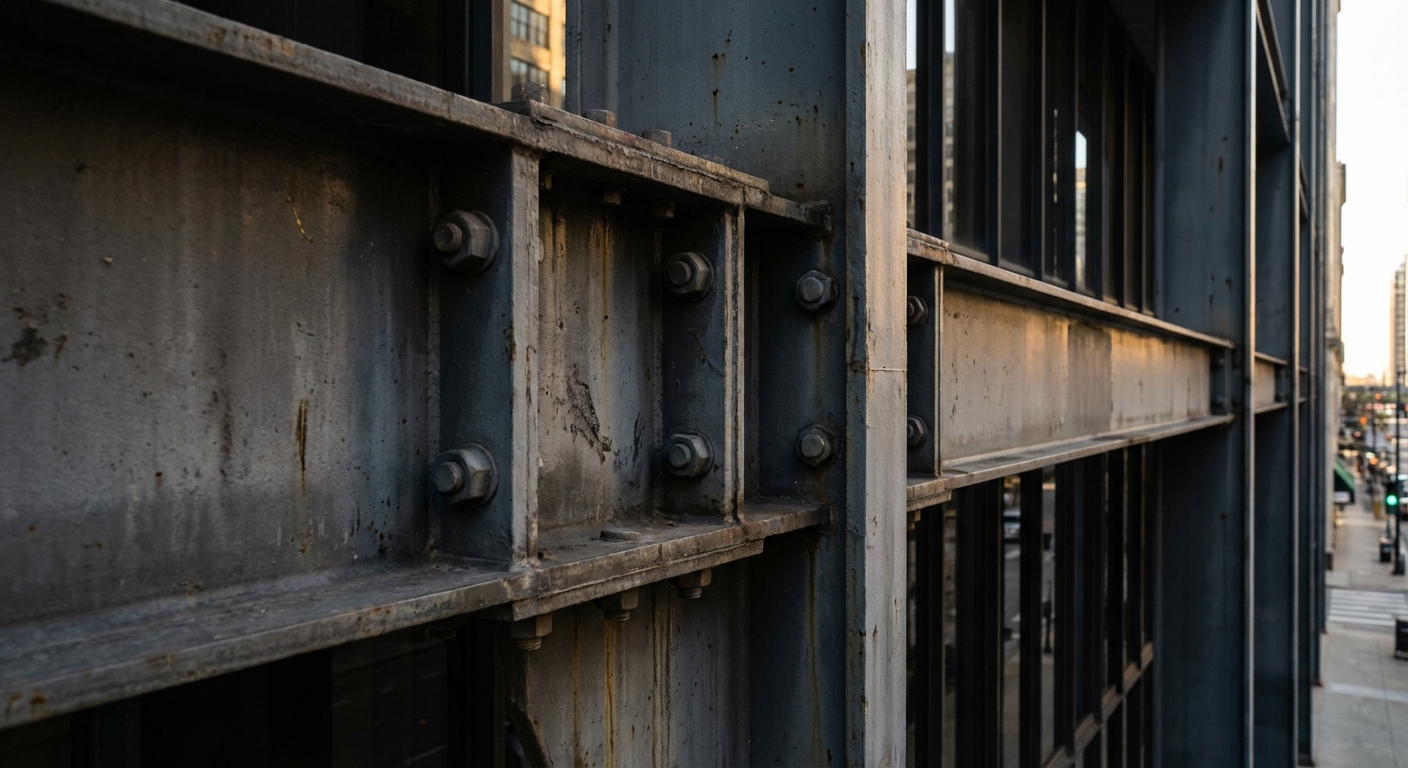
Maintaining a historic steel landmark requires a proactive approach to prevent rust and corrosion on the exposed frame. The Inland Steel Building must be inspected every six months to ensure that moisture is not trapped in the joints. Because the steel is the face of the building, any surface damage can lead to structural concerns if ignored.
Managing Steel Integrity
You must use non-abrasive cleaning agents to preserve the brushed finish of the stainless steel. Standard power washing can sometimes strip away protective coatings if not handled by specialists.
- Moisture Control: Effective drainage is vital at the foundation pilings.
- Rust Prevention: Joints and fasteners are the most vulnerable points.
- Facade Polishing: Regular cleaning prevents the buildup of corrosive urban pollutants.
Renovation Constraints
But wait, there’s more:As a landmark, you cannot simply change the windows to modern energy-efficient versions without city approval.
- Any repairs must match the original 1958 alloy composition.
- Interior motorized shades are often used to assist with climate control.
- Glass retrofits must respect the original aquamarine tint.
Key Takeaway: Owning a historic steel masterpiece requires specialized maintenance that honors the original engineering.
| Maintenance Task | Frequency | Objective | |
|---|---|---|---|
| Joint Inspection | Bi-Annual | Prevention of rust/leaks | |
| Surface Cleaning | Quarterly | Maintaining aesthetic shine |
Consistent care is the only way to protect the long-term value of a historic steel skyscraper.
8. How has the Inland Steel Building influenced contemporary steel construction?
The concepts of the Inland Steel Building are now the baseline for any modern steel structure warehouse or high-rise. It proved that a building’s “bones” could be beautiful and that long-span girders were superior for spatial utility. Contemporary architects continue to use the exoskeleton design to create visually striking and functional buildings.
Exoskeleton Design Standards
Displaying the structural support on the exterior has become a hallmark of high-tech architecture. You see this influence in stadiums, airports, and modern industrial hubs.
- Strength-to-Weight Ratio: High-strength steel allows for lighter, more resilient frames.
- Prefabrication: The precision of the 1958 panels paved the way for modern modular building.
- Clear-Span Logic: Creating open spaces for large machinery or high-density offices.
Aesthetic Minimalism Influence
In fact:The “Industrial Chic” trend owes its roots to this building’s honest use of raw metal and glass.
Key Takeaway: The Inland Steel Building proved that steel could be both the structural hero and the aesthetic star.
| Influence Area | Modern Application | Benefit | |
|---|---|---|---|
| Structural Design | Exoskeleton Frames | Increased interior space | |
| Material Choice | Metal Curtain Walls | Improved durability |
Modern construction continues to build upon the innovations established by this 1958 landmark.
9. Can the Inland Steel Building be considered a sustainable structure?
Sustainability is found in the longevity of the Inland Steel Building, which has remained functional for over six decades. Steel is 100% recyclable, and the building’s ability to be renovated without major demolition reduces its environmental footprint. Recent energy retrofits have transformed this mid-century icon into a high-performance 21st-century workspace.
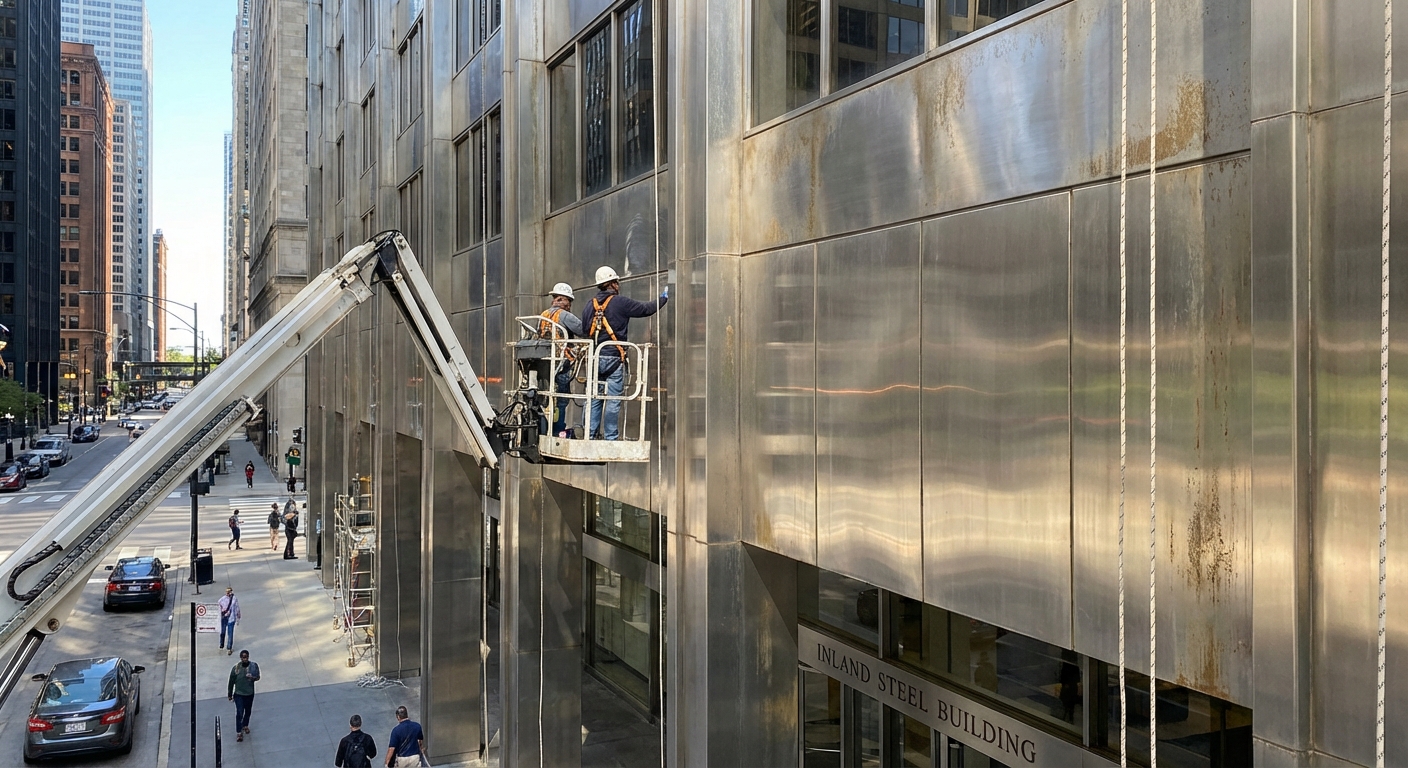
Recyclability and Adaptive Reuse
Because the interior walls are not load-bearing, you can update the office systems without tearing down the structure. This adaptability prevents the “build and destroy” cycle common in urban development.
- Material Life Cycle: Steel can be melted down and reused indefinitely.
- Reduced Waste: Modular renovations generate less construction debris.
- Energy Efficiency: Modern glazing reduces HVAC loads significantly.
Modern Green Retrofits
The 2018 renovation included several high-tech sustainability features.
- Motorized shades that respond to the sun’s position.
- High-performance low-E glass to reduce thermal gain.
- Updated high-efficiency lighting and HVAC systems.
The result?A 1950s landmark that performs as efficiently as a modern LEED-certified building.
Key Takeaway: Intelligent retrofitting proves that historic steel buildings are a sustainable choice for long-term urban use.
| Sustainability Factor | Benefit | |
|---|---|---|
| Steel Recyclability | Lower carbon footprint over 100 years | |
| Adaptive Interior | Minimal demolition waste during updates |
Longevity and material reuse are the twin pillars of this building’s green legacy.
10. What renovation strategies preserve the Inland Steel Building landmark status?
Renovating the Inland Steel Building requires a careful balance between modern performance needs and historical integrity. Specialists focus on “behind the scenes” updates to plumbing and electrical systems while leaving the facade untouched. This ensures that the building meets modern code requirements without losing its shimmering 1958 soul.
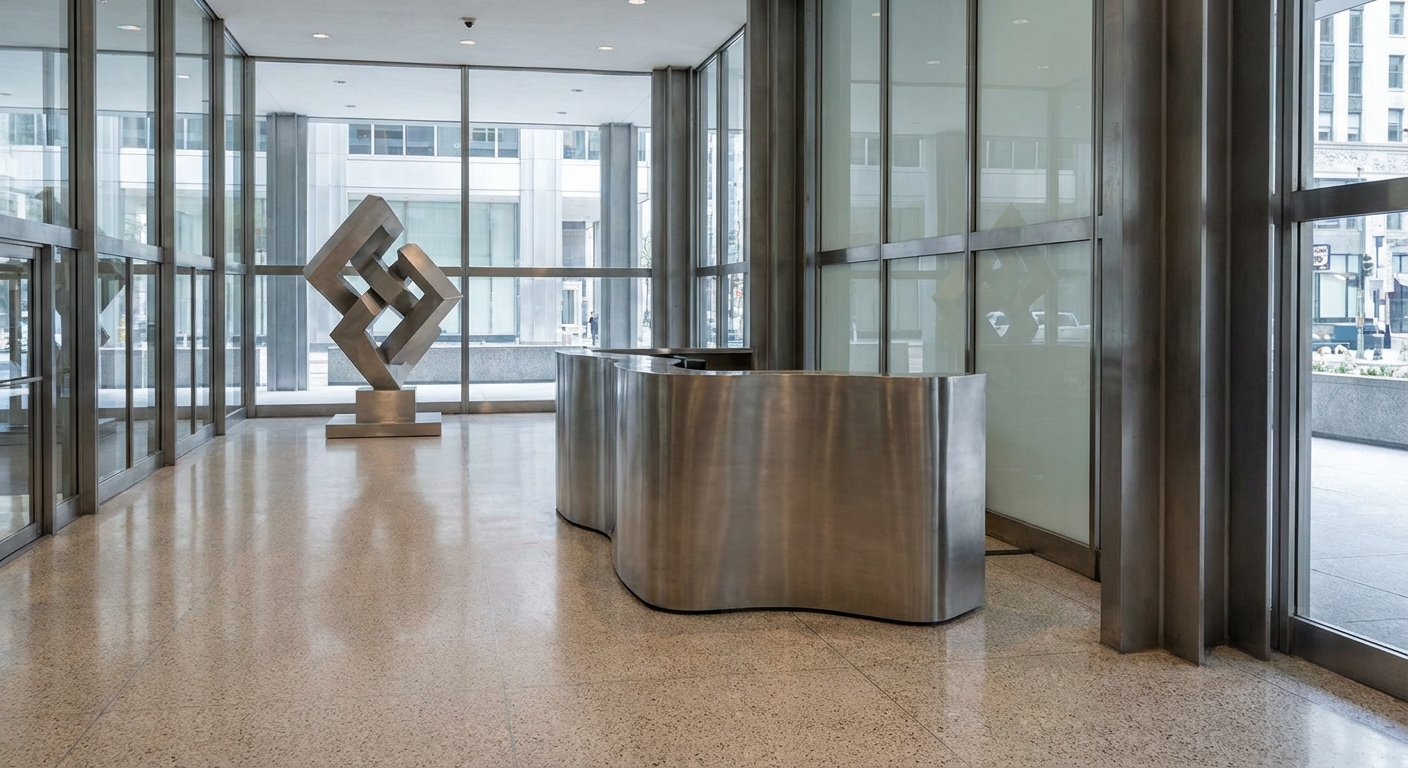
Balancing History and Modernity
You must match the original brushed texture of the stainless steel when performing any exterior repairs. This precision ensures that the steel structure manufacturing process respects the building’s historic designation.
- Interior Lighting: Transitioned to high-efficiency LED throughout the tower.
- Facade Preservation: Cleaning and polishing according to landmark standards.
- Art Restoration: Preserving the Frank Gehry lobby desk and Lippold sculpture.
Successful Energy Updates
The results speak for themselves:The 2018 renovation enhanced the building’s thermal performance while keeping its visual identity exactly the same.
Key Takeaway: Successful preservation proves that historic steel buildings can be modernized to meet today’s environmental standards.
| Strategy | Implementation | Benefit | |
|---|---|---|---|
| Lighting Retrofit | Total LED replacement | 40% Energy reduction | |
| Climate Control | Motorized shades | Better solar management |
Proactive preservation keeps the building competitive in the modern commercial real estate market.
Frequently Asked Questions
Can I visit the interior of the Inland Steel Building?While the upper floors are private offices, the lobby is open to the public during business hours and features significant mid-century art and a Frank Gehry security desk.
What’s the best way to maintain a stainless steel facade?The best method is regular cleaning with non-abrasive agents and prompt inspection for surface scratches to prevent environmental pollutants from causing rust.
How do I know if a column-free design is right for my project?If your business requires high flexibility, such as changing office layouts or housing large industrial machinery, a column-free steel structure is the most cost-effective long-term solution.
Can I achieve the Inland Steel Building look with modern prefabricated steel?Yes, modern pre-engineered steel systems allow for similar long spans and metal cladding options, providing a sleek contemporary aesthetic at a fraction of the custom construction cost.
How long does a steel building like the Inland Steel Building typically last?With routine maintenance and periodic system upgrades, a well-constructed steel building can last over 100 years, as evidenced by this Chicago landmark’s ongoing success.
Build Your Future with Steel
The Inland Steel Building proves that structural innovation leads to timeless success. Whether you are designing a high-rise or a warehouse, steel provides the flexibility and durability your project needs to thrive. Don’t let rigid construction limit your business potential. Contact us today to discuss your custom steel structure and receive a free engineering quote within 24 hours.