
Steel building prices generally range from15to100 per square foot depending on the level of customization, local engineering requirements, and the complexity of the installation process. Navigating the world of industrial construction often feels like walking through a financial minefield where hidden fees and shifting material costs lurk behind every corner. You may find yourself overwhelmed by the sheer volume of variables, from soil quality to global trade tariffs, making it nearly impossible to pin down an accurate budget for your new facility. By understanding the core drivers of steel workshop buildings prices , you can strip away the uncertainty and secure a high-quality structure that serves your business needs without draining your capital reserves.
What are average steel workshop buildings prices in 2026?
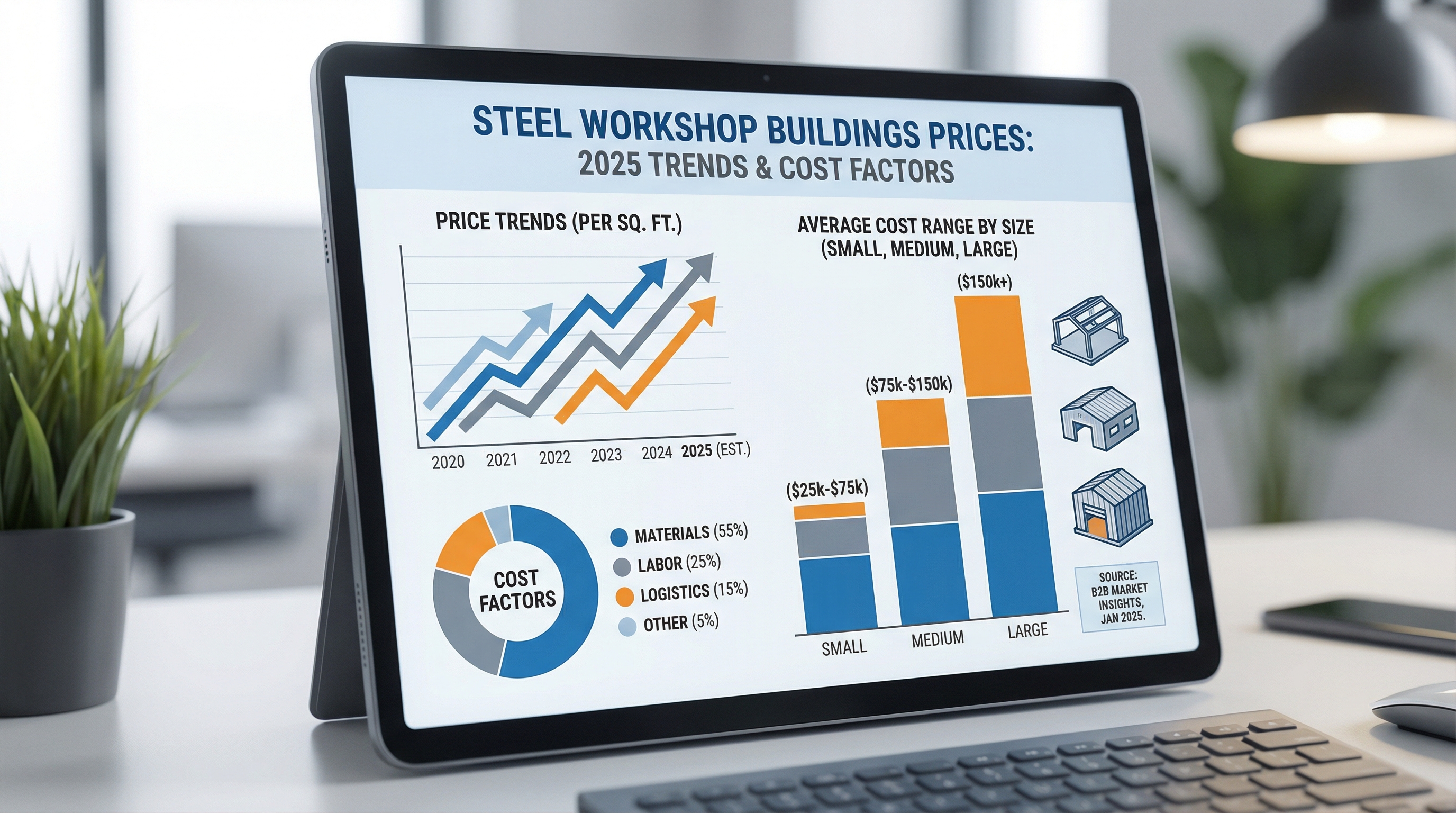
On average, you can expect to pay between15and43 per square foot for a standard project. Current market trends for steel workshop buildings prices show that basic kits remain the most affordable entry point, while fully installed industrial systems command higher premiums due to specialized labor and site logistics.
Cost per square foot for basic kits
If you are looking for the most budget-friendly option, basic prefabricated kits are your best bet. These usually cost between15and25 per square foot, providing you with the main frame and cladding components.
Wait, there’s more. You also need to consider that these kits don’t include the concrete slab or internal electrical systems. You should factor those in early to avoid surprises.
Fully installed structure price ranges
For a turnkey solution where professional crews handle the erection, prices typically jump to24–43 per square foot. This includes the labor of experienced steel workers who ensure every bolt meets strict safety tolerances.
Here is the kicker:
- Site preparation costs are separate.
- Foundation work adds 4−8 per square foot.
- Local labor rates can vary by up to 60%.
- Custom door systems will increase the total.
Key Takeaway: 2026 pricing favors those who plan for the full scope of construction early, rather than just looking at the base kit cost.
| Cost Component | Estimated Price (per Sq. Ft.) | |
|---|---|---|
| Basic Kit | 15–25 | |
| Installation Labor | 5–15 | |
| Concrete Slab | 4–8 | |
| Insulation Systems | 1.50–3 |
This analysis suggests that while kits are affordable, the total landed cost is what determines project feasibility.
Which factors change steel workshop buildings prices most?
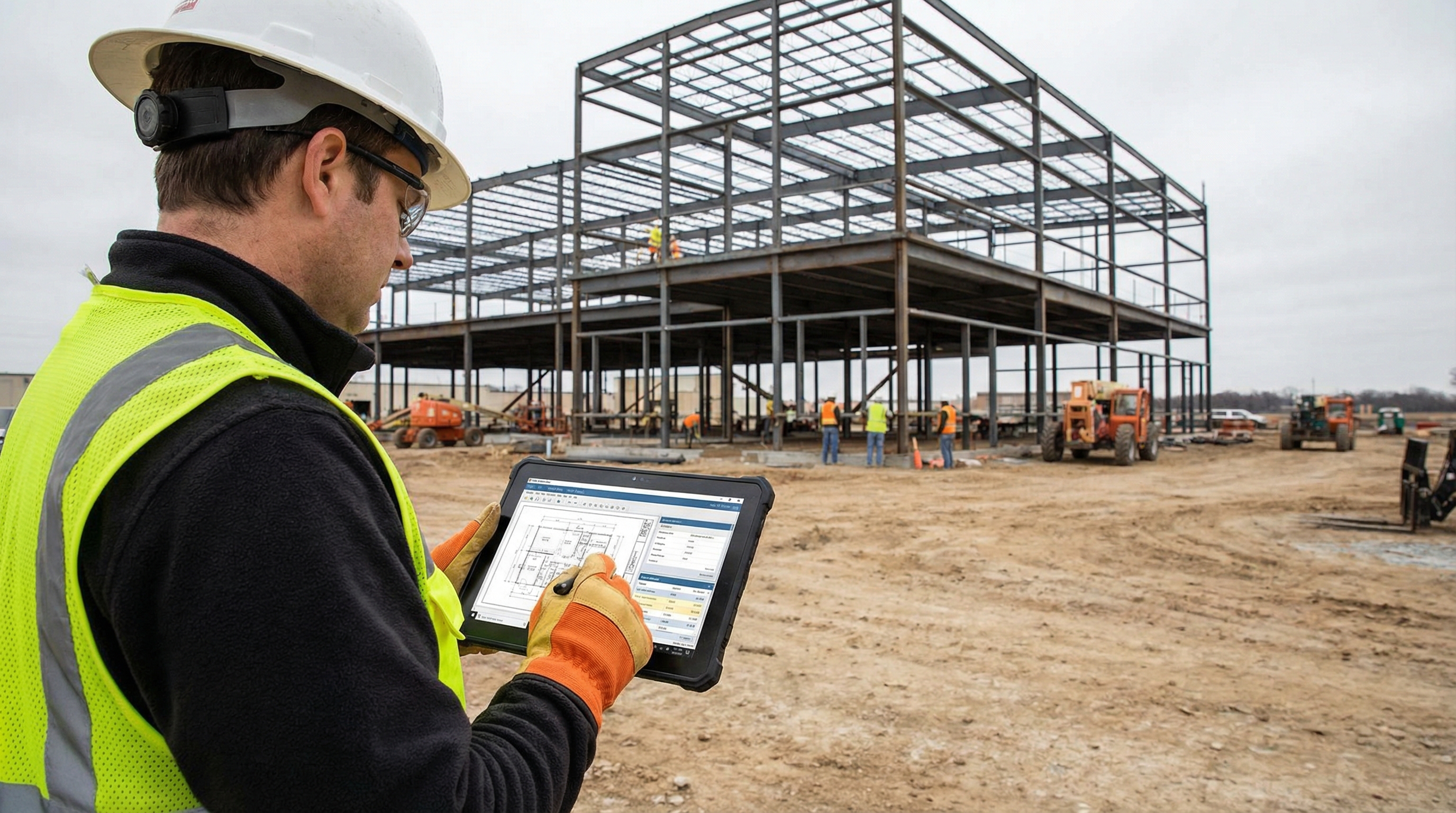
Market volatility and design complexity are the primary drivers of cost fluctuations in the industrial sector. Understanding how these elements shift steel workshop buildings prices allows you to make strategic decisions on when to buy and which features are truly essential for your operations.
Impact of global steel markets
The price of raw iron ore and recycled steel can change overnight based on international trade policies. When supply chains tighten, you will see immediate reflected costs in the fabrication phase of your building.
But that’s not all. You must also keep an eye on fuel surcharges that affect the delivery of heavy H-beams to your job site.
Complex designs and reinforcements
If your facility requires heavy-duty overhead cranes or high-clearance mezzanines, the price per square foot will naturally rise. Structural reinforcements are necessary to handle these dynamic loads safely.
The bottom line is:
- Clear spans over 40m cost more.
- Mezzanines add significant structural weight.
- Specialized coatings protect against corrosion.
- High-pitched roofs increase surface area.
Key Takeaway: Simplicity in design is the fastest way to keep your budget under control while still achieving your operational goals.
| Factor | Impact Level | Cost Influence | |
|---|---|---|---|
| Steel Market | High | 2−5 fluctuation | |
| Design Complexity | Medium | 5−10 increase | |
| Site Preparation | Variable | Depends on soil | |
| Interior Finishing | Low | Optional |
Refined engineering can mitigate some of these costs, but the market remains the ultimate decider.
How do materials impact steel workshop buildings prices?
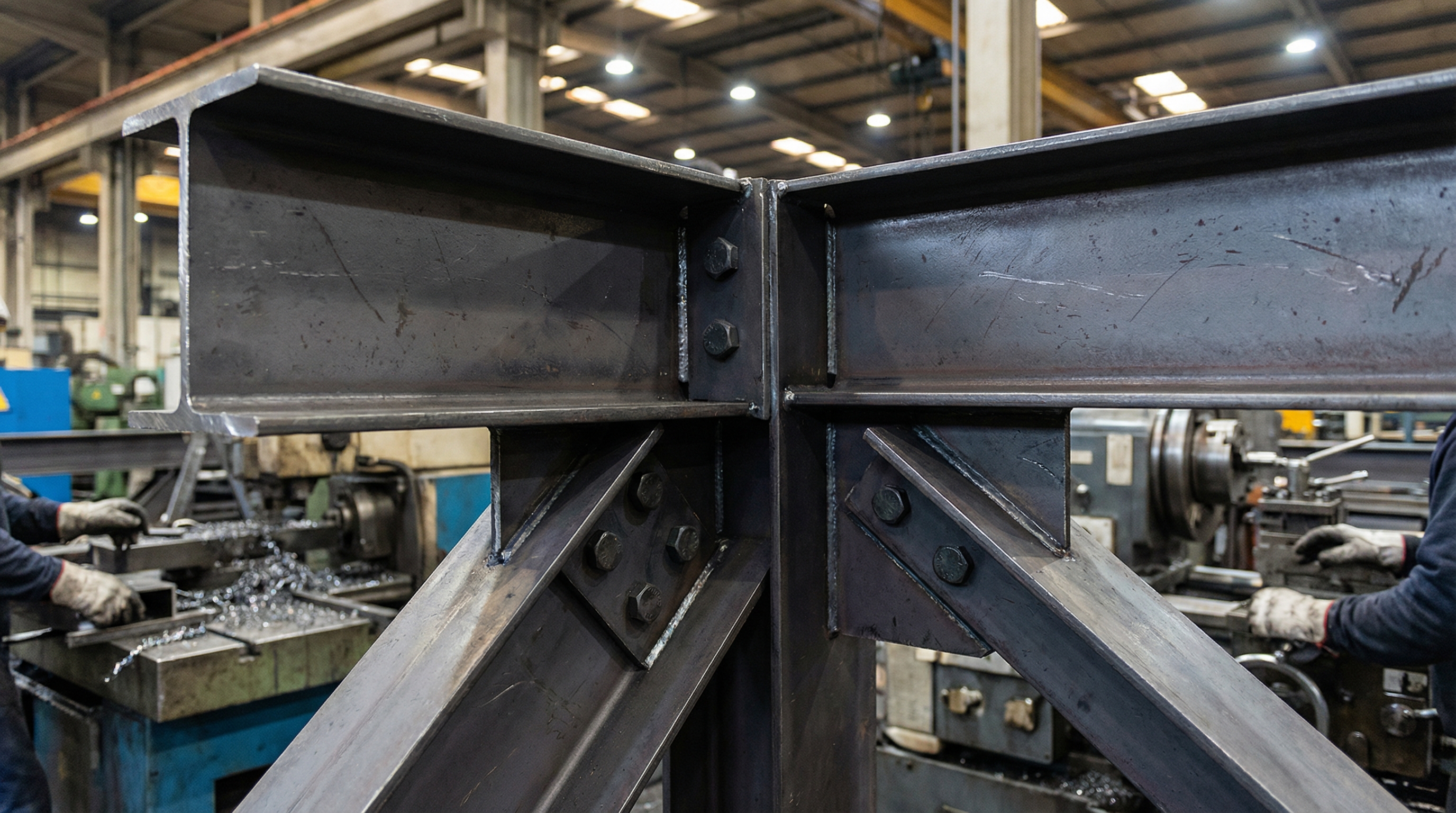
High-quality H-section steel and specialized cladding systems represent the largest portion of your material investment. Choosing the right gauge and finish for steel workshop buildings prices is critical because lower-grade materials may save you money today but lead to expensive maintenance tomorrow.
Primary H-section frame costs
The main load-bearing structure is usually the most expensive material component because of the sheer volume of steel required. You should prioritize factory-certified steel that comes with mill test certificates for guaranteed strength.
Make no mistake, the quality of your welding and fabrication is just as important as the raw steel itself. High-precision manufacturing ensures every piece fits perfectly.
Selecting panel and cladding systems
Your choice of wall and roof panels dictates the energy efficiency and aesthetic appeal of the structure. Insulated sandwich panels are more expensive upfront but can save you thousands in climate control costs over time.
Think about this:
- Galvanized purlins resist rust.
- Sandwich panels offer R-value.
- Single-skin sheets are cheapest.
- Translucent panels add natural light.
Key Takeaway: Material selection is a balance between initial capital expenditure and long-term operational efficiency.
| Material Type | Pros | Price Tier | |
|---|---|---|---|
| H-Section Steel | Maximum Strength | Premium | |
| Galvanized C/Z Purlins | Corrosion Resistant | Standard | |
| Sandwich Panels | High Insulation | Premium | |
| Corrugated Sheets | Cost-Effective | Economy |
Investing in high-quality panels is often the smartest move for long-term savings on utility bills.
Does location affect steel workshop buildings prices?
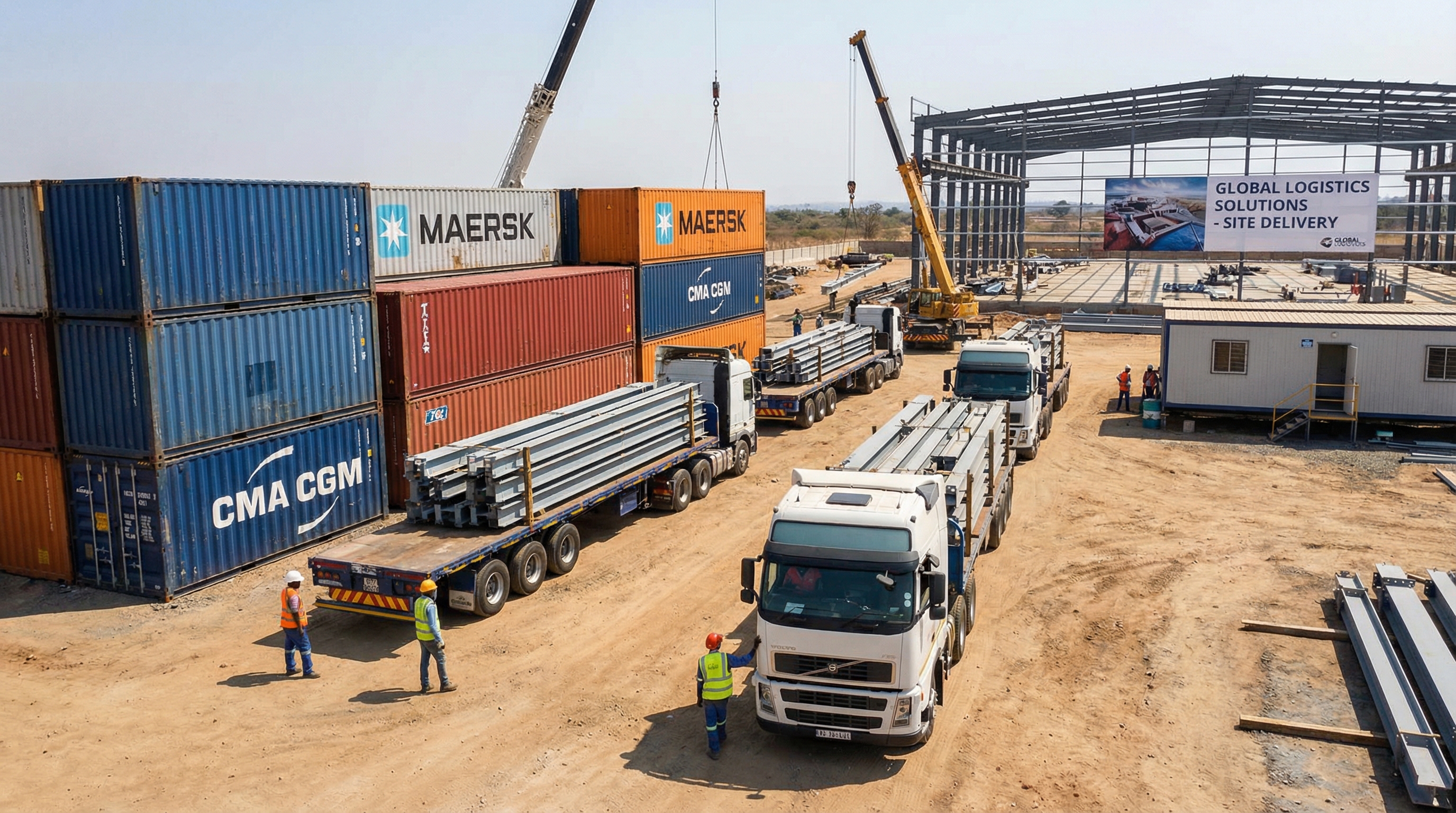
Yes, local engineering codes and shipping distances can add 10% to 20% to your total bill for any project. Regional variations in steel workshop buildings prices are often tied to seismic activity, snow loads, and the proximity of the project site to major manufacturing hubs.
Shipping for international projects
If you are ordering from an overseas manufacturer, logistics will be a significant factor in your total budget. You need to account for container ocean freight, customs duties, and local trucking from the port to your site.
Wait, there’s more. Efficient packing in the factory can reduce the number of containers needed, which directly lowers your shipping costs.
Engineering compliance requirements
Your local building department will require your structure to meet specific codes for wind speeds and snow loads. Designing a building to withstand a hurricane or heavy blizzard requires extra steel and bracing.
Here is the kicker:
- Coastal areas need better coatings.
- High-altitude sites need thicker roofs.
- Seismic zones require robust bracing.
- Permitting fees vary by city.
Key Takeaway: Always consult with a manufacturer who understands your local building codes before finalizing your budget.
| Location Factor | Cost Impact | Solution | |
|---|---|---|---|
| Ocean Freight | 3,000−8,000 | Bulk packing | |
| Local Permits | 500−2,000 | Professional prep | |
| High Snow Load | +15% Steel weight | Sloped roof | |
| Remote Delivery | +$2,000 Trucking | Site proximity |
Planning for regional environmental factors early prevents expensive redesigns during the permitting phase.
How to estimate total steel workshop buildings prices?
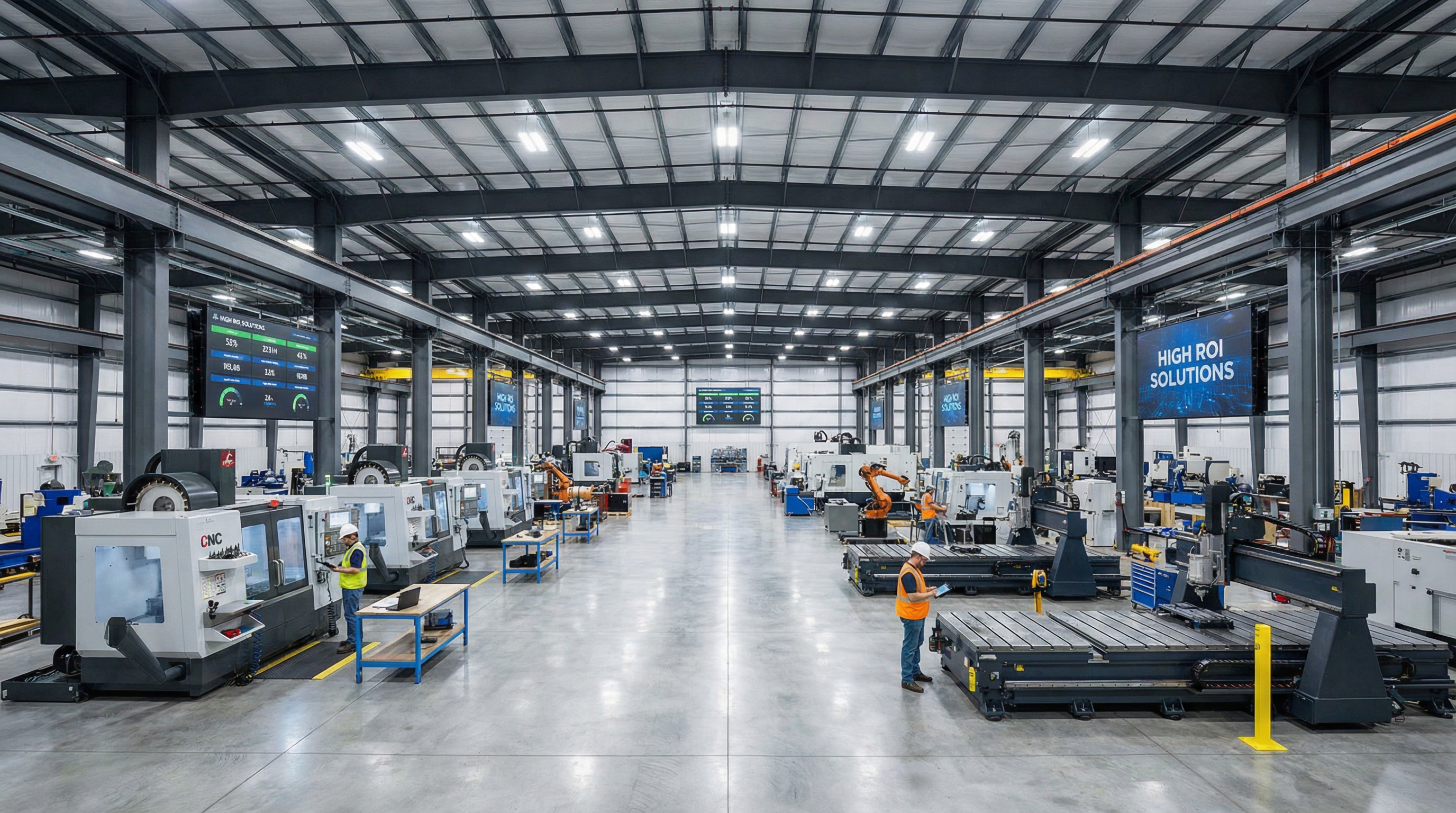
To estimate the total cost, you must combine the building kit price with foundation, labor, and finishing expenses. Many buyers focus solely on steel workshop buildings prices for the frame, but the “unseen” costs like utility connections and site grading can break a budget if not tracked carefully.
Budgeting for foundation work
Your foundation is the most critical part of the build, usually costing between4and8 per square foot. You must ensure the soil is properly compacted and the concrete is poured to the correct depth for your specific machinery.
But that’s not all. You should also account for the anchor bolts that must be placed with extreme precision to match the steel columns.
Accounting for doors and accessories
The price of industrial roller doors, pedestrian exits, and aluminum windows can add up quickly. You should choose high-cycle doors if your workshop sees constant traffic to avoid frequent repairs.
The real story is:
- Electric openers save time.
- Skylights reduce lighting costs.
- Gutters prevent foundation rot.
- Louvers provide vital ventilation.
Key Takeaway: A complete budget includes every component from the ground up, including the finishing touches that make the space usable.
| Category | % of Total Budget | Estimated Cost | |
|---|---|---|---|
| Steel Structure | 50% | $20,000+ | |
| Foundation/Slab | 15% | $6,000+ | |
| Labor/Erection | 20% | $8,000+ | |
| Doors/Accessories | 15% | $6,000+ |
Using a comprehensive checklist ensures that no small detail becomes a large financial burden later.
Can design choices lower steel workshop buildings prices?
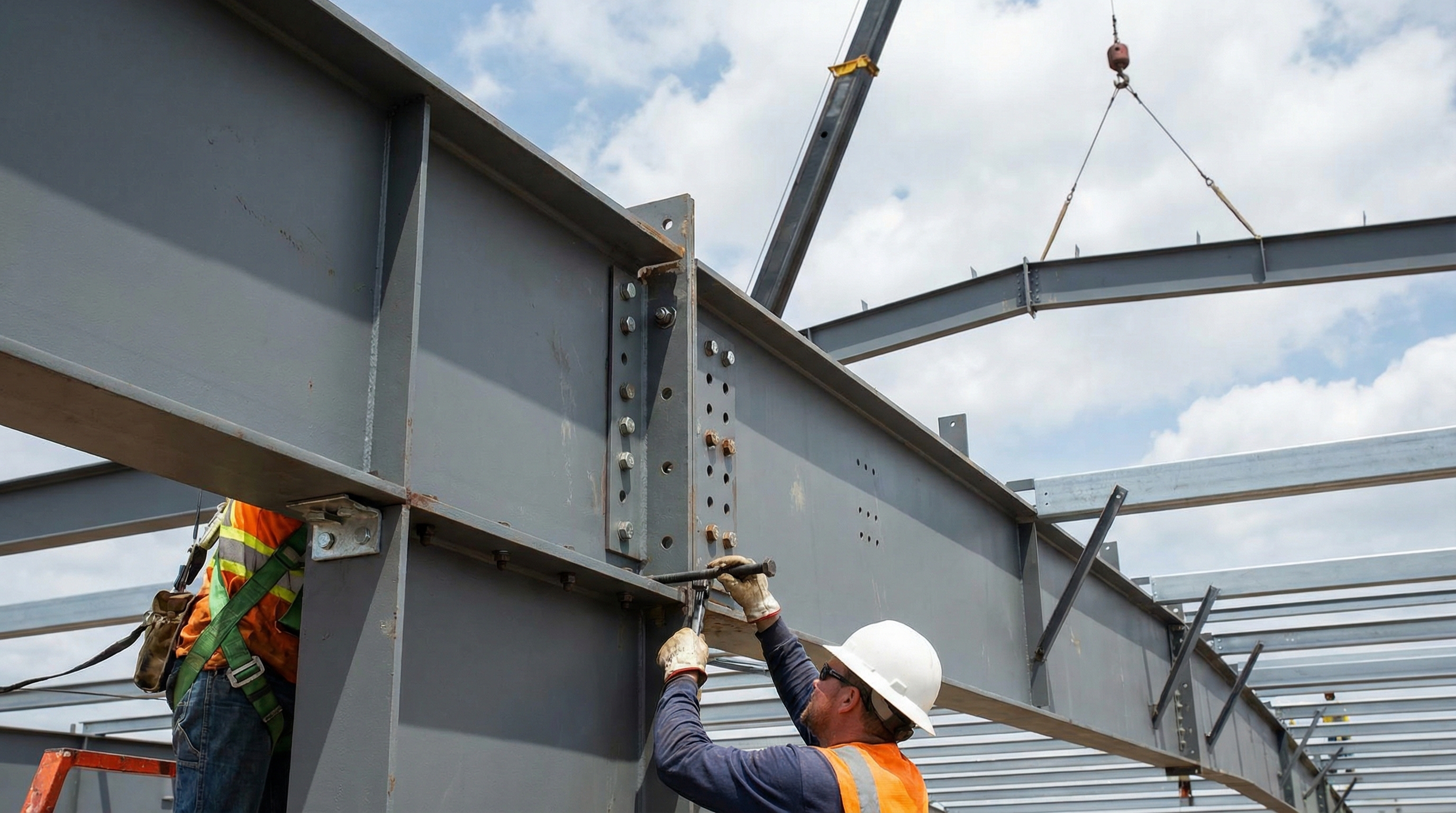
Selecting standard dimensions and pre-engineered components is the most effective way to reduce upfront costs. When analyzing steel workshop buildings prices, you will find that “off-the-shelf” designs allow manufacturers to optimize material usage and reduce fabrication time significantly.
Benefits of standard sizes
Most factories have optimized production lines for common sizes like 40×60 or 60×100 feet. If you can adapt your workflow to these standard footprints, you will often receive a lower price per square foot.
Truth be told, even a few feet of custom width can lead to significant waste in steel cutting. It is almost always cheaper to go slightly larger if it hits a standard threshold.
Limiting expensive custom features
While it is tempting to add architectural flourishes, every custom curve or unusual roof line adds engineering hours and specialized labor. You should focus on functionality first to maximize your investment.
Here is the kicker:
- Rectangular designs are cheapest.
- Single-slope roofs save on gutters.
- Fewer windows lower material costs.
- Standard colors avoid paint surcharges.
Key Takeaway: Operational efficiency doesn’t require architectural complexity; standard designs are usually more than sufficient for industrial work.
| Design Choice | Savings Potential | Trade-off | |
|---|---|---|---|
| Standard 40×60 Size | 10 – 15% | Less unique look | |
| Pre-Eng. Components | 20% | Fixed dimensions | |
| Standard Colors | 5% | Limited palette | |
| Single Slope Roof | 8% | Simple aesthetic |
By prioritizing standard engineering, you free up more budget for high-quality internal equipment.
Are industrial steel workshop buildings prices worth it?
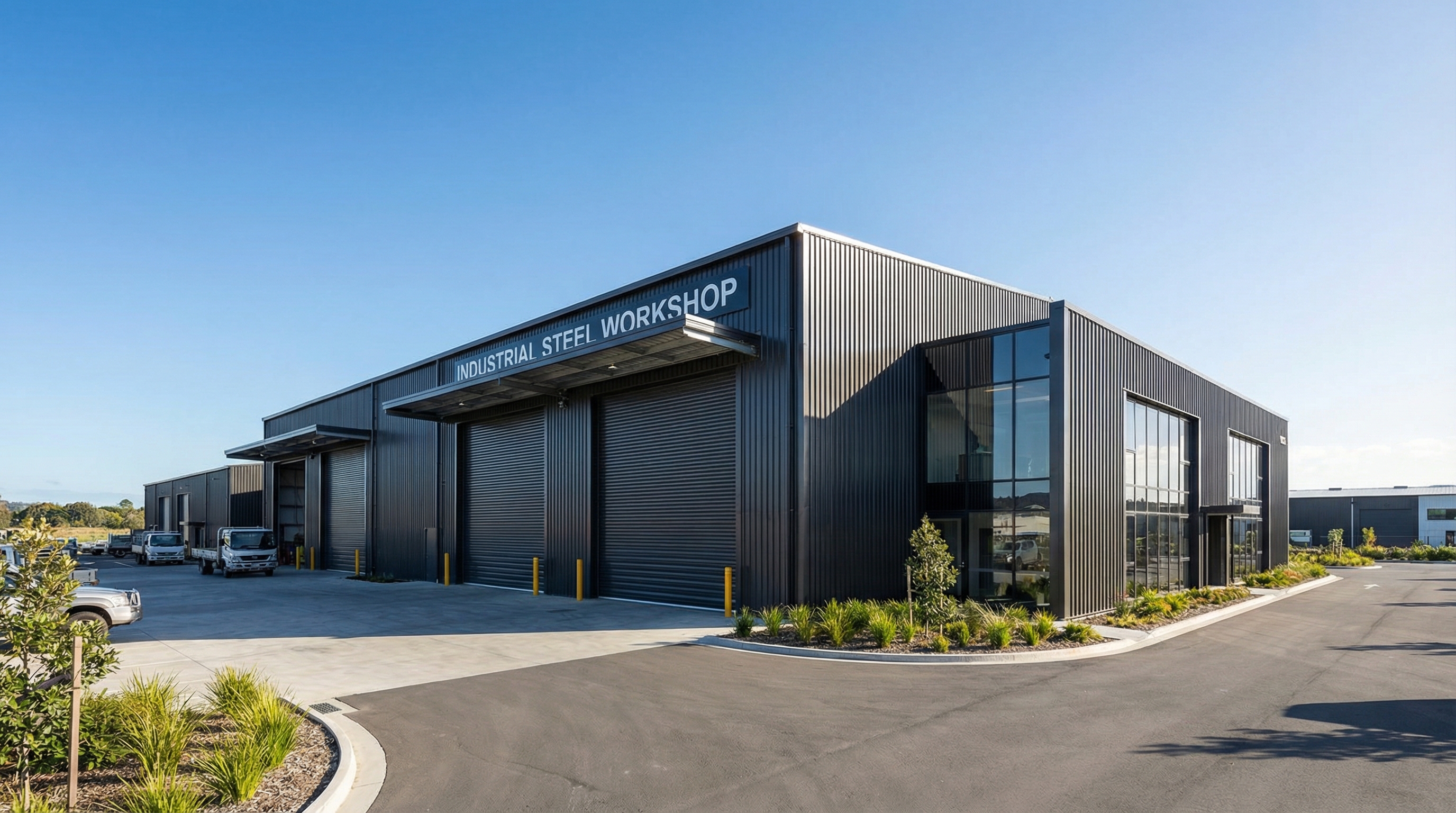
Investing in steel provides long-term ROI through low maintenance and structural longevity exceeding 50 years. Compared to other construction methods, steel workshop buildings prices offer a superior value proposition because the buildings are resistant to fire, mold, and termites.
Long-term ROI and durability
Steel buildings appreciate in value because they are incredibly durable and easy to expand. If your business grows, you can often add length to a steel workshop much more cheaply than you could with a brick-and-mortar structure.
It gets better. The resale value of a well-maintained steel workshop remains high, providing you with a solid exit strategy or asset for financing.
Maintenance cost comparisons
You will spend significantly less on maintenance with steel than with wood or concrete. There is no need for frequent painting, and the structural integrity doesn’t degrade with age if properly coated.
The bottom line is:
- Steel doesn’t rot or warp.
- Panels are easily replaced.
- Coatings last for decades.
- Pest control is a non-issue.
Key Takeaway: The higher upfront cost of steel is offset by the almost total lack of maintenance and repair expenses over its life.
| Feature | Steel Buildings | Wood Structures | |
|---|---|---|---|
| Lifespan | 50+ Years | 20 – 30 Years | |
| Fire Resistance | High | Low | |
| Maintenance Need | Very Low | Moderate to High | |
| Insurance Cost | Lower | Higher |
Industrial managers who think in decades rather than years consistently choose steel for its reliable performance.
How to reduce your steel workshop buildings prices?
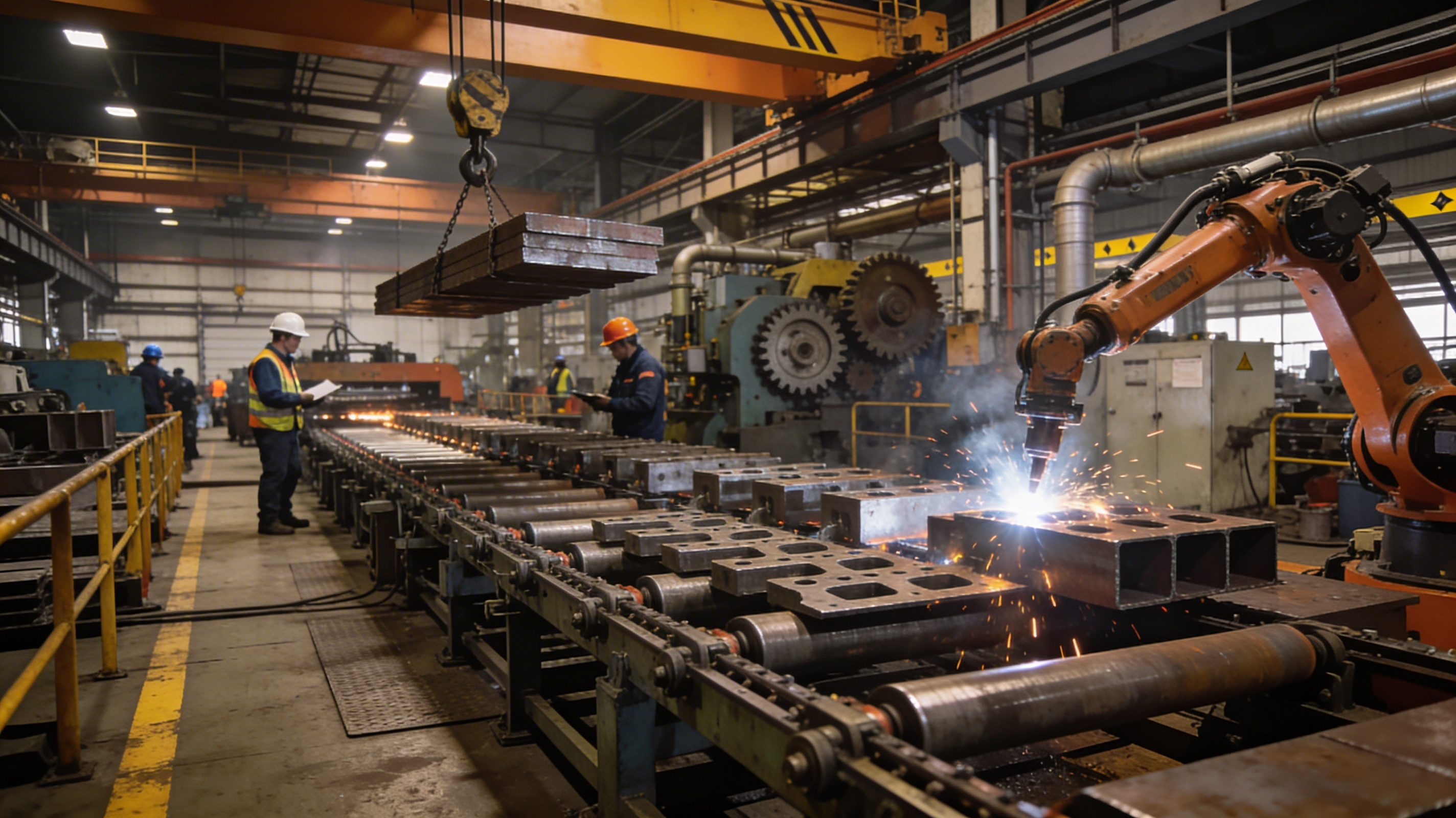
Utilizing a factory-direct manufacturing model eliminates middleman markups and offers the best pricing. When you source directly, the steel workshop buildings prices you pay are based on material and fabrication costs, not on a dealer’s commission or retail overhead.
Factory-direct pricing advantages
Working directly with the manufacturer gives you access to their engineering team, allowing you to optimize the design for cost-efficiency. You get clear communication and a faster response to any technical questions during the build.
The bottom line is:
- No hidden dealer fees.
- Better quality control.
- Faster delivery times.
- Customization at cost.
Purchasing in the off-season
Like many industries, steel fabrication has peak and off-peak months. If you can time your purchase for when the factory is less busy, you might be able to negotiate a better deal or faster production slot.
Make no mistake:
- Volume discounts apply to large orders.
- Multi-phase projects save on logistics.
- Flexible delivery dates lower costs.
- Off-season labor is often cheaper.
Key Takeaway: Direct sourcing and smart timing are the two most powerful tools you have for driving down the cost of your facility.
| Strategy | Savings % | Effort Level | |
|---|---|---|---|
| Factory-Direct Sourcing | 15 – 20% | Medium | |
| Off-Season Buying | 5 – 10% | High | |
| Volume/Bulk Orders | 10% | High | |
| Standardized Sizing | 15% | Low |
Cutting out the middleman is the single most effective way to protect your construction budget.
Why compare steel workshop buildings prices to wood?
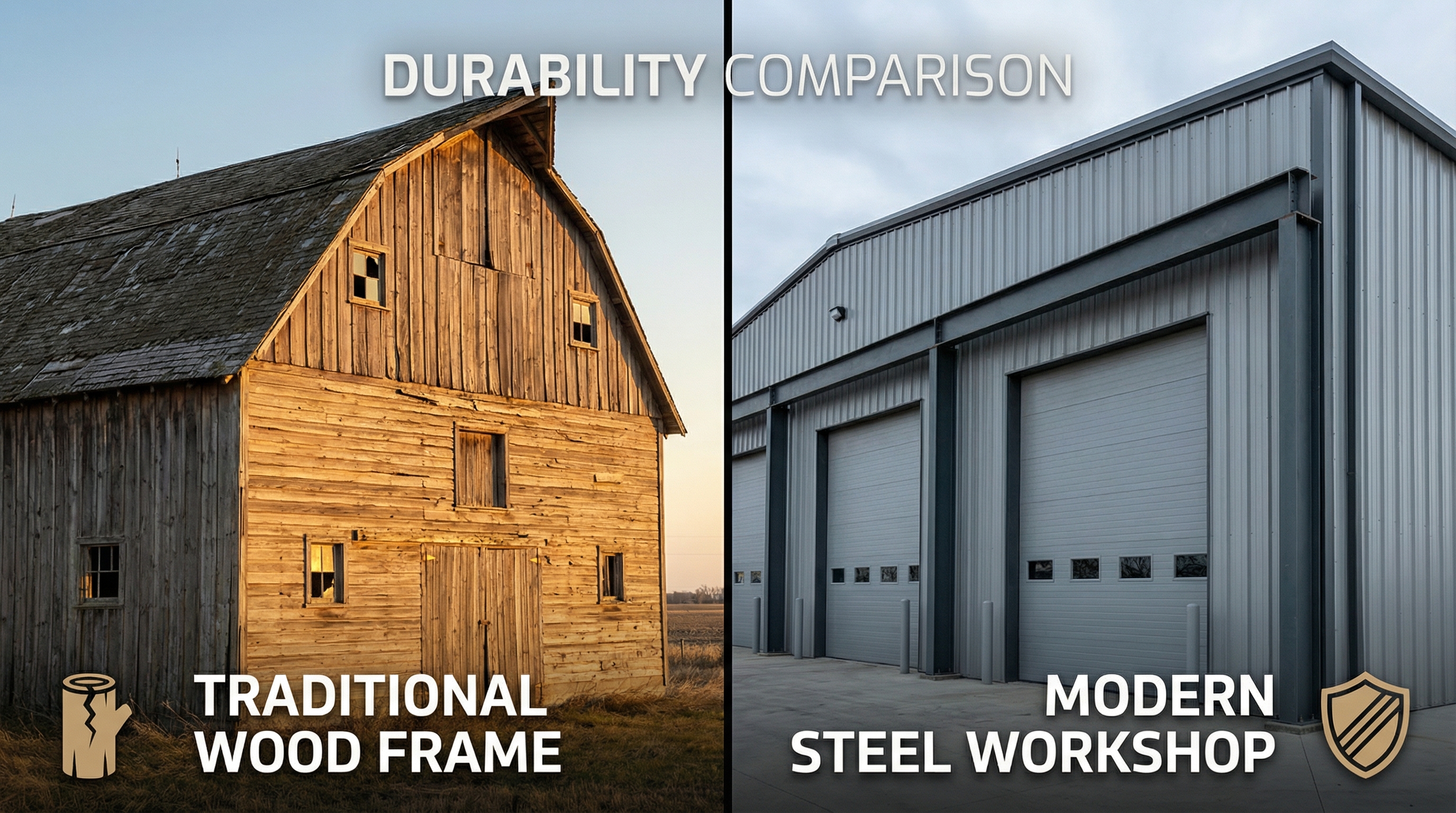
Steel typically offers lower lifetime costs than wood due to fire resistance and zero pest maintenance. While wood might seem cheaper for small projects like a prefabricated poultry house , for industrial workshops, the strength-to-weight ratio of steel is unbeatable.
Insurance and fire safety
Because steel is non-combustible, your insurance premiums will typically be lower than for a wooden structure. This is a recurring saving that you will enjoy for every year the building is standing.
The real story is:
- Wood rots in humid climates.
- Steel handles seismic loads better.
- Termites can destroy a wood barn.
- Steel clear spans are much wider.
Long-term asset value
A steel building is a “Class A” asset that holds its value over time. You should view your workshop as an investment in your company’s infrastructure that will provide a safe, stable environment for decades.
Think about this:
- Steel is 100% recyclable.
- Clear interiors are more flexible.
- Erection is much faster.
- Modifying steel is simpler.
Key Takeaway: While wood has its place in residential builds, steel is the clear winner for any industrial or commercial application requiring scale and safety.
| Comparison Point | Steel Workshop | Wood Frame | |
|---|---|---|---|
| Fire Safety Rating | Non-Combustible | High Risk | |
| Pest Resistance | 100% | Vulnerable | |
| Clear Span Max | 100m+ | Very Limited | |
| Lifetime Maintenance | Minimal | Frequent |
Choosing steel ensures that your capital remains locked in a durable asset rather than being lost to rot or repair.
What is the future of steel workshop buildings prices?
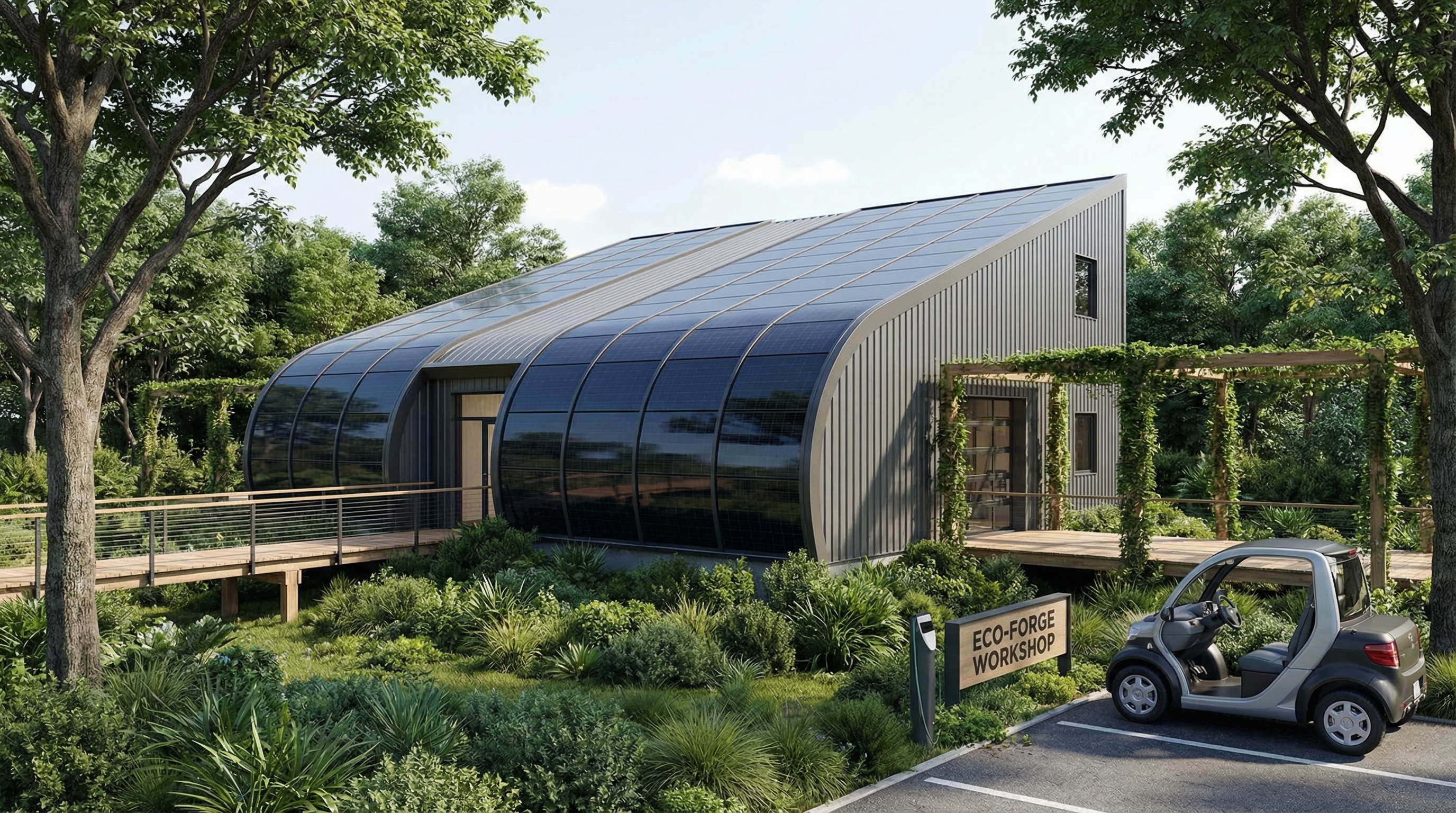
Future pricing will be shaped by green steel production and AI-driven fabrication efficiencies. As environmental regulations tighten, the cost of traditional steel workshop buildings prices may rise, but innovations in recycling and renewable energy will eventually stabilize the market.
Sustainable green steel trends
The industry is moving toward “green steel” which uses hydrogen or electricity instead of coal for smelting. While this might increase material costs initially, it appeals to corporations looking to meet strict ESG (Environmental, Social, and Governance) goals.
You can count on it:
- Recycled steel usage will increase.
- Solar-ready roofs will be standard.
- Insulation tech is getting thinner.
- Eco-friendly coatings are arriving.
Automation in manufacturing
Robotics and AI are already reducing waste in the factory, which helps keep prices competitive despite rising labor costs. High-precision laser cutting ensures that every piece of your building fits with zero field modifications required.
Wait, there’s more:
- Digital twins aid site assembly.
- Logistics tracking is now real-time.
- Smart sensors monitor building health.
- Modular parts speed up erection.
Key Takeaway: The future of steel construction is faster, greener, and more technologically integrated, offering better value for every dollar spent.
| Future Trend | Market Impact | Business Benefit | |
|---|---|---|---|
| Green Steel | Higher Material Cost | ESG Compliance | |
| AI Fabrication | Lower Labor Cost | Faster Erection | |
| Modular Systems | Predictable Pricing | Scalability | |
| Smart Monitoring | Low Maintenance | Safety |
Staying ahead of these trends allows you to build a facility that isn’t just modern today, but stays relevant for the next fifty years.
Decision FAQ
Can I customize the layout to fit specialized machinery?Yes, steel workshops are highly customizable. Our engineering team can design clear-span interiors and specific bay spacings to accommodate heavy equipment or overhead cranes without compromising structural integrity.
What’s the best way to prevent corrosion in humid climates?The most effective method is utilizing hot-dip galvanized steel or high-performance epoxy coating systems. These treatments provide a robust barrier against moisture and corrosive industrial environments.
How long does the installation of a workshop take?Typically, the on-site assembly of a pre-engineered steel workshop takes between 4 to 12 weeks, depending on the complexity and size. This is significantly faster than traditional concrete or wood construction.
Can I get a discount for bulk steel building orders?Yes, manufacturers often provide volume-based discounts for large-scale projects or multi-building contracts, as this allows for more efficient material purchasing and production scheduling.
What’s the most durable roofing option for snow loads?A vertical standing seam metal roof is considered the gold standard for high snow load areas. The design allows snow to slide off easily and minimizes the risk of leaks compared to horizontal configurations.
For a detailed breakdown of your project costs or to start your design phase, contact us today .
Our Vision: To provide the global industrial sector with precision-engineered, sustainable, and cost-effective structural solutions that empower business growth and ensure long-term operational resilience.