
A Steel Structure Workshop is a modern building system that utilizes a skeleton of structural steel frames for support and various cladding panels for enclosure. You might find that expanding your industrial capacity is a daunting task when traditional construction methods fail to meet your timeline or budget. Every week of construction delay translates directly into lost production revenue and mounting overhead costs that eat away at your profit margins. A Steel Structure Workshop provides you with a rapid, cost-effective, and highly durable solution to solve these spatial challenges efficiently.
What Is a Steel Structure Workshop Exactly?
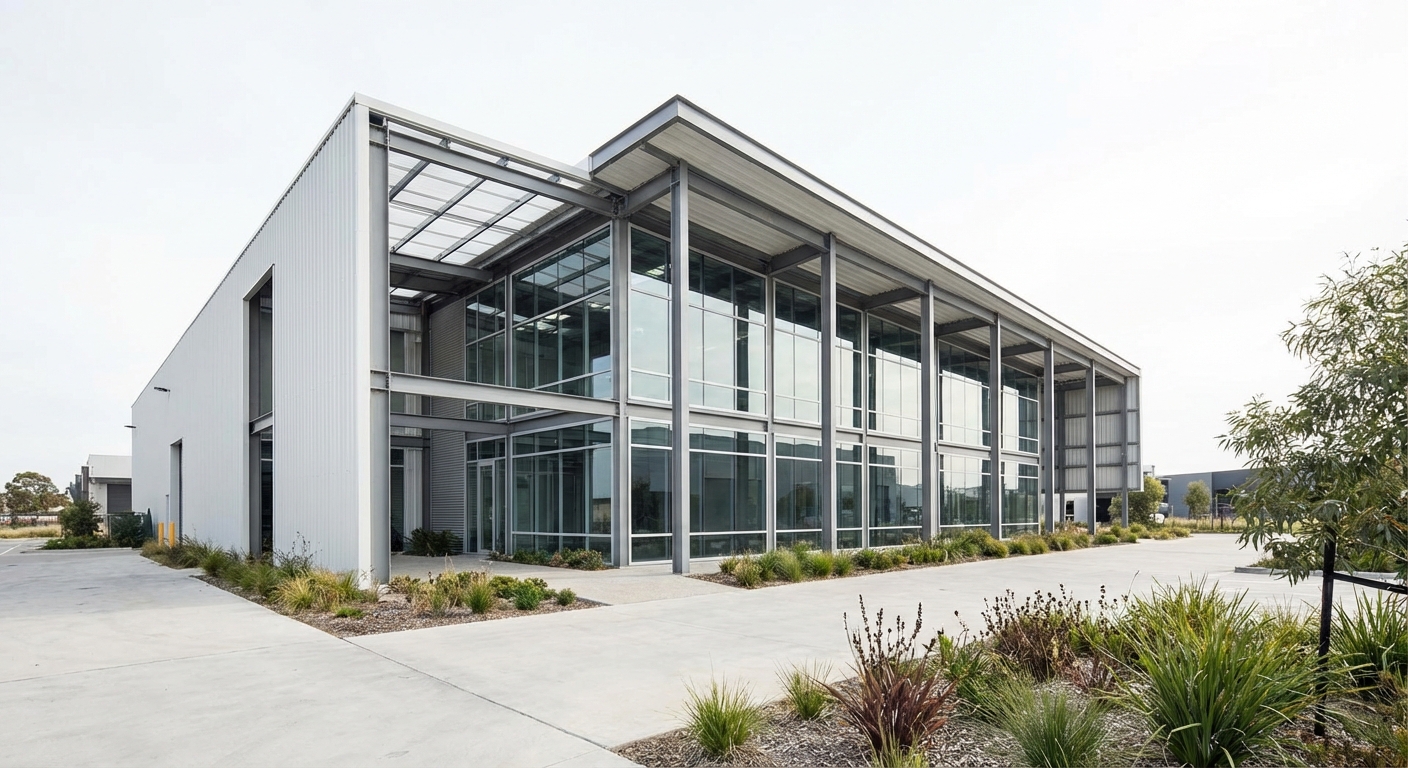
A Steel Structure Workshop is a precision-engineered facility where all primary and secondary structural members are prefabricated in a factory and then bolted together on-site. This system relies on high-strength steel columns and beams to create a robust frame that can support heavy industrial activities.
How does the primary frame function?
The main structure consists of H-section or I-beam columns and beams that bear the majority of the building’s load. You will find that these components are custom-sized to meet the specific requirements of your floor plan and local environmental stresses.
- Main Columns: These provide the vertical support for the entire roof and any internal cranes.
- Roof Beams: These span the distance between columns to support the cladding.
- Foundation Bolts: Heavy-duty anchors that secure the steel frame to the concrete base.
What about the secondary support?
But that’s not all. You also need a secondary structure consisting of C or Z-section purlins, girts, and various bracing members to ensure the building remains stable against lateral forces. These smaller steel pieces tie the main frame together and provide the necessary surface area to attach wall and roof panels.
Key Takeaway: A modern workshop is a modular, factory-made system designed for rapid assembly and extreme structural integrity.
The following table summarizes the primary components found in a standard steel building project.
| Component | Material Type | Function | |
|---|---|---|---|
| Primary Frame | H-Section Steel (Q355B/Q235B) | Main load-bearing skeleton | |
| Secondary Frame | C/Z Purlins & Girts | Supports cladding and transfers loads | |
| Bracing System | Round bar or Angle steel | Ensures lateral stability and rigidity |
This component breakdown shows how the structural harmony of steel ensures your building’s safety.
Why Is a Steel Structure Workshop the Best Choice?
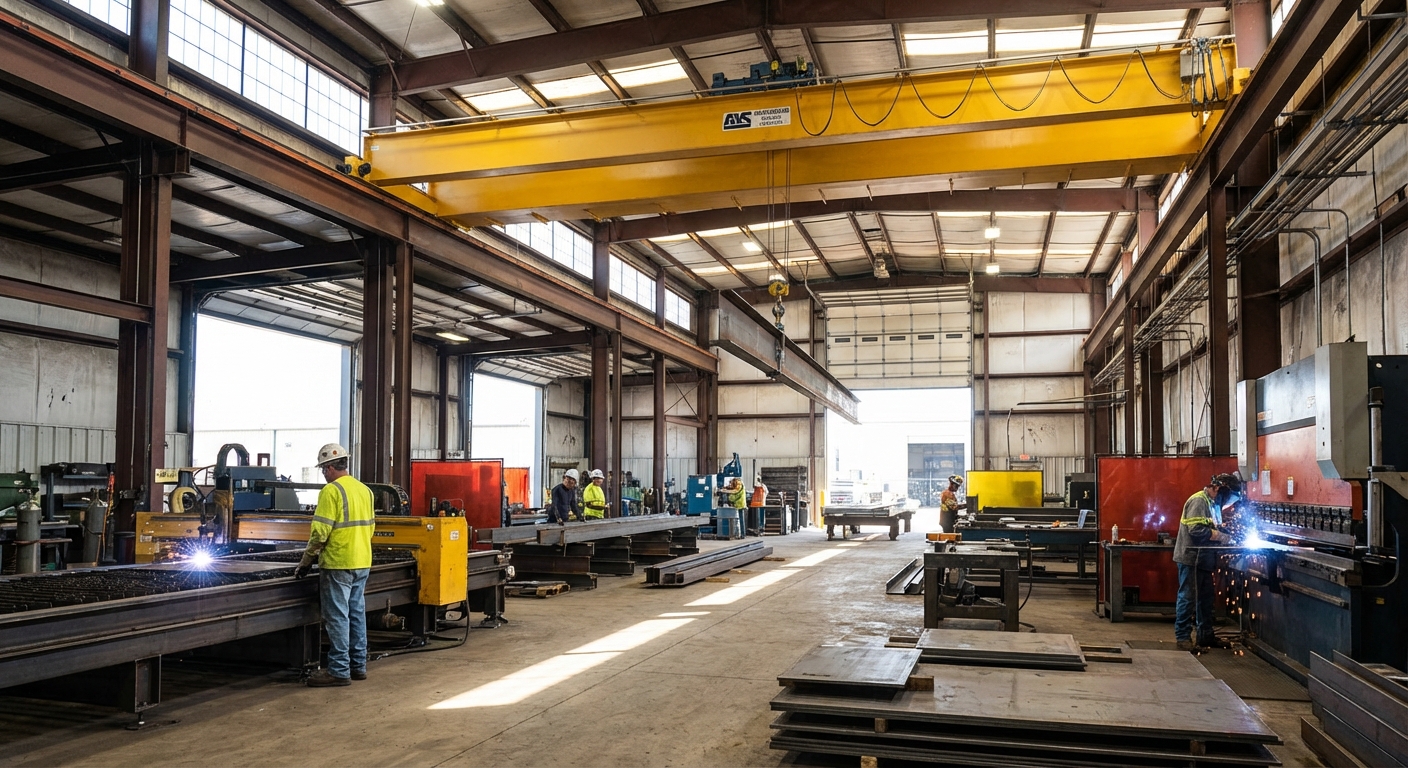
You choose a Steel Structure Workshop because it offers unparalleled construction speed and significant long-term savings on maintenance and foundation work. This building method allows you to move into your new facility much faster than traditional masonry or concrete alternatives would permit.
Is construction speed that important?
Think about it: the faster your building is finished, the sooner you can begin manufacturing or storing your products. Because components are pre-cut and pre-drilled at the factory, you can reduce on-site labor hours by as much as 50%.
- Rapid Assembly: No waiting for bricks to be laid or concrete to dry.
- All-Weather Build: Installation can continue in most weather conditions.
- Predictable Timeline: Factory production removes the variable of on-site fabrication delays.
How does steel provide durability?
Here is the kicker: steel is naturally resistant to pests, rot, and fire, which lowers your long-term insurance and repair costs. You get a structure that is designed to withstand decades of heavy use without the structural degradation common in older building styles.
Key Takeaway: Choosing steel maximizes your return on investment by shortening the time-to-market and minimizing future maintenance expenses.
The table below outlines the specific industrial benefits of choosing a steel-based construction model.
| Benefit | Impact on You | Long-term Value | |
|---|---|---|---|
| Speed | 30-50% faster completion | Earlier revenue generation | |
| Durability | High weather resistance | Lower insurance premiums | |
| Flexibility | Easy to expand later | Future-proofed investment |
Analyzing these benefits reveals why steel remains the gold standard for global industrial infrastructure.
What Are the Main Types of a Steel Structure Workshop?
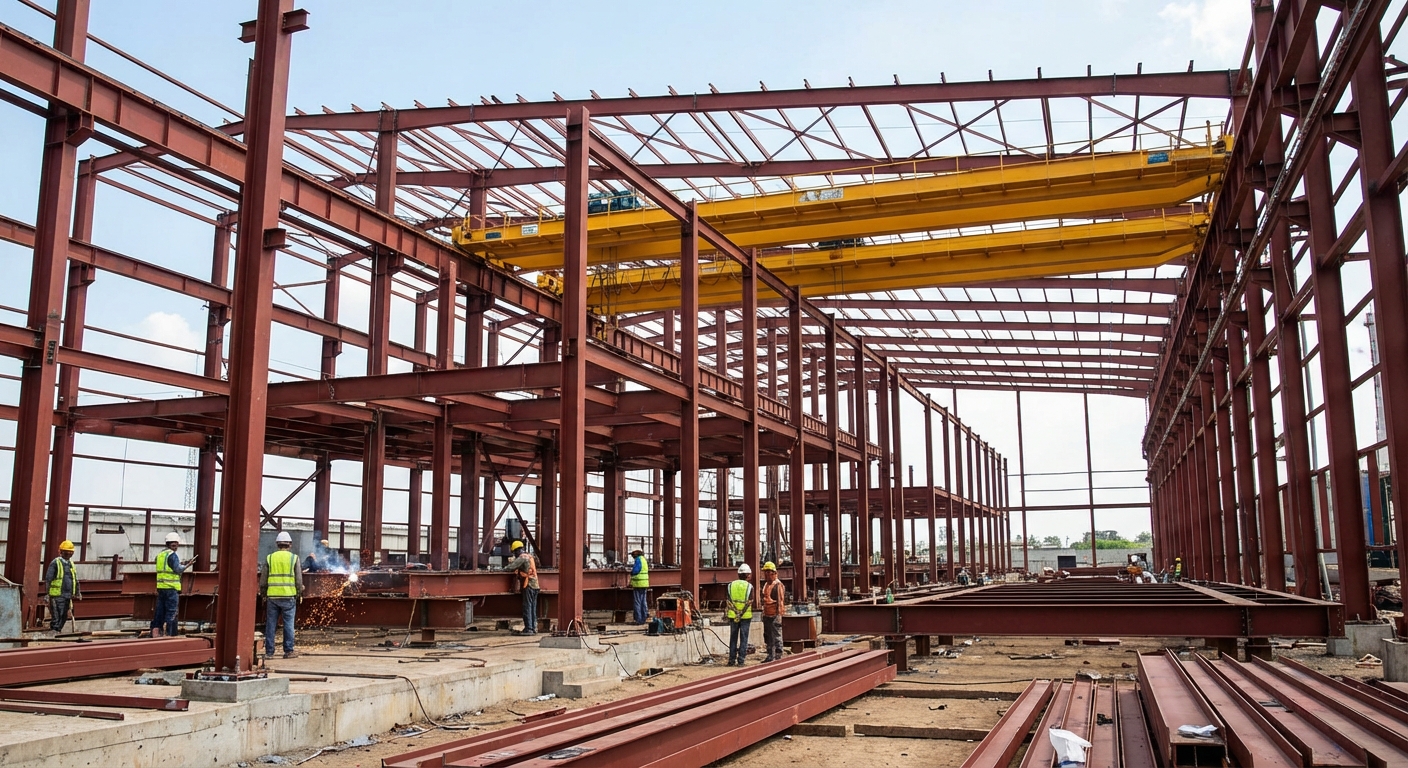
The main types of a Steel Structure Workshop include single-span, multi-span, and crane-equipped designs tailored to specific industrial workflows. You can select a layout that prioritizes open floor space or one that supports heavy-duty lifting machinery.
What is a clear-span layout?
A clear-span design provides you with a massive open area without any internal columns to obstruct your equipment or storage racks. This is particularly useful if you are managing large inventory or need to move large vehicles within the building.
- Single-Span: Best for widths up to 36 meters without interior supports.
- Multi-Span: Uses interior columns to achieve much wider total building widths.
- High-Bay: Designed with extra height for vertical storage or tall machinery.
Can it support overhead cranes?
But wait, there’s more. You can easily integrate crane runway beams directly into the column design to support lifting capacities ranging from 5 to over 50 tons. This allows you to handle heavy manufacturing tasks safely and efficiently within the same structural footprint.
Key Takeaway: Whether you need a simple storage area or a complex manufacturing hub, there is a structural configuration to match your needs.
This comparison helps you identify the correct structural type for your specific operational requirements.
| Type | Best Application | Key Feature | |
|---|---|---|---|
| Clear Span | Logistics & Warehousing | 100% usable floor space | |
| Multi-Span | Large Factories | Cost-effective for wide buildings | |
| Crane Workshop | Heavy Manufacturing | Integrated lifting support |
Evaluating these types allows you to optimize your facility’s internal logistics and workflow.
Which Design Factors Matter for a Steel Structure Workshop?
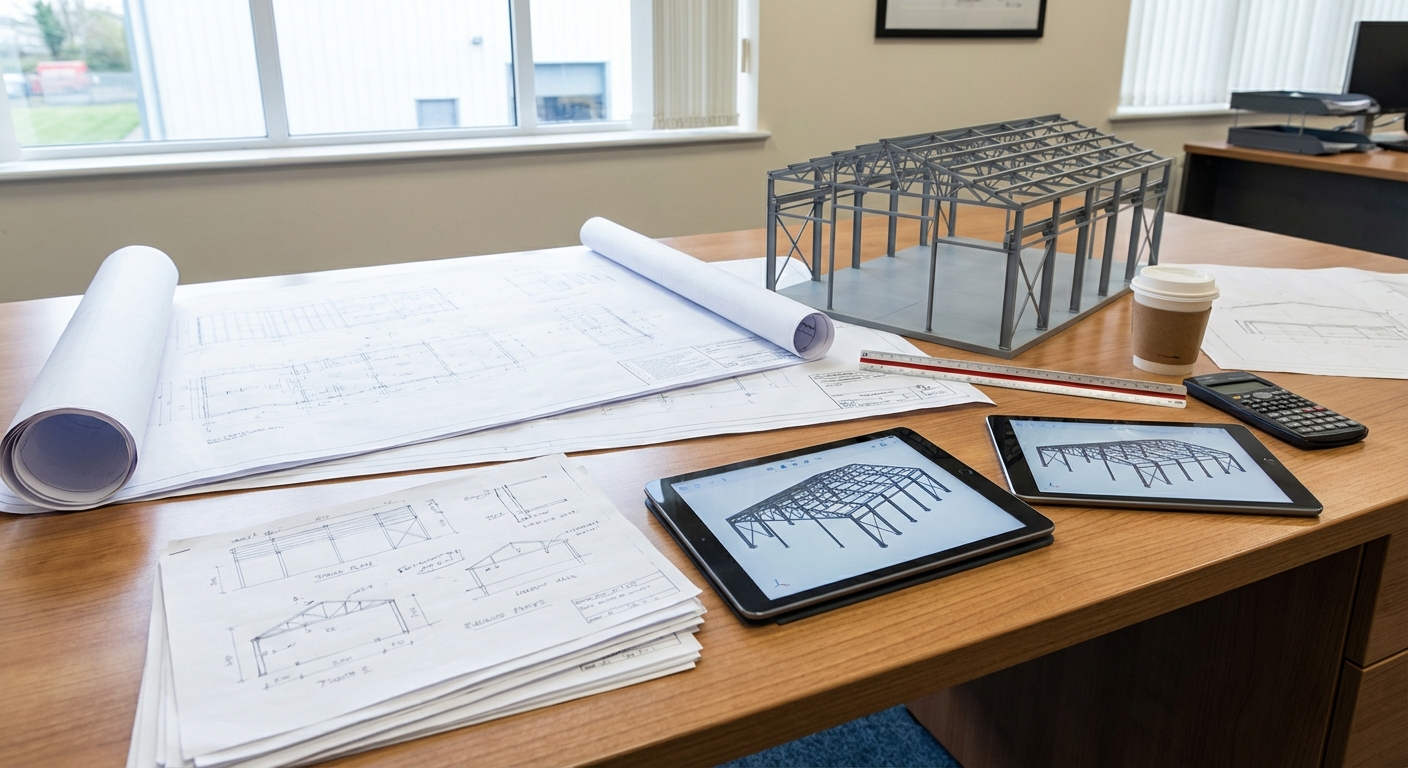
Critical design factors for a Steel Structure Workshop involve calculating local wind speeds, snow loads, and seismic conditions to ensure total structural safety. You must also consider internal environmental factors like ventilation, lighting, and insulation to create a productive workspace.
How do environmental loads work?
Your building must be engineered to survive the worst-case weather scenarios in your specific geographic location. Designers use advanced software to determine the exact thickness and grade of steel required to resist uplift from high winds or the weight of heavy snow.
- Wind Load: Crucial for coastal areas prone to storms.
- Snow Load: Necessary for colder climates to prevent roof collapse.
- Seismic Load: Ensures the building remains flexible during earthquakes.
Is internal comfort a priority?
But that’s only half the story. You also need to integrate sky panels for natural lighting and roof monitors for ventilation to keep your energy costs low and your workers comfortable. Proper insulation is essential if you plan to heat or cool the facility throughout the year.
Key Takeaway: Professional engineering ensures your building is not only safe from the elements but also optimized for daily operational efficiency.
The checklist below summarizes the essential design considerations for a new industrial project.
| Design Factor | Target Outcome | Solution | |
|---|---|---|---|
| Structural Loads | Safety & Compliance | Professional engineering calcs | |
| Thermal Control | Energy Efficiency | Sandwich panel insulation | |
| Natural Lighting | Lower Utility Bills | Polycarbonate sky panels |
A thorough design phase prevents costly structural failures and reduces long-term operating overhead.
What Materials Comprise a Steel Structure Workshop?
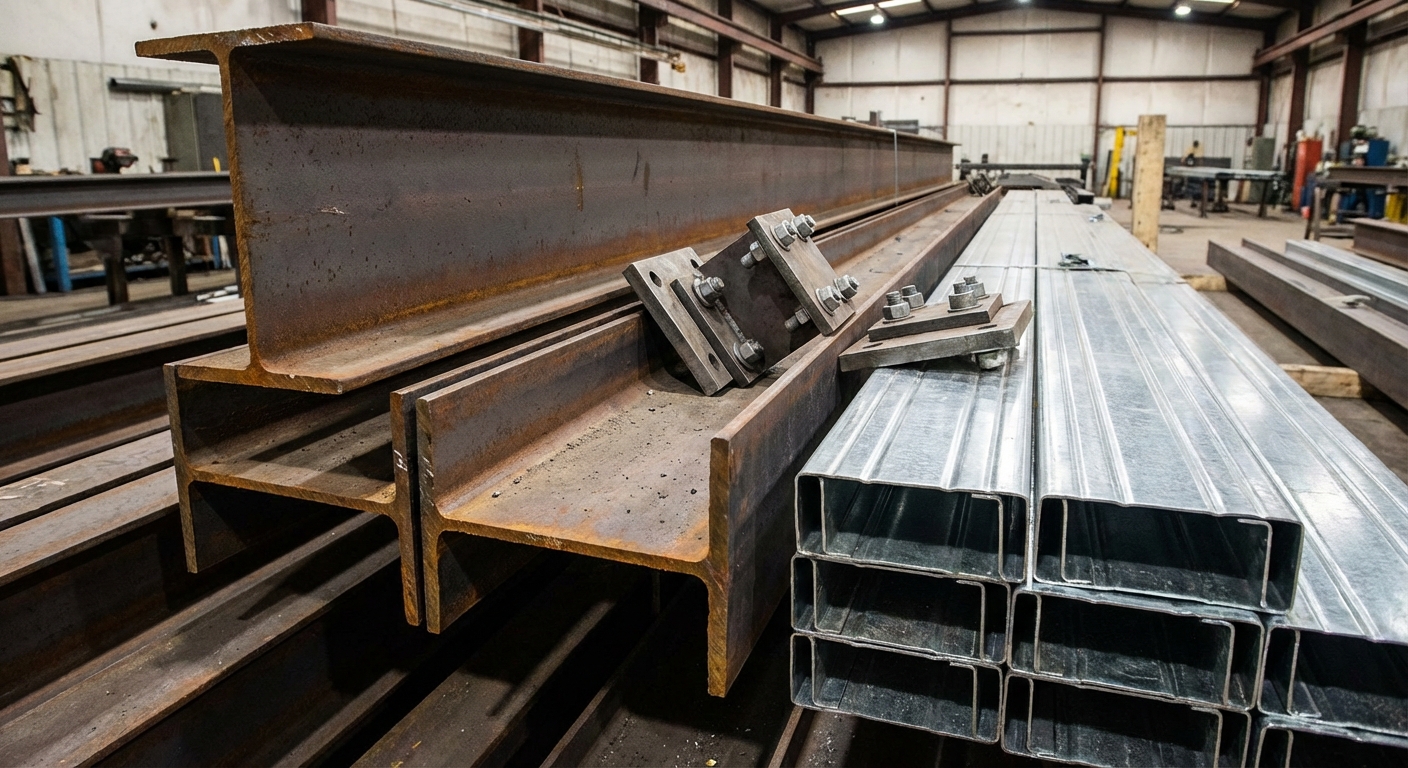
A Steel Structure Workshop is comprised of high-strength structural steel for the frame, galvanized purlins for secondary support, and insulated panels for the walls and roof. You must ensure that these materials are treated with the correct coatings to prevent corrosion and extend the building’s lifespan.
What steel grades are used?
The primary columns and beams are typically made from Q355B or Q235B steel, which offers the perfect balance of strength and weldability. You should look for steel that comes with mill test certificates to verify its quality and structural properties.
- Primary Steel: H-section beams with primer or galvanized finishes.
- Purlins: Thin-gauge, high-strength galvanized C or Z sections.
- Fasteners: High-strength bolts and self-tapping screws for tight connections.
Which cladding is best?
Here is the bottom line: your choice of cladding determines the building’s aesthetic and thermal performance. You can choose between cost-effective single-color sheets or insulated sandwich panels that feature a core of Rockwool or EPS for superior temperature control.
Key Takeaway: High-quality raw materials and protective coatings are the most important factors in determining the 50-year durability of your structure.
This table provides a breakdown of the materials typically used in high-quality steel construction.
| Component | Common Specification | Surface Treatment | |
|---|---|---|---|
| Main Frame | Q355B Steel | Sandblasting & Painting | |
| Secondary Frame | Galvanized Steel | Z275 Zinc Coating | |
| Wall/Roof Panels | Sandwich Panels | PVDF or PE Coating |
Selecting premium materials ensures your facility remains functional and attractive in harsh environments.
How Does a Steel Structure Workshop Compare to Concrete?
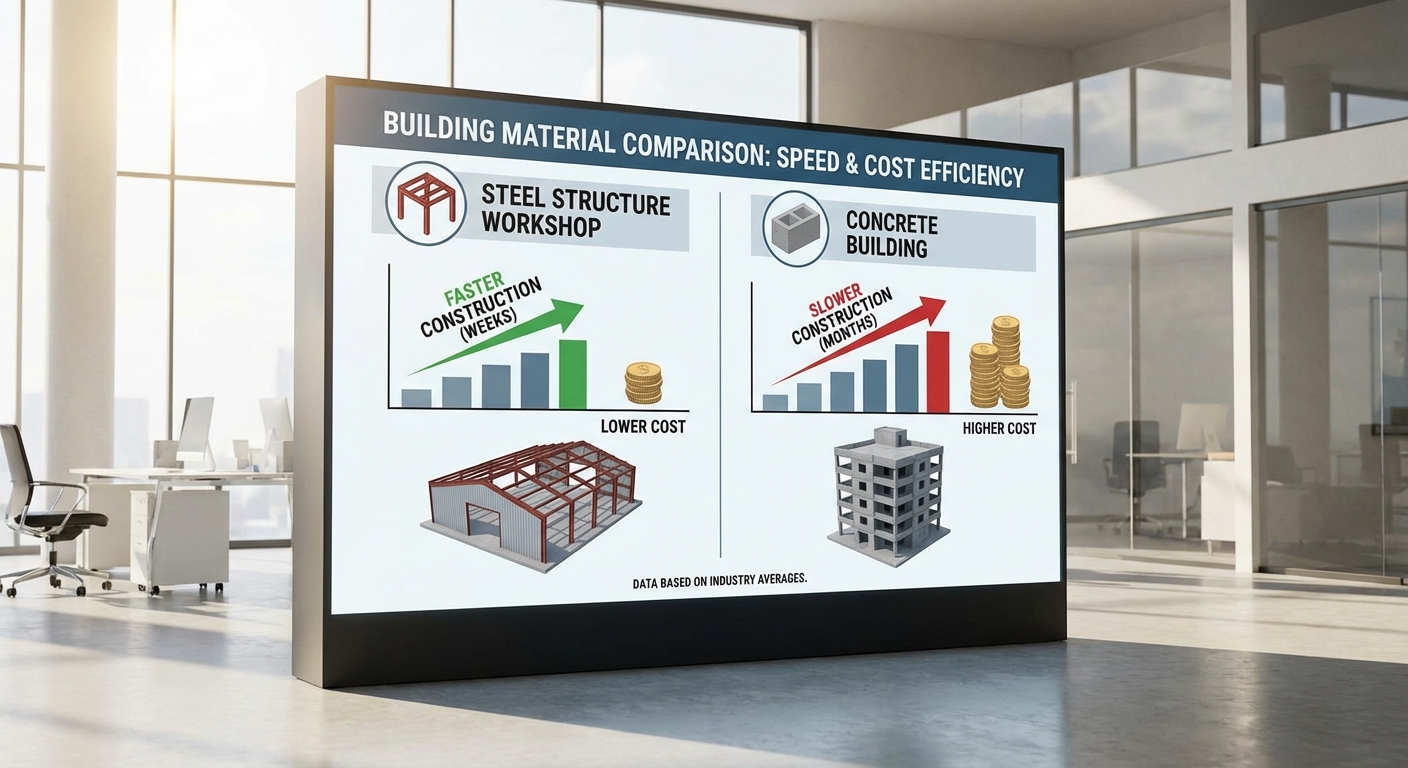
When you compare a Steel Structure Workshop to a concrete building, steel wins on construction speed, foundation requirements, and environmental sustainability. Steel is a much lighter material, which allows you to save significantly on the cost of the concrete foundation.
Is the cost difference real?
In many cases, the total project cost for a steel building is 20-30% lower than a comparable concrete structure. You save money not just on the materials, but also on the specialized labor and heavy machinery required for traditional masonry.
- Foundation Savings: Lighter frames require less concrete and reinforcement.
- Labor Efficiency: Small teams can erect large steel buildings quickly.
- Recycle Value: Steel has high scrap value; concrete is expensive to demolish.
How does the timeline vary?
The best part? While a concrete building might take twelve months to finish, a steel workshop can often be operational in just four to six months. This allows you to start generating revenue and serving your customers much sooner than your competitors.
Key Takeaway: Steel offers a faster path to profitability by reducing both the construction schedule and the total investment required for the foundation.
The following comparison table highlights the core differences between these two building methods.
| Feature | Steel Structure | Concrete Building | |
|---|---|---|---|
| Build Speed | Fast (Months) | Slow (Years) | |
| Weight | Light | Very Heavy | |
| Expansion | Very Easy | Very Difficult | |
| Waste | Low / Recyclable | High / Landfill |
This data confirms that steel is the most efficient choice for modern industrial and commercial growth.
What Determines the Cost of a Steel Structure Workshop?
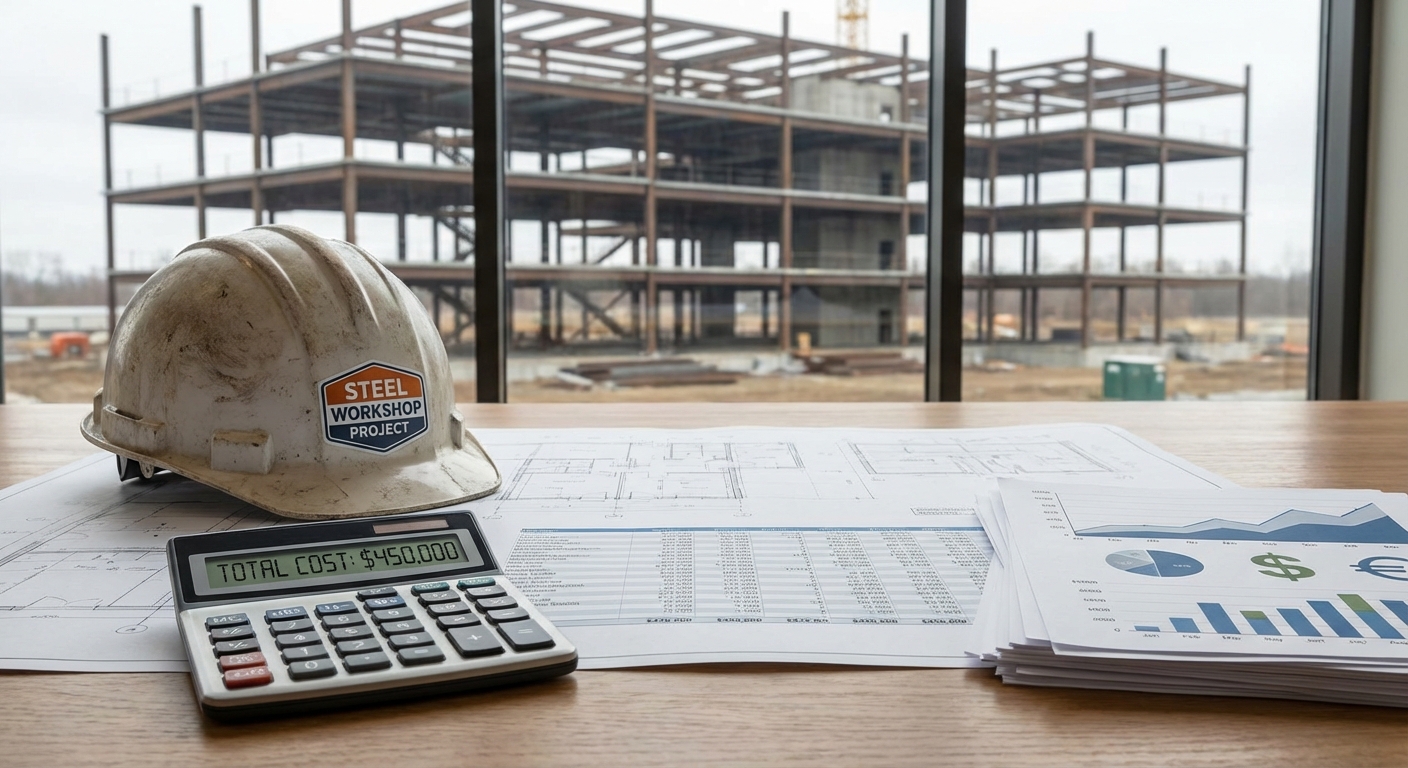
The cost of a Steel Structure Workshop is determined by the total weight of the steel, the complexity of the design, and the local shipping logistics. You will find that wider spans and higher load requirements for wind or snow will naturally increase the total price per square meter.
How do spans affect price?
As the distance between your columns increases, the steel beams must become deeper and heavier to prevent sagging. If you can accommodate internal columns, you can often lower the total cost of the project by reducing the steel weight required for the roof.
- Steel Tonnage: The primary driver of the final quote.
- Panel Type: Insulation thickness and core material affect the budget.
- Accessories: Doors, windows, and cranes add to the final tally.
Are there hidden costs?
But that’s not all. You must also account for the cost of transportation from the factory to your site, as well as the rental of cranes for the installation phase. It is always wise to ask for a complete bill of materials to avoid any surprises during the construction process.
Key Takeaway: Optimizing your building’s span and choosing the right insulation for your climate are the best ways to control your total budget.
This cost breakdown helps you understand where your investment is being allocated during the project.
| Category | Typical % of Budget | Main Variables | |
|---|---|---|---|
| Steel Frame | 60-70% | Market steel prices & span | |
| Cladding System | 15-20% | Insulation type & thickness | |
| Logistics/Install | 10-15% | Shipping distance & site access |
Careful budget planning ensures you get the most building for your money without sacrificing quality.
How to Solve Problems in a Steel Structure Workshop?
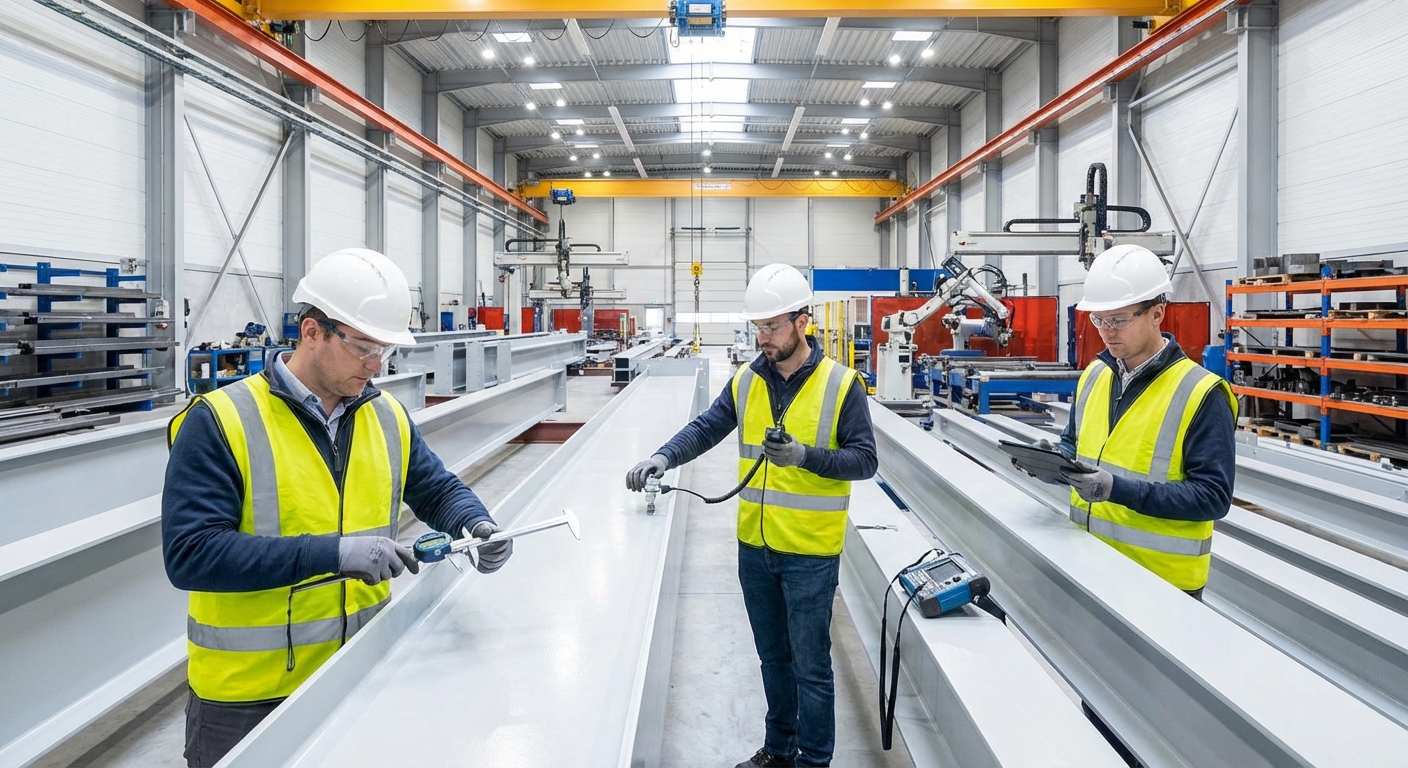
You can solve common problems in a Steel Structure Workshop by ensuring proper surface treatments for corrosion and using factory-verified drawings for assembly. Working with an experienced manufacturer allows you to avoid issues like mismatched holes or missing components during the on-site build.
How to fight rust effectively?
If your workshop is located near the sea or in a humid environment, you must prioritize hot-dip galvanizing for all secondary members and high-quality paint for the main frame. You can also use stainless steel fasteners to ensure that small connections do not weaken over time due to oxidation.
- Galvanization: Provides a thick zinc barrier against moisture.
- Epoxy Painting: Excellent for chemical resistance in industrial settings.
- Regular Cleaning: Removing salt and dust extends the life of the cladding.
What about assembly errors?
It gets even better. Most reputable factories perform a trial assembly or use 3D modeling software to ensure every part fits perfectly before it leaves the plant. You should always verify that each piece is clearly labeled according to the provided installation manual.
Key Takeaway: Prevention is better than a cure; choosing a supplier with a strict quality control process eliminates the most common construction risks.
The table below provides solutions to common risks associated with industrial steel buildings.
| Risk | Potential Problem | Solution | |
|---|---|---|---|
| Corrosion | Structural weakness | Galvanization or High-build paint | |
| Leaking Roof | Inventory damage | Standing seam roof systems | |
| Fitment Issues | Construction delays | Factory trial assembly & 3D design |
Proactive problem-solving during the design and manufacturing phases guarantees a smooth installation.
What Are Common Uses for a Steel Structure Workshop?
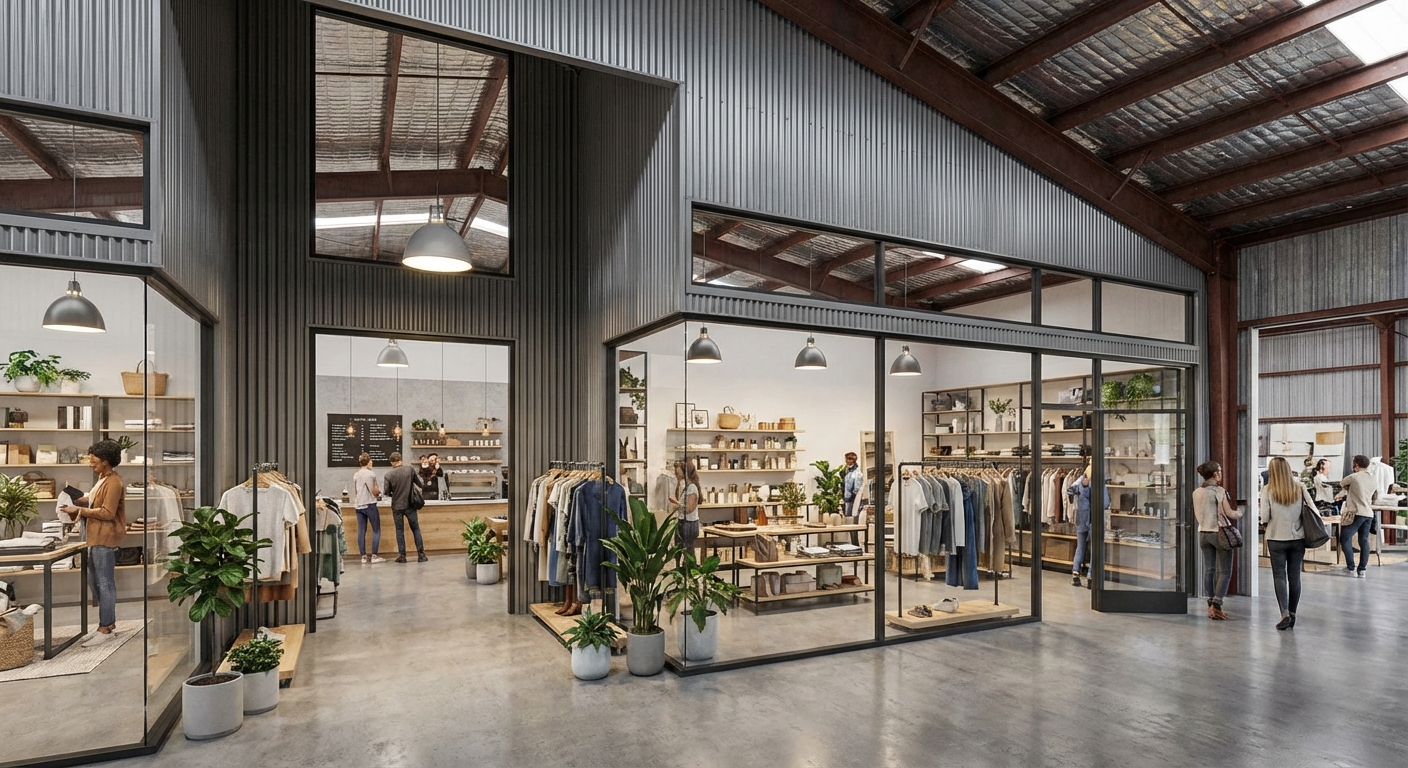
Beyond heavy manufacturing, a Steel Structure Workshop is commonly used for logistics warehouses, retail showrooms, and agricultural barns. You can customize the exterior appearance with glass curtain walls or high-end cladding to suit commercial applications.
Can it be used for retail?
But that’s only half the story. The wide spans and high ceilings of steel buildings make them perfect for car dealerships and shopping malls where you need an open, inviting environment. You can create a high-end look while still benefiting from the structural efficiency of a steel frame.
- Logistics Hubs: Ideal for high-density racking and truck docks.
- Schools/Gyms: Provides safe, large spaces for student activities.
- Farming: Used for livestock sheds because it is easy to sanitize.
Is it suitable for aviation?
Think about it: aircraft hangars require massive clear openings that only steel can provide economically. You can install large bi-fold or sliding doors into a steel frame to accommodate everything from private jets to commercial airliners.
Key Takeaway: The versatility of steel makes it the ideal building material for almost any industrial, commercial, or institutional project.
The table below lists the diverse sectors that rely on steel building technology.
| Sector | Common Use Case | Key Advantage | |
|---|---|---|---|
| Industrial | Manufacturing & Storage | High load & Crane support | |
| Commercial | Showrooms & Offices | Modern look & Wide spans | |
| Agricultural | Barns & Equipment sheds | Pest-free & Low maintenance |
This wide range of applications demonstrates the adaptability of steel to meet various business needs.
FAQs: What Should You Know About a Steel Structure Workshop?

Building a new facility is a major investment, and you likely have specific questions about the technical details and long-term viability of steel construction.
Can I expand my building in the future?
Yes, steel structures are inherently modular. Because the frames are bolted together, you can remove an end wall and add new sections to increase the length of your facility without disturbing the existing operations.
What’s the best way to prevent roof leaks?
The best choice is a standing seam roof system. This design hides the fasteners under a folded metal seam, which eliminates the primary path for water penetration and ensures a leak-free environment for decades.
How do I know if the design is safe for my area?
You must provide local wind, snow, and seismic data to the engineer. They will then use professional software to ensure the steel thickness and connections meet or exceed your local building codes and safety regulations.
Can I install the workshop myself?
While possible for small sheds, it is generally recommended to hire a professional crew. They have the necessary cranes, safety equipment, and torque wrenches to ensure that all high-strength bolts are tightened to the correct engineering specifications.
How long does a steel building actually last?
With basic maintenance, a steel structure will last 50 years or more. Using hot-dip galvanized steel for the secondary frame and high-quality coatings for the primary beams is the key to maximizing the lifespan of your investment.
Are you ready to expand your business with a durable, cost-effective facility?Whether you need a massive logistics hub or a high-efficiency manufacturing plant, our team is here to provide you with factory-direct solutions tailored to your specific needs. We believe that every business deserves a building that supports its growth through engineering excellence and reliable manufacturing. To receive a customized design and a transparent quote, contact us today and let us help you turn your project vision into a reality.