
You start a poultry farming business by choosing what you will produce, confirming demand, securing a suitable site, building the right house, and controlling cash before the first chicks arrive. Imagine buying birds first, then discovering that your shed overheats, feed deliveries are unreliable, or customers will not accept your target price; the losses can begin before your first production cycle ends. A practical chicken farming business plan connects market demand, flock capacity, housing, equipment, labor, biosecurity, and finance into one workable route. This guide shows you how to make those decisions in the correct order and turn an uncertain idea into an investable poultry project.
Why Does a Chicken Farming Business Plan Matter?
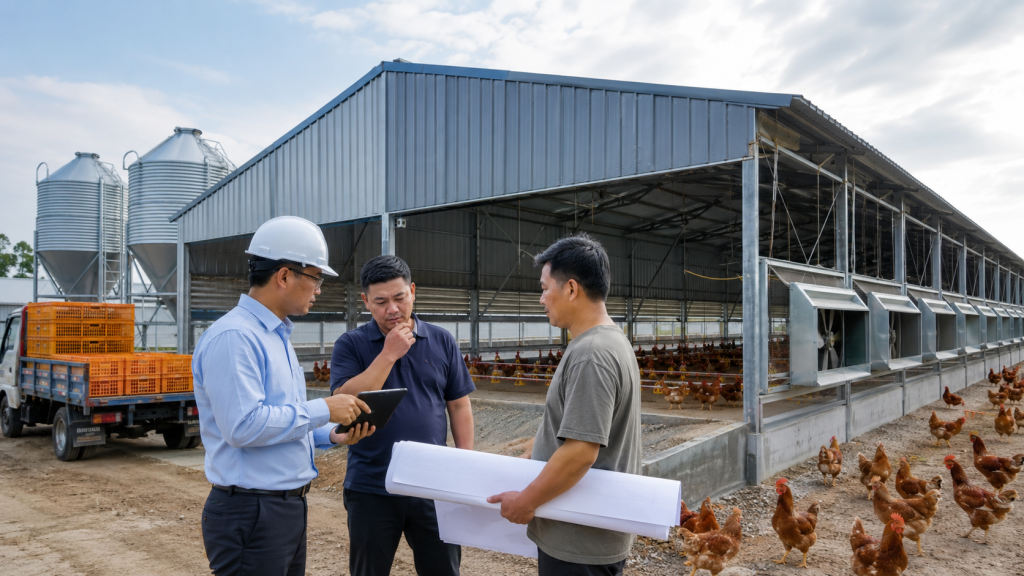
A chicken farming business plan matters because it converts your poultry idea into measurable production, cost, sales, and risk targets. It helps you see whether the farm can operate reliably before you commit money to land, buildings, equipment, and birds.
What Must Your Plan Decide First?
Your plan must first define what you will sell, who will buy it, and how much your farm can produce. Here is the key: every later decision depends on these three answers.
- Product: broilers, eggs, chicks, breeders, or feed
- Customer: wholesalers, retailers, processors, hotels, or households
- Capacity: birds per cycle and production cycles per year
- Route to market: farm gate, contract buyer, distributor, or direct sale
How Does Planning Reduce Expensive Mistakes?
Planning reduces mistakes by testing your assumptions before construction begins. You can compare demand, capacity, cash flow, and infrastructure as one system instead of buying each item separately.
| Planning Area | Question to Resolve | Business Benefit |
|---|---|---|
| Market | Who will buy and at what terms? | Reduces unsold production |
| Operations | Can the house support the flock? | Protects bird performance |
| Finance | Can cash cover a full cycle? | Prevents mid-cycle shortages |
This comparison shows why a plan should be completed before procurement.
Key Takeaway: You gain a decision framework that protects capital and keeps every supplier working toward the same production target.
Which Birds Fit a Chicken Farming Business Plan?
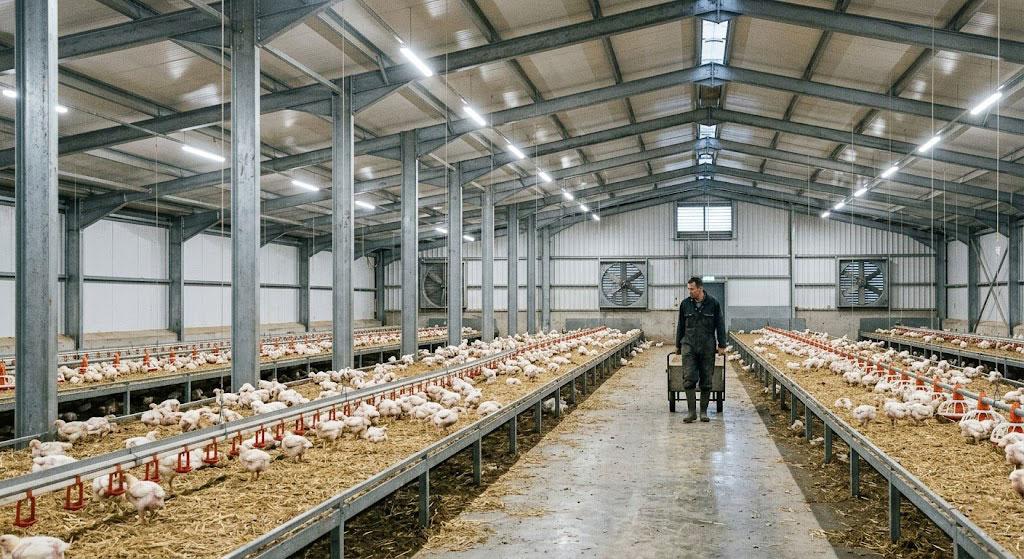
A chicken farming business plan should select birds according to your market, cash cycle, housing system, and management capability. Broilers, layers, and breeders create different income patterns and require different layouts, equipment, and operating discipline.
Should You Raise Broilers or Layers?
Choose broilers when your market needs meat and you prefer shorter production cycles; choose layers when buyers provide stable egg demand and you can manage a longer operating period. Think about it: faster sales do not automatically mean better margins if feed, mortality, or selling prices are poorly controlled.
- Broilers: faster turnover and batch-based sales
- Layers: recurring egg revenue and longer flock management
- Breeders: specialized skills, stricter controls, and higher entry barriers
- Mixed farming: more revenue streams but greater management complexity
What Bird Choice Means for Your Facility?
Bird choice changes stocking strategy, feeding lines, lighting, manure handling, ventilation, and product storage. Your building should therefore be designed around the production system rather than adapted after fabrication.
| Bird Model | Main Output | Facility Priority |
|---|---|---|
| Broiler | Meat | Airflow, floor or cage layout |
| Layer | Eggs | Cage or nest system, egg handling |
| Breeder | Hatching eggs | Controlled mating and biosecurity |
The facility priorities reveal why one generic house cannot serve every flock efficiently.
Key Takeaway: Selecting the bird model first prevents costly equipment conflicts and gives you a clear basis for quotations.
Get Your Custom Chicken Farm Plan and Quote Today !
Email:sales@showhoo.com.cn
Phone/WhatsApp: + 86 186 7895 5927
What Market Fits a Chicken Farming Business Plan?
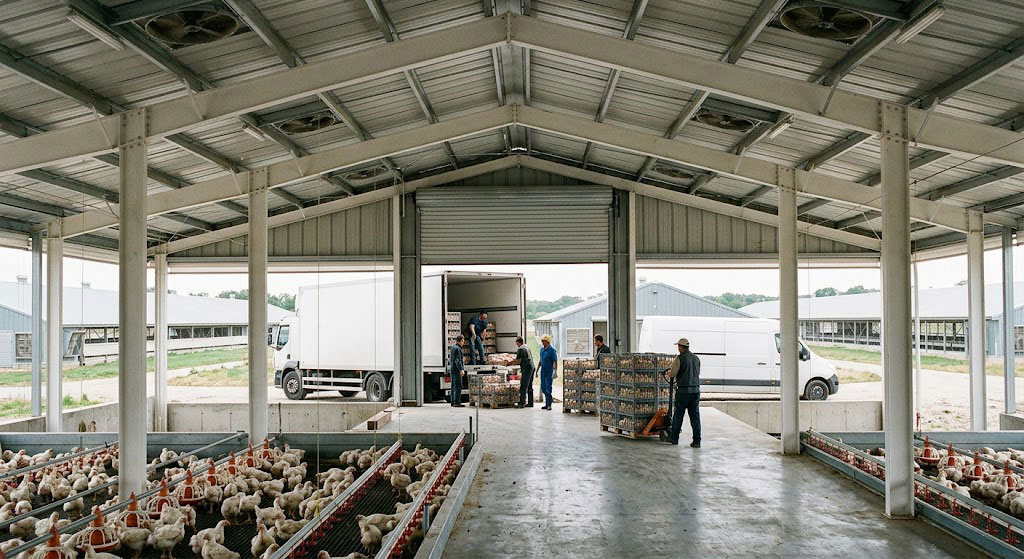
A chicken farming business plan fits a market only when verified demand can absorb your expected output at workable payment terms. You should investigate customers, competition, seasonal demand, quality requirements, and transport costs before deciding farm capacity.
Who Will Buy Your Poultry Products?
Your likely buyers include processors, wholesalers, supermarkets, restaurants, institutions, and local households. But that is only the beginning: you must learn how each buyer grades products, schedules deliveries, and pays suppliers.
- Required bird weight or egg grade
- Weekly or monthly purchasing volume
- Payment period and credit risk
- Packaging, cold-chain, or certification requirements
- Seasonal peaks and low-demand periods
How Do You Validate Demand Before Investing?
Validate demand by speaking directly with several buyers and comparing their purchase conditions with your estimated production cost. Written interest, trial orders, or supply discussions are stronger signals than general market enthusiasm.
| Validation Method | Evidence Produced | Reliability |
|---|---|---|
| Buyer interview | Price and specification feedback | Medium |
| Trial sale | Real customer response | High |
| Supply agreement | Volume and payment framework | Very high |
The stronger the evidence, the safer your capacity decision becomes.
Key Takeaway: Market validation helps you build for confirmed sales rather than hoping customers appear after production starts.
Where Should a Chicken Farming Business Plan Begin?
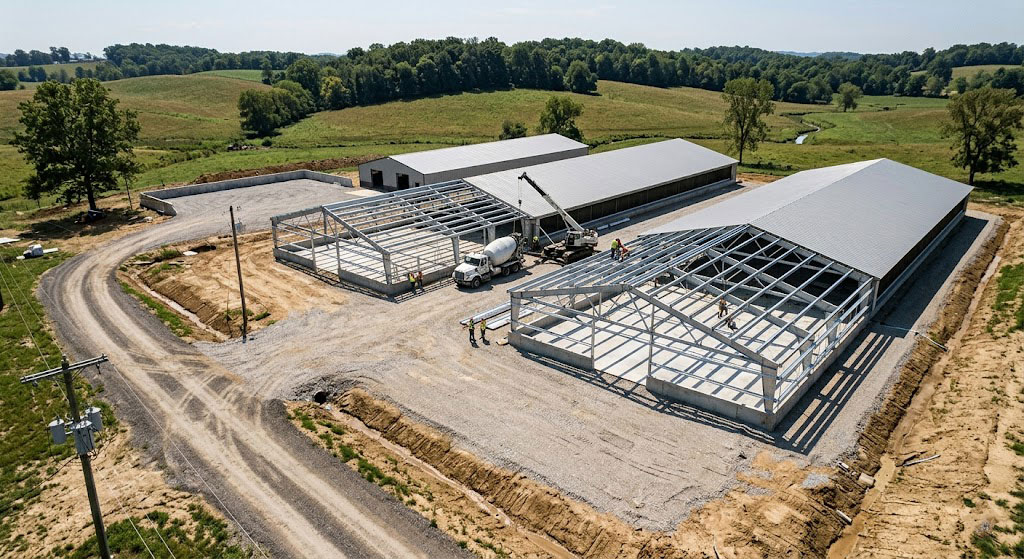
A chicken farming business plan should begin with a site that balances biosecurity, transport access, utilities, drainage, and legal approval. Cheap land can become expensive when poor roads, flooding, unreliable power, or nearby farms disrupt daily operations.
What Makes a Poultry Site Practical?
A practical site is accessible to feed trucks and customers while remaining separated from obvious contamination sources. Here is the deal: operational access and biological isolation must work together.
- All-weather road connection
- Reliable water quality and volume
- Stable electricity or backup generation
- Elevated, well-drained ground
- Space for future houses and service roads
- Acceptable distance from residential and poultry areas
Which Site Risks Require Early Checks?
Check zoning, environmental requirements, prevailing wind, soil conditions, flood exposure, and waste-disposal options before purchase. A local engineer and agricultural authority should confirm what applies in your project area.
| Site Risk | Early Check | Possible Control |
|---|---|---|
| Flooding | Topographic review | Elevation and drainage |
| Weak soil | Geotechnical testing | Foundation redesign |
| Disease exposure | Neighboring farm survey | Separation and access control |
These checks can prevent major redesigns after land acquisition.
Key Takeaway: A suitable location lowers logistics costs, supports biosecurity, and protects the building throughout its service life.
How Much Capital Needs a Chicken Farming Business Plan?
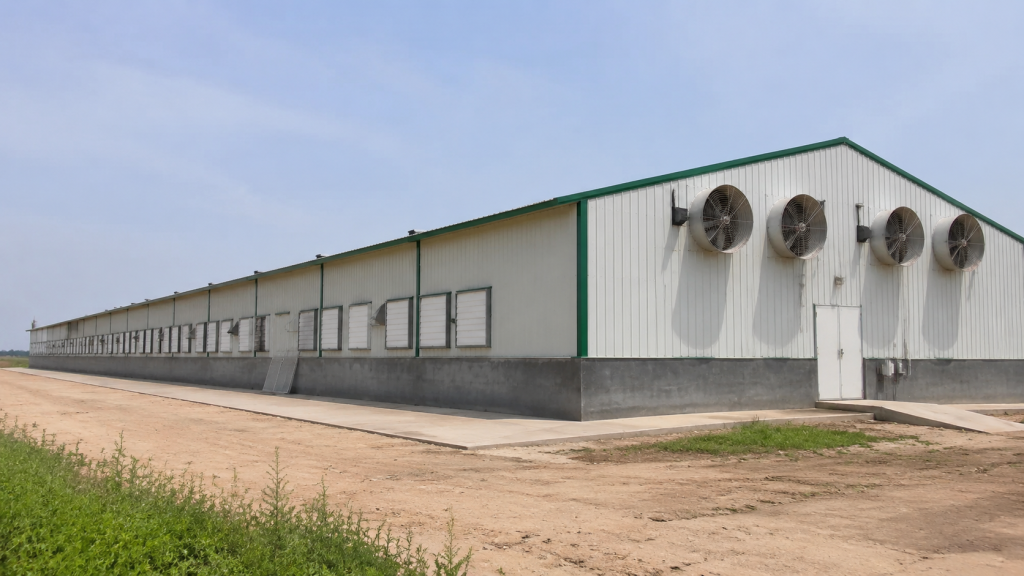
A chicken farming business plan needs enough capital to complete construction, commission equipment, place birds, and operate until customer payments arrive. Your budget should separate startup investment from recurring operating costs and retain a contingency for delays or price changes.
Which Startup Costs Must You Include?
Include every cost required to make the farm operational, not only the birds and house. Here is the kicker: small omitted items often become urgent expenses during installation or flock placement.
- Land, survey, permits, and site work
- Foundation, steel house, roofing, and cladding
- Feeding, drinking, ventilation, lighting, and power systems
- Freight, customs, installation, and commissioning
- Chicks, feed, vaccines, litter, labor, and insurance
- Working-capital and contingency reserve
How Should You Test Financial Feasibility?
Test a base case, a difficult case, and a strong case using different selling prices, feed costs, mortality assumptions, and production levels. Do not treat optimistic output as guaranteed revenue.
| Budget Group | Typical Items | Control Method |
|---|---|---|
| CAPEX | Building and equipment | Supplier quotations |
| OPEX | Feed, labor, utilities | Cycle-based forecast |
| Reserve | Delays and variation | Contingency allowance |
This structure makes funding needs easier to explain to investors or lenders.
Key Takeaway: A complete capital plan keeps the project funded through construction and the first operating cycle.
What Housing Supports a Chicken Farming Business Plan?
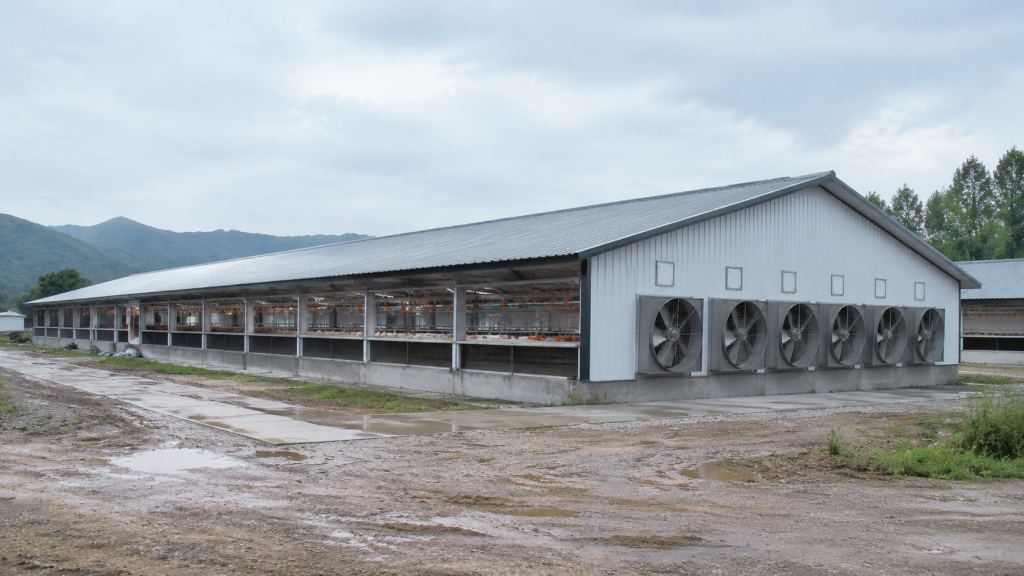
A chicken farming business plan is best supported by housing matched to climate, bird type, flock capacity, and management level. The house must control heat, moisture, airflow, predators, cleaning access, and equipment loads without creating operational bottlenecks.
Which Housing System Should You Choose?
Choose open-sided housing for suitable climates and lower automation levels, semi-enclosed housing for mixed natural and mechanical control, or closed housing for intensive environmental management. But wait, there is more: the lowest-cost shell may create higher lifetime losses if it cannot maintain stable conditions.
- Open-sided: natural airflow and lower initial complexity
- Semi-enclosed: flexible ventilation and moderate control
- Closed: stronger temperature, airflow, and biosecurity control
- Steel frame: clear spans, prefabrication, and equipment integration
What Must the Structural Design Confirm?
The design should confirm span, length, eave height, roof slope, wind and rain conditions, corrosion protection, insulation, openings, and suspended equipment loads. Final specifications must follow local codes and project-specific environmental data.
| Design Input | Why It Matters | Output |
|---|---|---|
| Flock and equipment | Determines usable layout | Building dimensions |
| Climate and loads | Determines structural demand | Frame and bracing |
| Thermal target | Determines envelope system | Roof and wall build-up |
The inputs show why accurate project data must come before fabrication.
Key Takeaway: Purpose-designed housing gives your flock a stable environment and prevents expensive site modifications.
Get Your Custom Chicken Farm Plan and Quote Today !
Email:sales@showhoo.com.cn
Phone/WhatsApp: + 86 186 7895 5927
Which Equipment Completes a Chicken Farming Business Plan?
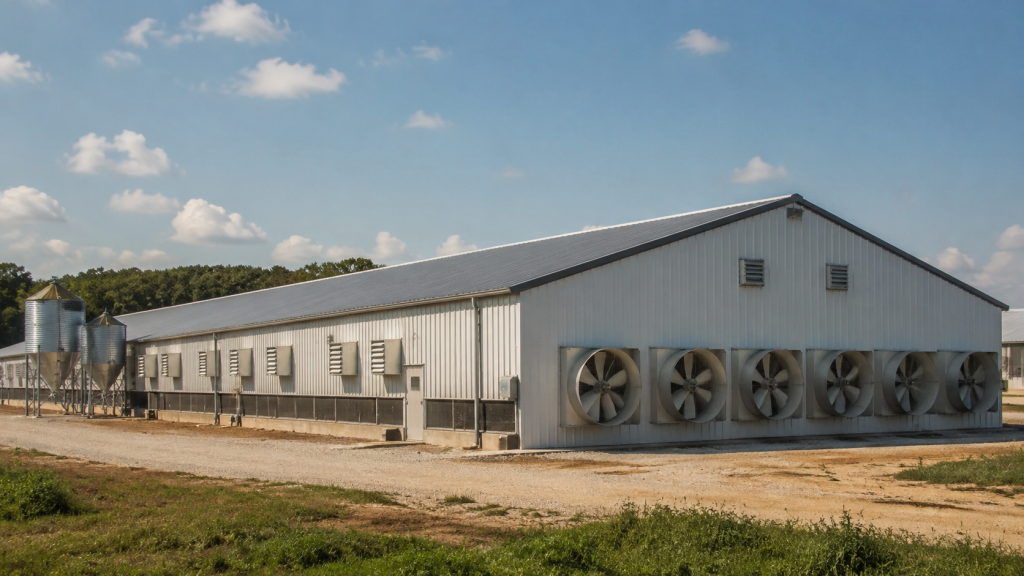
A chicken farming business plan is completed by equipment that delivers feed, water, air, light, heat, sanitation, and waste handling consistently. Equipment capacity must match the flock and building layout so that weak points do not limit the entire farm.
What Equipment Is Essential at Startup?
Essential systems depend on your bird type and production method, but reliable water, feeding, ventilation, and power are fundamental. Here is what matters: equipment should reduce variation, not simply add automation.
- Feed storage and distribution
- Drinking lines and water treatment
- Fans, inlets, cooling pads, or curtains
- Heating and lighting controls
- Cages, nests, or floor systems
- Manure handling, washing, and disinfection tools
How Do You Match Equipment With the Building?
Coordinate equipment positions, service passages, electrical routes, water lines, air paths, and support loads during design. This avoids cutting finished steelwork or blocking ventilation after delivery.
| System | Building Coordination | Result |
|---|---|---|
| Feeding lines | Suspension and aisle layout | Consistent access |
| Ventilation | Inlets, fans, and sealing | Predictable airflow |
| Water | Tank, pressure, and drainage | Reliable supply |
Coordinated design reduces installation delays and commissioning problems.
Key Takeaway: Matching equipment and structure as one system improves reliability and simplifies future maintenance.
How Do You Launch a Chicken Farming Business Plan?
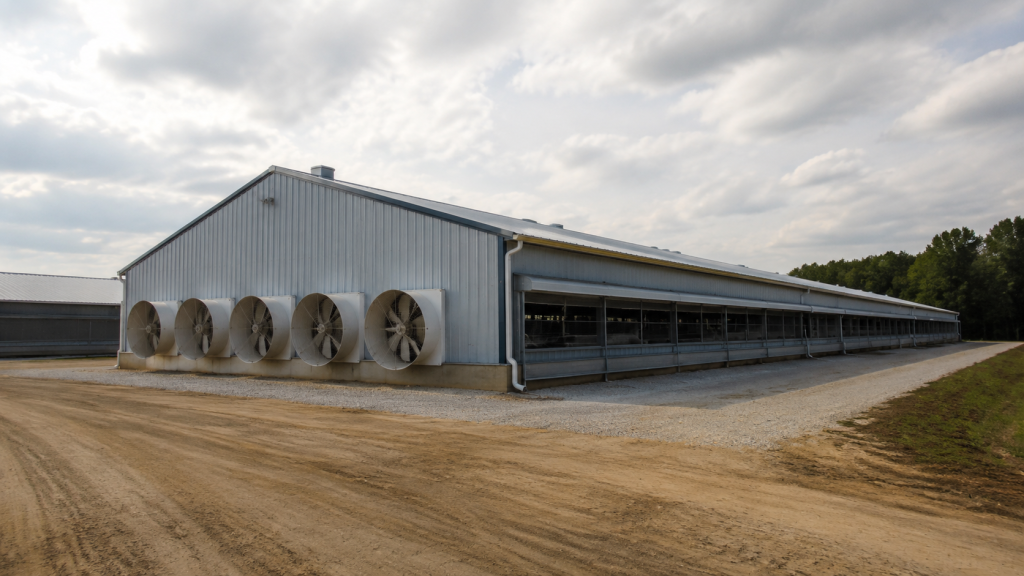
A chicken farming business plan launches successfully when construction, equipment testing, staffing, supplies, and chick delivery follow one coordinated schedule. Birds should arrive only after the house has been cleaned, tested, stabilized, and approved for operation.
What Sequence Keeps the Project on Track?
Use a phased sequence with clear acceptance points for each contractor and supplier. Think about it: placing chicks before ventilation, water, or backup power is proven creates avoidable risk.
- Confirm design, permits, and procurement
- Prepare site, drainage, foundation, and utilities
- Fabricate, ship, and erect the steel building
- Install and commission poultry equipment
- Train staff and test emergency procedures
- Clean, disinfect, stabilize, and place birds
What Must Be Ready Before Chicks Arrive?
Confirm temperature control, water flow, feed availability, lighting, alarms, generator operation, litter or cage readiness, and sanitation records. Assign responsibility for every item rather than relying on verbal assumptions.
| Readiness Area | Acceptance Check | Responsible Party |
|---|---|---|
| Environment | Stable temperature and airflow | Farm manager |
| Utilities | Water, power, and backup tested | Technical team |
| Biosecurity | Clean zones and entry rules active | Biosecurity lead |
This checklist gives management a clear go-or-delay decision.
Key Takeaway: A controlled launch protects the first flock and converts construction spending into productive capacity.
How Does Biosecurity Protect a Chicken Farming Business Plan?
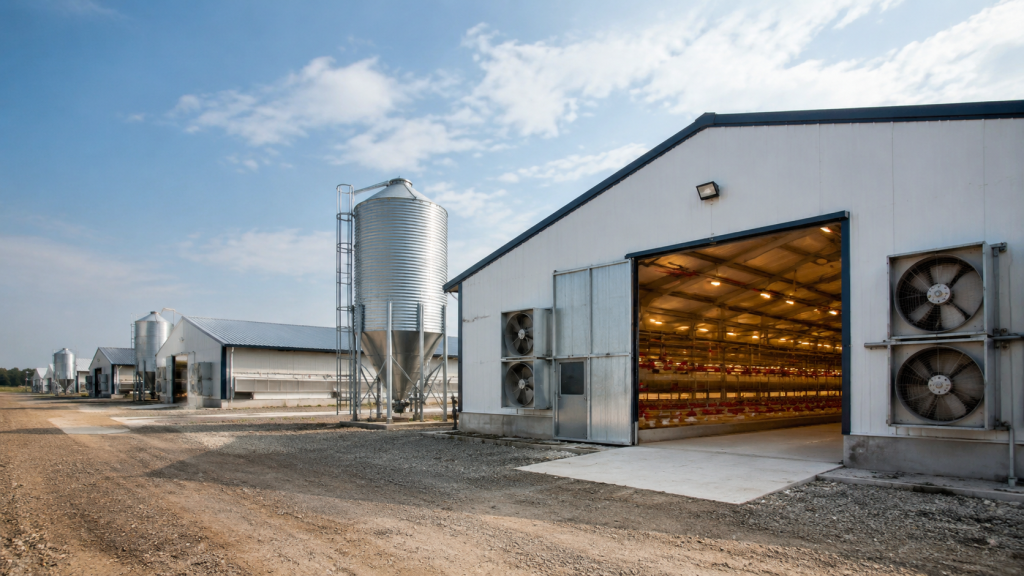
A chicken farming business plan is protected by biosecurity that limits how pathogens enter, move through, and leave the farm. Strong routines should cover people, vehicles, birds, equipment, water, feed, pests, cleaning, and dead-bird handling.
Which Biosecurity Barriers Matter Most?
Separate clean and dirty activities and control every entry point. Make no mistake: a modern building cannot compensate for uncontrolled visitors, shared tools, or poor sanitation discipline.
- Perimeter fencing and controlled gate access
- Visitor records, changing areas, and farm clothing
- Vehicle cleaning and delivery procedures
- Age-group or house separation
- Pest, wild-bird, and rodent control
- Cleaning, disinfection, and downtime between flocks
How Do You Turn Rules Into Daily Practice?
Use written procedures, staff training, inspection records, and corrective actions. Veterinary vaccination and disease-control programs should follow local regulations and professional advice.
| Biosecurity Layer | Daily Action | Management Proof |
|---|---|---|
| Entry control | Authorize people and vehicles | Access log |
| House hygiene | Clean and disinfect | Checklist |
| Health monitoring | Record behavior and mortality | Flock records |
The records help you identify failures before they spread across the farm.
Key Takeaway: Biosecurity protects birds, stabilizes production, and safeguards the cash assumptions in your plan.
Which Risks Threaten a Chicken Farming Business Plan?
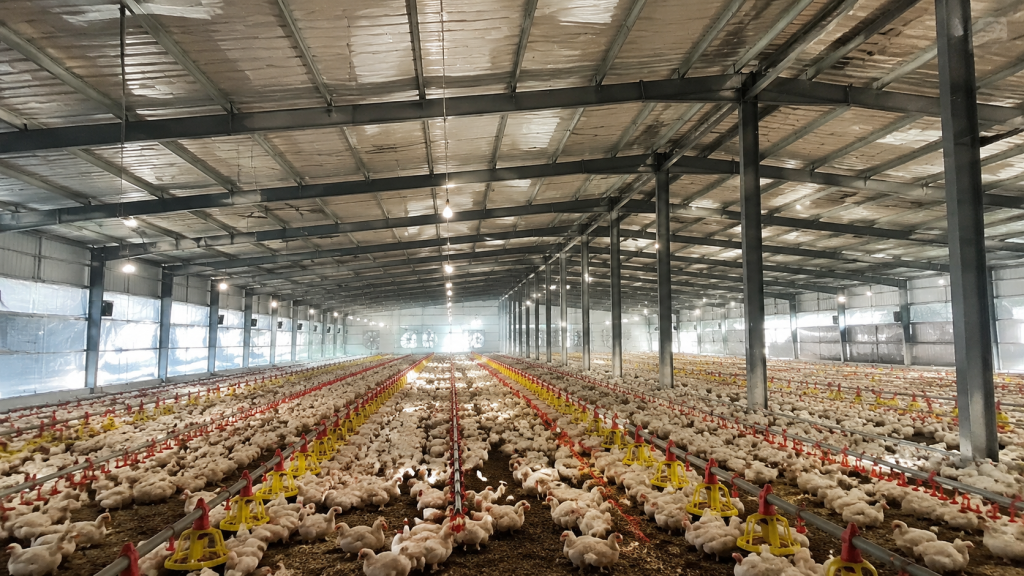
A chicken farming business plan is threatened by disease, feed-price changes, weak demand, power failure, heat stress, poor cash flow, and unsuitable infrastructure. You should rank each risk by likelihood, financial impact, warning signs, and practical response.
How Can You Prepare for Operational Shocks?
Prepare backup systems, alternative suppliers, emergency contacts, and action thresholds before a crisis occurs. Here is the reality: risk controls are cheaper when specified during planning than when purchased during an emergency.
- Backup generator and alarm response
- Alternative feed and chick suppliers
- Water storage and treatment capacity
- Mortality and performance monitoring
- Insurance and emergency cash reserve
- Preventive maintenance schedule
Which Risks Deserve Priority?
Prioritize risks that can stop the flock, destroy marketability, or exhaust working capital. Review the register before every production cycle and after any serious incident.
| Risk | Early Warning | Primary Response |
|---|---|---|
| Disease | Abnormal behavior or mortality | Isolate and seek veterinary action |
| Feed pressure | Supplier or price volatility | Contract and reserve options |
| Power failure | Unstable supply | Tested backup generation |
This ranking keeps management focused on threats with the greatest business impact.
Key Takeaway: A living risk register helps your farm respond quickly instead of improvising under financial pressure.
How Can Your Chicken Farming Business Plan Move Forward?
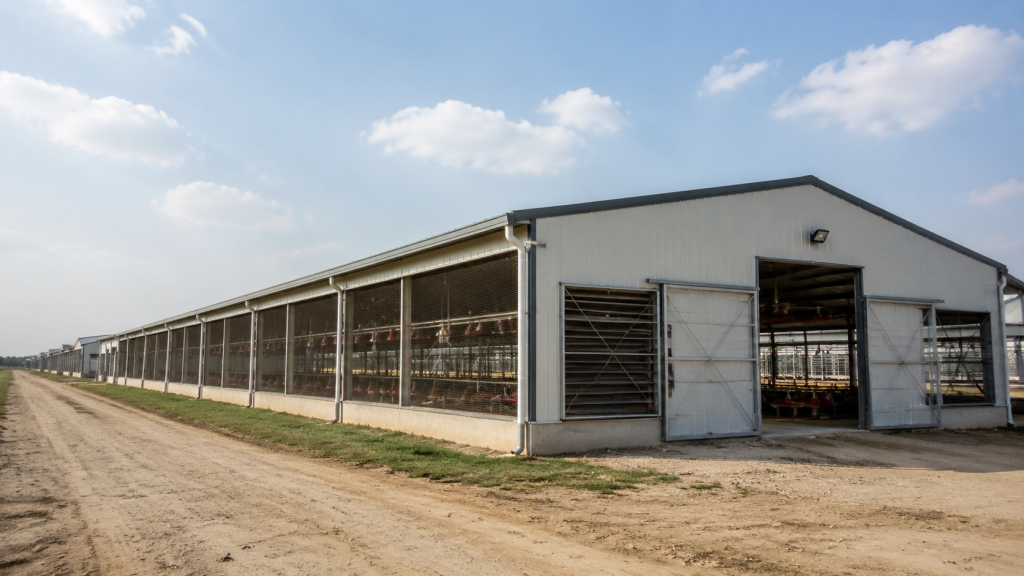
Conclusion: A chicken farming business plan moves forward when your market, flock model, site, capital, housing, equipment, biosecurity, and launch schedule are documented and aligned. You now have a practical route from early research to farm commissioning without treating any major decision in isolation.
What Project Information Should You Prepare?
Prepare enough information for designers and suppliers to develop a relevant proposal. Here is your next step: organize the project data before requesting prices.
- Project country and city
- Bird type, capacity, and production system
- Required house quantity and preferred dimensions
- Local wind, rain, temperature, and humidity
- Ventilation, insulation, and equipment needs
- Delivery schedule and installation-support requirements
What Can an Experienced Steel Building Supplier Provide?
An experienced supplier can translate your farm plan into a structural layout, material proposal, packing plan, and installation guidance. Compare offers by scope, engineering basis, materials, exclusions, and delivery responsibilities rather than headline price alone.
| Your Input | Supplier Output | Decision Value |
|---|---|---|
| Capacity and system | Preliminary layout | Confirms feasibility |
| Climate and site data | Structural concept | Defines safety basis |
| Delivery needs | Supply and logistics scope | Clarifies total procurement |
This exchange turns a general business idea into a project that can be priced and reviewed.
Key Takeaway: When you are ready to convert the plan into a buildable poultry facility, contact us today for a project-specific discussion. We believe poultry infrastructure should protect bird welfare, investor capital, and long-term food production at the same time.
Get Your Custom Chicken Farm Plan and Quote Today !
Email:sales@showhoo.com.cn
Phone/WhatsApp: + 86 186 7895 5927
What Questions Follow a Chicken Farming Business Plan?
A chicken farming business plan usually raises practical questions about starting scale, housing choice, and financial readiness. The answers below give you a clear first judgment while leaving room for local market, veterinary, and engineering requirements.
Can I Start With a Small Flock and Expand Later?
Yes, provided the site plan, utilities, drainage, and building layout reserve space for expansion. Modular steel bays and correctly sized service infrastructure make later growth easier, while an undersized road, water system, or waste area can restrict expansion.
What’s the Best Chicken House for a Beginner?
A simple, climate-appropriate house with reliable ventilation, water, sanitation, and easy management is usually best. The correct choice depends on flock size, local weather, labor, electricity reliability, and whether you use floor or cage production.
How Do I Know if My Budget Is Enough?
Yes, your budget is sufficient only when it covers the complete startup scope, one operating cycle, and a realistic contingency. Here is the simple test:
- Compare supplier quotations with the full project scope.
- Confirm cash can cover feed, labor, utilities, and health inputs.
- Stress-test feed price, mortality, selling price, and payment delays.