
A Steel Structure is a metal framework made of organized structural steel components designed to carry loads and provide full architectural rigidity. You may find yourself facing the immense challenge of constructing a large-scale industrial facility with a non-negotiable deadline and extreme durability requirements. Traditional timber or masonry often fail to meet these rigorous demands, resulting in structural degradation, high maintenance costs, and significant delays. By choosing a high-performance Steel Structure , you solve these issues through superior strength, rapid assembly, and long-term environmental resistance.
What Defines a Modern Steel Structure?
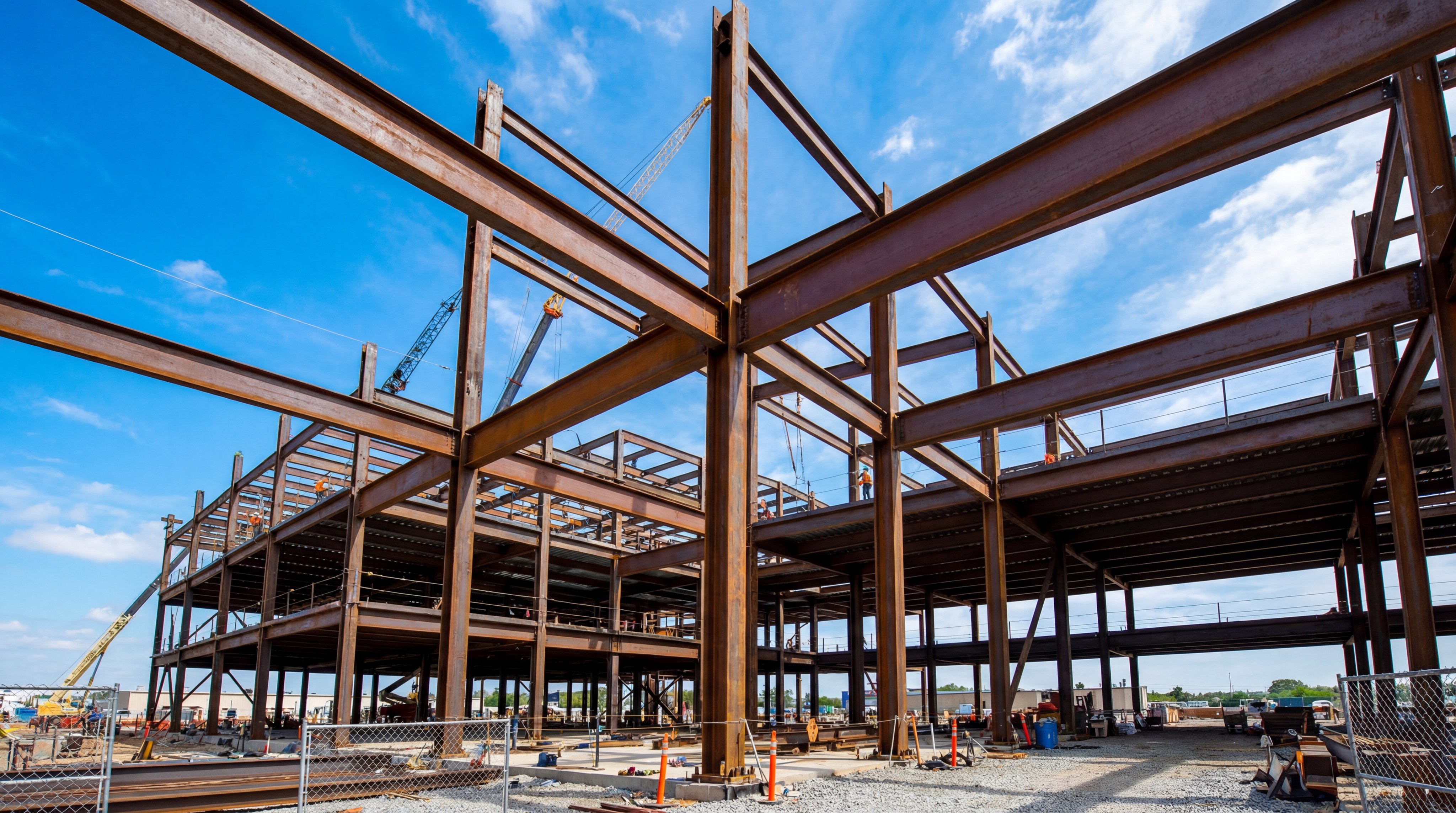
A modern Steel Structure is defined by its assembly of engineered components like beams, columns, and plates designed to manage specific mechanical loads. These systems utilize advanced metallurgical properties to achieve a high strength-to-weight ratio that other materials cannot match. You can rely on these frameworks to support massive spans while maintaining a relatively slim profile. This efficiency makes them the preferred choice for contemporary industrial and commercial architecture.
Core Framework Components
The skeletal integrity of your building relies on several primary members working in unison to distribute forces safely. These components are usually fabricated off-site to ensure maximum precision and quality control before they arrive at your location.
Think about it:
- Primary Beams: Horizontal members that carry lateral loads to the columns.
- Columns: Vertical supports that transfer weight directly to the foundation.
- Trusses: Triangular arrangements used to span long distances without intermediate supports.
- Purlins: Longitudinal members that support the roof decking and external cladding.
Load-Bearing Mechanics in Steel
Engineered steel manages both tension and compression with equal efficiency, allowing for complex geometries. This dual capability ensures that your structure remains stable even under dynamic loads like wind or heavy machinery.
Here is the kicker:
- Tension Members: Parts of the frame that resist pulling forces, often found in bracing.
- Compression Members: Components like columns that resist squeezing or crushing forces.
- Moment Connections: Specialized joints that resist rotation to provide extra stiffness.
Key Takeaway: Modern steel structures rely on a high strength-to-weight ratio to achieve spans impossible with other materials.
| Component | Primary Function | Typical Material Grade | |
|---|---|---|---|
| Main Column | Vertical Load Support | Q355B / S355 | |
| Roof Rafter | Lateral Span Support | Q355B / S355 | |
| Wall Girt | Cladding Attachment | Q235B / S235 |
The integration of these specific grades ensures that every part of the framework performs optimally under its designated stress level.
What Are Common Types of Steel Structure?
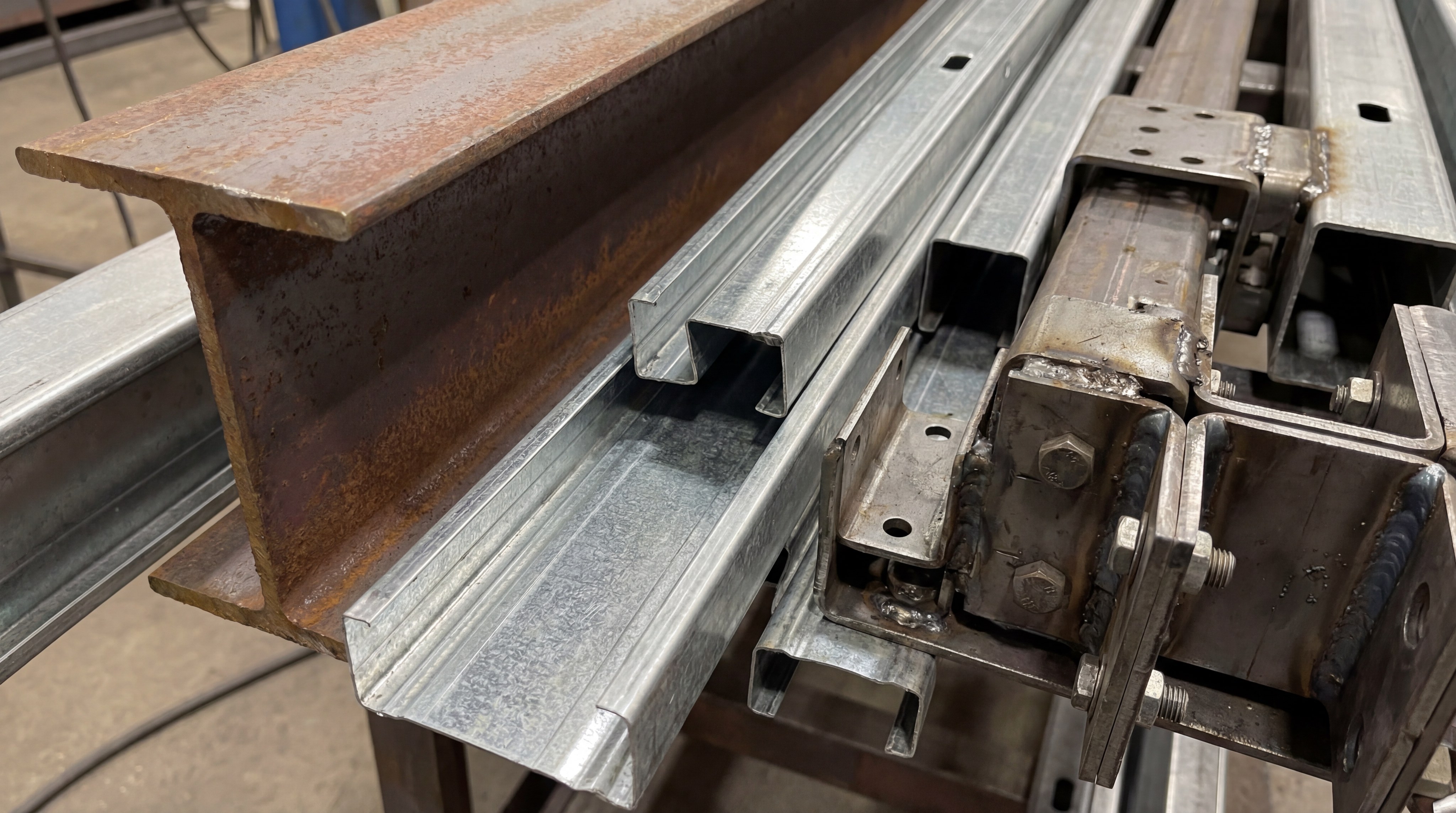
The primary types of Steel Structure include portal frames, truss systems, and lattice structures tailored for industrial or commercial spans. You select the specific type based on your project’s height requirements, floor load, and the necessity for clear-span space. Each system offers unique benefits regarding material usage and ease of installation on-site. Understanding these differences allows you to optimize your budget without compromising structural safety.
Heavy Structural Steel Frames
Heavy steel frames are the workhorses of the industrial world, designed to support massive cranes and heavy machinery. You will typically see these in smelting plants, power stations, and heavy manufacturing facilities where durability is paramount.
Here is why:
- I-Beams: Wide-flange sections that provide immense bending resistance.
- H-Beams: Thick-walled supports ideal for heavy vertical loads.
- Box Girders: Hollow rectangular sections used for extreme spans and torsional rigidity.
Light-Gauge Cold-Formed Systems
For smaller commercial or residential projects, light-gauge steel provides a lightweight and cost-effective alternative to traditional framing. These sections are formed at room temperature, resulting in high precision and excellent surface finish for your walls and roofs.
But wait, there’s more:
- C-Sections: Versatile profiles used for wall studs and floor joists.
- Z-Sections: Frequently used as roof purlins to allow for overlapping and continuous spans.
- Track Sections: Base and head plates that hold vertical studs in place.
Modular and Prefabricated Units
Modular steel units represent the peak of construction speed, allowing you to assemble entire building sections in a controlled factory environment. You simply transport these modules to the site and bolt them together, drastically reducing local labor requirements.
Think about it:
- Pre-Assembled Frames: Fully welded sections ready for immediate lifting.
- Skid-Mounted Units: Frameworks designed to hold specific industrial equipment for easy relocation.
- Container-Style Modules: Highly portable units used for temporary offices or housing.
Key Takeaway: Selecting the right structural type (Heavy vs. Light) is the most critical decision for project budgeting.
| Structure Type | Ideal Height Range | Common Use Cases | |
|---|---|---|---|
| Portal Frame | 1-2 Stories | Warehouses, Sheds | |
| Multi-Story Frame | 3-50+ Stories | Offices, Residential | |
| Space Frame | Variable | Stadiums, Airports |
Matching the structural type to your specific height and usage requirements prevents over-engineering and reduces unnecessary material costs.
What Properties Define a Steel Structure?
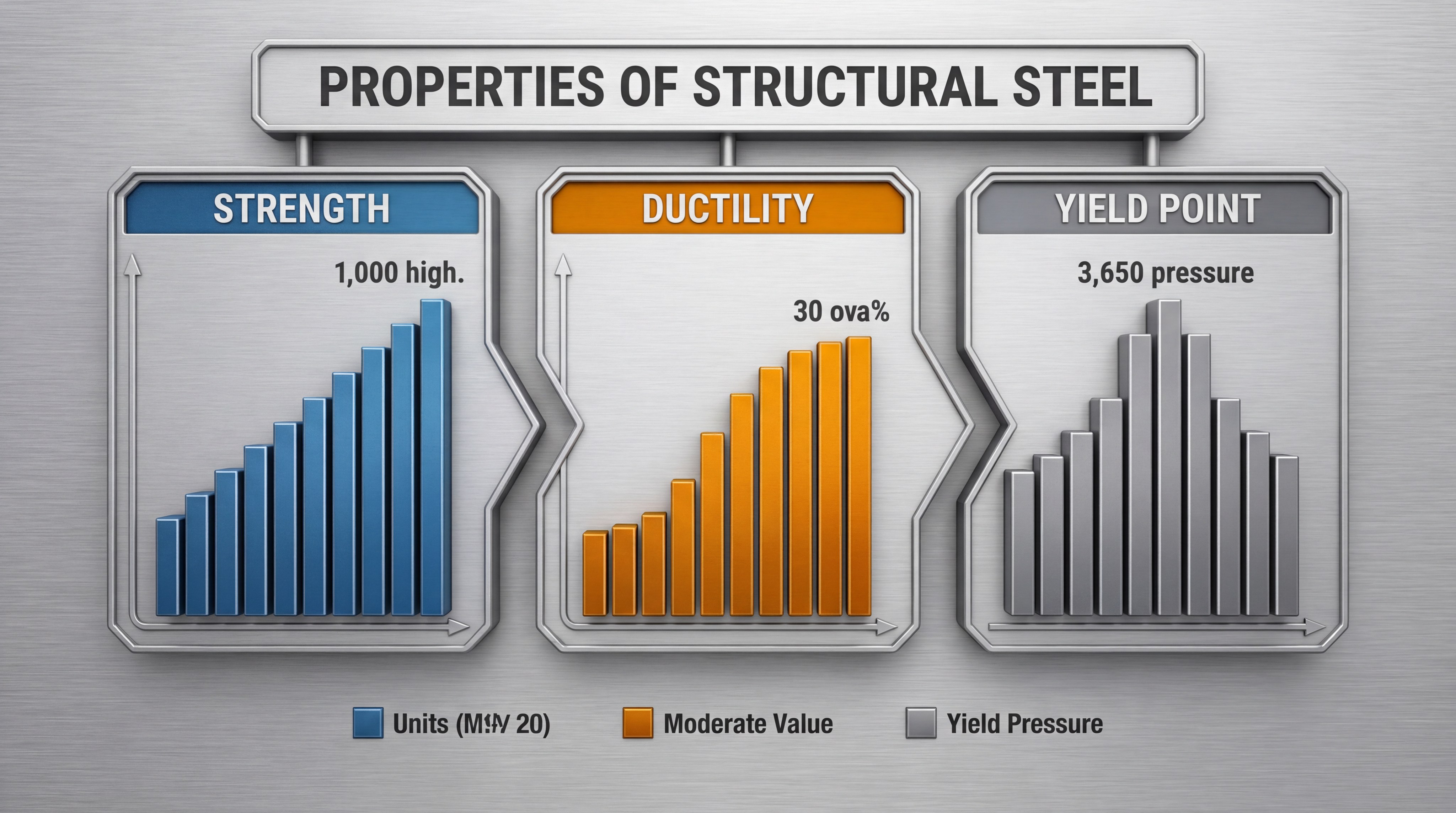
Essential properties of a Steel Structure include high tensile strength, ductility for seismic resistance, and excellent weldability for secure connections. You benefit from a material that is isotropic, meaning it maintains consistent strength properties regardless of the direction of the applied load. Unlike concrete, which requires curing time, steel reaches its full structural potential the moment it is manufactured. These inherent characteristics provide a level of predictability that is essential for complex engineering calculations.
Mechanical Strength and Yield Point
The yield point of steel is the specific stress level where the material begins to deform plastically rather than elastically. You want a high yield point to ensure your building can handle temporary overloads without permanent damage.
The best part?
- Tensile Strength: Resistance to being pulled apart, crucial for long-span rafters.
- Compressive Strength: Resistance to crushing, allowing columns to support many floors.
- Elastic Modulus: A measure of stiffness that dictates how much the steel will deflect under load.
Ductility and Resilience
Ductility is the ability of the steel to undergo significant deformation before actual failure occurs. This property is your best defense against sudden collapses, as it allows the building to “bend but not break” during extreme events.
Look:
- Energy Absorption: The capacity to soak up seismic energy during an earthquake.
- Fatigue Resistance: Durability under repeated loading cycles from machinery or wind.
- Toughness: Resistance to fracture, even when the material is subjected to impact.
Key Takeaway: The inherent ductility of steel allows it to absorb energy, making it the safest choice for earthquake-prone regions.
| Property | Measurement Unit | Industry Standard | |
|---|---|---|---|
| Yield Strength | Megapascals (MPa) | ASTM A36 / Q355 | |
| Elongation | Percentage (%) | min. 20-22% | |
| Density | kg/m³ | ~7,850 |
These standardized metrics ensure that you receive consistent material performance regardless of where the steel is sourced or fabricated.
Where Is a Steel Structure Applied?
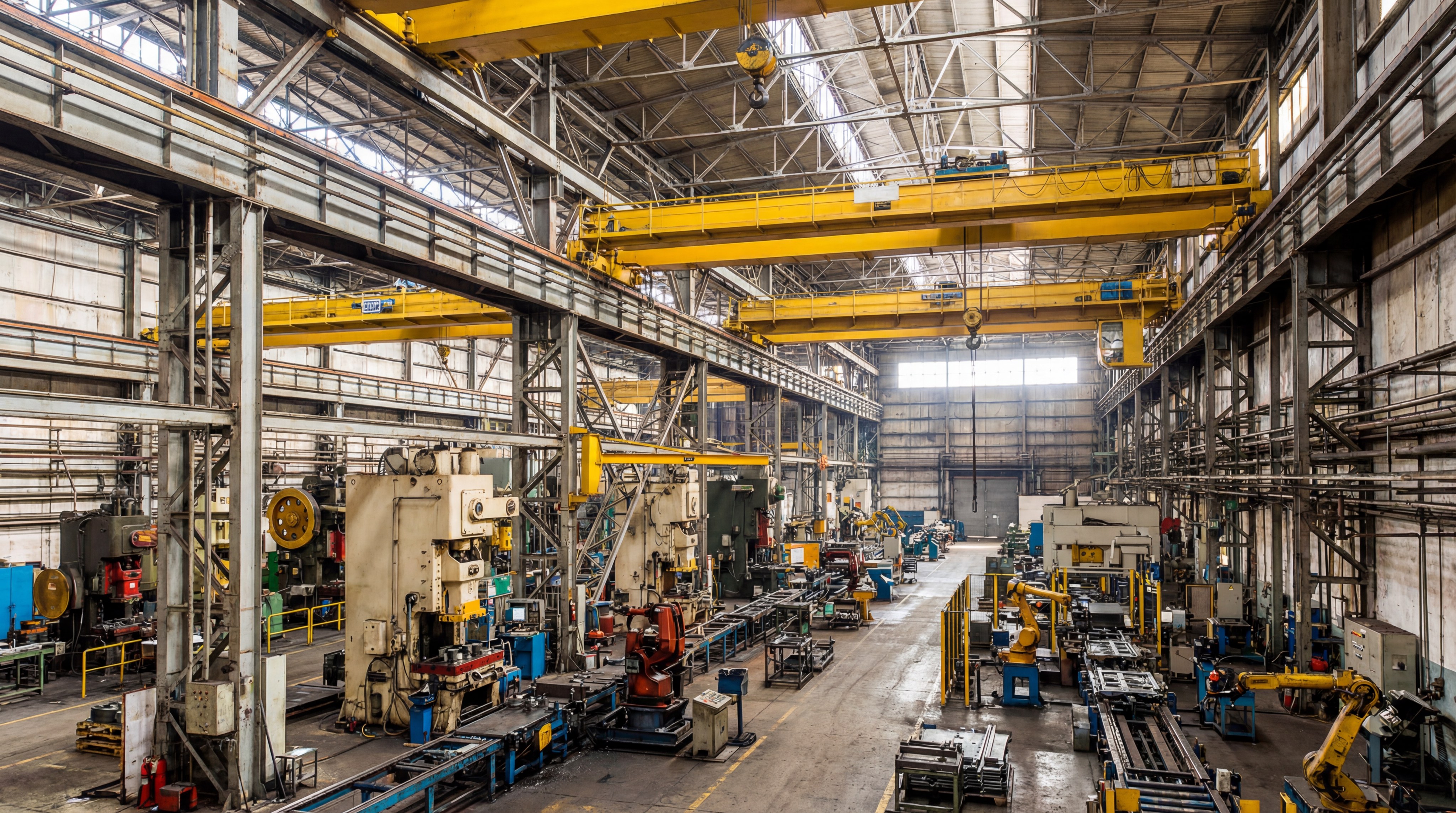
You typically apply a Steel Structure in massive manufacturing plants, logistics warehouses, and infrastructure projects requiring large unobstructed floor space. Its ability to span distances of over 100 meters without internal columns makes it indispensable for modern logistics and production. You also see steel in specialized environments like chemical plants where its resistance to heat and pressure is vital. From simple storage sheds to complex offshore platforms, steel provides the versatility needed for diverse industrial sectors.
Large-Span Manufacturing Plants
In manufacturing, you need open floor plans to accommodate assembly lines and heavy equipment movement. Steel portal frames provide this “clear span” capability, ensuring your operations are never hindered by poorly placed support pillars.
You might be wondering:
- Crane Runways: Integrated steel tracks that allow heavy overhead cranes to move goods.
- Mezzanine Floors: Elevated steel platforms that double your usable floor area.
- Equipment Supports: Robust frameworks designed to isolate machinery vibrations from the main building.
Specialized Storage Facilities
Modern logistics centers require high-bay racking systems that place immense vertical loads on the building’s framework. Steel structures can be engineered to support these racks directly, creating a “rack-clad” building that maximizes storage density.
Let’s face it:
- Cold Storage: Frameworks designed to integrate thick insulation panels for temperature control.
- Hazardous Material Units: Fire-rated steel structures that prevent the spread of industrial accidents.
- Automated Warehouses: Precision-aligned steel frames that allow robotic pickers to operate with millimeter accuracy.
Key Takeaway: Steel provides the clear-span depth required for heavy machinery and unobstructed workflow.
| Application Type | Required Span Width | Typical Load Capacity | |
|---|---|---|---|
| Logistics Hub | 30m – 60m | 5.0 – 10.0 kN/m² | |
| Heavy Factory | 20m – 40m | 15.0+ kN/m² | |
| Aircraft Hangar | 60m – 120m | Variable Wind Loads |
The diversity of application types demonstrates how steel can be tailored to meet the specific operational pressures of any industrial business.
Why Choose a High-Rise Steel Structure?
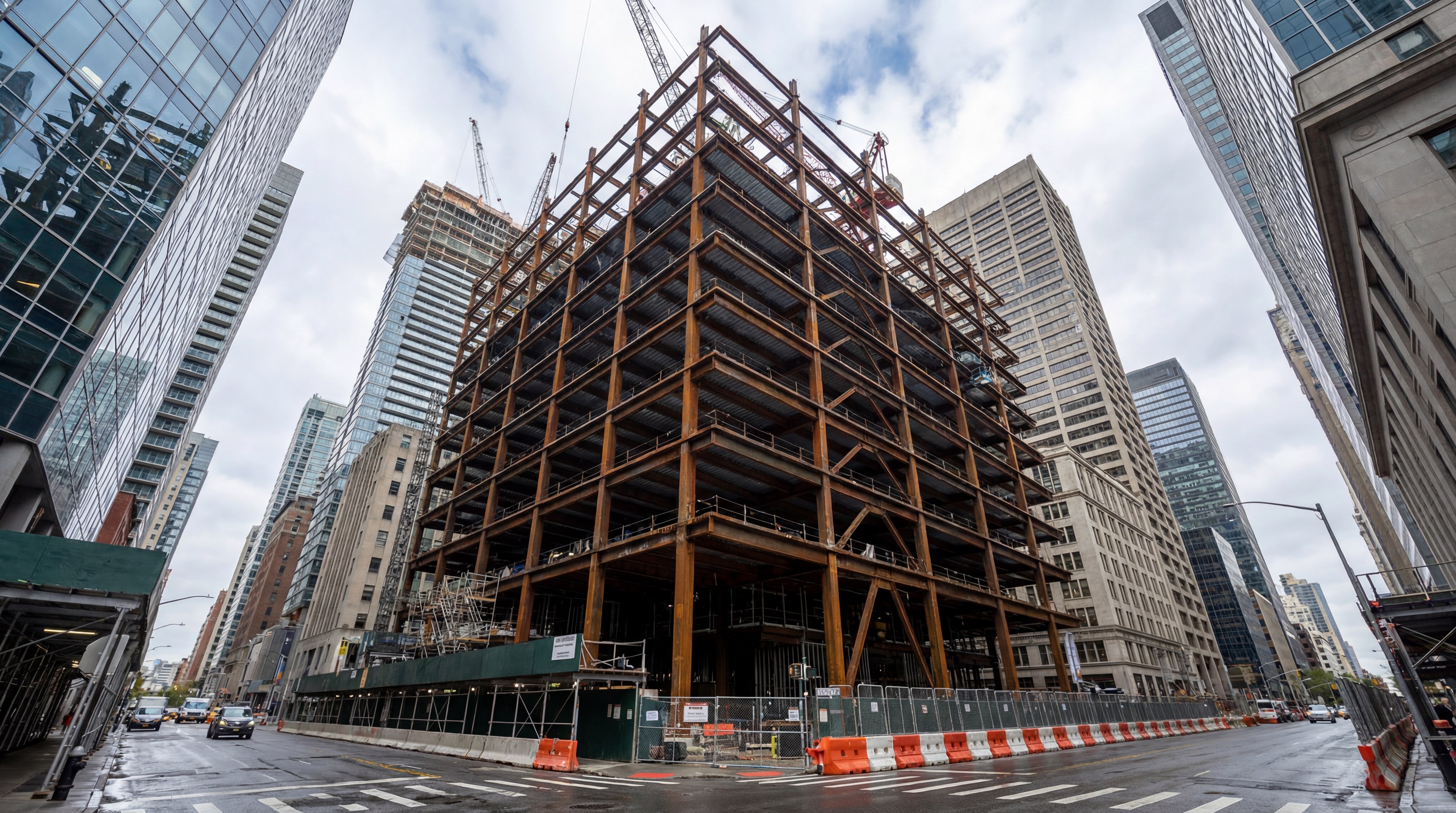
Multi-story buildings utilize a Steel Structure to reduce total foundation loads and drastically shorten vertical construction timelines compared to concrete. When you build upward, every kilogram of weight saved in the frame reduces the size and cost of the foundation below. Steel’s high strength allows for smaller column footprints, giving you more leasable or usable floor area on every level. Furthermore, the precision of steel fabrication allows for the seamless integration of glass facades and high-tech building systems.
Speed of Vertical Erection
Because steel members are prefabricated, you can erect several floors of a building in the time it would take to pour and cure a single concrete slab. This rapid pace significantly reduces your financing costs and allows you to occupy the building much sooner.
Now:
- Just-In-Time Delivery: Components arrive only when they are ready to be lifted into place.
- Parallel Work: Other trades, like plumbing and electrical, can start working on lower floors while upper floors are still being framed.
- All-Weather Construction: Unlike concrete, you can continue steel erection during freezing temperatures or light rain.
Foundation Load Reduction
By choosing steel, you effectively reduce the “dead load” of your building by up to 30% compared to traditional reinforced concrete. This reduction is particularly beneficial if you are building on soft soil or in areas where deep piling is expensive.
Simply put:
- Smaller Footings: Less concrete and rebar required for the ground-level supports.
- Shallower Foundations: Reduced excavation depth, which saves time and minimizes site disturbance.
- Seismic Safety: A lighter building generates less inertial force during an earthquake, reducing structural stress.
Key Takeaway: Using steel reduces total building weight by up to 30%, significantly lowering foundation costs for high-rises.
| Building Height | Steel Tonnage Estimate | Construction Duration | |
|---|---|---|---|
| 5 Stories | 200 – 400 Tons | 4 – 6 Months | |
| 15 Stories | 1,000 – 1,500 Tons | 8 – 12 Months | |
| 30+ Stories | 3,000+ Tons | 18+ Months |
The correlation between height and tonnage illustrates how steel’s efficiency becomes even more valuable as your project scales vertically.
Is a Steel Structure Best for Farming?
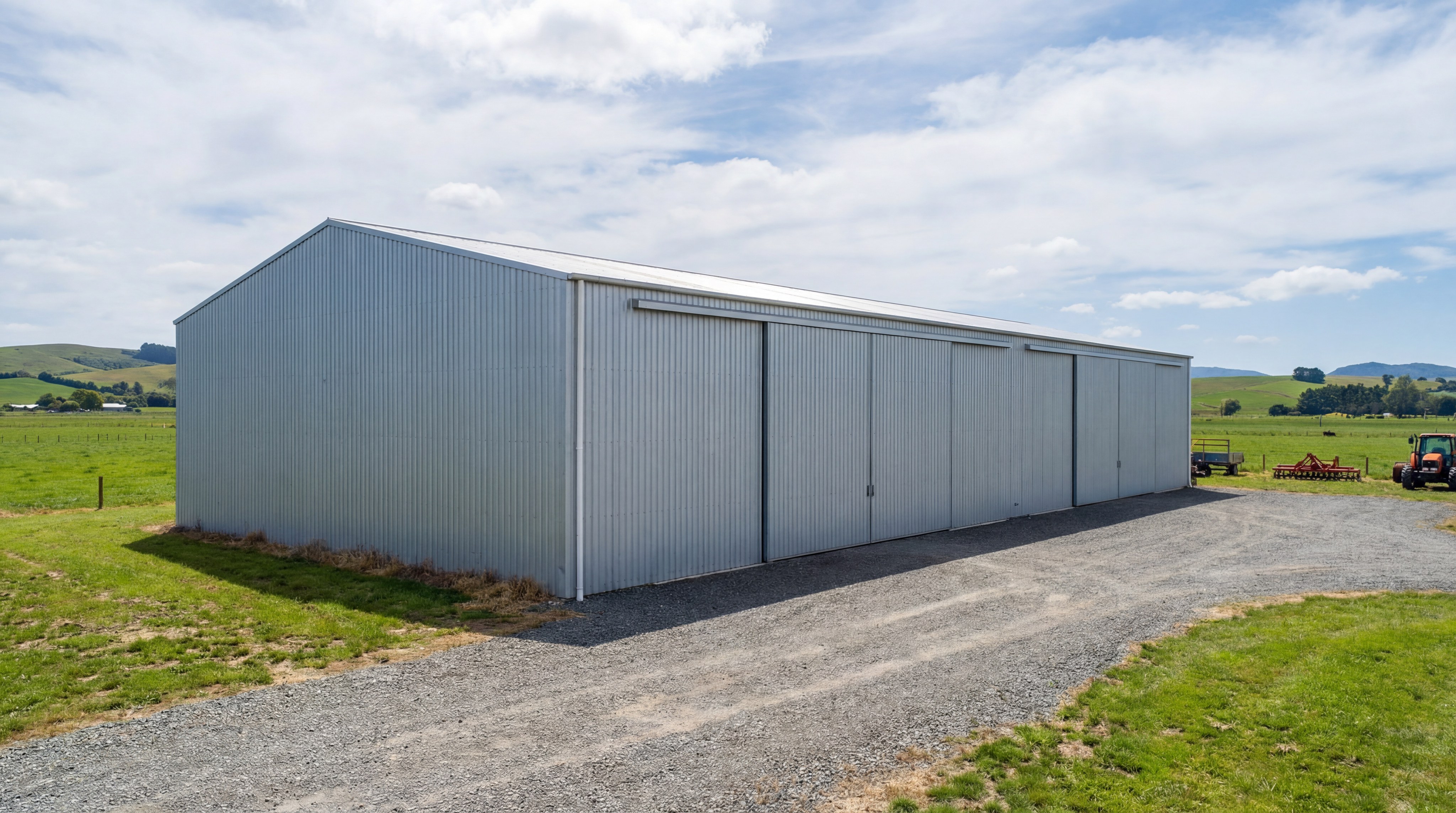
In the agricultural sector, a Steel Structure provides superior protection against fire, pests, and rot while maintaining climate control for livestock. You no longer have to worry about termites or wood rot compromising the safety of your grain storage or animal housing. Steel buildings are easily sanitized, which is essential for maintaining biosecurity in modern poultry or dairy operations. Their ability to resist high winds and heavy snow loads ensures that your valuable harvests and equipment remain protected year-round.
Pest and Fire Resistance
Traditional wooden barns are highly susceptible to lightning strikes and internal fires caused by hay combustion. A steel framework is non-combustible, which often results in significantly lower insurance premiums for your farm operations.
More importantly:
- Termite Proof: Steel offers zero nutritional value to wood-boring insects.
- Rodent Deterrence: Tight-sealing steel panels prevent rats and mice from nesting in the walls.
- Mold Resistance: Inorganic surfaces do not support the growth of fungus or mildew.
Climate-Controlled Storage Solutions
Whether you are storing sensitive crops or housing livestock, maintaining a stable internal temperature is critical for your bottom line. Steel buildings are designed to accommodate high-R-value insulation and ventilation systems that keep your assets in peak condition.
Think about it:
- Insulated Sandwich Panels: Provide both structural enclosure and high-level thermal resistance.
- Ridge Vents: Allow natural airflow to remove heat and moisture from animal housing.
- Large Access Doors: Specialized sliding or roll-up doors that maintain a tight seal against the elements.
Key Takeaway: Unlike wood, steel is impervious to termites and rot, ensuring decades of protection for livestock and crops.
| Agricultural Use | Environmental Challenge | Maintenance Frequency | |
|---|---|---|---|
| Grain Bin | High Internal Pressure | Every 5-10 Years | |
| Dairy Barn | High Humidity / Ammonia | Annual Inspection | |
| Equipment Shed | Potential Impact | Low / As Needed |
Investing in steel for agricultural use pays for itself through reduced repair costs and the longevity of the structure compared to timber alternatives.
How Do You Join a Steel Structure?
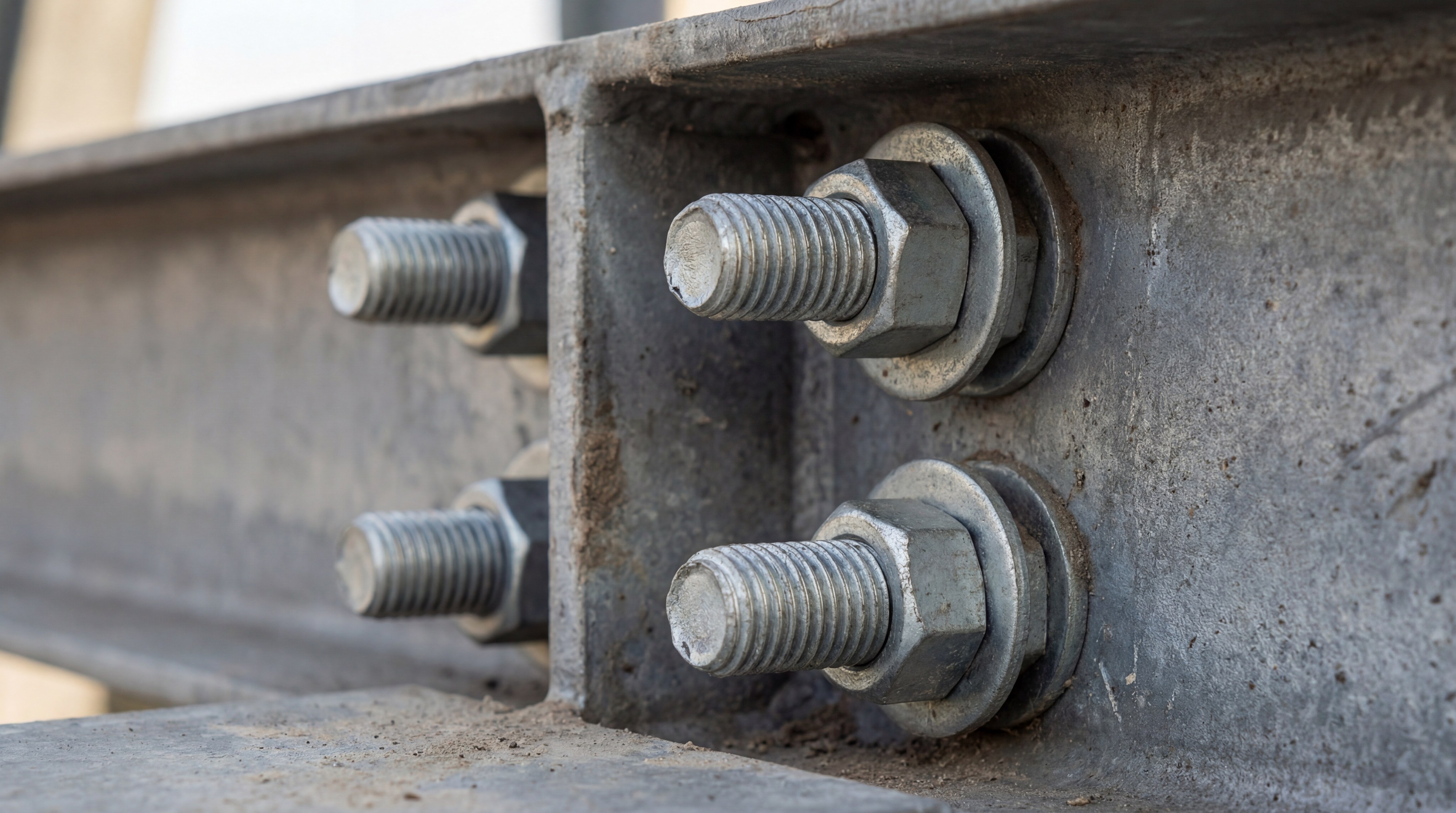
You join a Steel Structure using high-strength bolted connections or precision welding to ensure the transfer of stresses across the framework. The choice between these methods depends on your requirements for assembly speed, local labor expertise, and the necessity for future disassembly. Bolted connections are typically preferred for rapid on-site erection, while welding is used for permanent, high-stiffness joints in the factory. Both methods must adhere to strict international engineering standards to guarantee the long-term safety of the building.
Bolted vs. Welded Connections
Bolted connections allow you to assemble your building like a giant “Meccano” set, requiring only basic hand tools and a crane. Welded joints, however, create a continuous piece of metal that is exceptionally strong but requires specialized technicians and non-destructive testing on-site.
Here is the kicker:
- High-Strength Friction Bolts: Use immense clamping force to prevent joint slippage.
- Fillet Welds: The most common type of weld used to join overlapping steel plates.
- Full-Penetration Welds: Used in critical joints where the weld must be as strong as the base metal.
Compliance with International Codes
Every connection in your structure must be calculated by a professional engineer to withstand the maximum predicted loads. You must ensure that your project follows standards such as the AISC (American Institute of Steel Construction) or Eurocode 3 to avoid structural failure.
Let’s face it:
- Torque Wrenches: Used to ensure every bolt is tightened to the exact specification.
- Ultrasonic Testing: High-frequency sound waves used to check for internal flaws in welds.
- Visual Inspection: Regular checks by certified inspectors to confirm alignment and fitment.
Key Takeaway: Precision in connection design prevents localized stress failures and simplifies on-site assembly.
| Connection Type | Pros | Cons | Installation Speed | |
|---|---|---|---|---|
| Bolted | Easy to replace / Fast | Can loosen over time | Very High | |
| Welded | Permanent / Stiff | Difficult to inspect | Moderate | |
| Hybrid | Optimized Strength | Complex Design | Low |
The selection of a connection method directly impacts your on-site labor costs and the ultimate rigidity of the building framework.
Does a Steel Structure Beat Concrete?
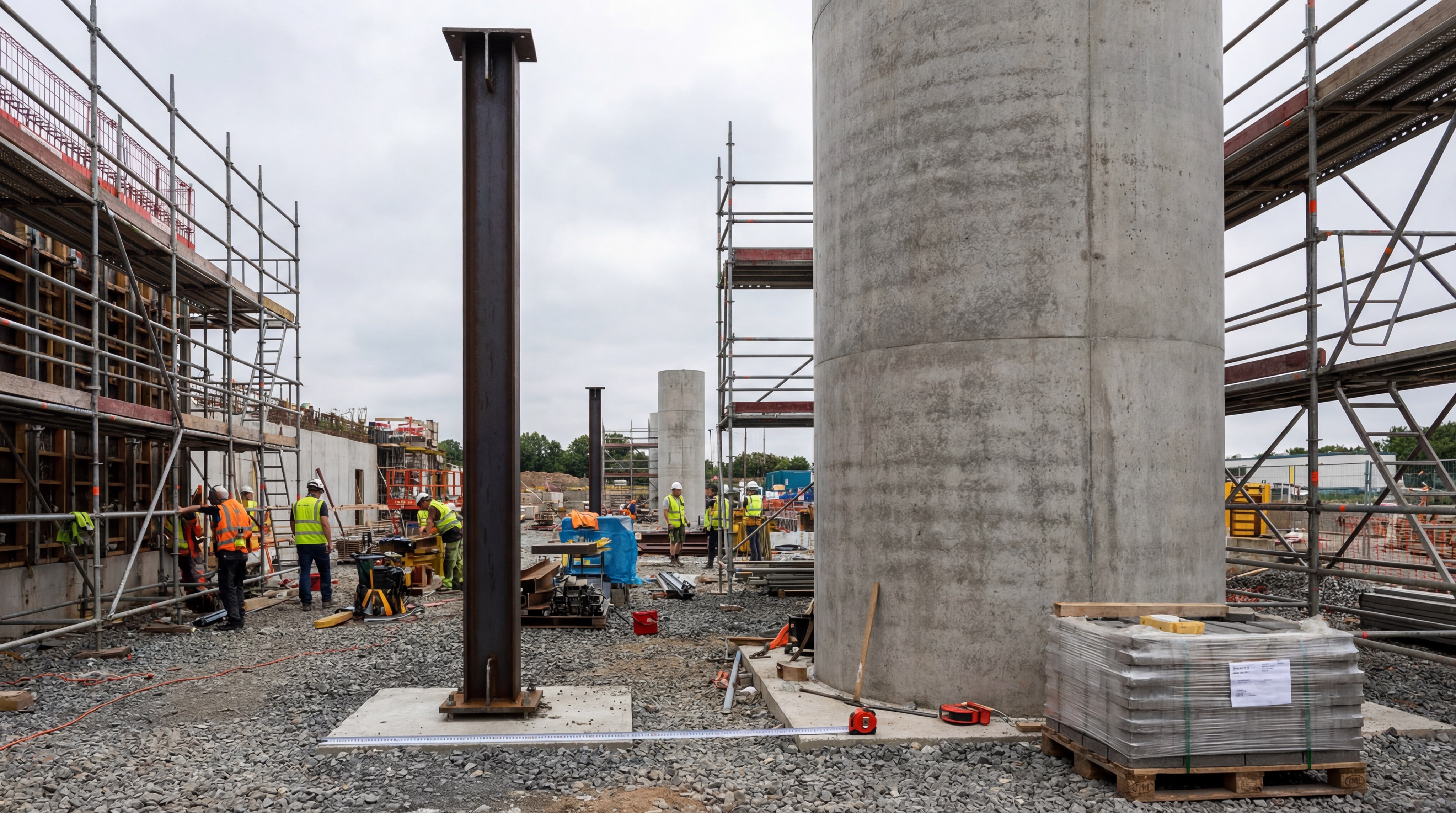
A Steel Structure offers higher recyclability and a better strength-to-weight ratio than concrete, allowing for more flexible architectural designs. You can achieve much longer spans with steel, which eliminates the need for the thick, heavy beams required in reinforced concrete construction. While concrete is excellent for fire resistance and sound dampening, it is much slower to build and contributes significantly to carbon emissions during production. Steel’s ability to be repurposed or recycled at the end of its life makes it a much more sustainable choice for modern developers.
Lifecycle Cost Analysis
While the upfront cost of steel can sometimes be higher than raw concrete, the total lifecycle cost is often lower. You save money through reduced construction time, smaller foundation requirements, and the high scrap value of the material at the end of the building’s life.
But wait, there’s more:
- Lower Maintenance: Modern coatings prevent corrosion for decades.
- Adaptability: It is much easier to modify or expand a steel building than a concrete one.
- Insurance Savings: High fire ratings and seismic performance can lead to lower premiums.
Environmental Impact and Recyclability
Steel is the most recycled material on the planet, with nearly 100% of structural steel being recovered and turned into new products. By choosing steel, you are supporting a “circular economy” and reducing the need for destructive mining of new iron ore.
Think about it:
- Recycled Content: Most new structural steel contains over 90% recycled material.
- Low Waste: Prefabrication ensures that almost no material is wasted on the job site.
- Carbon Footprint: Modern electric arc furnaces have drastically reduced the energy required to produce steel.
Key Takeaway: Steel is nearly 100% recyclable, making it the premier choice for sustainable, “Green” building certifications.
| Material | Lifespan | Fire Rating | Recycle Rate | |
|---|---|---|---|---|
| Steel | 50 – 100+ Years | A1 (Non-combustible) | ~98% | |
| Concrete | 40 – 80 Years | High | ~20% (as aggregate) | |
| Wood | 20 – 50 Years | Low | ~10% |
The superior recyclability and longevity of steel make it the most environmentally responsible choice for large-scale construction projects.
How Does Tech Improve Steel Structure?
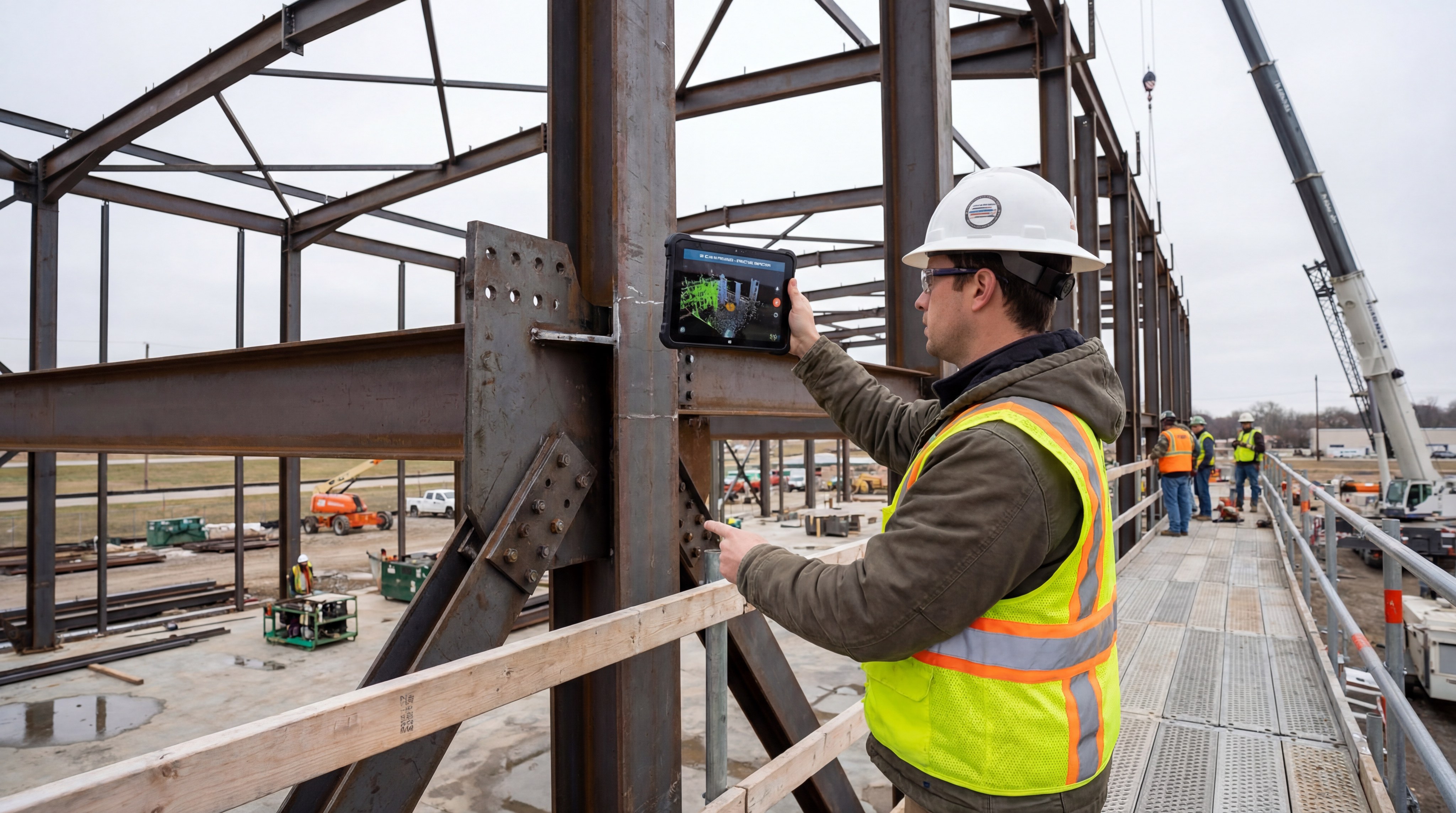
Modern engineering uses 3D laser scanning and BIM modeling to ensure that every Steel Structure is fabricated with sub-millimeter accuracy. You no longer have to rely on manual measurements that are prone to human error, especially on complex or irregular sites. These technologies allow you to visualize the entire project in a virtual environment before a single piece of steel is cut. This “digital twin” approach identifies potential clashes with pipes or ducts early, saving you thousands of dollars in on-site rework.
3D Laser Scanning and Modeling
By using laser scanners, you can capture the exact dimensions of an existing site or foundation with incredible speed. This data is then imported into 3D modeling software, ensuring that your steel frame will fit perfectly upon arrival.
Here is why:
- Point Clouds: Dense sets of data points that create a precise 3D map of your site.
- Clash Detection: Software that automatically finds where steel beams might hit other building systems.
- BIM Integration: A shared digital model used by architects, engineers, and contractors.
Dimensional Control and Inspection
Technology has also revolutionized how we inspect steel for quality and safety during the construction process. You can now use automated tools to verify that every column is perfectly vertical and every bolt is tightened to the correct torque.
Simply put:
- Drones: Used to inspect high-altitude joints and roof panels without scaffolding.
- LiDAR: Light Detection and Ranging used for rapid topographical surveys.
- Ultrasonic Testing: High-tech sensors that “see” through metal to find hidden cracks.
Key Takeaway: Advanced 3D modeling eliminates “clashes” between structural steel and mechanical piping before fabrication.
| Service Name | Technology Used | Primary Benefit | |
|---|---|---|---|
| Scan-to-BIM | LiDAR / 3D Laser | 100% Fitment Accuracy | |
| NDT Testing | Ultrasonic / X-Ray | Guaranteed Joint Safety | |
| Drone Survey | High-Res Photogrammetry | Safe High-Reach Inspection |
Utilizing these advanced services ensures that your project remains on schedule and meets the highest possible quality standards.
What Is Next for the Steel Structure?
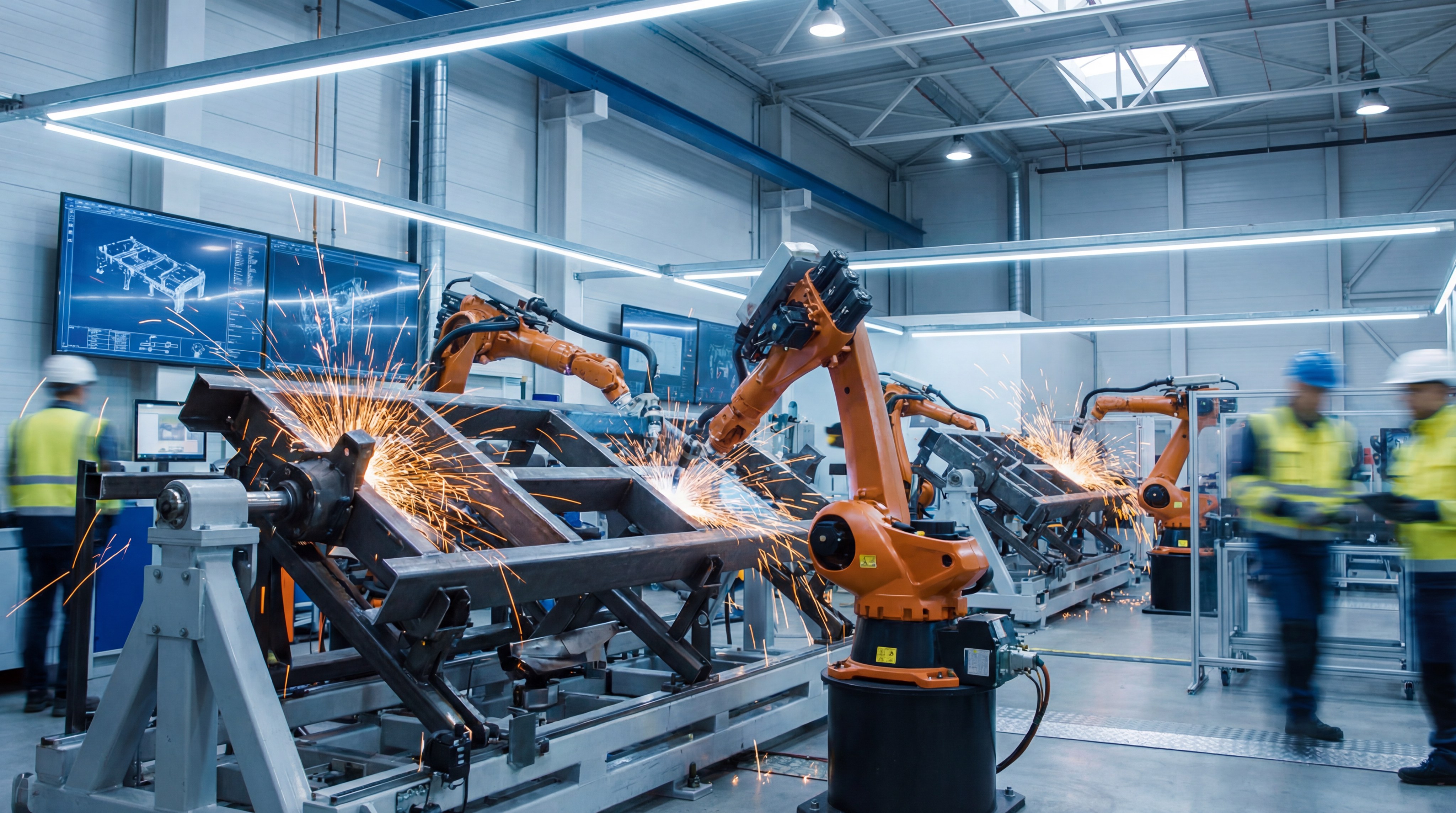
The future of the Steel Structure lies in robotic automation and the development of high-performance alloys for extreme environmental resilience. You are entering an era where buildings will be designed by artificial intelligence to use the absolute minimum amount of material while maintaining maximum strength. Automated factories can now produce complex, custom steel shapes as easily as standard I-beams, opening up new worlds of architectural possibility. As we move toward carbon neutrality, green steel produced with hydrogen will become the industry standard for sustainable development.
Robotic Welding and Automation
Robots never get tired and can weld with a level of consistency that is impossible for a human to maintain over a 10-hour shift. This automation is driving down the cost of custom steel fabrication, making unique and beautiful architecture more accessible for your projects.
The best part?
- Automated CNC Cutting: Laser or plasma cutters that follow digital blueprints with zero error.
- Robotic Assembly: Arms that lift, position, and weld components into finished trusses.
- AI Design Optimization: Software that “evolves” the most efficient structural shapes possible.
High-Performance Alloy Development
New “Smart” steels are being developed that can actually signal when they are under too much stress or beginning to corrode. These advanced materials will allow you to build lighter, taller, and more durable structures than ever before.
More importantly:
- Self-Healing Coatings: Paints that automatically fill in scratches to prevent rust.
- Shape-Memory Alloys: Metals that can return to their original shape after a massive earthquake.
- Ultra-High-Strength Steel: Alloys that allow for incredibly thin columns in skyscrapers.
Key Takeaway: Automation is driving down the cost of custom steel shapes, making unique architecture more accessible.
| Trend Name | Expected Adoption | Impact on Industry | |
|---|---|---|---|
| Green Steel | 2026 – 2030 | Zero-Carbon Construction | |
| 3D Metal Printing | 2028 – 2035 | Complex Topology Design | |
| AI Generative Design | Current / Rapid | 20% Material Reduction |
The convergence of these technologies promises a future where steel buildings are smarter, greener, and more efficient than anything we have seen before.
Summary of Structural Solutions
Selecting a steel structure is a definitive investment in long-term reliability, safety, and operational efficiency for your business. Whether you are expanding an industrial complex, protecting agricultural assets, or designing a commercial landmark, the versatility of steel remains unmatched in the modern era. We solve the challenges of slow construction, high maintenance, and structural instability through precision engineering and high-grade materials. At Showhoo Building, we specialize in delivering high-performance steel solutions tailored to your specific load requirements and environmental conditions. To get a detailed quote and start your journey toward a more durable future, please contact us today .
FAQ
- Can I customize the span width of a steel structure for a specific industrial machine?Yes, you absolutely can. Steel portal frames are designed for high customization, allowing you to achieve clear spans of over 60 meters to accommodate any production layout or heavy machinery requirements.
- What is the best steel grade for structures located in high-corrosion coastal environments?You should use Q355B or higher with a hot-dip galvanized finish. In coastal areas, the salt-heavy air requires a protective zinc coating (minimum 600g/m²) or specialized epoxy paints to ensure the structure lasts for its intended 50-year lifespan.
- How do I know if my steel structure requires specialized fire-resistant coatings?This is determined by local building codes and occupancy types. Generally, multi-story commercial buildings or facilities storing flammable materials require intumescent paint or spray-on fireproofing to maintain structural integrity for 1-3 hours during a fire.
- Is it possible to expand a steel building after the initial construction is finished?Yes, expansion is a primary benefit of steel. Because steel structures are modular and bolted, you can easily remove end-walls and add new bays to lengthen the building without compromising the existing framework.
- Who should perform the annual structural integrity inspections for large-scale steel warehouses?You must hire a certified structural engineer or a qualified inspection firm. Annual checks should focus on bolt tightness, weld condition, and signs of corrosion or foundation settling to ensure the continued safety of your operations.