
Effective housing and shelter are the foundation of a healthy and profitable swine operation. If your structures are flimsy or poorly designed, your animals face stress from extreme weather, leading to reduced growth rates and lost revenue. You need a permanent solution that secures your investment and optimizes animal welfare: high-quality pig house ideas utilizing durable steel construction provide the long-term stability and protection required for modern farming success.
Why are sturdy pig house ideas vital for your farm’s success?
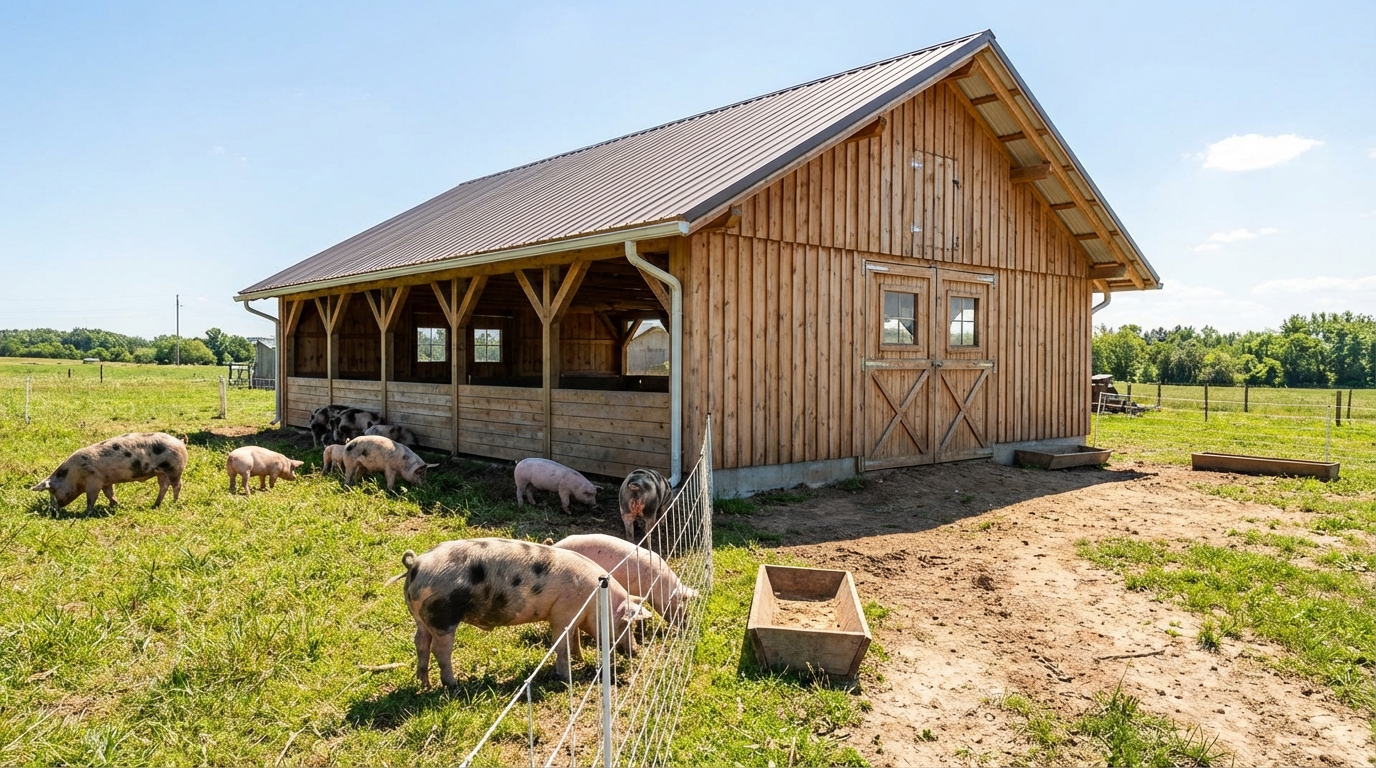
Professional pig house ideas are essential because they provide a controlled environment that shields your livestock from the harsh sun and freezing winters. A well-constructed shelter ensures your pigs remain comfortable, which directly impacts their weight gain and overall health. Without a solid structure, you risk losing animals to environmental stress and disease.
Does animal comfort drive your profit?
Pigs that are stressed by temperature fluctuations spend more energy regulating their body heat rather than growing. You must realize that a comfortable pig is a productive pig:
- Reduced caloric waste on thermoregulation.
- Improved immune system response.
- Lower mortality rates in piglets.
How do professional structures save you money?
Investing in high-end designs helps you avoid the constant cycle of repairs associated with cheap, temporary materials. You can focus your resources on expanding your herd rather than patching up a failing roof.
| Component | Impact on Success | |
|---|---|---|
| Insulated Roofing | Temperature Stability | |
| Reinforced Walls | Structural Longevity | |
| Drainage Systems | Disease Prevention |
Professional engineering ensures that every square meter of your facility contributes to the health of your swine and the growth of your business.
Key Takeaway: Sturdy housing is a strategic investment that maximizes pig growth and minimizes operational losses over time.
What materials should you choose for professional pig house ideas?
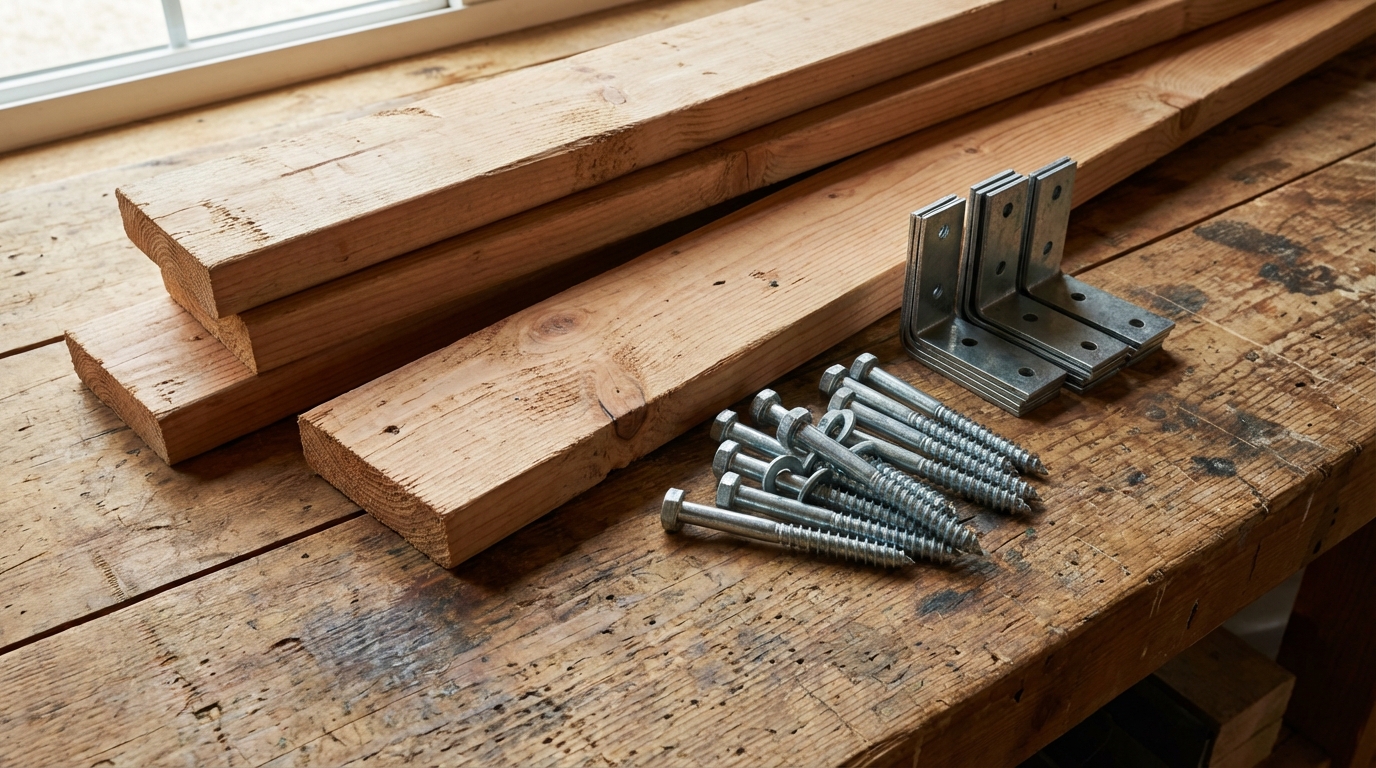
Selecting the right materials for your pig house ideas determines whether your building lasts five years or fifty. While wood is common for small-scale projects, commercial-grade operations require the strength and sanitation benefits of steel and concrete. These materials withstand the high humidity and corrosive environment typically found in active pig barns.
Why is steel superior to traditional timber?
Steel structures offer unparalleled durability against the elements and the destructive nature of large livestock. You will find that steel doesn’t rot, warp, or harbor pests like traditional lumber often does:
- Fire-resistant properties for safety.
- Pre-fabricated precision for fast assembly.
- Large clear-span capabilities without internal columns.
Can you adapt other structures for farming?
Many farmers find that a steel structure workshop provides the perfect shell for a customized swine facility. These versatile buildings allow you to install specialized internal penning while maintaining a robust external envelope.
| Material | Durability Rating | Maintenance Level | |
|---|---|---|---|
| Galvanized Steel | High | Very Low | |
| Untreated Wood | Low | High | |
| Concrete | High | Low |
Choosing industrial-grade materials from the start prevents structural failures that could endanger your livestock and halt production.
Key Takeaway: High-quality steel and concrete are the gold standards for structures that must endure the rigors of commercial swine production.
How do pig house ideas improve farrowing safety for sows?
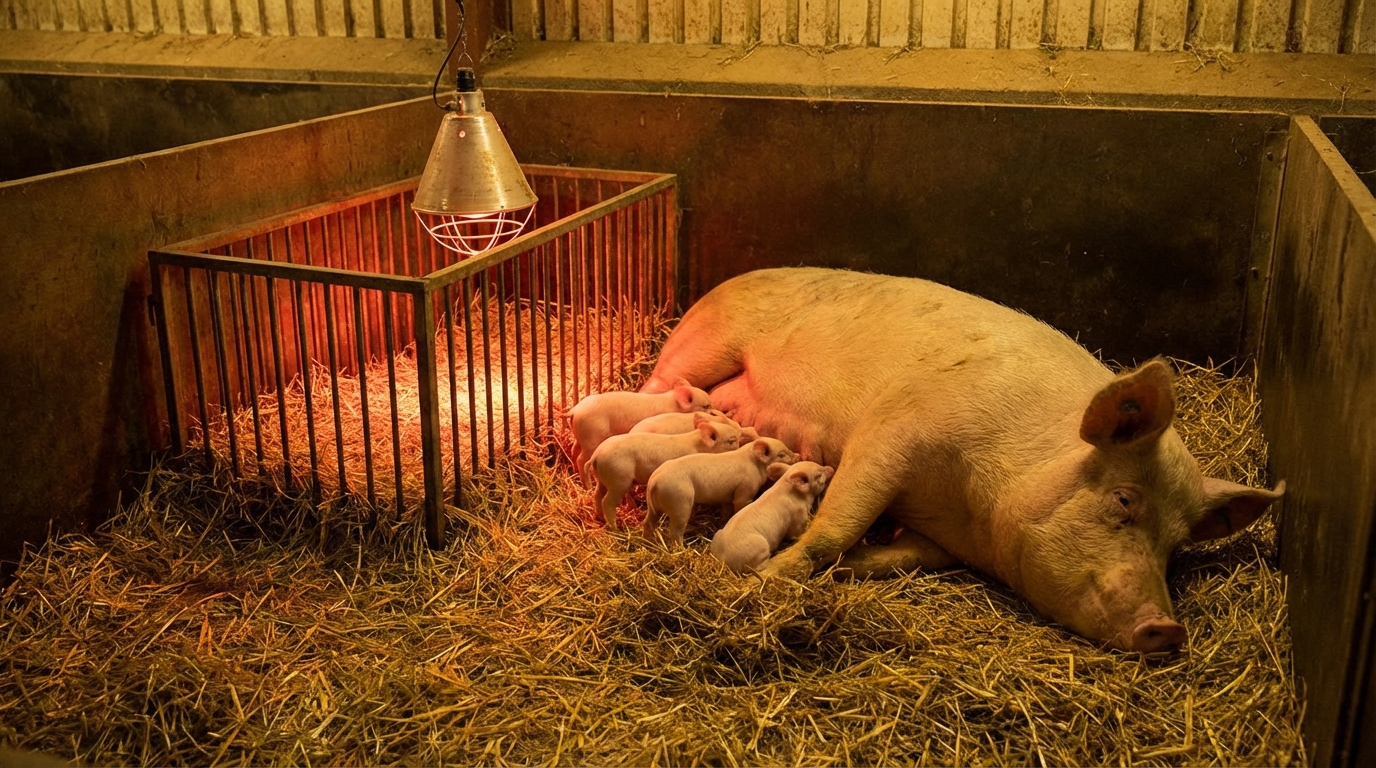
Implementing specialized pig house ideas for farrowing is the best way to protect both the sow and her vulnerable piglets. These areas require careful temperature management and structural features that prevent the sow from accidentally crushing her young. Professional designs create a serene environment that reduces maternal stress during this critical biological phase.
What features protect the newborn piglets?
Newborns require much higher temperatures than adult sows to survive their first few days. You can integrate dedicated heat zones and safety rails to ensure the highest survival rates:
- Guard rails to prevent crushing.
- Localized heating lamps or floor mats.
- Easy-to-clean flooring for hygiene.
Is environmental control necessary for sows?
A sow in labor is highly sensitive to noise and temperature spikes that can cause complications. The secret to success is:
- Sound-dampening insulated wall panels.
- Draft-free ventilation systems.
- Accessible feeding and watering points.
| Farrowing Feature | Benefit to Piglets | Benefit to Sow | |
|---|---|---|---|
| Heat Zones | Survival & Growth | Reduced Stress | |
| Safety Crates | Crushing Prevention | Controlled Movement | |
| Slotted Floors | Waste Removal | Dry Lying Area |
Optimizing the farrowing environment is a direct way to increase the number of healthy weaned pigs per litter.
Key Takeaway: Specialized farrowing layouts are vital for reducing piglet mortality and maintaining the long-term productivity of your sows.
Can smart pig house ideas help prevent destructive behavior?
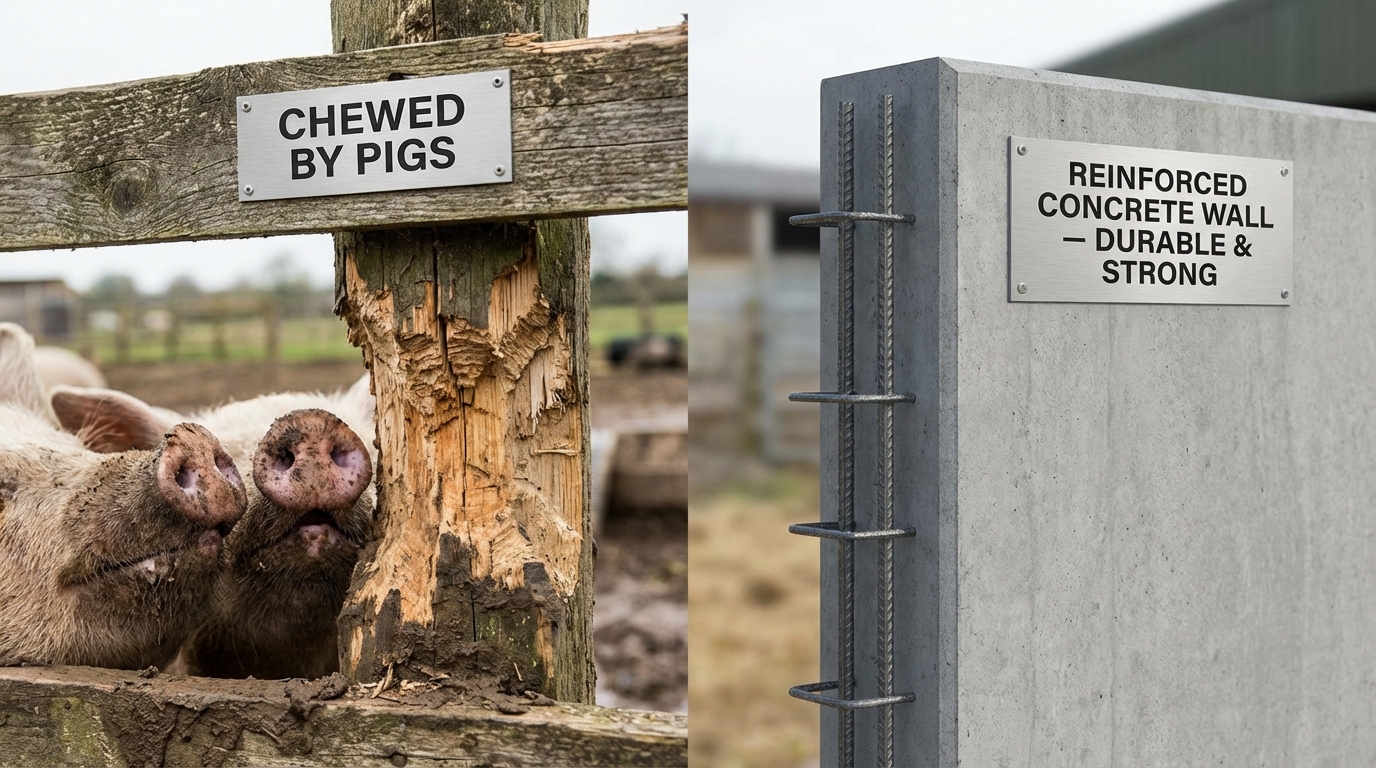
Designing pig house ideas with the animal’s natural strength in mind is crucial for maintaining structural integrity. Pigs are naturally curious and incredibly strong, often using their snouts to root, chew, and push against any weak points in their enclosure. If you use flimsy materials, you will spend more time on repairs than on actual animal husbandry.
Why do pigs damage traditional enclosures?
Pigs explore their environment through rooting, which can quickly undermine shallow foundations or light wooden posts. You must build for the worst-case scenario:
- Using lag bolts instead of simple nails.
- Installing heavy-gauge steel penning.
- Implementing concrete footings for all walls.
How does steel prevent escape and injury?
Steel panels and gates provide a smooth yet impenetrable barrier that pigs cannot chew through or dismantle. Think about this:
- No splinters to cause infections.
- No chemical treatments that pigs might ingest.
- Reinforced latching systems that resist manipulation.
| Material Type | Resistance to Chewing | Resistance to Impact | |
|---|---|---|---|
| Softwood | Minimal | Low | |
| Hardwood | Moderate | Moderate | |
| Structural Steel | Absolute | Extreme |
Building with heavy-duty materials ensures your animals stay exactly where they belong while protecting the building itself.
Key Takeaway: Industrial-strength materials are the only way to counteract the natural destructive power of active, healthy swine.
What space requirements define the best pig house ideas?
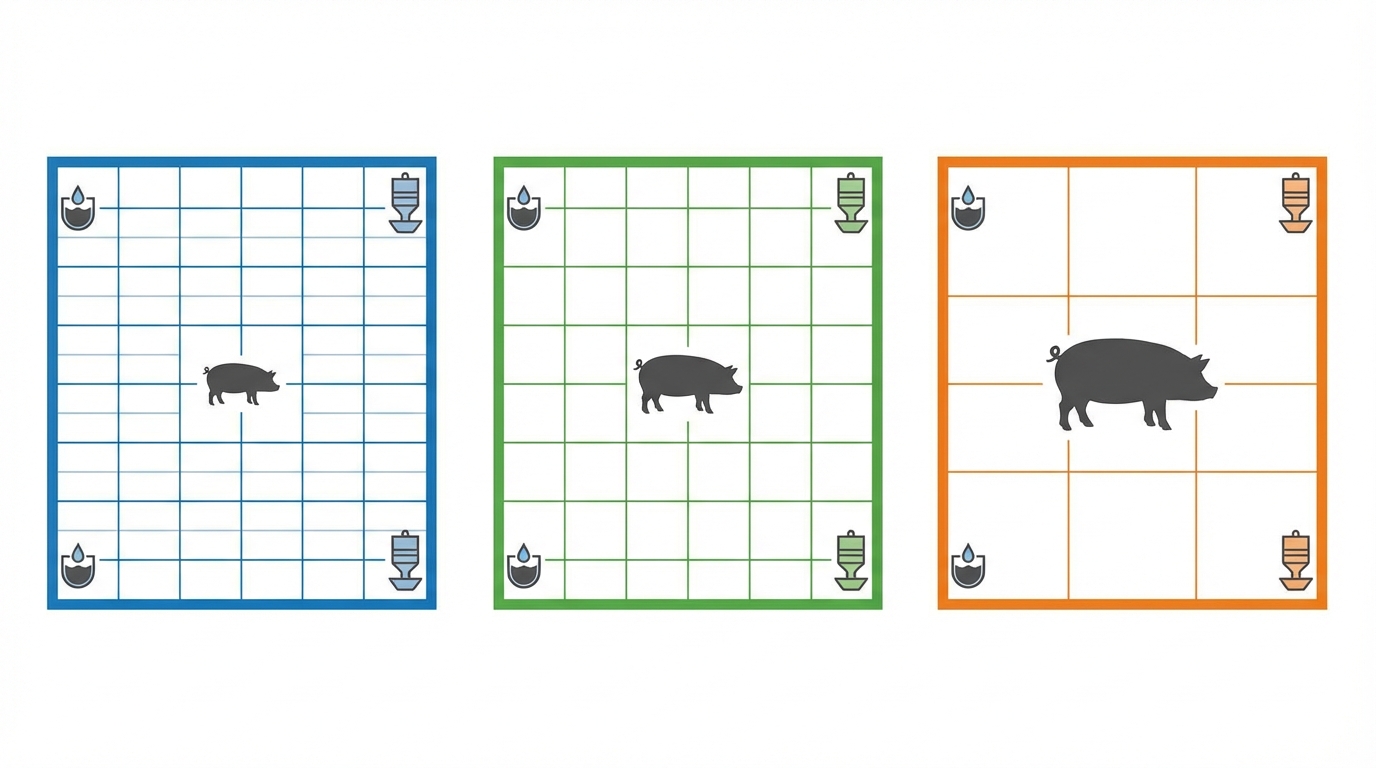
Properly sized pig house ideas prevent overcrowding, which is a leading cause of aggression and disease spread. You must calculate the floor space based on the weight and age of the pigs to ensure every animal has a dry place to lie down simultaneously. Professional designs account for growth stages to maximize the utility of your steel structure throughout the year.
How much space does a growing pig need?
As pigs gain weight rapidly, their space requirements expand accordingly to maintain health. You need to follow these general guidelines:
- Weaners: 0.3 – 0.4 square meters per head.
- Growers: 0.5 – 0.7 square meters per head.
- Finishers: 0.8 – 1.0 square meters per head.
Why is extra space beneficial?
Providing slightly more than the minimum space can actually improve your bottom line by reducing veterinary costs. The reason is simple:
- Lower social stress levels.
- Better air quality per animal.
- Easier access to feeders for submissive pigs.
| Pig Type | Recommended Area (m2) | Key Resource Access | |
|---|---|---|---|
| Weaner | 0.35 | Heat Zones | |
| Finisher | 0.90 | Multiple Feeders | |
| Gestating Sow | 2.20 | Group Interaction |
Matching your building size to your herd density is a critical step in professional farm management and animal welfare.
Key Takeaway: Correct space allocation reduces social friction and ensures optimal growth rates for every animal in your herd.
How do ventilation systems integrate with modern pig house ideas?
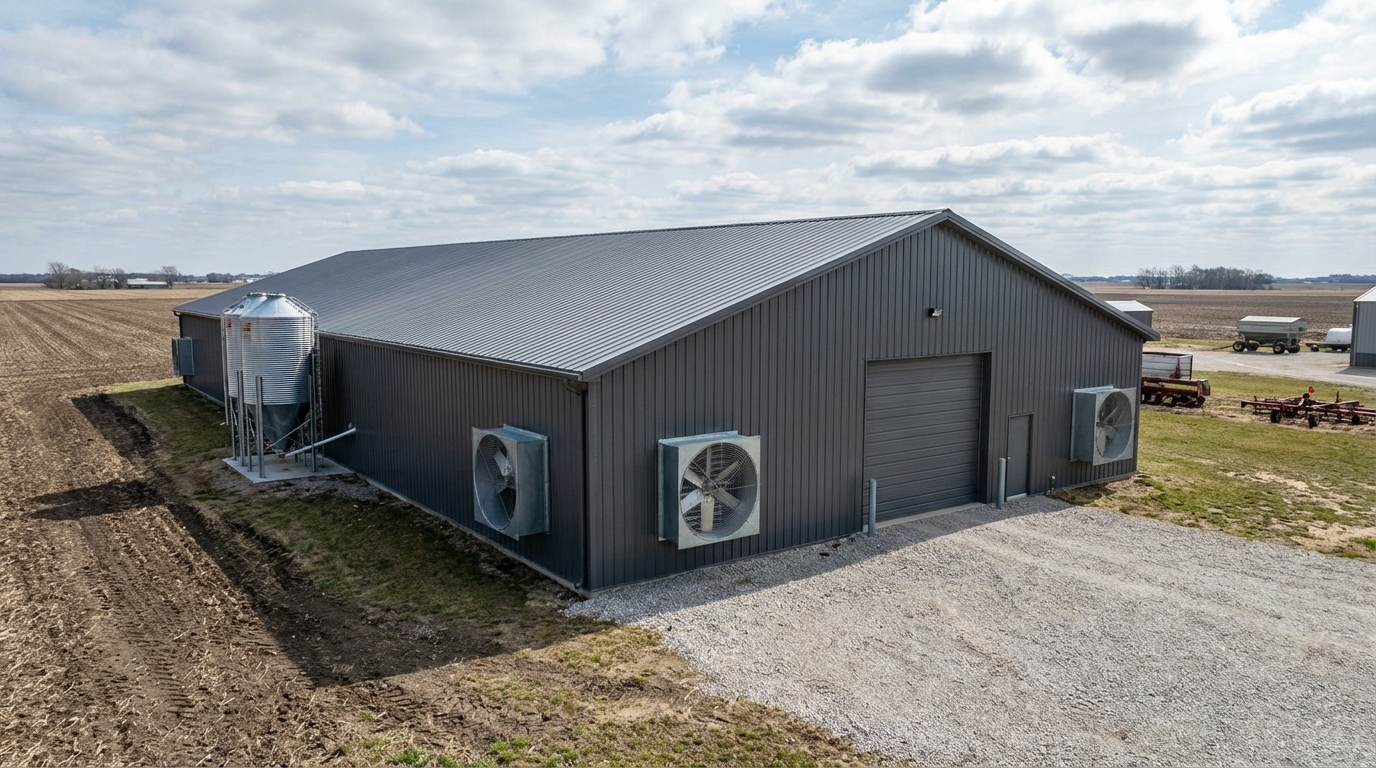
Integrating active air management into your pig house ideas is non-negotiable for large-scale operations. High ammonia levels and excessive humidity can lead to respiratory infections that devastate your productivity. Modern steel buildings are ideal for supporting powerful exhaust fans and automated inlet systems that keep the air fresh 24 hours a day.
Can natural ventilation suffice?
While natural airflow is cheaper, it often fails during the peak of summer or the dead of winter. You should consider a hybrid approach:
- Curtain-sided walls for spring and fall.
- Mechanical fans for summer cooling.
- Controlled inlets to prevent winter drafts.
What are the benefits of automated systems?
Automated controllers take the guesswork out of management by reacting to temperature shifts instantly. Here is the benefit:
- Constant monitoring of CO2 levels.
- Reduced manual labor requirements.
- Prevention of heat stress mortality.
| Ventilation Type | Best Climate Use | Maintenance | |
|---|---|---|---|
| Natural (Curtains) | Temperate | Low | |
| Tunnel (Fans) | Tropical/Hot | Moderate | |
| Pit Ventilation | All Climates | High |
High-quality airflow ensures that the environment inside your barn remains conducive to health regardless of the weather outside.
Key Takeaway: Proper ventilation is the primary defense against respiratory disease and performance-robbing heat stress.
Why is biosecurity central to effective pig house ideas?
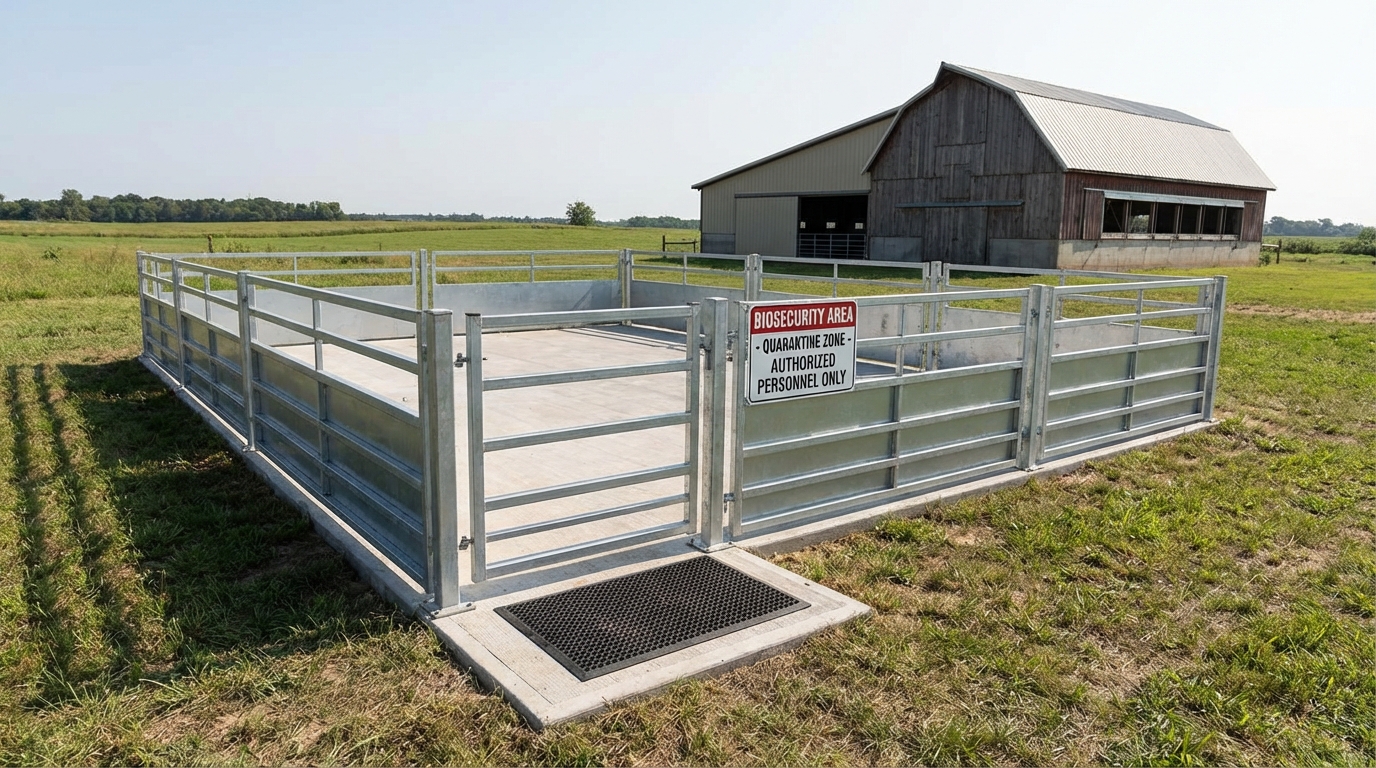
Smart pig house ideas prioritize biosecurity by creating physical barriers to disease entry. You must design your facility to include isolation pens and disinfection zones to protect your primary herd from external pathogens. Steel structures are particularly helpful here because their smooth surfaces are significantly easier to disinfect than porous wood.
How do you design an isolation area?
A quarantine pen should be located away from the main barn to prevent nose-to-nose contact between new and existing animals. The layout must include:
- Separate drainage systems.
- Dedicated feeding and cleaning tools.
- Restricted access for unauthorized personnel.
Can building layout prevent disease spread?
The internal flow of your barn should prevent cross-contamination between different age groups. Consider this strategy:
- All-in/all-out management cycles.
- Footbaths at every entrance.
- Bird-proof mesh on all openings.
| Biosecurity Feature | Disease Risk Reduction | Operational Impact | |
|---|---|---|---|
| Isolation Pen | Very High | Prevents Outbreaks | |
| Smooth Steel Walls | High | Easier Sanitation | |
| Perimeter Fencing | Moderate | Keeps Wildlife Out |
A proactive approach to biosecurity through building design is far more cost-effective than treating a sick herd.
Key Takeaway: Biosecurity-focused layouts act as a shield, preventing catastrophic disease outbreaks from reaching your livestock.
Can pig house ideas provide relief during summer heat?
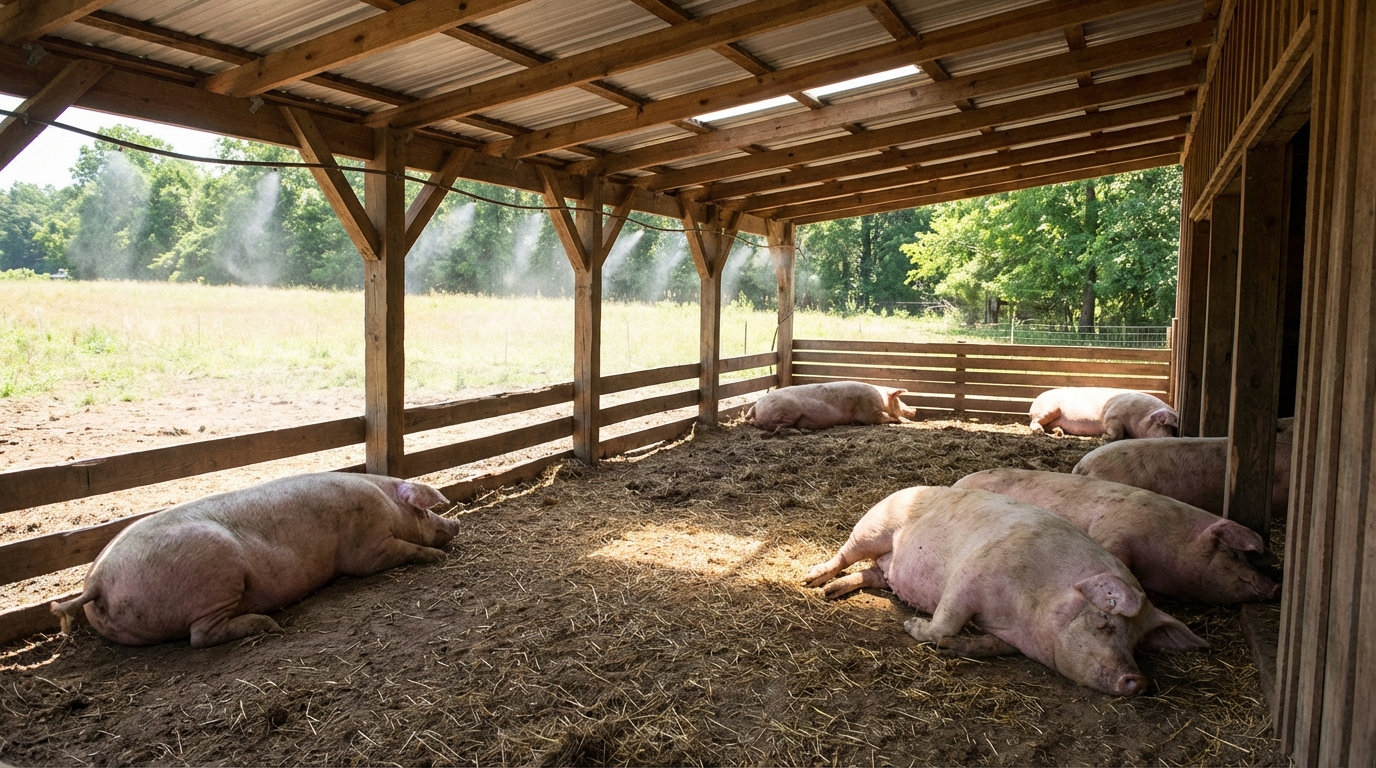
Addressing heat stress is a major component of successful pig house ideas in warmer climates. Pigs cannot sweat effectively, making them highly susceptible to heat stroke when temperatures rise above 25°C. Your shelter must provide deep shade and integrated cooling technologies like misters or drippers to keep animals safe.
How do misting systems work in steel sheds?
Misting systems use high-pressure nozzles to release a fine fog that cools the air through evaporation. You will see an immediate difference:
- Lower ambient temperatures.
- Increased feed intake during hot days.
- Calmer animal behavior.
Is shade alone enough for summer?
While a roof provides shade, a cow&sheep shed or similar structure needs high ceilings to allow heat to rise away from the pigs. Look at these essentials:
- Reflective roofing materials.
- Open ridge vents for heat escape.
- Strategic placement of cooling fans.
| Cooling Method | Effectiveness | Water Usage | |
|---|---|---|---|
| Shade Only | Low | Zero | |
| Misters | Moderate | Low | |
| Evaporative Pads | High | Moderate |
Combining structural shade with active cooling ensures your pigs continue to thrive even during the hottest months of the year.
Key Takeaway: Integrated cooling solutions are essential for maintaining productivity and preventing animal loss during peak summer heat.
How do hoop structures compare to other pig house ideas?
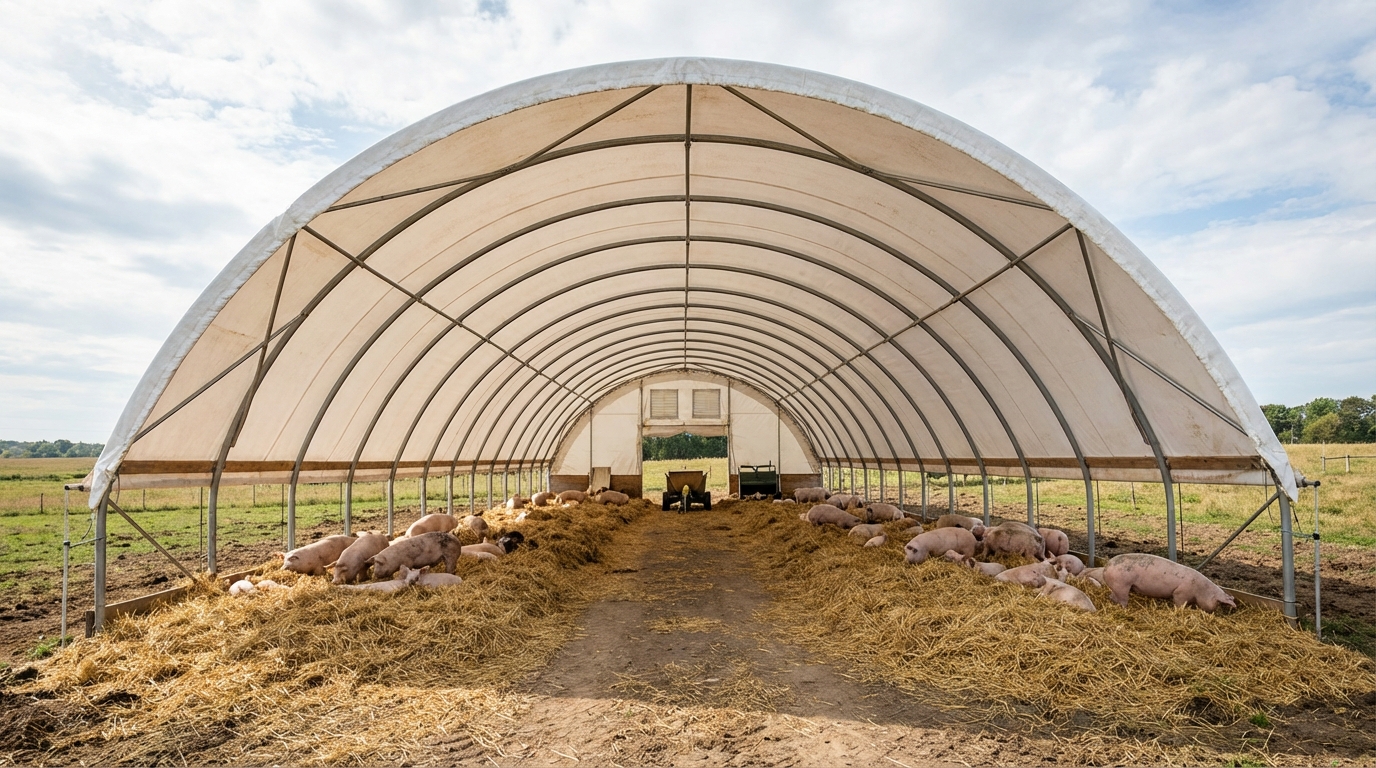
Hoop structures are popular pig house ideas for producers looking for a balance between cost and performance. These buildings use a steel arch frame covered by a heavy-duty fabric or metal skin, providing excellent natural light and airflow. They are particularly effective for deep-bedding systems where natural decomposition helps keep the environment warm in winter.
What are the main advantages of hoop barns?
Hoop barns offer a versatile, low-cost alternative to traditional square barns while maintaining structural reliability. The benefits are clear:
- Lower initial capital investment.
- Superior natural ventilation.
- Rapid construction and installation.
Are they suitable for all climates?
Hoop structures perform exceptionally well in areas with heavy snow or wind when engineered correctly with steel trusses. You must ensure:
- Proper anchoring to concrete pads.
- High-quality, UV-resistant coverings.
- Adequate drainage around the perimeter.
| Building Style | Cost Efficiency | Ventilation Potential | |
|---|---|---|---|
| Traditional Barn | Moderate | Moderate | |
| Hoop Structure | High | High | |
| Insulated Shed | Low | Moderate |
Hoop structures represent a modern approach to swine housing that prioritizes animal well-being and farmer profitability.
Key Takeaway: Hoop structures provide a high-performance, cost-effective housing solution for diverse swine farming operations.
What inspection routines ensure your pig house ideas stay safe?
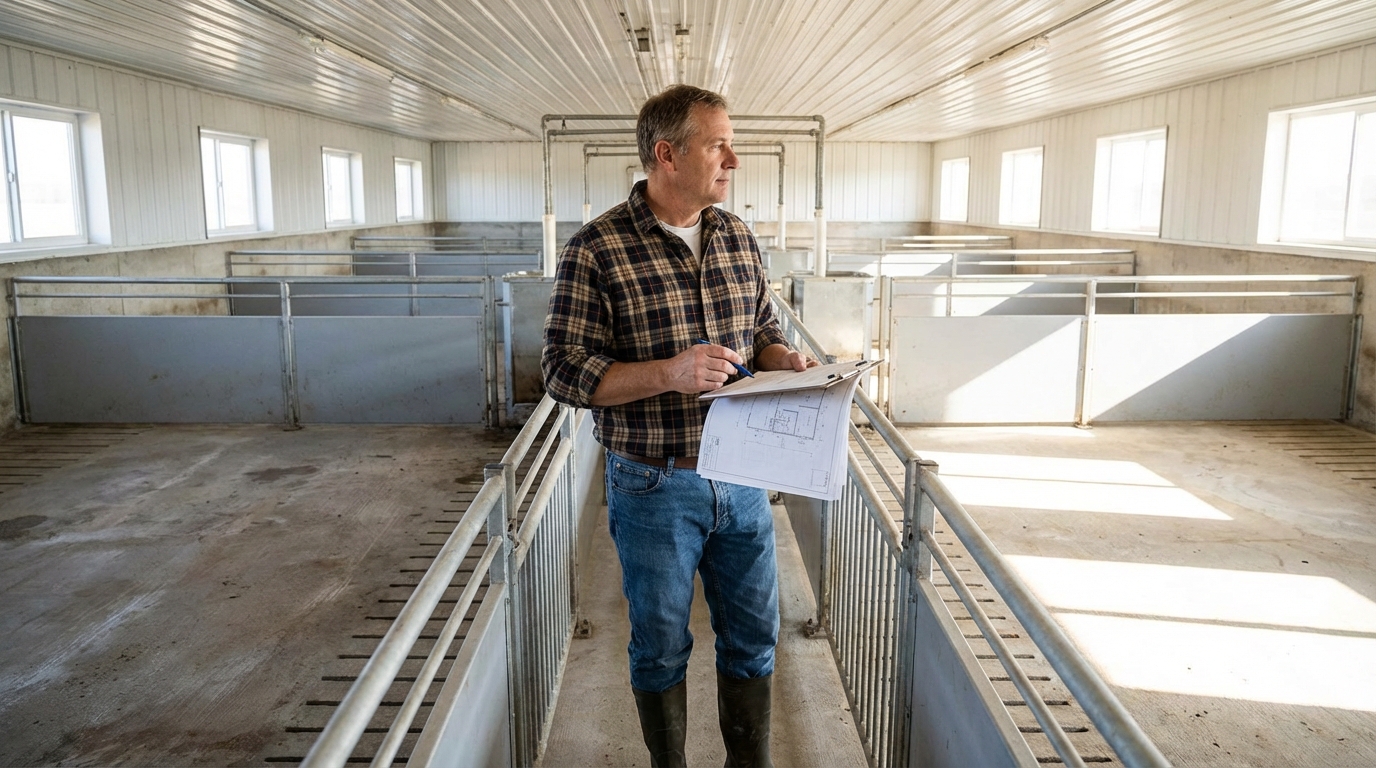
Even the best pig house ideas require regular maintenance to remain safe and functional for your livestock. Regular inspections allow you to catch small issues like a loose bolt or a blocked drain before they become expensive catastrophes. A professional steel structure simplifies this process by providing a clear, accessible framework that is easy to monitor.
What should you look for during a weekly walk-through?
Routine checks ensure that your pigs are not being exposed to hidden dangers like sharp edges or malfunctioning waterers. The checklist is vital:
- Integrity of pen latches and gates.
- Evidence of pests or rodent nesting.
- Blockages in automated feeding lines.
How do you maintain the exterior shell?
The external steel structure needs minimal but consistent care to prevent rust and ensure long-term stability. The secret is:
- Clearing debris from gutters and roofs.
- Inspecting foundation footings for erosion.
- Checking electrical conduits for damage.
| Inspection Item | Frequency | Action Required | |
|---|---|---|---|
| Feeding Systems | Daily | Clean and Adjust | |
| Gates/Latches | Weekly | Tighten Bolts | |
| Roof/Structure | Quarterly | Debris Removal |
Consistent maintenance protects your capital investment and ensures your animals always have a safe, reliable home.
Key Takeaway: Proactive inspection routines are the final step in ensuring your housing provides a safe environment for your pigs.
Conclusion
Providing high-quality housing is the most important decision you can make for your swine farm. Poorly designed shelters lead to disease, structural failure, and lost profits, while professional steel structures offer a lifetime of security and performance. At Showhoo, we specialize in high-quality, factory-direct steel buildings that are custom-engineered to meet the specific needs of commercial pig farmers worldwide. Our systems are designed for rapid installation, extreme durability, and optimal animal welfare, ensuring you get the highest return on your investment. Don’t leave your herd’s safety to chance; contact us today to start designing a facility that will secure your farm’s future.
Housing & Shelter FAQ
What is the best material for commercial pig barns?Steel is the superior choice for commercial operations because it resists the corrosive environment of a pig barn and requires very little maintenance. Unlike wood, steel does not harbor bacteria and can be thoroughly disinfected between herds.
Can I use a workshop building for my pigs?Yes, a steel structure workshop is highly adaptable and can be outfitted with the necessary penning, ventilation, and drainage systems for swine. This approach often provides a more robust shell than a dedicated low-cost agricultural shed.
How do I prevent my pigs from destroying their housing?The best prevention is using high-strength materials like reinforced concrete and heavy-gauge steel from the start. Pigs have incredible rooting and chewing power, so avoid soft woods and use lag bolts instead of standard screws for all internal fixtures.
Is insulation necessary for pig houses?Insulation is highly recommended to prevent temperature spikes in summer and heat loss in winter. It helps maintain a stable internal environment, which reduces animal stress and improves feed conversion ratios.
What is the most cost-effective shelter for a small herd?Hoop structures often provide the best balance of price and performance for smaller or pasture-based operations. They offer excellent ventilation and can be used with deep-bedding systems to reduce daily cleaning labor.