
You lose dozens of training hours every year due to unpredictable rain, wind, and frozen ground. These delays don’t just stall your horse’s progress; they disrupt your business revenue and compromise the safety of your riders in subpar conditions. The answer lies in understanding how big is a horse arena needs to be to meet your specific operational requirements. By selecting the right dimensions now, you ensure a professional training environment that functions perfectly regardless of the season.
How big is a horse arena for general equestrian use?
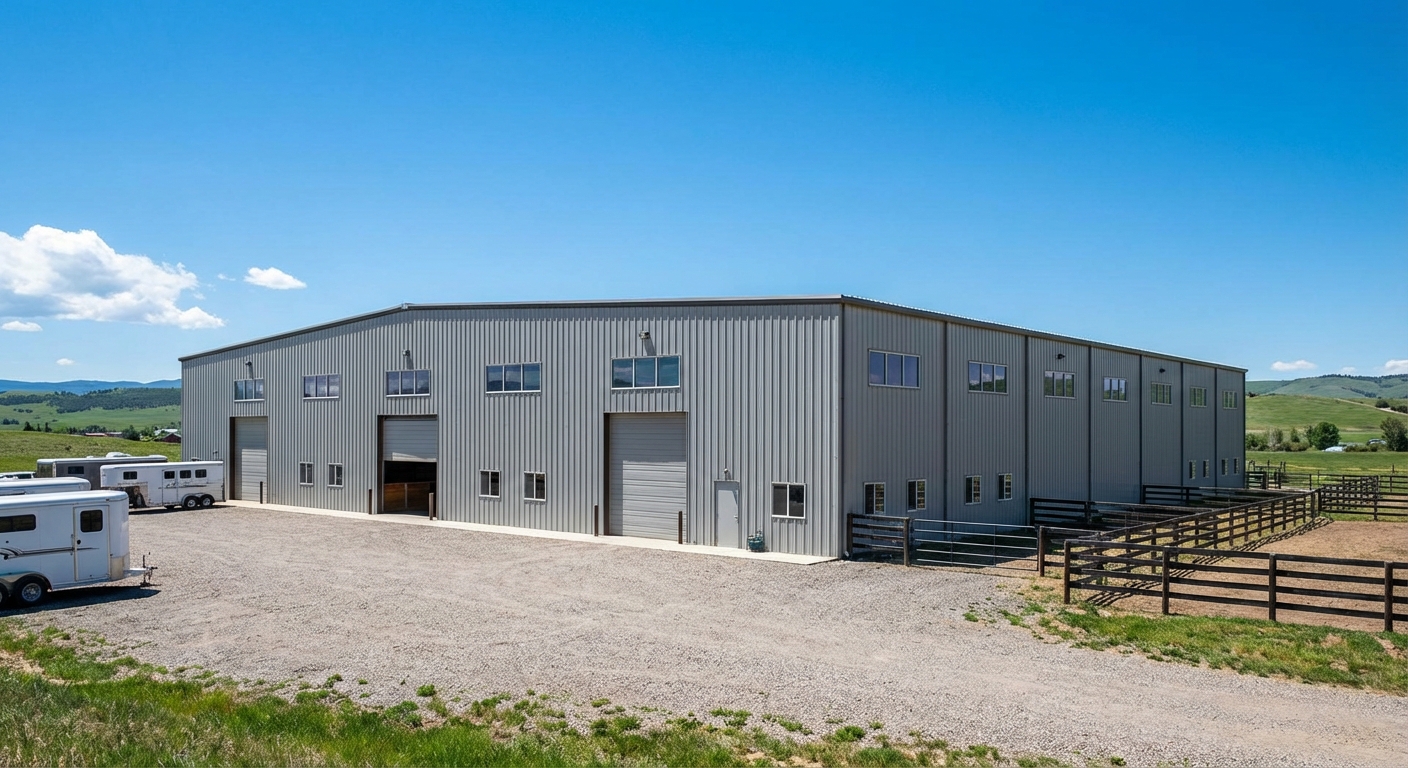
A standard indoor arena for general purpose riding should be at least 60 feet wide and 120 feet long. Determining how big is a horse arena for your facility depends on your most frequent activities and the number of horses in the ring simultaneously. This entry-level size provides enough room for basic flatwork and safe circles.
Standard Dimensions for Multi-Purpose Use
When planning your layout, you must account for both the riding surface and the safety clearance for the rider.
- 60′ x 120′: Minimum for individual training.
- 80′ x 200′: Gold standard for versatility.
- 100′ x 200′: Optimal for commercial boarding stables.
Think about this: Small footprints lead to crowded corners and increased risk of collisions. Key Takeaway: A 60′ x 120′ footprint is the baseline, but 80′ x 200′ offers significantly better ROI for growing businesses.
| Feature | Minimum Size | Recommended Size | |
|---|---|---|---|
| Width | 60 Feet | 80 Feet | |
| Length | 120 Feet | 200 Feet | |
| Purpose | Private Training | Commercial Use |
This table provides the essential metrics needed to evaluate a basic facility layout.
How big is a horse arena for professional dressage?
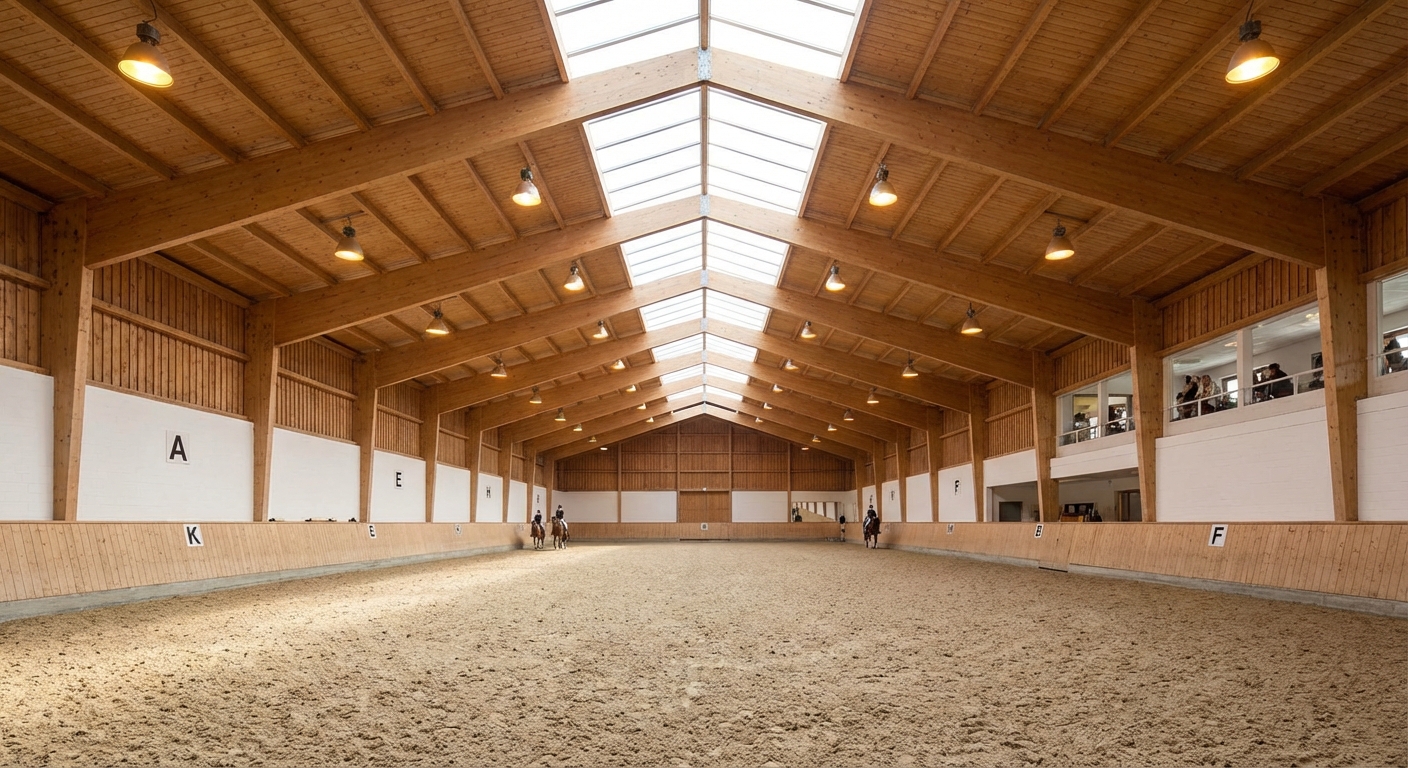
A professional dressage arena requires strict dimensions of either 20 meters by 40 meters or 20 meters by 60 meters. When calculating how big is a horse arena for this discipline, you must use precise metric conversions to ensure your training translates accurately to competition standards. A 20m x 60m space is roughly equivalent to 66 feet by 197 feet.
Specialized Dressage Requirements
Precision is the most important factor for dressage trainers who rely on specific markers.
- Short Court: 20m x 40m for introductory levels.
- Long Court: 20m x 60m for FEI and Grand Prix.
- Ceiling Height: 16 feet minimum for adequate air flow.
Look at it this way: If your arena is even a few inches off, your horse’s rhythm and marking accuracy will suffer. Key Takeaway: Always build to the 20m x 60m standard if you intend to host or train for high-level dressage competitions.
| Type | Dimensions (Metric) | Dimensions (Imperial) | |
|---|---|---|---|
| Small Arena | 20m x 40m | 66′ x 132′ | |
| Standard Arena | 20m x 60m | 66′ x 197′ |
Maintaining these exact ratios is crucial for competitive muscle memory.
How big is a horse arena for stadium jumping?
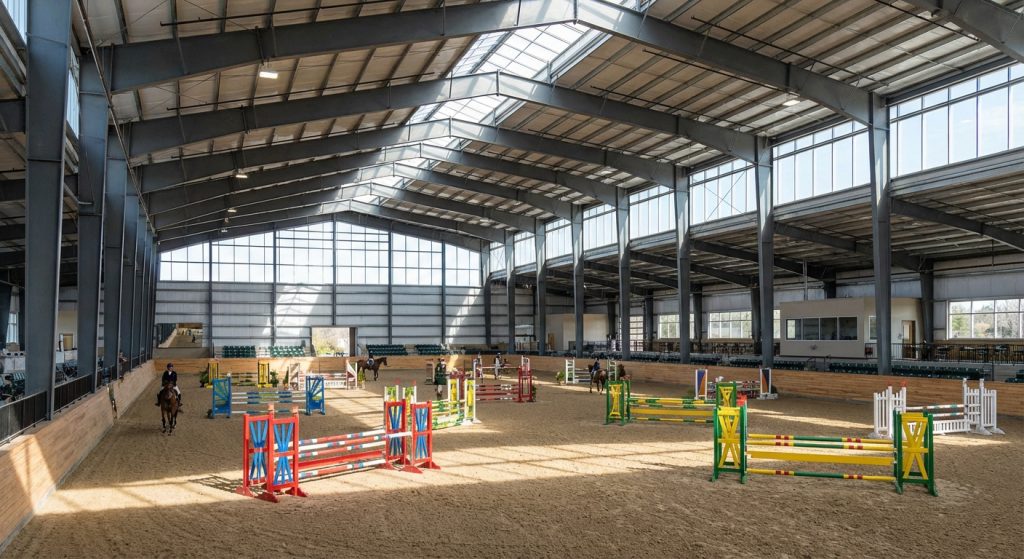
Stadium jumping arenas require a minimum width of 80 feet and a length of at least 150 feet to accommodate full courses. Analyzing how big is a horse arena for jumping involves more than just ground square footage; you must also consider vertical clearance. Most professional courses require 18 to 20 feet of interior height to ensure safety during high-effort leaps.
Course Layout and Vertical Clearances
Jumpers need ample room for approaches, turns, and safe landing zones between obstacles.
- Course Width: 80′ – 100′ allows for tighter lines and complex patterns.
- Run-out Space: 20′ minimum behind the final fence in a line.
- Apex Height: 18’+ for horses jumping over 1.20m.
The best part? A wider arena allows you to leave a full course set up while still having room for flatwork. Key Takeaway: Width is more critical than length for jumping, as it dictates the complexity and safety of your course turns.
| Component | Minimum Measurement | Impact on Safety | |
|---|---|---|---|
| Interior Width | 80 Feet | Prevents dangerous sharp turns | |
| Ceiling Height | 18 Feet | Protects rider during tall jumps |
Proper vertical and horizontal scaling ensures your jumping program remains competitive and safe.
How big is a horse arena for communal training?
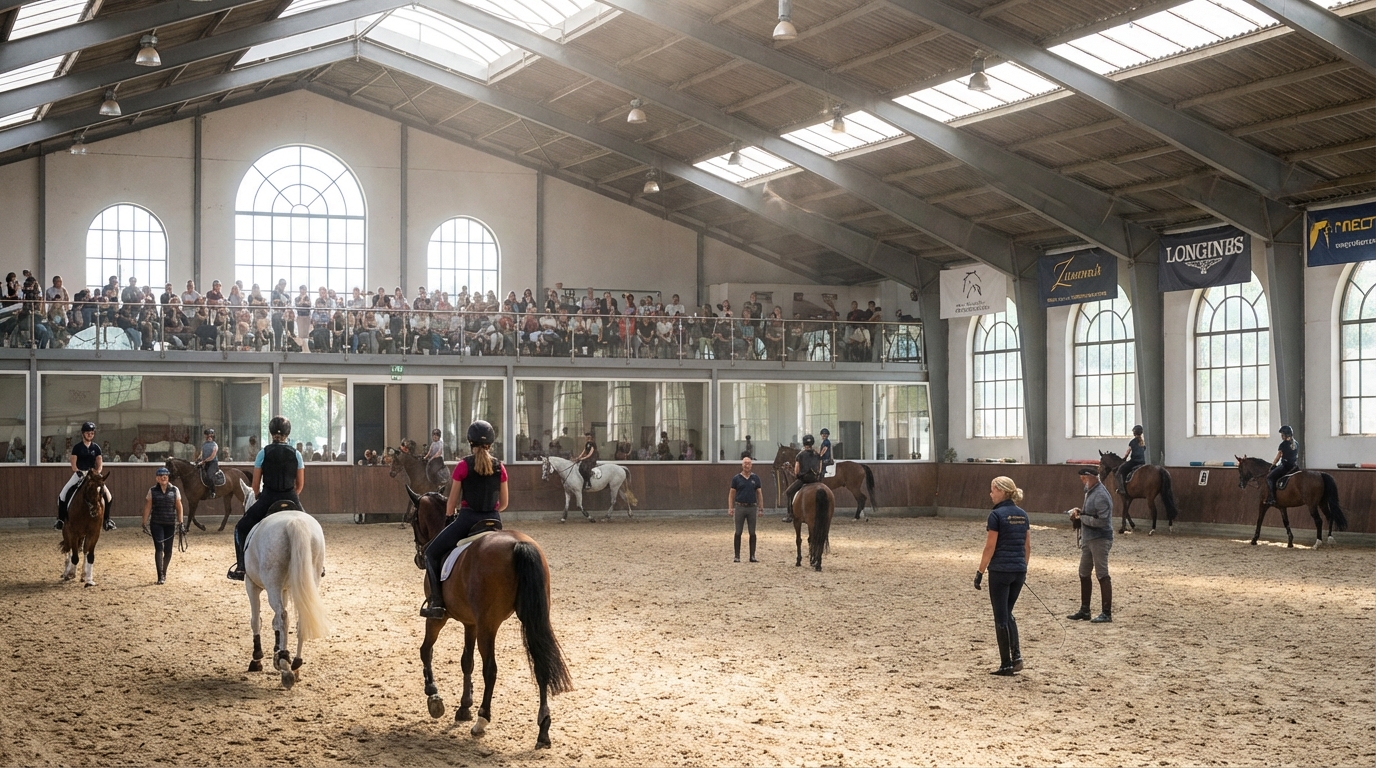
Communal training facilities typically require dimensions of 100 feet by 200 feet to allow multiple riders to work simultaneously. Understanding how big is a horse arena for group use is vital for lesson barns where safety depends on maintaining a “buffer zone” between horses. This larger footprint reduces the stress on both the animals and the instructors.
Shared arenas must account for the different speeds and levels of multiple horses in the ring.
- Passing Lanes: Requires a width of at least 80 feet.
- Observation Areas: Add 10 feet of width for a dedicated viewing gallery.
- Emergency Exits: Multiple points of egress are necessary for high-volume use.
Wait, there’s more. A cramped arena increases the likelihood of kicks and behavioral issues among stalled horses. Key Takeaway: If you regularly have more than four riders, a 100′ width is necessary to prevent traffic bottlenecks.
| Rider Count | Recommended Width | Safety Margin | |
|---|---|---|---|
| 1-3 Riders | 70 Feet | Moderate | |
| 4-6 Riders | 100 Feet | High |
Selecting a communal size based on peak hour usage protects your business from liability.
How big is a horse arena for private farm barns?
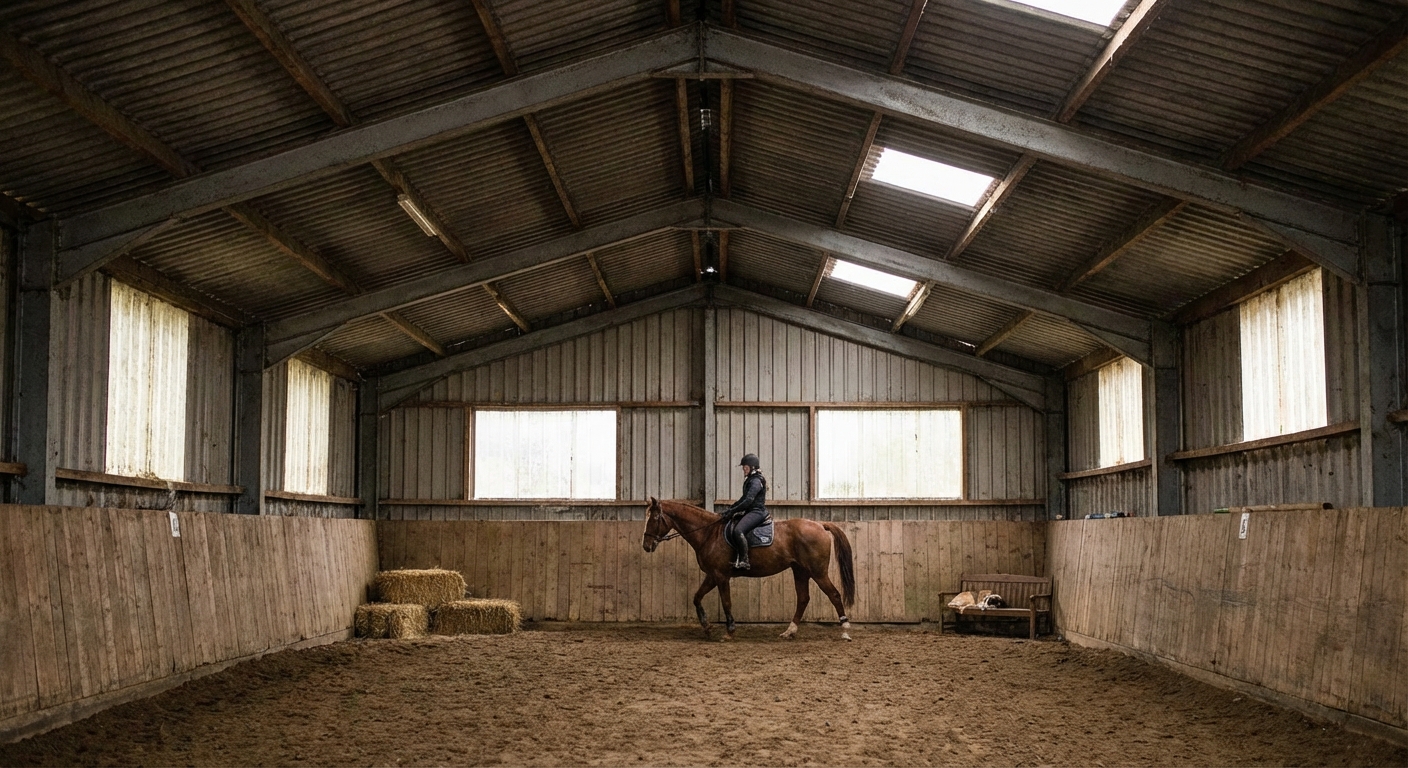
Private farm arenas can function effectively at a scaled-down size of 60 feet by 100 feet for individual pleasure riding. When deciding how big is a horse arena for a personal property, you must balance your riding goals with the available land and budget. Smaller arenas are significantly easier to maintain and require less expensive lighting and footing upkeep.
Efficiency for Individual Owners
Personal use arenas focus on daily exercise rather than competition-grade course layouts.
- Footprint: 6,000 to 8,000 square feet is often sufficient.
- Maintenance: Easier to drag and water with smaller equipment.
- Permitting: Smaller structures often face fewer zoning hurdles on residential land.
Here is the truth: You don’t always need a massive building to stay in peak riding shape during the winter. Key Takeaway: Focus on high-quality footing rather than excessive square footage for a private, one-horse facility.
| Property Type | Target Size | Maintenance Level | |
|---|---|---|---|
| Small Acreage | 60′ x 100′ | Low | |
| Professional Farm | 80′ x 150′ | Moderate |
Private owners should prioritize a functional width of 60 feet for safe lunging and basic circles.
How big is a horse arena using steel clear-span frames?
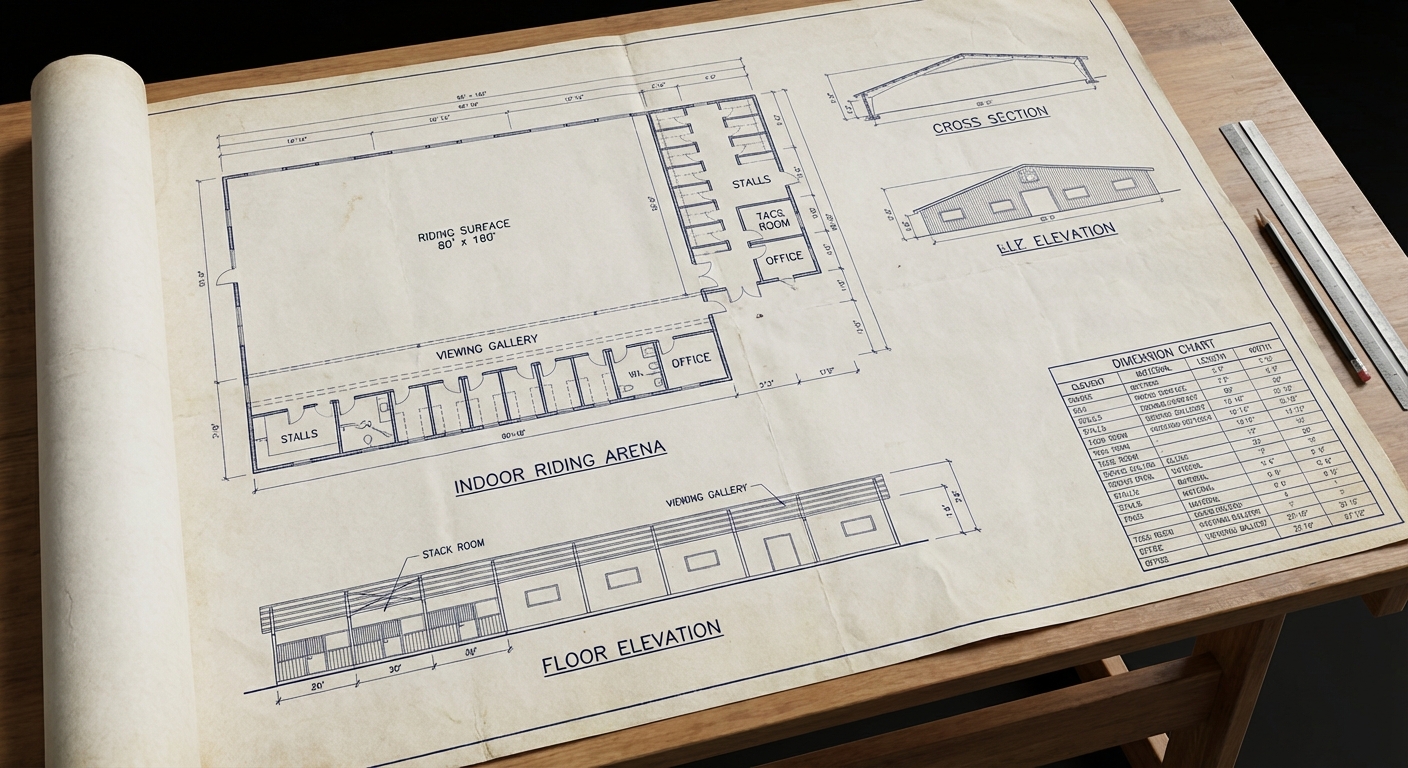
Clear-span steel structures allow for arenas to reach widths of up to 200 feet without any internal support columns. When you evaluate how big is a horse arena built with steel, the lack of obstructions is the primary safety benefit. This engineering allows for a completely open riding surface, which is essential for high-speed disciplines and large-scale events.
Engineering the Clear-Span Advantage
Modern steel frames provide the structural integrity needed for massive, open-concept equestrian spaces.
- Span Width: 60′ to 150′ is standard; 200′ is possible for elite venues.
- Truss Spacing: Typically set at 20′ to 25′ for maximum load bearing.
- Durability: Resists rot and pests that typically plague wooden structures.
Here is the key: Interior posts are a massive liability that can lead to catastrophic injuries for horses. Key Takeaway: Always choose a clear-span design to maximize the usable safety zone within your arena footprint.
| Structure Type | Maximum Width (Clear) | Obstruction Risk | |
|---|---|---|---|
| Wood Post Frame | ~80 Feet | High | |
| Clear-Span Steel | 200+ Feet | Zero |
Clear-span technology is the industry standard for professional-grade equestrian safety.
How big is a horse arena for beginner lunging?
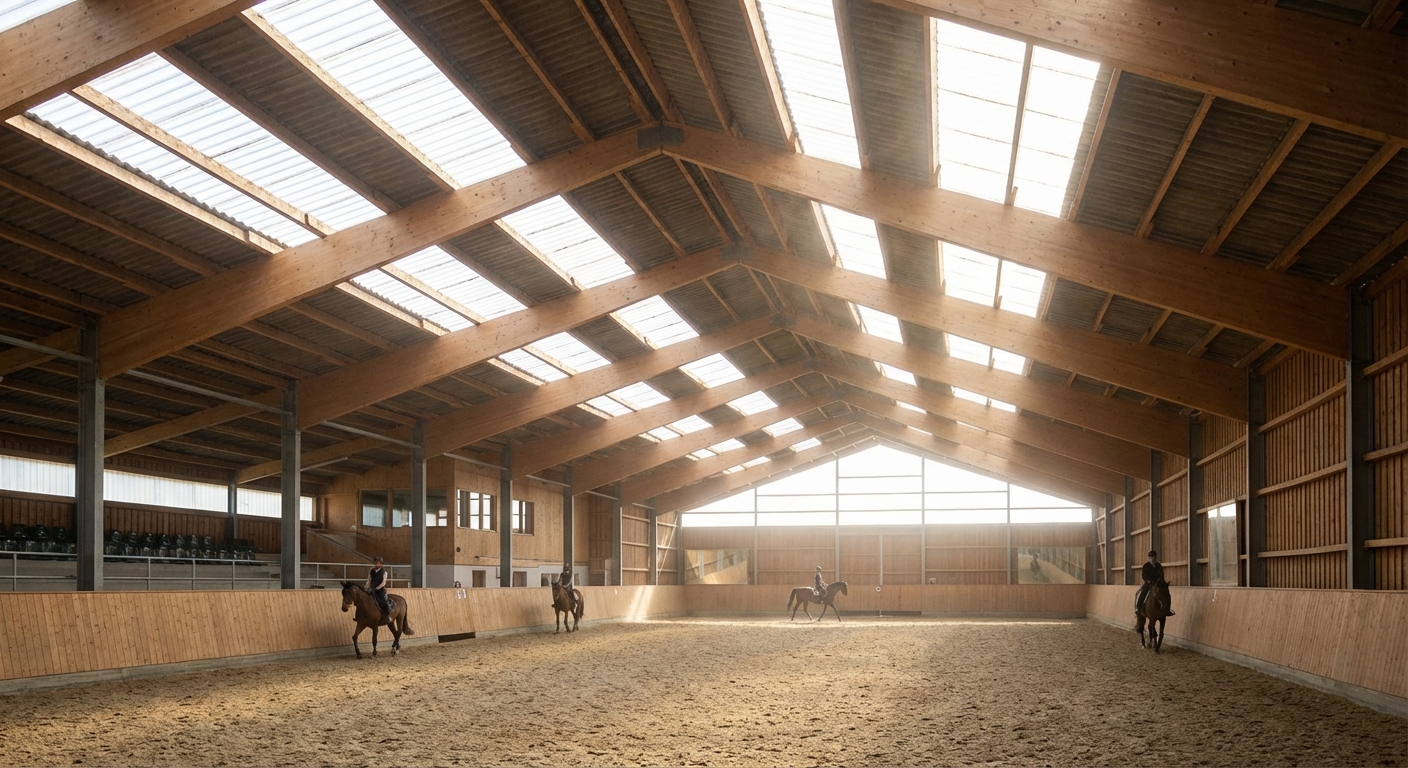
A dedicated lunging arena or round pen should have a diameter between 50 and 66 feet. For instructors wondering how big is a horse arena for ground training, the 20-meter circle is the universal standard. This size allows for enough centrifugal force to work the horse without over-stressing their joints through tight turns.
Ground Work and Lunging Geometry
Lunging requires specific space to keep the handler safe while allowing the horse to move freely.
- Standard Diameter: 60 feet (approx. 18 meters).
- Wall Height: 4 to 5 feet for solid rider guards.
- Footing Depth: 3-4 inches to handle the high-impact stress of circling.
Think of it this way: A circle that is too small ruins hocks, while one too large loses control of the horse. Key Takeaway: If your main arena is 80′ wide, you can easily section off a safe 60′ lunging circle at one end.
| Discipline | Circle Diameter | Primary Benefit | |
|---|---|---|---|
| Basic Lunging | 60 Feet | Controlled exercise | |
| Advanced Work | 66 Feet | Metric precision |
This specialized sizing prevents the physical strain associated with improper ground work.
How big is a horse arena for therapeutic riding?
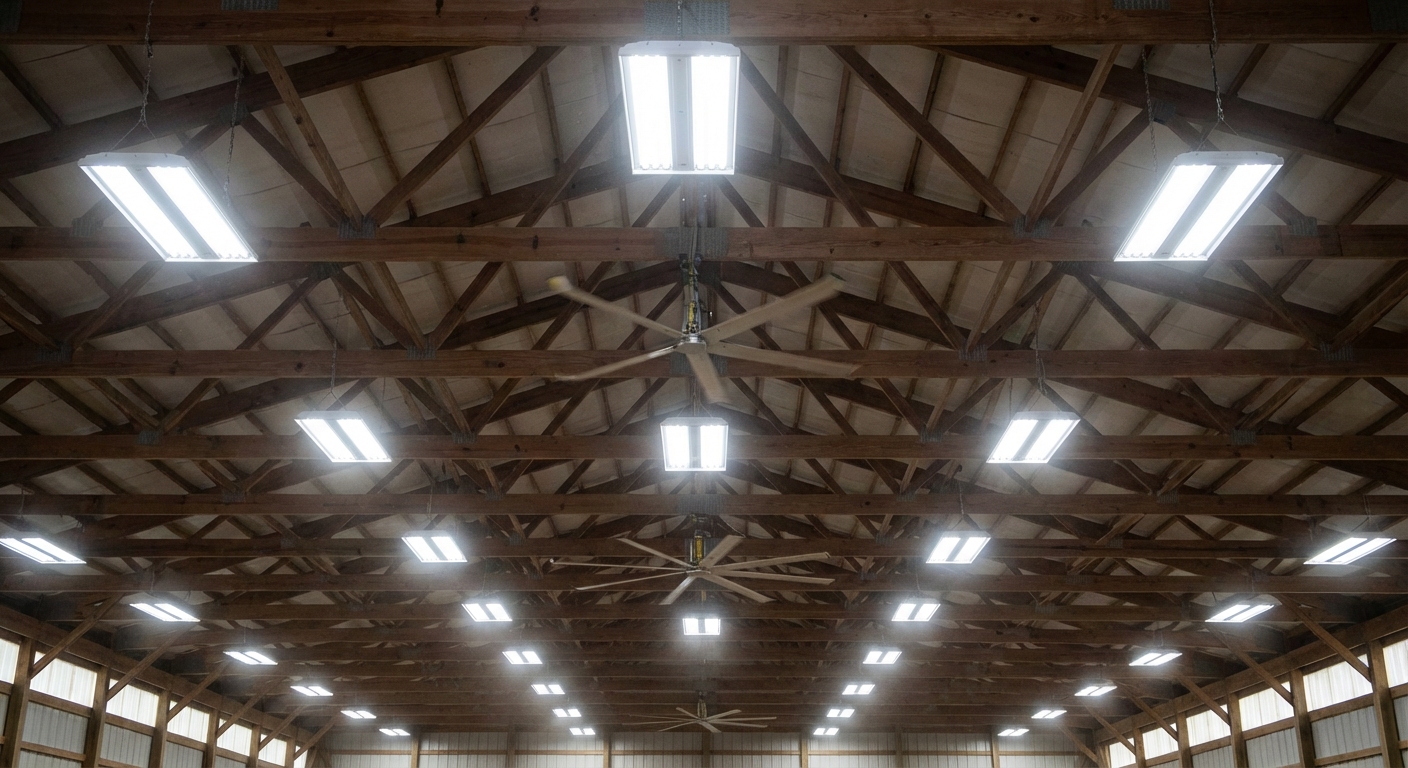
Therapeutic riding arenas are most effective at a size of 70 feet by 120 feet to accommodate horses, riders, and side-walkers. Calculating how big is a horse arena for therapy programs requires extra width to allow for mounting ramps and support staff. Safety and accessibility are the driving factors rather than speed or competition standards.
Accessibility and Support Staff Clearance
Therapy sessions often involve three adults per horse, necessitating wider lanes for safe movement.
- Lane Width: 12 feet minimum to allow for side-walkers on both sides.
- Mounting Zone: 15′ x 15′ area for ramps and lift equipment.
- Sensory Area: Extra length for obstacles and educational props.
Don’t forget: The “invisible” space occupied by support staff is just as important as the horse’s path. Key Takeaway: Width is the most important metric for therapeutic centers to ensure volunteers have safe working room.
| Program Need | Minimum Space | Purpose | |
|---|---|---|---|
| Side-walking | +4′ per side | Volunteer safety | |
| Mounting Ramp | 15′ x 10′ | Rider accessibility |
Designing for therapy requires a focus on inclusive dimensions and staff safety.
How big is a horse arena for commercial showgrounds?
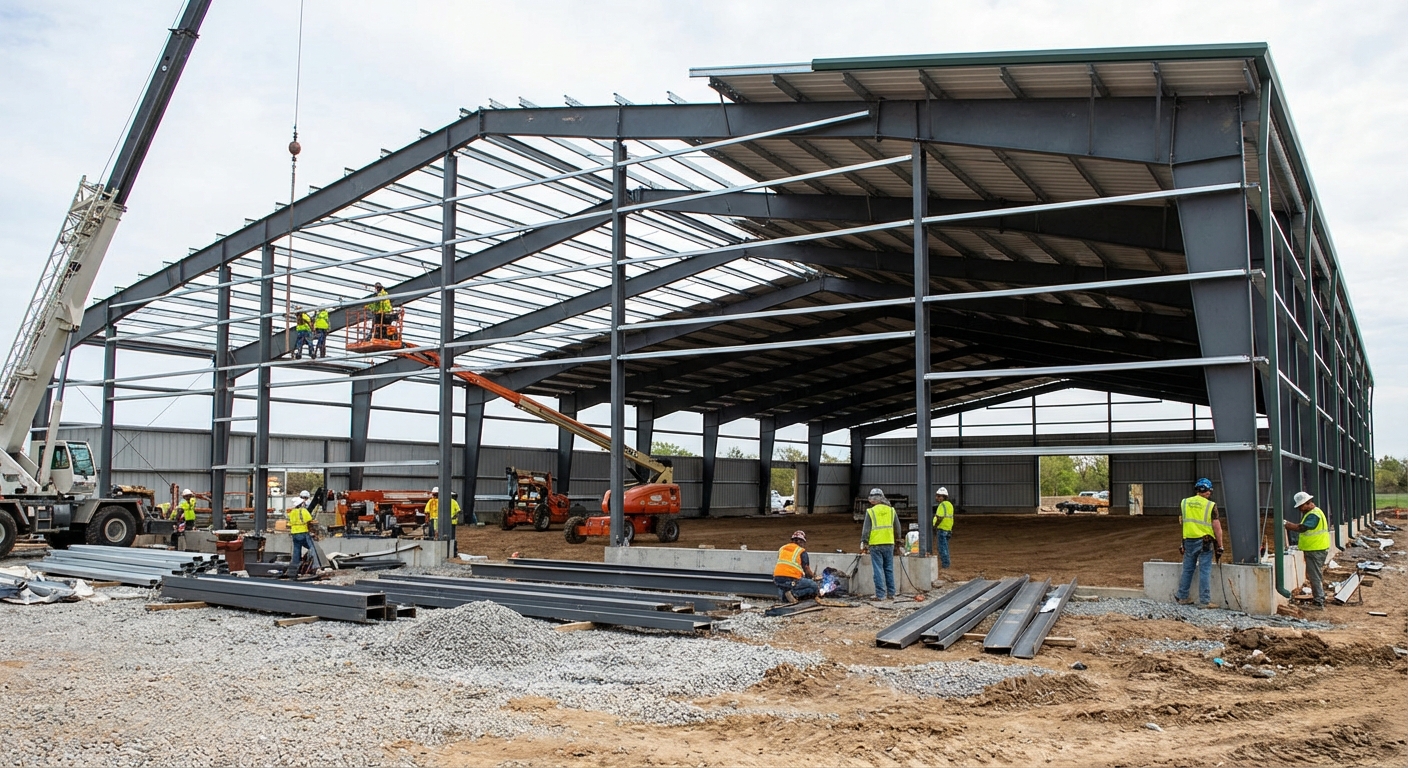
Commercial showgrounds often utilize massive indoor arenas measuring 150 feet by 300 feet or larger. When determining how big is a horse arena for high-traffic public events, you must factor in grandstands, judging booths, and multiple entry gates. These structures serve as multi-purpose event centers that must meet strict fire codes and occupancy standards.
Scaling for Public Events and Spectators
Showgrounds must provide a world-class experience for both the competitors and the paying audience.
- Viewing Capacity: Add 20-30 feet of width for bleachers and walkways.
- Warm-up Space: Often requires a secondary, adjacent arena of at least 80′ x 150′.
- Doorways: 16′ wide x 14′ high for tractor and trailer access.
The bottom line is: A show arena is a business asset; if it’s too small, you can’t host the high-revenue events. Key Takeaway: Commercial venues should prioritize a 100’+ width to remain viable for a variety of horse show circuits.
| Event Factor | Added Requirement | Business Impact | |
|---|---|---|---|
| Bleachers | +20 Feet Width | Increased ticket revenue | |
| Heavy Equipment | 16′ Doors | Faster footing maintenance |
Large-scale showgrounds require strategic scaling to balance athletic needs with spectator comfort.
How big is a horse arena for seasonal climate protection?
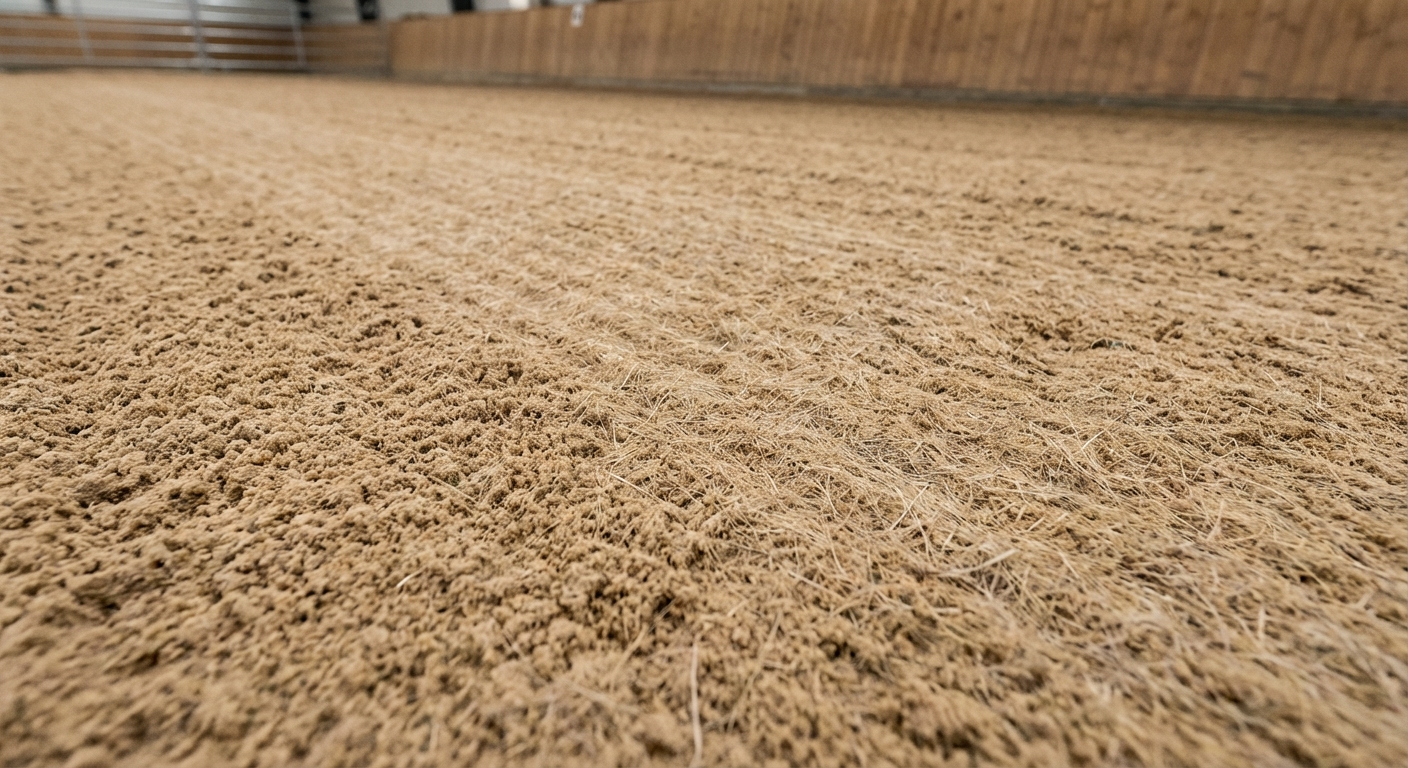
Arenas designed specifically for climate protection should be large enough to include a 10-foot “perimeter buffer” to prevent moisture from blowing in. When assessing how big is a horse arena for harsh weather, you need to account for overhangs and wall placement that shield the footing. Proper sizing ensures that your expensive riding surface stays dry and usable 365 days a year.
Ventilation and Insulation Buffers
Climate-controlled arenas must manage air flow without allowing the elements to degrade the interior.
- Eave Height: 16 feet allows for better heat dissipation in summer.
- Wall Setbacks: 5 feet from the arena edge prevents rain spray on footing.
- Vapor Barriers: Essential for preventing condensation in metal buildings.
Take note of this: A wet perimeter makes 20% of your riding surface unusable during the rainy season. Key Takeaway: Add a 10-foot buffer to your structural width to keep your actual riding surface protected from wind-blown rain.
| Climate Issue | Design Solution | Required Clearance | |
|---|---|---|---|
| Wind-blown Rain | Extended Eaves | 3-5 Feet | |
| Summer Heat | Higher Ceilings | 16-18 Feet |
Strategic sizing for weather protection guarantees a consistent training environment in any season.
Choosing the perfect size for your facility is the foundation of a successful equestrian business or private hobby. By focusing on clear-span designs and discipline-specific dimensions, you create a safe, professional, and high-value environment. If you are ready to begin planning your custom project, contact us today for expert guidance on layout and structural requirements.
Frequently Asked Questions
Can I build an indoor arena without a formal permit?Usually no. Most municipalities require engineer-approved plans and specific building permits for safety, insurance, and zoning compliance, especially for commercial use.
What’s the recommended height for a jumping arena?An interior height of 18 to 20 feet is recommended for jumping. This ensures the rider and horse have adequate clearance during maximum vertical effort.
How big is a horse arena for multiple trailers?You should plan for a perimeter clearance of at least 30 to 40 feet around the building to allow for trailer turn-arounds and safe loading areas.
Is a 60-foot width sufficient for all riding disciplines?It is the bare minimum. While fine for private use and basic flatwork, it is often too narrow for professional jumping courses or group lessons.
Why is a clear-span steel frame better than wood?Steel frames eliminate the need for interior support posts, providing a 100% usable and safe riding surface without dangerous physical obstructions.