
High-quality horse barn designs and plans prioritize animal safety, optimal ventilation, and structural longevity to create a functional and stress-free equine environment. Many owners struggle with traditional wood structures that rot over time, require constant maintenance, and present significant fire hazards. These structural failures don’t just cost money; they agitate the daily routine of both horse and rider, leading to poor air quality and unsafe housing conditions. By opting for modern horse stable designs, you can implement a durable, fire-resistant, and low-maintenance solution that protects your investment for decades.
How do I choose the best site for horse stable designs?
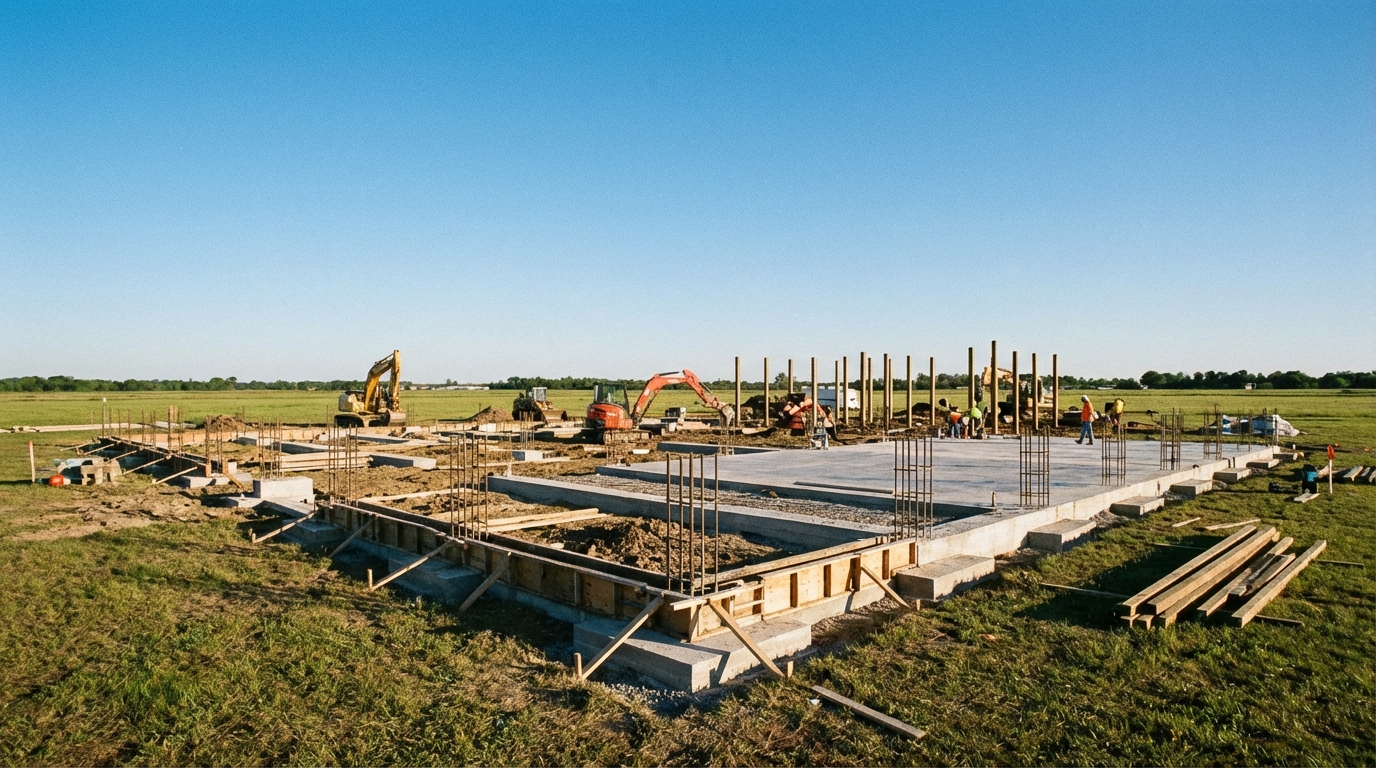
Selecting the best site for horse stable designs involves evaluating natural drainage, wind patterns, and soil stability to prevent future structural issues. Here is the deal: a poorly placed barn leads to mud pits and respiratory issues for your horses. You must look for the highest ground available to ensure water flows away from the foundation rather than pooling around it.
Prioritize Grading and Natural Drainage
Effective site selection starts with understanding how water moves across your property during heavy rain. You should aim for a slight 1% to 2% grade around the building perimeter to encourage runoff.
- Use crushed stone or gravel as a base to enhance drainage.
- Avoid low-lying areas that collect moisture and foster bacteria.
- Ensure the foundation is raised above the surrounding terrain.
Consider Prevailing Wind Directions
Why does this matter? Positioning your barn to catch summer breezes provides free, natural cooling for your animals. However, you also need to ensure that the main openings can be shielded from harsh winter gusts.
- Orient the long side of the barn perpendicular to summer winds.
- Use natural tree lines as windbreaks for winter protection.
- Monitor local weather patterns before finalizing your layout.
Verify Local Building and Zoning Codes
Before you break ground, you must confirm that your chosen site complies with all local setbacks and agricultural permits. Some jurisdictions have strict rules regarding the proximity of animal housing to property lines or water sources.
- Visit your local government office for clarity on permits.
- Check for utility lines or easements that might restrict construction.
- Secure all necessary paperwork before ordering building materials.
Key Takeaway: Proper site selection reduces long-term maintenance costs and ensures a healthier living environment for horses.
| Feature | Design Recommendation | Benefit | |
|---|---|---|---|
| Grading | 1-2% slope away from barn | Prevents water damage | |
| Orientation | Perpendicular to summer breeze | Natural cooling | |
| Foundation | Raised gravel or stone base | Superior drainage |
Site preparation is the foundation of a successful build, determining the structural health and hygiene of the facility for years.
What is the ideal stall size for various horse stable designs?
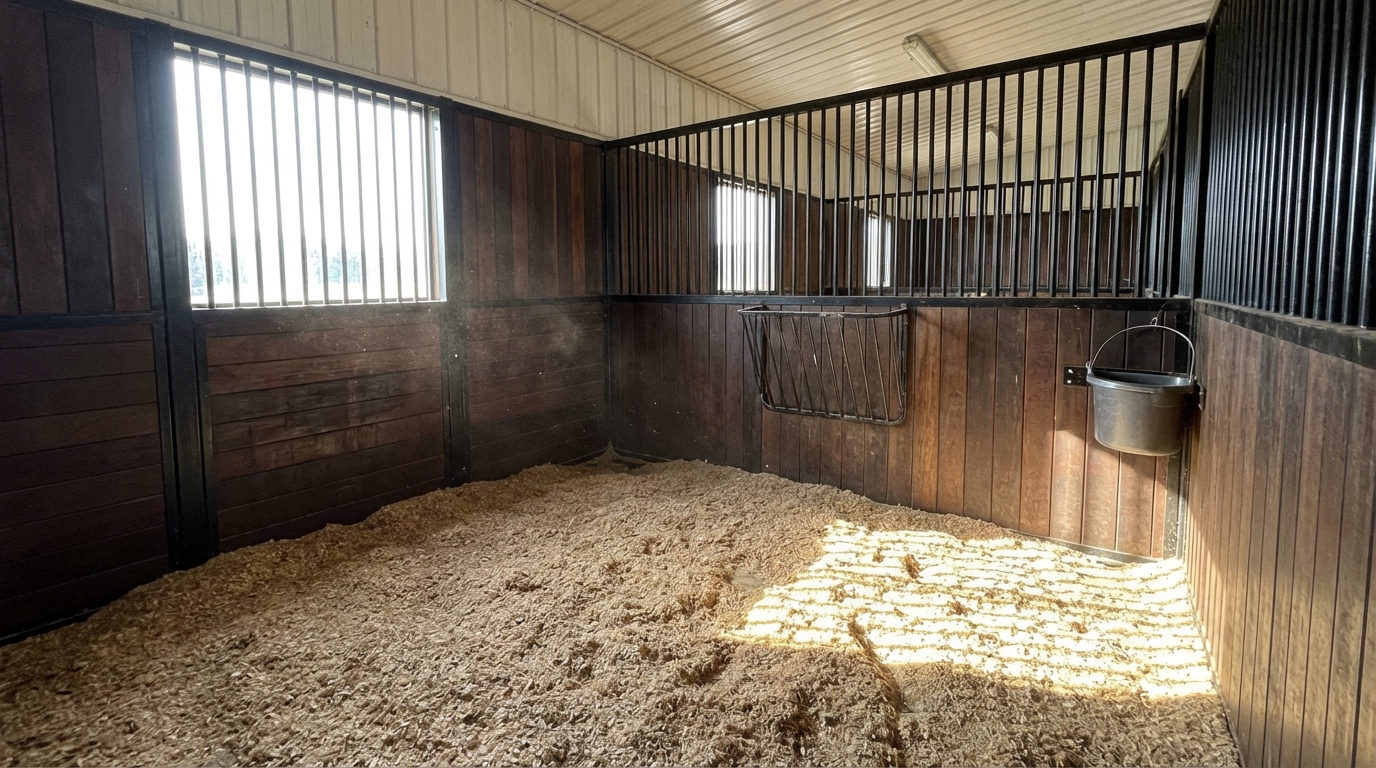
The ideal stall size for various horse stable designs depends on the breed of the horse, their daily activity level, and the specific intended use of the space. While standard dimensions exist, a “one size fits all” approach often leads to cramped conditions or wasted space. You should always consider the maximum size of the animal to ensure they can turn around and lie down without hitting the walls.
Standard 12×12 Stalls for Average Horses
A 12×12 stall is the gold standard for average-sized horses weighing around 1,000 lbs. This provides enough room for the horse to move comfortably and reduces the risk of getting “cast” against a wall.
- This size is easier to clean and manage for daily chores.
- It accommodates most standard stall mat systems perfectly.
- Provide at least 8 feet of vertical clearance for safety.
Compact 10×10 Options for Ponies
If you are housing smaller breeds or ponies, a 10×10 stall is often adequate and more cost-effective. These smaller units allow you to fit more stalls into a limited footprint without sacrificing comfort for smaller animals.
- Perfect for miniature horses or young foals.
- Reduces the amount of bedding required for each stall.
- Ideal for properties with limited acreage or building space.
Oversized 12×24 Foaling Stalls
For breeding operations, you must include at least one oversized stall to accommodate a mare and her foal safely. These are typically created by removing a temporary partition between two standard stalls.
- Offers plenty of room for veterinary staff to assist during birth.
- Prevents the foal from getting stepped on in tight quarters.
- Can be converted back to standard stalls when foaling season ends.
Key Takeaway: Tailoring stall dimensions to your specific horse breed maximizes animal comfort and optimizes your barn’s total footprint.
| Horse Type | Recommended Stall Size | Primary Purpose | |
|---|---|---|---|
| Average Horse | 12′ x 12′ | Standard housing | |
| Pony/Miniature | 10′ x 10′ | Space-saving comfort | |
| Mare and Foal | 12′ x 24′ | Safe birthing and nursing |
Matching the stall size to the horse’s physical needs prevents injuries and promotes better rest and relaxation.
How can I ensure proper ventilation in horse stable designs?
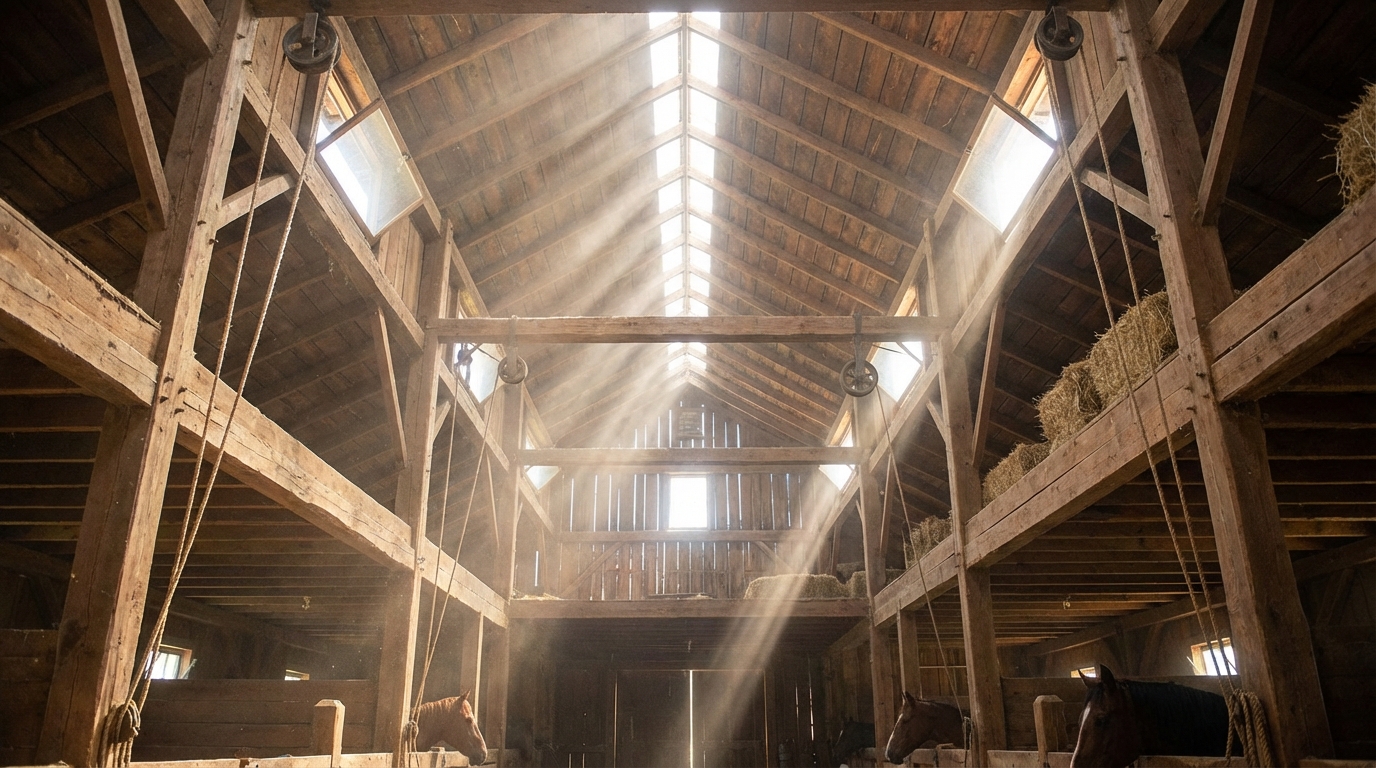
Ensuring proper ventilation in horse stable designs requires a combination of passive airflow features and mechanical assists to remove dust, moisture, and ammonia. Why does this matter? Poor air quality is the leading cause of respiratory disease in stalled horses. You need a system that constantly exchanges stale air for fresh air without creating dangerous drafts.
Utilize Ridge and Gable Vents
Ridge vents located at the peak of the roof allow warm, moist air to escape naturally as it rises. Gable vents on the end walls provide an additional exit point for heat trapped in the upper levels of the barn.
- Continuous ridge vents offer the most consistent airflow.
- Gable vents can be styled to match the barn’s aesthetic.
- This passive system works 24/7 without electricity costs.
Incorporate Eave and Soffit Openings
For the ridge vents to work, fresh air must enter from the bottom of the structure. Open eaves or soffit vents pull cool air in, creating a “chimney effect” that pushes stale air out through the roof.
- Keep these openings clear of bird nests or debris.
- Use mesh screens to prevent pests from entering the attic.
- Ensure even distribution of vents along both side walls.
Install Stall Fans for Summer Cooling
In areas with high humidity or low wind, mechanical fans become necessary to prevent heat stress. You should mount commercial-grade fans in the corner of each stall, directed toward the horse’s resting area.
- Use fans with enclosed motors to prevent dust-related fires.
- Keep all cords out of reach from curious horse teeth.
- Fans also help discourage flies and other biting insects.
Key Takeaway: A multi-layered ventilation strategy combines roof exits and eave intakes to maintain a healthy, breathable environment year-round.
| Ventilation Component | Function | Best For | |
|---|---|---|---|
| Ridge Vents | Exhausts hot air at the peak | Year-round air exchange | |
| Soffit Vents | Intake for fresh, cool air | Creating consistent flow | |
| Stall Fans | Directional cooling airflow | Extreme summer heat |
Proper airflow is the most critical factor in preventing chronic respiratory issues and maintaining a pleasant barn atmosphere.
What are the most durable flooring options for horse stable designs?
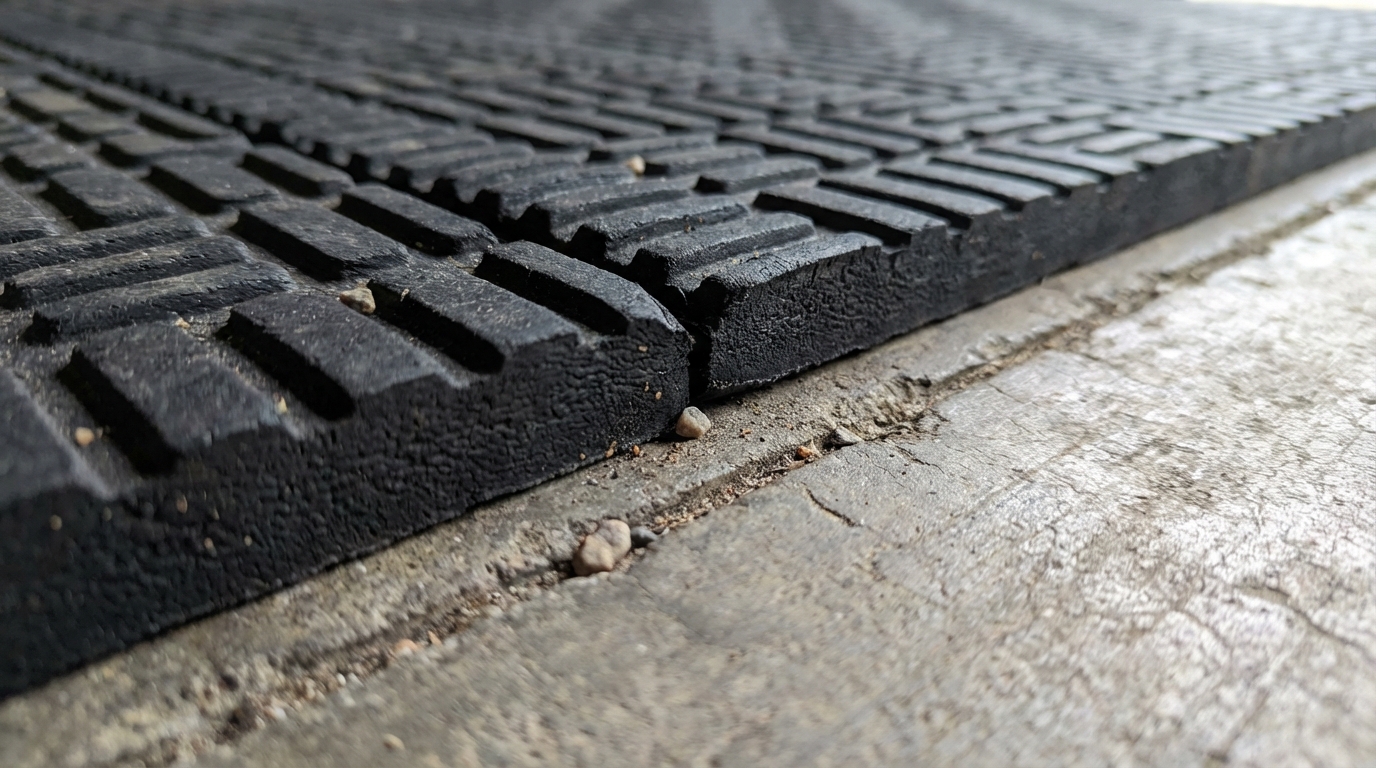
The most durable flooring options for horse stable designs balance structural strength with the physical comfort of the horse’s hooves and joints. Hard surfaces like plain concrete are easy to clean but can cause significant leg strain over time. You need a solution that provides traction, allows for drainage, and stands up to the heavy weight of the animals.
Heavy-Duty Interlocking Rubber Mats
Rubber mats are the industry standard for providing cushion and insulation against cold ground. Interlocking versions prevent the mats from shifting or curling at the edges, which creates a trip hazard.
- Easy to remove for deep cleaning of the sub-floor.
- Significantly reduces the amount of bedding needed.
- Provides a slip-resistant surface for horses and handlers.
Crushed Stone and Gravel Bases
Underneath your mats or bedding, a well-compacted base of crushed stone or “fines” is essential for drainage. This layer allows urine and moisture to leach into the ground rather than pooling on the surface.
- Use limestone or granite fines for maximum compaction.
- Ensure the base is at least 4 to 6 inches deep.
- Re-level the base every few years to prevent low spots.
Textured Concrete in High-Traffic Aisles
Concrete is the best choice for main aisles and wash bays because it can handle heavy equipment and constant water. However, it must have a broom-finished or “brushed” texture to prevent horses from slipping.
- Resists wear and tear better than any other material.
- Can be sloped toward drains for easy wash-downs.
- Provides a professional, clean look to the facility.
Key Takeaway: Combining a porous sub-base with high-quality rubber mats creates a floor that is both durable for the owner and comfortable for the horse.
| Flooring Layer | Material Recommendation | Benefit | |
|---|---|---|---|
| Surface | Interlocking Rubber Mats | Joint protection and grip | |
| Sub-Base | Compacted Stone Fines | Drainage and stability | |
| High Traffic | Textured Concrete | Longevity and easy cleaning |
Selecting the right flooring sequence prevents “pawing” damage and reduces the long-term risk of equine lameness.
Which door styles work best for modern horse stable designs?
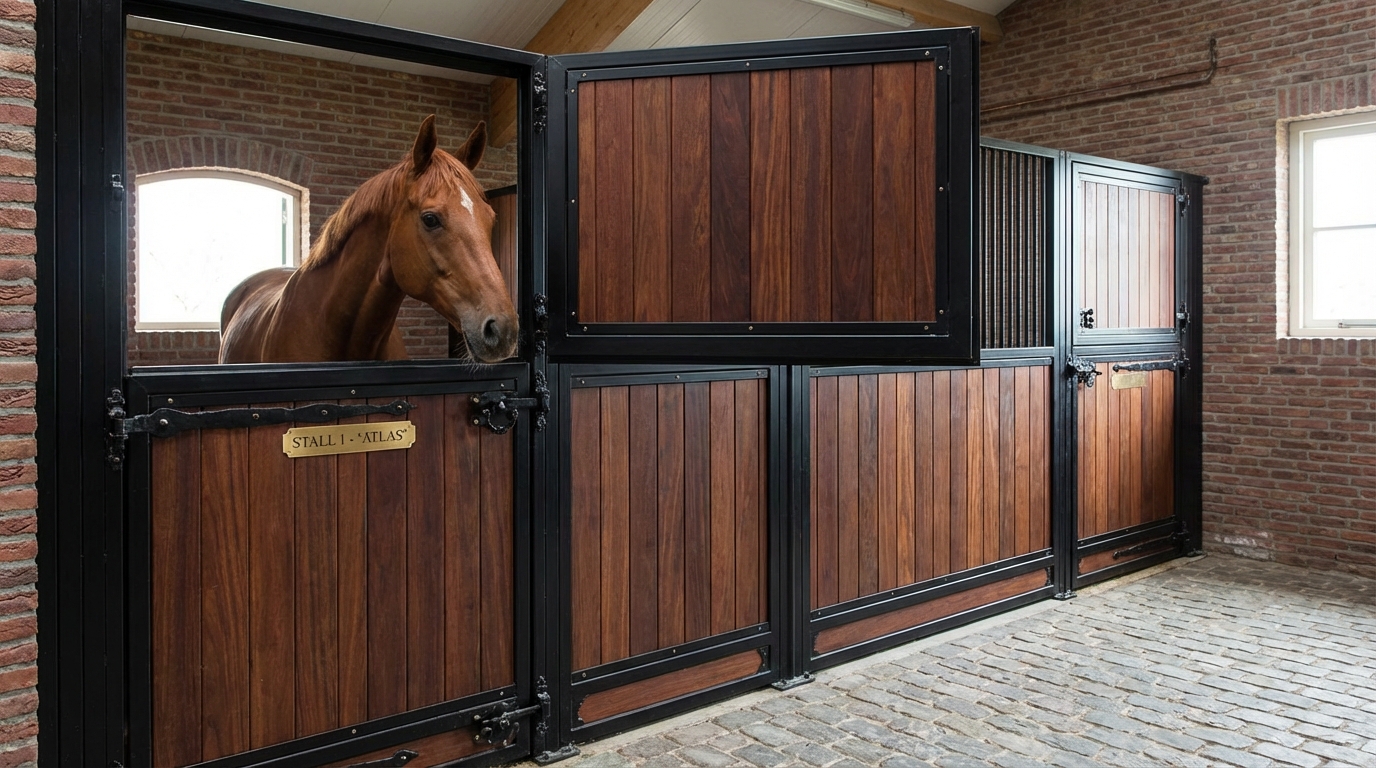
Modern horse stable designs benefit most from doors that prioritize safety, ease of operation, and ventilation. Here is the deal: a heavy, swinging wooden door can be dangerous in high winds and difficult to manage with a horse in hand. You should choose doors that maximize the footprint of your barn while providing secure containment.
Functional Dutch Doors for Exterior Access
Dutch doors are divided horizontally, allowing the top half to remain open while the bottom half keeps the horse safely inside. This style is perfect for stalls that open directly to a paddock or pasture.
- Enhances ventilation and allows horses to socialize.
- Can be closed completely during extreme weather.
- Provides a classic, charming look to the barn exterior.
Smooth-Sliding Interior Aisle Doors
Sliding doors are the preferred choice for barn aisles because they do not swing out into the walking path. This prevents accidents and allows for narrower aisle designs if space is at a premium on your property.
- Use heavy-duty tracks and rollers for longevity.
- Include a “stay roller” at the bottom to prevent swinging.
- Can be operated easily with one hand while leading a horse.
Steel Entry Gates for Maximum Durability
For the main barn entrance, large steel sliding doors or overhead doors offer the best protection against the elements and intruders. Steel structure components are preferred here because they do not warp or sag like wood.
- Resistant to wind damage in hurricane-prone regions.
- Low maintenance and can be painted to match any color.
- Provides a wide opening for tractors and hay deliveries.
Key Takeaway: Sliding doors save space and improve safety, while Dutch doors enhance airflow and horse mental well-being.
| Door Type | Best Use Case | Main Advantage | |
|---|---|---|---|
| Sliding | Main Aisle Stalls | Space-saving and safe | |
| Dutch | Exterior Stall Walls | Superior ventilation | |
| Steel Overhead | Main Barn Entry | High security and durability |
Investing in high-quality hardware ensures that your doors remain easy to operate and secure for the life of the building.
How do I plan efficient storage in horse stable designs?
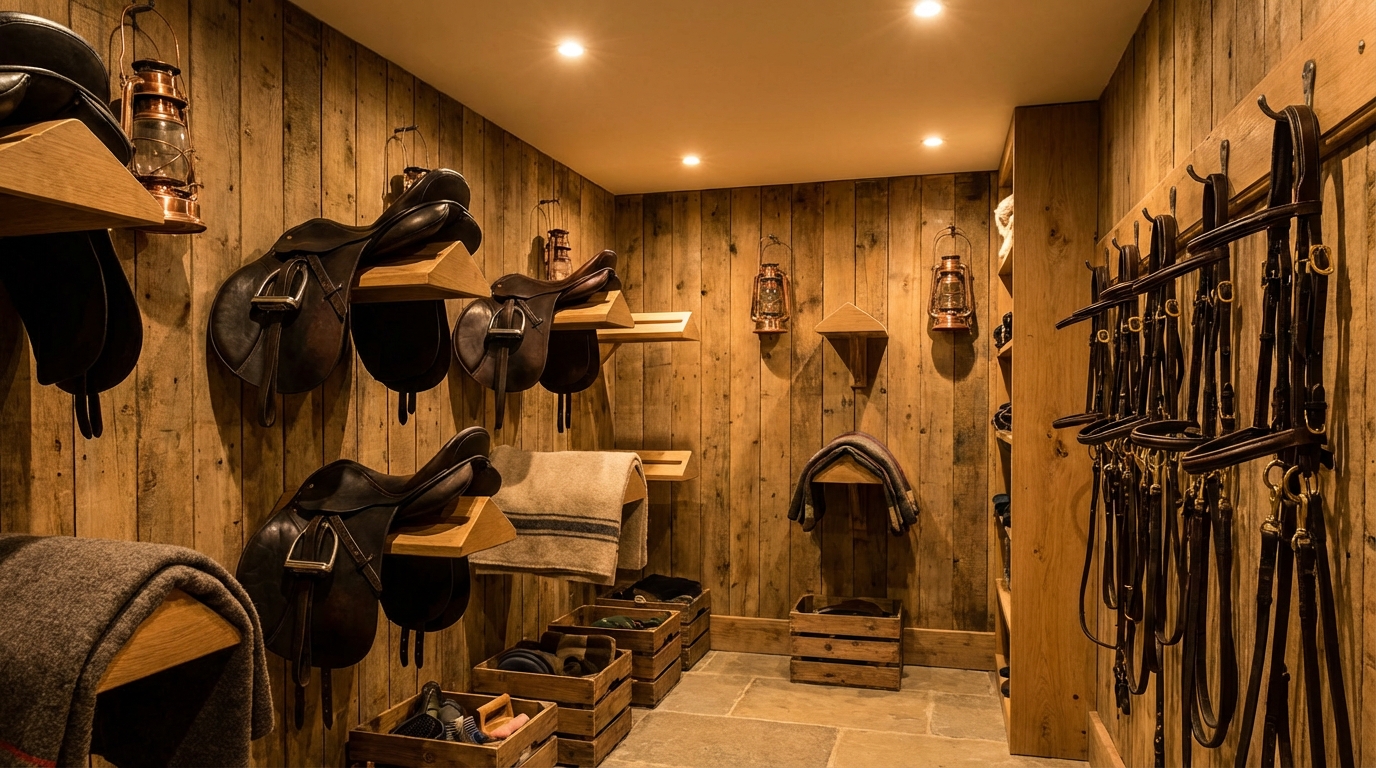
Efficiency in horse stable designs is largely determined by how well you organize feed, tack, and equipment. A cluttered barn is not just an eyesore; it is a safety hazard for both humans and animals. You need to plan for dedicated storage zones that are sealed off from rodents and protected from the elements.
Climate-Controlled Tack Rooms
Leather equipment like saddles and bridles is expensive and sensitive to mold and extreme temperatures. A separate, insulated tack room allows you to maintain a consistent environment that preserves your gear.
- Use vertical wall racks to maximize floor space.
- Include a sink for cleaning bits and tack.
- Ensure the room is well-lit for early morning prep.
Rodent-Proof Feed Storage Rooms
Why does this matter? Mice and rats are attracted to grain and can spread diseases to your horses. Your feed room should be a fortress, using metal bins or a sealed room to keep pests away from your horse’s nutrition.
- Store supplements in airtight containers to maintain freshness.
- Use a “first-in, first-out” system to prevent spoilage.
- Keep the floor clear of spilled grain to discourage visitors.
Side Bays for Hay and Bedding
Storing large quantities of hay inside the main barn can be a fire risk and creates significant dust. Dedicated side bays or lean-to structures keep your forage dry and accessible without cluttering the main stable area.
- Elevate hay on pallets to prevent moisture wicking from the ground.
- Ensure the area is well-ventilated to prevent spontaneous combustion.
- Place storage near the entry for easy delivery truck access.
Key Takeaway: Dedicated, sealed storage areas protect your financial investment in equipment and feed while improving barn safety.
| Storage Area | Ideal Features | Protection Against | |
|---|---|---|---|
| Tack Room | Insulation and de-humidifier | Mold and dry rot | |
| Feed Room | Metal bins and sealed door | Rodents and moisture | |
| Hay Bay | Pallets and high airflow | Fire and mold |
Keeping storage areas organized reduces the time spent on chores and increases the overall enjoyment of your equestrian property.
What lighting solutions enhance safety in horse stable designs?
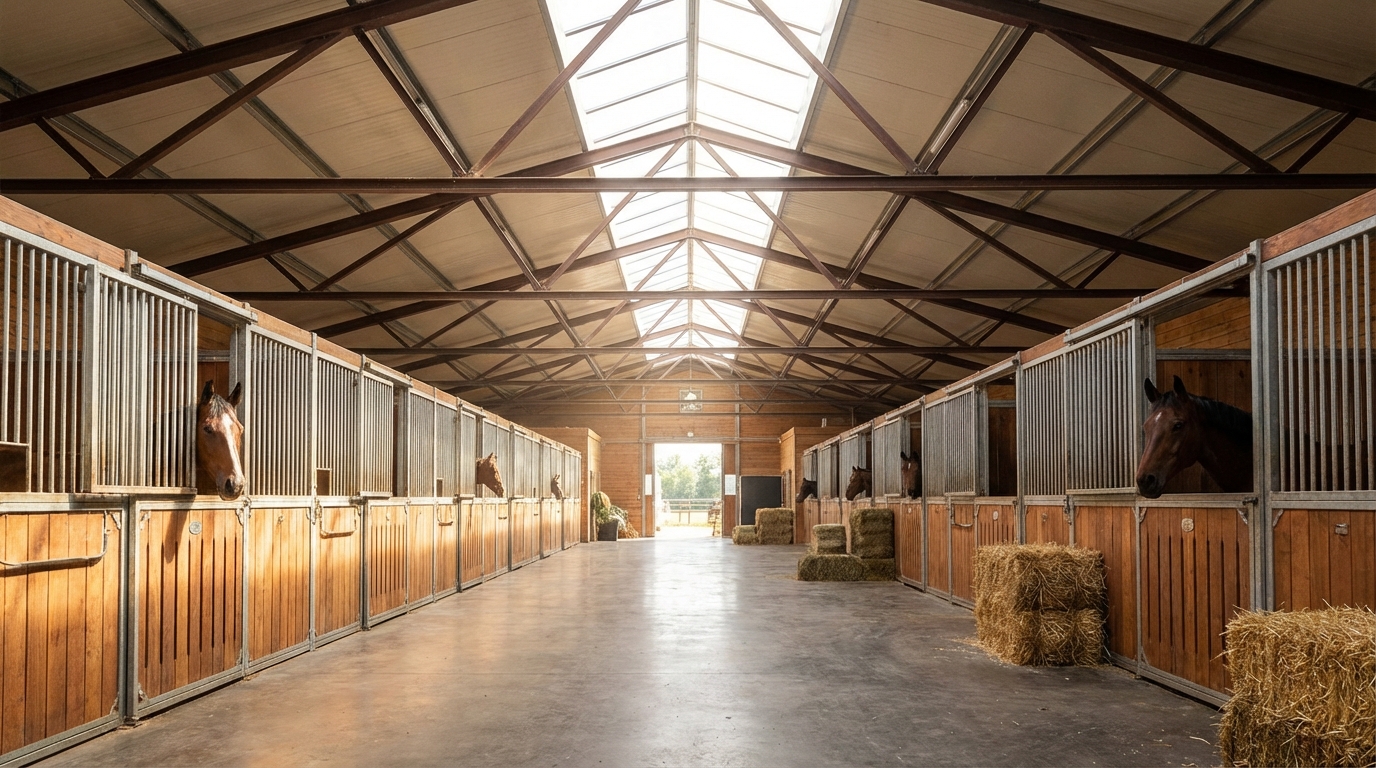
Safety in horse stable designs relies heavily on consistent, shadow-free lighting that allows handlers to spot hazards and health issues. Barns are naturally dusty and often damp environments, which can be hard on standard electrical fixtures. You need to choose industrial-grade solutions that are specifically rated for agricultural use.
Vapor-Tight LED Overhead Fixtures
LED lights are the superior choice for barns because they are energy-efficient and generate very little heat. Vapor-tight housings protect the bulbs and wiring from the fine dust and moisture common in stable environments.
- Lasts significantly longer than traditional incandescent bulbs.
- Provides “instant-on” light even in freezing temperatures.
- Reduces the risk of electrical fires caused by dust accumulation.
Natural Light via Skylights or Clear Panels
Nothing beats natural sunlight for horse health and mood. Incorporating translucent roof panels or high-set windows allows you to light the barn for free during daylight hours while providing a connection to the outside world.
- Reduces electricity costs during the day.
- Helps maintain the horse’s natural circadian rhythm.
- Use frosted panels to prevent harsh, direct sun spots.
Exterior Security and Task Lighting
You should never overlook the area surrounding the barn. Motion-activated floodlights at the entrances and low-intensity path lights ensure that you can safely navigate the property during late-night checks or early-morning feedings.
- Lights up the perimeter to discourage intruders or predators.
- Ensures safe footing in paddocks and loading areas.
- Use timers to automate the lighting schedule.
Key Takeaway: A combination of vapor-tight LEDs and natural daylighting provides the safest and most cost-effective illumination for equine facilities.
| Lighting Type | Recommendation | Benefit | |
|---|---|---|---|
| Main Aisle | Vapor-tight LED strips | Energy efficiency and safety | |
| Stall Light | High-mounted, caged LED | Prevents bulb breakage | |
| Natural | Translucent roof panels | Zero-cost daytime light |
Strategic lighting placement ensures that every corner of the barn is visible, reducing accidents during grooming and vet visits.
How should I layout a wash stall for horse stable designs?
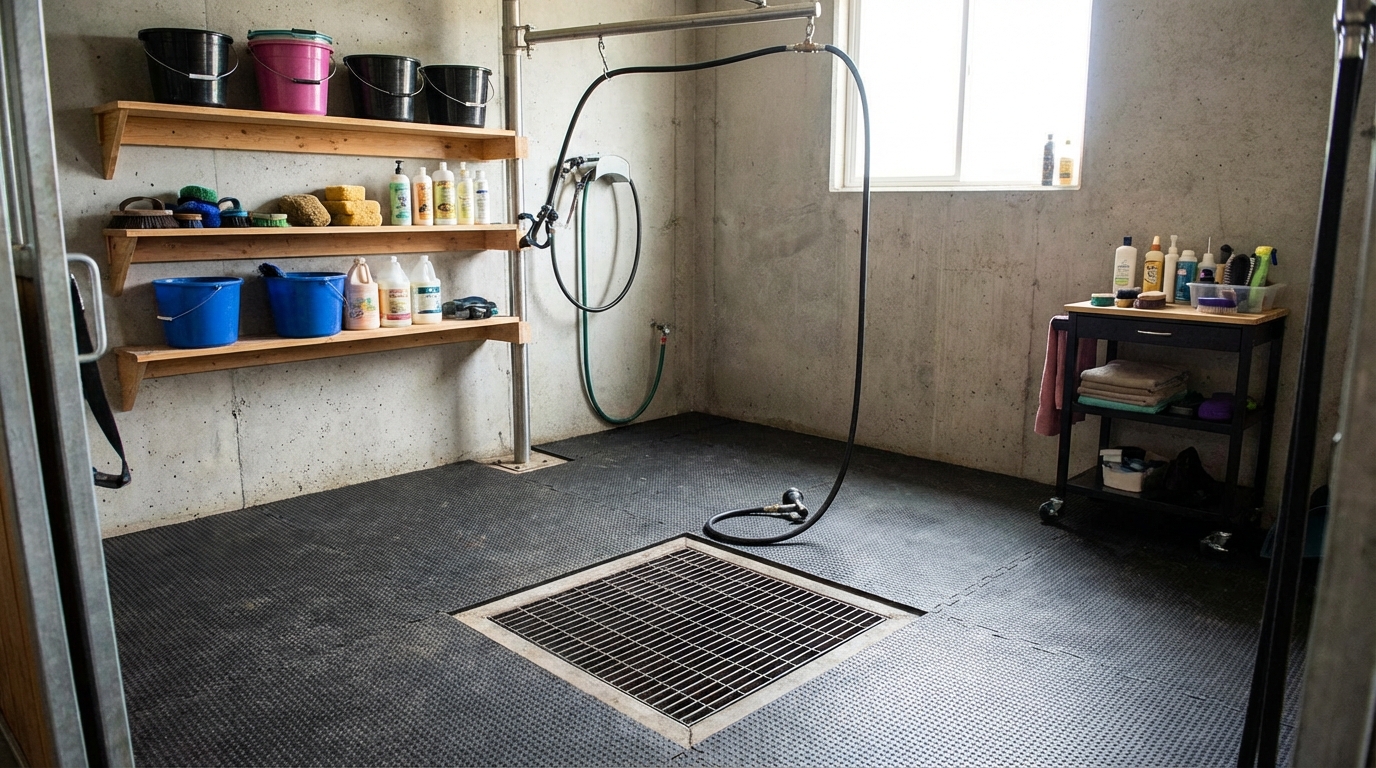
A well-designed wash stall is a luxury that quickly becomes a necessity for serious horse owners. In horse stable designs, this area must handle constant water flow, high humidity, and the heavy weight of a wet horse. The layout should prioritize quick drainage and a safe, non-slip environment for both the horse and the handler.
Install Non-Slip Rubberized Flooring
The floor is the most critical element of a wash stall. You must use a highly textured, non-slip rubber surface that remains grippy even when covered in soapy water.
- Interlocking mats with drainage holes are ideal.
- Ensure the floor has a 2% slope toward a central drain.
- Avoid plain concrete, which becomes a “skating rink” when wet.
Overhead Swinging Hose Booms
Why does this matter? Dragging hoses across the floor is a major trip hazard and can spook a nervous horse. An overhead boom keeps the hose off the ground and allows you to move 360 degrees around the animal with ease.
- Keeps the hose clean and prevents kinks.
- Reduces wear and tear on plumbing fixtures.
- Allows for precise water application without a struggle.
Waterproof Wall Panel Systems
Traditional wood walls will quickly rot and grow mold in a wash bay. You should use waterproof materials like PVC panels or specialized metal siding that can be hosed down and sanitized regularly.
- Resists mold, mildew, and chemical damage.
- Provides a clean, professional appearance.
- Easy to install over existing structural frames.
Key Takeaway: Prioritizing drainage and non-slip surfaces makes the wash stall a safe, efficient area for grooming and therapy.
| Component | Design Standard | Goal | |
|---|---|---|---|
| Flooring | Textured rubber over sloped base | Slip prevention | |
| Plumbing | Overhead boom with hot/cold mix | Ease of movement | |
| Walls | PVC or metal waterproof panels | Moisture resistance |
A dedicated wash bay keeps moisture out of the main barn aisles, preserving the structural integrity of the rest of the facility.
What is the recommended aisle width for horse stable designs?
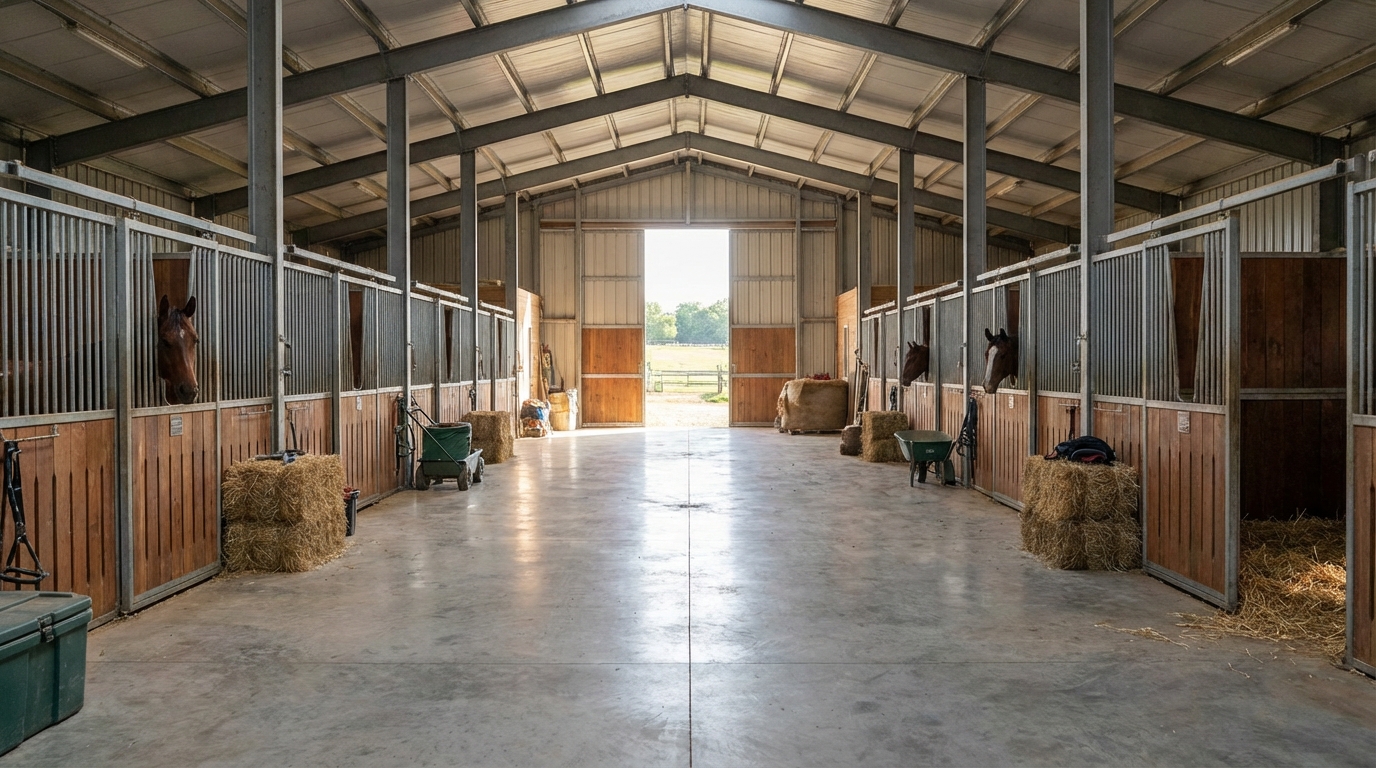
The recommended aisle width for horse stable designs is determined by the need for two horses to pass safely and for equipment to navigate the space. Here is the deal: a narrow aisle feels claustrophobic and increases the risk of a horse kicking another as they pass. Most professional designs aim for a width that balances efficiency with safety.
Aim for a Minimum 12-Foot Center Aisle
A 12-foot aisle is the standard for most boarding and training facilities. This width allows for a horse to be cross-tied on one side while another horse or a wheelbarrow passes safely on the other.
- Provides a spacious, open feel that improves ventilation.
- Accommodates tractors for stall cleaning and hay delivery.
- Reduces the risk of “aisle aggression” between horses.
Plan for Emergency Access Clearances
In the event of a medical emergency or a fire, you need enough room for emergency vehicles or large trailers to get close to the stalls. Wide aisles ensure that you can evacuate animals quickly and without bottlenecks.
- Check local fire codes for minimum clearance requirements.
- Ensure the ceiling height matches the wide aisle proportions.
- Keep the aisle completely clear of equipment and debris.
Incorporate Recessed Cross-Tie Areas
If you have a narrower barn, consider building recessed “pockets” or grooming bays where a horse can be tied out of the main traffic flow. This keeps the thoroughfare open for movement while allowing you to work on an animal safely.
- Ideal for smaller private barns with limited footprints.
- Allows for dedicated storage of grooming tools nearby.
- Improves the overall flow of the daily barn routine.
Key Takeaway: A 12-foot aisle width is the optimal balance for safety, ventilation, and the movement of equipment and animals.
| Width Category | Dimension | Best For | |
|---|---|---|---|
| Narrow | 10 Feet | Private, low-traffic barns | |
| Standard | 12 Feet | Professional boarding/training | |
| Wide | 14+ Feet | Large breeding or show facilities |
Ample aisle space prevents accidents and creates a much more pleasant working environment for barn staff and owners.
How do steel materials compare in modern horse stable designs?
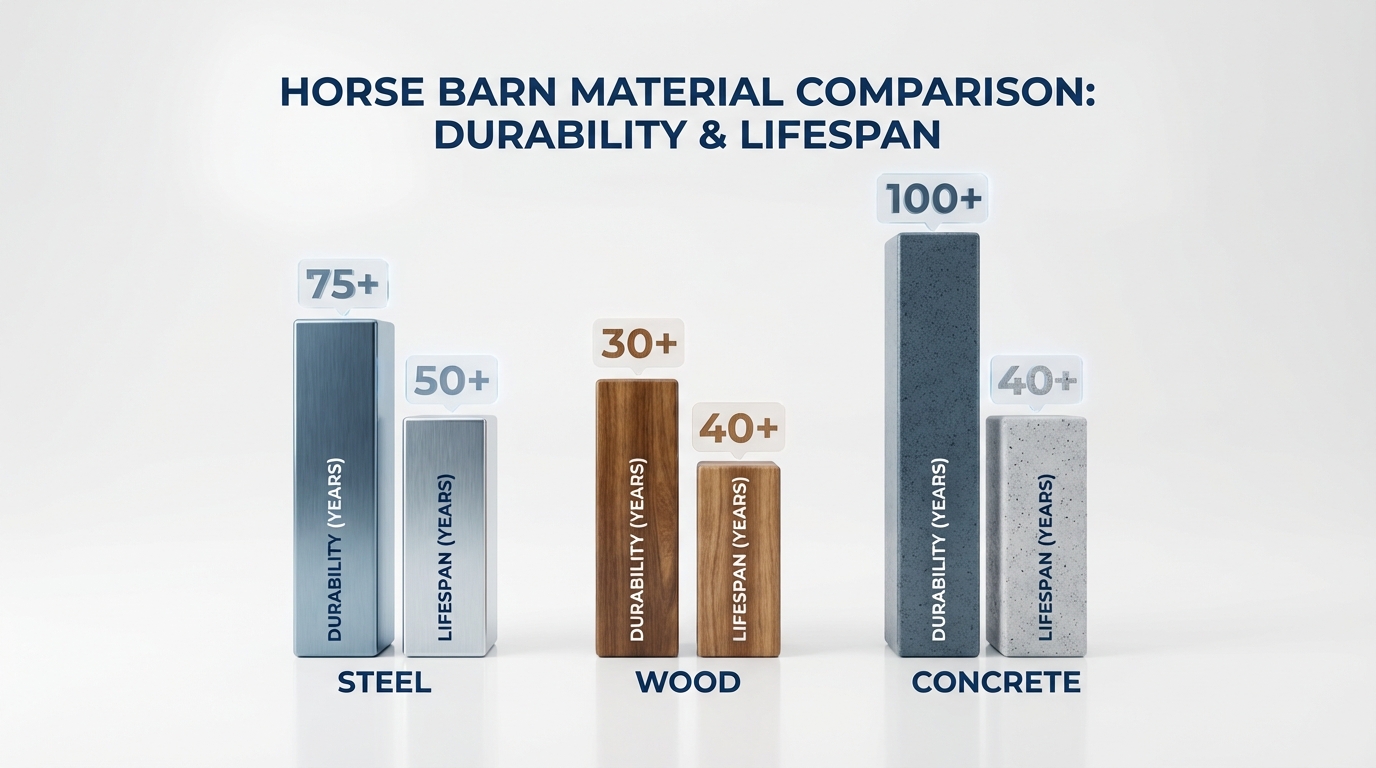
When comparing materials for modern horse stable designs, steel consistently outperforms wood in terms of fire resistance, maintenance requirements, and long-term durability. While the initial cost may be different, the total cost of ownership is significantly lower with steel. You are essentially investing in a “lifetime” building that won’t rot, warp, or be eaten by pests.
Superior Fire and Pest Resistance
One of the greatest fears for any horse owner is a barn fire. Steel is non-combustible, providing a much higher safety margin than wood structures. Additionally, steel is impervious to termites, carpenter ants, and horses that like to “crib” or chew on wood.
- Significantly lower insurance premiums in many regions.
- Eliminates the need for toxic chemical pest treatments.
- Protects the structural integrity from destructive chewing.
Long-Term Maintenance Cost Savings
Wood barns require constant painting, staining, and the replacement of rotten boards. Steel buildings feature high-quality coatings that are designed to last for decades without significant fading or corrosion.
- No need for frequent structural repairs due to rot.
- Modern steel is hot-dip galvanized for extreme rust resistance.
- Simply hosing down the exterior keeps it looking new.
Customizable Clear-Span Engineering
Steel allows for “clear-span” designs, meaning the roof is supported by the exterior walls without the need for interior columns. This gives you total flexibility to arrange your stalls, aisles, and tack rooms exactly how you want them.
- Easier to modify the interior layout in the future.
- Provides a much larger, unobstructed interior space.
- Ideal for integrating indoor riding arenas with stabling.
Key Takeaway: Steel structures offer unmatched fire safety and structural longevity, making them the most cost-effective choice over the building’s lifespan.
| Material Feature | Wood Barns | Steel Barns | |
|---|---|---|---|
| Fire Rating | Combustible (High Risk) | Non-Combustible (Safe) | |
| Pest Resistance | Low (Termites/Chewing) | Total (Immune) | |
| Lifespan | 20–30 Years | 50+ Years |
Choosing steel for your horse barn ensures that your facility remains a safe, low-maintenance asset for generations of riders and horses.
Conclusion
Designing the perfect equine facility requires a balance of aesthetic appeal and rigorous structural standards. By implementing these 27 tips and ideas, you ensure that your barn is not only beautiful but also a safe, efficient sanctuary for your horses. Whether you are building a small private stable or a large professional training center, focusing on ventilation, durable flooring, and efficient layouts will pay dividends in horse health and owner satisfaction.
Ready to bring your dream barn to life with industrial-grade durability and expert engineering? Contact us today for a customized quote on a high-quality steel horse barn tailored to your specific needs.
FAQ
How do I choose the best site for my horse barn?Prioritize a high-ground location with a 1-2% grade to ensure natural drainage. You should also consider prevailing winds for summer cooling and check local zoning codes for necessary setbacks.
Is a 10×10 stall big enough for a horse?A 10×10 stall is adequate for ponies or small breeds, but a 12×12 stall is the recommended standard for average-sized horses to ensure they can move and rest comfortably.
What is the best way to handle manure drainage in a barn?Use a well-compacted base of crushed stone or gravel under rubber mats. For wash stalls, ensure a 2% slope toward a central drain to prevent standing water and slip hazards.
Can I customize the interior of a steel barn?Yes, because steel barns use clear-span engineering, there are no interior support columns required. This allows you to place stalls, aisles, and storage rooms in any configuration you choose.
How do I prevent my horse from chewing on the barn?Choosing a steel structure is the most effective solution, as horses cannot chew through metal. For wood barns, you may need to install metal “chew guards” on all exposed edges.