
Mastering Warehouse Construction: A Strategic Guide for Industrial Projects
Warehouse construction is the specialized process of designing and building industrial facilities that provide protected environments for storing goods while optimizing logistical throughput and worker productivity.
Many developers face a nightmare during the early stages of industrial expansion: components arrive at the job site only to reveal critical defects or missing materials that halt progress for weeks. This lack of coordination between design and manufacturing leads to mounting costs and structural compromises that no project manager should have to endure. By adopting an integrated approach to warehouse construction , you can eliminate these logistical failures and ensure your facility is built to the highest standards of modern engineering.
What are the primary types of warehouse construction projects?
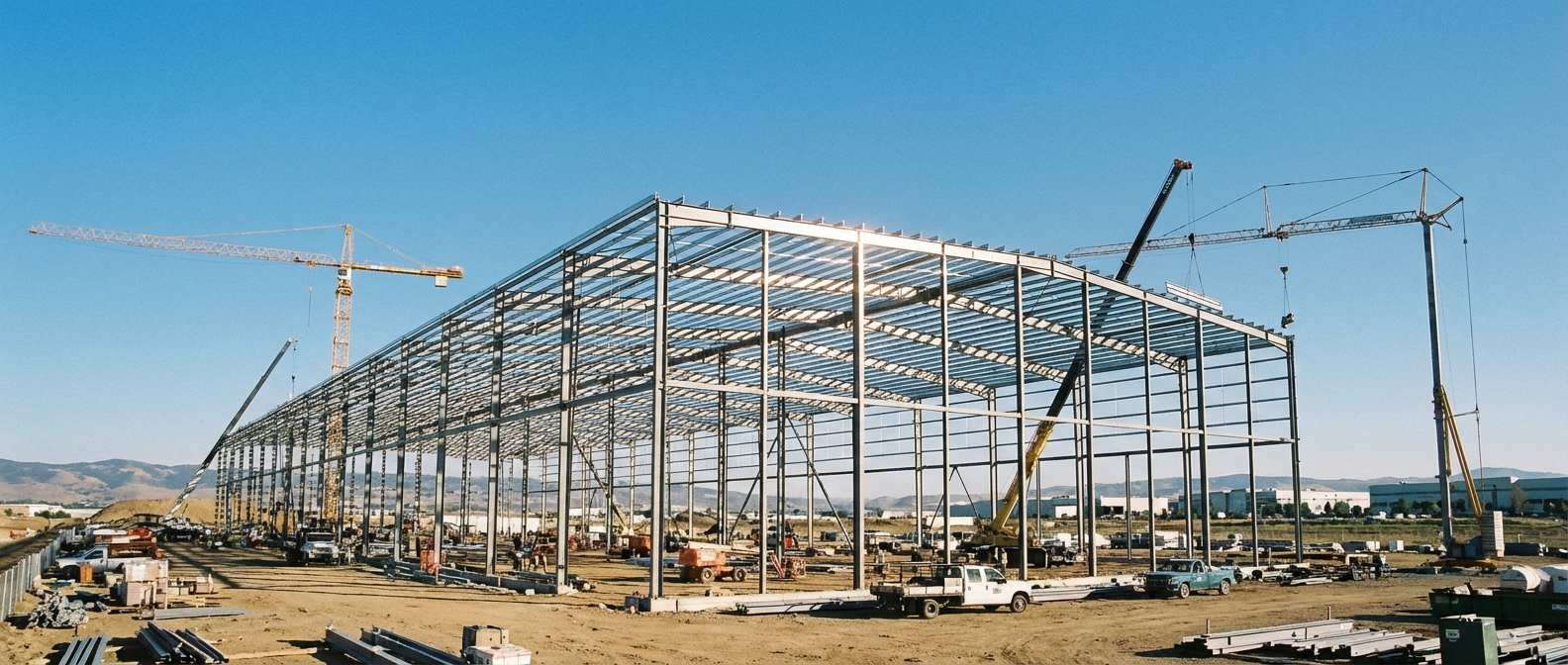
Primary warehouse projects are categorized based on their environmental controls and the specific storage needs of the commodities they are intended to protect. When you begin a warehouse construction project, selecting the right category is the foundation of your operational success.
What defines general storage facilities?
These structures provide essential space for bulk or rack storage and are typically the most common industrial builds. You must decide between heated and unheated versions depending on the local climate and product sensitivity.
Look at it this way:
- They include bin storage and wide aisle spaces.
- They feature dedicated receiving and shipping zones.
- They accommodate packing, crating, and office areas.
How do refrigerated warehouses differ?
Refrigerated facilities are engineered to preserve perishable goods through advanced thermal insulation and specialized mechanical systems. You will need to account for both freeze and chill spaces during the structural layout.
The truth is:
- They require high-performance insulated panels.
- They integrate complex mechanical cooling zones.
- They must have airtight dock seals to maintain temperature.
Are there specialized hazard facilities?
Special-designed warehouses are built to meet strict regulatory requirements for storing hazardous chemicals, ammunition, or flammable liquids. You must prioritize fire suppression and containment features in these high-risk environments.
Here is the kicker:
- They utilize vapor barriers for humidity control.
- They include specialized liquid storage containment.
- They are built with reinforced structural safety zones.
Key TakeawayIdentifying your specific storage type early ensures that the engineering team integrates the necessary thermal, safety, and logistical features to support your business model.
| Warehouse Type | Primary Focus | Key Feature | |
|---|---|---|---|
| General Storage | Bulk/Rack Efficiency | Wide Aisle Design | |
| Refrigerated | Temperature Control | Insulated Wall Panels | |
| Hazardous | Safety & Compliance | Vapor Barriers |
Understanding these categories allows you to align your budget with the technical requirements of your inventory.
Why is the design phase critical for warehouse construction?
The design phase is critical because it ensures that architectural intent is perfectly aligned with manufacturing capabilities and your future operational goals. During warehouse construction, a meticulous design review prevents the “unbuildable” designs that often lead to field modifications and wasted materials.
How does engineering impact manufacturability?
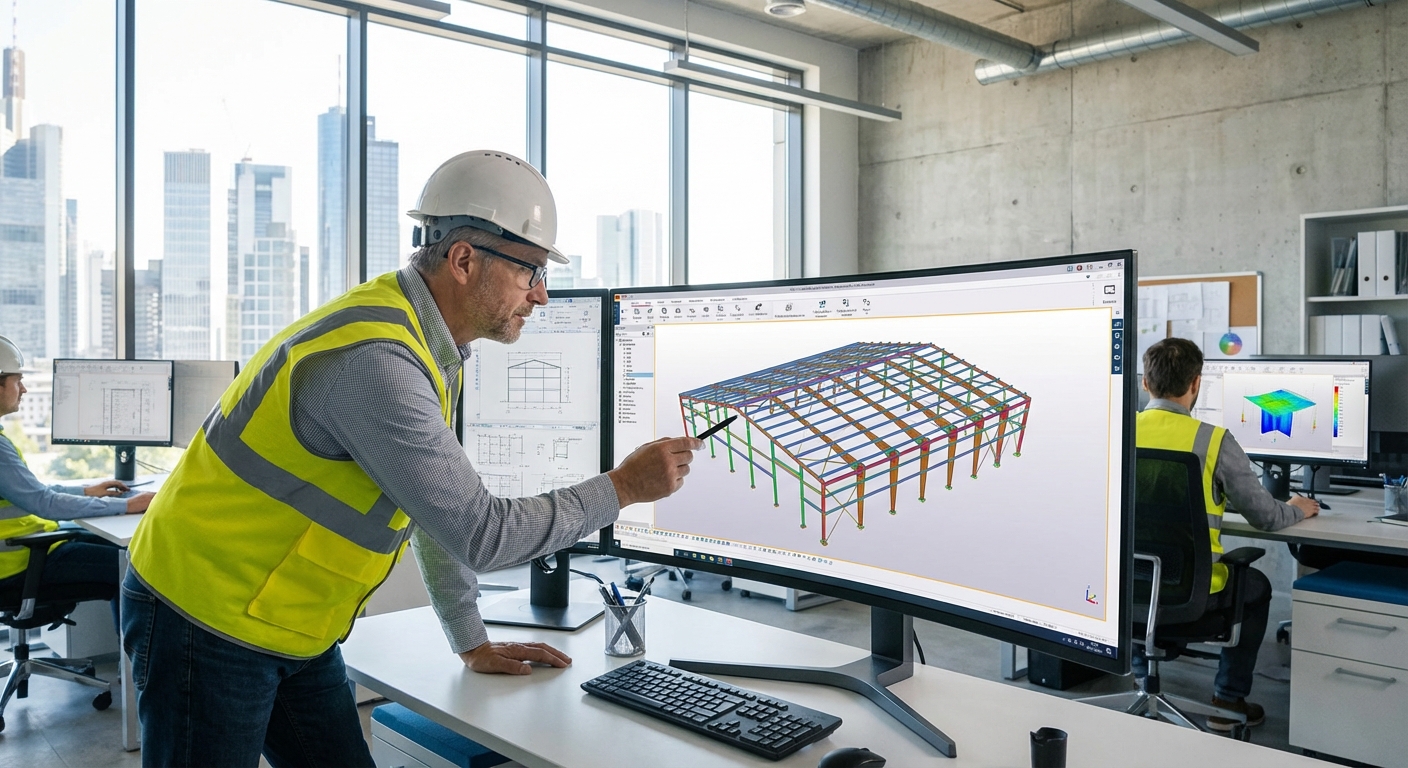
Detailed engineering reviews check every connection and bolt hole before the steel ever hits the fabrication line. You avoid the frustration of mismatched components when your designer and manufacturer work in a single, integrated system.
What does this mean for you?
- It reduces the need for onsite welding or cutting.
- It ensures components fit perfectly during assembly.
- It streamlines the transition from 3D models to production.
Can you plan for future growth?
Flexible design allows your facility to adapt to business changes, such as adding new mezzanine levels or office spaces. You should look for “flex” configurations that allow for easy expansion of loading docks or parking.
Consider this:
- Designs should include extra structural capacity for rooftop HVAC.
- Site layouts must account for future truck maneuvering.
- Interior walls should allow for easy reconfiguration.
Key TakeawayInvesting in a robust design phase eliminates costly onsite errors and provides the structural flexibility needed to grow your operations without major renovations.
| Design Element | Benefit | Long-term Impact | |
|---|---|---|---|
| Manufacturability Review | Zero field modifications | Faster project completion | |
| Structural Reserve | Rooftop equipment support | Operational versatility | |
| Flex Configuration | Modular expansion paths | Lower future capital spend |
A well-designed blueprint acts as a roadmap for both the factory floor and the construction site.
How do structural loads impact warehouse construction?
Structural loads impact your facility by determining the required strength and thickness of every steel member to ensure the building remains safe under environmental stress. During warehouse construction , engineers must calculate precise factors for wind, snow, and seismic activity based on your specific geographical location.
How are environmental loads managed?
Engineers design the primary frames to resist lateral forces from wind and vertical pressures from heavy snow accumulation. You must ensure that your roof design accounts for wind uplift, which is a major cause of industrial damage in open areas.
Think about it:
- Racking in seismic zones needs extra bracing.
- Wind velocity is higher across typical warehouse zones.
- Roof copings must be reinforced against uplift forces.
Why are floor standards so important?
The floor slab must be engineered to carry the massive dead loads of stored products and the dynamic loads of heavy forklift traffic. You require high flatness and levelness (FF/FL) ratings to operate high-lifting equipment safely at peak heights.
The bottom line is:
- Concrete slabs should be treated with hardeners.
- Floors must withstand abrasion from steel-wheeled trucks.
- Level surfaces prevent forklift tipping at high bays.
Key TakeawayAccounting for environmental and operational loads ensures the long-term integrity of your structure and the safety of the personnel working inside.
| Load Category | Specific Consideration | Recommended Action | |
|---|---|---|---|
| Seismic | Rack Bracing | Use reinforced steel grades | |
| Wind | Roof Uplift | Strengthen metal roof copings | |
| Operational | Floor Flatness | Apply concrete hardeners |
Structural calculations provide the backbone of a safe and durable industrial environment.
What are the essential components of warehouse construction?
The essential components of industrial builds include the primary steel frames, secondary members, and specialized cladding systems that arrive as a complete, installation-ready kit. In warehouse construction, the quality of these components directly dictates the speed of assembly and the durability of the finished facility.
What makes up the primary frame?
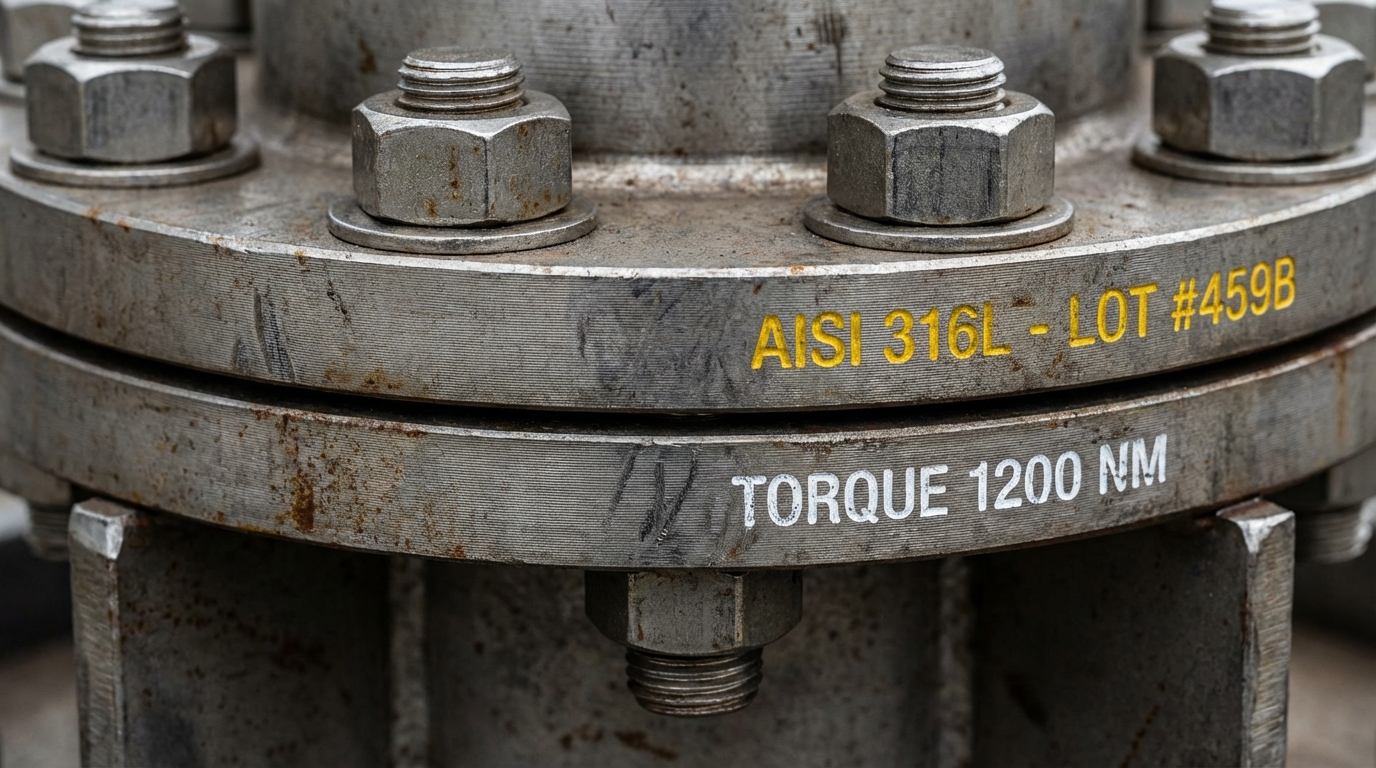
The primary frame consists of heavy-duty H-beams and columns that support the weight of the entire building and its contents. You should ensure these members are factory-welded and pre-drilled to ensure they align perfectly when they arrive at your site.
Here is the kicker:
- It provides the clear span for large machinery.
- It utilizes high-strength bolts for all connections.
- It determines the overall height and volume of the space.
Why focus on the roofing system?
Modern roofing systems use durable metal panels and specialized coatings to reflect solar radiation and prevent water infiltration. You need a system that integrates seamlessly with your wall panels to create a completely sealed envelope.
What does this mean for you?
- White coatings reduce summer HVAC loads.
- Proper seals minimize air and water infiltration.
- Purlins provide the necessary secondary support.
Key TakeawayBy utilizing a complete, factory-verified component system, you can accelerate your erection timeline and eliminate the need for time-consuming field modifications.
| Component | Role | Material Benefit | |
|---|---|---|---|
| Primary Frame | Structural Skeleton | Clear span flexibility | |
| Secondary Members | Support Purlins | Increased load distribution | |
| Metal Cladding | Exterior Envelope | Weather and solar resistance |
High-quality components are the building blocks of a high-performance logistics hub.
How can efficiency be optimized in warehouse construction?
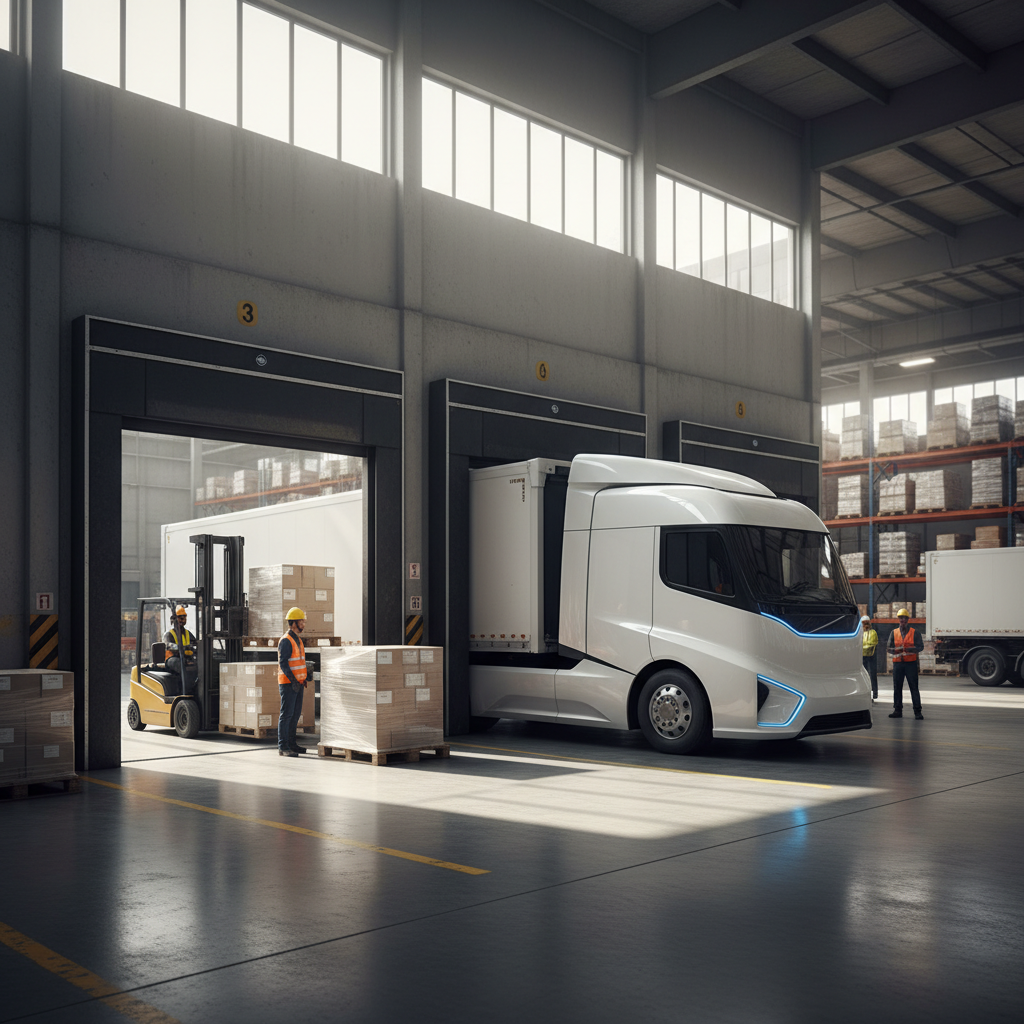
Efficiency is optimized by creating a layout that maximizes your vertical storage volume and streamlines the flow of goods from receiving to shipping. In the world of warehouse construction , every meter of saved travel distance for a forklift translates directly into improved operational profit.
How do you optimize dock placement?
Strategic placement of loading docks separates incoming and outgoing shipments to prevent bottlenecking and congestion. You should design dock heights to match standard truck beds, typically around 1.3 meters above the pavement.
Look at it this way:
- Separate doors for receiving and shipping reduce errors.
- Dock levelers accommodate varying truck heights.
- Interior dock space improves worker comfort in winter.
Why utilize high bays?
Higher bays allow you to take advantage of vertical space, significantly increasing your pallet capacity without expanding the building’s footprint. You can maximize your ROI by engineering the structure to support taller racking systems and automated pickers.
Consider this:
- High bays reduce the cost per pallet position.
- They require specialized lighting for deep aisles.
- Vertical storage optimizes your site’s land usage.
Key TakeawayA logically organized facility reduces personnel travel time and maximizes storage density, leading to lower operating costs and faster order fulfillment.
| Optimization Strategy | Operational Benefit | Structural Requirement | |
|---|---|---|---|
| Dock Separation | Reduced congestion | Dual-side site access | |
| High Bay Design | Increased storage density | Enhanced floor levelness | |
| Optimized Aisles | Faster forklift throughput | Strategic column spacing |
Efficiency begins with a floor plan that reflects your specific logistics workflow.
What sustainable practices are used in warehouse construction?
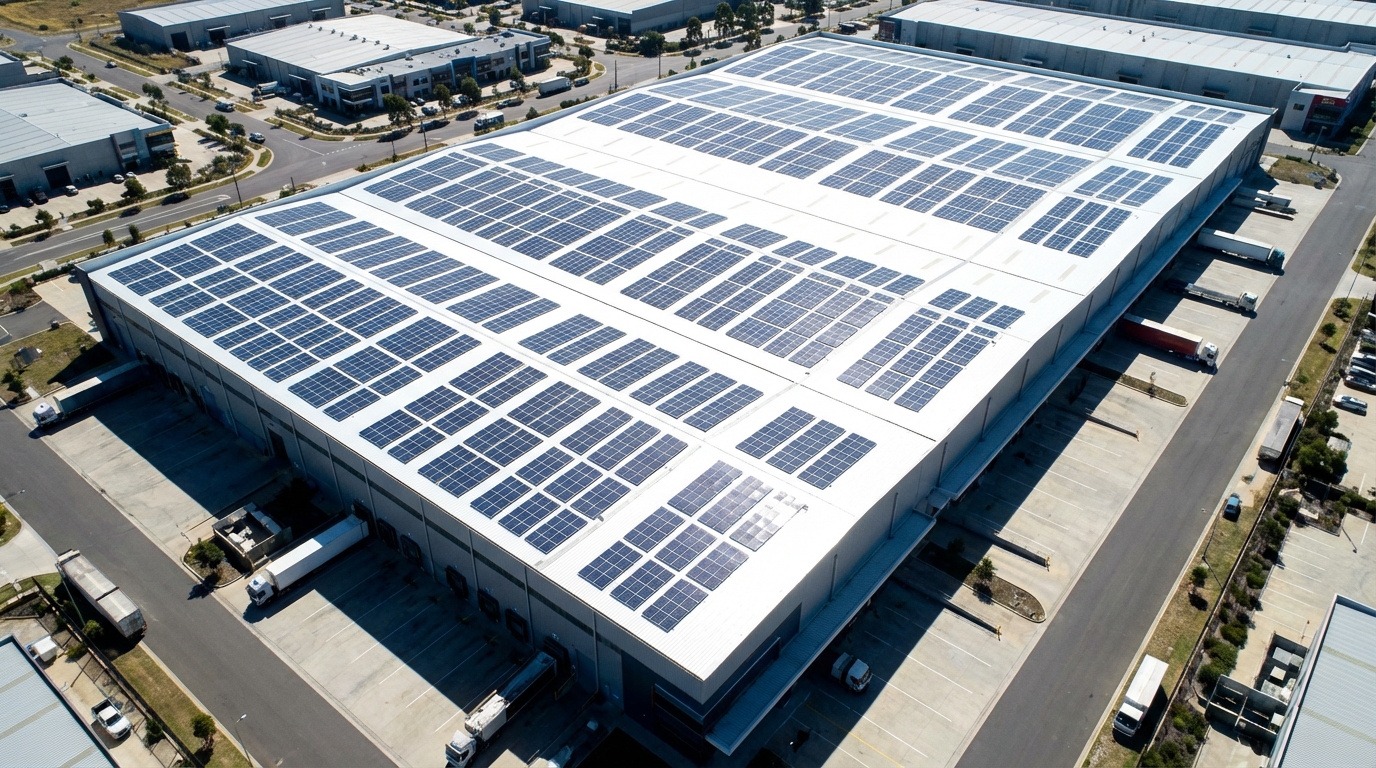
Sustainable practices focus on reducing the long-term carbon footprint and energy costs of your facility through smart material choices and renewable energy integration. Modern warehouse construction techniques often include features that improve worker comfort while simultaneously lowering utility bills.
Can white roofs save energy?
Installing a light-colored, reflective roof can reflect a massive percentage of solar radiation, which significantly lowers your cooling requirements in the summer. You benefit from a smaller required HVAC plant size, which reduces your initial capital expenditure.
The truth is:
- Reflective roofs improve worker productivity.
- They extend the lifespan of the roofing material.
- They contribute to overall building energy efficiency.
How is natural lighting integrated?
Incorporating skylights and wall-mounted translucent panels allows you to use daylight as your primary illumination source during the morning and afternoon. You should use motion-sensor LED systems to fill the gaps when natural light is insufficient.
Think about it:
- Daylighting reduces electricity consumption.
- It creates a more pleasant environment for workers.
- Smart controls adjust light levels automatically.
Key TakeawaySustainable buildings are not only better for the environment but also significantly cheaper to operate over their 20 to 30-year lifespan.
| Green Feature | Primary Benefit | Resource Saved | |
|---|---|---|---|
| Reflective Coating | Reduced HVAC load | Electricity | |
| Daylighting | Natural illumination | Lighting costs | |
| Solar Arrays | On-site power generation | Grid dependency |
Sustainability is a strategic investment that pays dividends through reduced operational overhead.
How is safety prioritized during warehouse construction?
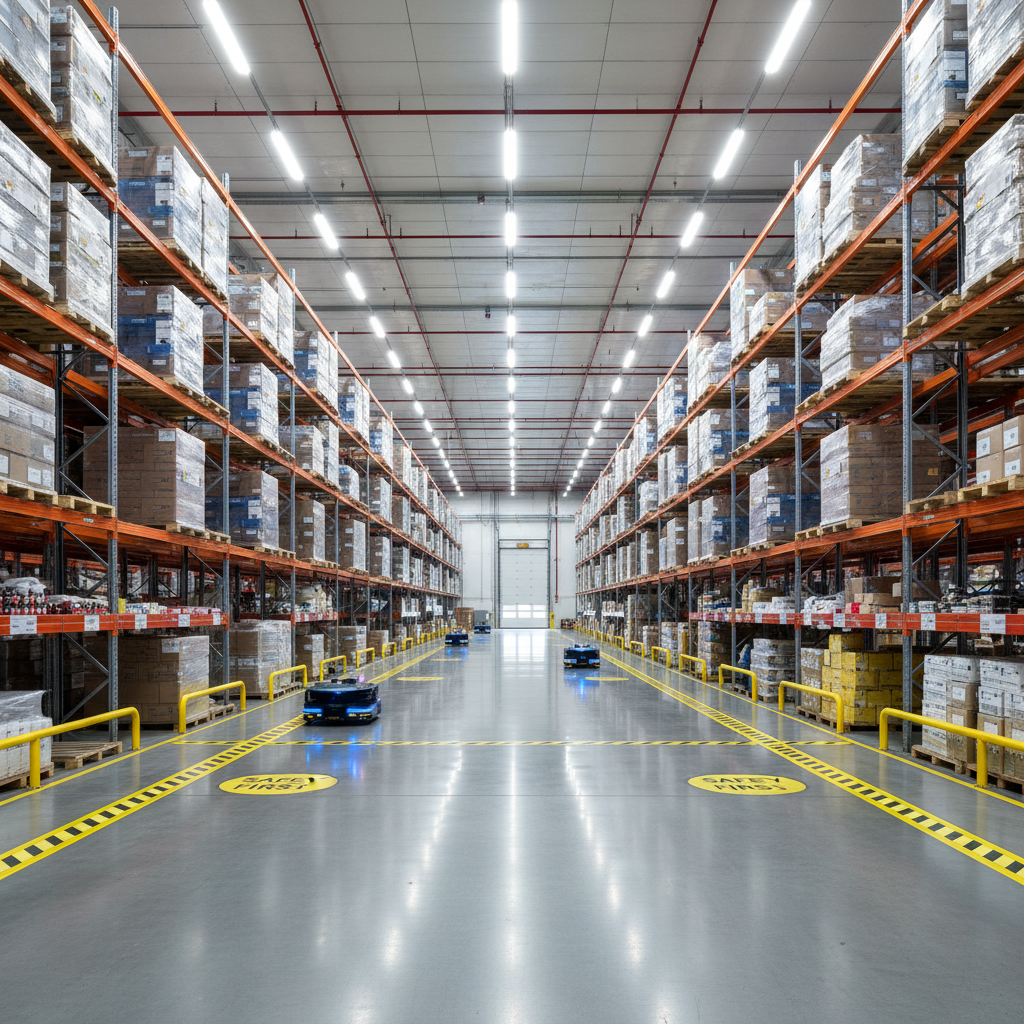
Safety is prioritized by adhering to strict life-safety codes that protect both your inventory and the employees who operate within the facility. During warehouse construction , every aspect of the design, from fire suppression to floor finishing, must be engineered to prevent occupational injuries.
How is fire protection engineered?
Fire sprinkler systems must be specifically designed to handle the commodity classification of the items you intend to store. You must evaluate your system’s adequacy if you switch from storing metal parts to flammable plastics or wood pallets.
What does this mean for you?
- High-hazard goods require specialized sprinklers.
- Proper egress paths must remain unobstructed.
- Firewalls prevent the spread of flames between zones.
Why use non-slip surfaces?
Applying non-slip finishes to concrete floors, especially near loading docks and high-traffic areas, is essential to prevent falls and accidents. You should ensure that your flooring can handle the moisture that often enters through open dock doors.
Here is the kicker:
- Non-slip treatments reduce insurance liability.
- They protect workers during wet weather conditions.
- Proper signage warns of potential floor hazards.
Key TakeawayA safety-first approach to construction reduces workplace injuries and ensures your facility remains compliant with international insurance and safety standards.
| Safety Feature | Risk Mitigated | Implementation | |
|---|---|---|---|
| ESFR Sprinklers | Rapid fire spread | High-output ceiling heads | |
| Non-slip Coating | Slips and falls | Epoxy additives on docks | |
| Hazard Signage | Operational accidents | Visual floor markings |
Safety is the foundation upon which a productive industrial culture is built.
What are the common risks in overseas warehouse construction?
Overseas projects face unique risks such as communication gaps, shipping damage, and the discovery of defects only after the materials have traveled thousands of miles. In warehouse construction, managing these risks requires a manufacturer who maintains total control over the fabrication and logistics process.
How can coating defects be avoided?
Operating an in-house coating line allows for documented application records and climate control that prevent rust or peeling before the steel reaches your site. You should demand a factory audit to verify that surface preparation meets Sa2.5 standards.
What does this mean for you?
- It ensures a durable finish in harsh climates.
- It prevents the need for onsite repainting.
- It protects the structural steel from corrosion.
Why is trial assembly necessary?
Pre-assembling critical connections at the factory allows engineers to verify the fit and alignment of every component before they are packed for shipping. You save weeks of frustration by identifying and correcting potential issues in the factory rather than at your remote site.
The bottom line is:
- It guarantees that all bolt holes line up perfectly.
- It verifies the accuracy of the 3D design model.
- It minimizes the risk of missing hardware or parts.
Key TakeawayChoosing a factory-direct partner who performs trial assemblies and rigorous quality checks is the only way to ensure success in overseas projects.
| Overseas Risk | Solution | Verification Method | |
|---|---|---|---|
| Shipping Damage | Specialized Export Packing | Photo documentation | |
| Missing Components | Sequenced Labeling System | Packing list audit | |
| Mismatched Parts | Factory Trial Assembly | Pre-shipment fit check |
Eliminating uncertainty in the supply chain is the key to a stress-free international build.
How does automation affect modern warehouse construction?
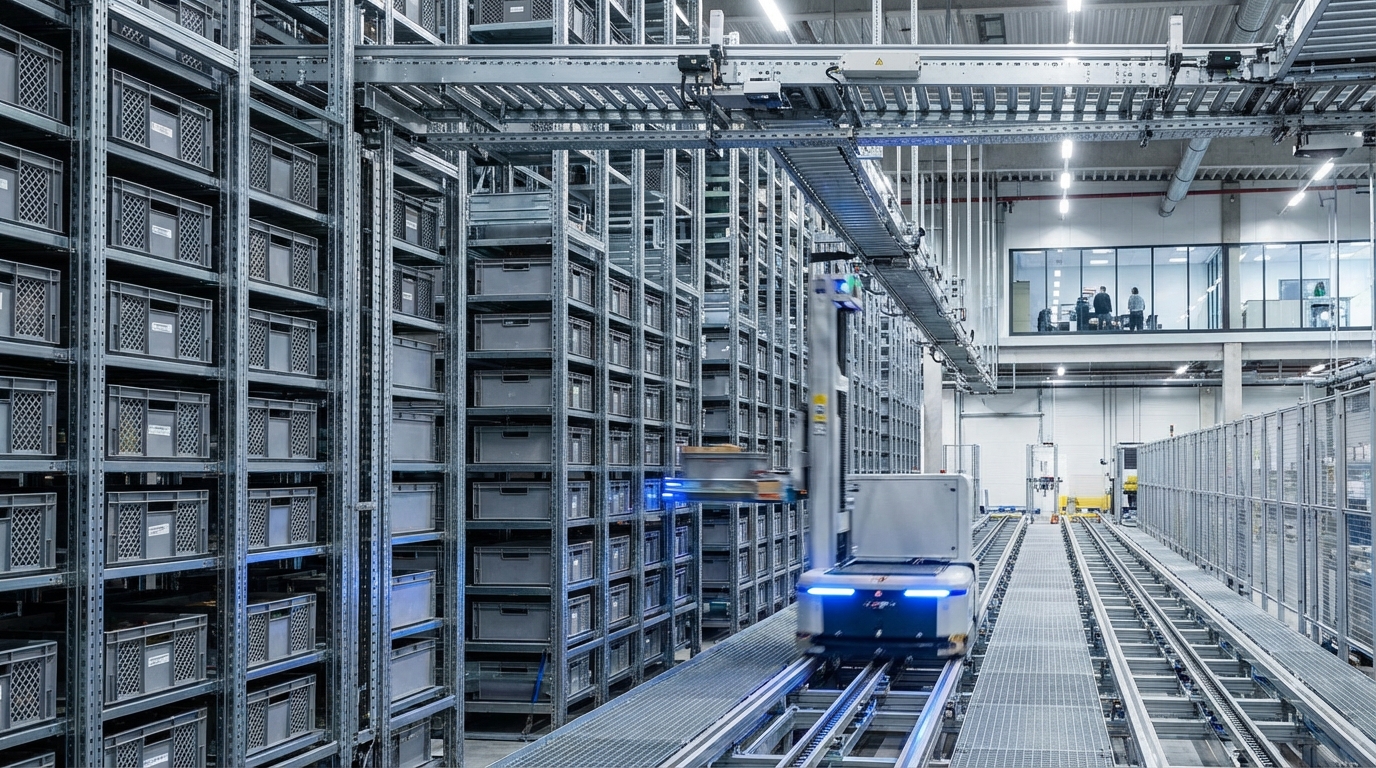
Automation redefines the physical requirements of your building, necessitating higher clear spans, ultra-flat floors, and integrated connectivity hubs. Modern warehouse construction must adapt to accommodate Automated Storage and Retrieval Systems (AS/RS) that operate with minimal human intervention.
What are the floor requirements for AS/RS?
Robotic systems require extremely level floors to operate safely at high speeds, as even a minor slope can cause picking errors or equipment damage. You will need to specify “Super Flat” concrete standards during the initial pouring phase of your project.
Look at it this way:
- Flat floors prevent robotic navigation errors.
- They allow for taller, more stable rack systems.
- They reduce the wear and tear on automated units.
How is connectivity integrated?
Modern facilities serve as high-tech hubs that require broadband connectivity and specialized electrical layouts to power sensors and tracking systems. You must design the structural frame to support the cabling and mounting hardware for these technologies.
Consider this:
- Connectivity allows for real-time inventory tracking.
- Automated systems often require low-light environments.
- Smart hubs integrate with your logistics software.
Key TakeawayBuilding for automation today ensures that your facility remains competitive and can easily integrate robotic technologies as your business scales.
| Automation Need | Construction Impact | Result | |
|---|---|---|---|
| High-speed Robotics | Super Flat Floor (FF) | Precision navigation | |
| Vertical Shuttles | Increased Clear Height | Maximum pallet density | |
| IoT Sensors | Structural Data Hubs | Real-time visibility |
The future of logistics is automated, and your building must be ready to support it.
What is the estimated timeline for warehouse construction?
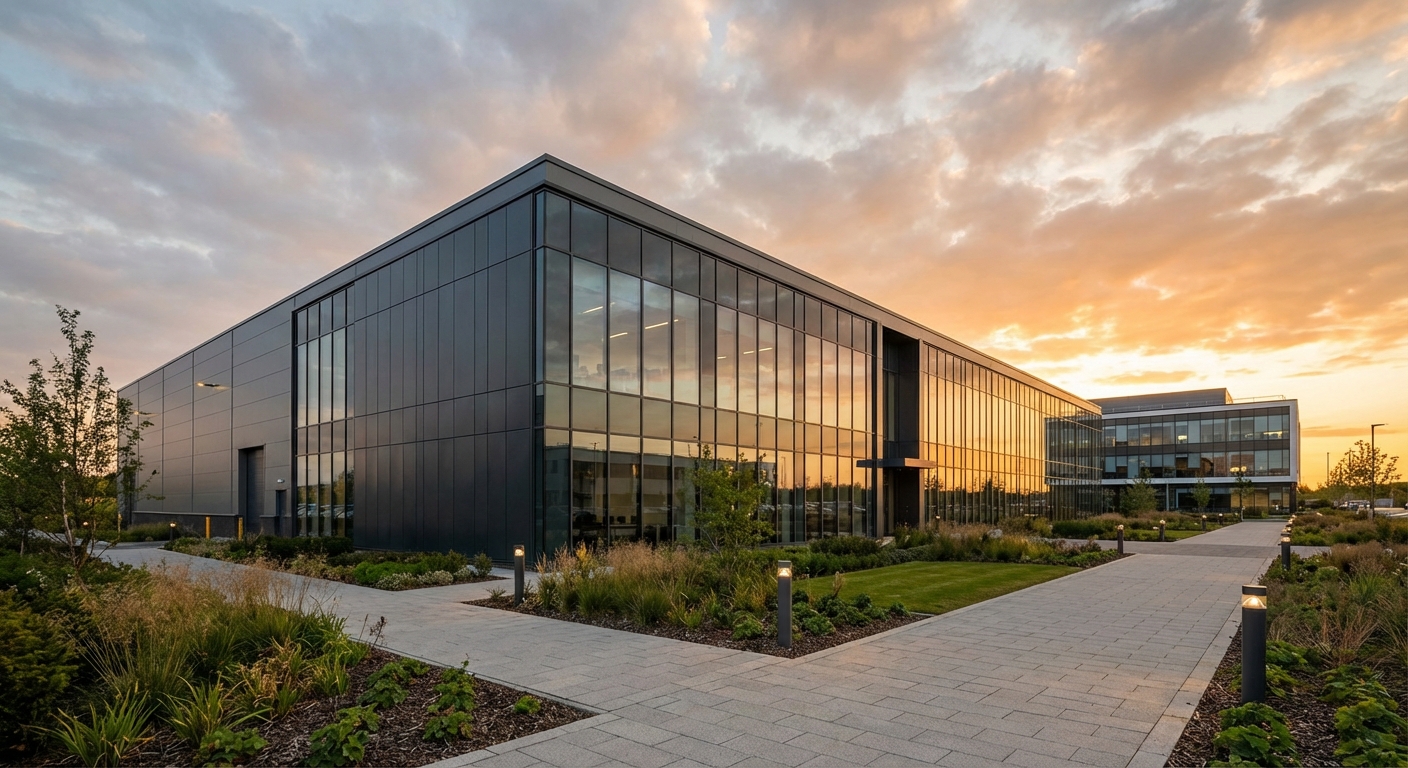
The timeline for industrial projects typically spans several months, moving from initial design and fabrication to international shipping and final onsite assembly. During warehouse construction, the speed of your project is largely determined by the efficiency of the manufacturing process and the clarity of the installation drawings.
How long does fabrication take?
Once the design is finalized, fabrication in a modern factory can take anywhere from four to eight weeks depending on the complexity of the steel members. You should look for a partner with high annual capacity to ensure your project isn’t delayed by manufacturing bottlenecks.
Think about it:
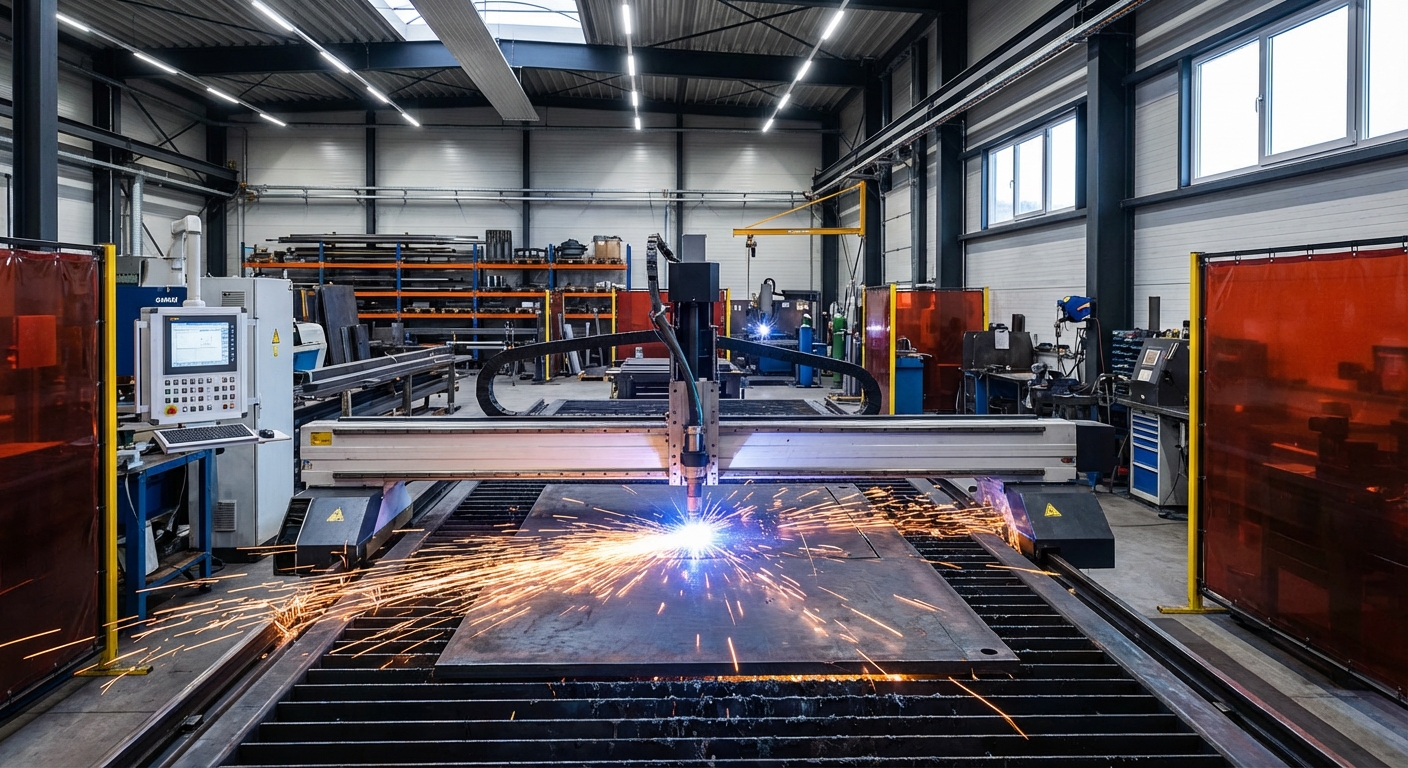
- Automated welding lines accelerate production.
- CNC cutting ensures high-precision components.
- Factory-direct control eliminates third-party delays.
What happens during onsite assembly?
Since all components arrive pre-marked and sequenced, the actual erection of the steel frame can often be completed in a fraction of the time required for traditional builds. You will follow detailed drawings that allow your local crew to assemble the structure like a large-scale kit.
What does this mean for you?
- It reduces the need for skilled onsite labor.
- It minimizes the impact of local weather delays.
- It allows you to move into the facility much sooner.
Key TakeawayAn integrated manufacturing and shipping model can cut months off your total project timeline, allowing you to begin generating revenue from your new facility faster.
| Phase | Estimated Duration | Influencing Factor | |
|---|---|---|---|
| Design & Review | 2-4 Weeks | Customization depth | |
| Fabrication | 4-8 Weeks | Factory capacity | |
| Shipping & Logistics | 3-6 Weeks | Destination distance |
Proper planning and factory-direct coordination are the most effective ways to accelerate your build.
Building the Future of Global Logistics
At Showhoo, we believe that high-quality industrial facilities are the backbone of global commerce. By controlling every stage of the process—from the initial engineering review to final delivery—we ensure that your project is completed without the defects, delays, or cost overruns that plague traditional construction models. Our vision is to provide every client with a buildable, high-performance structure that serves their business for decades to come.
This guide has addressed the critical challenges of design, structural integrity, and overseas risk management, providing you with a clear path to industrial excellence. If you are ready to start your next project with a partner you can trust, contact us today to receive a free engineering consultation and project quote within 24 hours.
Frequently Asked Questions
Can I customize the clear span of my warehouse to accommodate large machinery?Yes, modern steel engineering allows for clear spans often exceeding 40 meters. This provides you with an unobstructed interior space that is perfect for large-scale logistics or manufacturing equipment without the interference of support columns.
What’s the best way to prevent moisture damage to stored goods?The most effective method is incorporating vapor barriers during the build and utilizing controlled humidity (CH) systems. Additionally, designing walls that allow for natural evaporation prevents rain from collecting in wall cavities.
How do I know if my floor can handle high-lifting forklift equipment?High-lifting equipment requires specific floor flatness and levelness (FF/FL) ratings. During the pouring phase, you should ensure the concrete is treated with hardeners to withstand the abrasion of heavy rubber or steel wheels.
Can I expand my warehouse facility in the future?Absolutely, you should plan for “flex” configurations during the design phase. By ensuring the site layout accounts for future loading docks and the roof has built-in structural capacity, your building can easily grow with your business.
What’s the best floor finish for chemical storage areas?For areas subject to chemical spills or battery charging, epoxy coatings are the professional standard. These coatings provide a durable, non-porous surface that resists corrosion and makes the cleanup of hazardous materials much simpler.