
The total investment to construct a facility of this scale typically ranges from 1,700,000to3,300,000, depending on your specific design and regional requirements. Scaling your operations to a 100,000 sq ft warehouse represents a massive capital undertaking where even a 5% budget variance can result in six-figure losses. Volatile steel markets, complex local building codes, and hidden “soft costs” often leave developers with unfinished structures or compromised operational efficiency. This comprehensive guide breaks down every financial layer of your industrial project to ensure your investment is backed by data and precision engineering.
What is the base cost for a 100,000 sq ft warehouse?

The average turnkey cost for a 100,000 sq ft warehouse currently ranges from 17to33 per square foot. This price bracket accounts for the base building shell as well as the essential foundation and slab work required for industrial use. Here is the deal: your total expenditure is highly sensitive to the current market price of commercial steel and regional labor availability.
Estimating the Total Investment Range
Commercial steel structures generally command between12and25 per square foot for the building shell alone. When you factor in the concrete foundation, which adds another 5to8 per square foot, you reach the comprehensive turnkey range.
Factors Determining the Price Ceiling
Regional economic shifts and site-specific challenges can push your final quote toward the higher end of the spectrum. You must also account for site clearing and utility proximity when finalizing your initial budget.
- Building Shell: 1.2M–2.5M
- Foundation/Slab: 500k–800k
- Total Turnkey: 1.7M–3.3M
Key Takeaway
Securing an accurate baseline quote requires balancing your structural needs with the current economic climate of your specific construction site.
| Cost Category | Price Per Sq Ft | Total for 100,000 SF | |
|---|---|---|---|
| Base Building Shell | 12–25 | 1,200,000–2,500,000 | |
| Foundation & Slab | 5–8 | 500,000–800,000 | |
| Total Turnkey Range | 17–33 | 1,700,000–3,300,000 |
This data reflects the primary capital requirements needed to move from a raw site to a standing structural shell.
How do materials affect a 100,000 sq ft warehouse?
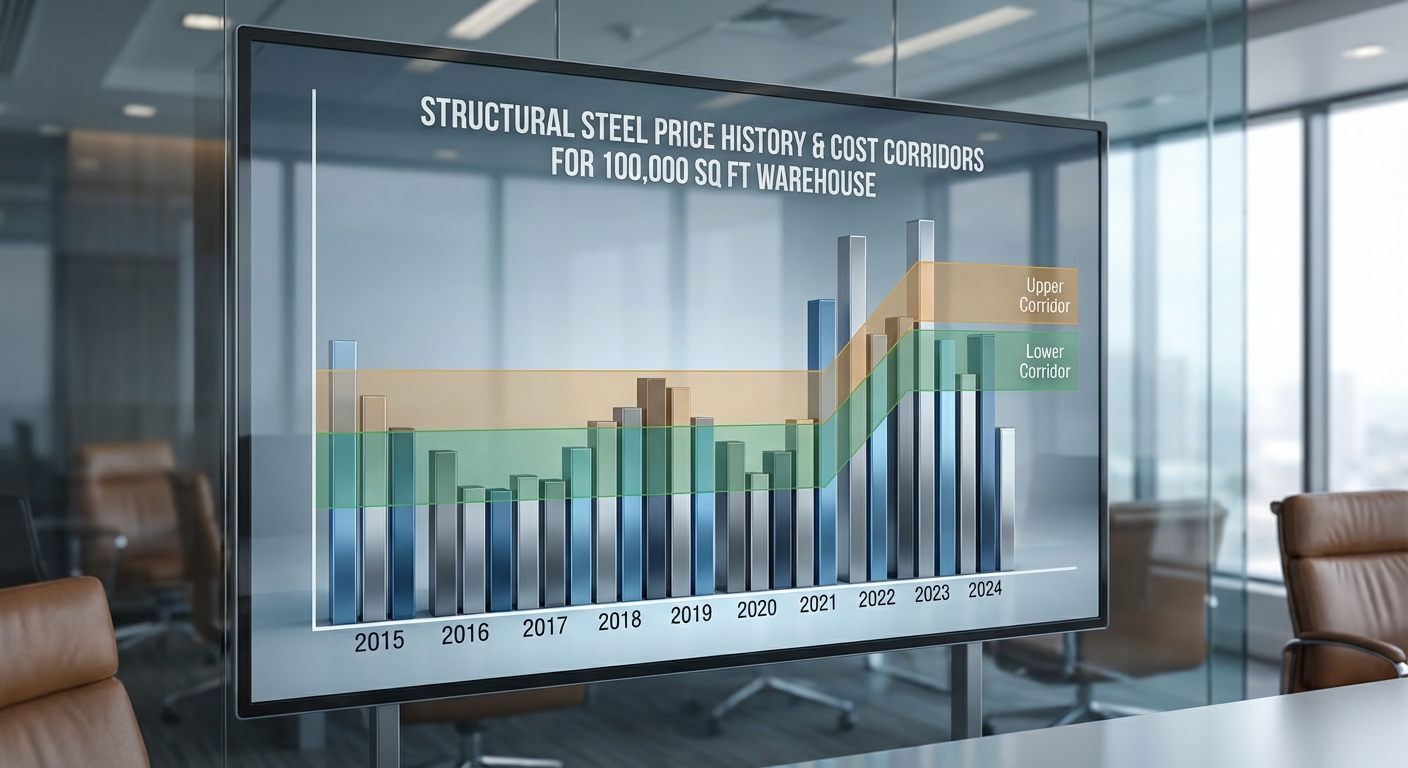
Raw material components for a 100,000 sq ft warehouse typically cost between7and11 per square foot. These expenses cover the primary structural frame, wall panels, roofing systems, and all necessary fasteners. You will find that global supply chain variables and fuel surcharges play a significant role in these monthly price fluctuations.
Raw Steel and Fuel Surcharges
The primary steel frame is your largest material expense, usually ranging from 5.00to7.50 per square foot. But wait, there is more: the cost of transporting these massive components to your site can fluctuate based on current diesel prices.
Cladding and Roofing Systems
Secondary materials like wall and roof panels add another 2.00to3.50 per square foot to your total. Choosing higher gauge steel or specialized finishes will protect your investment but will also increase your initial material outlay.
- Primary Frame: 65% of material budget
- Panels/Cladding: 30% of material budget
- Fasteners/Trim: 5% of material budget
Key Takeaway
Material costs are the most volatile part of your budget, making early procurement strategies vital for maintaining your financial projections.
| Material Component | Price Range (per SF) | Impact Level | |
|---|---|---|---|
| Primary Steel Frame | 5.00–7.50 | High | |
| Wall & Roof Panels | 2.00–3.50 | Medium | |
| Fasteners & Trim | 0.20–0.50 | Low |
The fluctuating nature of metal markets necessitates a buffer in your material budget to handle sudden price spikes.
What is the labor fee for a 100,000 sq ft warehouse?
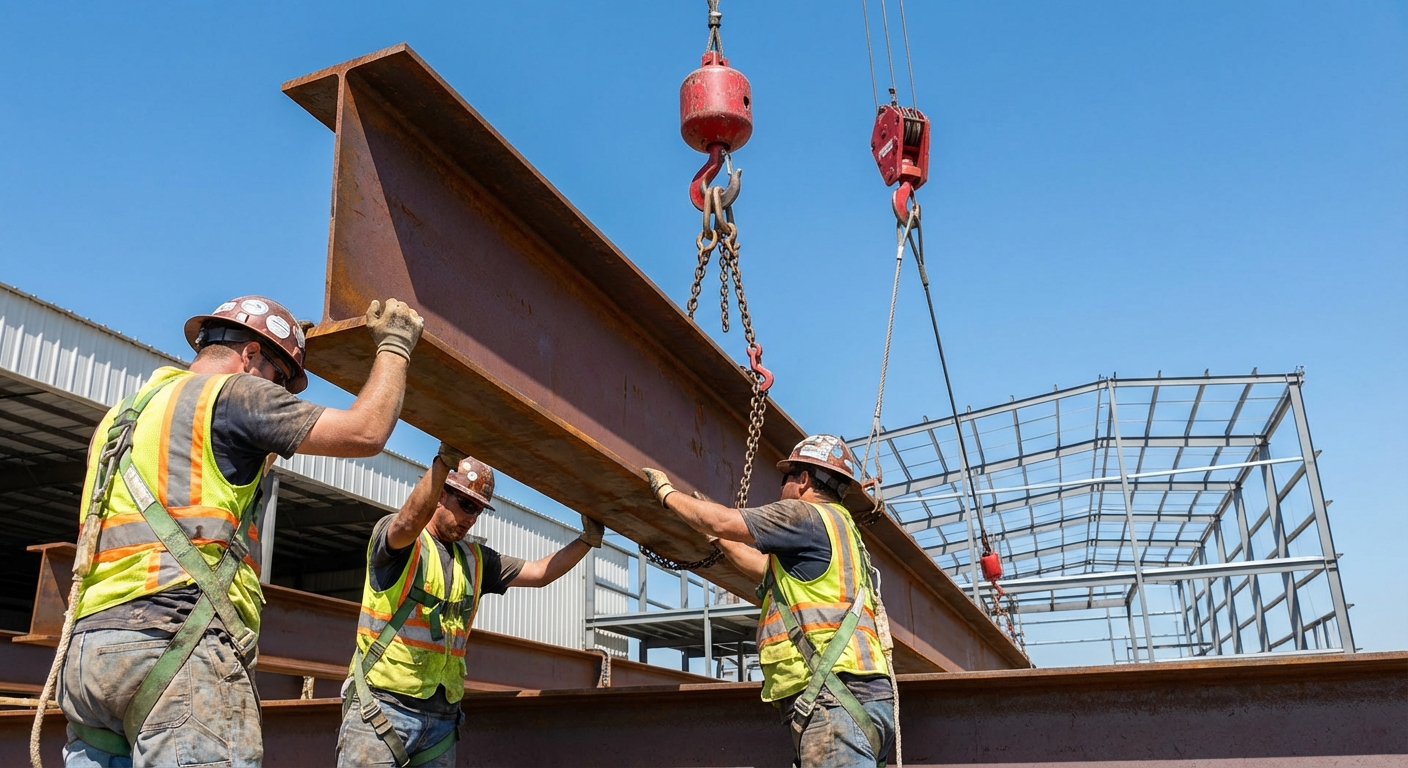
Labor expenses for a 100,000 sq ft warehouse generally fall between 5and9 per square foot. This figure typically represents 20% to 40% of your total project budget, depending on local prevailing wage laws. Think about this: hiring specialized crews who understand pre-engineered systems can actually save you money by reducing on-site errors.
Specialized Erection Crews
Steel erection is the most labor-intensive phase, accounting for 60% of your total labor expenditure. It requires a coordinated effort between crane operators, ironworkers, and site supervisors to ensure the structure is plumb and secure.
Insurance and Compliance Fees
You must also factor in worker’s compensation, recruitment, and safety training expenses. These administrative labor costs ensure that your project remains compliant with national safety standards and local labor regulations.
- Steel Erection: Largest labor block
- Concrete Labor: Significant secondary cost
- Management: Oversight and safety
Key Takeaway
Investing in an experienced erection crew reduces the risk of long-term structural issues and ensures the safety of everyone on the job site.
| Labor Element | Percentage of Budget | Primary Cost Drivers | |
|---|---|---|---|
| Steel Erection | 60% | Crew size, equipment rental | |
| Foundation Labor | 25% | Excavation, concrete finish | |
| Site Supervision | 15% | Management duration |
The efficiency of your labor force directly dictates how quickly you can move from breaking ground to operational status.
Why build a steel 100,000 sq ft warehouse?
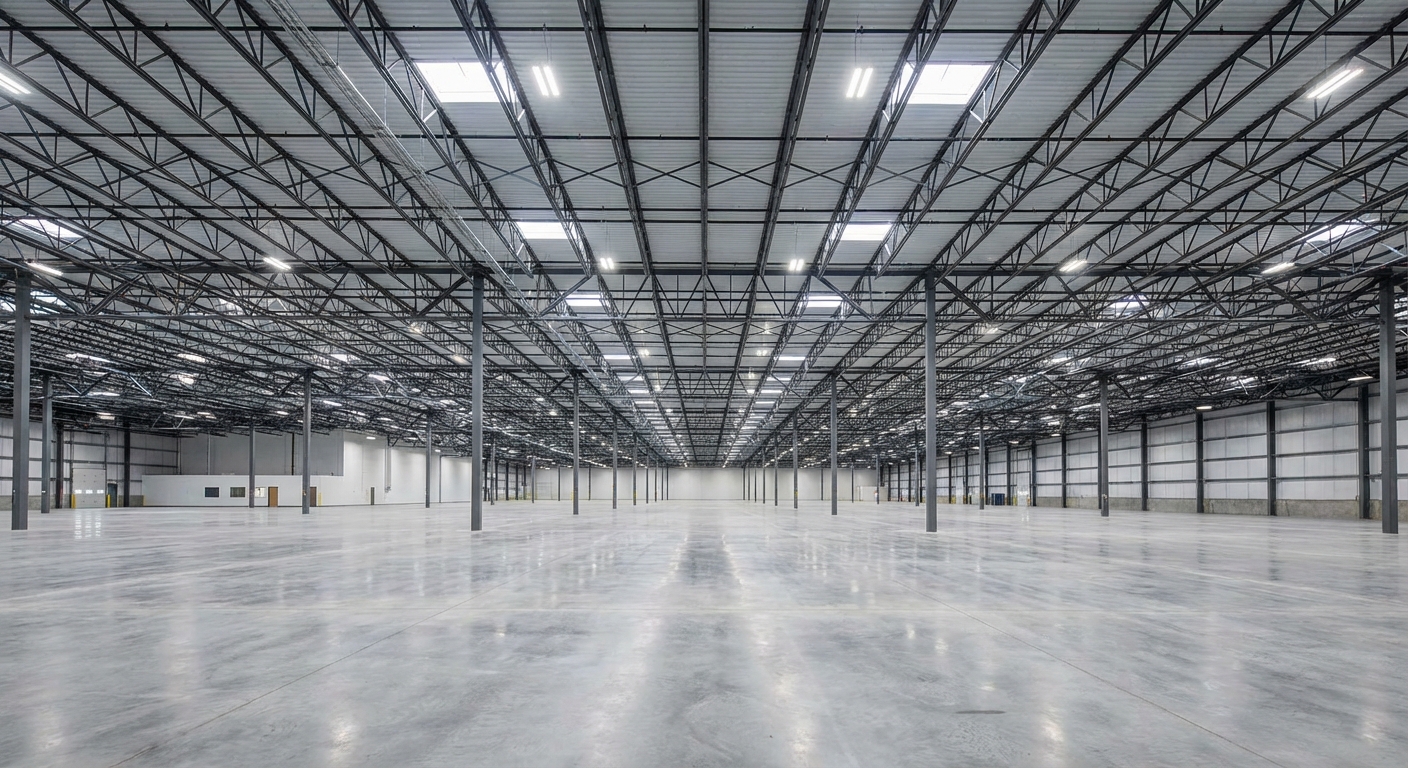
Choosing steel for your 100,000 sq ft warehouse offers unmatched clear-span efficiency that maximizes your usable internal floor space. Unlike traditional timber or concrete tilt-up methods, pre-engineered steel allows for massive layouts without the need for intrusive interior columns. It gets better: the speed of erecting prefabricated components can get your business operational up to 30% faster than other construction types.
Clear-Span Structural Efficiency
Steel’s high strength-to-weight ratio allows for spans that provide maximum storage density for racking systems. This flexibility is essential if you plan to utilize automated forklifts or specialized logistics workflows that require unobstructed paths.
Long-Term Durability and Resale
Steel structures are resistant to fire, pests, and rot, which leads to significantly lower insurance premiums over the life of the building. Furthermore, the low maintenance requirements of a metal exterior ensure your facility retains its value for decades.
- No interior columns
- Pest and fire resistance
- High salvage value
Key Takeaway
The operational flexibility and speed of construction provided by steel offer a superior return on investment compared to traditional building materials.
| Benefit Category | Steel Advantage | Operational Impact | |
|---|---|---|---|
| Internal Layout | Clear-span design | Max storage density | |
| Construction Speed | Prefabricated parts | 30% faster occupancy | |
| Maintenance | High resistance | Lower insurance costs |
The efficiency of a column-free interior directly translates to higher pallet positions and better logistical flow for your business.
What soft costs hit a 100,000 sq ft warehouse?
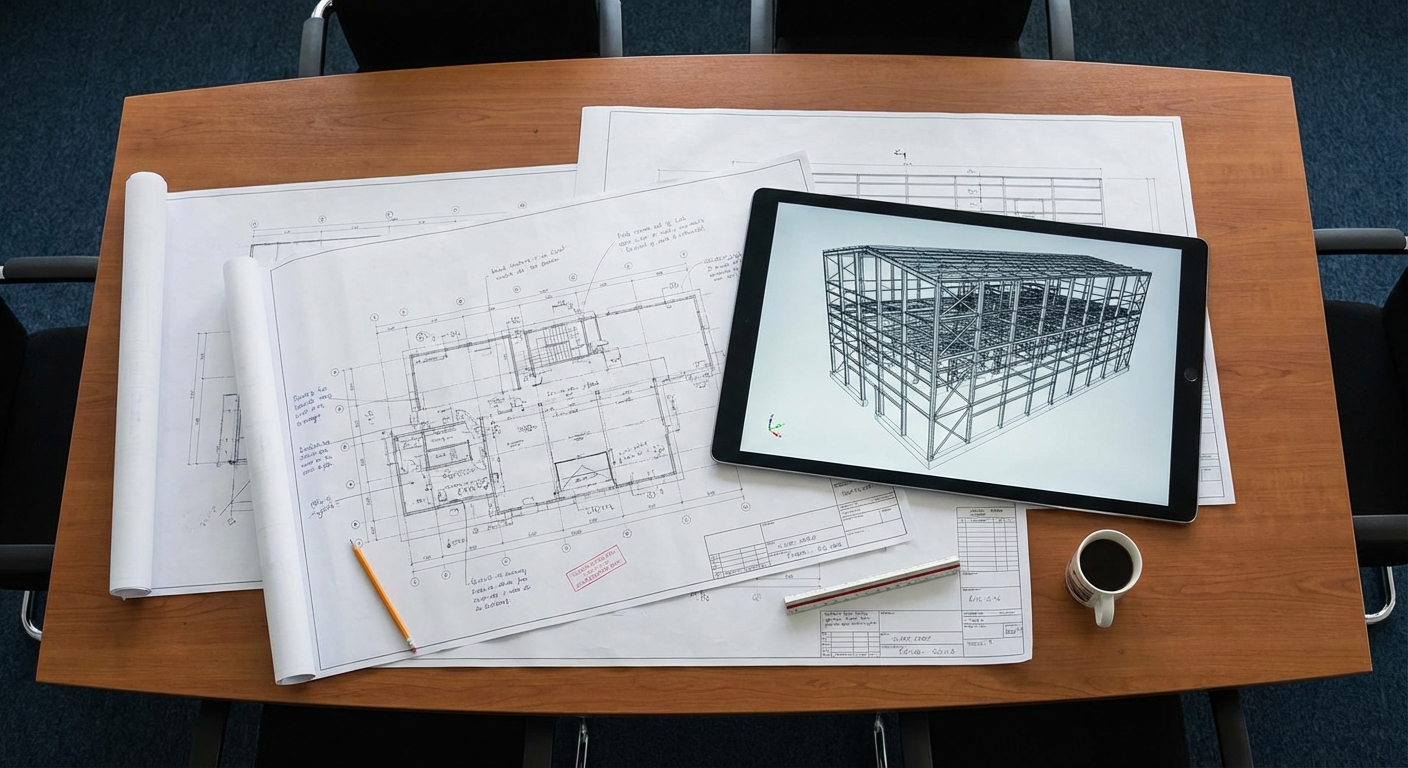
Soft costs for a 100,000 sq ft warehouse typically account for approximately 30% of your total project expenditures. These fees cover architectural design, structural engineering, and the various legal permits required to begin construction. You should know that as your design becomes more complex, these expert service fees will naturally increase to match the project’s scope.
Engineering and Architectural Fees
Design and engineering usually consume 10% to 15% of your total budget to ensure structural integrity and code compliance. Modern projects often utilize 3D Building Information Modeling (BIM) to catch potential clashes before they reach the fabrication stage.
Permits, Legal, and Financing
Navigating local zoning laws, environmental impact studies, and construction loan interest adds another layer of financial complexity. These costs are often front-loaded, meaning you will need significant capital before the first piece of steel ever arrives on site.
- Architectural Design
- Building Permits
- Construction Interest
Key Takeaway
Failing to account for soft costs can stall your project before it starts, so dedicate a full third of your budget to professional services.
| Soft Cost Type | Estimated % of Budget | Variable Factor | |
|---|---|---|---|
| Design/Engineering | 10% – 15% | Design complexity | |
| Permits & Taxes | 5% – 10% | Municipal location | |
| Financing/Interest | 5% – 8% | Loan term length |
Proper planning in the soft cost phase prevents expensive field modifications and legal delays during the active construction period.
Does design change a 100,000 sq ft warehouse cost?
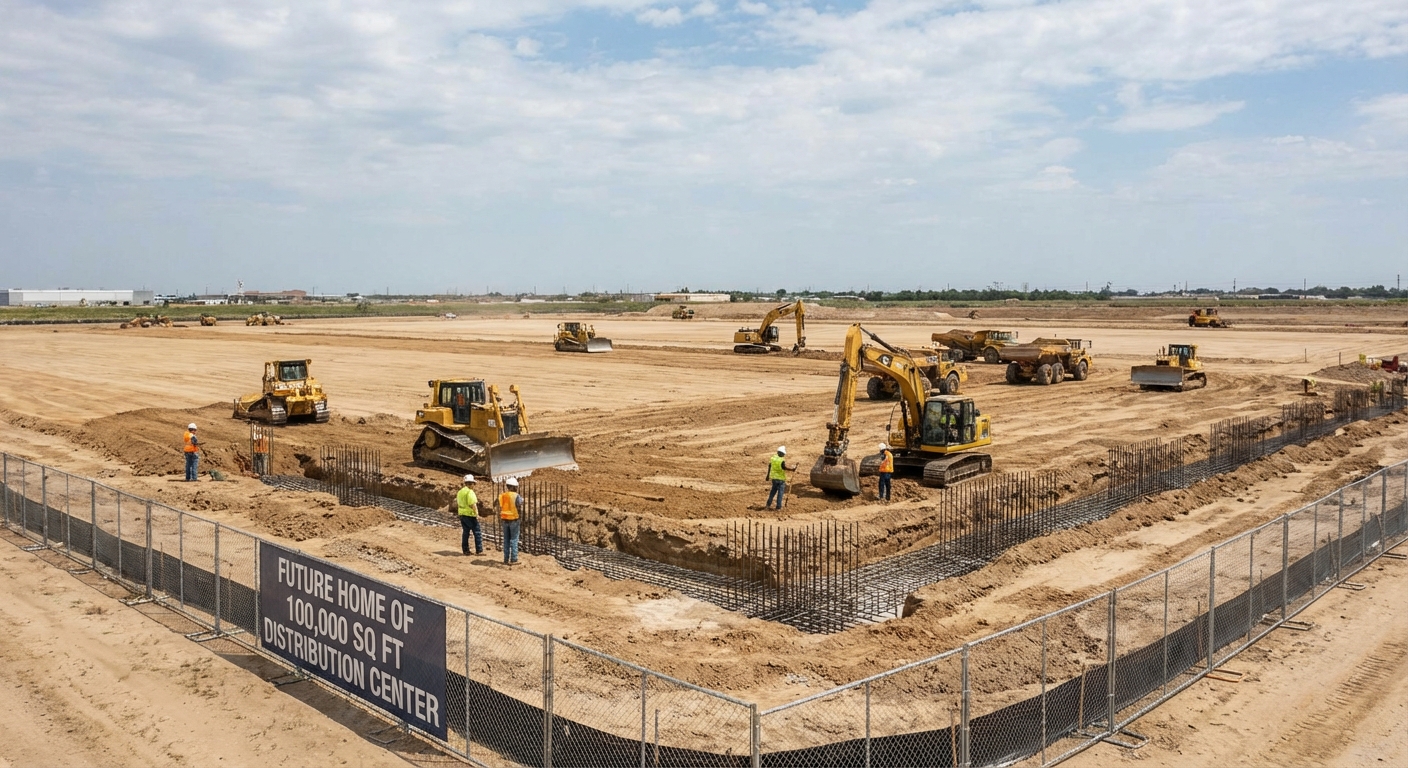
Yes, specific design choices such as eave height and bay spacing can increase the final price of your 100,000 sq ft warehouse by 5% to 15%. If you require high-density vertical racking, the additional structural load necessitates heavier steel members and reinforced concrete footings. Here is the deal: every foot of height you add increases the surface area for wind loads, which dictates the amount of steel required for stability.
Bay Spacing and Eave Height
Increasing your eave height allows for more vertical storage but adds roughly 5% to 10% to your structural costs. Wider bay spacing facilitates easier forklift movement but requires heavier purlins and girts to support the roof load over longer distances.
Multi-Story Considerations
If your land is limited, a multi-story approach can double your floor space, though it significantly increases the complexity of the foundation. While more expensive per square foot, this design is often the only viable solution for high-density urban infill projects.
- Height vs. Material
- Span vs. Structural Load
- Floor levels vs. Cost
Key Takeaway
Optimizing your building’s dimensions for your specific operational needs is the most effective way to control total construction expenses.
| Design Feature | Cost Impact | Benefit | |
|---|---|---|---|
| Increased Eave Height | +5% to +10% | Higher racking capacity | |
| Wider Clear Spans | +10% to +15% | Better forklift flow | |
| Mezzanine Levels | Variable | Doubled floor space |
Strategic design prevents you from over-paying for unused space while ensuring you have the capacity needed for future growth.
Which accessories suit a 100,000 sq ft warehouse?
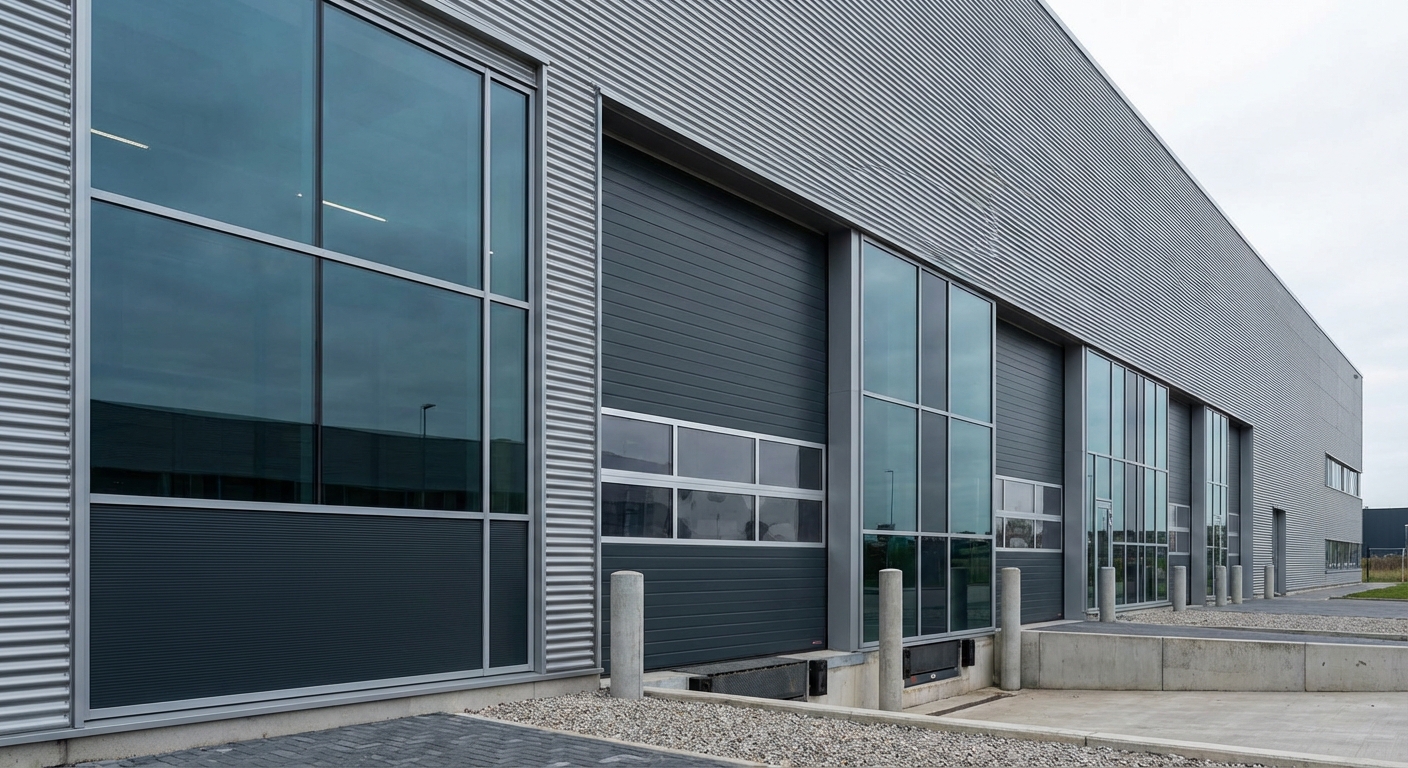
Customizing your 100,000 sq ft warehouse with industrial doors, windows, and high-performance insulation is essential for operational efficiency. Integrating heavy-duty sectional doors facilitates high-traffic logistics, while strategic window placement improves employee well-being and reduces lighting costs. The best part? These additions often provide the highest return on investment by lowering your long-term utility overhead.
Industrial Door and Window Systems
Heavy-duty doors are the lifeblood of your logistics hub and typically cost between 2,500and5,000 per unit. You should also consider self-flashing windows which are ready for immediate installation and help bring natural light into your workshop or office zones.
Insulation and Energy Efficiency
Faced fiberglass insulation with R-values ranging from R-10 to R-30 is the industry standard for climate control. Investing in high-quality insulation protects your inventory from temperature extremes and significantly reduces the strain on your mechanical cooling systems.
- Sectional Roll-up Doors
- Self-framing Windows
- Fiberglass Batt Insulation
Key Takeaway
Choosing high-quality accessories during the initial build phase prevents the high cost of retrofitting and improves daily operational performance.
| Accessory Item | Estimated Cost | Functional Value | |
|---|---|---|---|
| Sectional Doors | 2,500–5,000 ea | Logistics speed | |
| R-19 Insulation | 1.50–2.50 /SF | Climate control | |
| Natural Lighting | 500–1,200 /unit | Energy savings |
Integrating these functional elements ensures your facility remains comfortable for workers while maintaining the integrity of sensitive stored goods.
How to manage 100,000 sq ft warehouse HVAC costs?
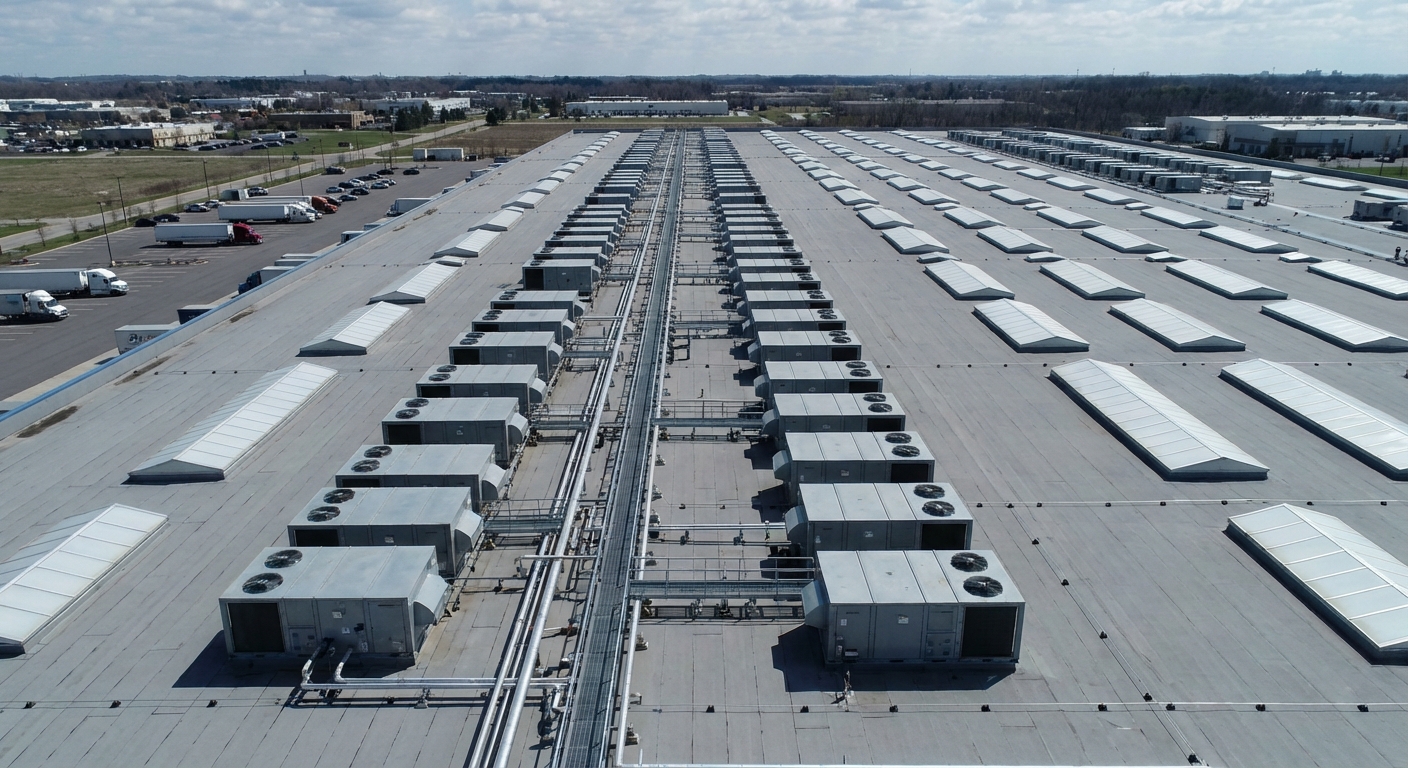
Managing HVAC costs for a 100,000 sq ft warehouse requires a strategic choice between full climate control and simple ventilation systems. Full climate control via commercial rooftop units (RTUs) can range from 20to33 per square foot, making it a major budget item. But wait, there is more: you can significantly lower these costs by optimizing natural airflow and using skylights to reduce heat gain from artificial lighting.
Commercial Rooftop Units (RTUs)
RTUs are the preferred choice for large-scale industrial buildings due to their ability to provide precise temperature and humidity management. These systems are essential if you are storing sensitive electronics, pharmaceuticals, or food products that require a stable environment.
Ventilation and Airflow Design
For general dry storage, a simple mechanical ventilation system costing 2.00to5.00 per square foot may be sufficient. Using ridge vents and louvers allows hot air to escape naturally, which reduces the reliance on expensive electrical cooling during summer months.
- Full RTU Systems
- Natural Ridge Vents
- HVLS Ceiling Fans
Key Takeaway
Your choice of HVAC system should be dictated by your inventory’s sensitivity and your local climate to avoid unnecessary operational expenses.
| HVAC System Type | Cost Per Square Foot | Best Use Case | |
|---|---|---|---|
| Full Climate Control | 20.00–33.00 | Cold/Sensitive storage | |
| Ventilation Only | 2.00–5.00 | Dry goods storage | |
| Heating Only | 5.00–10.00 | Cold northern climates |
Selecting the right level of environmental control ensures you aren’t paying for cooling capacity that your business model doesn’t require.
What is the 100,000 sq ft warehouse build timeline?
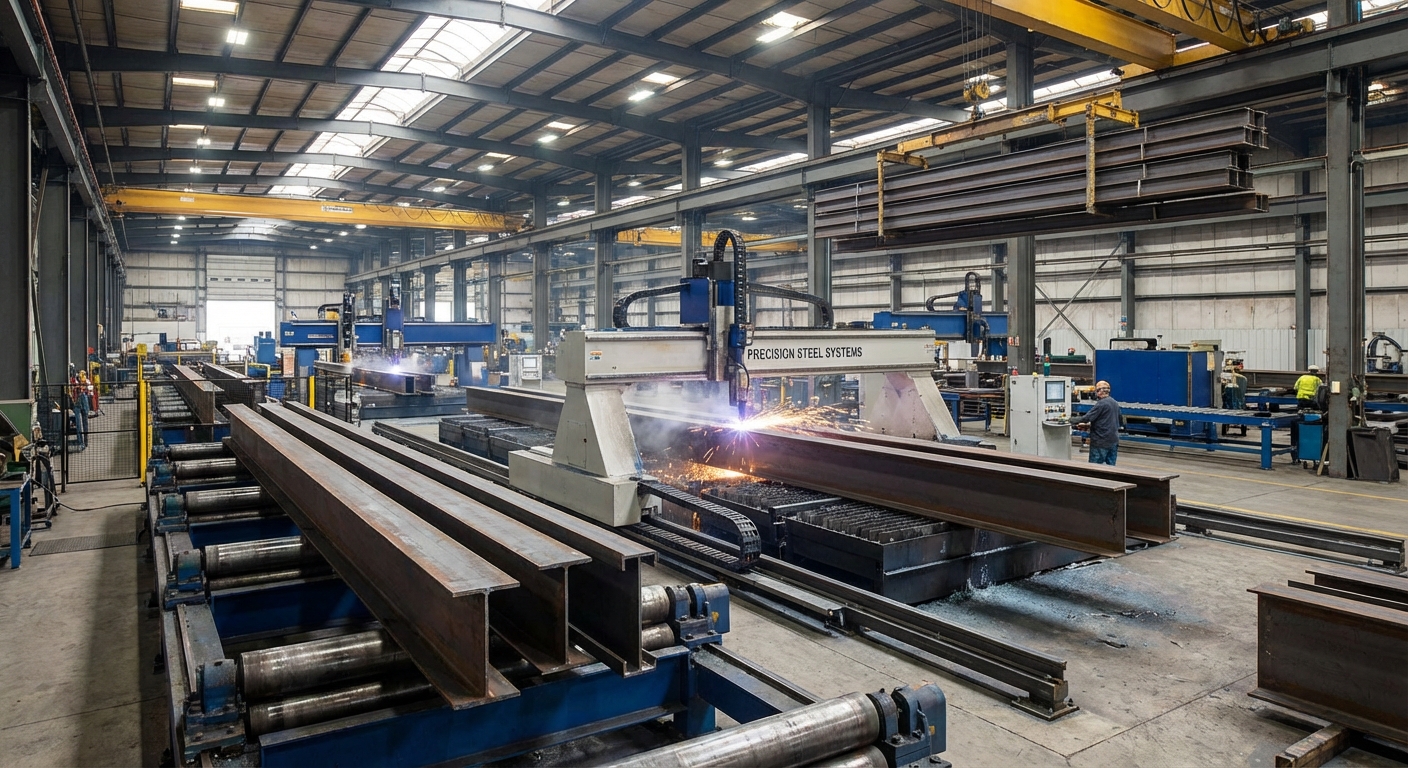
The journey to complete a 100,000 sq ft warehouse typically spans between 6 and 12 months from the initial design phase. This timeline includes roughly 2 to 4 months for permitting and design, followed by 2 to 3 months for factory manufacturing. It gets better: because steel components are prefabricated, the actual on-site erection can be completed in just a few months, barring extreme weather.
The Pre-Fabrication Workflow
Manufacturing begins with 3D modeling and moves quickly to the automated cutting and welding of H-section steel beams. This factory-controlled environment ensures that every piece arriving at your site is precision-engineered for a seamless fit without field modifications.
On-Site Erection Phases
Once the foundation is cured, the steel skeleton can be raised quickly using heavy cranes and specialized crews. This phase is followed by the installation of the building envelope, including roof panels, wall cladding, and the final interior fit-out.
- Design/Permit Phase
- Manufacturing Phase
- On-site Erection Phase
Key Takeaway
A clear project timeline allows you to coordinate your business relocation and staffing needs with the actual completion of your facility.
| Project Phase | Estimated Duration | Critical Path | |
|---|---|---|---|
| Design & Permitting | 2 – 4 Months | Zoning approval | |
| Manufacturing | 2 – 3 Months | Steel availability | |
| Erection & Finish | 3 – 5 Months | Weather conditions |
Strict adherence to the manufacturing and erection schedule is the best way to prevent the snowball effect of construction delays.
Why does location matter for a 100,000 sq ft warehouse?
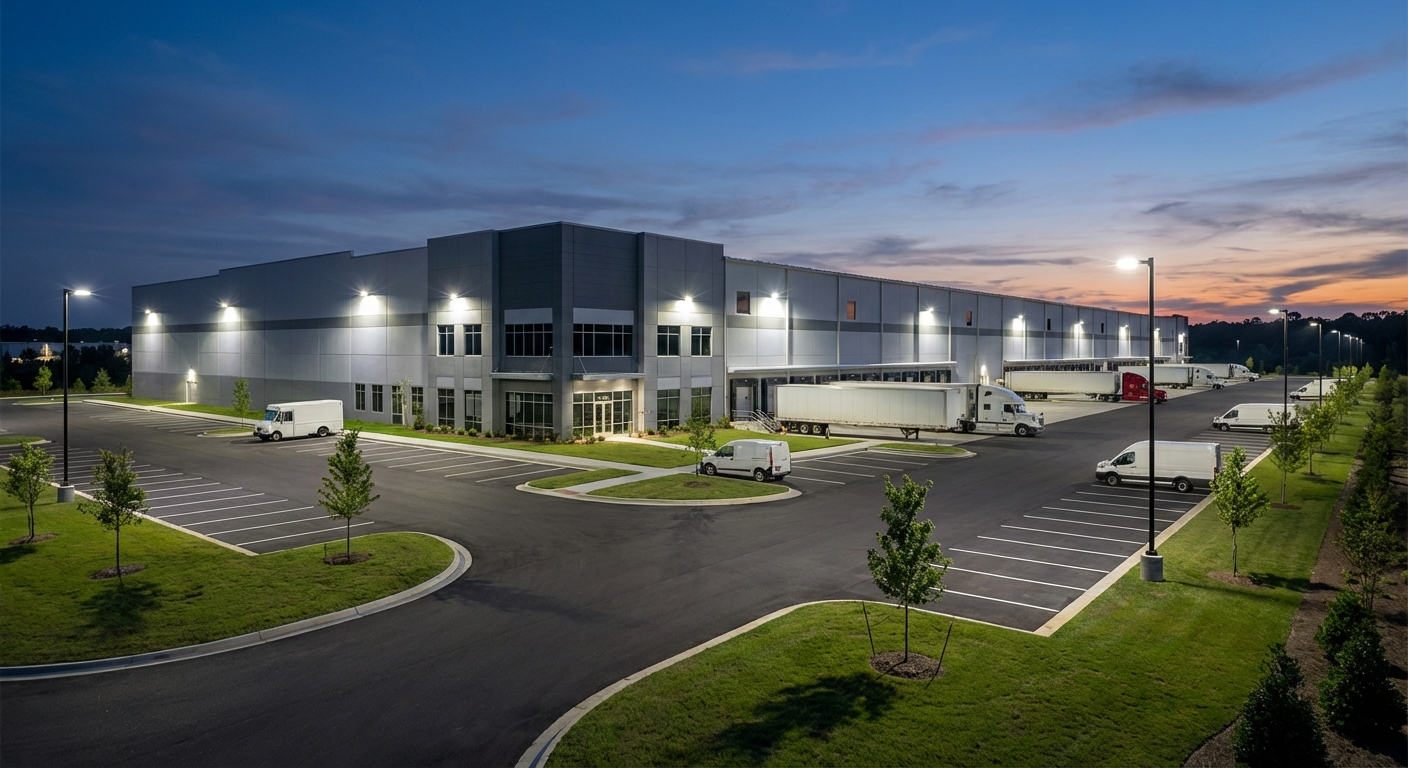
Your choice of location dictates the local building codes for wind, snow, and seismic activity, which directly impacts the weight of steel required for your 100,000 sq ft warehouse. Building in a northern region requires a roof structure capable of supporting heavy snow loads, which can add 10% to your material costs. Think about this: even the distance from the nearest utility grid can add significant “hard costs” for running power and water lines to your site.
Site Preparation and Utility Proximity
Remote sites may offer cheaper land but often require expensive excavation and utility extensions that eat into your savings. Conversely, urban infill sites might be ready for utilities but come with higher logistics costs for nighttime material deliveries and tight staging areas.
Regional Building Codes
Local municipalities enforce specific safety standards that determine the gauge of steel and the type of fire suppression systems required. You must ensure your design meets these codes during the permitting phase to avoid expensive redesigns or construction stoppages.
- Snow and Wind Loads
- Utility Hookup Fees
- Logistics and Freight
Key Takeaway
Conducting a thorough site analysis before purchasing land ensures that hidden environmental and regulatory costs don’t derail your budget.
| Location Factor | Cost Variance | Mitigation Strategy | |
|---|---|---|---|
| High Snow Load | +10% Steel Weight | Heavier gauge purlins | |
| Urban Infill | +15% Logistics | Night-time deliveries | |
| Remote Sites | +5% Freight | Bulk ship optimization |
Regional factors are the silent budget-killers that must be addressed early in the site selection and engineering process.
Ready to build your future?
Constructing a 100,000 sq ft warehouse is a landmark achievement that requires balancing material “hard costs,” professional “soft costs,” and strategic design choices. By understanding these financial layers, you can ensure your project remains on budget and perfectly suits your operational needs. We specialize in providing factory-direct pricing, certified engineering, and integrated delivery systems that eliminate the middleman and reduce project risk. Our mission is to transform your industrial vision into a durable, high-performance reality that serves your business for decades. If you are ready to take the next step in your expansion, contact us today to receive a customized solution and a precision-engineered quote for your next steel building project.
FAQ: Planning Your 100,000 Sq Ft Warehouse
Can I expand my 100,000 square foot warehouse later?Yes, pre-engineered steel buildings are inherently modular, allowing you to add new frames to existing endwalls for easy length extensions as your business grows.
What’s the best roof for a 100,000 square foot warehouse?A standing seam metal roof is the gold standard because it accommodates thermal expansion and offers superior leak resistance for large-scale industrial facilities.
How do I know if I need a multi-story warehouse?It depends on your local land costs and zoning restrictions; multi-story designs are typically reserved for high-density urban areas where land is more expensive than the additional structural steel.
Can I include an office space inside the warehouse?Yes, you can easily integrate mezzanine levels or separate interior partitions to create high-quality office spaces, retail showrooms, or staff breakrooms within the main steel shell.
How long will my 100,000 square foot warehouse last?It depends on your maintenance schedule, but a high-quality steel structure with modern protective coatings is designed to last well over 50 years with minimal upkeep.