
The total expense for a 20,000 square foot steel warehouse typically ranges between 240,000 and 380,000 for the building shell and basic foundation. Many business owners find themselves struggling with overcrowded facilities and inefficient logistics that stifle growth and eat away at profit margins. Ignoring the need for expansion can lead to missed orders, worker safety issues, and eventually, a total loss of market share to more agile competitors. Fortunately, a prefabricated steel structure provides a rapid, high-durability solution that allows you to scale operations without the astronomical prices of traditional masonry or wood-frame builds. Understanding the exact cost to build a warehouse is the first step toward reclaiming your operational efficiency and securing a long-term asset.
What is the base cost to build a warehouse at 20,000 sq ft?
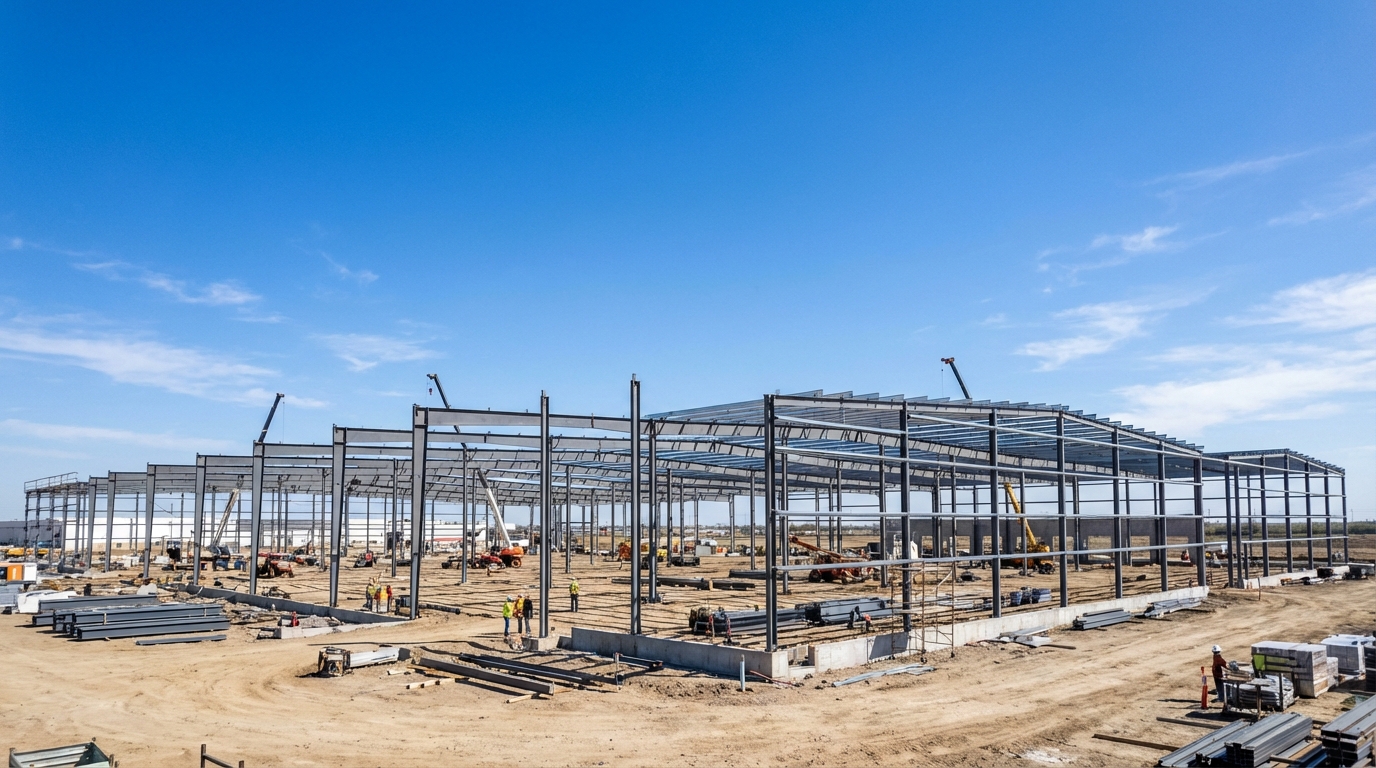
A standard 20,000 square foot steel building usually costs between 12and19 per square foot for the basic materials and shell. This cost to build a warehouse serves as your primary budget anchor before accounting for specialized finishes or regional labor variances. You must balance the initial price against the long-term ROI of owning a clear-span facility.
How much space does a 100×200 building provide?
A 100-ft by 200-ft footprint offers an expansive 20,000 square feet of unobstructed floor space for your racking and machinery. This layout is ideal for maximizing cubic volume through high-density storage systems and wide driving aisles for forklifts.
- Clear span design eliminates interior columns.
- Standard eave heights typically range from 20 to 30 feet.
- Flexible floor plans support manufacturing or fulfillment centers.
But wait, there is more. You can easily divide this space into specialized zones for cold storage, office areas, or hazardous material handling.
What industries benefit from this warehouse size?
Regional distributors and e-commerce fulfillment centers frequently select this specific size to balance inventory capacity with manageable overhead. It provides enough room for several loading docks while remaining small enough for rapid deployment in urban or industrial zones.
Think about it:
- Third-party logistics (3PL) providers use these for regional hubs.
- Manufacturing firms utilize the space for raw material intake.
- Agricultural companies find it perfect for large-scale equipment storage.
Key TakeawaySecuring a 20,000 sq. ft. steel structure allows you to optimize your supply chain with a predictable capital expenditure and maximum floor flexibility.
| Specification | Metric Value | Commercial Benefit | |
|---|---|---|---|
| Floor Area | 20,000 Sq. Ft. | High-volume storage capacity | |
| Standard Dimensions | 100′ x 200′ | Optimal for standard racking | |
| Estimated Base Cost | 240k−380k | Cost-effective expansion |
Analyzing the base price reveals that steel offers the lowest barrier to entry for large-scale industrial storage.
Does the design change the cost to build a warehouse?
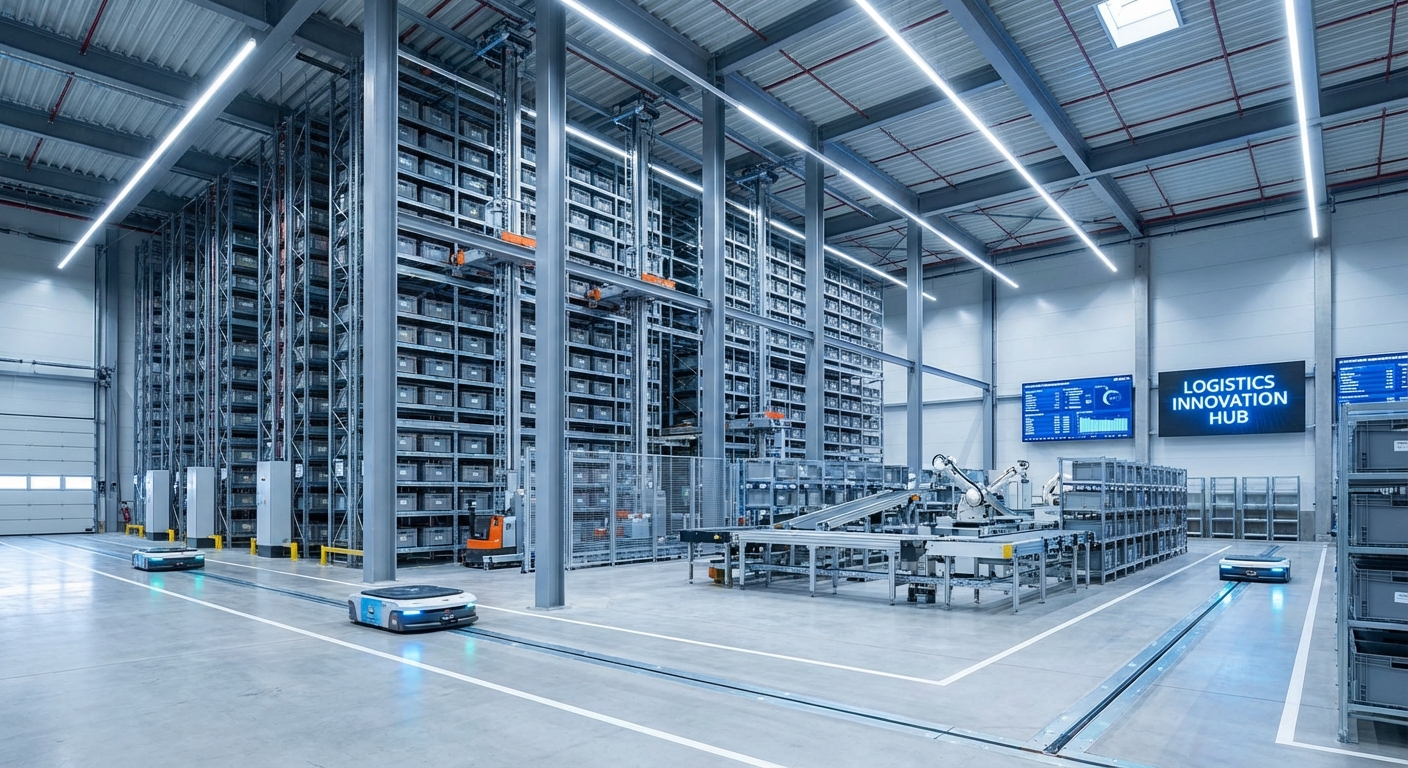
Complexity in structural engineering and architectural features directly increases the cost to build a warehouse by requiring more steel and specialized labor. If you choose a simple portal frame design, your expenses will stay near the lower end of the market average. Customizations like high-load crane runways or decorative facades will shift your budget toward the premium tier.
Can steel structures support e-commerce growth?
Steel warehouses are the backbone of modern e-commerce because they accommodate high-velocity sorting equipment and mezzanines. Adding these levels increases the load requirements on the primary frame, which raises the material weight.
- Mezzanines can double your usable square footage.
- Heavy-duty floors support automated robotic pickers.
- Reinforced frames handle rooftop HVAC units for climate control.
Here is the kicker: the flexibility of steel allows you to modify the interior layout as your fulfillment technology evolves.
Is steel better than wood or tilt-up construction?
Steel provides a superior strength-to-weight ratio that allows for wider clear spans than wood and faster assembly than tilt-up concrete. While tilt-up is durable, the massive onsite labor and crane costs often make it less competitive for mid-sized projects.
- Steel offers 30% faster construction timelines.
- Wood structures are prone to pests and fire risks.
- Tilt-up requires expensive onsite casting and curing.
Key TakeawayChoosing a streamlined steel design ensures you spend your budget on functional storage capacity rather than unnecessary architectural complexity.
| Construction Type | Cost per Sq. Ft. | Durability Rating | |
|---|---|---|---|
| Prefab Steel | 12−19 | High / Fire Resistant | |
| Wood Frame | 22−39 | Moderate / High Risk | |
| Tilt-up Concrete | 28−48 | Maximum / High Cost |
Comparing different methods shows that prefab steel delivers the best balance of speed and structural integrity for industrial use.
What site factors impact the cost to build a warehouse?
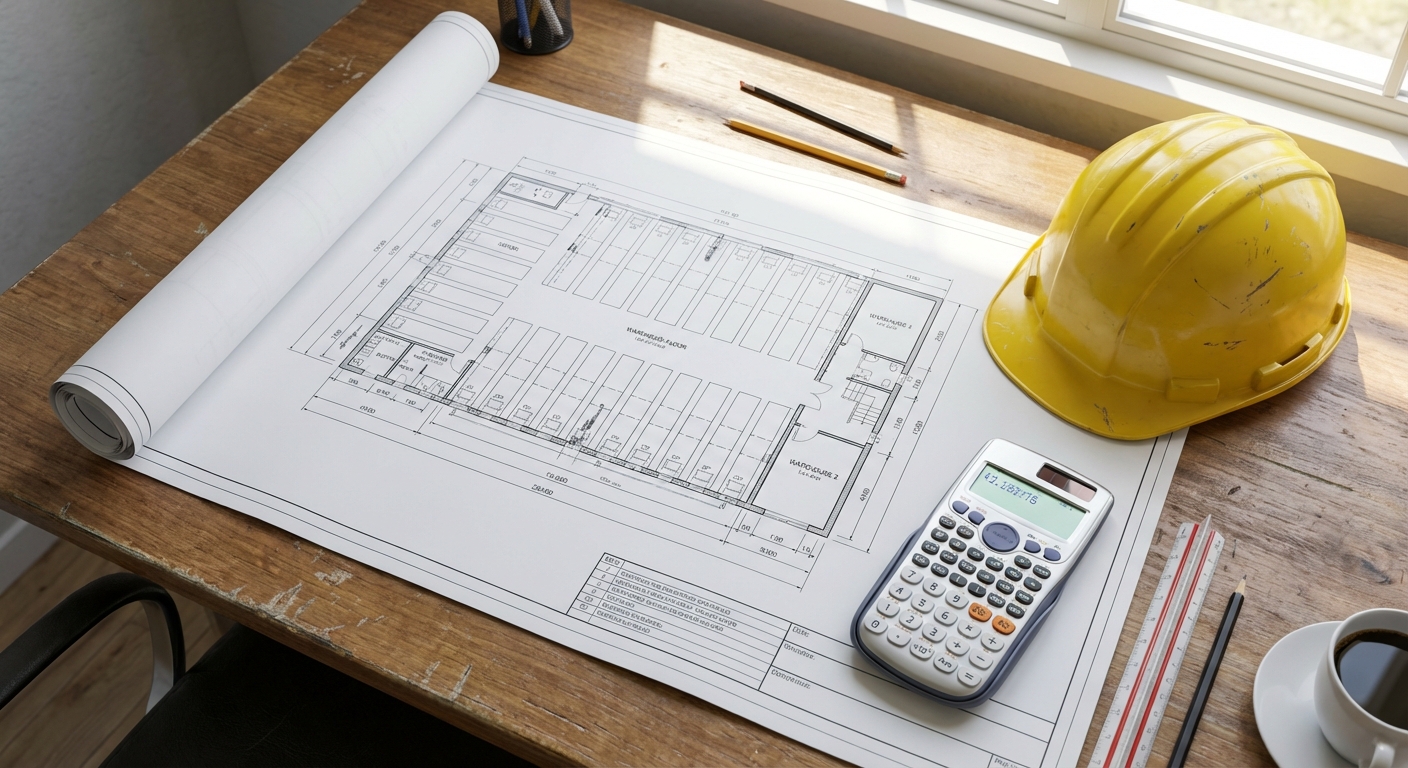
Your geographic location and local soil conditions are primary drivers that dictate the necessary engineering for the cost to build a warehouse . Buildings located in regions with high seismic activity or extreme snow loads require thicker steel sections and more robust connections. You must also consider the proximity of your site to major transportation hubs, which influences shipping fees for the building components.
How does geographic location impact your budget?
Regional building codes vary significantly, forcing you to invest more in structural reinforcement if you are in a hurricane or blizzard zone. For instance, a warehouse in Florida must withstand 160+ mph winds, while one in Minnesota needs to handle 50+ lbs of snow per square foot.
- Local permit fees vary by county and state.
- Environmental regulations may require specific drainage systems.
- Freight costs increase with distance from the fabrication plant.
The best part? Professional engineering ensures your building meets these codes without over-spending on unnecessary materials.
Why do steel price fluctuations matter for pricing?
Steel is a global commodity, meaning the price you pay today might change by 5% or 10% within a single month. Locking in a quote early in the planning phase protects you from market volatility and supply chain disruptions.
- Global demand spikes can delay material delivery.
- Tariffs on imported metals affect domestic pricing.
- Fuel surcharges impact the final delivered price.
Key TakeawayEarly site assessment and code reviews are vital to prevent expensive engineering surprises that can derail your project budget.
| Cost Driver | Influence Level | Potential Impact | |
|---|---|---|---|
| Snow/Wind Loads | High | 2−5 extra per sq. ft. | |
| Freight Distance | Moderate | 1,000−10,000 total | |
| Local Permits | Variable | 1% – 3% of total budget |
Strategic site selection remains one of the most effective ways to control your overall construction expenditures.
How do materials drive the cost to build a warehouse?
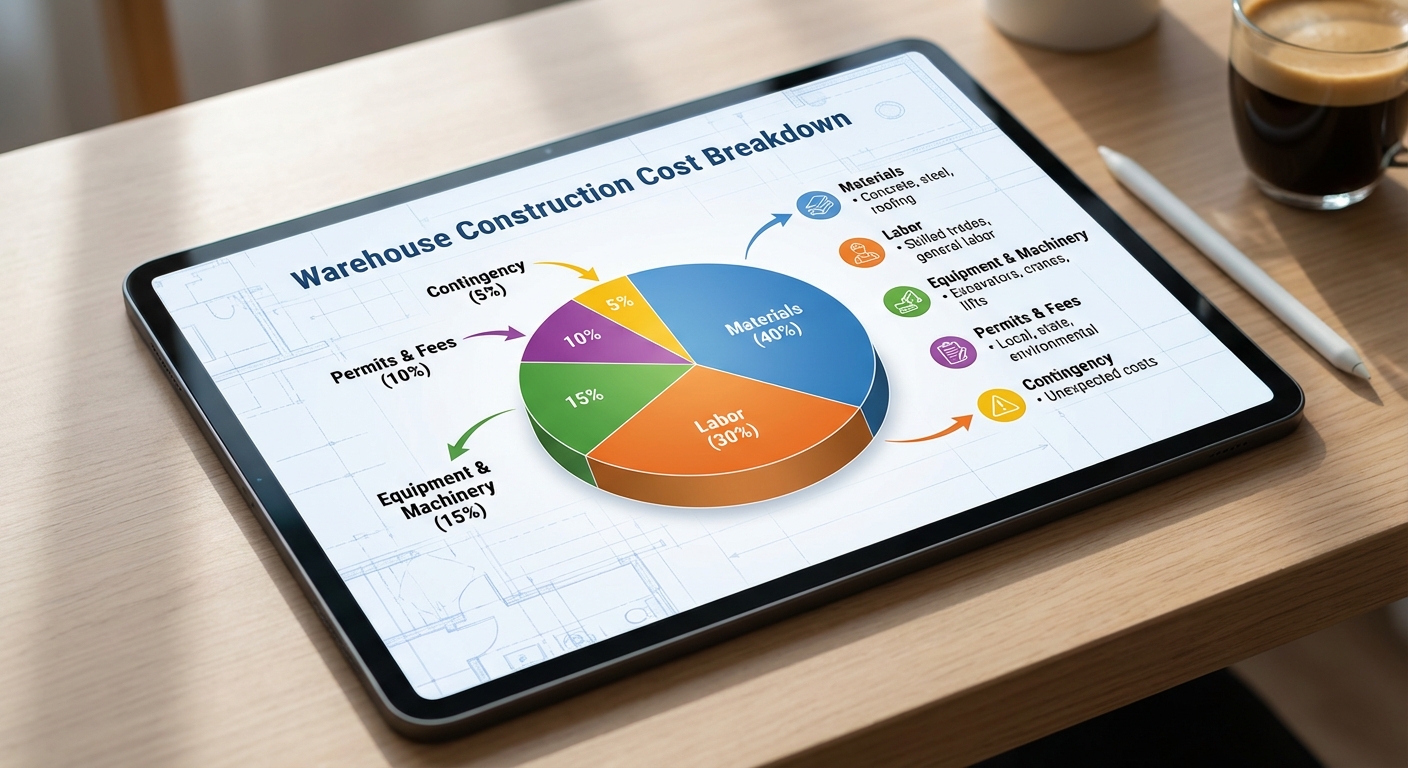
Raw material costs for a 20,000 square foot building fluctuate based on the current price of steel and the chosen insulation systems. The cost to build a warehouse includes the primary frame, secondary members like purlins, and the exterior metal sheeting. High-quality paint finishes and energy-efficient panels will increase the upfront material bill but save you money on utility costs later.
What are the current material costs per square foot?
You can expect raw material costs to range from 7to11 per square foot depending on the gauge of the steel and the complexity of the components. This estimate includes everything needed to create a weather-tight shell for your operations.
- Primary frames handle the main structural loads.
- Purlins and girts support the wall and roof panels.
- Trim and flashing prevent leaks and improve aesthetics.
Now: keep in mind that specialized doors and windows also contribute to this specific material subtotal.
Why is pre-construction planning vital for ROI?
Precise planning prevents material waste and ensures that every beam is engineered to the exact requirements of your specific use case. Without a detailed material list, you risk ordering too much or facing delays due to missing components.
- Inventory tracking starts at the design phase.
- Accurate lists reduce onsite cutting and scrap.
- Standardized components speed up the procurement cycle.
Key TakeawayInvesting in high-quality materials and precise engineering reduces the total cost of ownership by minimizing maintenance and energy waste.
| Material Component | Estimated Share | Function | |
|---|---|---|---|
| Primary Frame | 45% | Structural stability | |
| Wall/Roof Panels | 30% | Enclosure and protection | |
| Insulation/Doors | 25% | Energy and access |
Understanding the material breakdown allows you to make informed trade-offs between upfront costs and long-term efficiency.
Why does concrete affect the cost to build a warehouse?
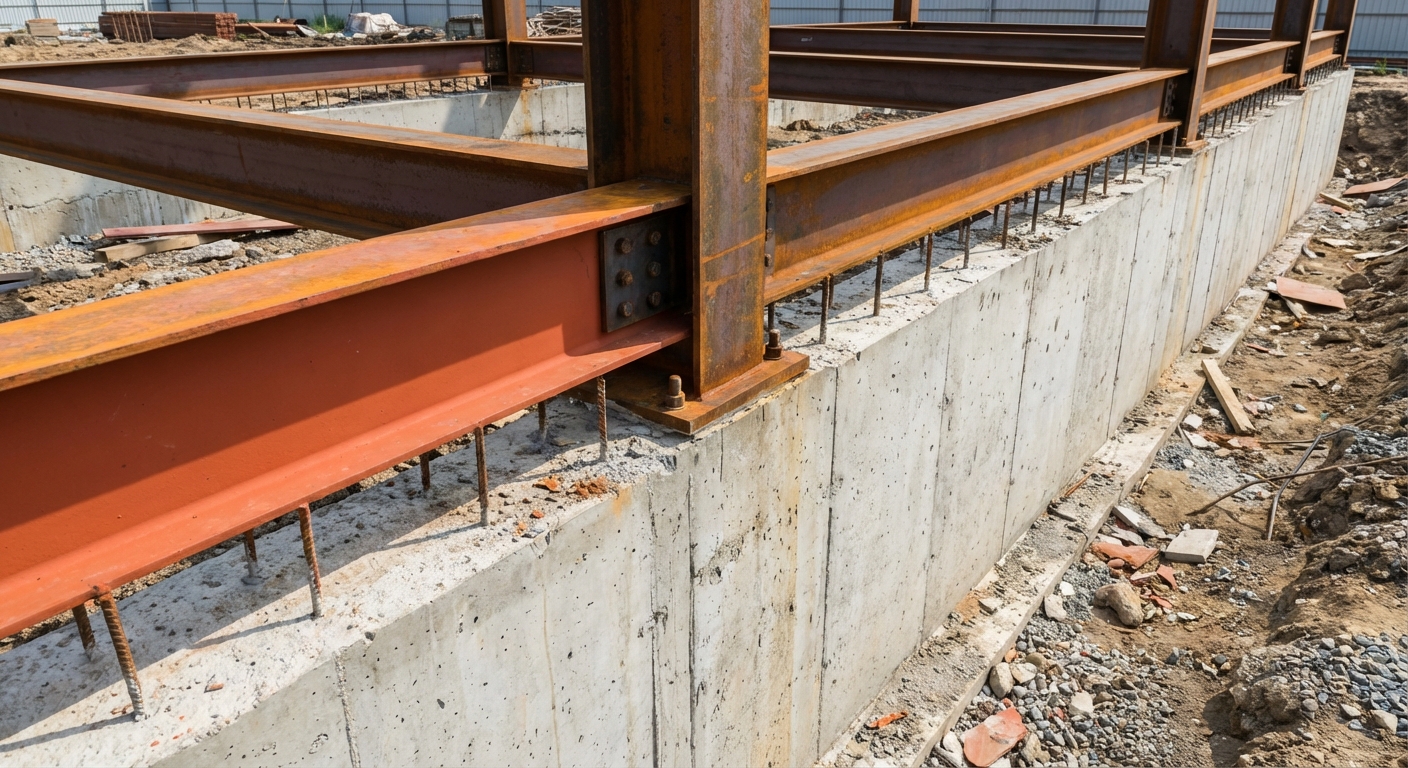
A poured concrete foundation typically represents a significant portion of the cost to build a warehouse , ranging from 3.85to7.00 per square foot. The thickness of the slab must match the weight of your inventory and the traffic patterns of your heavy machinery. You cannot skimp on the foundation, as a settling slab can lead to structural cracks and operational downtime.
How much does a poured concrete foundation cost?
For a 20,000 sq. ft. structure, the foundation cost can range from 77,000to140,000 depending on soil prep and slab thickness. A standard 6-inch reinforced slab is usually sufficient for general warehousing and light manufacturing.
- Footings must be deep enough to bypass the frost line.
- Vapor barriers prevent moisture from damaging your inventory.
- Reinforcing rebar adds the necessary tensile strength.
Believe it or not, the preparation of the ground often costs as much as the concrete itself if the soil is poor.
What specific services are included in foundation fees?
Concrete contractors include site grading, formwork, and the actual pouring and finishing of the slab in their quotes. You may also need to budget for specialized finishes like epoxy coatings if you are handling chemicals or food products.
- Excavation and soil compaction.
- Formwork setup and rebar installation.
- Concrete pumping and power troweling.
Key TakeawayA robust foundation is the literal base of your investment, ensuring your steel building remains level and safe for decades.
| Foundation Element | Estimated Cost | Purpose | |
|---|---|---|---|
| Site Grading | 1.00−2.00/sf | Level surface for building | |
| Concrete Material | 2.50−4.00/sf | Load-bearing structure | |
| Rebar/Forms | 0.50−1.00/sf | Internal reinforcement |
Proper foundation engineering prevents the structural failures that lead to catastrophic long-term repair costs.
Can fabrication lower the cost to build a warehouse?
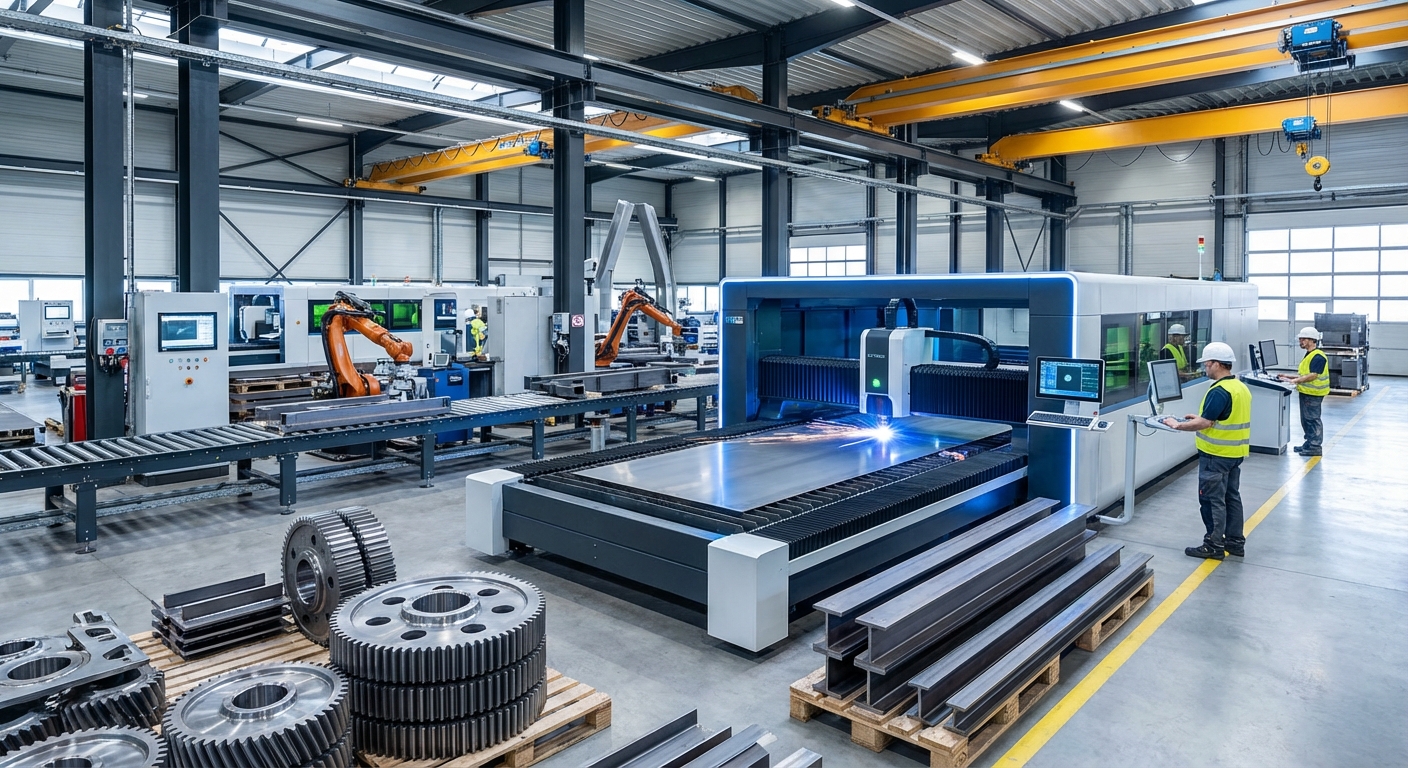
Precision-cut components from a modern factory significantly lower the cost to build a warehouse by reducing material waste and onsite modifications. When parts are manufactured to exact specifications, you avoid the high cost of field-welding and manual adjustments. This “bolt-together” approach streamlines the entire assembly process, making it far more efficient than traditional building methods.
Why does precision-cut steel reduce material waste?
Factory fabrication uses advanced software to nest parts on steel plates, ensuring that almost every square inch of raw material is utilized. This efficiency is passed on to you as a lower material surcharge compared to local steel sourcing.
- CNC machines ensure 100% accuracy on bolt holes.
- Factory welding is performed in controlled environments.
- Parts are labeled for immediate onsite identification.
Think about it: every minute a worker spends fixing a part on-site is money out of your pocket.
Can modular designs accommodate future expansions?
Steel warehouses are inherently modular, meaning you can easily remove an end-wall to add more bays as your company grows. This future-proofing means you don’t have to overbuild today to satisfy the needs of five years from now.
- Expandable frames allow for seamless additions.
- Interchangeable panels simplify repairs and upgrades.
- Modular layouts support phased construction budgets.
Key TakeawayLeveraging factory pre-fabrication minimizes onsite errors and provides a scalable path for your business growth.
| Fabrication Method | Efficiency Gain | Cost Impact | |
|---|---|---|---|
| Factory Prefab | 35% Faster | Lower Labor Costs | |
| Field Fabrication | High Waste | High Specialized Labor | |
| Hybrid Design | Variable | Balanced Budget |
Modern manufacturing technology is the primary reason steel remains the most competitive material for industrial warehouses.
How do labor fees change the cost to build a warehouse?
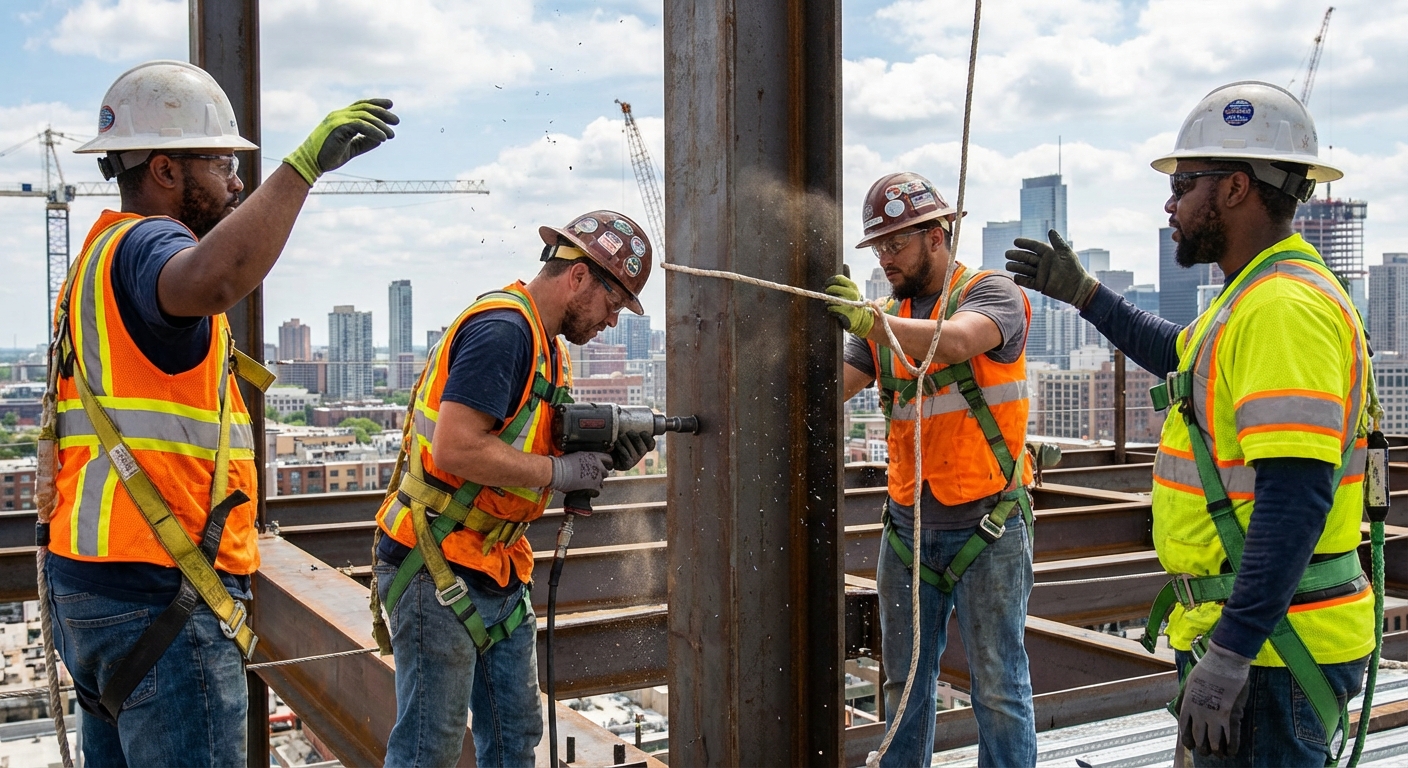
Labor typically accounts for 20% to 40% of the total cost to build a warehouse , with rates varying significantly by region and skill level. In union-heavy areas or regions with high demand for trade workers, your hourly billing for ironworkers and concrete finishers will be at a premium. You must ensure your contractor is experienced specifically with steel structures to prevent expensive delays and safety violations.
What percentage of the budget goes to labor?
You should allocate approximately 5to9 per square foot specifically for the crew that will erect the building and manage the site. This ensures you have a professional team capable of handling heavy machinery and structural connections.
- Erecting the steel frame is the most labor-intensive phase.
- Specialized trades are needed for electrical and plumbing.
- Project management fees cover oversight and scheduling.
Here is the kicker: a highly skilled crew might charge more per hour but will finish the job weeks ahead of a cheaper, inexperienced team.
What specific services are included in labor fees?
Your labor budget covers more than just swinging hammers; it includes the insurance, training, and equipment management required to keep a site running. You are paying for the peace of mind that comes with a safe, OSHA-compliant construction environment.
- Structural steel erection and bolting.
- Wall and roof panel installation.
- Access equipment operation (cranes, lifts).
Key TakeawayVetting your construction crew for steel-specific expertise is the best way to protect your budget from time-consuming assembly errors.
| Labor Component | Typical Cost/sf | Responsibility | |
|---|---|---|---|
| Steel Erection | 3.00−5.00 | Frame and bolting | |
| Concrete Work | 2.00−3.00 | Slab and footings | |
| Finishing Trades | 1.00−2.00 | Doors and electrical |
Analyzing labor efficiency reveals that assembly expertise is just as important as the price of the steel itself.
Does construction speed lower the cost to build a warehouse?
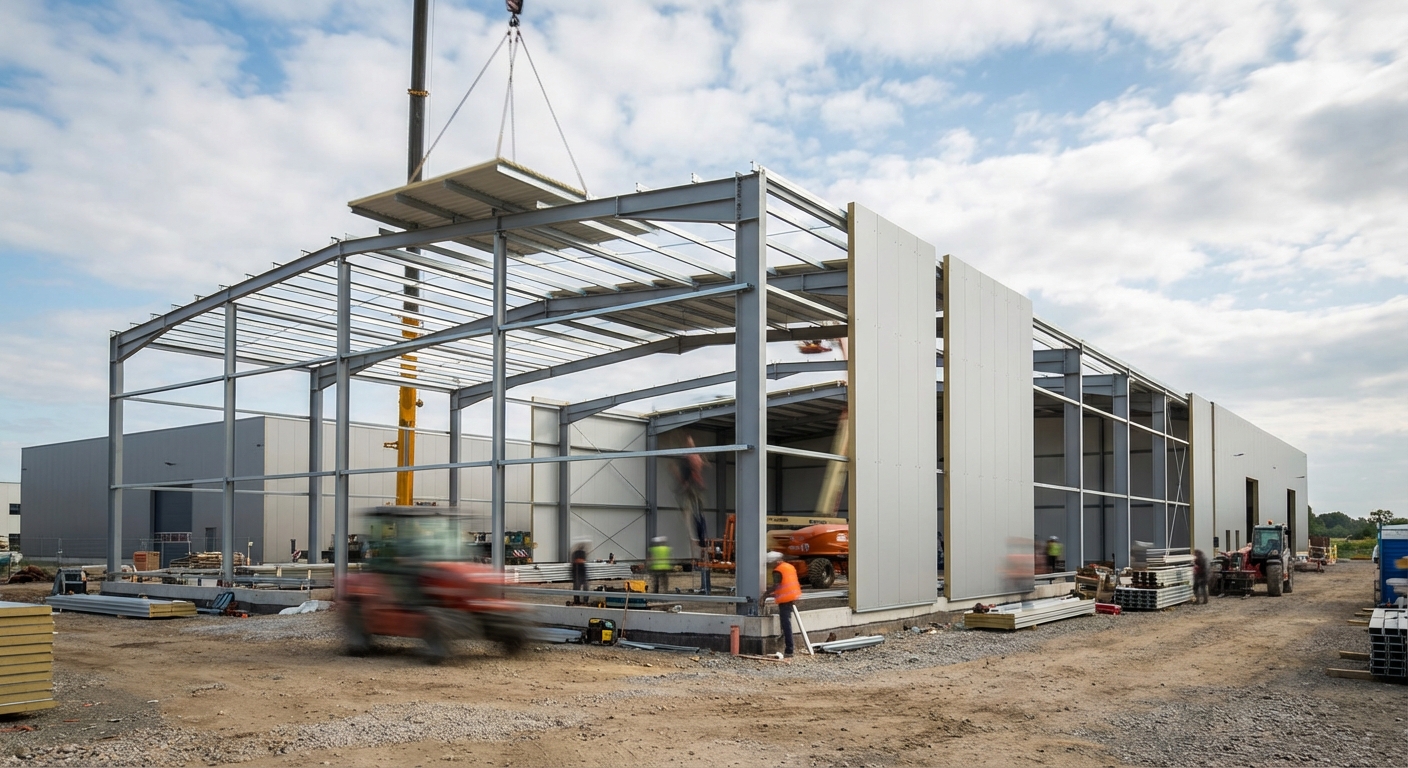
Reduced timelines are a major factor in lowering the cost to build a warehouse because they cut down on management overhead and financing interest. A 20,000 square foot steel warehouse can be dried-in within weeks, whereas a traditional build might take several months. This rapid turnaround allows you to move inventory and generate revenue much sooner, improving your overall project cash flow.
How much faster is prefab assembly than traditional?
Prefabricated steel kits arrive ready to assemble, reducing onsite construction time by approximately 33% compared to conventional methods. Since most of the heavy lifting happens in the factory, the onsite crew spends their time bolting parts together rather than fabricating them.
- Staged deliveries keep the job site organized.
- Simplified connections require fewer specialized tools.
- All-weather assembly prevents seasonal delays.
Now: consider the “opportunity cost” of waiting six months for a building versus having one ready in sixty days.
Can ready-to-assemble kits lower onsite worker hours?
By minimizing the need for onsite welding and cutting, these kits significantly reduce the total man-hours required to complete the structure. This efficiency translates directly into lower labor invoices and fewer chances for onsite accidents.
- Pre-punched holes eliminate drilling time.
- Detailed assembly drawings reduce planning errors.
- Standardized parts simplify the training of new crews.
Key TakeawayThe speed of steel construction is a financial advantage that provides faster occupancy and lower construction-period interest.
| Build Phase | Steel Timeline | Traditional Timeline | |
|---|---|---|---|
| Foundation | 1 – 2 Weeks | 1 – 2 Weeks | |
| Framing/Shell | 2 – 4 Weeks | 8 – 12 Weeks | |
| Total to Dry-In | 4 – 6 Weeks | 12 – 16 Weeks |
Speed is the ultimate cost-saver in industrial construction, allowing you to bypass months of expensive onsite management.
Does durability reduce the cost to build a warehouse?
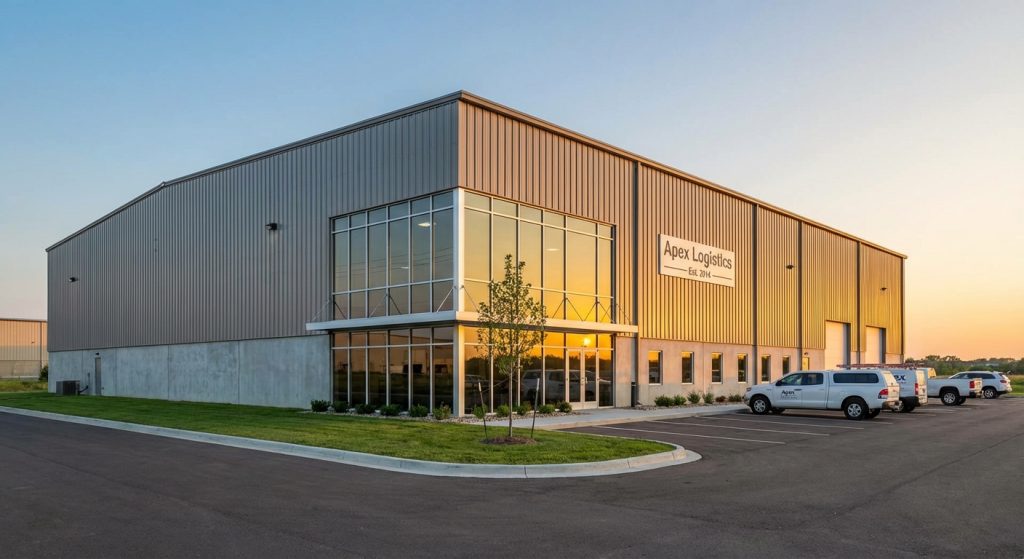
High structural integrity and resistance to common industrial hazards significantly lower the long-term cost to build a warehouse by slashing annual maintenance bills. Steel does not rot, warp, or attract termites, which are the primary killers of traditional wood-framed buildings. Furthermore, modern paint coatings and rust-resistant coatings ensure the exterior remains functional and professional-looking for decades without repainting.
How does steel durability reduce annual repair bills?
Annual maintenance costs for a 20,000 sq. ft. steel building typically range from 1.40to1.85 per square foot, which is much lower than other building types. You will spend far less on structural repairs, pest control, and roof maintenance over the lifespan of the building.
- Inorganic materials prevent mold and rot.
- High-grade steel resists impacts from forklifts.
- Standardized panels make individual repairs easy.
Wait, there is more. The strength of steel often qualifies you for lower property insurance rates because it is non-combustible.
Why are steel warehouses more energy efficient?
When paired with high-quality insulation systems like insulated metal panels (IMPs), steel buildings can maintain extremely stable interior temperatures. This reduces the strain on your HVAC systems and lowers your monthly utility expenses by a wide margin.
- Reflective roof coatings lower cooling loads.
- Tight seals prevent air infiltration and energy loss.
- Insulated panels offer high R-values for cold storage.
Key TakeawayBuilding with steel is an investment in long-term stability, ensuring your operational costs remain low as the facility ages.
| Maintenance Item | Steel Frequency | Wood Frequency | |
|---|---|---|---|
| Pest Control | Minimal | Frequent | |
| Structural Check | Every 5 Years | Annual | |
| Exterior Paint | 20+ Years | 5 – 7 Years |
Durability directly translates to a higher resale value and lower operational overhead throughout the building’s lifecycle.
What soft costs affect the cost to build a warehouse?
Soft costs, such as architectural fees, permits, and insurance, usually account for about 30% of the total cost to build a warehouse. These “hidden” expenses are necessary to ensure the building is legal, safe, and financially protected. Neglecting these early in the budgeting process can lead to severe funding shortages during the final stages of the project.
Which permits and legal fees should you budget for?
You must account for land use permits, environmental impact studies, and local building inspections before you even break ground. Depending on your jurisdiction, these fees can range from a few thousand dollars to tens of thousands.
- Civil engineering fees cover drainage and grading.
- Building permits ensure the structure meets local safety codes.
- Impact fees may be required for new utility connections.
Think about it: the legal right to build is just as important as the steel itself.
Insurance providers view steel as a low-risk material because it is fire-resistant and holds up well against extreme weather. This structural resilience means you can negotiate significantly lower monthly premiums compared to wood-frame owners.
- Non-combustible materials reduce fire risk ratings.
- Engineered wind resistance prevents storm damage.
- Proper grounding provides protection against lightning strikes.
Key TakeawayComprehensive budgeting for soft costs ensures a smooth transition from the design phase to the final occupancy of your new warehouse.
| Soft Cost Category | Estimated % | Purpose | |
|---|---|---|---|
| Engineering/Design | 10% – 15% | Plans and safety | |
| Permits/Legal | 5% – 8% | Compliance and rights | |
| Insurance/Financing | 5% – 10% | Risk and capital |
Proper management of soft costs is the final piece of the puzzle in delivering a warehouse project on time and within budget.
Ready to stop wasting money on inefficient space? We solved the mystery of the 20,000 sq. ft. budget and provided the exact roadmap to your structural success. You can now take these insights to your board and finalize your expansion strategy with confidence. At Showhoo Building, we stand for engineering precision and unwavering structural integrity for every square foot we manufacture. Let our experts help you lock in current steel pricing and design a facility that works as hard as you do. Contact us today to start your project.
Frequently Asked Questions (FAQ)
Can I customize the height of my 20,000 sq. ft. warehouse?
Yes, steel buildings allow for extremely flexible eave heights, often reaching 40 feet or more to maximize vertical storage and racking. This is because the high strength-to-weight ratio of steel frames supports taller walls without the need for additional interior supports.
How do I ensure my steel building meets local snow load codes?
Professional engineering is the only way to guarantee code compliance, as our team uses site-specific data to design the roof trusses and columns. Every structure we provide is stamped by a certified engineer to meet or exceed your local wind and snow requirements.
Can I finance a prefabricated steel warehouse project?
Absolutely, and many lenders prefer steel buildings because they represent a durable, high-value asset with a long lifespan. We can assist you in coordinating the necessary documentation and structural plans required by financial institutions to secure your construction loan.
How long does the entire process take from design to delivery?
A standard 20,000 sq. ft. project typically moves from signed design to onsite delivery in 8 to 12 weeks, depending on the current fabrication queue. This is up to 33% faster than traditional methods, allowing you to start operations months ahead of schedule.
What insulation options are best for a 20,000 sq. ft. structure?
Insulated Metal Panels (IMPs) provide the highest thermal efficiency and R-values, making them the gold standard for climate-controlled warehousing. For general dry storage, fiberglass blanket insulation with a vapor barrier is a more cost-effective alternative that still provides excellent energy performance.