
To enter the commercial broiler industry, you must understand the interplay between bird husbandry, biosecurity, and specialized steel housing designed for intensive production. Many aspiring farmers dive into poultry management without realizing the technical complexity and 24/7 dedication required to maintain healthy flocks. This lack of preparation can lead to high mortality rates, failed inspections, and financial ruin before the first flock even reaches market weight. Fortunately, by following a structured management protocol and investing in professional how many chickens are in a commercial chicken house infrastructure, you can build a sustainable and profitable agricultural business.
What is the first step for new poultry farmers?
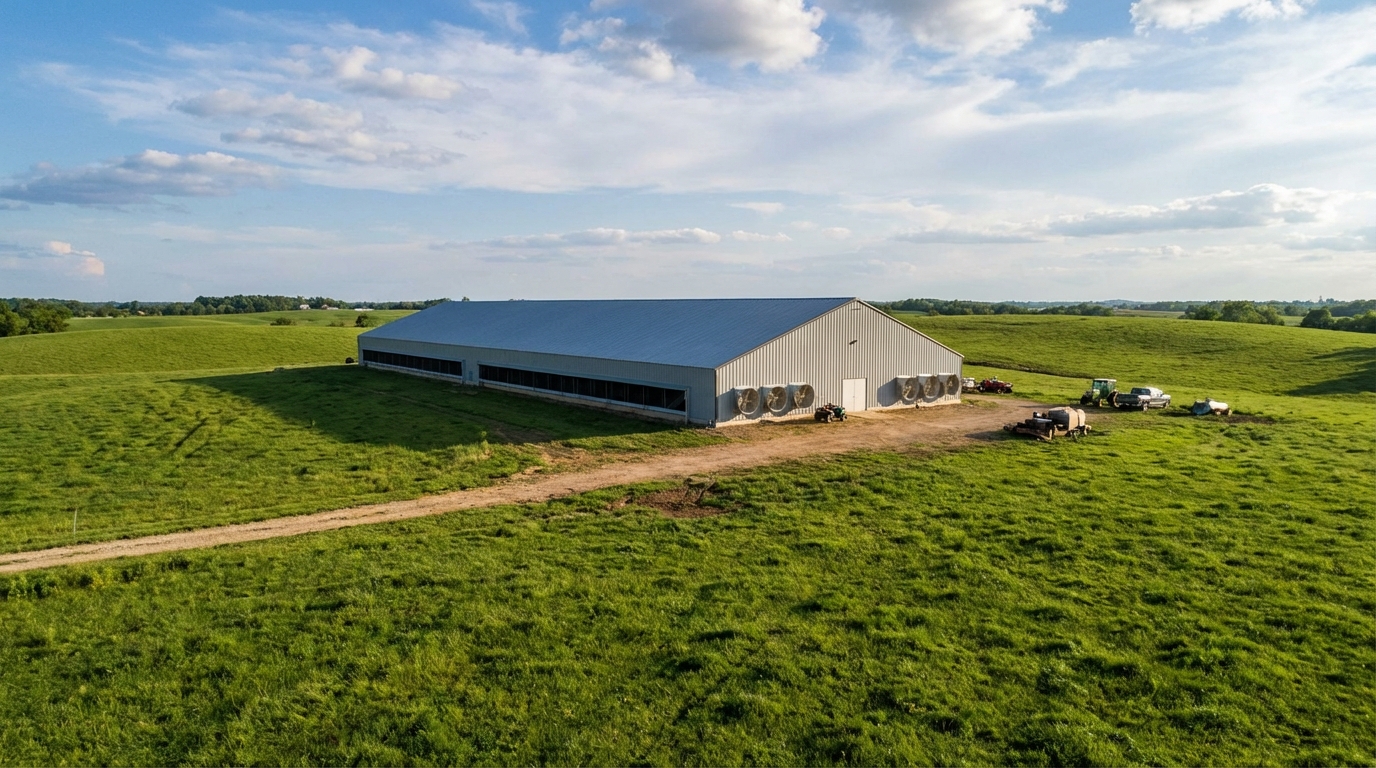
The first step for new poultry farmers is deciding which specific farm type—pullet, breeder, or broiler—aligns with your labor capacity and business goals while determining how many chickens are in a commercial chicken house for that sector. You must evaluate the level of day-to-day care required by different integrators.
How do integrators support new growers?
Integrators own the birds and provide the feed and veterinary services while you provide the facility and labor. Here’s the deal. You are responsible for daily husbandry and bird care under their strict management protocols.
Why should you talk to local growers?
Speaking with multiple current growers in your area provides a realistic view of the industry’s daily requirements.
- Understand regional weather impacts.
- Learn about specific integrator reputations.
- Assess the actual labor hours needed.
Key Takeaway: Success begins with a thorough understanding of the contract grower model and the specific responsibilities of each farm type.
| Step | Action | Outcome | |
|---|---|---|---|
| Research | Contact local integrators | Secure a partnership | |
| Analysis | Talk to current growers | Realistic expectations | |
| Planning | Choose a farm type | Target specific infrastructure |
Choosing a farm type is the foundation upon which all your subsequent infrastructure and financial decisions will be built.
How many chickens are in a commercial chicken house?
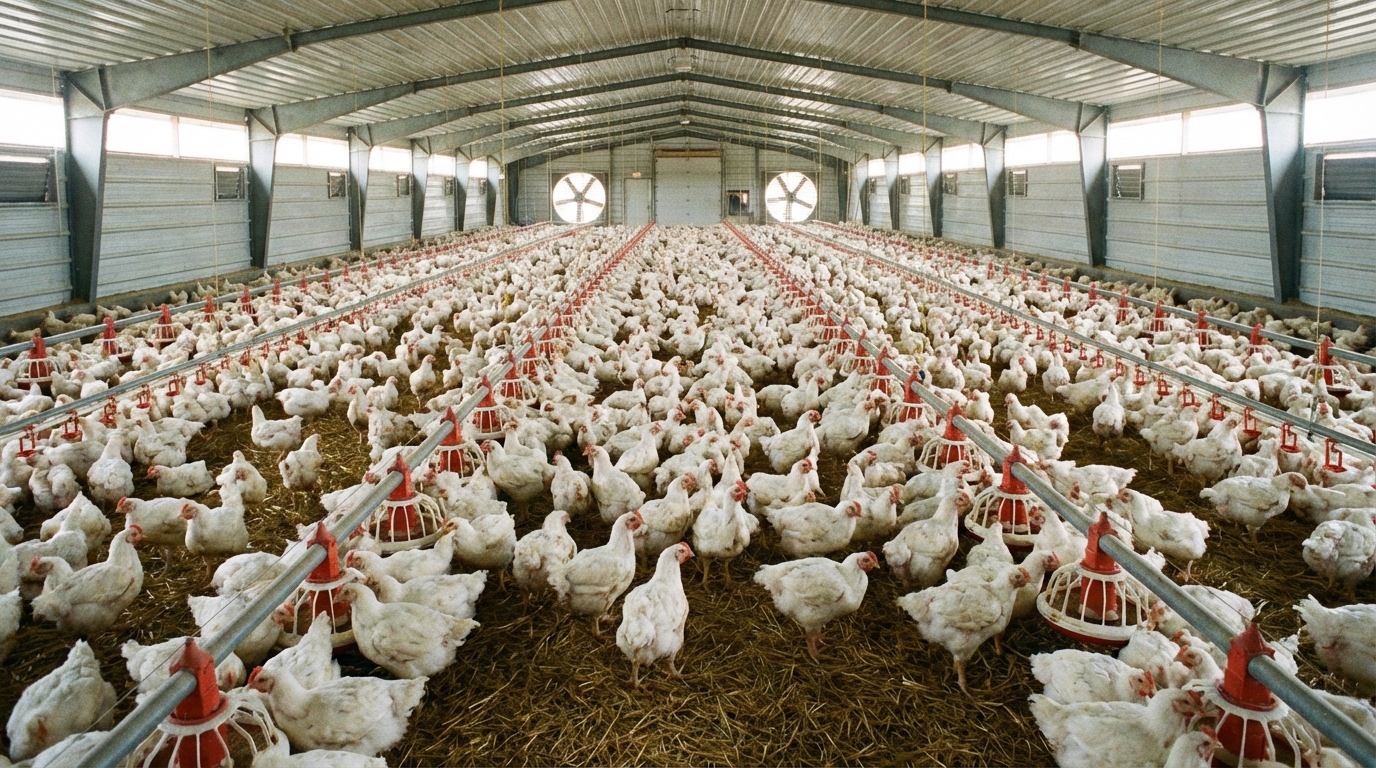
In a standard 60 × 600-foot modern facility, how many chickens are in a commercial chicken house typically ranges from 36,000 to 52,000 birds depending on the target market weight. This high density requires advanced automation to ensure every bird has equal access to resources. Look: these numbers fluctuate based on whether you are growing small fast-food birds or larger birds for retail cuts.
What factors influence stocking density?
The target weight of the bird is the primary factor in determining how many individuals fit in a single house. Larger birds require more square footage to move and access feeders.
- Small birds: Higher density allowed.
- Large birds: More floor space per bird.
- Environment: Ventilation capacity affects density.
Is high-density farming sustainable?
Modern steel structures allow for intensive farming while maintaining strict animal welfare standards through climate control. These chicken house designs maximize efficiency and reduce the environmental footprint per pound of protein produced.
Key Takeaway: Stocking density is a calculated balance between bird welfare, market requirements, and the capacity of your housing systems.
| Building Size | Bird Target Weight | Total Chickens | |
|---|---|---|---|
| 60′ x 600′ | Small (3.5 lbs) | ~52,000 | |
| 60′ x 600′ | Large (9.0 lbs) | ~36,000 |
Higher bird counts require more robust automated systems to maintain the delicate balance of the house environment.
What is the purpose of a pullet farm?
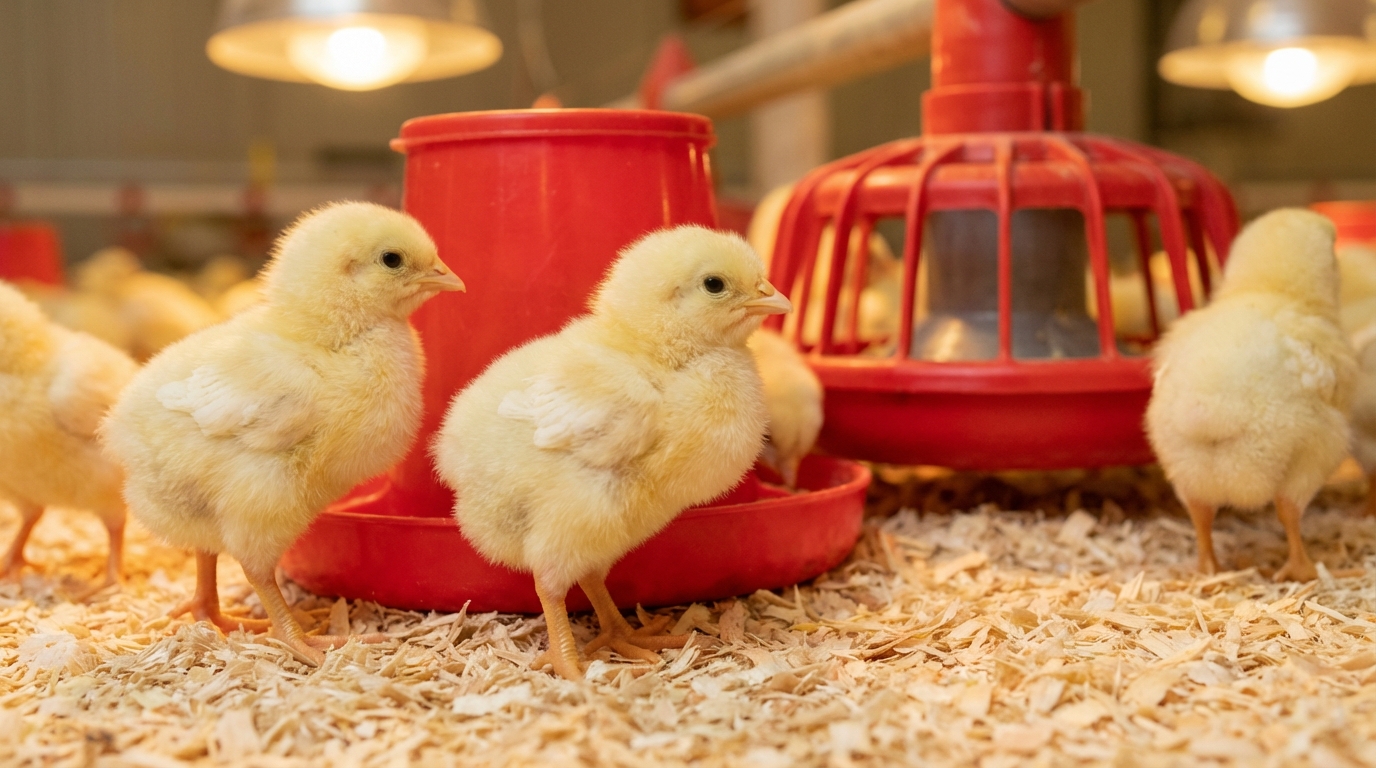
A pullet farm is designed to raise young or sexually immature female chickens from hatchlings until they are ready to move to a breeder facility, which directly affects how many chickens are in a commercial chicken house for future production. The brood phase, lasting the first 10 to 14 days, is the most critical period. Think about it. Mistakes made in these early days will negatively impact the birds’ entire productive lives.
How is pullet feeding managed?
Feeding systems on pullet farms are computerized to ensure flock uniformity despite natural pecking orders.
- Computerized feed delivery.
- Alternating day schedules.
- Strict monitoring of bird weight.
Why is uniformity so important?
Uniform growth ensures that when birds transition to breeder houses, they reach sexual maturity at the same time. This predictability is essential for consistent hatching egg production later in the cycle.
Key Takeaway: Pullet management is a precision science focused on creating a uniform foundation for the breeding program.
| Phase | Duration | Focus | |
|---|---|---|---|
| Brooding | 10–14 Days | Early development | |
| Rearing | 20–22 Weeks | Uniform growth | |
| Transition | Post 22 Weeks | Moving to breeder farm |
Uniformity in the pullet stage is the single greatest predictor of success in the subsequent breeding phase.
How do dark-out houses regulate bird growth?
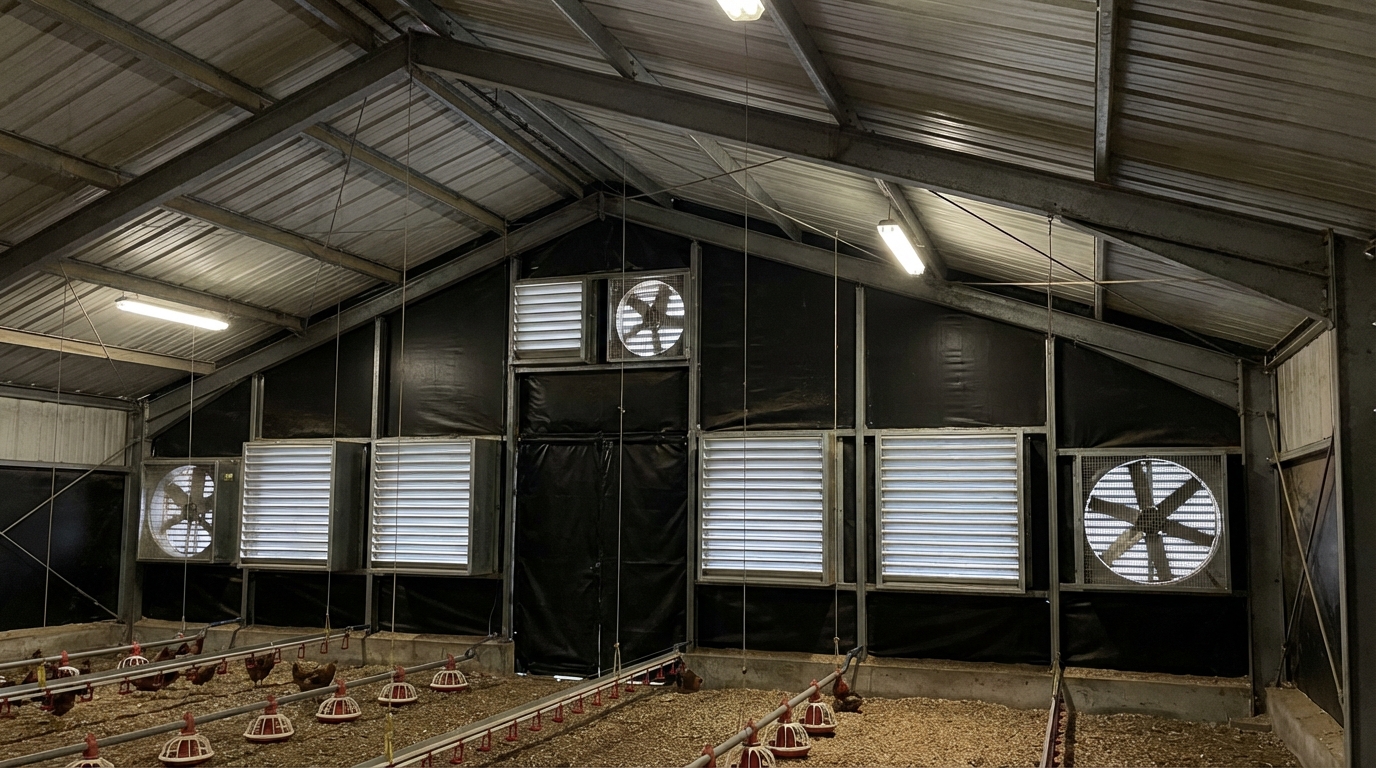
Dark-out houses use specialized light-trapping components on fans and inlets to control the birds’ exposure to light, which dictates the biological rhythms of how many chickens are in a commercial chicken house . Simply put, these measures regulate sexual maturation and growth rates. You must maintain these false walls and light traps to ensure they remain functional and clean.
What are light traps?
Light traps are physical barriers that allow air to pass while blocking 100% of external light.
- Installed on every fan.
- Required on all air inlets.
- Must be cleaned regularly for airflow.
How does darkness affect maturation?
Controlled periods of total darkness prevent birds from maturing too quickly before they are physically ready. This management leads to longer-lasting and more productive breeder hens.
Key Takeaway: Light control is a primary management tool used to synchronize the reproductive development of the flock.
| Component | Function | Maintenance | |
|---|---|---|---|
| False Wall | Prevents light leaks | Dusting/Sealing | |
| Light Trap | Airflow without light | Weekly cleaning | |
| Controller | Schedules light hours | Calibration |
Properly maintained dark-out systems are essential for the biological success of any pullet operation.
What makes breeder farm management intensive?
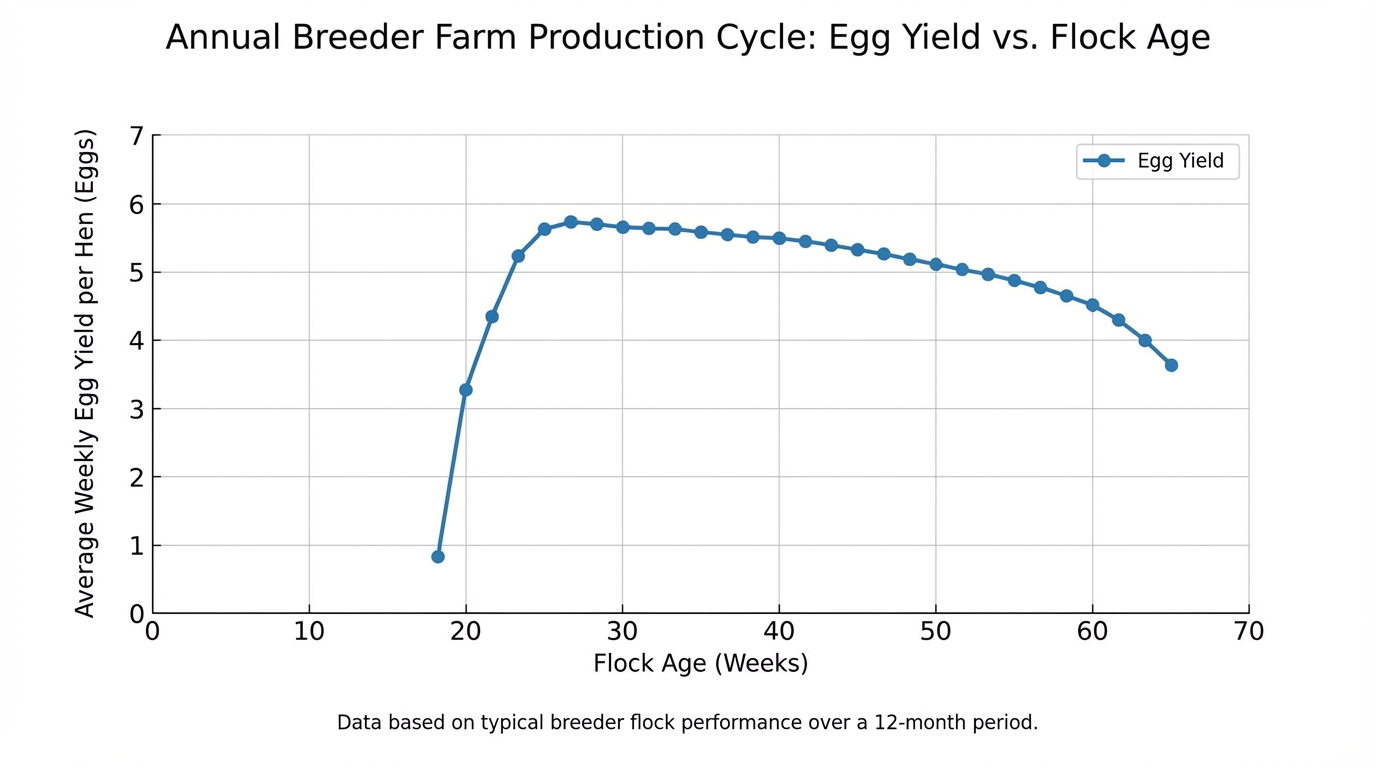
Breeder farm management is the most labor-intensive stage because it involves daily egg collection and fertility management, which requires knowing how many chickens are in a commercial chicken house to optimize output. A typical breeder house can produce 1.2 to 1.4 million eggs per year. But there’s a catch. Every single egg must be collected, inspected, and climate-controlled multiple times a day.
What are the daily labor requirements?
Breeders require more manual labor than broilers due to the complexity of the reproductive cycle.
- Constant egg gathering.
- Nest box maintenance.
- Monitoring hen and rooster health.
How are fertile eggs handled?
Eggs are gathered and moved to specialized cooler rooms to await pickup by the integrator for the hatchery. Maintaining precise temperatures in these rooms is vital for embryo survival.
Key Takeaway: Breeder farming traded speed for production volume, requiring a disciplined daily routine for egg quality.
| Task | Frequency | Impact | |
|---|---|---|---|
| Egg Collection | Multiple/Daily | Prevents floor eggs | |
| Slat Cleaning | Between flocks | Biosecurity | |
| Feed Management | Daily | Hen weight control |
The labor-intensive nature of breeder farms is reflected in their payment structures, which are often per dozen eggs.
What defines a modern breeder house interior?
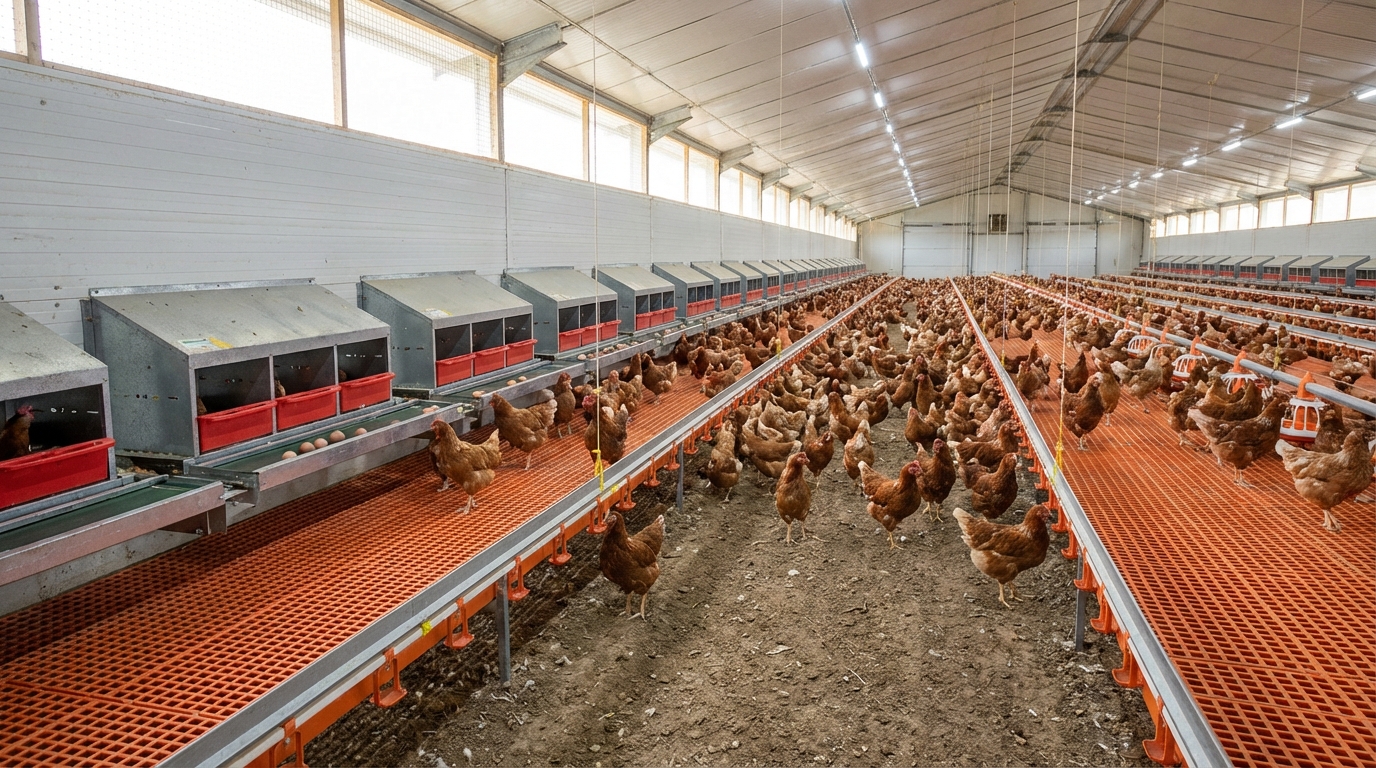
Modern breeder house interiors are characterized by raised slat areas and specialized nesting boxes that accommodate how many chickens are in a commercial chicken house . The best part? Most systems are now automated to move eggs directly to a central collection area at the end of the building. These steel structure buildings provide the durability needed for the heavy interior equipment.
Why are raised slats used?
Slats keep the birds off the floor, which improves hygiene and keeps the nesting areas cleaner.
- Reduces floor-laid eggs.
- Separates waste from birds.
- Provides a stable mating area.
How do automated nests work?
Automated nests provide a comfortable environment for hens and then gently convey the eggs onto a collection belt. This reduces the physical strain on the grower and keeps the eggs cleaner.
Key Takeaway: Specialized interior layouts are designed to maximize egg hygiene and minimize the physical toll on the farmer.
| Zone | Primary Equipment | Bird Activity | |
|---|---|---|---|
| Slats | Feeders/Nests | Eating/Laying | |
| Scratch Area | Rooster feeders | Mating/Exercise | |
| End Room | Cooler/Belt system | Egg processing |
A well-designed interior layout reduces the time spent on manual labor while increasing total hatching egg yield.
Why is ventilation critical for flock health?
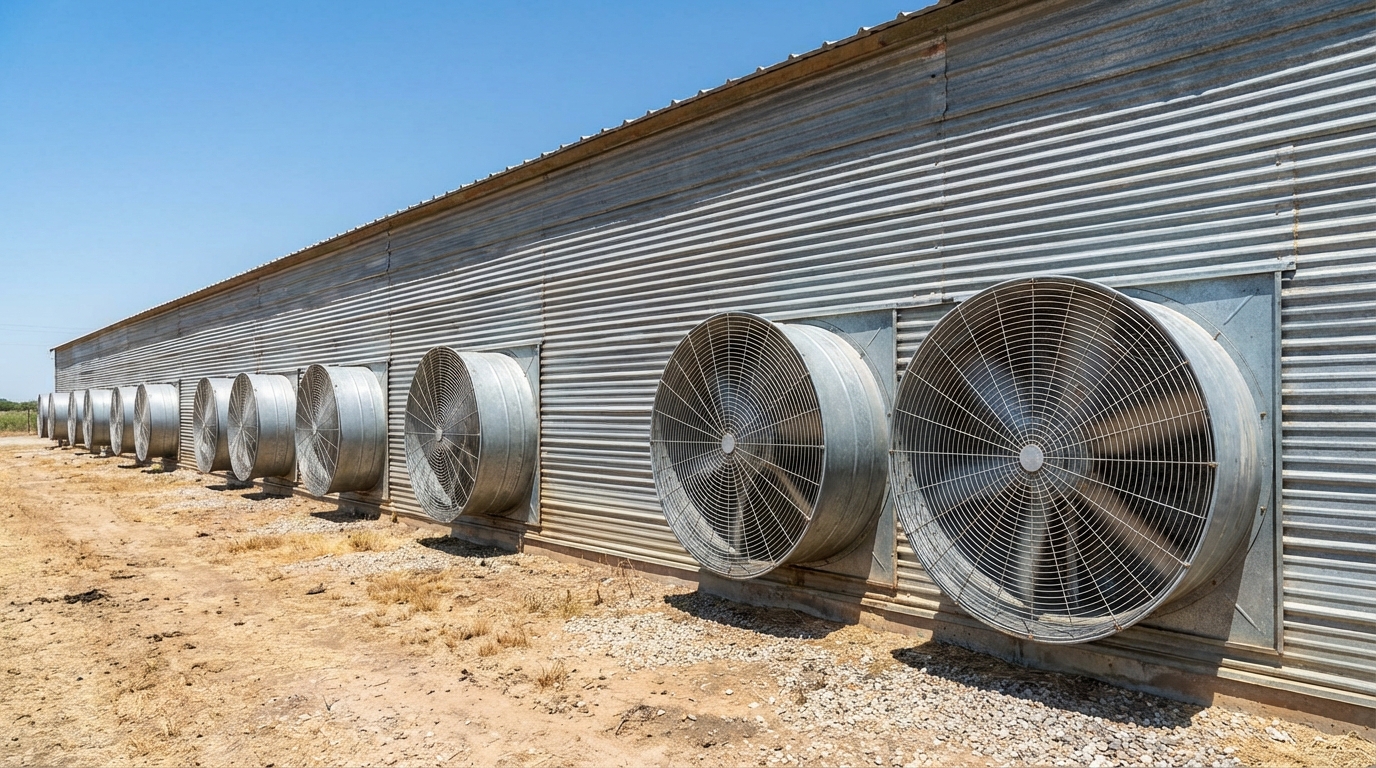
Ventilation is the life-support system of the farm, ensuring the right air exchange for how many chickens are in a commercial chicken house regardless of the season. In a modern poultry house, the grower is 100% responsible for the birds’ air quality needs. Wait, there’s more. Ventilation must remove moisture, ammonia, and heat to prevent massive flock mortality during summer months.
How does tunnel ventilation work?
Tunnel ventilation uses massive exhaust fans at one end of the house to pull air through cooling pads at the other end.
- Creates a wind-chill effect.
- Lowers perceived temperature.
- Rapidly removes stale air.
What happens if ventilation fails?
Even a brief power outage or mechanical failure can lead to the death of thousands of birds within minutes due to heat prostration. You must have backup generators and alarm systems in place.
Key Takeaway: Managing airflow is a 24-hour responsibility that dictates the health and comfort of the entire flock.
| Season | Goal | Primary Tool | |
|---|---|---|---|
| Winter | Ammonia removal | Minimum ventilation inlets | |
| Summer | Heat removal | Exhaust fans/Cooling pads | |
| Transitional | Comfort | Automated controllers |
The precision of your ventilation system is the primary defense against environmental stress and respiratory disease.
How does the broiler grow-out cycle work?
The broiler grow-out cycle is the fastest phase of the industry, where how many chickens are in a commercial chicken house can reach market weight in as little as 32 to 70 days. Truth be told, this turnaround speed requires high-efficiency steel structure workshop facilities that can be cleaned and reconditioned quickly between flocks. You will raise multiple flocks per year in this high-intensity model.
What are the different bird targets?
Integrators dictate bird weight based on the intended market.
- Fast food: 3.5 lbs (rapid turnaround).
- Retail cuts: 4-6 lbs (moderate cycle).
- Value-added: 7-9 lbs (longer grow-out).
How is feed efficiency measured?
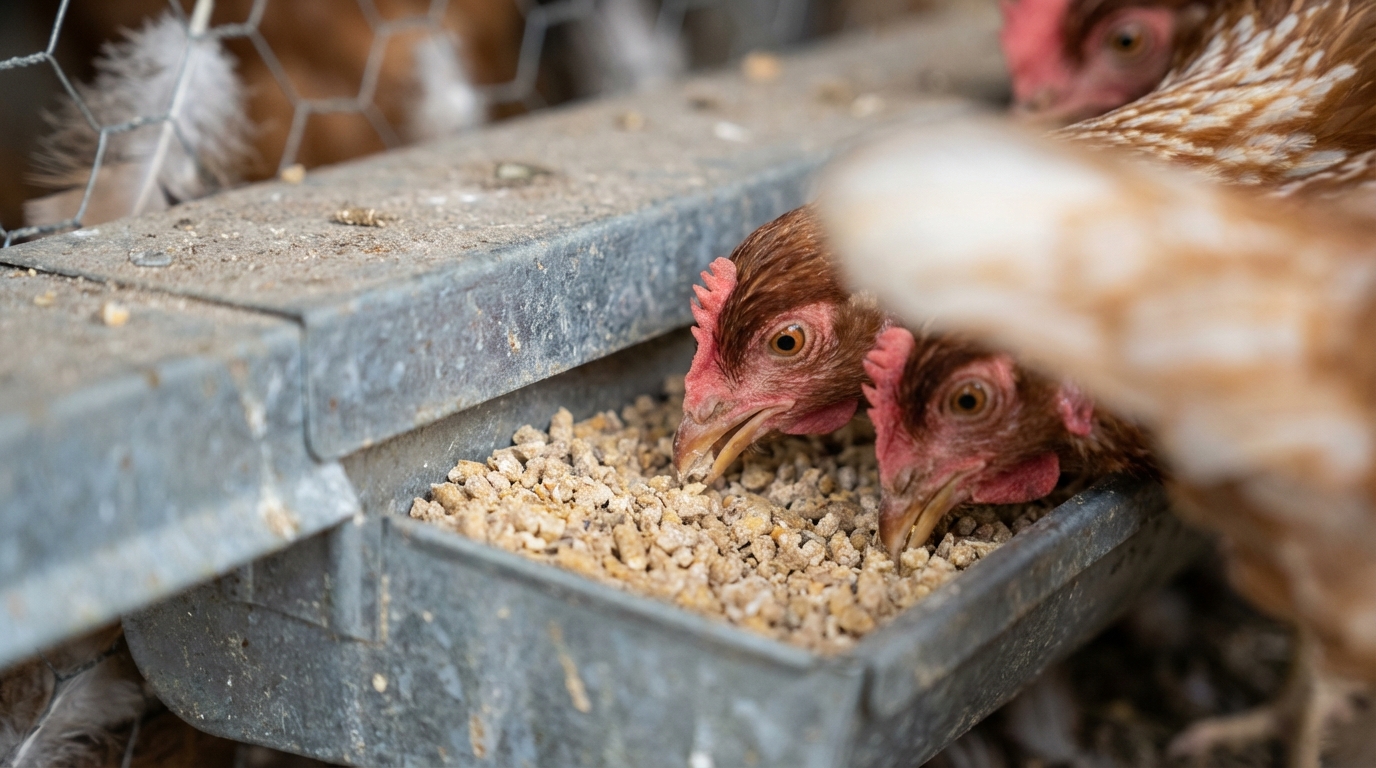
Feed conversion—the amount of feed needed per pound of meat—is the primary metric for profitability. Automated feed pans must be adjusted daily to the birds’ height to prevent waste.
Key Takeaway: Broiler farming is a game of efficiency where small adjustments in feed and environment lead to large profit margins.
| Market Type | Grow Days | Target Weight | |
|---|---|---|---|
| Small Bird | 32–40 | ~3.5 lbs | |
| Big Bird | 60–70 | ~9.0 lbs |
The speed of the broiler cycle means that mistakes are measured in hours, not days, requiring constant vigilance.
Why is biosecurity vital for farm protection?
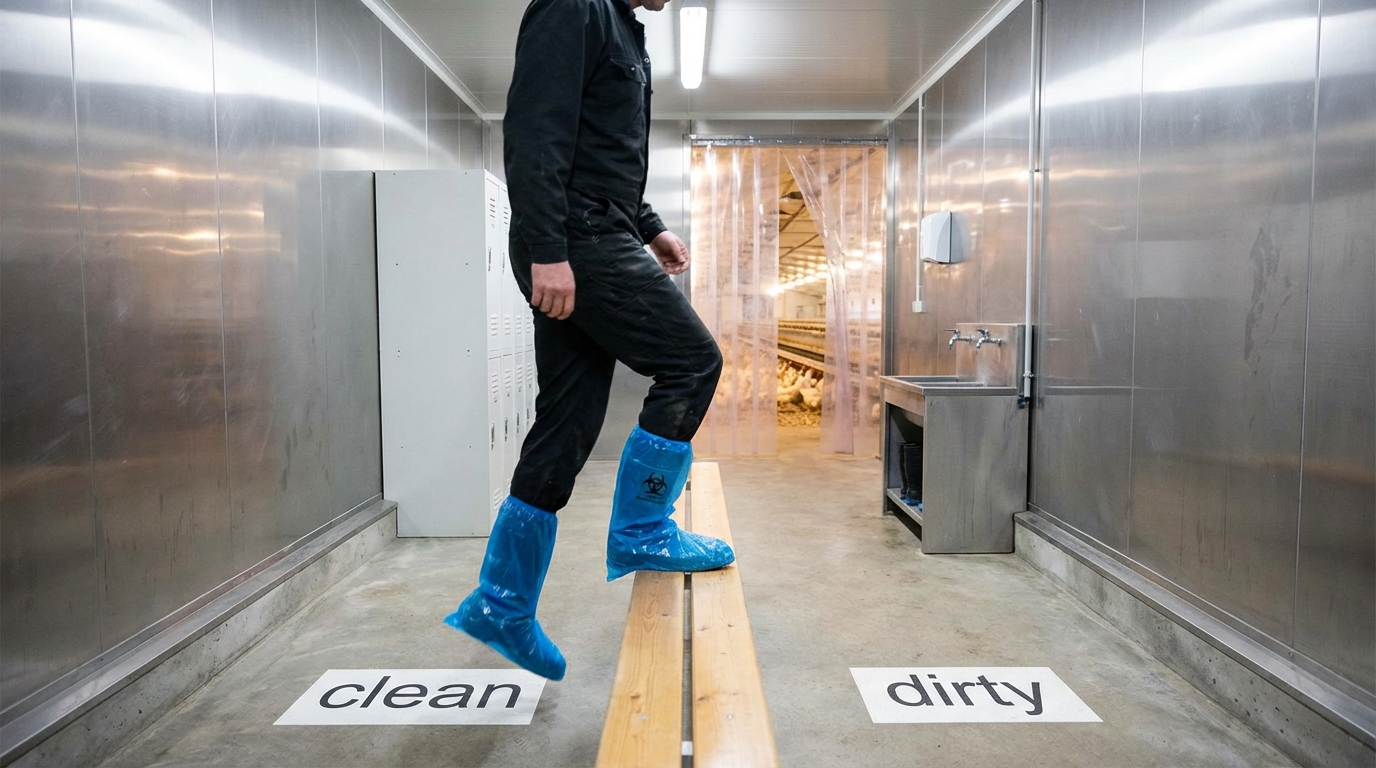
Biosecurity is the practice of protecting birds from disease and protects the financial investment behind how many chickens are in a commercial chicken house. You might wonder: why is it so strict? Because high-density housing allows contagious viruses to spread instantly, potentially wiping out your entire livelihood and affecting neighboring farms.
What are common biosecurity measures?
Strict biosecurity involves controlling everything that enters the bird area.
- Dedicated footwear and clothing.
- Danish entry systems with benches.
- Rodent and insect control.
How do you manage mortality?
Daily mortality removal is required by law and integrator protocol. You are responsible for the disposal method, whether it be composting, incineration, or rendering, while following all environmental regulations.
Key Takeaway: Biosecurity is not a suggestion; it is a mandatory set of procedures that safeguards the global food supply.
| Threat | Source | Defense | |
|---|---|---|---|
| Avian Flu | Wild fowl | Enclosed houses/Sealing | |
| Bacterial | Human traffic | Foot baths/Entry rooms | |
| Parasites | Rodents/Insects | Professional pest control |
A single breach in biosecurity can have regional economic impacts, making it the most critical part of your daily routine.
How do you design a durable poultry farm layout?
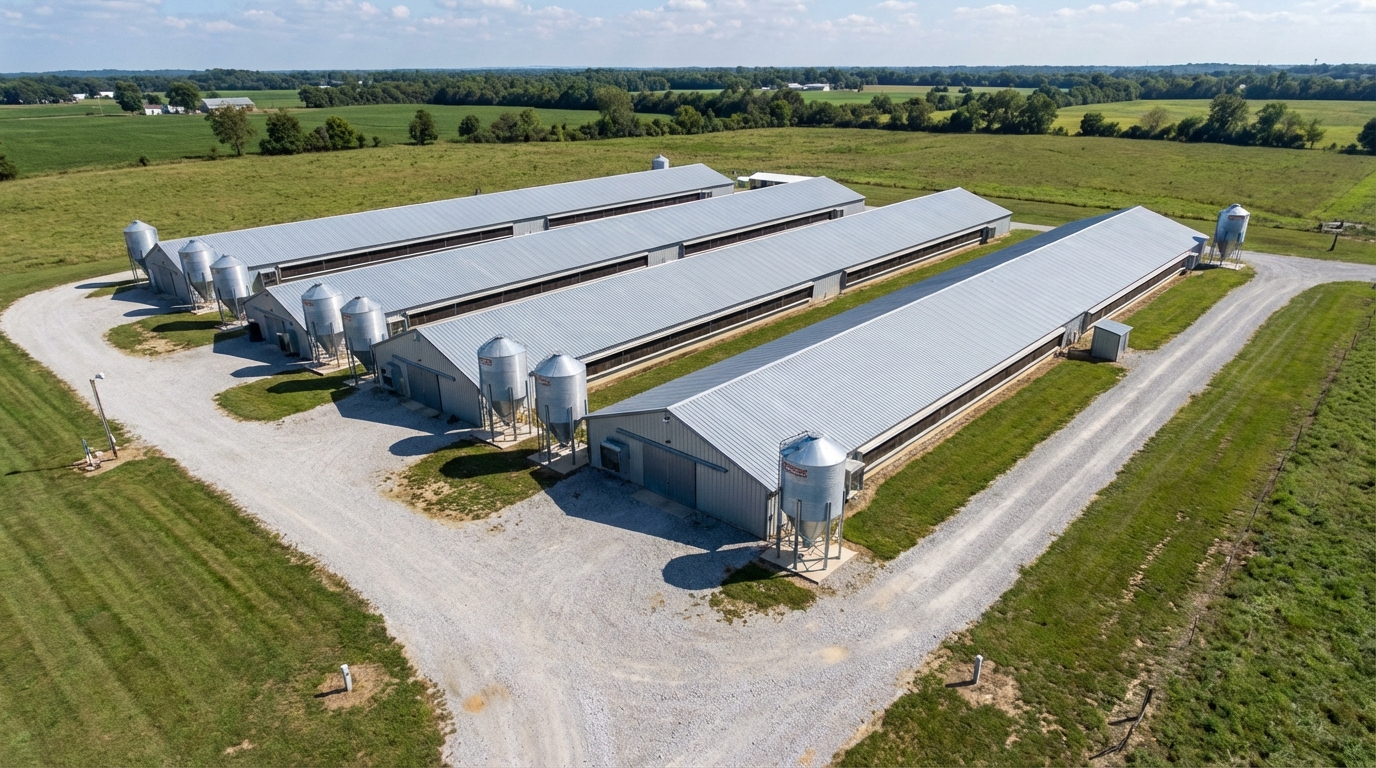
Designing a durable farm layout requires considering drainage, access for feed trucks, and the long-term integrity of how many chickens are in a commercial chicken house . It gets better: using steel structure warehouse technology ensures your buildings last for 30+ years with minimal maintenance compared to wood. You must plan for litter handling and nutrient management from day one.
What are the benefits of steel construction?
Steel provides superior biosecurity because it is non-porous and resists pests like termites.
- Fast assembly (bolted connections).
- Resistance to high winds/snow.
- Fire-resistant materials.
Why is site planning critical?
Your farm must accommodate large 18-wheeler feed trucks and bird-catching crews. Proper road spacing and heavy-duty pads are essential to prevent logistics bottlenecks during critical times.
Key Takeaway: A professional site layout and durable steel construction are the best investments for long-term farm viability.
| Feature | Requirement | Benefit | |
|---|---|---|---|
| Drainage | Sloped site | Prevents flooding | |
| Spacing | Wide turn radius | Easy truck access | |
| Material | Prefabricated steel | Speed/Durability |
A well-planned site reduces operational stress and ensures your infrastructure can handle the demands of modern commercial farming.
At Showhoo Steel Structure, we understand that your poultry house is more than just a building; it is a life-support system for your investment. We are committed to providing factory-direct, high-quality steel structures that help you maximize bird health and operational efficiency. If you are ready to build a facility that meets international standards for durability and biosecurity, contact us today to discuss your project.
FAQ
Can I build a poultry house using local wood?While possible, modern commercial standards favor steel structures for their superior durability, fire resistance, and ability to maintain the strict sealing required for biosecurity and climate control.
What is the best way to handle farm mortality?The best method depends on local regulations, but composting is widely considered the most sustainable and cost-effective way for growers to handle daily bird loss while producing useful fertilizer.
Can I manage multiple farm types at once?It is usually best to specialize in one farm type, such as broilers or breeders, due to the vastly different labor requirements and the strict biosecurity risks associated with cross-contamination.
What happens if the power goes out?Every commercial house must have an automatic backup generator and an alarm system to ensure that ventilation and feeding systems continue to operate during an outage.
How do I get a contract with an integrator?You should contact local integrator offices (like Tyson or Pilgrim’s) to see if they are currently expanding in your area and to get their specific building specifications before starting construction.