
A good home for pigs requires a high-quality pig shed that provides climate control and safety while allowing for ample outdoor foraging. Many owners find their current structures decaying rapidly or their animals falling ill due to poor environmental design. This leads to rising veterinary costs and stressed residents that cannot express their natural behaviors. By focusing on durable materials and animal-centered design, you can ensure a safe haven that supports their long-term health and happiness.
How much space is required inside a pig shed?
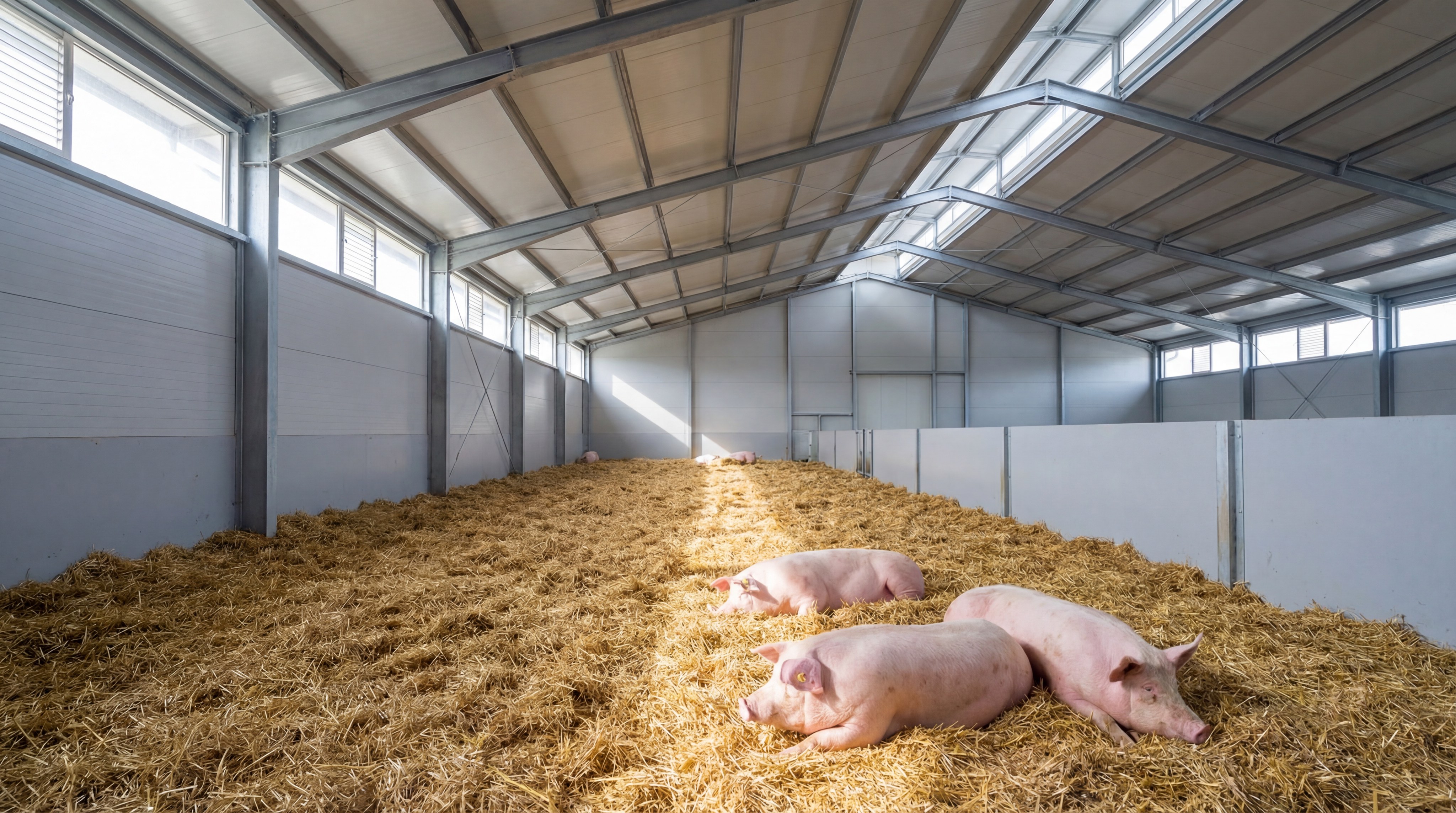
Your pig shed should provide at least 64 square feet per adult pig to ensure they have enough room for normal activity. Providing this space is the most critical factor in preventing territorial aggression and ensuring respiratory health. While industry minimums exist, a sanctuary-style approach requires significantly more room to allow for natural behaviors.
Can you expand the layout?
You should always aim for more than the bare minimum to prevent group tensions. If your residents spend more time indoors due to local weather, they will need additional square footage to stay active. Think about the dynamics of your specific herd when planning the internal dimensions.
Why is height important?
You need a structure with at least eight feet of height to allow for proper staff access and cleaning. High ceilings also contribute to better air circulation, which is vital for preventing the buildup of harmful gases. The best part? It makes daily maintenance much easier for you.
| Space Factor | Requirement | |
|---|---|---|
| Minimum Area | 64 sq ft per adult | |
| Minimum Height | 8 feet | |
| Social Buffer | +20% for aggressive groups |
Adequate interior volume ensures that air quality remains high even when pigs are closed inside.
Key TakeawayPrioritizing internal space over minimum standards reduces social stress and respiratory issues, creating a much more harmonious environment for your residents.
What materials make a pig shed most durable?
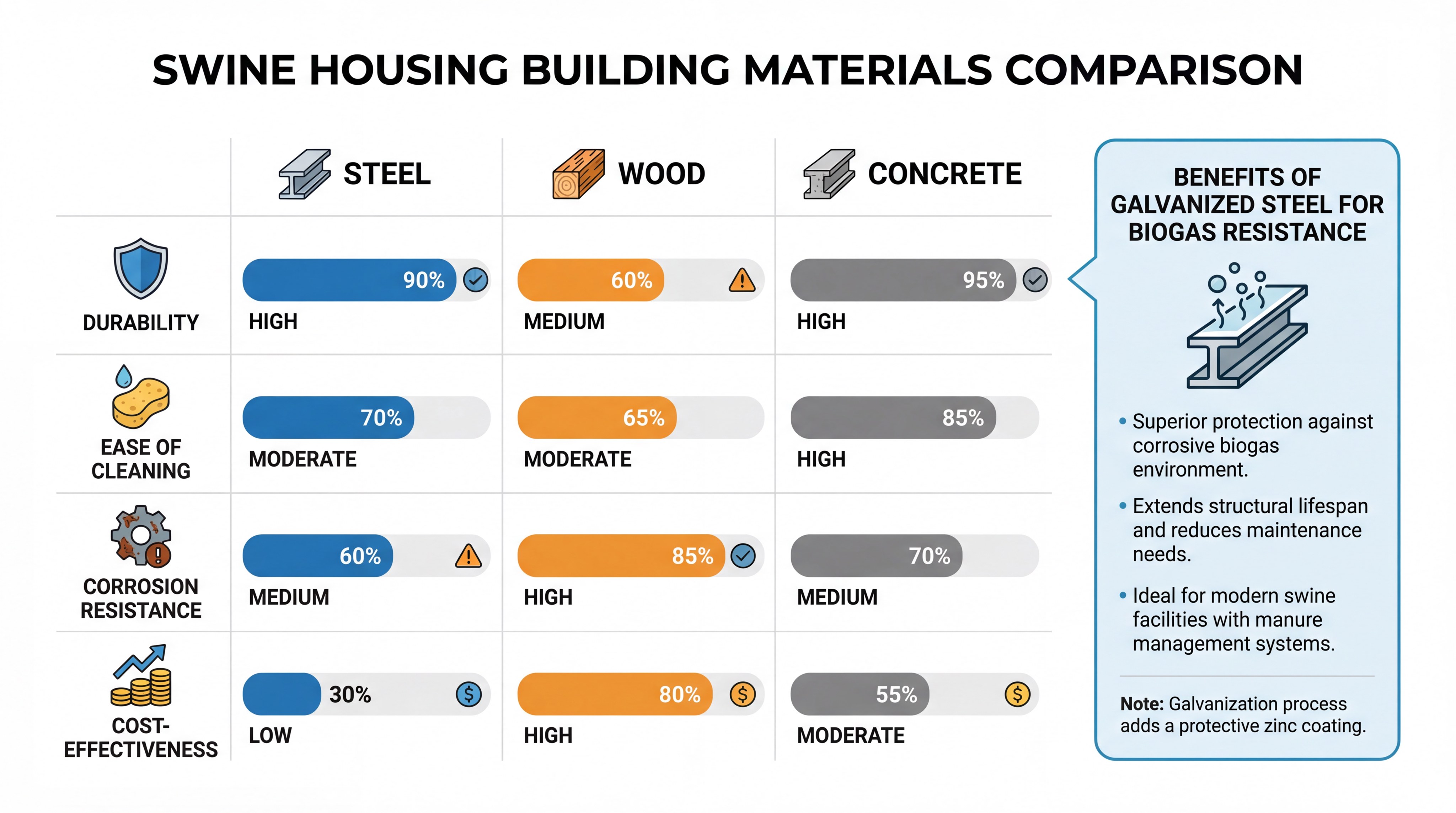
A durable pig shed must be constructed from materials that can withstand the immense physical pressure of rooting and rubbing. Pigs are powerful animals that naturally scratch against walls and support beams throughout the day. Choosing professional-grade materials ensures that the structure remains safe and intact for decades.
Should you choose steel or wood?
You will find that galvanized steel is far superior to wood because it resists rot and chewing. Wood often requires frequent repainting or replacement, whereas steel maintains its structural integrity with minimal maintenance. Here is the deal: Steel doesn’t harbor the same bacteria that porous wood can.
- Galvanized steel for corrosion resistance.
- Concrete foundations for stability.
- Smooth panels to prevent injury.
How do you resist biogas?
You must consider that pig manure produces corrosive biogas that can eat through standard building materials. Galvanized components, including tie bars and bolts, are essential to prevent this type of chemical decay. This choice protects your investment from the inside out.
| Material | Durability | Maintenance | |
|---|---|---|---|
| Steel | Excellent | Low | |
| Wood | Moderate | High | |
| Concrete | High | Moderate |
Steel offers the best balance of longevity and hygiene for modern agricultural applications.
Key TakeawayUsing high-quality galvanized steel for your primary structure prevents structural failure caused by the unique environmental challenges of housing swine.
What is the ideal flooring for a healthy pig shed environment?
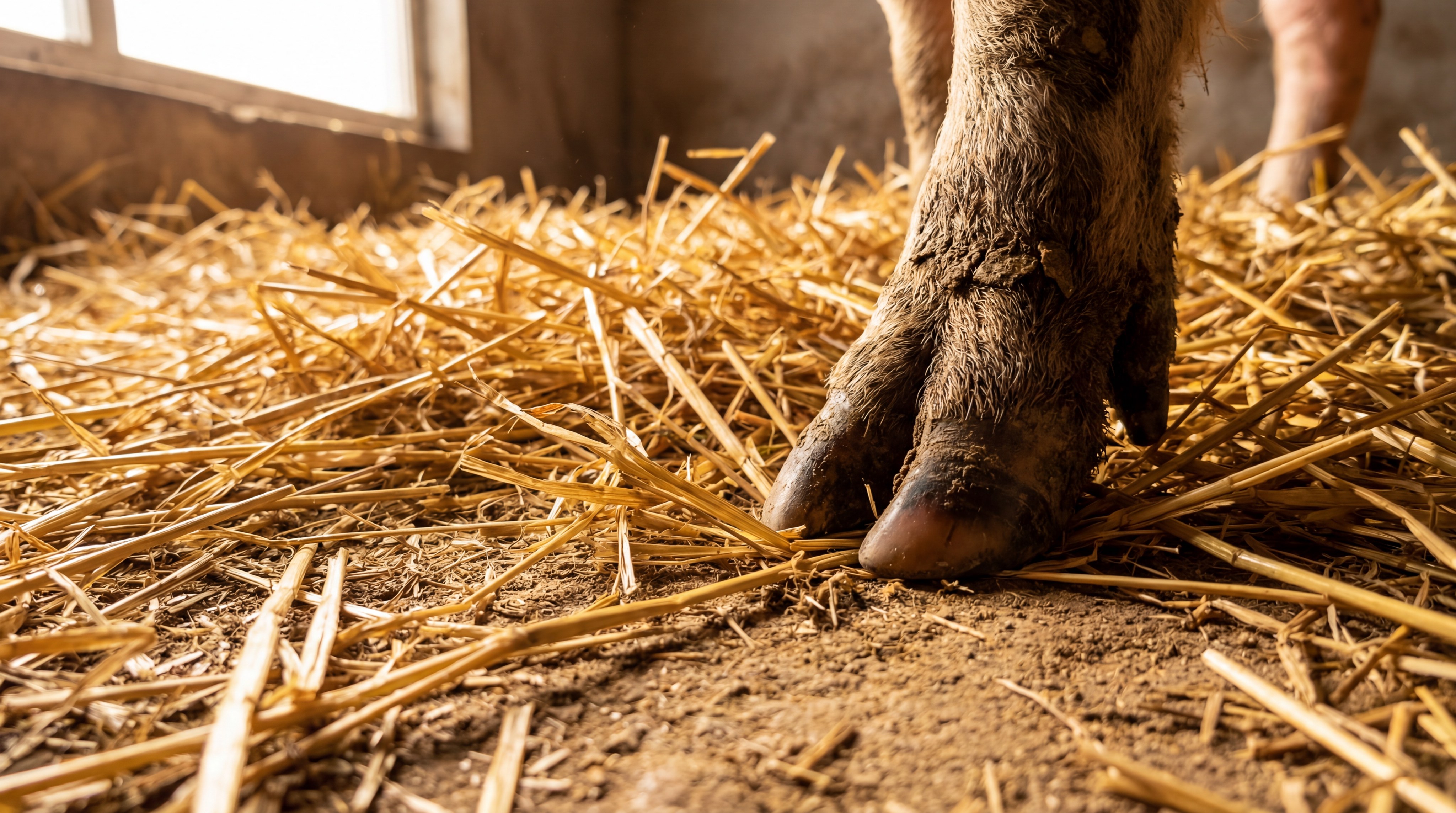
The best flooring for a pig shed is typically a well-maintained packed dirt floor that offers excellent traction and joint support. Foot infections and arthritis are common issues in pigs, often exacerbated by overly hard or abrasive surfaces. A soft yet firm ground helps protect sensitive hooves and supports heavy frames.
How do you manage drainage?
You should raise the dirt floor so it is higher than the surrounding ground to ensure water runs away from the structure. Proper drainage prevents the interior from becoming a mud pit during heavy rains. It sounds simple, but it is vital for health.
Why avoid concrete floors?
You should avoid bare concrete because it can be incredibly hard on a pig’s joints over time. If you must use concrete, ensure it is covered with a very thick layer of dirt or sand. The reality? Textured surfaces prevent slips that cause permanent injury.
- Packed dirt for natural comfort.
- Proper slope for waste runoff.
- Thick straw bedding for nesting.
| Floor Type | Traction | Joint Impact | |
|---|---|---|---|
| Packed Dirt | High | Low | |
| Concrete | Moderate | High | |
| Wood | Low | Moderate |
Natural flooring options significantly reduce the risk of long-term mobility issues in aging residents.
Key TakeawayFocusing on flooring that mimics natural terrain while providing adequate drainage is the most effective way to prevent costly orthopedic treatments.
How should you design pig shed doors for safety?
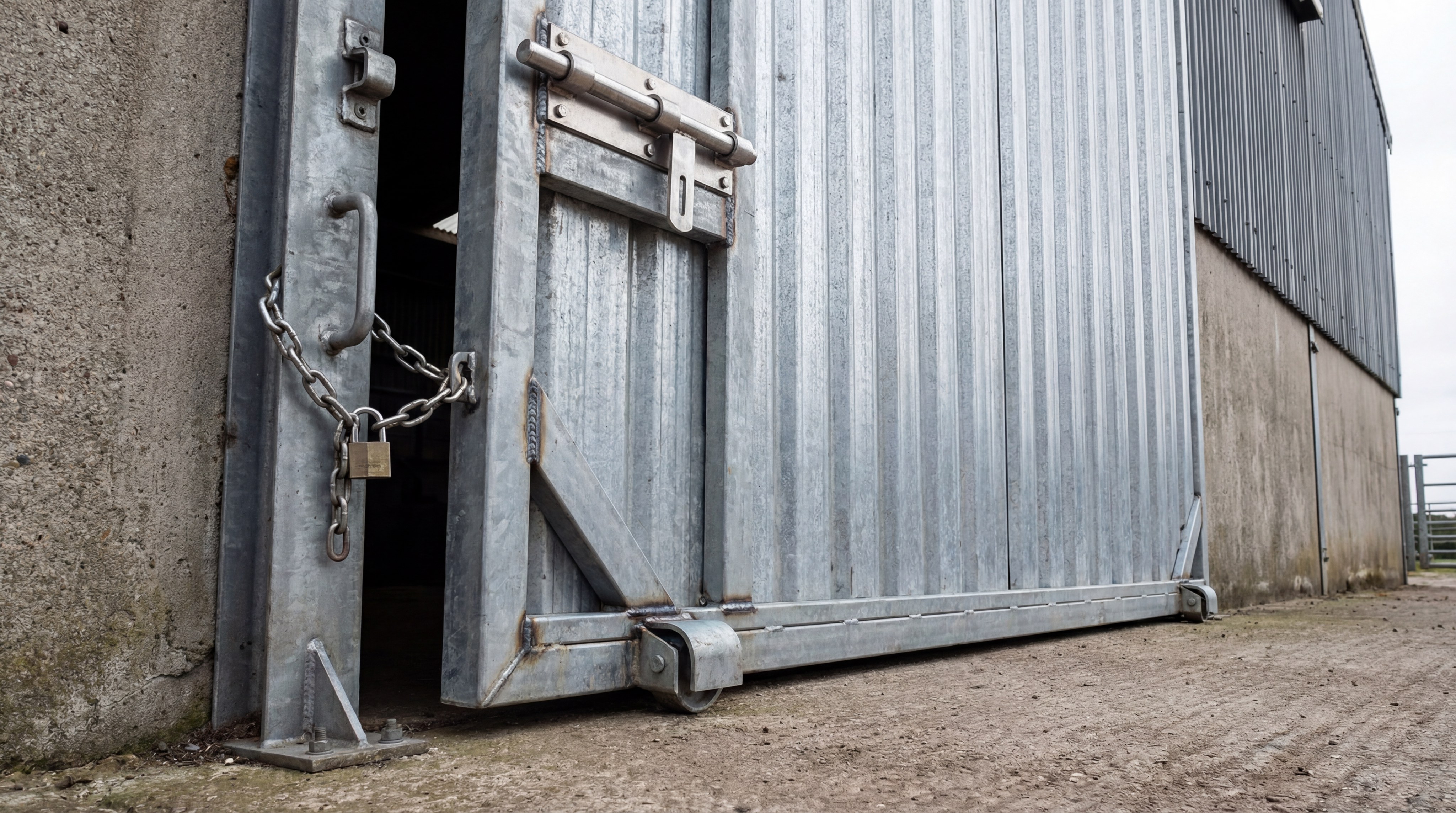
Designing pig shed doors requires heavy-duty materials and secure latching systems that can withstand a pig’s determined attempt to push through. Every entry point should be designed to prevent injury while allowing for easy operation by human caregivers. Robust hardware is the only way to ensure your residents stay where they are supposed to be.
Are sliding doors better?
You might find that sliding doors are more effective because they cannot be easily pushed off their tracks by a curious resident. Ensure your sliders have stay rollers at the bottom to prevent them from swinging inward or outward. Trust me: A swinging door is a major safety hazard.
Why use double latches?
You should install a heavy-duty latch combined with a backup chain loop on every gate. This double-latching system provides an extra layer of protection if one mechanism fails or is manipulated.
- Stainless steel latches.
- Stay rollers for sliders.
- Low-profile thresholds.
| Door Feature | Purpose | Safety Level | |
|---|---|---|---|
| Sliding Track | Prevent pushing | High | |
| Double Latch | Backup security | Maximum | |
| Smooth Edge | Prevent cuts | Critical |
High-quality hardware is a small investment that prevents the major headache of an escaped herd.
Key TakeawaySecure, low-threshold doors protect your pigs’ feet and ensure they remain safe within their designated living areas at all times.
Why does your pig shed need professional electricity?
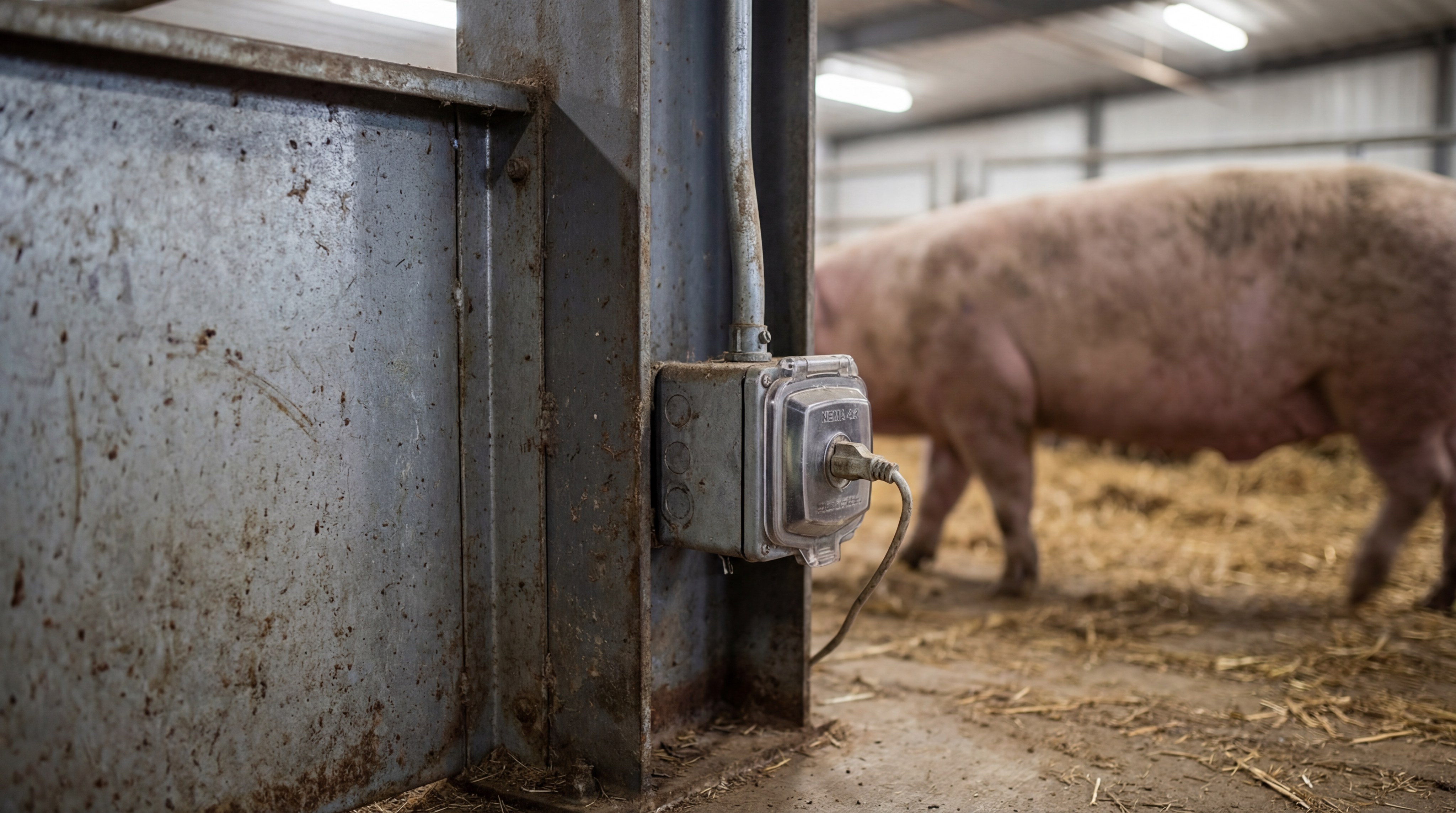
Professional electricity in your pig shed allows you to automate essential services like lighting, heating, and water filtration. It is a fundamental safety tool that keeps pigs alive and comfortable during extreme weather events. All wiring must be installed by a licensed professional to ensure fire safety in a dusty barn environment.
How do you protect wires?
You must ensure that all electrical wires are protected in metal conduit to prevent rodents or pigs from chewing them. Chewed wires are a leading cause of agricultural fires and must be avoided at all costs. Keep them high. The out-of-reach rule is non-negotiable.
Are heated waterers helpful?
You should consider installing heated autowaterers if you live in a climate where temperatures frequently dip below freezing. These units ensure your residents always have access to fresh, unfrozen water without constant manual labor.
- Conduit-protected wiring.
- Weatherproof outlet covers.
- Automated heating units.
| Electrical Component | Function | Safety Note | |
|---|---|---|---|
| Metal Conduit | Protect wires | Prevents fires | |
| Constant-use Cover | Keep dust out | Reduces sparks | |
| Ceramic Panel | Safe heating | No fire risk |
A professionally wired building allows for advanced environmental controls that significantly improve animal welfare.
Key TakeawaySafe electrical systems are the backbone of a modern sanctuary, enabling you to respond to temperature shifts and provide consistent hydration.
How do you cool a pig shed in hot weather?
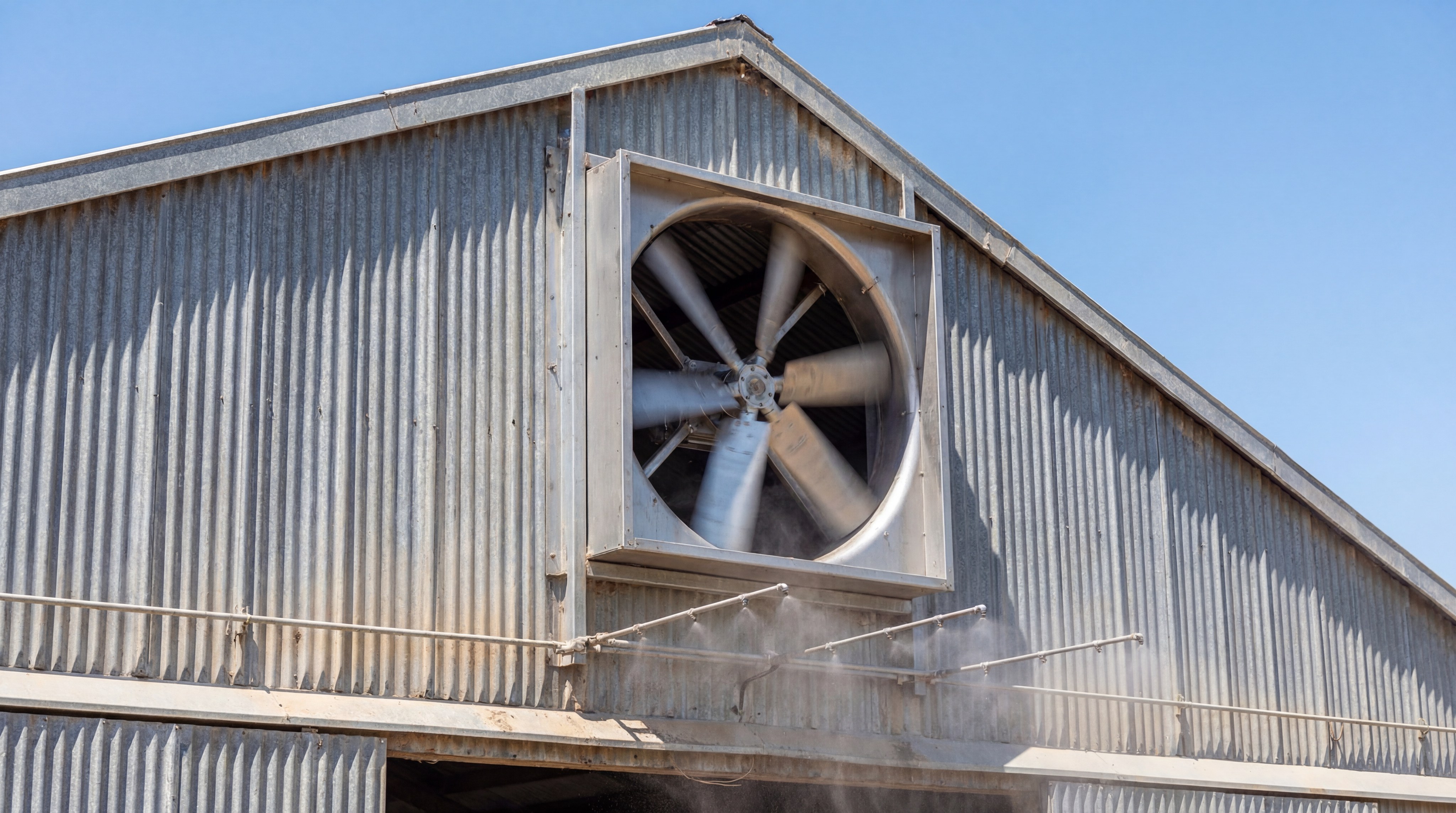
To cool your pig shed effectively, you must combine industrial-grade ventilation with evaporative cooling methods like misters. Pigs do not sweat, making them highly vulnerable to heat stress and potential heat stroke during the summer months. High-volume airflow is the most effective way to lower the effective temperature inside the structure.
Why use industrial fans?
You should install industrial exhaust fans to pull hot air out and circulate fresh air throughout the living space. These fans move more volume than standard household fans and are built to handle the dust found in barns. The result? A much lower risk of respiratory distress.
How do misters work?
You can use water misters in conjunction with your fans to promote evaporative cooling on the pigs’ skin. Ensure that the water does not create massive mud puddles inside the bedding area.
- Industrial exhaust fans.
- Evaporative mister kits.
- Shade-giving shutters.
| Cooling Method | Effectiveness | Cost | |
|---|---|---|---|
| Exhaust Fans | High | Moderate | |
| Water Misters | High | Low | |
| Natural Breeze | Variable | Zero |
Active cooling systems are mandatory for any facility housing large-breed pigs in warm or humid climates.
Key TakeawayMaintaining a cool environment through mechanical ventilation is a life-saving measure for pigs, who cannot regulate their own body temperature.
What outdoor features complement a pig shed?
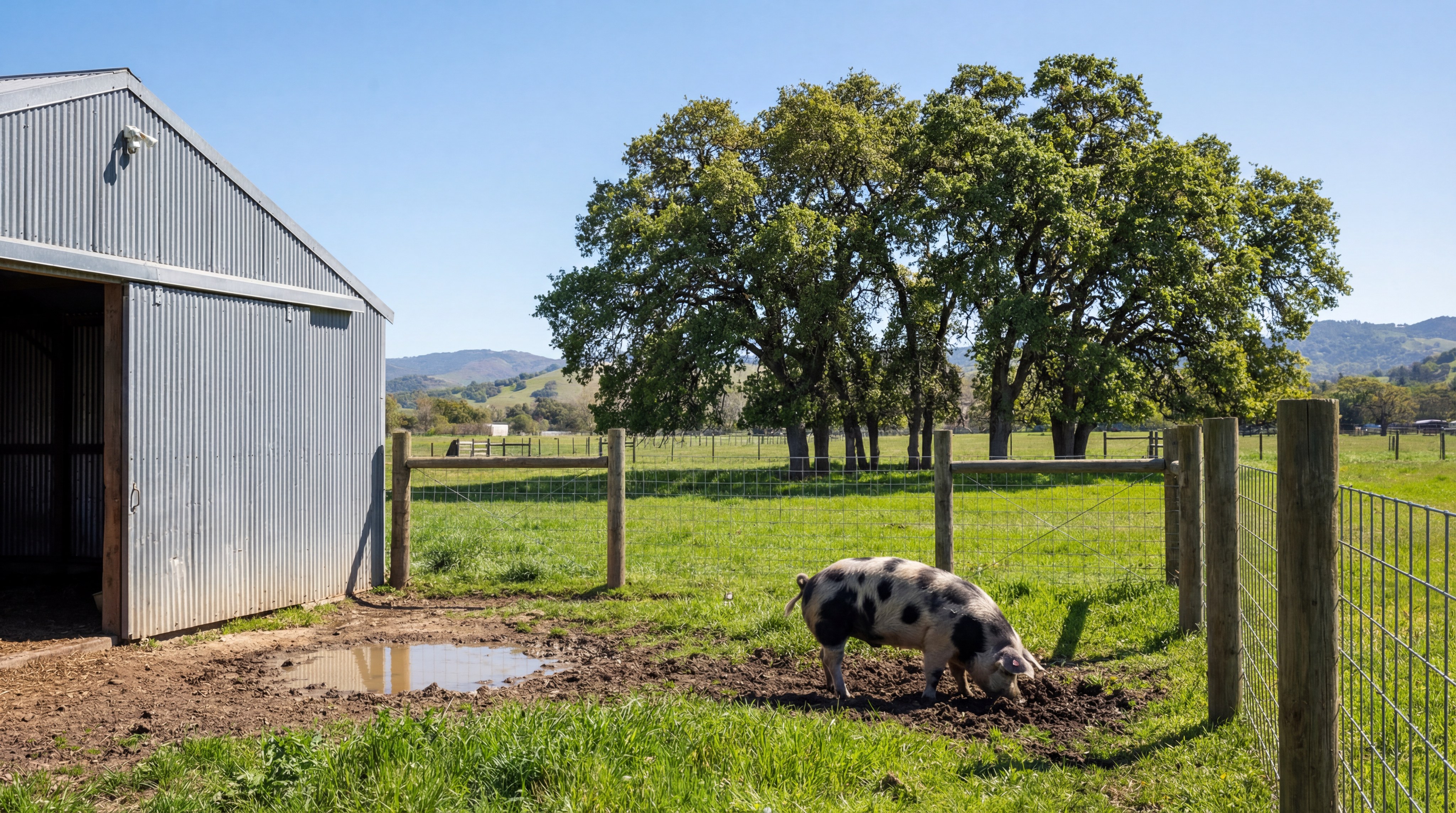
A healthy pig shed environment is incomplete without access to a large outdoor pasture that offers foraging and rooting opportunities. Pigs need space to explore, graze, and engage in natural behaviors that keep them mentally stimulated. The outdoor area should be a mix of open land and shaded wooded spots.
What is the best terrain?
You should provide a variety of surfaces, including grass for grazing and soft earth for rooting. Avoid overly rocky or hard terrain that can lead to hoof lesions or joint pain. Think variety. It keeps their lives interesting.
How do you manage mud?
You should create a designated mud wallow away from the building to allow pigs to coat themselves for sun protection. Make sure they also have plenty of dry areas to stand on to prevent hoof rot.
- Grassy pasture for grazing.
- Wooded areas for shade.
- Mud wallows for skin care.
| Outdoor Feature | Benefit | Management | |
|---|---|---|---|
| Pasture | Foraging | Rotate frequently | |
| Shade Trees | Cooling | Check for toxins | |
| Mud Wallow | Skin protection | Flush regularly |
A diverse outdoor environment prevents boredom and encourages the physical activity necessary for weight management.
Key TakeawayAccess to the outdoors provides the essential enrichment and natural skin care that a building alone cannot offer.
Which fencing works best near a pig shed?
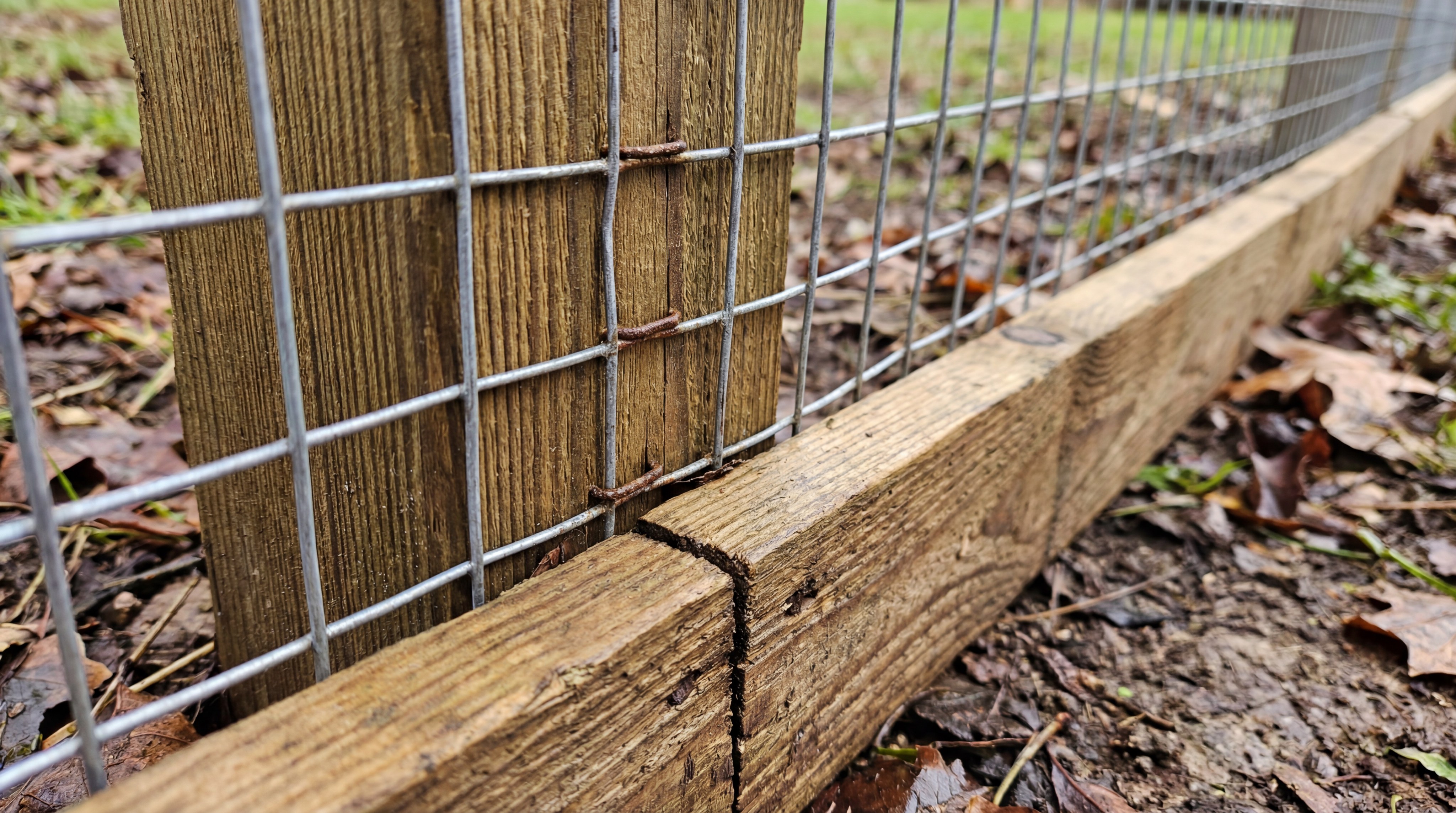
Fencing near your pig shed must be incredibly robust, using 2×4 woven wire mesh combined with pressure-treated wooden posts. Pigs are surprisingly strong and can easily destroy lightweight fencing if they decide to root underneath it. Secure perimeter control is your first line of defense against predators and escapes.
Why use wooden posts?
You will find that using all wood posts creates a much sturdier fence than metal T-posts, which can be bent by a large pig. Ensure your posts are set deep into the ground to withstand the pressure of a rubbing animal. Here is the secret: Bottom boards prevent “rolling.”
How do you stop rooting?
You should run a horizontal wooden board along the bottom of the fence, flush with the ground. This prevents your residents from getting their noses under the wire and rolling it up.
- 2×4 woven wire mesh.
- Pressure-treated wood posts.
- Wooden bottom kick-boards.
| Fence Component | Strength | Cost | |
|---|---|---|---|
| Woven Wire | High | Moderate | |
| Wood Posts | Maximum | High | |
| T-Posts | Low | Low |
Investing in heavy-duty fencing materials reduces the risk of injury and the constant need for repairs.
Key TakeawayA properly reinforced fence line provides peace of mind and ensures your residents remain safely within their designated sanctuary.
How do you winterize a pig shed for warmth?
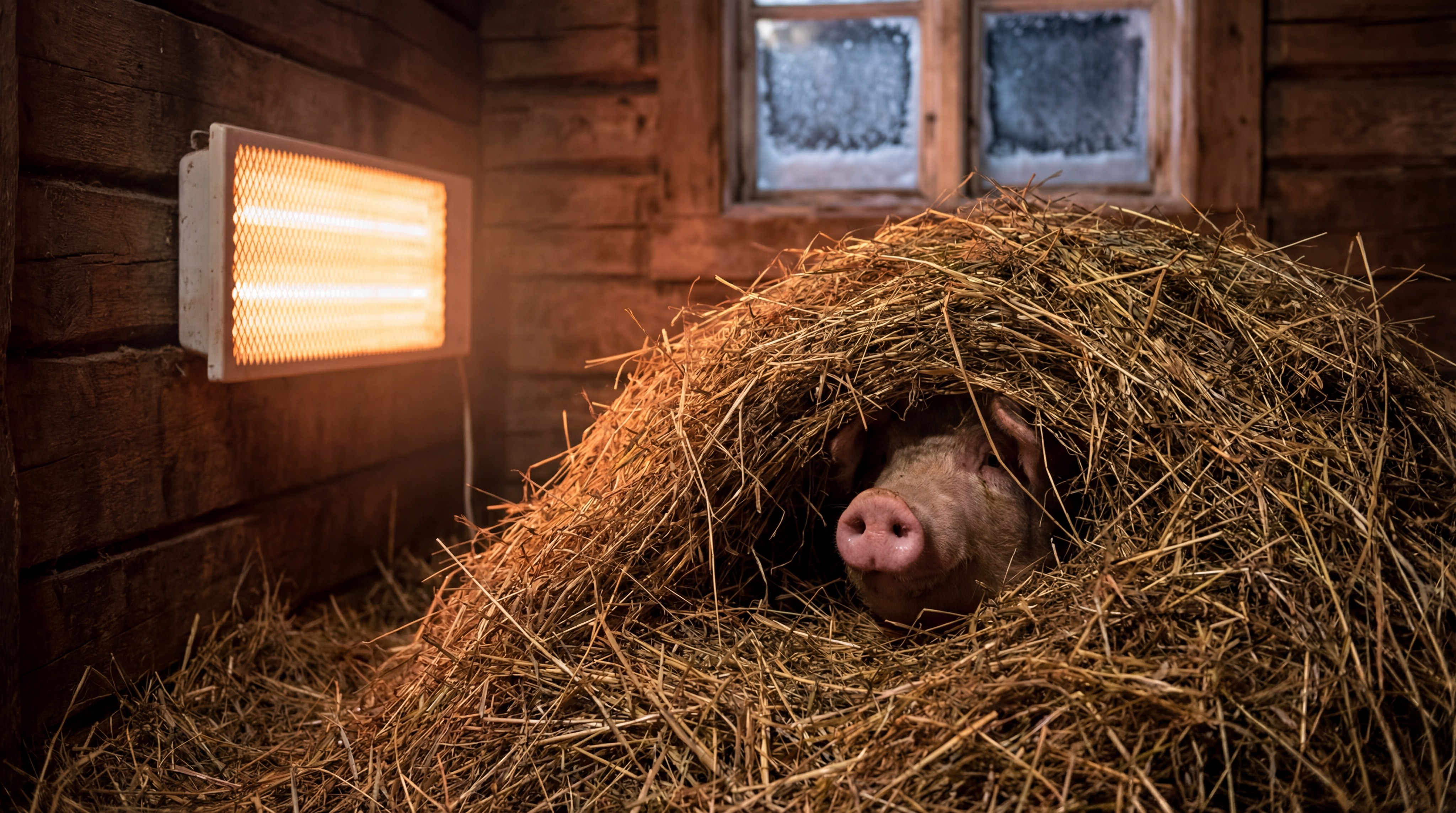
Winterizing your pig shed involves eliminating drafts while providing an abundance of clean, dry straw for nesting. While hot weather is dangerous, extreme cold can also lead to illness if pigs cannot find a warm place to huddle. Proper bedding is the most effective and natural way to keep your residents warm.
How much straw is needed?
You should provide enough long-fibered straw so that your pigs can completely bury themselves in a large nest. This natural insulation allows them to trap body heat effectively during the coldest nights. Pile it high. There is no such thing as too much straw in winter.
Should you use heat lamps?
You must avoid heat lamps because they are a major fire hazard in barn settings. Instead, opt for safer ceramic heating panels or simply ensure the pigs have a buddy to snuggle with.
- Deep piles of long-fibered straw.
- Plastic strip curtains for doors.
- Ceramic heat panels for safety.
| Winter Prep | Action | Impact | |
|---|---|---|---|
| Bedding | Add deep straw | High warmth | |
| Drafts | Seal gaps | Prevents chills | |
| Water | Use heaters | Ensures hydration |
Focusing on natural insulation and safe heating sources keeps your residents cozy without increasing fire risks.
Key TakeawayDeep straw and draft-free environments allow pigs to use their natural nesting instincts to survive even the harshest winters.
Should you build a feeding area in your pig shed?
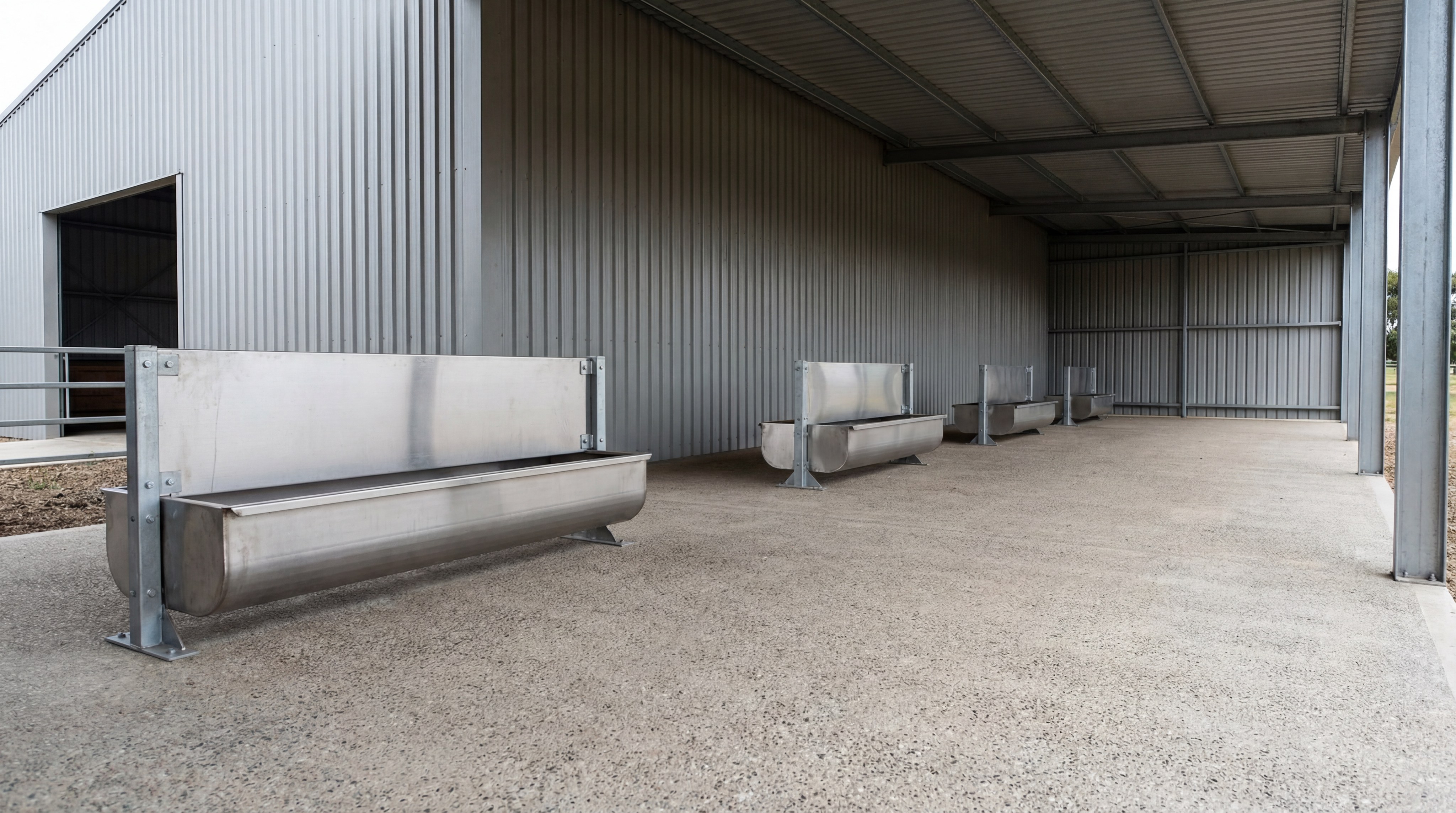
A dedicated feeding area inside or attached to your pig shed helps reduce mealtime chaos and aggression. Pigs can be extremely enthusiastic about food, and having a structured space makes the process safer for both animals and caregivers. A covered area also ensures they can eat comfortably regardless of the weather.
Why use a covered pavilion?
You should consider a covered space so your residents can eat out of the rain or hot sun. This prevents the feeding area from becoming a muddy mess that is difficult for you to clean. The best part? It keeps the food dry and appetizing.
How do you ensure safety?
You need a “lock-out” design where you can set up the food while the pigs are secured in another area. This prevents you from being accidentally knocked over by hungry residents as you carry heavy troughs.
- Textured concrete for easy cleaning.
- Bolt-down stainless steel troughs.
- Secure gates for meal prep.
| Feeding Feature | Benefit | Cleaning Ease | |
|---|---|---|---|
| Textured Pad | Slip resistance | High | |
| Bolted Troughs | No tipping | Moderate | |
| Covered Roof | Weather protection | High |
Organized feeding stations minimize stress and ensure every resident gets their fair share of nutrition.
Key TakeawayA well-designed feeding station is a practical addition that improves daily management and maintains the hygiene of the entire living space.
Showhoo Building is committed to providing world-class steel structures that prioritize animal welfare and structural longevity. Our factory-direct pricing and custom engineering support allow you to build a professional-grade home for your herd at a fraction of the cost of local alternatives. We believe that every pig deserves a safe, climate-controlled, and durable environment to call home.
Are you ready to design the ultimate sanctuary? Contact us today for a free consultation and quote on your next agricultural building project.
FAQ
Can I use a standard wooden garden shed for my pigs?I would not recommend it. Standard sheds are usually too thin to withstand a pig’s strength, and they often lack the ventilation needed to prevent ammonia buildup.
How do I stop my building from smelling?In my experience, you must combine industrial exhaust fans with daily spot-cleaning of the bedding area. If you can smell ammonia, your pigs are already at risk.
Can I house different sizes of pigs together?You can, but you must design the structure for the largest resident. If you have a large-breed hog, your fencing and walls must be built to their strength level.
What is the best way to keep the floor dry?I suggest raising the interior dirt floor slightly higher than the exterior ground. This simple step prevents rainwater from flowing into the bedding.
Do they really need a mud wallow if they have fans?Yes, I believe they do. Mud provides natural sun protection and skin conditioning that mechanical cooling simply cannot replace.