
A lactating dairy cow generally requires 24 to 30 inches of bunk space and a stall measuring approximately 48 inches by 8.5 feet to thrive. When you underestimate how much space does a cow need in a shed , your herd faces increased competition, leading to higher stress and lower milk yields. Investing in a precision-engineered facility ensures your cows remain comfortable and productive for years to come.
Why is determining how much space does a cow need in a shed vital for health?
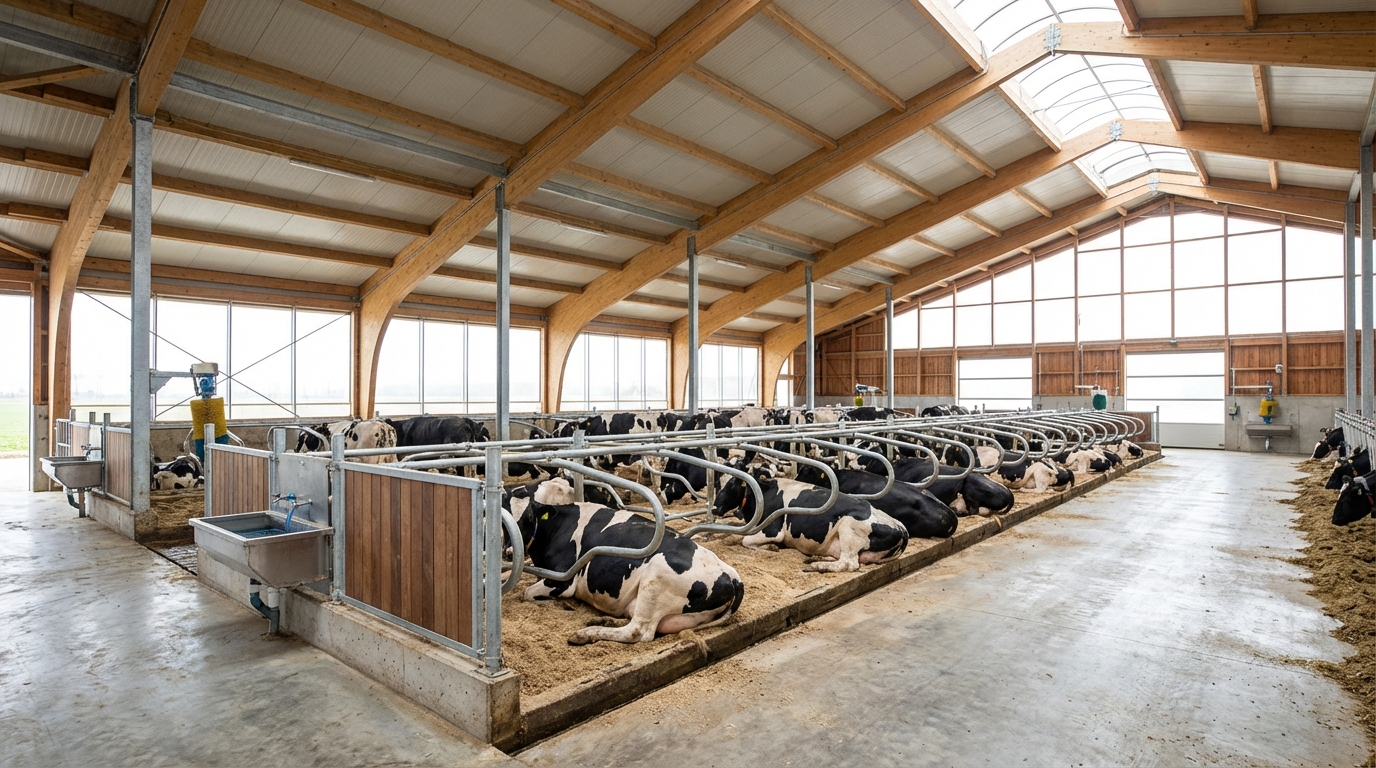
Determining how much space does a cow need in a shed is vital because it directly impacts the animal’s ability to rest and circulate blood to the udder. Insufficient space forces cows to stand for longer periods, which significantly increases the risk of lameness and metabolic disease.
Think about this:
- Adequate space reduces cortisol levels by lowering social competition.
- Proper layouts encourage longer lying times for better digestion.
- Clean environments prevent the spread of mastitis and hoof rot.
Impact on Cow Comfort and Time Budgets
A cow’s daily “time budget” requires 12 to 14 hours of lying down for maximum productivity. Without enough room to comfortably recline, she will spend too much time standing in alleys, leading to physical exhaustion.
Understanding Social Hierarchy and Stress
Every herd has a social hierarchy where “boss” cows may prevent submissive animals from accessing stalls or feed. Providing extra square footage ensures that even the lowest-ranked cow can fulfill her biological needs without fear of aggression.
| Factor | Optimal Target | Impact of Failure | |
|---|---|---|---|
| Lying Time | 12-14 Hours | Reduced milk yield | |
| Standing Time | 2-3 Hours | Increased lameness | |
| Social Space | 120 sq ft | High stress levels |
Proper space management creates a stable environment where cows can maintain their natural behaviors without restriction.
Key Takeaway: Cow health is inseparable from physical space, as it dictates the animal’s daily rest and stress levels.
What are the stall dimensions for how much space does a cow need in a shed?
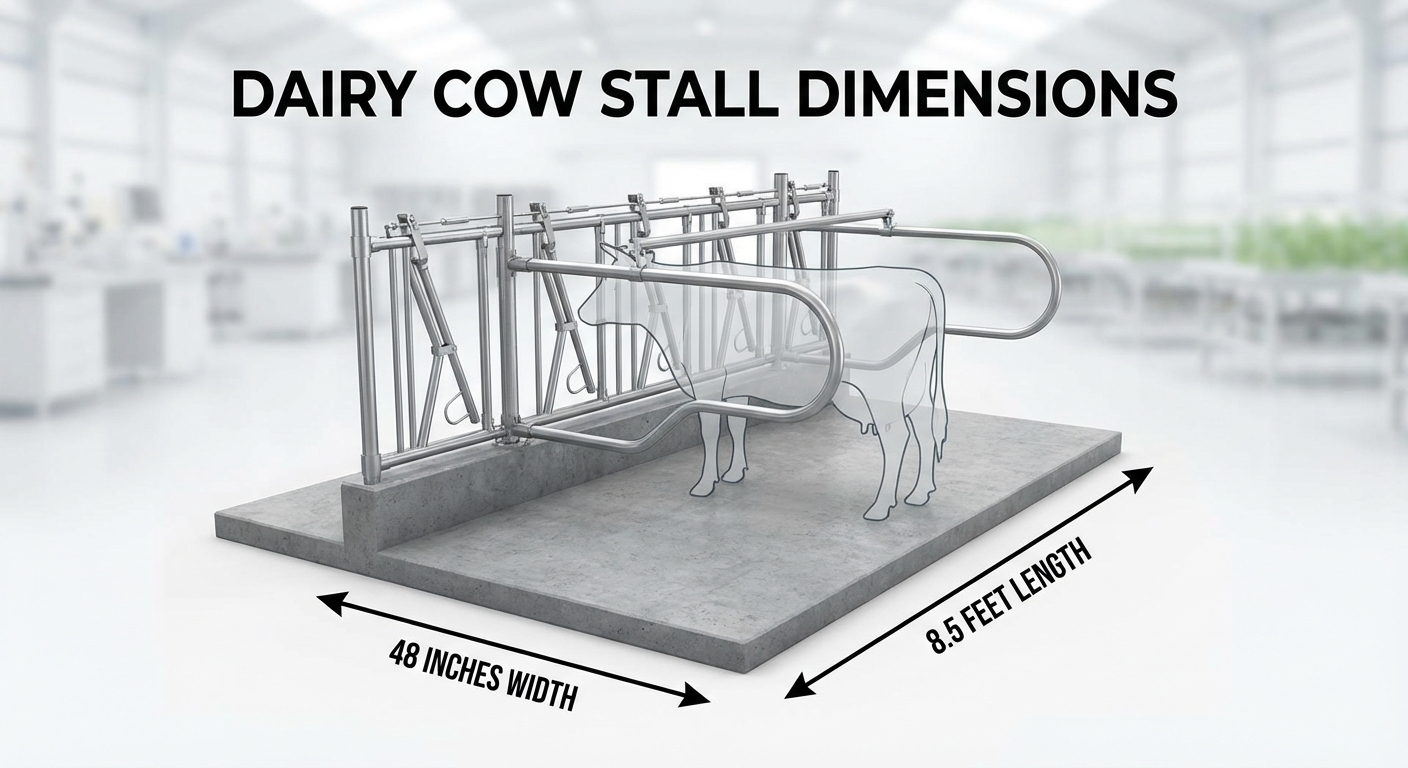
The ideal stall dimensions for an average 1,500-pound cow are 48 inches in width and at least 8.5 feet in total length. These specific measurements for how much space does a cow need in a shed allow the animal to lie down straight while keeping manure out of the resting area.
It gets better:
- Wide stalls prevent injury to the hips and hocks.
- Correct length keeps the bedding cleaner for longer periods.
- Neck rail height ensures the cow stands comfortably before lying.
Essential Lunge Space for Standing
Cows must “lunge” forward to shift their weight when rising from a lying position. If your shed lacks at least 2.5 feet of clear space in front of the cow’s head, she will struggle to stand, leading to joint strain.
Optimal Stall Width and Partition Design
Stall partitions should be wide enough to allow a comfortable resting posture but narrow enough to prevent the cow from turning around. For cows under 1,200 pounds, you can slightly reduce these dimensions to maintain stall cleanliness.
| Weight (lbs) | Width (in) | Length (ft) | |
|---|---|---|---|
| < 1,200 | 42-45 | 7.5-8.0 | |
| 1,200-1,500 | 45-48 | 8.0-8.5 | |
| > 1,500 | 48-50 | 9.0 |
Adjusting stall sizes to your specific breed prevents both overcrowding and excessive manure buildup in the resting zone.
Key Takeaway: Correct stall dimensions provide the necessary lunge space and width to support natural movement and hygiene.
How much space does a cow need in a shed regarding bunk and feeding areas?
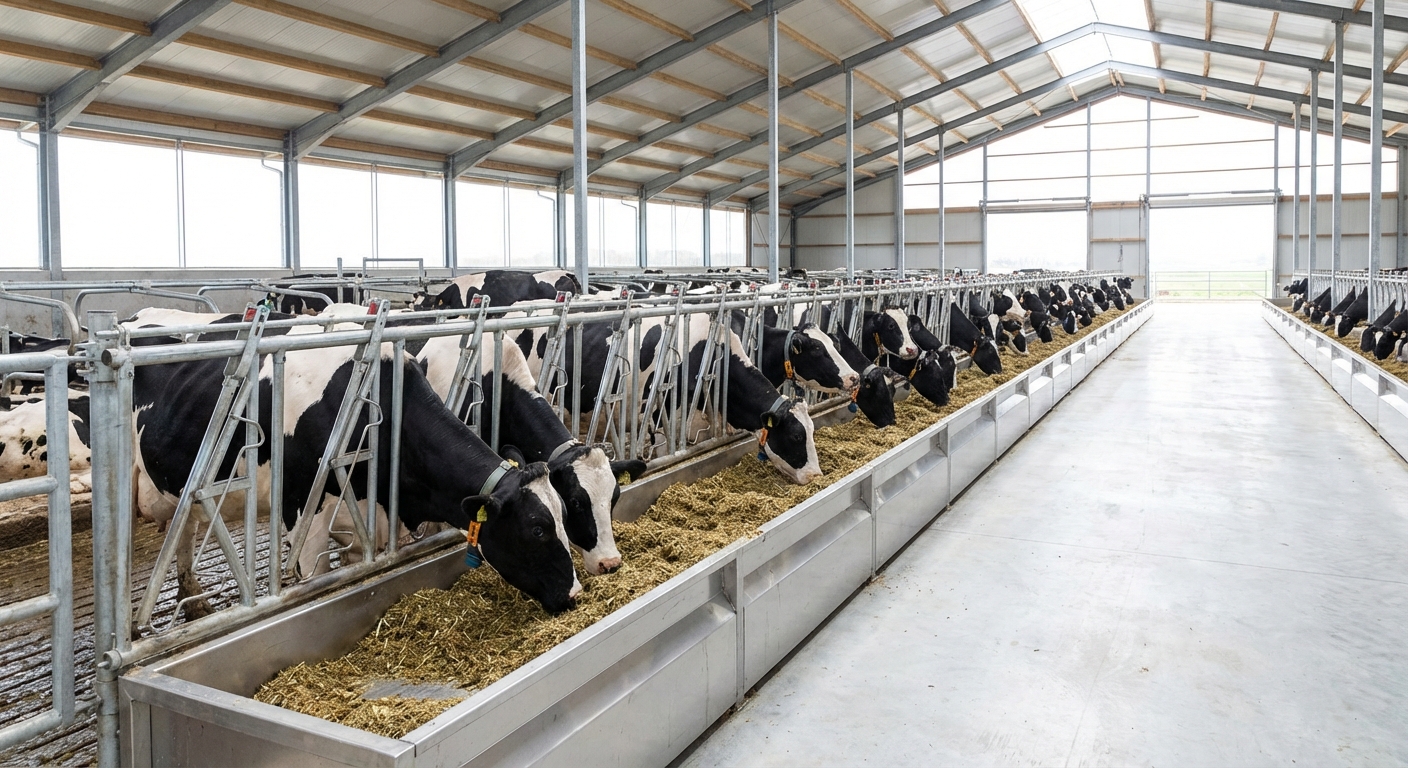
A lactating cow needs approximately 24 to 30 inches of linear bunk space to ensure she can consume her ration without competition. When evaluating how much space does a cow need in a shed , you must prioritize feeding access as it is the primary driver of milk production.
The best part?
- Synchronized feeding reduces the time cows spend waiting in alleys.
- Wide feed lanes allow for easy “cow flow” behind those already eating.
- Ample space prevents aggressive “slug feeding” behaviors.
Feeding Space for Lactating vs. Fresh Cows
Fresh cows, which have recently calved, are more metabolically fragile and require at least 30 inches of bunk space. This extra room ensures they don’t have to fight for nutrition during their most critical stage of lactation.
The Role of Headlocks and Feed Lanes
Installing headlocks helps define the space for each animal, preventing dominant cows from sweeping their heads and clearing others away. A wide feed lane behind the bunk is also essential to allow other cows to pass without disruption.
| Group Type | Bunk Space (in) | Alley Width (ft) | |
|---|---|---|---|
| Lactating | 24-30 | 12-14 | |
| Fresh | 30 | 14-15 | |
| Dry | 24-30 | 10-12 |
Bunk space must be reevaluated if you see cows lining up or acting aggressively during fresh feed delivery.
Key Takeaway: Feed intake remains high only when cows have enough physical room to eat comfortably and without competition.
How much space does a cow need in a shed when managing dry cows and calving?
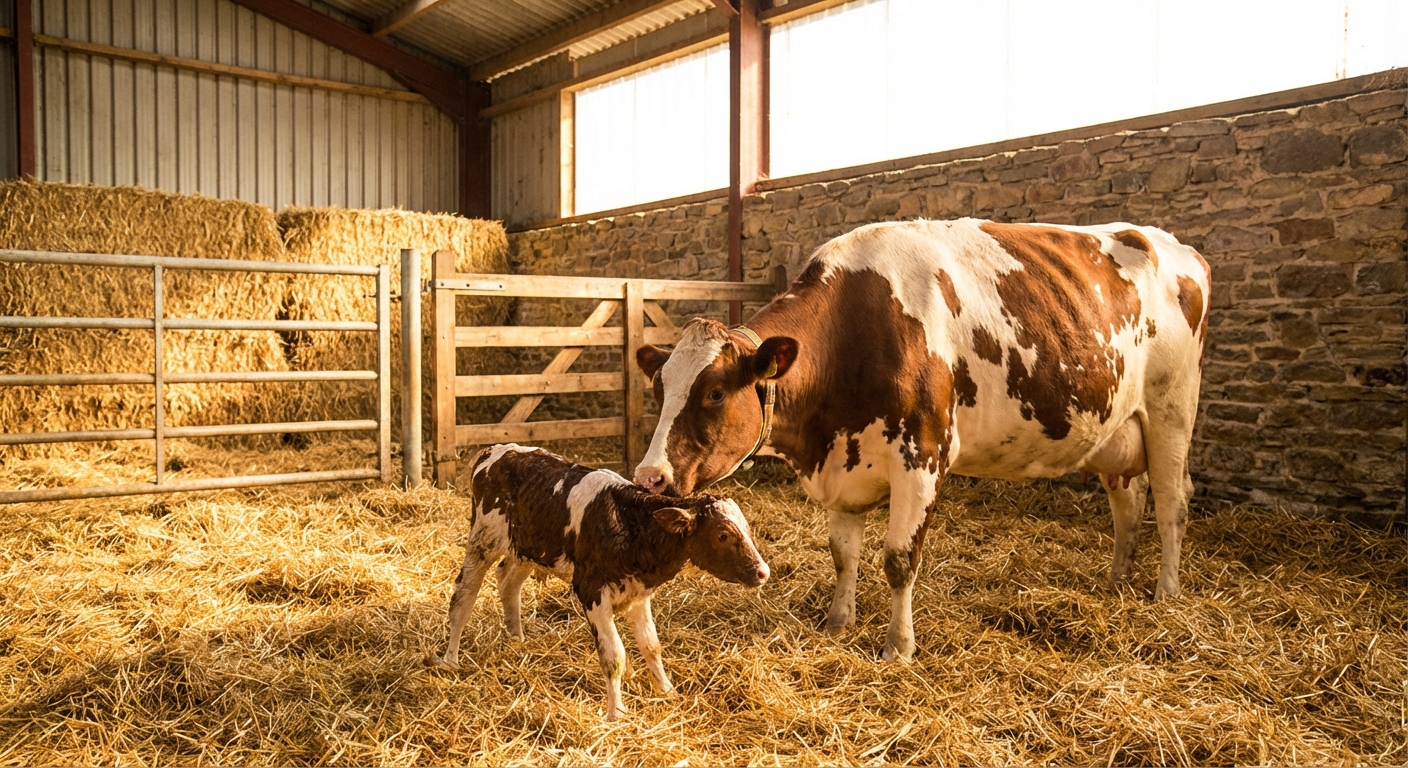
Dry cows require between 50 and 100 square feet of bedded pack space depending on how close they are to their calving date. Calculating how much space does a cow need in a shed for these non-lactating groups is essential to prevent metabolic issues before they start their next cycle.
Wait, there’s more:
- Individual calving pens should provide at least 140 square feet.
- Bedded packs must be kept dry and fluffy to support health.
- Transition groups need low-stress environments with easy bunk access.
Bedded Pack and Early Dry Period
During the early dry period, 50 square feet per cow is sufficient to maintain hygiene while providing comfort. As the cow approaches her “close-up” period, doubling this space helps reduce social pressure and physical discomfort.
Individual Calving Pen Requirements
A dedicated calving pen, typically 12×12 or 10×14 feet, allows the cow to move freely during labor. This isolated space also makes it easier for farm staff to assist with delivery or collect colostrum immediately after birth.
| Group Phase | Housing Type | Space (sq ft) | |
|---|---|---|---|
| Early Dry | Bedded Pack | 50 | |
| Close-up | Bedded Pack | 100 | |
| Maternity | Individual Pen | 140 |
Strategic spacing for dry cows ensures a successful transition into the milking herd with fewer health complications.
Key Takeaway: Doubling the available space during the close-up and calving periods is essential for animal welfare and calf vigor.
How much space does a cow need in a shed to ensure proper air quality and ventilation?
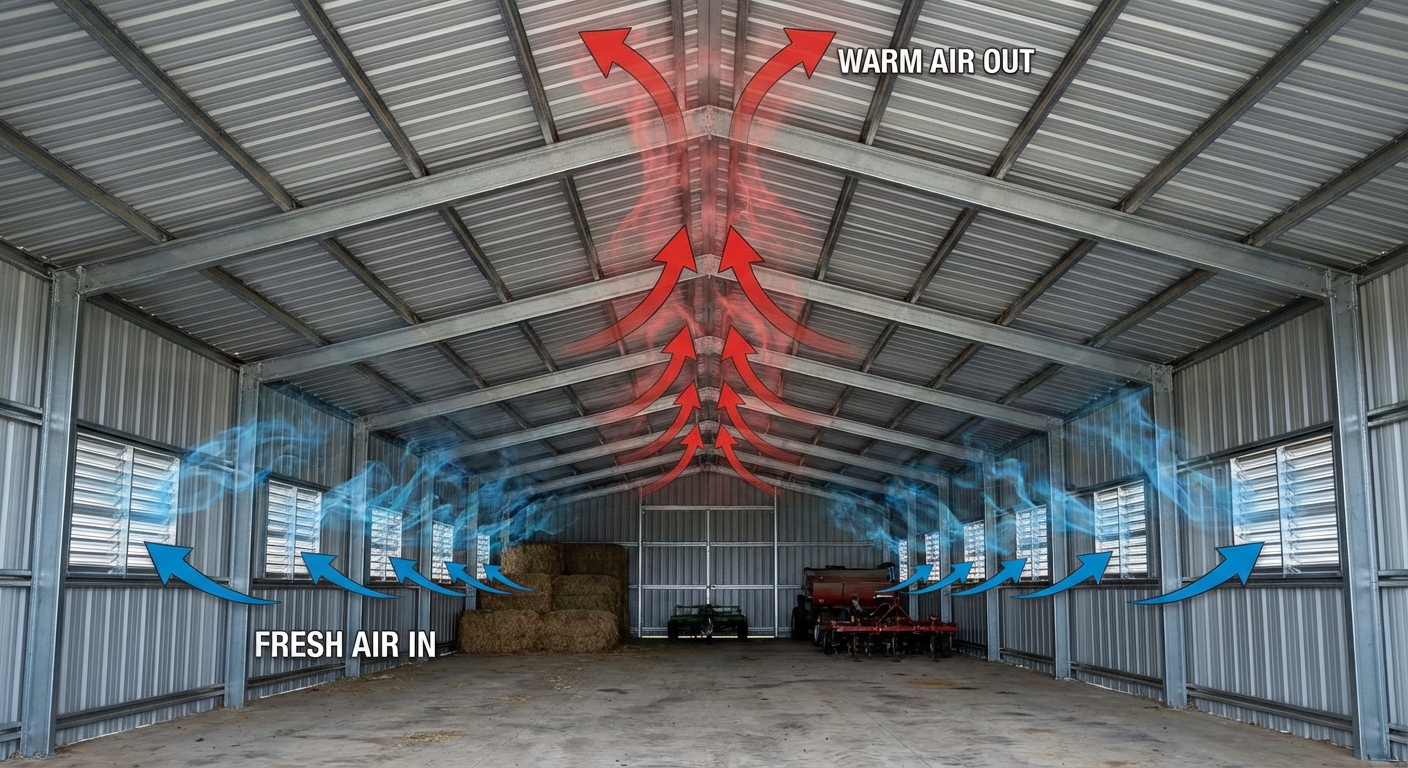
To ensure air quality, a shed requires significant cubic volume, typically provided by high eaves and a 4:12 roof pitch. When considering how much space does a cow need in a shed , the “air space” above the cows is just as important as the floor space below them.
Let’s dive deeper:
- Ridge vents allow warm, moist air to escape the building naturally.
- Sidewall openings should be placed at the “cow level” for direct cooling.
- High ceilings dilute ammonia and pathogen concentrations effectively.
Airflow at the Livestock Activity Height
Proper ventilation must focus on the “breathing zone” where the cows spend most of their day. If the air is only moving near the roof, the cows will suffer from heat stress and respiratory irritation at the floor level.
Preventing Ammonia and Humidity Buildup
Without enough air volume per animal, humidity levels rise, creating a breeding ground for bacteria. Engineering the shed with a high eave height ensures that moisture is pulled away from the bedding and the animals.
| Feature | Design Standard | Purpose | |
|---|---|---|---|
| Eave Height | 14-16 Feet | Increase air volume | |
| Roof Pitch | 4:12 Ratio | Support thermal buoyancy | |
| Ridge Opening | 2 inches per 10ft width | Exhaust warm air |
Volume-based design prevents “dead air” zones that can lead to pneumonia and reduced feed intake during summer months.
Key Takeaway: Air quality depends on the vertical space and cubic volume available to exhaust moisture and heat.
Does moisture management affect how much space does a cow need in a shed?
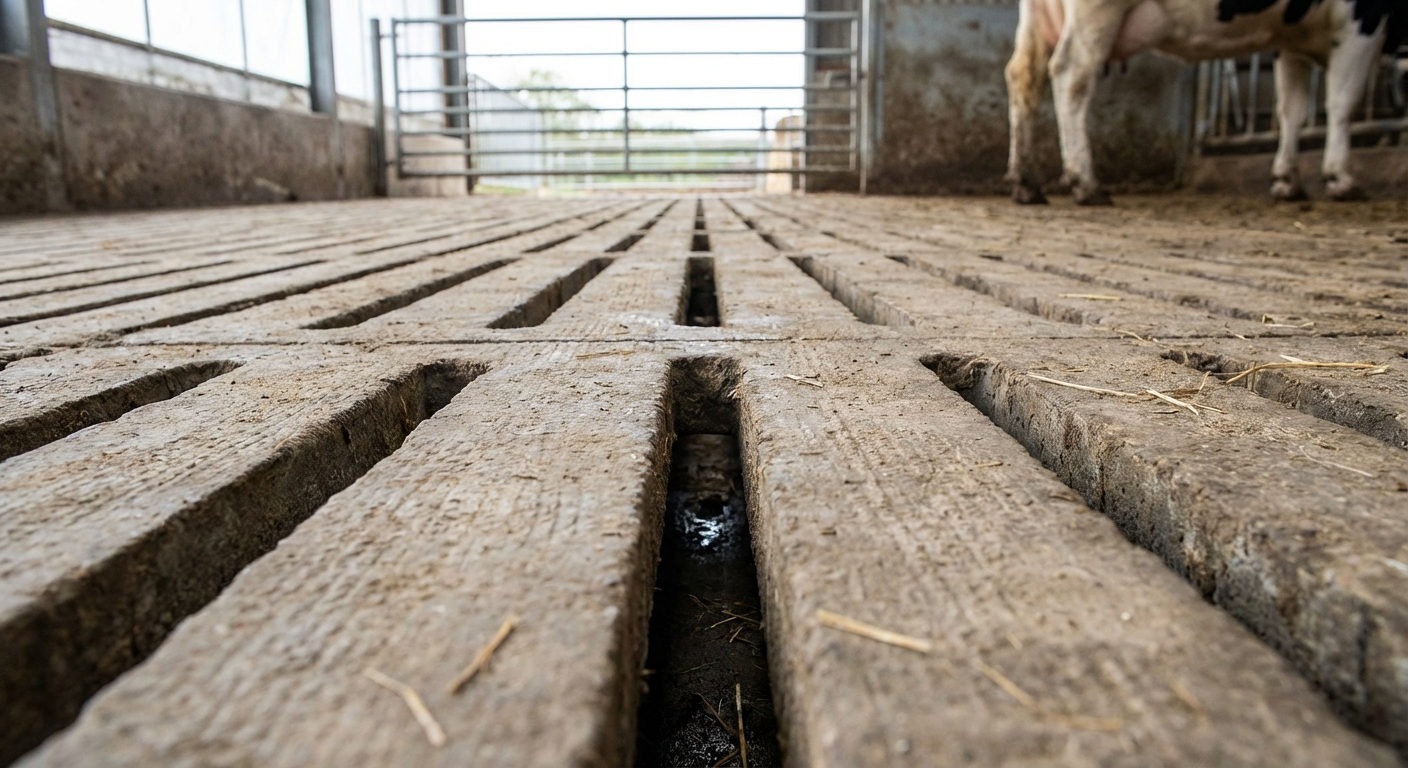
Moisture management significantly reduces the effective usable area, as cows will avoid wet, slippery sections of the floor. Your calculations for how much space does a cow need in a shed must include integrated drainage systems to keep all walking surfaces dry and safe.
Believe it or not:
- Slotted floors or 1-2% slopes prevent water from pooling in alleys.
- Dry surfaces are essential for maintaining hoof hardness and health.
- Automated scrapers work best in sheds with unobstructed, wide paths.
Drainage and Hoof Integrity
Digital dermatitis and other hoof diseases thrive in damp, manure-laden environments. A well-drained shed ensures that cows can move confidently between stalls and feed bunks, utilizing the full footprint of the facility.
Corrosion-Resistant Engineering
High moisture levels can quickly degrade building materials if they aren’t properly protected. Using galvanized steel ensures that the structural base and stall partitions remain strong despite constant exposure to water and waste.
| Element | Specification | Benefit | |
|---|---|---|---|
| Floor Gradient | 1.5% Slope | Rapid fluid removal | |
| Grooved Concrete | 0.5″ Deep | Prevents cow slips | |
| Steel Coating | Hot-dip Galvanized | Stops rust/corrosion |
Effective drainage ensures that every square foot of your investment remains functional and safe for livestock movement.
Key Takeaway: Without proper drainage, parts of your shed become “dead zones” that cows will refuse to use, causing overcrowding elsewhere.
How much space does a cow need in a shed for efficient cleaning and operational flow?
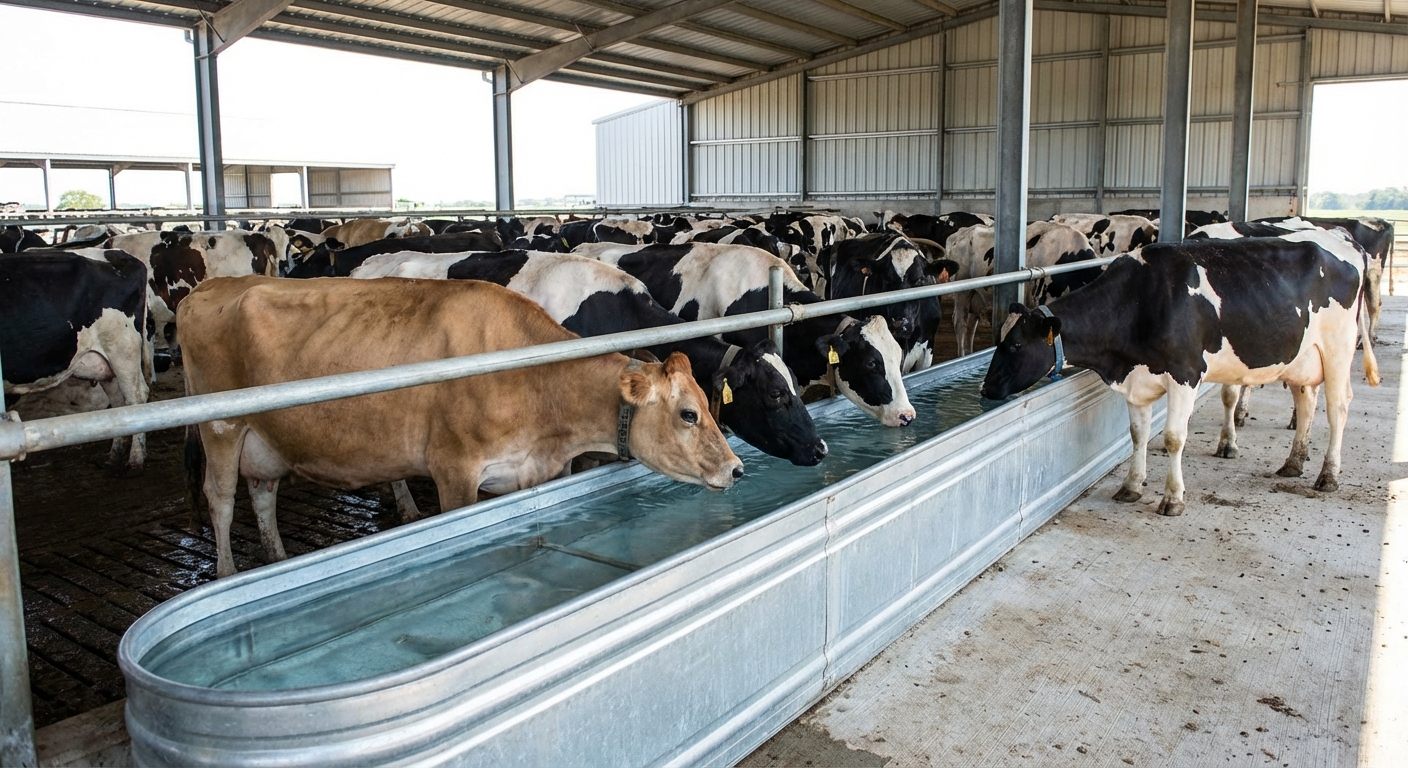
Efficient cleaning requires alleys that are 12 to 14 feet wide to accommodate machinery and cow movement simultaneously. When you ask how much space does a cow need in a shed , you must also account for the space required for your staff to work safely.
Think of it this way:
- Wide crossovers every 15 stalls prevent bottlenecks during movement.
- Water troughs need at least 3 feet of clear space around them.
- Designing with “no dead corners” makes daily washdowns much faster.
Designing for Clear Cleaning Paths
A shed with too many internal supports or narrow passages will take twice as long to clean. Open-plan steel structures allow tractors or automated scrapers to clear the alleys without having to navigate tight corners.
Eliminating Dead Corners
Bacteria and waste tend to accumulate in corners that are difficult to reach with standard cleaning tools. By rounding off or angling these sections, you ensure the entire shed remains hygienic with minimal manual labor.
| Area | Optimal Width | Flow Benefit | |
|---|---|---|---|
| Feed Alley | 14 Feet | Easy tractor access | |
| Back Alley | 12 Feet | Safe cow passing | |
| Crossover | 10-12 Feet | Prevents bullying at water |
Operational flow is the backbone of a profitable farm, reducing labor costs and animal injuries during daily routines.
Key Takeaway: Layout planning must include the turning radii of machinery and the passing width for cows to ensure a smooth operation.
How much space does a cow need in a shed if the herd is expected to expand?
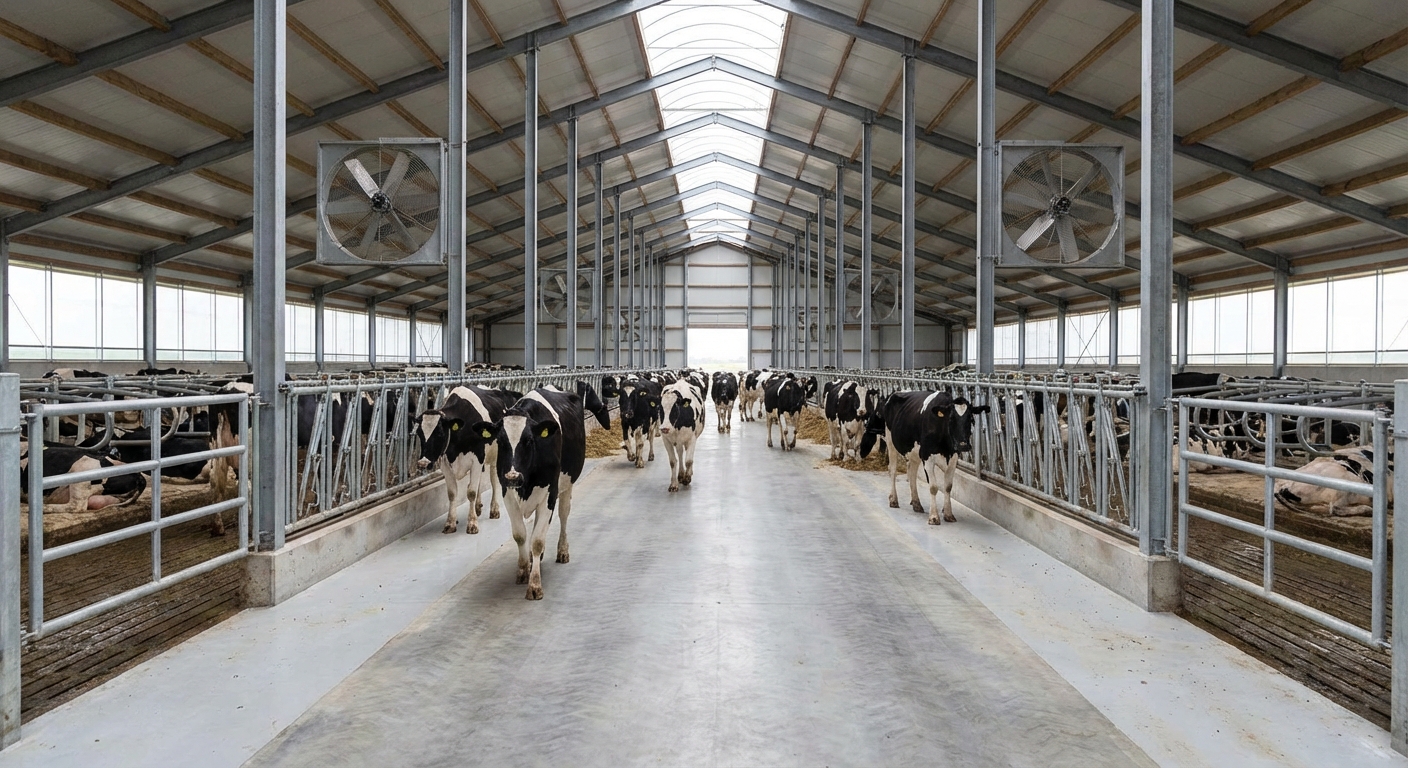
Planning for expansion requires a site that can accommodate at least a 50% increase in building length. When deciding how much space does a cow need in a shed, you should view your current footprint as the first phase of a larger long-term project.
Make no mistake:
- End-wall expansion is the most cost-effective way to grow.
- Utilities like water and manure pits should be sized for the future herd.
- Modular steel frames can be bolted together to extend existing barns.
Scalable Steel Structures
Steel buildings are uniquely suited for growth because the structural frames can be extended without compromising the integrity of the original roof. This allows you to add more stalls or feeding space as your business scales up.
Maintaining Continuous Operations
The best designs allow for construction to happen on the exterior of the current barn, meaning your cows aren’t displaced during the expansion. This prevents the loss of milk production during the building process.
| Expansion Step | Action | Future Proofing | |
|---|---|---|---|
| Phase 1 | Initial 100-cow shed | Size pit for 200 cows | |
| Phase 2 | Extend end-wall | Bolt-on new steel frame | |
| Phase 3 | Update ventilation | Add fans to new section |
Thinking ahead prevents the need for expensive “retrofit” projects that rarely provide the same level of cow comfort as a planned extension.
Key Takeaway: Modular design allows you to increase your capacity without disrupting the health or productivity of your existing herd.
Does the structural material influence how much space does a cow need in a shed?
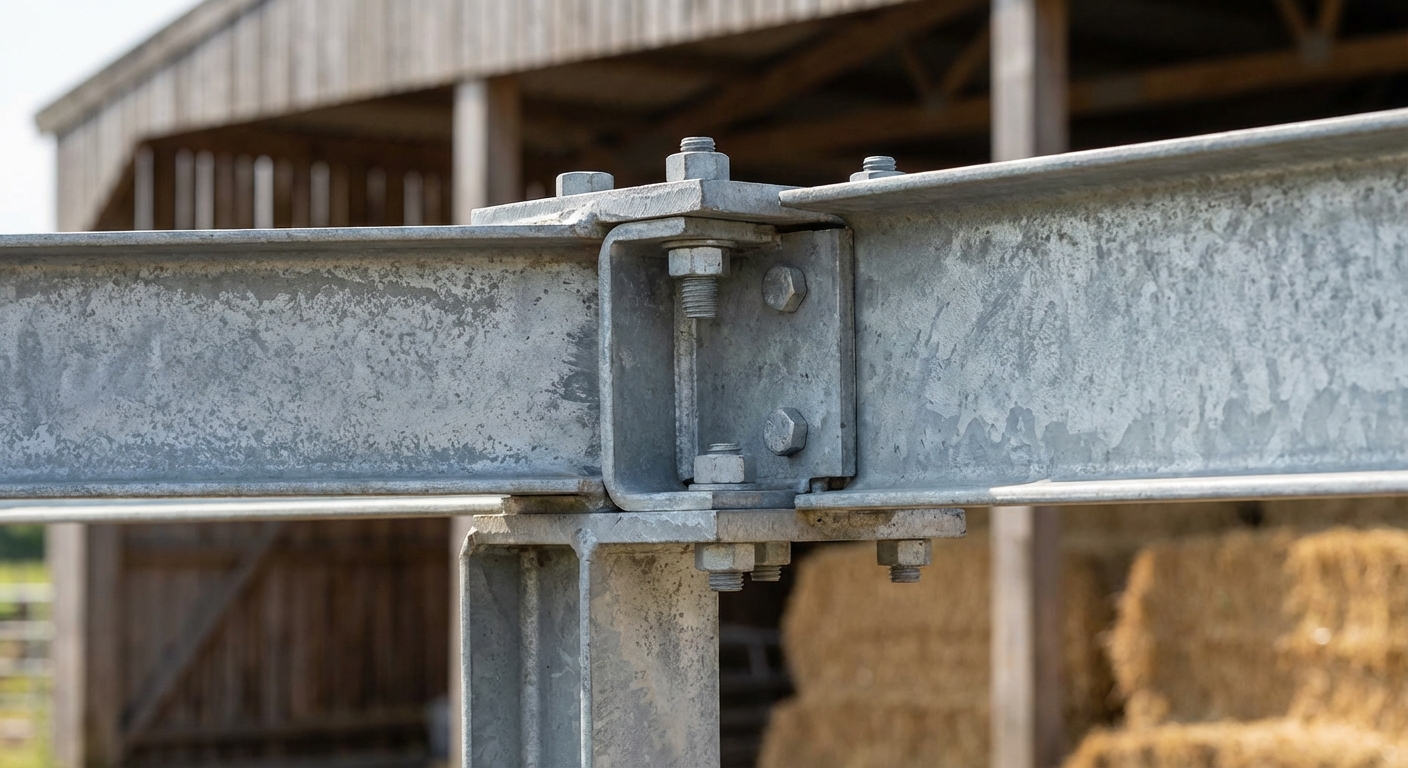
Structural material influences the interior layout because steel offers much wider “clear-spans” than wood or traditional masonry. When calculating how much space does a cow need in a shed , steel frames eliminate the need for internal support pillars that can obstruct cow movement.
But that’s not all:
- Steel is non-combustible, reducing your long-term insurance risks.
- Pre-engineered components ensure rapid on-site assembly.
- Galvanized finishes resist the corrosive effects of manure and urine.
Steel vs. Wood: Durability and Span
Wood structures often require interior poles every 10 to 12 feet, which creates “dead space” and complicates cleaning. Steel beams can span over 100 feet without any internal supports, giving you a completely open floor plan for maximum efficiency.
Long-Term Corrosion Protection
The atmosphere inside a livestock shed is highly corrosive due to the presence of ammonia and moisture. High-quality steel with specialized coatings ensures the building remains structurally sound for 25 to 30 years without significant maintenance.
| Material | Max Clear Span | Maintenance | Life Expectancy | |
|---|---|---|---|---|
| Steel | 100+ Feet | Low | 30+ Years | |
| Wood | 40-50 Feet | High | 15-20 Years | |
| Concrete | 60 Feet | Medium | 40+ Years |
Choosing the right material ensures that your floor plan remains flexible and your structural integrity stays intact for decades.
Key Takeaway: Steel’s ability to provide wide clear-spans maximizes usable internal square footage and simplifies management.
What engineering factors define how much space does a cow need in a shed?
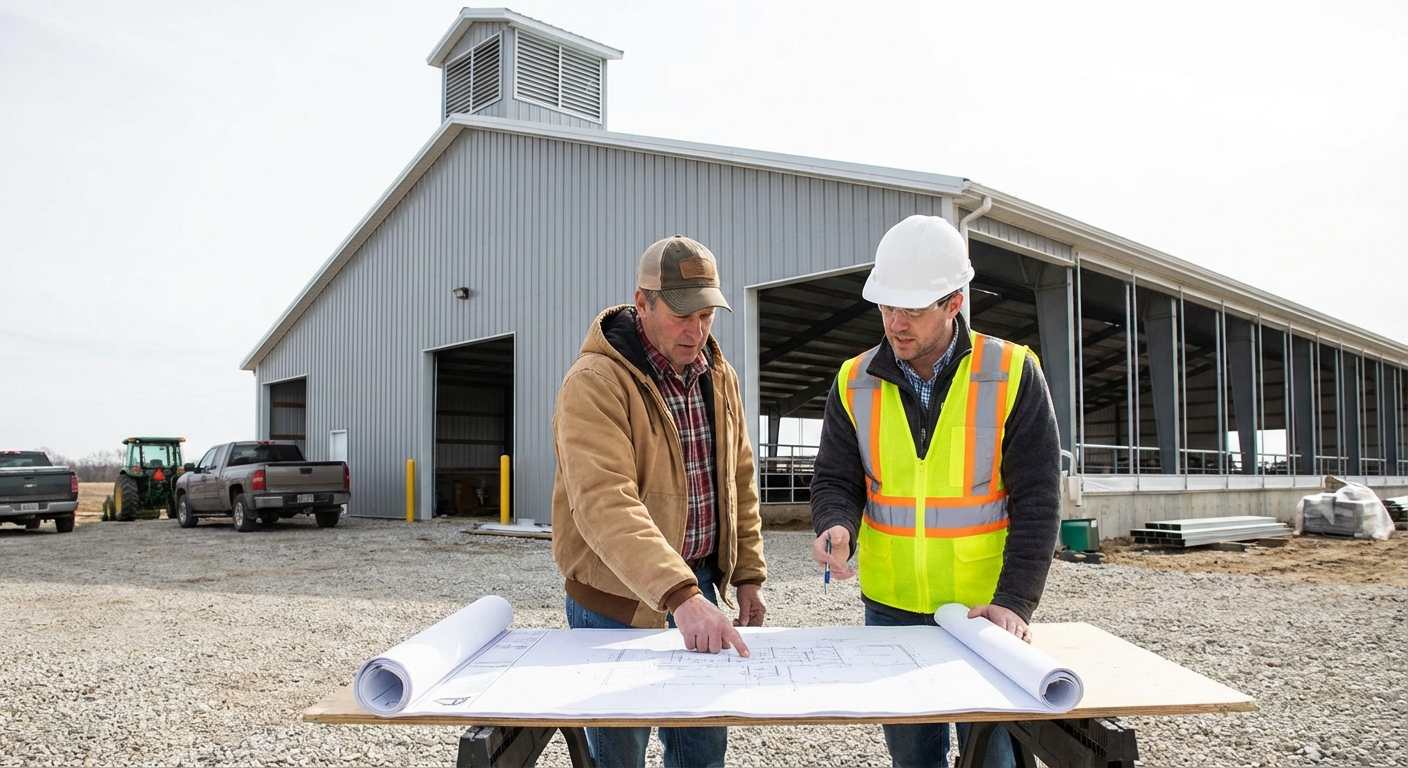
Engineering factors like snow load, wind speed, and local humidity levels ultimately dictate the final dimensions of the structure. How much space does a cow need in a shed is a question of biology, but how that space is protected is a question of structural engineering.
Now, for the final piece:
- Professional blueprints ensure the building meets all local building codes.
- 3D modeling helps you visualize cow flow before the first shovel hits.
- Custom engineering balances cost with long-term structural reliability.
Climate and Management Style Analysis
A dairy in a humid, tropical climate requires much higher ceilings and more open walls than a farm in a cold, northern region. Your management style—such as robotic milking versus a traditional parlor—also dictates where extra space is needed for “traffic.”
Custom Proposals and Engineering Support
Every farm is unique, and “off-the-shelf” shed plans often fail to account for the specific needs of your breed or terrain. Working with specialized engineers ensures that every bolt and beam is optimized for your specific herd size and location.
Data-driven design removes the guesswork, ensuring that your facility supports maximum milk production from day one.
Key Takeaway: Precision engineering translates biological needs into a functional, durable environment tailored to your specific farm.
Conclusion
Building a facility that respects the biological needs of your herd is the fastest way to ensure long-term profitability. If you are ready to design a barn that maximizes cow comfort and streamlines your daily chores, contact us today for a customized proposal. Our team is ready to help you build a future-proof shed that works as hard as you do.
Frequently Asked Questions
1. Can I use the same spacing for Jersey cows and Holsteins?No, Holsteins are larger and generally require the full 48-50 inch stall width, while smaller Jersey cows can thrive in stalls between 42 and 45 inches wide.
2. How do I know if my cows have enough space?Observe their behavior; if more than 10% of the herd is standing in stalls or if you see aggressive behavior at the feed bunk, your cows likely need more space.
3. Is it possible to overstock a dairy shed?While some farms overstock by 10-20%, this requires exceptional ventilation and management. For most operations, 1:1 stall-to-cow ratios are recommended for health.
4. How does lunge space affect cow longevity?If a cow cannot lunge forward easily, she will struggle to stand, leading to knee and hock injuries that can cause her to be culled from the herd prematurely.
5. How often should I check my shed’s ventilation?You should monitor air quality daily, looking for condensation on the ceiling or ammonia smells at cow level, which indicate that your air exchange rate is too low.