
Cold formed steel buildings are pre-engineered structures composed of steel components shaped at room temperature to provide a high-strength, lightweight framework for commercial, industrial, and residential use. Traditional construction projects often face the daunting reality of skyrocketing material costs and unpredictable labor delays that can stall your business growth indefinitely. These setbacks agitate your bottom line and create unnecessary operational stress as project timelines stretch far beyond their original scope. By choosing modern cold formed steel buildings , you can eliminate these inefficiencies through precision-engineered kits designed for rapid assembly and long-term durability.
What exactly are cold formed steel buildings?
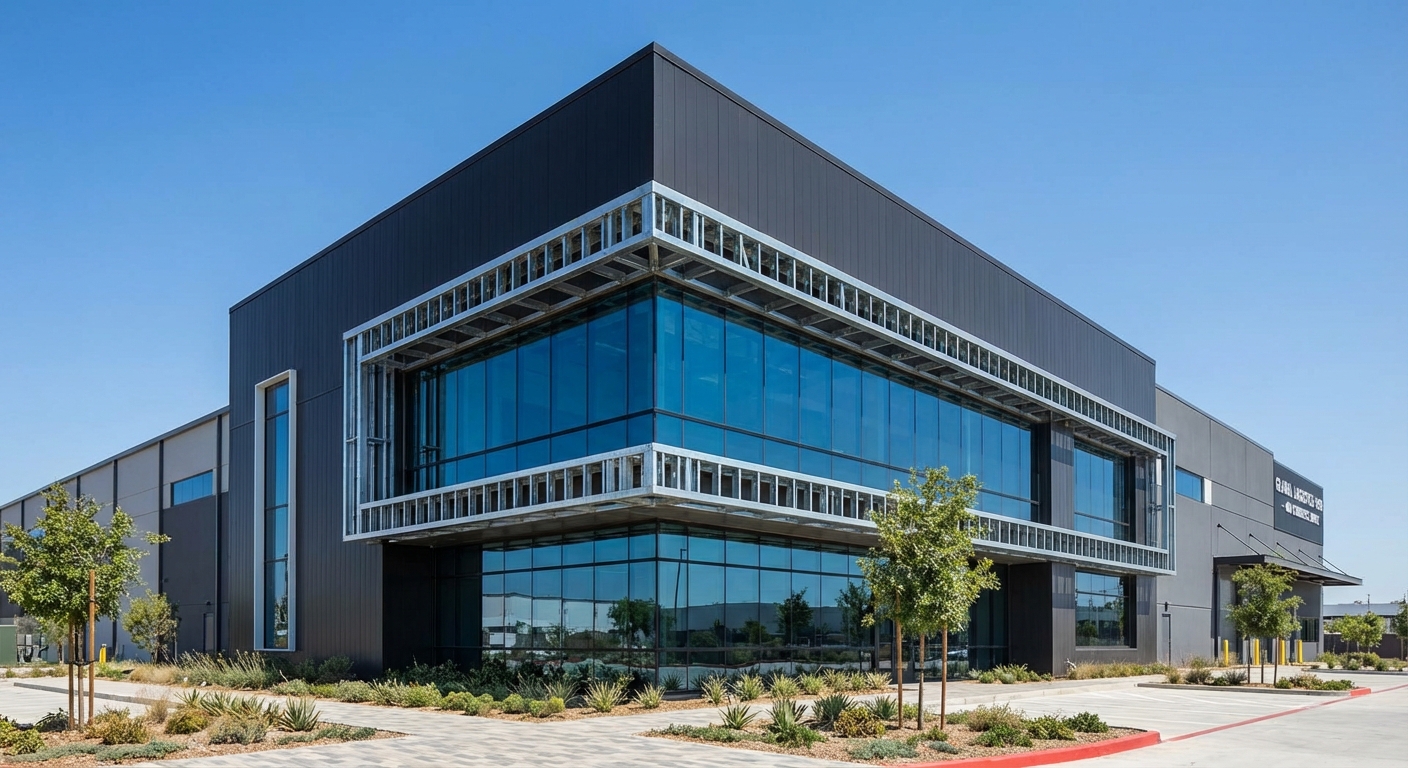
Cold formed steel buildings are structural systems framed with members that have been roll-formed from thin sheets of steel at ambient temperatures. This specific manufacturing method ensures the steel retains its molecular hardness and structural integrity without requiring the high-heat furnaces used in traditional steel production.
How are these structural members manufactured?
The fabrication process involves feeding steel coils through a series of rollers and dies to achieve specific profiles like C-channels or Z-sections. Because this occurs at room temperature, the material maintains a consistent thickness across every piece.
Think about this: the result is a product that is exceptionally straight and dimensionally stable. You will find that these members do not warp, shrink, or split like traditional wood framing often does.
What are the primary framing components?
The core structure of these buildings relies on a series of studs, tracks, joists, and trusses that are engineered to work as a cohesive system. Each piece arrives on your site pre-cut and pre-punched for mechanical fasteners.
- Studs and Tracks: The vertical and horizontal members for wall framing.
- Joists: Horizontal members used to support floor or ceiling loads.
- Trusses: Engineered triangular structures used for roof support.
- Purlins and Girts: Secondary members that provide attachment points for cladding.
Key TakeawayCold formed steel provides a high strength-to-weight ratio and exceptional dimensional accuracy, making it a superior choice for precision-focused construction.
| Feature | Performance Detail | |
|---|---|---|
| Material Process | Roll-formed at room temperature | |
| Standard Shapes | C-channels, Z-sections, and Hat channels | |
| Connection Type | Mechanical fasteners (screws/bolts) | |
| Durability | High resistance to warping and shrinking |
The integration of precision-punched components ensures that the structural frame remains perfectly aligned throughout the building’s lifecycle.
Why are these buildings ideal for the retail sector?
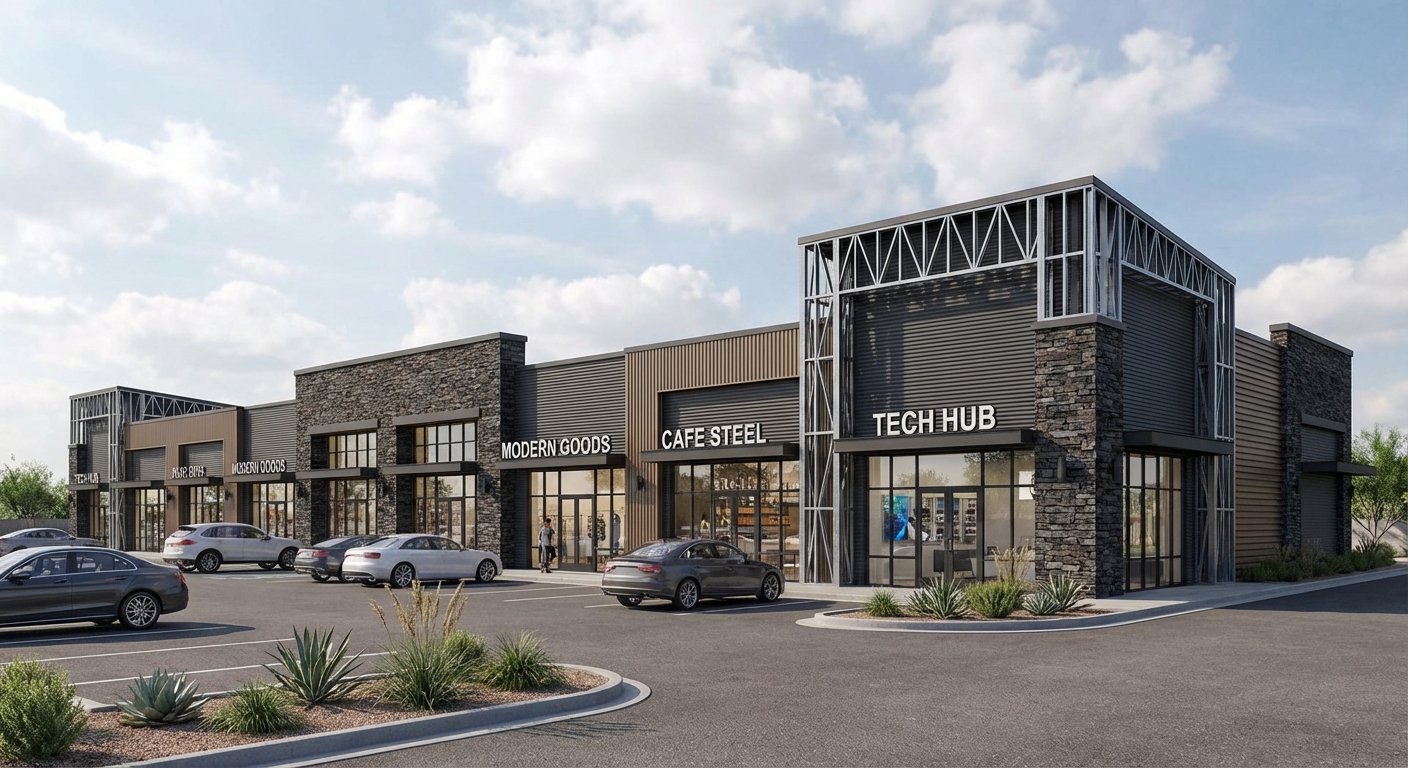
Using cold formed steel buildings for your retail project allows for a wide-open interior layout that maximizes your available floor space for customers. The framing’s inherent versatility supports large storefront windows and flexible floor plans that can be reconfigured as your business grows.
How does this framing improve layout flexibility?
Retailers often require clear-span designs that eliminate the need for obstructive interior columns. This framing system allows for spans that keep your display areas open and inviting for foot traffic.
Furthermore, the strength of the steel supports various exterior finishes. You can easily apply brick, stone, or modern metal panels to match your brand’s specific aesthetic requirements.
Can they accelerate your grand opening?
The “erector-set” nature of these kits means your structure can reach the “dry-in” stage much faster than masonry or wood projects. This speed to market is critical for retail businesses looking to generate revenue as quickly as possible.
- Minimized On-Site Fabrication: Components are ready to install upon arrival.
- Simplified Foundations: Lighter frames require less intensive concrete work.
- Predictable Timelines: Precision engineering reduces the risk of on-site errors.
Key TakeawayRetail businesses benefit from the combination of architectural freedom and the rapid construction timelines offered by cold-formed framing solutions.
| Retail Advantage | Business Impact | |
|---|---|---|
| Clear Span Interior | Maximizes usable merchandising space | |
| Architectural Versatility | Supports diverse cladding and large windows | |
| Speed of Erection | Shortens the path to revenue generation | |
| Structural Stability | Ensures doors and windows remain aligned |
Rapid assembly allows retail owners to move from the design phase to the grand opening with significantly less downtime than traditional methods.
How does cold-formed steel compare to hot-rolled steel?
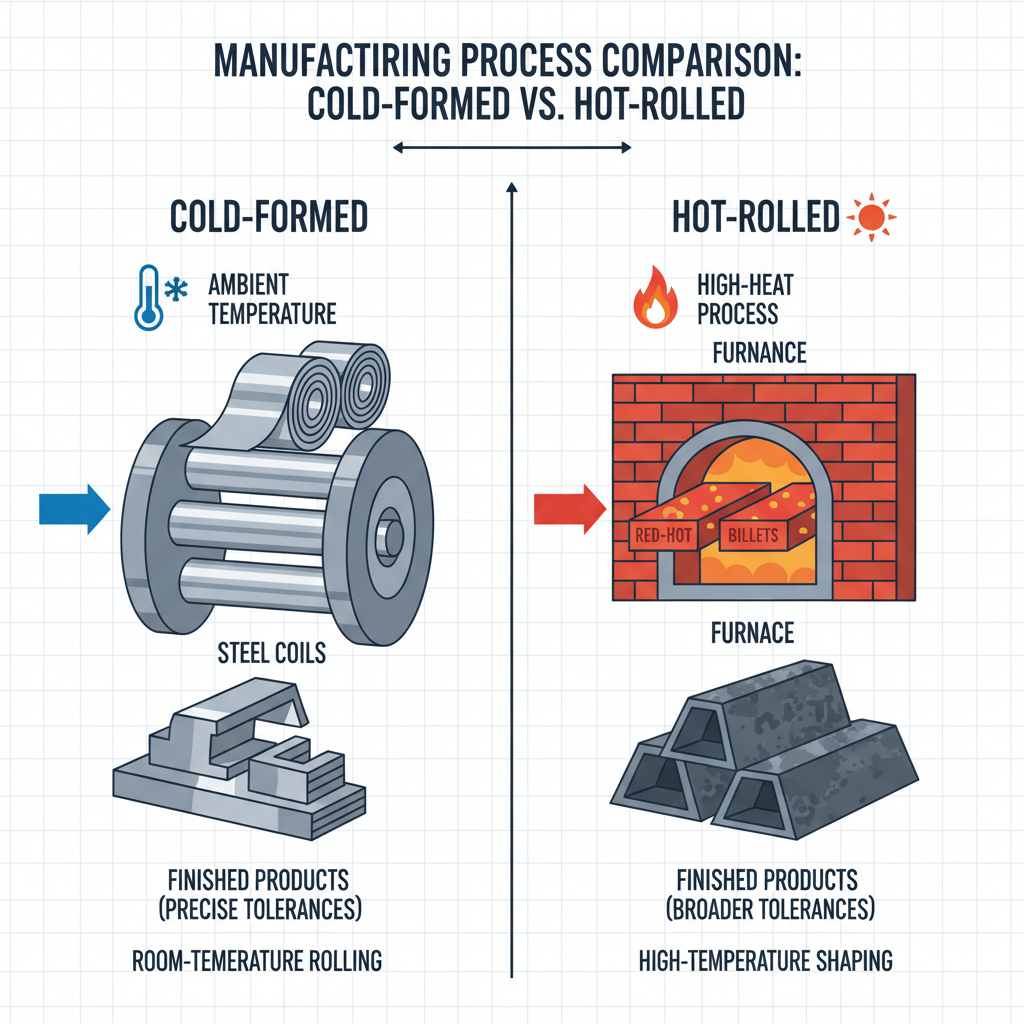
In the world of cold formed steel buildings , the distinction between cold-formed and hot-rolled “red iron” steel is vital for project planning. While hot-rolled steel is shaped at temperatures exceeding 2,000 degrees, cold-formed steel is roll-formed at room temperature, resulting in a lighter and more cost-effective product for mid-sized applications.
What are the weight and handling differences?
Cold-formed members are significantly lighter than their hot-rolled counterparts, making them easier to transport and handle on the job site. You will often find that you do not need heavy cranes for the erection process.
But wait, there is more. The lighter weight does not mean a sacrifice in strength; it simply means the material is optimized for efficiency in buildings under 40 feet wide.
Which manufacturing process offers better precision?
Cold-forming allows for much tighter tolerances during the manufacturing phase because the steel does not expand and contract from extreme heat. This results in components that fit together with millimetric accuracy.
- Precision Punching: Holes for wiring and fasteners are computer-placed.
- Consistent Thickness: Roll-forming ensures uniform material distribution.
- Reduced Scrap: Custom lengths minimize material waste during production.
Key TakeawayWhile hot-rolled steel is suited for massive industrial spans, cold-formed steel offers superior precision and lower logistical costs for standard commercial structures.
| Factor | Cold-Formed Steel | Hot-Rolled (Red Iron) | |
|---|---|---|---|
| Manufacturing Temp | Ambient / Room Temp | 2,000°F+ | |
| Material Weight | Lightweight / High Strength | Heavy / Dense | |
| On-site Equipment | Forklifts / Hand Tools | Large Cranes | |
| Installation | Mechanical Fasteners | Welding / Heavy Bolting |
The choice between these systems usually depends on your specific clear-span requirements and the available budget for on-site heavy equipment.
What makes the assembly process so efficient?
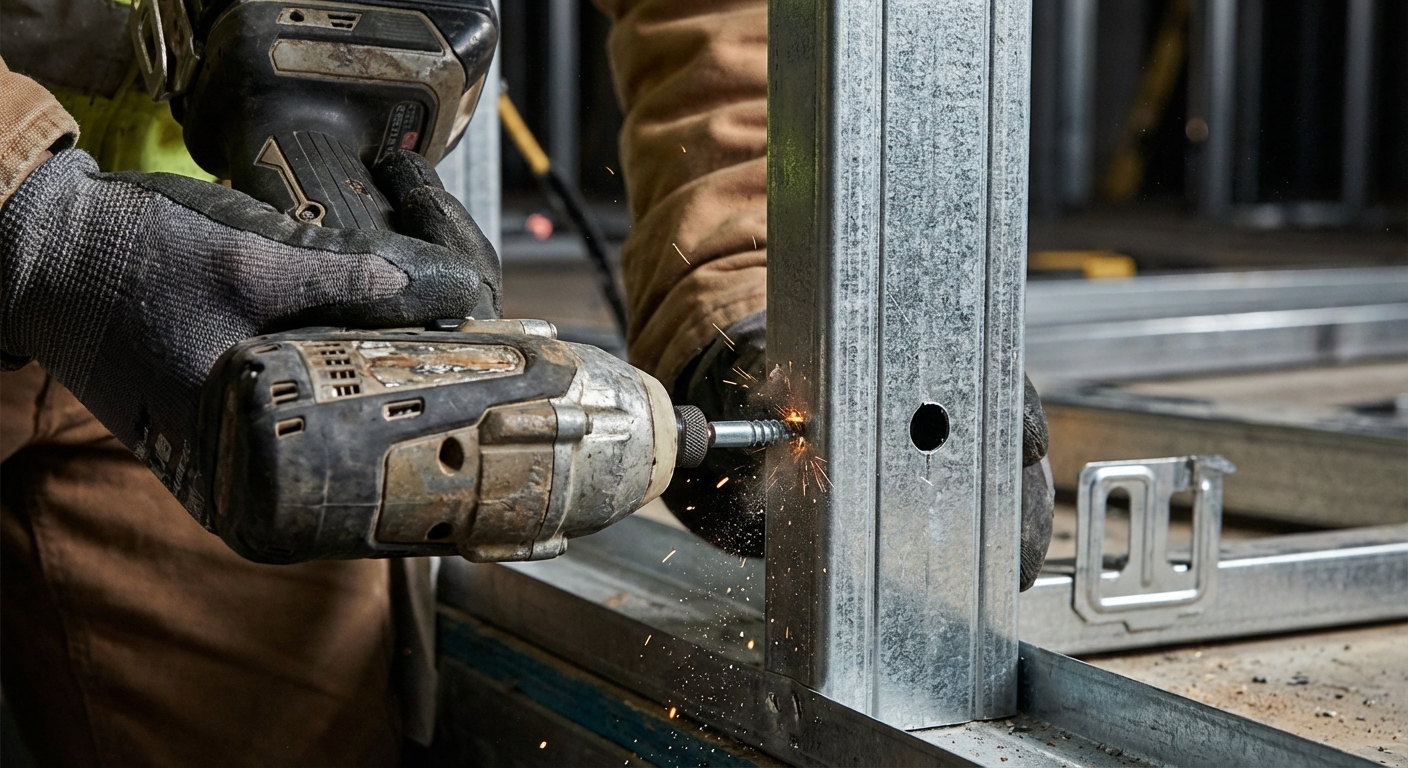
The assembly of cold formed steel buildings is remarkably efficient because the system utilizes mechanical connections rather than complex welding. This approach allows smaller crews to erect the building using standard high-torque impact drivers and basic hand tools.
Why is onsite welding unnecessary?
Eliminating onsite welding removes the need for expensive specialized labor and the associated fire-watch safety protocols. You can proceed with assembly in various weather conditions without worrying about weld integrity being compromised.
The deal is simple: mechanical fasteners provide a consistent and verifiable connection across the entire structure. This simplifies the inspection process and ensures the building meets all engineering specifications.
How do pre-punched holes simplify the build?
Every component in your kit arrives with pre-punched holes for both structural fasteners and electrical wiring. This eliminates the guesswork and manual drilling that often slows down traditional framing projects.
- No Field Cutting: Components are delivered to exact lengths.
- Pre-Numbered Kits: Parts are labeled for easy identification and placement.
- Alignment Accuracy: Pre-punched holes ensure the frame is square from the start.
Key TakeawayThe transition from welding to mechanical fastening significantly reduces labor costs while increasing the overall speed of the assembly process.
| Efficiency Factor | Build Impact | |
|---|---|---|
| Fastener Type | Self-tapping screws and bolts | |
| Labor Skill | General carpentry/assembly skills required | |
| Tooling | Standard impact drivers and drills | |
| Project Speed | Eliminates cooling time for welds |
Standardized mechanical connections allow for a more predictable construction schedule and reduced reliance on highly specialized trade labor.
Are cold formed steel buildings truly cost-effective?
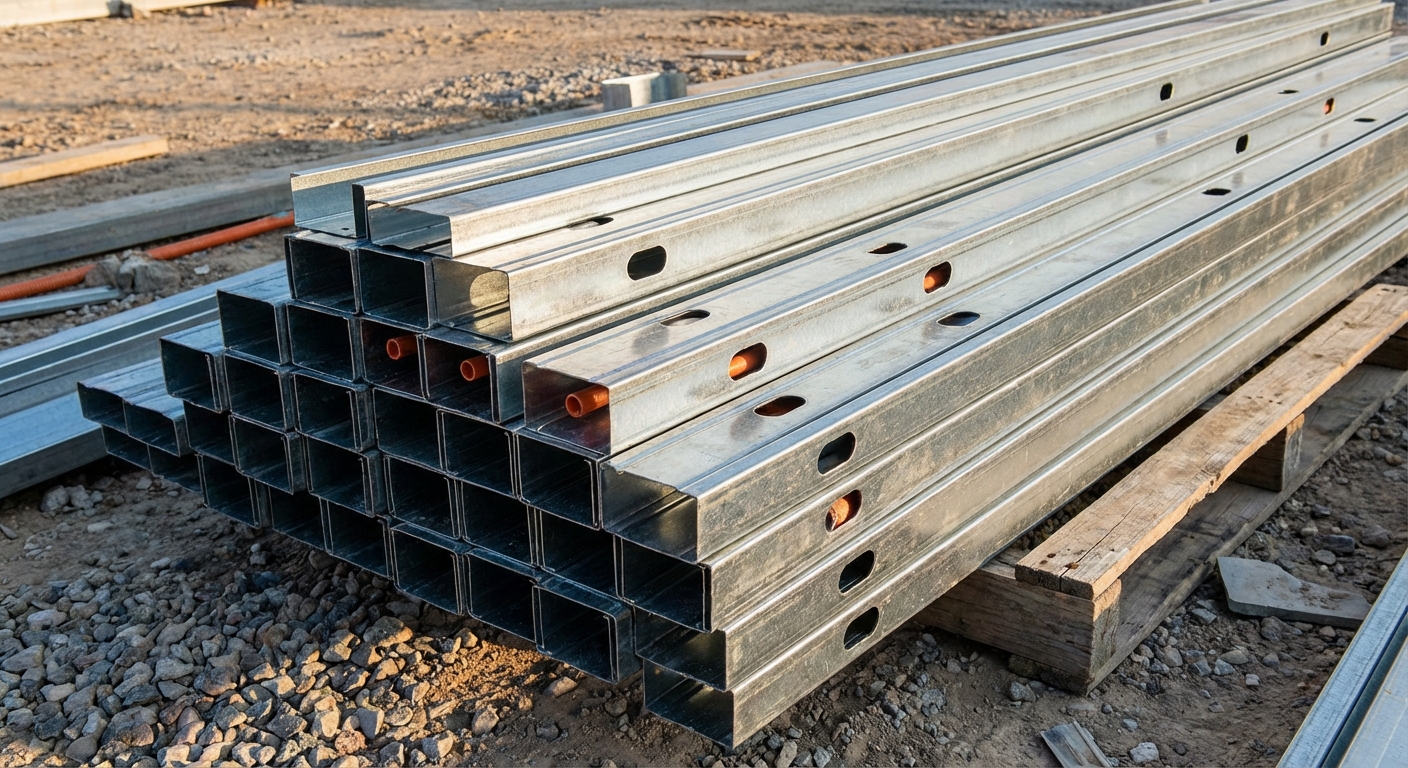
Investing in cold formed steel buildings provides immediate financial advantages through reduced foundation requirements and lower material waste. Because the framing system is significantly lighter than masonry or red iron, it puts less stress on the soil and requires less concrete.
How do they lower your foundation costs?
The lightweight nature of these structures means you can utilize smaller footings and less rebar reinforcement. You could potentially save up to 30% on your concrete expenses compared to heavier construction styles.
Here is the truth: those savings can be reinvested into higher-quality interior finishes or business equipment. The economical footprint makes it easier to build on sites with challenging soil conditions.
What are the long-term maintenance savings?
Steel is immune to the most common causes of building deterioration, such as rot, mold, and termite infestations. This durability ensures that your maintenance budget remains focused on aesthetics rather than structural repairs.
- Pest Resistance: Termites and wood-boring insects cannot damage the frame.
- Moisture Immunity: Galvanized coatings prevent rust and corrosion.
- Dimensional Stability: Walls stay straight, preventing cracks in finishes.
Key TakeawayThe combination of lower upfront foundation costs and minimal long-term maintenance makes steel framing one of the most profitable building investments.
| Financial Benefit | Estimated Impact | |
|---|---|---|
| Foundation Costs | 20-30% reduction in concrete and labor | |
| Insurance Premiums | Lower rates due to fire resistance | |
| Pest Control | Zero costs for termite treatments | |
| Lifecycle Value | High resale value and 50+ year lifespan |
Reduced foundational stress and the elimination of biological threats ensure that the building remains a low-cost asset for decades.
How do they perform in agricultural settings?
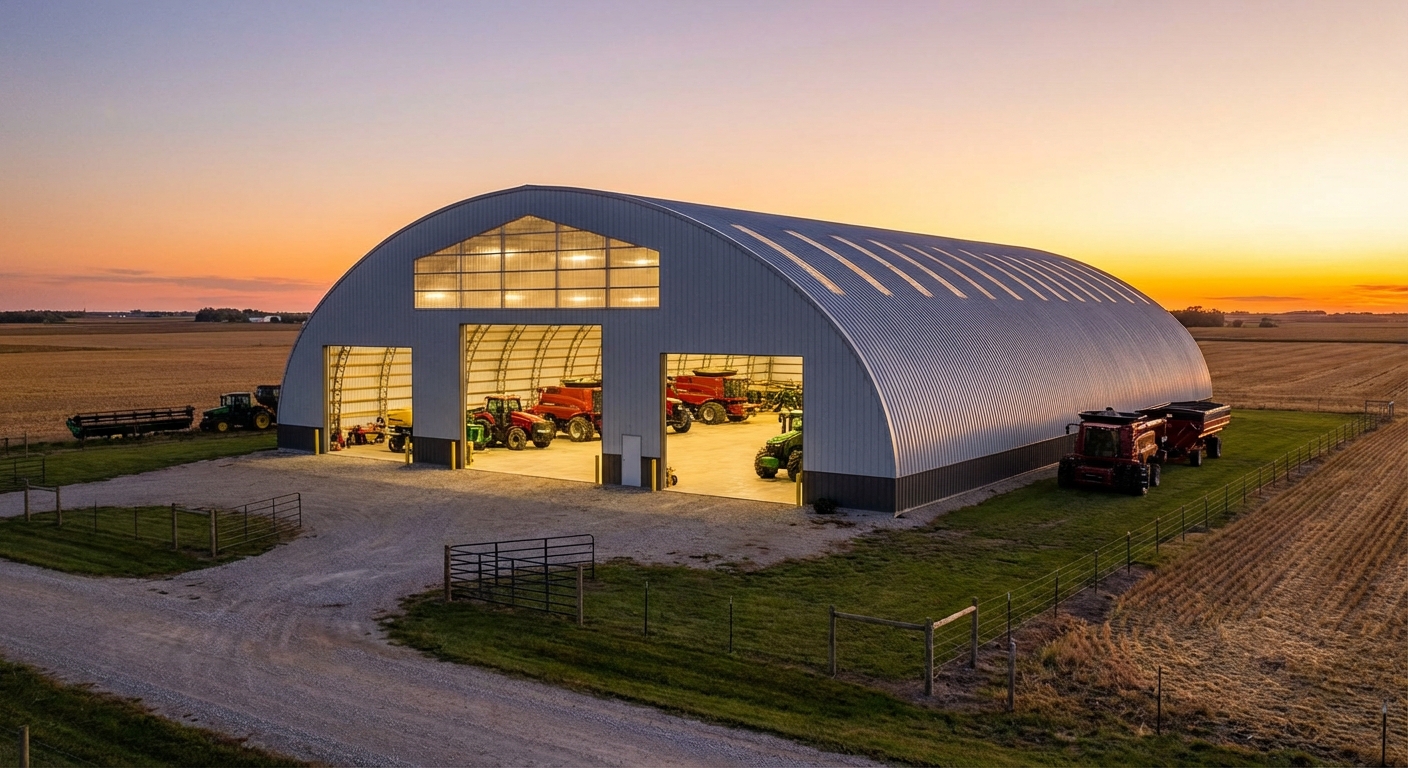
Cold formed steel buildings are a staple in the agricultural sector because they provide large, clear-span areas for machinery storage and livestock shelter. The galvanized finish of the steel members offers superior protection against the high moisture levels and corrosive elements often found in farm environments.
Is the clear-span design beneficial for equipment?
Agricultural operators need wide, unobstructed openings to maneuver large tractors, combines, and trailers. This framing system easily supports the large door headers required for these massive equipment entries.
You will also find that the lack of interior columns makes it easier to organize your workshop or storage bins. It allows for a more efficient workflow during busy planting or harvest seasons.
Can they protect your livestock and feed?
The non-porous nature of steel makes it easy to sanitize, which is essential for maintaining a healthy environment for livestock. Additionally, the fire-resistant frame provides a safer storage solution for hay and grain.
- Hygienic Surface: Easy to wash down and disinfect.
- Rodent Resistance: Metal walls prevent pests from nesting and damaging feed.
- Weather Resilience: Designed to handle heavy snow loads and high winds.
Key TakeawaySteel buildings provide agricultural businesses with a durable, low-maintenance environment that protects valuable equipment and livestock from the elements.
| Agricultural Use | Performance Feature | |
|---|---|---|
| Machine Sheds | Large clear-span for heavy equipment | |
| Hay Storage | Fire-resistant framing for dry storage | |
| Livestock Barns | Easy-to-clean galvanized surfaces | |
| Workshops | Durable environment for year-round repairs |
The resilience of galvanized steel ensures that agricultural buildings can withstand the rigors of farm life without the constant need for structural repair.
What are the environmental benefits of using steel?
Choosing cold formed steel buildings is a proactive step toward sustainable construction because steel is the most recycled material on the planet. Most steel components produced today contain a high percentage of recycled content, reducing the demand for virgin ore mining.
Is the material fully recyclable?
At the end of a building’s lifecycle, every piece of the steel frame can be salvaged and recycled into new products without losing any structural strength. This supports a circular economy and prevents construction waste from entering landfills.
It is worth noting that steel production has become significantly cleaner over the last few decades. The cold-forming process itself uses less energy than high-heat forging, further reducing your project’s carbon footprint.
How does steel improve energy efficiency?
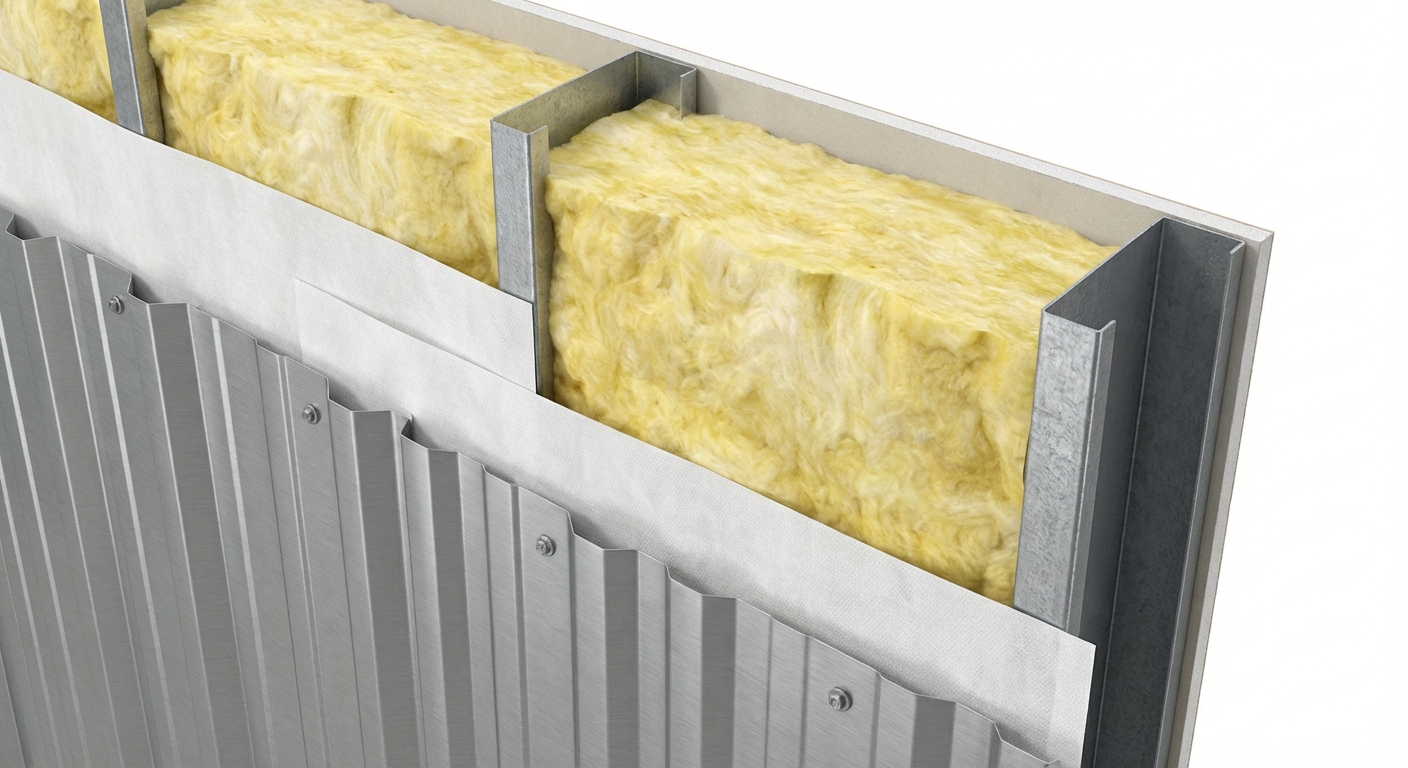
The precision of steel framing allows for tight building envelopes that significantly reduce air infiltration. You can easily integrate high R-value insulation into the wall cavities to lower your heating and cooling costs.
- Tight Seals: Precision framing eliminates gaps where air could escape.
- High Insulation Capacity: Deep wall cavities accommodate advanced insulation.
- Reflective Cladding: Metal roofs can reflect solar heat to keep interiors cool.
Key TakeawaySustainable construction is achievable through steel’s 100% recyclability and its ability to support highly energy-efficient building envelopes.
| Sustainability Goal | Steel Performance | |
|---|---|---|
| Recyclability | 100% recyclable at end-of-life | |
| Waste Reduction | Precision kits eliminate job site scrap | |
| Energy Efficiency | Supports advanced airtight sealing | |
| Material Origin | High content of repurposed scrap steel |
Utilizing steel not only reduces initial construction waste but also ensures the building remains an environmentally responsible asset throughout its life.
How is the delivery and logistics handled?
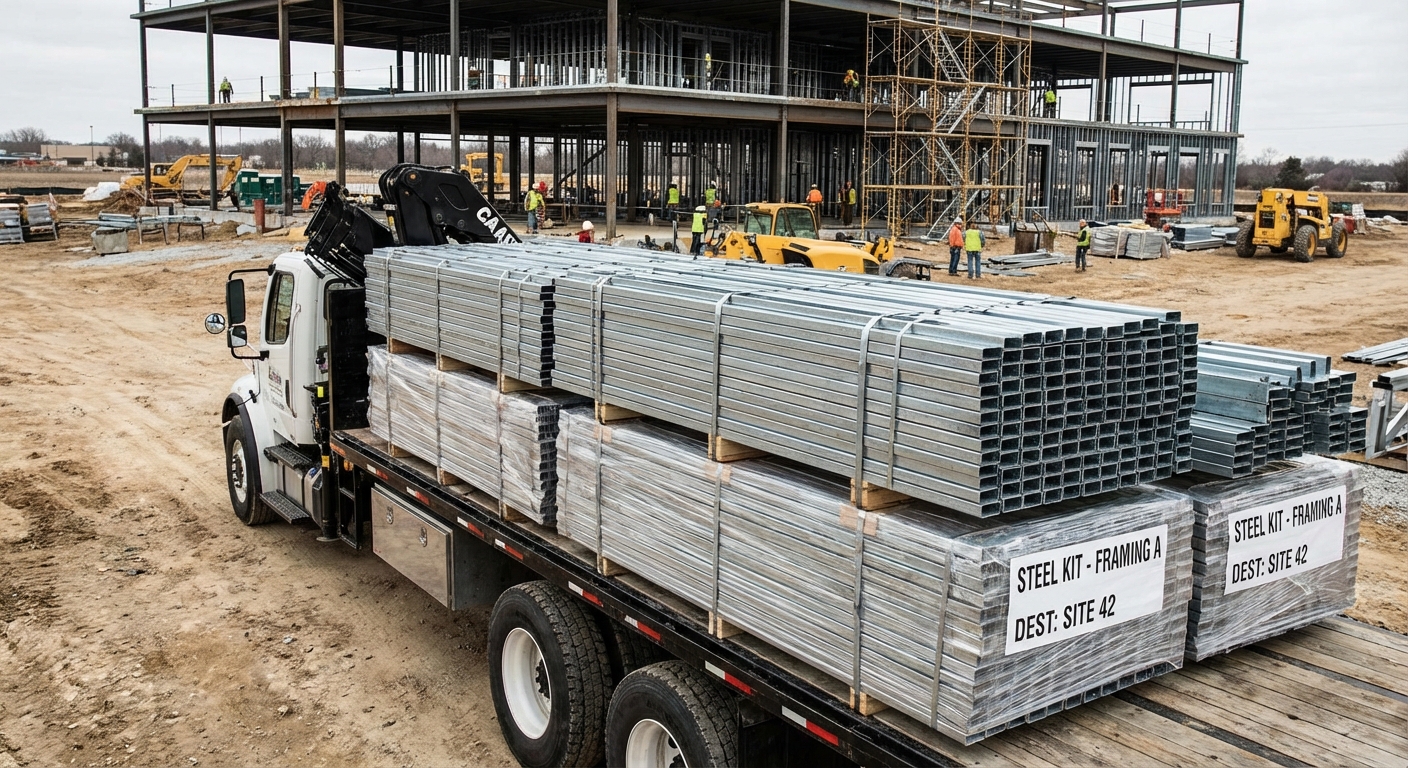
The logistics of cold formed steel buildings are streamlined through palletized shipping, which allows for easier delivery to restricted or remote construction sites. Unlike traditional lumber, which can arrive in messy, unorganized piles, steel kits are bundled and labeled according to your specific erection plans.
What is the advantage of palletized kits?
Bundled components take up much less space on the delivery truck and the job site, allowing you to keep a clean and organized work area. You can offload the entire building using a standard forklift rather than needing specialized heavy equipment.
Look at it this way: better organization leads to fewer lost parts and faster inventory checks. You can start the assembly process immediately because everything is grouped by its structural role.
Can they be delivered to tight sites?
Because the components are lightweight and efficiently packed, they can often be delivered by smaller trucks that can navigate tight urban sites or narrow rural roads. This flexibility reduces the logistical headaches often associated with larger structural steel projects.
- Bundled Labeling: Components are grouped by wall or roof section.
- Weather Protection: Kits are often shrink-wrapped for protection during transit.
- Sequential Loading: Parts are loaded in the order you will need them.
Key TakeawayEfficient shipping and palletized organization simplify the logistics of construction, reducing on-site clutter and speeding up the inventory process.
| Logistics Detail | Site Benefit | |
|---|---|---|
| Packaging | Palletized and shrink-wrapped bundles | |
| Offloading | Standard forklift or telehandler | |
| Site Footprint | Neatly stacked components save space | |
| Inventory | Labeled parts simplify checking against plans |
Streamlined delivery ensures that materials are protected and ready for immediate use, preventing the delays often caused by disorganized site arrivals.
Can these buildings withstand extreme fire conditions?
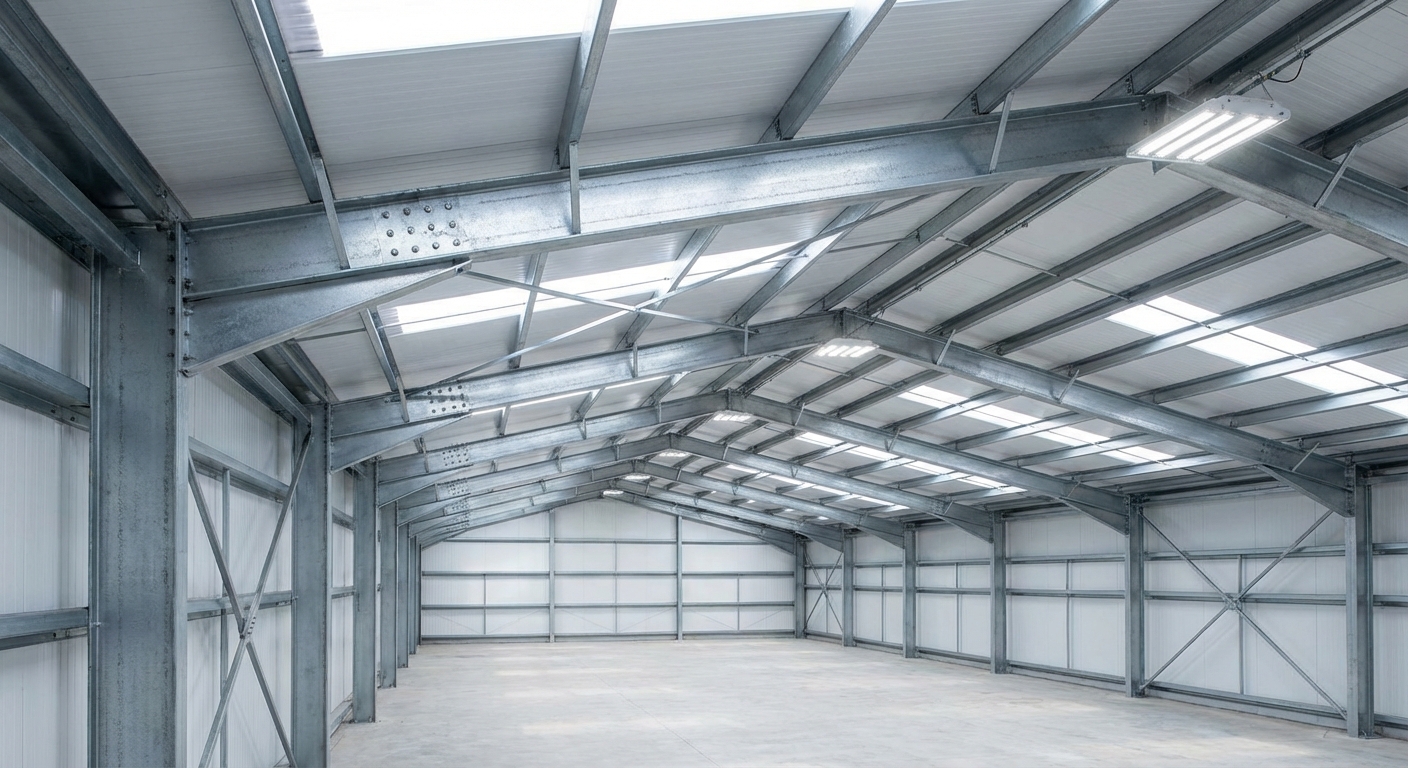
Safety is a paramount concern, and cold formed steel buildings offer superior fire resistance compared to traditional wood-framed structures. Steel is a non-combustible material, which means it will not ignite or contribute fuel to a fire, helping to contain flames and protect occupants.
How does steel behave in a fire?
While extreme temperatures can eventually soften steel, it does not provide the fuel required for a fire to spread rapidly across the structure. This non-combustibility gives your local emergency services more time to respond and your occupants more time to evacuate safely.
Think about this: many insurance companies offer lower premiums for steel-framed buildings because they recognize the reduced risk of total loss. This is a recurring financial benefit that stems directly from the safety of the material.
Does it meet strict urban building codes?
Steel framing is often the preferred choice in high-density urban zones where fire codes are most stringent. You can easily achieve various fire-hour ratings by adding specific layers of gypsum board or intumescent coatings.
- Zero Flame Spread: Steel will not carry fire from one room to another.
- Non-Toxic: Unlike treated wood, steel does not release toxic fumes when heated.
- Structural Integrity: Maintains shape longer than charred wood during a fire.
Key TakeawayThe inherent non-combustible properties of steel significantly enhance the safety profile and code compliance of any modern building project.
| Safety Feature | Steel Performance | |
|---|---|---|
| Combustibility | Non-combustible (Class A) | |
| Fuel Contribution | Zero contribution to fire growth | |
| Melting Point | Approximately 2,500°F | |
| Insurance Impact | Potential for lower annual premiums |
By choosing a fire-resistant structural material, you protect both the physical asset and the safety of everyone who enters the building.
What are the primary size limitations to consider?
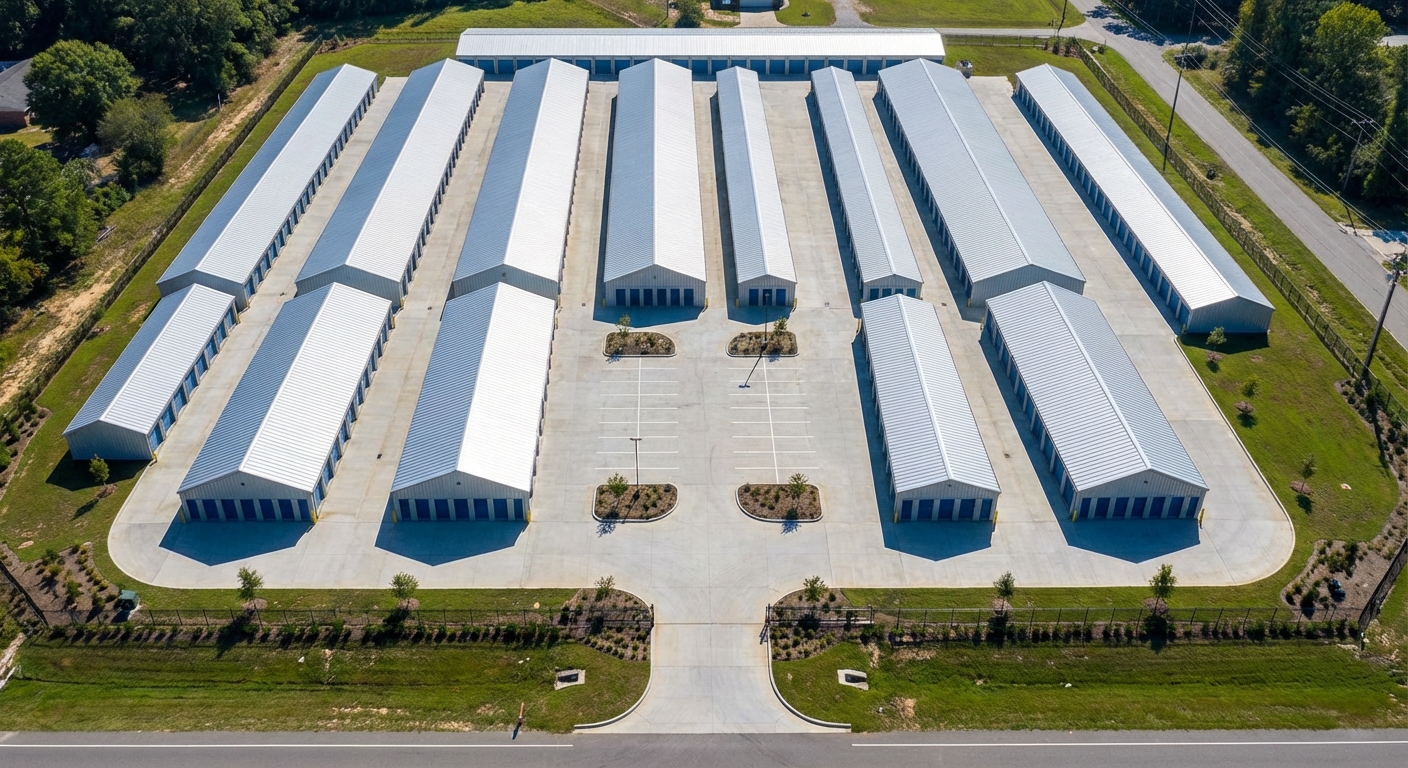
While cold formed steel buildings are incredibly versatile, they are most efficient within certain dimensional parameters. Typically, these buildings are optimized for widths up to 40 feet and eave heights up to 20 feet, making them the perfect solution for small-to-mid-sized commercial complexes.
What are the standard clear-span limits?
The sweet spot for cold-formed engineering is usually between 20 and 40 feet of clear span. If your project requires massive spans over 100 feet, you might consider a hybrid system that uses cold-formed secondary members with a hot-rolled primary frame.
Here is the deal: staying within the standard range ensures you get the most cost-effective price per square foot. These dimensions are ideal for self-storage units, detached garages, and small retail centers.
Can they support a second floor?
Yes, these systems are frequently used to create two-story structures or mezzanine levels for storage. The framing is engineered to support the additional floor loads while maintaining the same speed of assembly.
- Standard Widths: 20′, 24′, 30′, and 40′ are common.
- Eave Heights: Generally range from 10′ to 20′.
- Roof Pitches: Typically 1:12 to 4:12 depending on snow loads.
Key TakeawayCold-formed steel is the most economical choice for structures under 40 feet wide, offering a balance of strength and affordability.
| Dimension Type | Standard Optimization | |
|---|---|---|
| Building Width | up to 40′ (Clear Span) | |
| Eave Height | 10′ to 20′ standard | |
| Roof Slope | 1:12 to 4:12 common | |
| Bay Spacing | 10′ to 20′ typical |
Understanding these standard ranges allows you to design a structure that maximizes value while meeting all your functional space requirements.
Ready to build a structure that stands the test of time? If you are looking for a durable, cost-effective, and rapid construction solution, contact us today to receive a professional consultation and a personalized project quote.
Key Takeaways
- Efficiency: Precision-engineered kits reduce on-site labor and eliminate the need for welding.
- Savings: Lower foundation costs and minimal maintenance provide long-term financial benefits.
- Durability: Steel is resistant to fire, pests, and rot, ensuring a 50+ year building lifespan.
- Sustainability: 100% recyclable material supports green building goals and energy efficiency.
We believe that high-quality construction should be accessible and efficient. Our stance is that cold formed steel represents the future of mid-sized commercial and agricultural building, offering a level of precision and safety that traditional materials simply cannot match. Let us help you streamline your next project from the ground up.
FAQ
Can I customize the exterior of my building?Yes. You can use a variety of finishes including metal panels, brick veneer, stone, or stucco to achieve your desired aesthetic.
How long does it take to deliver a kit?Standard delivery times vary by project complexity, but most kits are fabricated and delivered within a few weeks of final engineering approval.
Is it possible to add on to my building later?Absolutely. The modular nature of cold-formed framing makes it relatively simple to expand your building by adding additional bays or sections.
How do I handle electrical and plumbing?The steel studs arrive with pre-punched service holes, making it easy for tradespeople to run wiring and plumbing through the walls without drilling.
Do these buildings require special permits?Like any structure, you will need to meet local building codes. Your kit will arrive with engineered blueprints to assist with the permitting process.