
Asking for a quote on a new industrial facility often feels like asking, “How long is a piece of string?”—it is frustratedly vague and impossible to answer without specific details regarding dimensions, location, and end-use. If you miscalculate the budget by even a small margin, you risk stalling the project or facing financial ruin before the foundation is even poured. In the volatile 2025 construction market, where new steel tariffs and labor shortages shift prices weekly, a guess is a dangerous thing. We provide the specific base numbers and variable breakdowns you need to accurately forecast your investment. While a basic kit might start lower, a fully installed steel structure warehouse cost in 2025 typically lands between 22.00 to 45.00 per square foot, depending on complexity and location.
1. What is the average steel structure warehouse cost today?
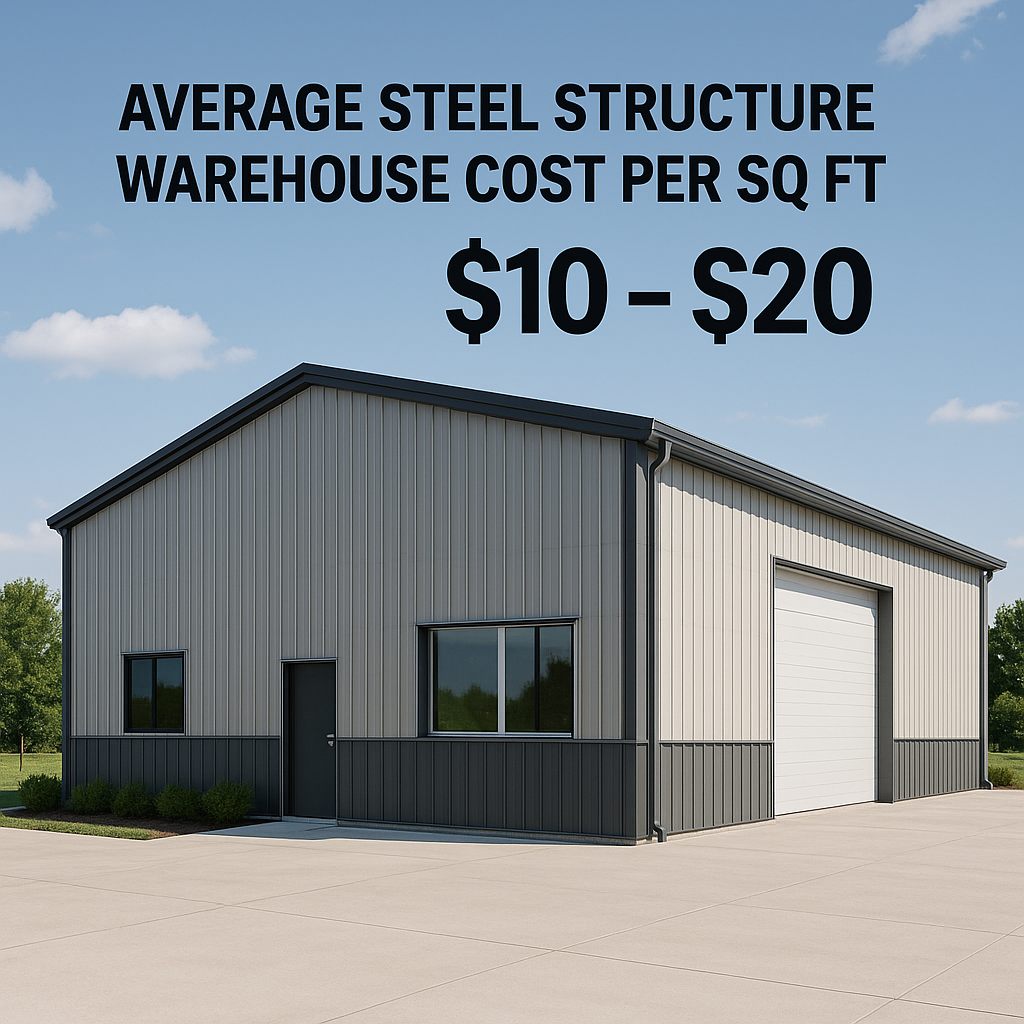
To get a building “in the dry” on a concrete slab, the baseline cost has shifted upward due to recent economic factors to a range of 20.00 to 45.00 per square foot. This range accounts for the recent volatility in the global steel market, particularly the 25% tariff on imported steel introduced earlier this year.
Here’s the deal:
This aggregate number is actually composed of three distinct buckets: the material kit, the concrete foundation, and the labor for assembly. You cannot simply look at the steel price; you must view the project holistically. Many first-time buyers make the mistake of budgeting only for the “Red Iron” kit. They often forget that concrete and labor combine to exceed the cost of the steel itself.
The “Shell” vs. “Turnkey” Trap
- Metal Kit Only: Includes columns, rafters, and sheeting delivered to your site (10−25/sq ft).
- Foundation: Concrete slab and piers, heavily dependent on soil (6−10/sq ft).
- Erection: Professional labor to assemble the frame (6−15/sq ft).
- Turnkey: Includes lighting, basic electrical, and plumbing (60−70/sq ft).
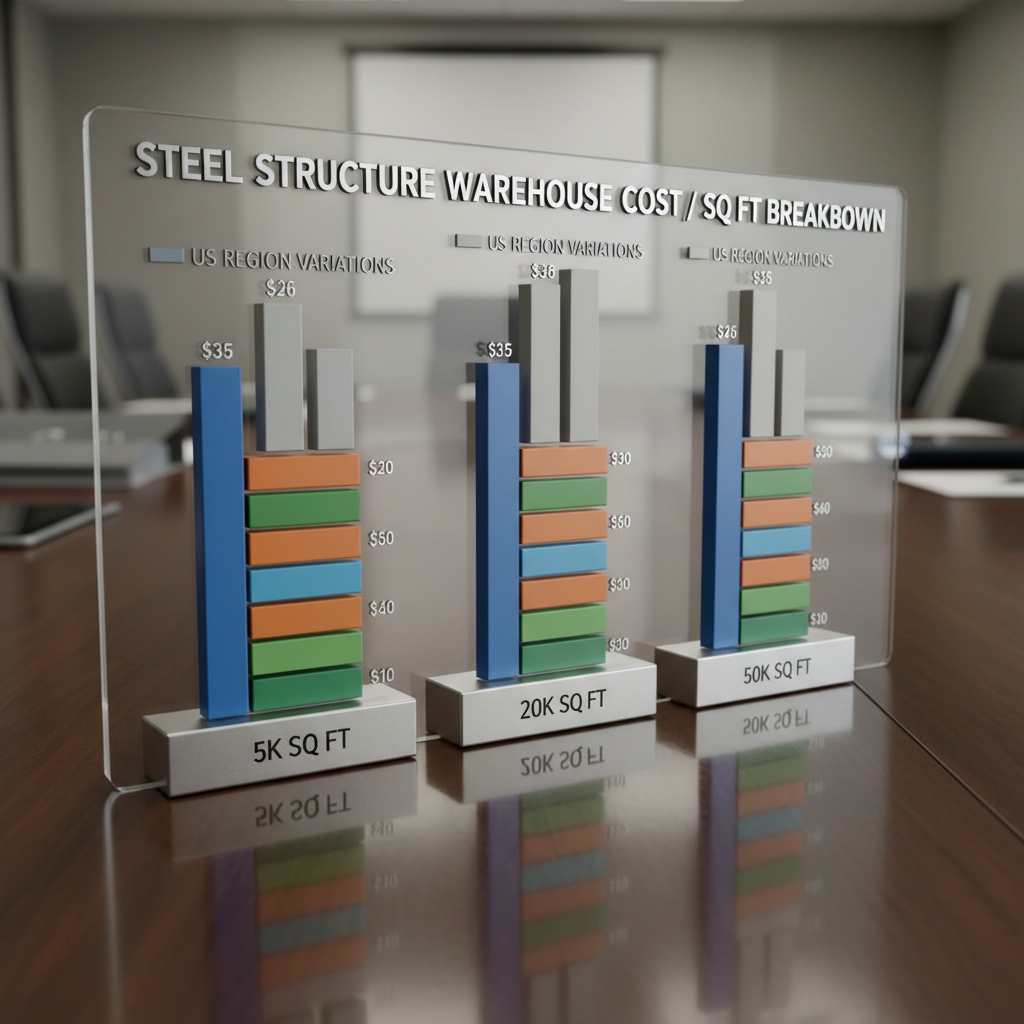
Key Takeaway
When comparing quotes, you must ensure you are comparing apples to apples regarding “turnkey” versus “kit only” pricing. A quote of $12/sq ft likely excludes the anchor bolts, the concrete, the insulation, and the crew to build it.
2025 Market Estimates (Turnkey/Installed)
| Expense Category | Low Range (per sq ft) | High Range (per sq ft) | Key Driver | |
|---|---|---|---|---|
| Material Kit | $10.00 | $25.00 | Steel tariffs & complexity | |
| Concrete Slab | $6.00 | $10.00 | Local mix prices & soil | |
| Framing/Erection | $6.00 | $15.00 | Union vs. Non-union labor | |
| Total Installed | $22.00 | $50.00+ | Complexity & Location |
Plan for the upper end of the $50 range if you are in a high-load geographic area or require extensive customization.
2. How does square footage change the steel structure warehouse cost?
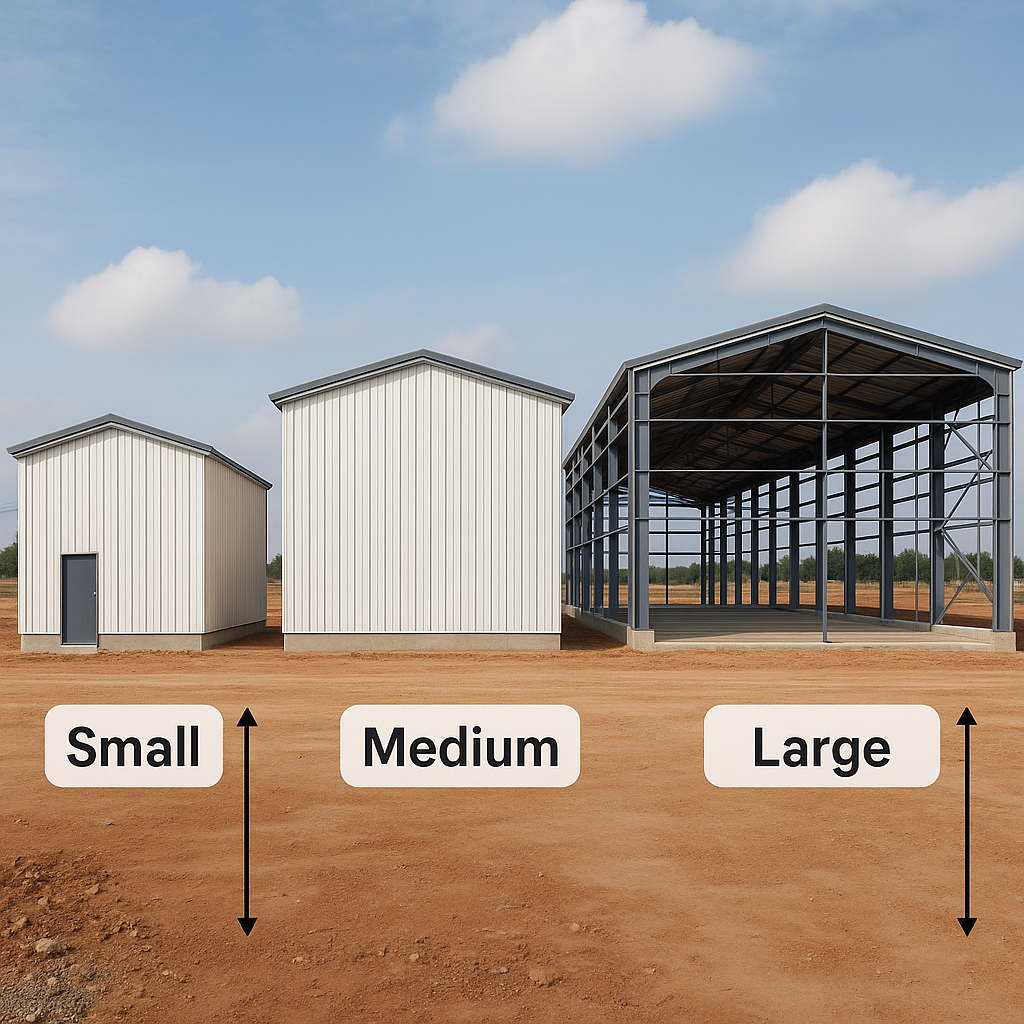
Generally, as the total square footage increases, the steel structure warehouse cost per square foot decreases due to economies of scale in manufacturing and shipping. This inverse relationship is one of the most consistent rules in construction economics.
You might be wondering:
Does a smaller building actually cost more? Yes, strictly on a unit price basis because engineering fees, shipping minimums, and mobilization costs are fixed. Whether you build 2,000 square feet or 20,000, you still need one crane, one crew mobilization, and one set of stamped engineering plans. Spreading $5,000 of freight across 20,000 square feet is far cheaper per foot than spreading it across 2,000 square feet.
Size vs. Efficiency
- Small (Under 2,500 sq ft): Highest cost per sq ft; soft costs eat up a large percentage of the budget.
- Medium (5,000 – 10,000 sq ft): The “sweet spot” for many businesses with costs stabilizing around 20−25/sq ft for the kit.
- Large (20,000+ sq ft): Maximum efficiency; bulk steel purchasing lowers the rate significantly.
- Mega (50,000+ sq ft): Erection crews move faster on long, repetitive frame lines.
Key Takeaway
Designing your facility to standard increments (like 5,000 or 10,000 sq ft) maximizes material usage and minimizes waste. Avoid custom dimensions that require unique engineering unless operationally necessary.
Unit Price Scaling Example
| Building Size | Kit Price Estimate | Price Per Sq Ft | Notes |
|---|---|---|---|
| 30′ x 40′ | ~32k | 20.00−26.00 | High soft cost impact |
| 50′ x 100′ | ~95k | 15.00−19.00 | Optimal efficiency zone |
| 100′ x 200′ | ~380k | 12.00−19.00 | Bulk material discount |
Economies of scale are your best friend; doubling the size often only increases the total price by 60-70%.
3. Does foundation design impact the steel structure warehouse cost?
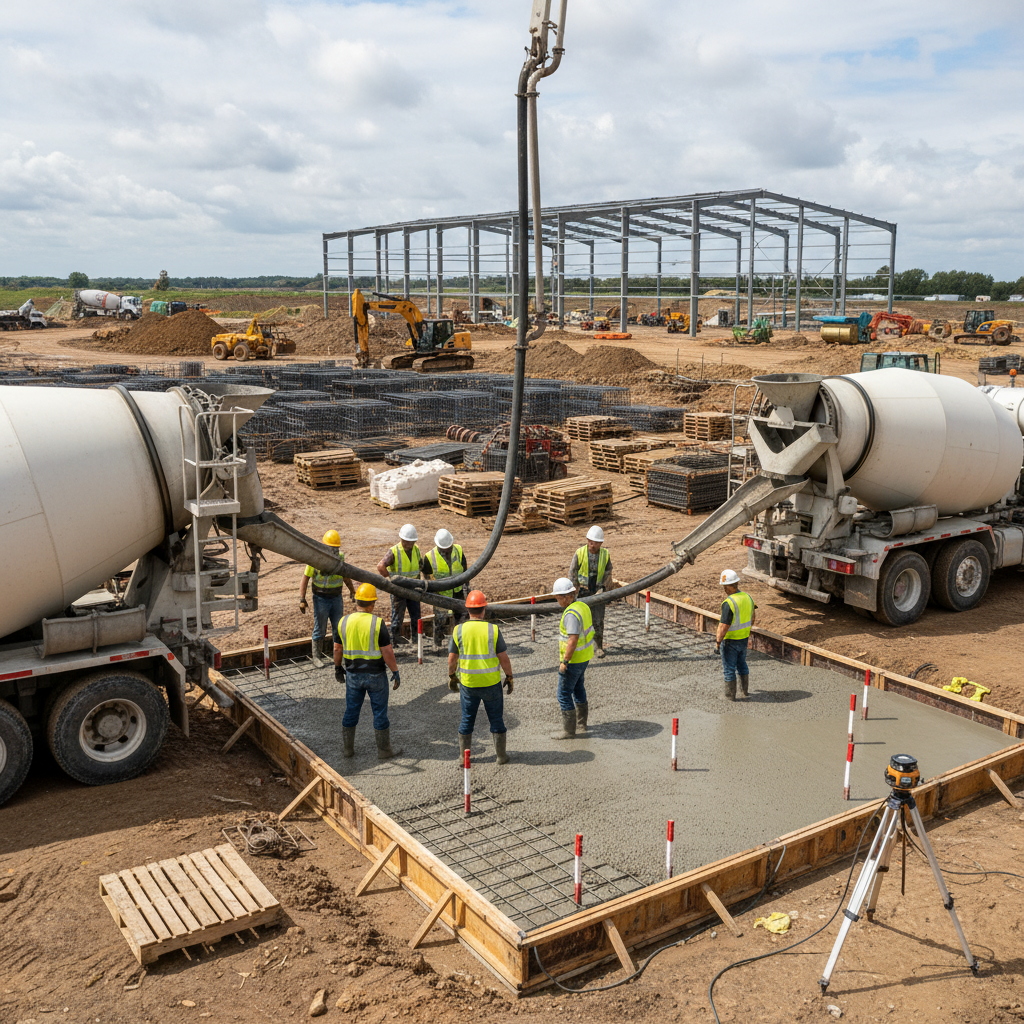
The foundation is a massive variable, often accounting for nearly 20-25% of the total project budget. While a standard slab might cost $6.00 per square foot, difficult ground conditions or heavy load requirements can double this figure.
But here’s the kicker:
This price assumes a standard reinforced slab on a level grade; if your site has clay soil, you may face expensive over-excavation. “Expansive soils” found in regions like Texas require replacement with select fill, involving heavy earthmoving equipment. If you store heavy inventory on racking systems, point-load requirements may dictate footings that are 24 inches deep or more.
Foundation Cost Factors
- Soil Conditions: Poor soil requires remediation to prevent future shifting or cracking.
- Load Requirements: Forklifts require reinforced heavy-duty slabs (6-8 inches) with higher PSI.
- Frost Lines: Northern climates need deep frost walls to prevent heaving.
- Anchor Accuracy: Surveyors must verify bolt locations before pouring to avoid costly retrofits.
Key Takeaway
Never cut corners on the geotechnical report; discovering bad soil after the pour is a financial catastrophe. A professional surveyor costing
1,500 saves you froma
10,000 foundation repair.
Foundation Type Cost Comparison
| Foundation Style | Typical Application | Est. Cost Range |
|---|---|---|
| Floating Slab | Light storage, garages | 5.00−8.00 / sq ft |
| Pier & Beam | Uneven terrain, agricultural | 6.00−10.00 / sq ft |
| Reinforced Industrial | Heavy manufacturing | 8.00−12.00 / sq ft |
Allocate at least 25% of your total budget for groundwork and concrete to be safe.
4. Will complex roof styles raise the steel structure warehouse cost?
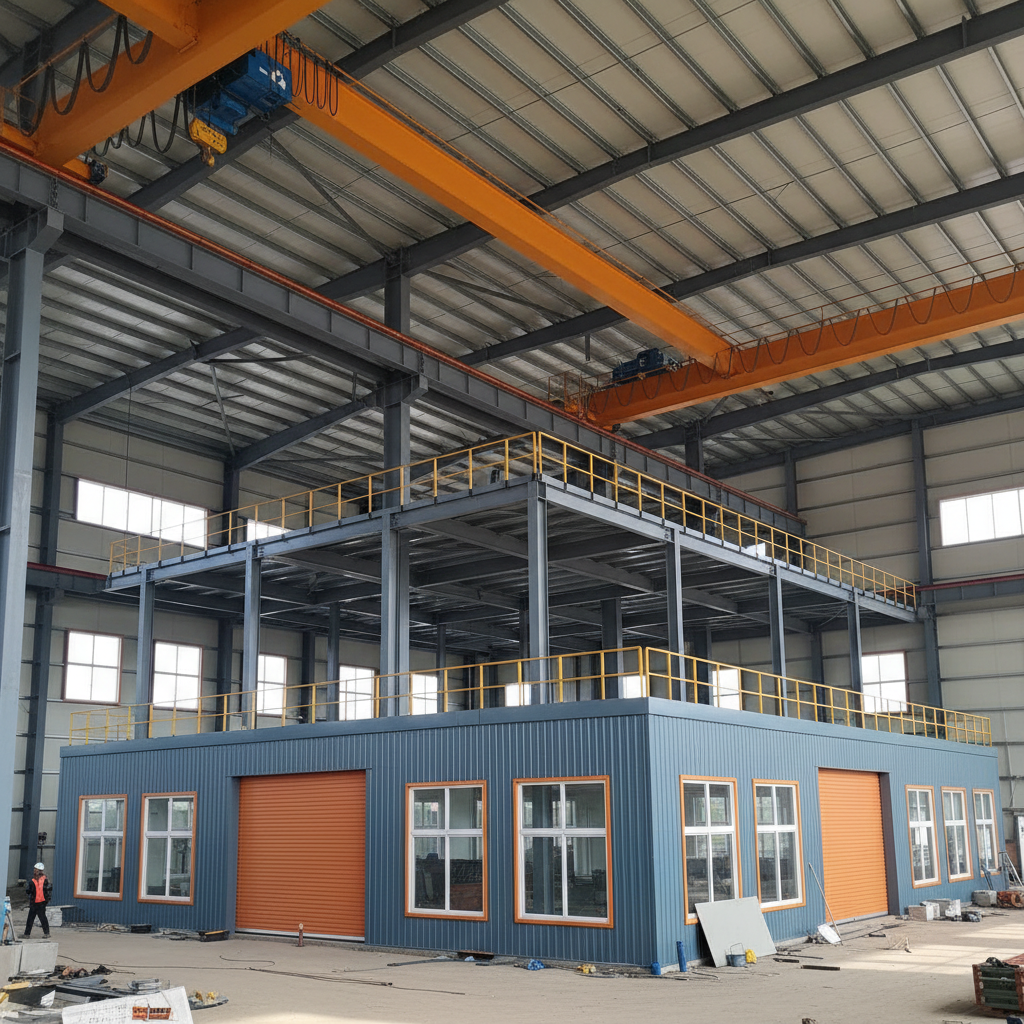
Keeping the design simple with a low-pitched gable roof (typically 1:12 or 2:12) is the most effective way to control your steel structure warehouse cost . Aesthetic choices often clash with budgetary constraints, and the roof geometry is the primary battlefield for this conflict.
What’s the real story?
Steep roofs require significantly more steel to cover the same floor area, increasing the length of rafters and the square footage of panels. Beyond materials, the labor cost skyrockets because crews cannot walk on a 6:12 pitch safely without complex harnessing and scaffolding. This slows down the installation process, increasing the days on-site and the rental fees for lift equipment.
Design Efficiency Tips
- Rectangular Geometry: Stick to rectangular footprints to avoid custom “hip” or “valley” trim.
- Pitch Selection: A 1:12 pitch sheds water effectively but offers the lowest steel weight.
- Straight vs. Tapered: Use tapered columns for spans over 40 feet to save weight.
- Avoid Parapets: Unless required by zoning, parapet walls add significant steel and flashing costs.
Key Takeaway
A steep roof might look residential, but it adds 10-15% to your structural costs without adding any usable interior space. Stick to a 1:12 or 2:12 pitch for maximum industrial efficiency.
Roof Pitch Cost Implications
| Roof Pitch | Steel Usage | Cost Impact | Ideal Use |
|---|---|---|---|
| 1:12 | Lowest | Base Price | Industrial / Warehousing |
| 2:12 | Low | +2-3% | Standard Commercial |
| 4:12 | Medium | +5-8% | Retail / Barndominium |
| 6:12+ | High | +10-15% | Residential / Church |
The optimal balance of aesthetics and cost for commercial projects is almost always a 2:12 pitch.
5. Do location codes alter the final steel structure warehouse cost?
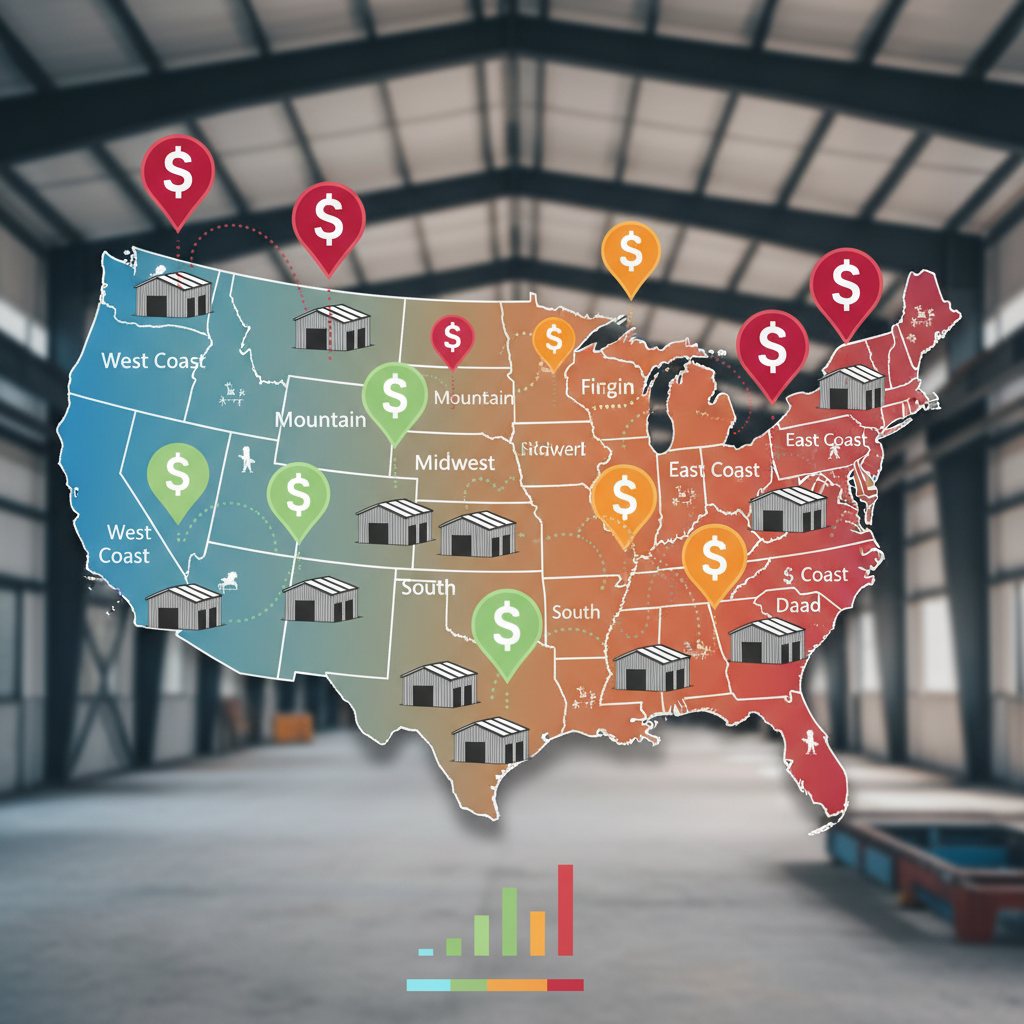
Local building codes regarding wind, snow, and seismic loads dictate the amount of steel required, directly influencing the final price tag. You cannot build the same warehouse in Miami that you build in Oklahoma; the structural engineering must adapt to local forces.
It boils down to this:
A warehouse built in Florida (high hurricane wind loads) or Minnesota (heavy snow loads) requires heavier steel framing and closer purlin spacing. For high-wind zones, this might mean “wind-rated” overhead doors and thicker 24-gauge sheeting, which are significantly more expensive than standard options. In snow zones, roof purlins might need spacing of 2 feet rather than 5 feet.
Regional Variables
- Seismic Zones (West Coast): Requires substantial additional bracing and heavier columns to withstand lateral movement.
- Snow Load (North/Mountains): Requires stronger roof trusses to support 40+ lbs per sq ft of snow.
- Wind Rating (Coastal): Requires impact-resistant paneling and reinforced connections for 150+ mph gusts.
- Exposure Categories: “Exposure C” (open terrain) builds cost more than “Exposure B” (urban).
Key Takeaway
Your zip code is a major cost driver; always provide the exact location during the quoting process to avoid engineering surprises later. A 20-mile difference can change wind exposure categories and price.
Regional Cost Variance Estimate
| Region | Primary Challenge | Est. Surcharge |
|---|---|---|
| Midwest | Moderate Snow/Wind | Base / Lowest |
| Northeast | Heavy Snow | +15-20% |
| Southeast | High Wind (Hurricane) | +10-25% |
| West Coast | Seismic / High Labor | +25-30% |
Expect to pay at least 25% more for a structure in California or Florida compared to the Midwest.
6. How much do accessories add to the steel structure warehouse cost?
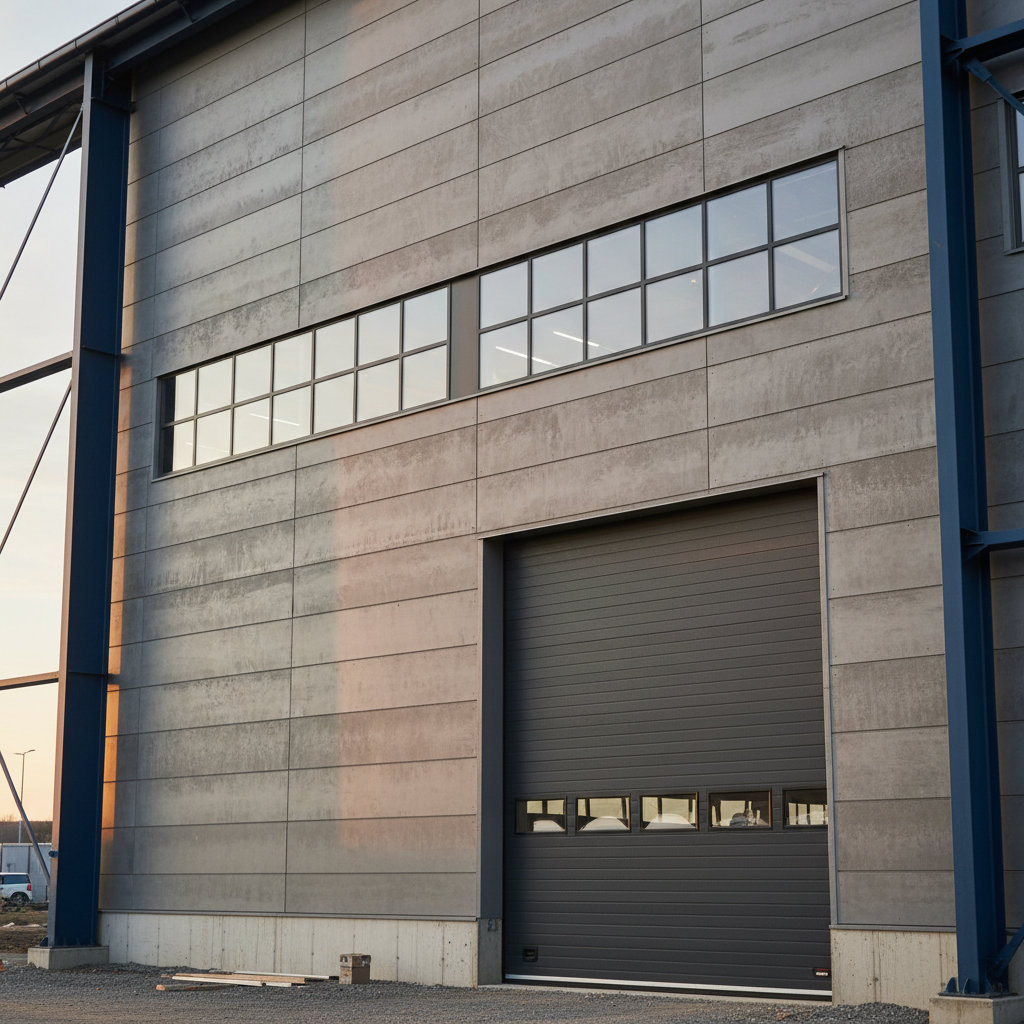
Most projects see an increase of 15% to 20% over the basic kit price when factoring essential accessories into the steel structure warehouse cost . While the “shell” protects against rain, the accessories determine the building’s actual functionality and workflow efficiency.
Don’t forget these:
The base kit includes the frame and sheeting; it is essentially a metal tent. To make it a functional workspace, you need entry points, light, and airflow. Ignoring these during the initial quote comparison is the most common reason for budget overruns later in the project.
Common Add-ons
- Insulation: Vital for climate control and preventing “metal rain” condensation.
- Gutters: Critical for foundation protection by directing water away from the slab.
- Overhead Doors: High-cycle doors are needed for busy logistics hubs (1k−5k+).
- Mezzanine Floors: Excellent for adding office space without expanding the footprint.
- Framed Openings: Pre-frame future door spots now to save thousands on retrofitting later.
Key Takeaway
Insulation is not optional in 2025; energy codes and condensation risks make it a mandatory investment for asset protection. Spend the money on high R-value systems now to save on HVAC bills forever.
Accessory Price List (Estimates)
| Accessory | Unit Cost (Approx) | Purpose |
|---|---|---|
| 3070 Walk Door | 500−800 | Personnel Entry |
| 12×12 Door | 1,500−3,000 | Vehicle Access |
| Insulation | 0.75−1.50 / sq ft | Temp Control |
| Ridge Vents | 500−800 each | Ventilation |
Budget an extra 20% on top of your kit price specifically for these functional necessities.
7. What is the assembly labor share of steel structure warehouse cost?
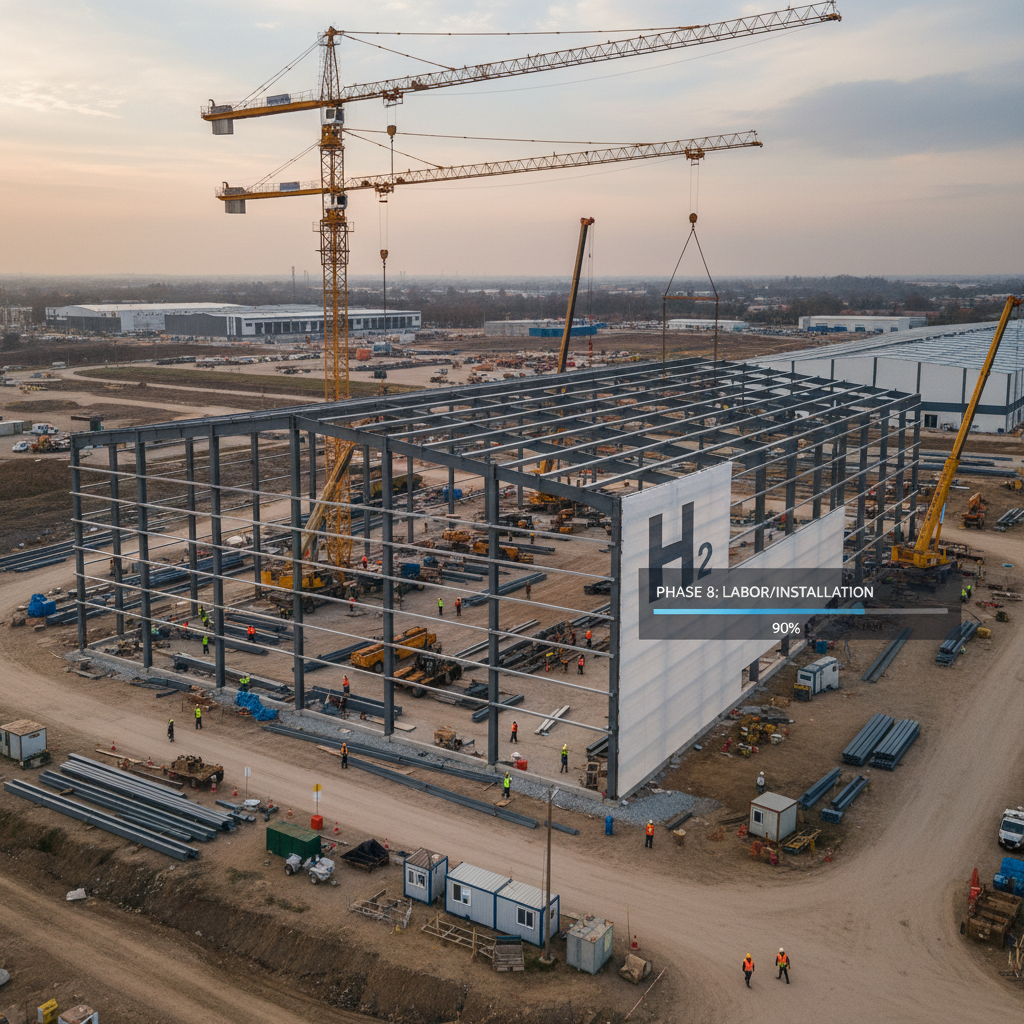
Professional framing erection typically adds 6.00 to 15.00 per square foot to your budget, assuming a standard crew and equipment. This rate has risen sharply in 2025 due to skilled trade shortages across the United States construction sector.
Here is the choice:
You can save money by erecting it yourself, but for commercial warehouses larger than 2,000 square feet, the speed and safety of a professional crew are worth the investment. Steel erection is dangerous work involving heavy suspended loads and heights. Professional crews carry the necessary insurance and have the specific tools to assemble the frame correctly.
Labor Variables
- Union vs. Non-Union: Rates vary by region; cities like New York have much higher union rates.
- Equipment Rental: Cranes and scissor lifts are often separate line items costing thousands.
- Site Access: Difficult terrain slows down the crew, raising hourly total costs.
- Complexity: Mezzanines and steep roofs slow down erection significantly.
Key Takeaway
Unless you are a professional contractor, the liability and slow pace of DIY erection will likely cost you more in the long run than hiring a pro.
Labor Cost Tiers
| Crew Type | Est. Rate (per sq ft) | Pros | Cons |
|---|---|---|---|
| DIY / General | 3.00−5.00 | Cheapest | High Risk, Slow |
| Non-Union Pro | 6.00−10.00 | Balanced | Varies by Region |
| Union / Spec | 12.00−18.00 | Guaranteed | Most Expensive |
Secure your erection crew early; availability is often the biggest bottleneck in 2025 schedules.
8. Does freight distance affect the steel structure warehouse cost?
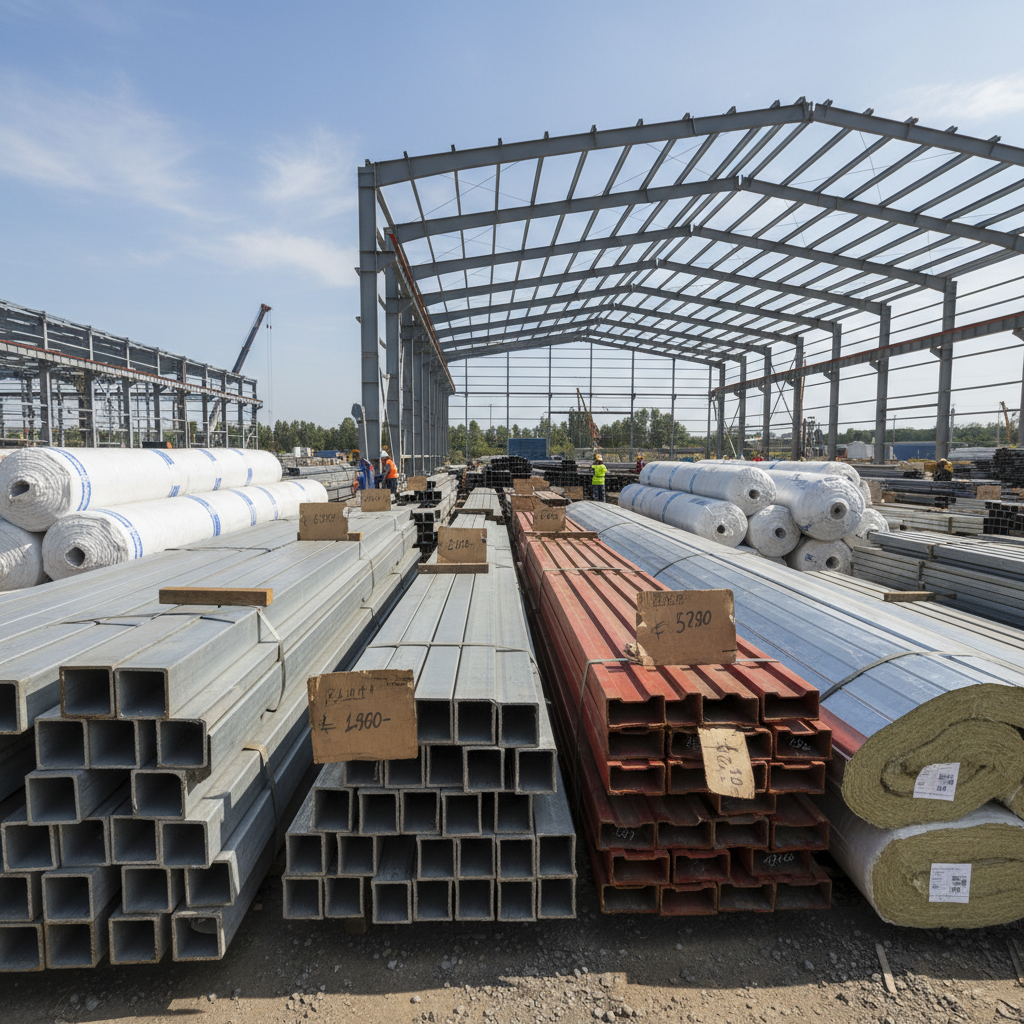
Shipping heavy steel beams is expensive, so the proximity of the manufacturing plant to your job site plays a massive role in the total steel structure warehouse cost . A single warehouse can require three or four flatbed trucks to deliver the primary frames and sheeting.
Good news for you:
We utilize multiple shipping points across the country to minimize these miles. However, rising diesel fuel costs in 2025 mean freight is no longer a negligible line item. If your site is in a remote location, far from major interstates, “last mile” delivery charges can apply.
Logistics Checklist
- Site Accessibility: Can a 53-foot flatbed turn around on your property?
- Offloading: You are responsible for renting a telehandler to unload 5,000 lb bundles.
- Fuel Surcharges: Check quotes for clauses allowing price hikes if diesel spikes.
- Drop Trailers: Restricted sites may require offloading at a secondary location.
Key Takeaway
Always verify who is responsible for the forklift rental; showing up without one when the truck arrives will result in expensive detention fees.
Freight Cost Drivers
| Factor | Impact on Price | Mitigation Strategy |
|---|---|---|
| Distance | High | Source from regional plant |
| Fuel Prices | Moderate | Lock in rates early |
| Site Delay | High | Ensure site is ready |
Logistics can add 1−2 per square foot if your site is difficult to access or remote.
9. Are there hidden fees in a typical steel structure warehouse cost?
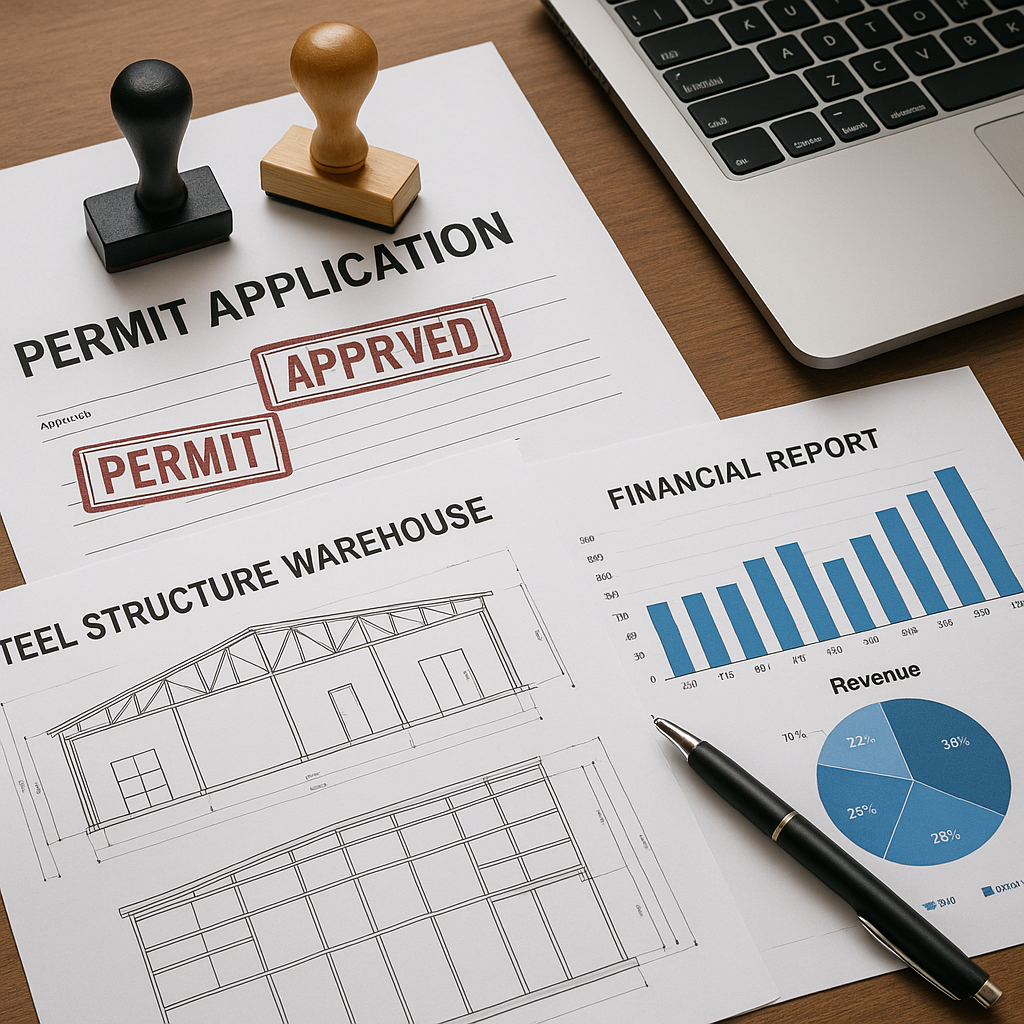
Beyond the metal and concrete, you must budget for site preparation and administrative fees. These “soft costs” are rarely included in the advertised kit price but are unavoidable for any legal build.
Read the fine print:
A “complete” quote often excludes the dirt work and government permissions needed to legally build. Ignoring these can add 10-15% to your final bill unexpectedly. You also need to consider the “dry-in” vs. “turnkey” distinction regarding electrical and plumbing trades.
The Hidden Expenses
- Permitting: Local government fees and “site plan review” costs (500−5,000).
- Utility Hookups: Running three-phase power can cost tens of thousands.
- Excavation: Importing fill dirt to raise the pad can rival concrete costs.
- Taxes: Sales tax is often added at the register, not the quote.
Key Takeaway
Soft costs are the silent budget killers; set aside a 10% contingency fund specifically for permits, impact fees, and utility connections.
Soft Cost Budgeting
| Item | Typical Cost Range | Notes |
|---|---|---|
| Permits & Fees | 1% – 3% of Project | Varies by City |
| Surveying | 2,000−5,000 | Required for Permit |
| Site Prep | 5,000−20,000+ | Highly Variable |
| Utilities | 5,000−15,000 | Distance dependent |
Verify your utility connection costs before purchasing land; remote power runs can break the budget.
10. How does long-term value offset the steel structure warehouse cost?
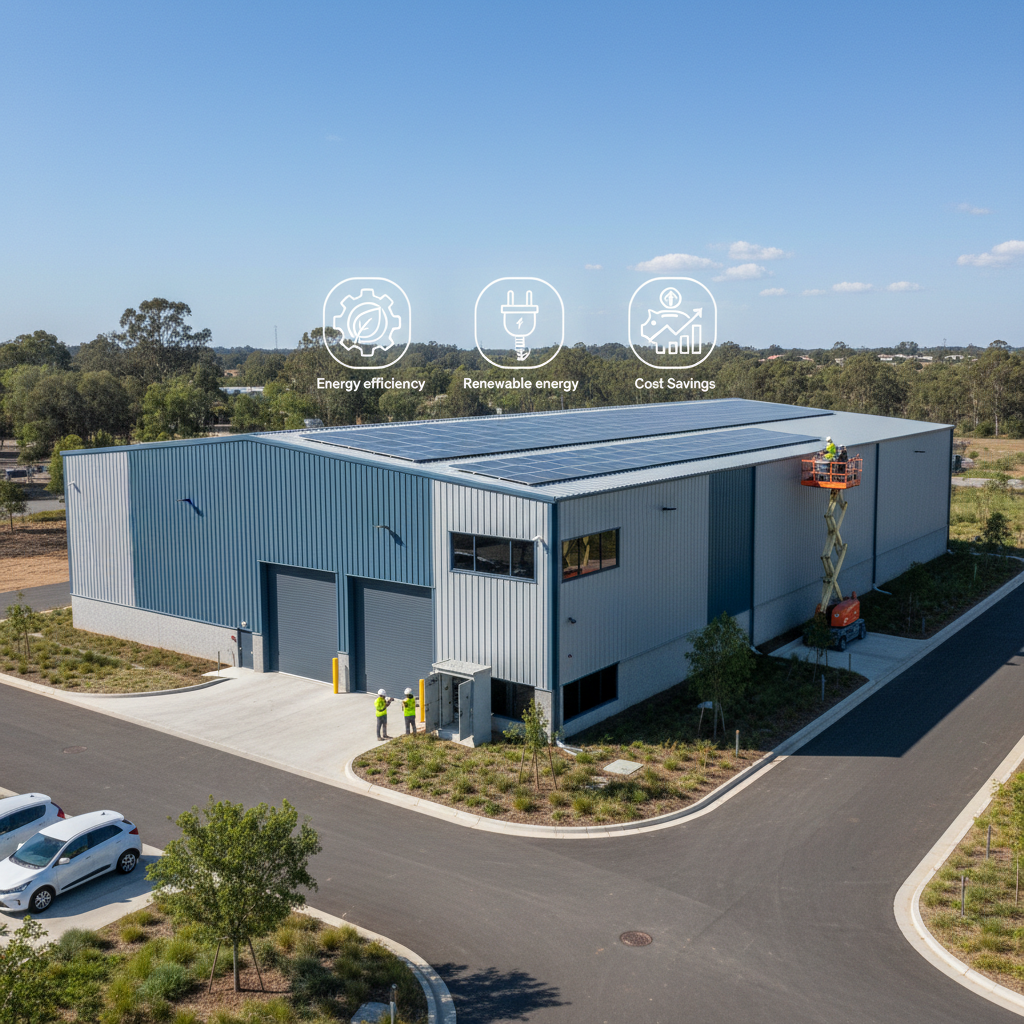
While the upfront investment is significant, the durability and low maintenance of metal dramatically offset the initial cost over the building’s lifespan. When calculating ROI, one must look at the 20-year horizon, not just the construction day cost.
Analysis Guide
The Total Cost of Ownership (TCO) for steel is superior because you aren’t repainting wood every 5 years or replacing shingles every 15. The “Galvalume” roof panels used on modern steel buildings often come with 25-year warranties against rust, ensuring your asset remains liquid and valuable.
Key Takeaway
Steel structures resist fire, termites, and rot, leading to insurance premiums that are often 30% lower than wood structures.
Long-Term Savings Analysis
| Feature | Wood/Traditional | Steel Warehouse | Savings |
|---|---|---|---|
| Insurance | High Risk | Low Risk | ~30% Less/Year |
| Maintenance | Frequent Painting | Minimal Wash | ~50% Less labor |
| Durability | 20-30 Years | 50+ Years | Replacement deferred |
| Energy | Variable | High (w/ insulation) | Consistent |
Investing in steel is an investment in asset longevity; the resale value remains high for decades.
Conclusion
Determining an accurate steel structure warehouse cost requires looking beyond the basic kit price to include foundation, labor, and site-specific loads. By understanding the variables—from roof pitch to freight logistics—you can build a facility that maximizes square footage without breaking the budget. In 2025, planning for a range of 20 to 50 per square foot installed will keep your project funded and realistic. We are committed to engineering durable, cost-effective solutions that help your business scale efficiently.
Contact us today to solve your storage challenges with a custom quote tailored to your specific location and operational needs.
Frequently Asked Questions
Q1: Can I reduce costs by erecting the building myself?Yes, but it is risky for large warehouses. While you save the 6-10/sq ft labor fee, you assume all liability for safety and structural errors, and the project will likely take significantly longer, costing you business downtime.
Q2: Does the price of steel fluctuate often?Absolutely, steel is a global commodity. In 2025, prices change based on tariffs, supply chain demand, and fuel costs, so most official quotes are valid for only 7-14 days before they must be recalculated.
Q3: Are barndominiums cheaper than traditional houses?Generally, yes. The shell construction is faster and cheaper (approx 40−60/sq ft), but the final cost depends entirely on your interior finishing materials, which can push the total to $120+/sq ft.
Q4: Do I need an architect for a steel warehouse?Usually, no. We provide engineer-stamped plans that satisfy most local permitting offices, saving you the substantial expense of hiring a third-party architectural firm unless you need complex aesthetic designs.
Q5: How much does insulation add to the cost?Insulation typically adds a small percentage (1.00−2.50/sq ft) to the price but pays for itself rapidly. Skipping it in a climate-controlled warehouse is a financial mistake due to energy loss and moisture damage.